
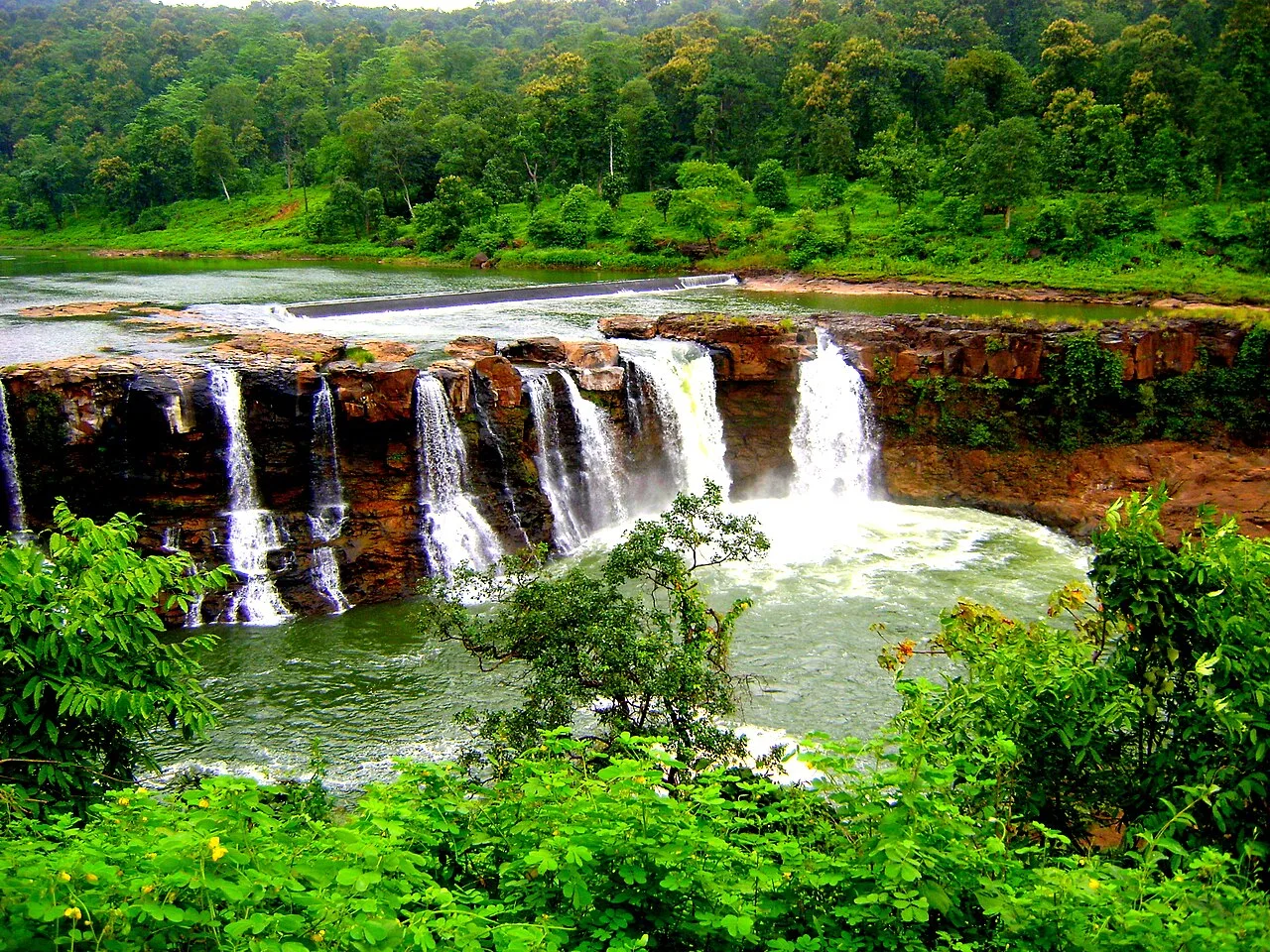
Waghai (Gira Falls)
Waghai is a town and taluka in Gujarat’s Dang district, associated with Gira Falls. Visitors come to the area to see the falls and explore this part of the district.
Key facts · verified by Ghumoopedia editors
- Type of place
- Natural attraction
- Best time to visit
- November to February
- Nearest railway station
- Navsari · about 60 km (straight line)
- Nearest airport
- Nashik (Ozar) Airport · about 85 km (straight line)
- Verified
- 21 Nov 2026
Plan a trip from Waghai (Gira Falls) — a day-by-day route through places nearby.
Located in southern Gujarat, Waghai is both a town and a taluka within Dang district. It lies around 32 km to the west of Ahwa, the district headquarters, and roughly 52 km north-west of Saputara, a hill station. Vansda, Chikhli and Bilimora are west of Waghai. A state highway runs from the town to Chikhli, where it joins National Highway 8. Waghai also has a narrow-gauge rail link with Bilimora, and a rail connection with Saputara. Gujarat combines Harappan cities at Dholavira and Lothal, the stepwells and Sultanate mosques of Ahmedabad and Patan, the Jain hills of Palitana and Girnar, Gandhi's Sabarmati Ashram, the Asiatic lions of Gir and the white salt desert and craft villages of Kutch. Gujarat is very hot from March to June (Kutch and north Gujarat often exceed 42°C), receives monsoon rain from late June to September, heaviest in the south and the Dangs, and is pleasant and dry from November to February with cold desert nights in Kutch. The usual best time to visit is November to February. Timings, fees and access arrangements must be confirmed locally. For official information, see Gujarat Tourism at https://www.gujarattourism.com.
Why it matters
Waghai is a town and taluka in Dang district, in southern Gujarat. Gira Falls, associated with Waghai, is a seasonal natural attraction that draws visitors to the forested Dang region, particularly when the river is flowing strongly. The town is also a useful local base for journeys towards Ahwa and Saputara, and its narrow-gauge railway connection with Bilimora reflects its role as a transport link. Gujarat Tourism presents the state as a destination for both natural and cultural travel, but no UNESCO or Archaeological Survey of India designation for Gira Falls is established here. Its importance is best understood as regional: a place to experience the landscape of the Dangs and support visits to nearby towns and attractions. Access and conditions can change with the season.
Waghai is a town and taluka in Dang district, a southern Gujarat region known for forested hills and Adivasi communities. Published accounts identify Waghai as a local settlement and transport point, but detailed, reliable records of the town’s early origins are limited. Gira Falls is a natural feature rather than a constructed monument, and a documented account of its formation or early visitor history is not readily established; it is better not to assign it a precise age or named builder. Waghai’s more visible historical change has been its connection to wider transport routes. A narrow-gauge railway links the town with Bilimora, while road connections lead west towards Chikhli and the wider highway network. These links helped make Waghai a practical gateway for travel into the Dangs. The area’s history is also inseparable from the Indigenous communities who have lived in the region and maintained distinct languages, livelihoods and cultural traditions. Today, visits to the falls and nearby natural sites contribute to local tourism.
Origin stories & folklore
As with many rivers and waterfalls, local visitors may encounter oral stories or personal beliefs connected with the water, surrounding hills or forest. Such accounts can vary between families and villages and should be understood as living oral tradition, not verified history. Ask residents respectfully if they wish to share a story, and do not treat a sacred or private account as a tourist performance. The waterfall’s seasonal flow and changing appearance are observable features; explanations about supernatural origins belong to the realm of belief.
Spend unhurried time at Waghai (Gira Falls): walk the marked paths, use official viewpoints and ask locally whether a guide, entry ticket or forest permission is needed. Enjoy the water from safe, marked points; rocks near falls and dams are slippery and currents are dangerous, especially in the monsoon. Wildlife sightings are never guaranteed — patience and quiet improve your chances. A comfortable itinerary is one main visit in the morning, a local meal at midday and a short nearby stop before an afternoon return. Use the district list on this site to find other places in Dang, but check the route and its condition before combining stops. If a festival is on — such as Navratri garba, the Rann Utsav or Uttarayan kite flying — roads and stays can be busy, and the experience can be unforgettable. Leave no litter: many sites are protected by the communities around them.
Suggested itineraries
Half day: Travel from Waghai to Gira Falls; spend about 1–2 hours at approved viewpoints and paths; return to town for a meal. Full day: Visit Gira Falls in the morning; have lunch in or near Waghai; spend the afternoon at Waghai Botanical Garden, then return before dusk. Gentler option: Arrange a vehicle close to the permitted viewing area, enjoy a brief visit from the safest accessible viewpoint, and take a relaxed meal break in Waghai; check the surface and distance in advance.
Waghai lies in the Dangs, where Adivasi cultural traditions remain part of everyday community life. Gujarati is widely used, alongside local languages and varieties spoken by communities in the region. Music, group dancing and distinctive festive dress may be seen at public celebrations, though customs differ between communities and occasions. Visitors may encounter garba during Navratri and cultural gatherings around the Dang Darbar in Ahwa. These are living traditions, not staged attractions everywhere. Ask before photographing people, performances or ceremonial activities, and follow local guidance about appropriate behaviour.
Local communities
The Dangs are home to Adivasi communities, including Dangi and Bhil communities, as well as other groups with distinct local identities. People’s livelihoods vary and may include farming, wage work, forest-linked activities, small businesses and services. Tourism around Waghai and Gira Falls can also support transport providers, food sellers and accommodation operators, though opportunities and involvement differ locally. Treat residents as hosts and neighbours rather than as attractions: ask permission before taking portraits, buy directly and respectfully where possible, and avoid making assumptions about customs or livelihoods.
Festivals & events
The Dang Darbar, held in Ahwa, is a notable regional gathering associated with Adivasi culture and is usually held around the Holi season; it can bring increased visitors and demand for transport and accommodation. Navratri, generally in autumn, is observed in the wider region with community celebrations and garba. Holi is also celebrated locally. These events are not necessarily held at Gira Falls itself, and arrangements vary by year and place. Check locally before travelling, as roads and lodging may be busier during major gatherings.
Local food in Gujarat includes dhokla, khandvi, thepla, fafda-jalebi, undhiyu in winter, the Gujarati thali, Kutchi dabeli, Surti locho and ponk, kadhi-khichdi, and sweets such as mohanthal and shrikhand; much of Gujarat's food is vegetarian and lightly sweet. Ask what is fresh that day; many small eateries cook a limited daily menu. Vegetarian travellers eat superbly here; non-vegetarian food is available in cities but limited in pilgrimage towns such as Palitana, Dwarka and Ambaji, where it may be banned. Remote sites may have no restaurant at all. Carry water and snacks, eat a proper breakfast before long drives, and ask your accommodation for a packed lunch if you are heading out early. Try a home-cooked or local thali meal when you can — it is often the best food on the route. Choose busy, clean places, drink sealed or filtered water, and carry your packaging back with you.
Shopping & local experiences
Waghai town is the most practical place to look for everyday provisions and locally prepared food. In the wider Dang region, visitors may find hand-made items, bamboo or other locally sourced crafts, and seasonal produce, but availability varies and should not be assumed at the falls. Buy directly from makers or reputable local sellers when possible, ask before photographing a craftsperson, and agree on what an item is made from. Avoid collecting plants, forest materials or objects from the site. A meal in town can be a simple way to support local businesses.
Gira Falls is a seasonal waterfall in the Waghai area, with its appearance strongly influenced by rainfall and river flow. The surrounding Dang landscape includes wooded hills, streams and forest patches. The wider region contains moist and dry deciduous vegetation, with trees and undergrowth that change in appearance through the seasons. Wildlife and birdlife belong to the broader forest landscape, but sightings at the falls are never guaranteed; keep quiet, maintain distance and do not feed animals. During and after heavy monsoon rain, rocks, paths and water edges can be slippery, and currents may be hazardous. Stay within marked or locally approved viewing areas and follow any temporary closures.
November to February
The nearest principal railway station by straight-line distance is Navsari, roughly 60 km away. The nearest operating airport by straight-line distance is Nashik (Ozar) Airport, roughly 85 km away. These figures are calculated from map coordinates — actual road distance is longer. Ahmedabad, Vadodara, Surat and Rajkot are the main rail and air gateways; Bhuj serves Kutch, and Veraval, Junagadh, Dwarka and Porbandar serve Saurashtra. For the final leg, Gujarat State Road Transport Corporation (GSRTC) buses, private sleeper coaches and shared chhakdas and autos in rural areas link district towns. A private taxi gives more flexibility for remote sites. When comparing train, bus and flight, count the complete door-to-door time: a flight saves the most time only if the onward road transfer is short, while an overnight train can save a hotel night. Book your return before you leave, because seats fill quickly on weekends, festivals and holidays. Current train numbers, timings, return services and fares are not listed here; check IRCTC and NTES for trains and the airline's own schedule for flights. No permit is needed to visit Gujarat. Gujarat is a dry state: alcohol sale and consumption are prohibited except with a liquor permit, which visitors from outside the state can apply for at authorised hotel liquor shops with ID — never carry alcohol across the state border without one. Lion safaris in Gir and entry to parts of the Rann of Kutch near the border need advance online booking or a permit, and the White Rann around Dhordo is busiest during the Rann Utsav (roughly November to February).
Confirm onward and return timings on IRCTC / NTES, the state bus operator or your airline before travel. A dash means current timings or fares have not been verified.
Getting around
Waghai is the practical arrival point for reaching Gira Falls. From town, visitors may be able to arrange a local taxi or auto, but availability can vary; confirm a return pickup before leaving. Local buses connect some towns, though they may not serve the falls entrance conveniently. Walking is suitable only for the route and conditions you have checked in advance. Parking may be available near the access area, but capacity and rules should be confirmed locally. There are no visitor boats to rely on. For remote stops, a private vehicle offers greater flexibility, especially outside busy periods.
Hours, tickets & permissions
Access arrangements at Gira Falls may vary by season, water conditions and local management. Depending on current rules, visitors may encounter an entry ticket, a camera charge, a guide requirement or a restriction on entering particular areas; do not assume these apply or that access is unrestricted. There may also be temporary closures during unsafe conditions. Confirm current opening arrangements, fees and any forest or site permissions with the local managing authority or tourism office before setting out. Follow posted instructions and do not cross barriers.
Facilities
Facilities at the falls may be basic and can vary with the season. Toilets, drinking water, food stalls, waste bins and marked parking are not guaranteed, so carry water and take rubbish back with you. Waghai town is more likely to offer food and basic services. Guides may be available locally, but check whether one is required or useful for your route. ATMs and reliable card services should not be assumed at the site. Confirm current facilities and access conditions before travelling, especially after heavy rain.
Accessibility
The approach and viewing areas may involve uneven ground, steps, exposed rocks or short walks; conditions can change after rain. There is no basis to assume that the falls have wheelchair ramps, smooth paths or accessible toilets. Wheelchair users, visitors with strollers and people with limited mobility should check the current route and vehicle access locally before setting out. Older visitors may find the safest viewpoint more manageable than walking close to the water. Shade can be limited in open areas, so plan rest breaks and avoid slippery edges. Do not attempt steep or unmarked routes.
No permit is needed to visit Gujarat. Gujarat is a dry state: alcohol sale and consumption are prohibited except with a liquor permit, which visitors from outside the state can apply for at authorised hotel liquor shops with ID — never carry alcohol across the state border without one. Lion safaris in Gir and entry to parts of the Rann of Kutch near the border need advance online booking or a permit, and the White Rann around Dhordo is busiest during the Rann Utsav (roughly November to February). Carry a photo ID at all times and save the emergency number 112 and your accommodation's contact offline. Heat in summer and heavy rain in the monsoon are the main weather risks; carry water, avoid midday sun and allow extra time when roads flood. Waterfalls and dams are dangerous in the monsoon: keep behind barriers and leave the area if the water level rises suddenly.
Photography
Soft morning or late-afternoon light can suit the water and surrounding greenery, while the monsoon may bring stronger flow but also greater risk and restricted access. Use only approved paths and viewpoints; avoid stepping onto wet rocks for a photograph. Ask permission before photographing residents, workers or cultural activities. Do not fly a drone without confirming current rules and obtaining any required permissions; forest or local restrictions may apply. Keep equipment and people away from the water’s edge.
Choose a stay by the full journey to Waghai (Gira Falls), not just the district name. Ahmedabad, Vadodara, Rajkot and Bhuj offer the widest choice; pilgrim towns have dharamshalas and trust guesthouses, and Gir has resorts near Sasan Gir. In summer, check air-conditioning; in the monsoon, check that the property is accessible if roads flood. Book in advance for weekends, festivals and the peak season (November to February). Confirm the exact location, meals included, check-in time and cancellation terms in writing. Avoid sending money to unverified contacts or touts at stations. Carry some cash, as card and digital payments can be unreliable in remote areas.
Waghai Botanical Garden is an easy nearby stop to consider alongside the falls. Ahwa, the Dang district headquarters, offers a town visit and is about 32 km from Waghai. Saputara, a hill station, is about 52 km to the south-east by the same source, though actual road routes and conditions should be checked. Vansda National Park is another natural-area option in the wider region; confirm its current access rules before combining it with a visit. Allow for road time rather than relying on straight-line distances.
For couples, Waghai (Gira Falls) rewards a slow pace: arrive early for soft light and fewer crowds, share a local meal and keep the evening free. A full-moon night on the White Rann, sunset at Shivrajpur or an evening on the Sabarmati Riverfront makes the trip memorable. Public displays of affection can be frowned upon in conservative communities and at religious sites, so be discreet. Keep a buffer in your itinerary, because weather and road conditions can delay plans.
Q: How much time should I allow for Gira Falls? A: Allow a few hours for the drive, a careful visit to the approved viewpoints and a return to Waghai; conditions may extend the visit. Q: When is a good season to visit? A: The waterfall is seasonal and often most impressive after monsoon rain, but water levels and safety vary. November to February is generally pleasant for travel in Gujarat. Q: Is there an entry fee or permit? A: Rules can change and may include a ticket, camera charge or permission requirement. Confirm current arrangements locally before travelling. Q: Is the site suitable for children or elderly visitors? A: It can be, if they remain on safe marked paths and use an appropriate viewpoint. Wet rocks and strong currents make close approaches unsafe. Q: Where can I stay nearby? A: Check accommodation in Waghai and Ahwa; Saputara offers another base with more visitor services. Confirm availability and road conditions before your trip.
Be the first to share photos, stories, advice or a helpful contact for Waghai (Gira Falls).
Loading…