
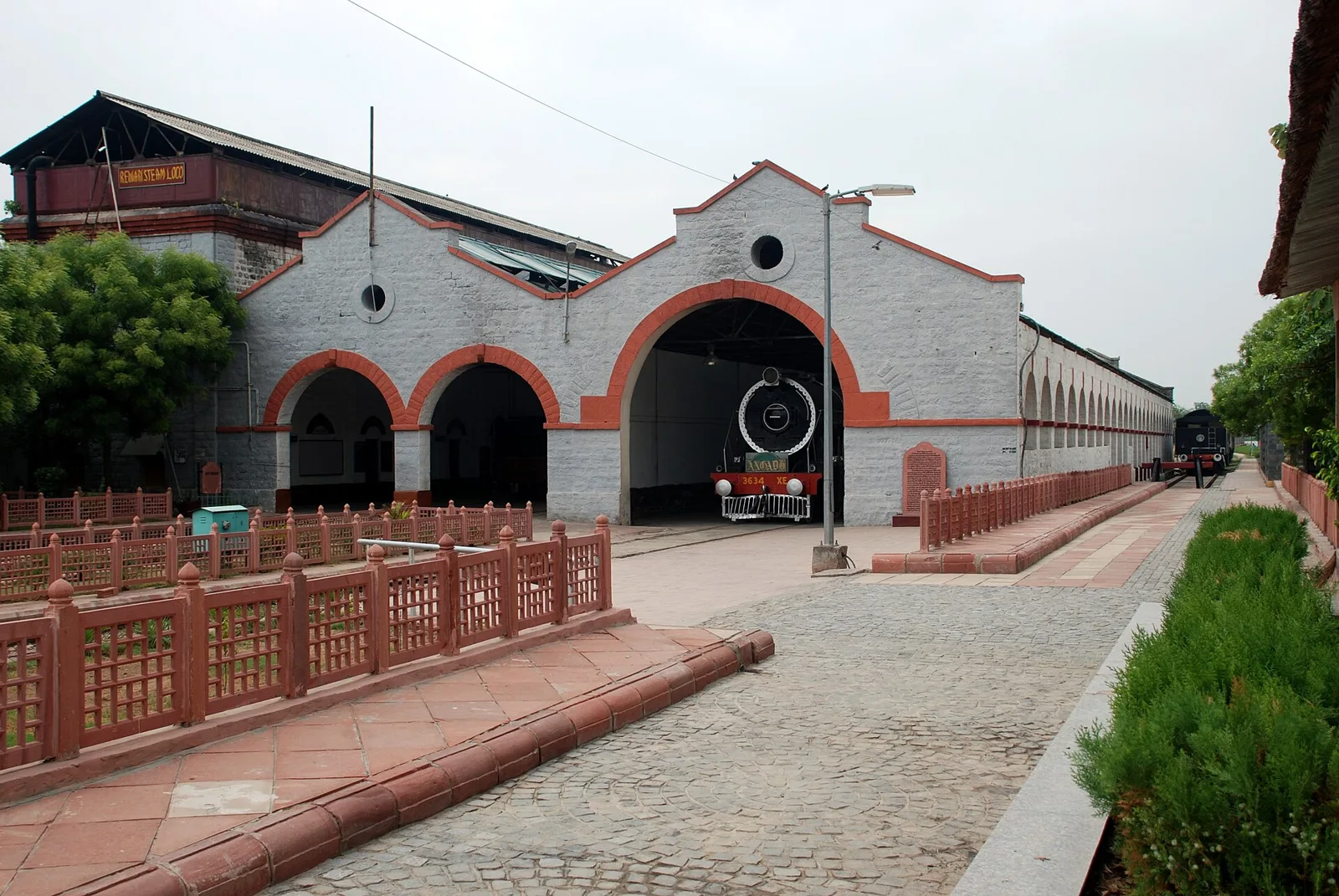
Rewari Railway Heritage Museum
The Rewari Railway Heritage Museum is a railway museum in Rewari, Haryana, where visitors can see surviving steam locomotives, including the working Fairy Queen, built in 1855.
Key facts · verified by Ghumoopedia editors
- Type of place
- Heritage monument
- Best time to visit
- October to March; November to February for birdwatching at Sultanpur
- Nearest railway station
- Rewari Junction · about 5 km (straight line)
- Verified
- 21 Nov 2026
Plan a trip from Rewari Railway Heritage Museum — a day-by-day route through places nearby.
In Rewari district, Haryana, within Delhi NCR, the museum occupies the former Rewari Steam Locomotive Shed. The shed dates to 1893 and is India’s sole surviving steam-engine shed. Its collection includes some of the last steam locomotives remaining in the country. The Fairy Queen is among them: built in 1855, it is the world’s oldest steam locomotive still in working order. The engines and the shed’s railway history are key features for visitors. The site is 400 m from Rewari railway station’s entrance, on its northern side. Gurgaon is 50 km away, while the National Rail Museum at Chanakyapuri, New Delhi, lies 79 km from the museum. Haryana carries the legends of Kurukshetra and the Mahabharata, a strong wrestling (akhara) and folk tradition, and fast-growing modern cities around Gurugram and Faridabad. Haryana is hot and dry from April to June, humid in the July–September monsoon, and cool with fog in December and January. The Aravalli outcrops in the south are rocky and dry. The usual best time to visit is October to March; November to February for birdwatching at Sultanpur. Timings, fees and access arrangements must be confirmed locally. For official information, see Haryana Tourism at https://haryanatourism.gov.in.
Why it matters
The Rewari Railway Heritage Museum preserves the former Rewari Steam Locomotive Shed, built in 1893. It is an important local landmark and a record of the steam era on northern India’s railways. The Indian Railways heritage site displays historic locomotives, including the Fairy Queen, built in 1855 and widely described as the world’s oldest working steam locomotive. Its value lies in bringing railway history, engineering and conservation into a setting that was itself used as a locomotive shed. The museum is in Rewari city, Haryana, and is part of the wider railway heritage story of Delhi NCR.
The Rewari shed was built in 1893 to service steam locomotives working on railway routes in northern India. Rewari’s position on important lines made it a useful operating and maintenance point. The shed belongs to the period when railways were expanding across the subcontinent and steam engines required regular inspection, water, fuel and repair facilities. The site is described as India’s only surviving steam locomotive shed. Steam traction gradually gave way to diesel and electric power, and the shed ceased its original role as a working steam depot. Indian Railways later conserved and adapted the historic premises as a heritage museum. The former shed now provides a setting for a collection of historic locomotives and railway interpretation. The 1855-built Fairy Queen is among its best-known exhibits; it has been described as the world’s oldest still-functional steam locomotive. The museum also presents the wider story of steam locomotion and the people and skills involved in operating and maintaining engines. Visitors should check current displays locally, since access to individual locomotives or facilities can change during conservation work.
Origin stories & folklore
The region of Haryana has strong associations with the Mahabharata and with local oral traditions, but those broader stories should not be presented as the origin of this railway site. The Fairy Queen’s evocative name can invite fanciful tales, yet it is the name of a historic locomotive, not evidence of a supernatural local belief. A more grounded story is the transformation of a working shed into a place where visitors encounter railway memories. Ask local guides about family recollections of steam trains, while distinguishing personal memories from older folklore.
Architecture & design
The museum’s character comes from its industrial railway setting rather than a palace or temple style. The historic shed was designed for the practical work of housing and servicing locomotives. Its layout centres on rail tracks and engine spaces, allowing visitors to see machines in the context of a railway depot. The surviving shed fabric and railway infrastructure help explain how a steam locomotive was brought in for maintenance and kept ready for service. Brick masonry and metal roofing are characteristic of the historic industrial appearance, though repairs and display arrangements may have altered parts of the complex. The scale of the bays and the sight of locomotives on rails give a sense of the space and equipment required by steam operations. Interpretive displays and restored exhibits now share the site with the older structures. Look for the contrast between the functional shed architecture and the detailed engineering of the locomotives; do not assume that every track or workshop area is open to visitors.
Important objects & sculptures
The principal collection is railway machinery: historic steam locomotives preserved for public viewing. The Fairy Queen, built in 1855, is the most widely recognised exhibit and is described as the world’s oldest still-functional steam locomotive. Other engines and railway equipment illustrate changes in locomotive design and operation. Displays may also include smaller tools, fittings, photographs or explanatory material, but the exact exhibits and their condition can change. Look closely at the wheels, connecting rods, boiler area and cab details where access and barriers permit. Read the interpretation boards for context, and do not climb onto machinery or touch controls unless staff explicitly allow it.
Explore Rewari Railway Heritage Museum slowly and read the interpretation boards or hire an authorised guide to understand its history. Check opening days and ticket counters in advance, as many monuments and museums close on one weekday and on public holidays. A comfortable itinerary is one main visit in the morning, a local meal at midday and a short nearby stop before an afternoon return. Use the district list on this site to find other places in Rewari, but check the actual road route and its condition before combining stops. If a festival or fair is on, local roads and stays can be busy — and the experience can be unforgettable. Leave no litter: many sites are protected by the communities around them.
Suggested itineraries
Half day: Spend 1–2 hours exploring the shed and locomotive displays; pause for a local meal; take a short walk or auto ride through central Rewari. Full day: Visit the museum in the morning; have lunch in town; explore Rewari’s old quarters and Rao Tula Ram Memorial Museum if open; leave time for a relaxed tea or meal before returning. Gentler option: Arrange a drop-off close to the entrance, focus on the main displays with seated breaks, and skip additional town stops.
The museum sits within Rewari’s everyday urban life, where Hindi and Haryanvi are widely used and local customs reflect the broader culture of southern Haryana. Railway heritage adds a distinct thread: former railway workers and residents may have personal memories of steam engines, station life and the work of maintaining trains. These recollections are valuable oral history, though they are individual experiences rather than a single shared tradition. In the surrounding region, folk music, dance and community gatherings remain part of festive life. Visitors will encounter a modern town as well as historic railway exhibits; modest, considerate behaviour and asking before photographing people are appreciated.
Festivals & events
The museum is not known as the venue for a major annual festival. Rewari and the wider Haryana region observe festivals such as Holi, Diwali and Teej, generally bringing community gatherings and increased activity around town. Seasonal fairs and local religious events may also take place, but their locations and schedules vary. During popular holidays, transport, markets and accommodation can be busier than usual. Check local notices before planning a visit around an event, and do not assume that festivities are held at the museum itself or that the museum’s visitor arrangements remain unchanged.
Local food in Haryana includes bajra khichdi, singri ki sabzi, kachri chutney, bathua raita, fresh milk, curd and ghee, and sweets such as ghevar and rewri. Ask what is fresh that day; many small eateries cook a limited daily menu. Vegetarian travellers eat very well across this region, and most towns also have simple non-vegetarian dhabas. Remote sites may have no restaurant at all. Carry water and snacks, eat a proper breakfast before long drives, and ask your accommodation for a packed lunch if you are heading out early. Try a home-cooked or dhaba meal when you can — it is often the best food on the route. Choose busy, clean places and carry your packaging back to town.
Shopping & local experiences
Rewari’s town markets are the practical place to look for everyday goods, snacks and locally made items. The city has a long association with brass work, so visitors can ask in local shops about brassware and how pieces are made; availability and origin vary. Railway-themed souvenirs may be offered at the museum, but a shop or particular item is not guaranteed. For a food stop, explore local eateries for familiar Haryanvi and North Indian dishes, asking about ingredients and seasonal specialties. Choose locally made goods where possible and avoid buying items presented as historic railway material.
October to March; November to February for birdwatching at Sultanpur
The nearest principal railway station by straight-line distance is Rewari Junction, roughly 5 km away. The nearest operating airport by straight-line distance is Indira Gandhi International Airport, Delhi (for southern Haryana), roughly 60 km away. These figures are calculated from map coordinates — actual road distance may differ. Delhi, Chandigarh and Amritsar are the main rail and air hubs, and most long-distance journeys connect through them. For the final leg, Haryana Roadways buses and private coaches on the main national highways link district towns; shared taxis usually leave early in the morning. A private taxi gives more flexibility for remote sites. When comparing train, bus and flight, count the complete door-to-door time: a flight saves the most time only if the onward road transfer is short, while an overnight train plus a road journey can save a hotel night. Book your return before you leave, because seats fill quickly on weekends and holidays. Current train numbers, timings, return services and fares are not listed here; check IRCTC and NTES for trains and the airline's own schedule for flights. No permit is needed to visit Haryana. Bird sanctuaries and heritage sites charge entry tickets, and some protected monuments close on one weekday.
Confirm onward and return timings on IRCTC / NTES, the state bus operator or your airline before travel. A dash means current timings or fares have not been verified.
Getting around
Rewari Junction is the convenient rail arrival point for the city, and the museum is in the station area. From the station or central Rewari, local auto-rickshaws and taxis can help with the final leg; agree the destination before setting off. Walking may be practical for visitors staying nearby, but check the route and pavement conditions, especially in heat or traffic. Local buses serve parts of the town, though they may not stop at the museum entrance. If arriving by car, check locally where visitor parking is permitted and avoid blocking railway access roads.
Hours, tickets & permissions
Entry may be subject to a ticket, visitor registration or other rules set by the site’s managing authority. Rules for photography, access to particular engines and guided visits can also vary. There is no reliable current schedule or fee information provided here, so confirm opening days, hours and charges directly with the museum or Indian Railways before travelling. Public holidays, maintenance and special events may affect access. Follow staff instructions and any signs around tracks, workshop spaces and exhibits.
Facilities
Facilities at the museum may include visitor information, interpretation boards and basic seating, but provision can vary; check locally before relying on toilets, drinking water or a staffed guide. Food options are more likely in Rewari town than within the museum grounds. ATMs, shops and additional services are available in the city, though not necessarily beside the entrance. Ask staff about permitted parking and whether guided visits can be arranged. Carry water in hot weather, and take rubbish away if bins are not available.
Accessibility
The site is a railway shed and museum complex, so expect walking across hard surfaces and possibly uneven ground around tracks or displays. Shade may be limited in open areas, so plan breaks and avoid the hottest part of the day. Wheelchair and stroller suitability depends on the current route and surface conditions; contact the managing authority beforehand to confirm access. Elderly visitors may find a shorter visit with seated rests more comfortable.
No permit is needed to visit Haryana. Bird sanctuaries and heritage sites charge entry tickets, and some protected monuments close on one weekday. Carry a photo ID at all times and save the emergency number 112 and your accommodation's contact offline. Heat in summer and dense fog in winter are the main weather risks; carry water and allow extra travel time on foggy December–January mornings. Respect community rules, private property and posted instructions. Check official advisories for the region before travel, and follow local guidance if access changes.
Photography
Photographs of the locomotives and shed are often a natural part of a visit, but confirm current rules with staff, including any restrictions on flash or camera equipment. Soft morning or late-afternoon light can bring out the engines’ shapes while reducing glare, subject to opening arrangements. Keep to visitor paths and do not enter operational railway areas for a viewpoint. Drone use should not be assumed to be permitted; railway and aviation restrictions may apply. Ask permission before photographing staff or other visitors, and be especially considerate around families.
Choose a stay by the full journey to Rewari Railway Heritage Museum, not just the district name. Main towns in Rewari usually offer hotels, state tourism lodges and guesthouses with better transport, meals and medical access, while village homestays offer a closer connection to local life. In the plains, check fans or air-conditioning in summer and heating in the December–January cold wave. Book in advance for weekends, festival dates and the peak season (October to March; November to February for birdwatching at Sultanpur). Confirm the exact location, meals included, check-in time and cancellation terms in writing. Many homestays accept payment on arrival; avoid sending money to unverified contacts. Mobile network and digital payments can be unreliable in remote areas, so carry some cash.
Within Rewari, visitors can explore the old town and look for Rao Tula Ram Memorial Museum, checking its current access arrangements before making it part of the day. Sultanpur National Park, in neighbouring Gurugram district, is a possible separate excursion for birdwatching, especially in the cooler season; confirm its current visitor rules and route. The National Rail Museum in Chanakyapuri, New Delhi, offers a broader railway collection but is a separate journey rather than a quick local stop. Check road conditions and travel time before combining destinations.
For couples, Rewari Railway Heritage Museum rewards a slow pace: arrive early for soft light and fewer crowds, share a local meal and keep the evening free. Public displays of affection can be frowned upon in conservative communities and at religious sites, so be discreet. A homestay or a small heritage hotel can make the trip memorable — confirm privacy, hot water and transport back. Keep a buffer in your itinerary, because weather and traffic can delay plans in Haryana.
Q: How much time should I allow for the museum? A: Allow a couple of hours for a relaxed visit to the shed and locomotive displays; add time for a meal or another stop in Rewari. Q: When is a good season to visit? A: October to March is generally more comfortable for travel in Haryana. Summer can be very hot, so check conditions and plan accordingly. Q: Is entry ticketed, and when is it open? A: Entry rules, fees and opening days can change. Confirm current details with the museum or Indian Railways before setting out. Q: Is it suitable for children and elderly visitors? A: Children often enjoy seeing the engines, but keep them away from tracks and machinery. Older visitors may prefer a shorter route and rest breaks; surfaces can be uneven. Q: Where can I stay nearby? A: Rewari has town accommodation options. Check current availability and location, especially if you want to be close to the station or museum.
Be the first to share photos, stories, advice or a helpful contact for Rewari Railway Heritage Museum.
Loading…