
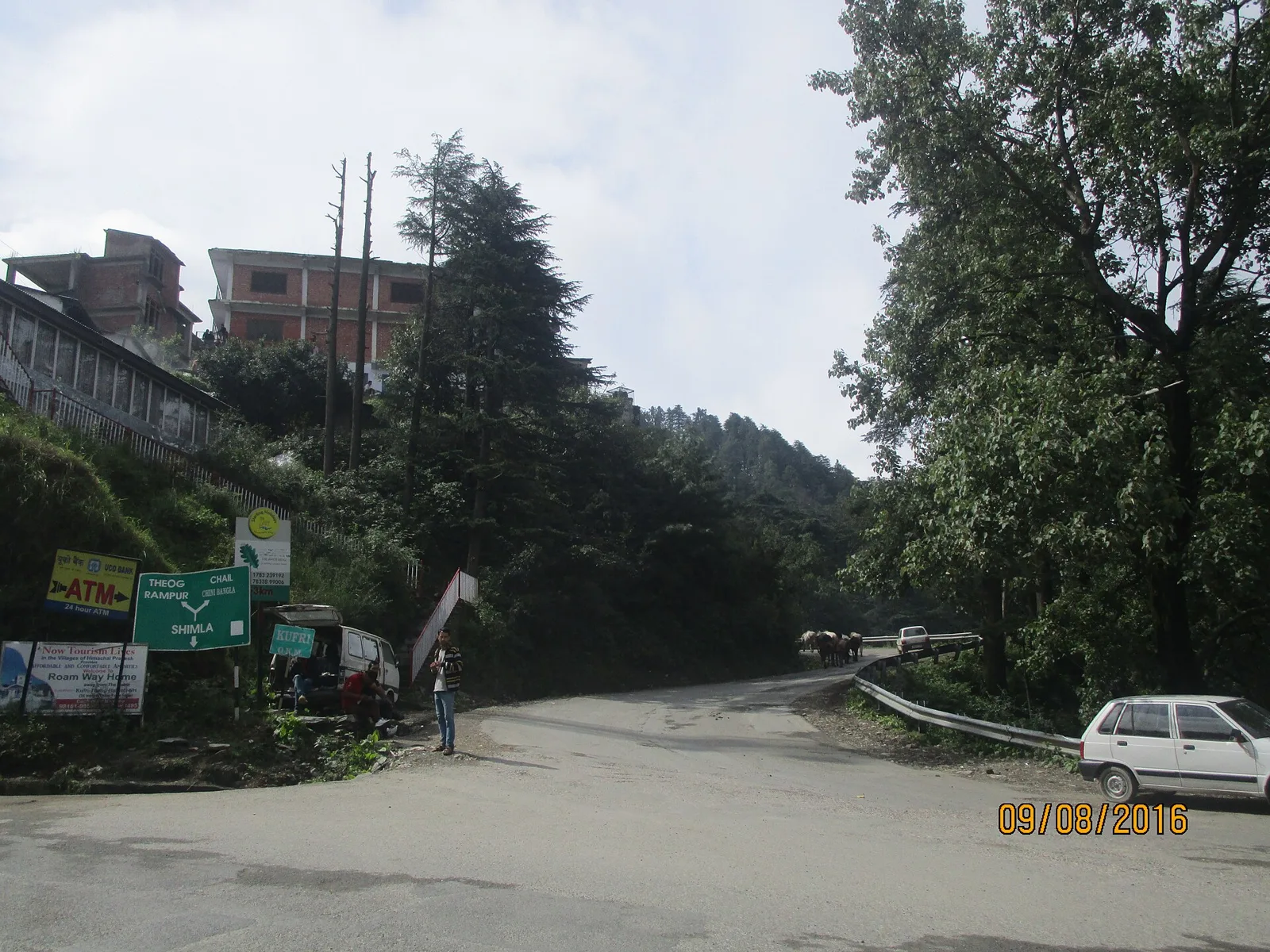
Chail
Chail, a Himachal Pradesh hill station associated with both Shimla and Solan districts, attracts visitors for its cedar woodland, Himalayan views, historic palace, trekking routes and camping.
Key facts · verified by Ghumoopedia editors
- Type of place
- Natural attraction
- Best time to visit
- March to June and October to November for most hill towns; May to October for Lahaul-Spiti and high passes
- Nearest railway station
- Solan · about 10 km (straight line)
- Nearest airport
- Shimla Airport (Jubbarhatti) · about 20 km (straight line)
- Verified
- 21 Nov 2026
Plan a trip from Chail — a day-by-day route through places nearby.
Chail, in Himachal Pradesh, is linked with Shimla district and also characterised as a hill station in Solan district. It stands 45 kilometres from Solan city and 44 kilometres from Shimla, the state capital. Its climate is pleasant, and cedar woodland covers the surrounding slopes. Chail Palace, constructed in 1892 and rebuilt in 1951, served the Maharaja of Patiala as a summer residence during British rule. The Patiala peg was also created at the Maharaja’s palace here. The Patiala rulers were responsible for building Chail’s cricket ground. Hikers come for views across the lower Himalayas. Trekking routes connect the area with Junga, Kufri and Ashwani Khad near Solan. Eco-camps are held in Chail, while a number of campsites are available to hikers and other camping visitors. Hiking and camping are among the area’s draws. Himachal's hill towns blend Hindu temple traditions, Tibetan Buddhist monasteries and village devta (local deity) customs, with fairs and festivals tied to the farming calendar. Altitude decides the weather: the Shivalik foothills are mild, Shimla and Manali are cool with winter snow, and Lahaul-Spiti is a cold desert closed by snow for months. The July–September monsoon brings landslides and road closures in the hills. The usual best time to visit is March to June and October to November for most hill towns; May to October for Lahaul-Spiti and high passes. Timings, fees and access arrangements must be confirmed locally. For official information, see Himachal Pradesh Tourism at https://himachaltourism.gov.in.
Why it matters
Chail is a hill station in Solan district, Himachal Pradesh, close to Shimla, and is valued for its cedar forests, cool mountain setting and views towards the lower Himalayas. Its importance is both natural and historical: the surrounding landscape draws walkers and campers, while the Chail Palace and cricket ground reflect the association with the Maharajas of Patiala. The palace was built as a summer retreat, and the ground remains a notable local landmark. Chail is also a base for short excursions and trekking routes in the region. No UNESCO designation or specific national protected-monument status is established here; check with local authorities for the current status and access rules of individual sites.
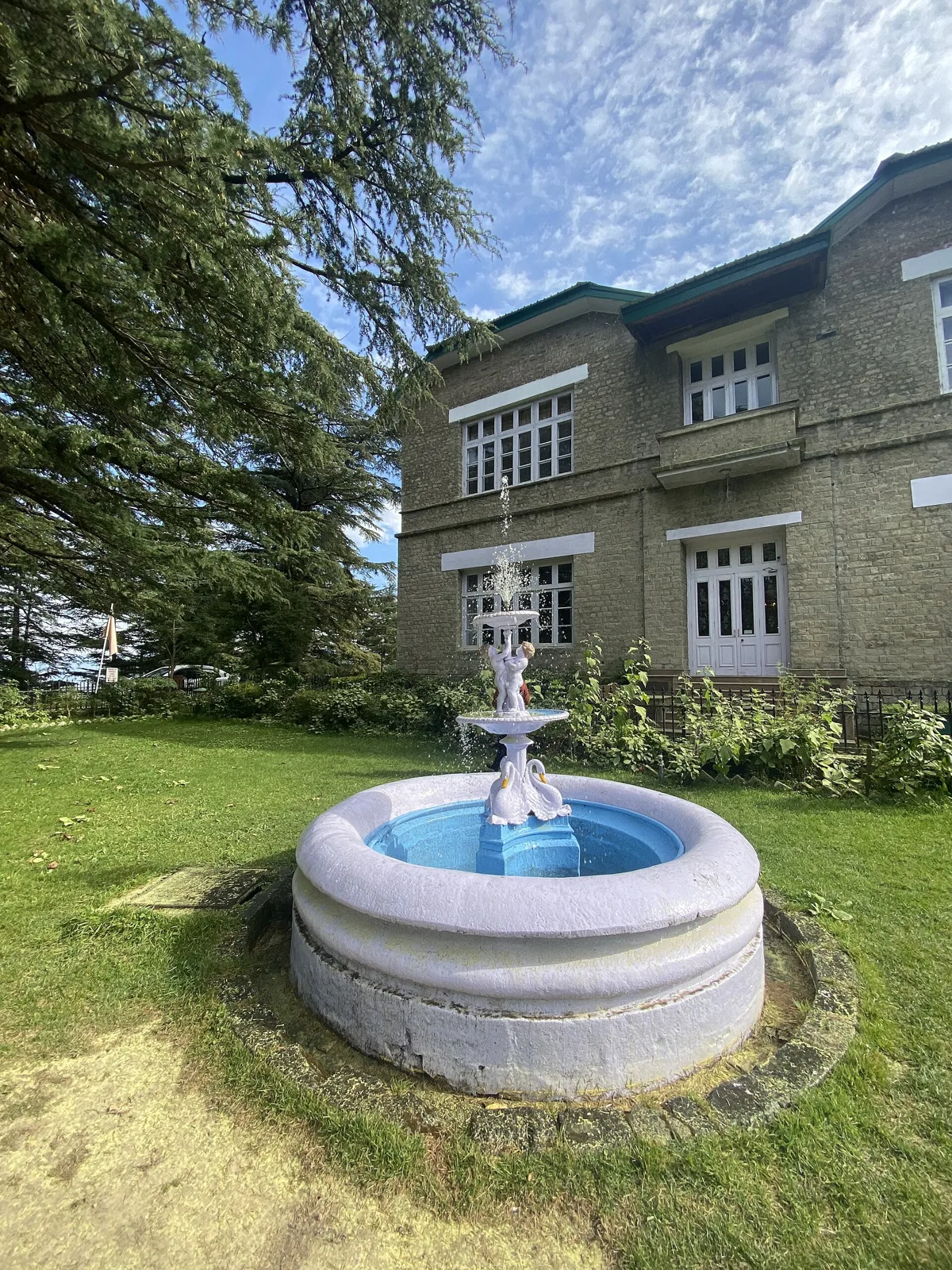
Chail’s modern history is closely associated with the rulers of Patiala during the British Raj. Maharaja Bhupinder Singh is commonly credited with developing it as a retreat after relations with the British authorities made Shimla less accessible to him. The Chail Palace was built in 1892 as a summer residence, amid forested hills above the surrounding valleys. Patiala rulers also established the cricket ground, which became one of the town’s best-known landmarks. The palace was rebuilt in 1951, and its later use changed from a royal residence to a hospitality property; access to its grounds or rooms may therefore depend on current management arrangements. Chail has since developed as a small hill destination, with visitors drawn by its woodland setting, heritage sites and walking routes. The story that the “Patiala peg” originated at the Maharaja’s palace is widely repeated, though it is best treated as a popular historical anecdote rather than a firmly documented account. Chail’s growth as a visitor destination has brought accommodation and outdoor recreation alongside local village life and forest landscapes.
Origin stories & folklore
There is no single, well-documented origin legend for Chail that can be confidently presented as local fact. Across Himachal Pradesh, communities maintain traditions connected with village devtas, local deities believed by devotees to watch over settlements, fields and seasonal wellbeing. In and around Chail, such beliefs may be expressed through temple visits, processions or community observances, but practices differ between villages and families. Stories told locally can vary, and visitors should ask residents respectfully rather than assume that a regional custom applies everywhere. Treat accounts of the Patiala peg or the Maharaja’s retreat as historical anecdotes unless a source establishes otherwise; they are not origin legends for the landscape.
Use Chail as a base to understand local life: walk through the market area, visit community-run attractions and ask your host about nearby viewpoints and short excursions. Always ask before photographing people, homes or ceremonies. A comfortable itinerary is one main visit in the morning, a local meal at midday and a short nearby stop before an afternoon return. Use the district list on this site to find other places in Shimla, but check the actual road route and its condition before combining stops. If a festival or fair is on, local roads and stays can be busy — and the experience can be unforgettable. Leave no litter: many sites are protected by the communities around them.
Suggested itineraries
Half day: Allow about 3–4 hours for a walk through the market area, a visit to the Chail Palace or cricket ground if access is permitted, and a nearby viewpoint suggested by your host. Full day: Allow about 6–8 hours for a morning heritage stop, a local meal, an afternoon forest walk or approved sanctuary visit, and a relaxed return through town; check road and site access before combining stops. Gentler option: Choose one accessible town-side stop, take a short level walk where the surface allows, and arrange a taxi between locations rather than attempting a longer trail.
Everyday culture in Chail reflects the hill communities of the Shimla–Solan region. Hindi is widely used, alongside local Pahari speech varieties; language use differs between households and visitors may also hear other languages. Hindu temple observances and village devta customs are part of community life, with local practices varying by settlement. Folk music, dance and traditional clothing may be seen at fairs or family celebrations, rather than as scheduled performances for visitors. Seasonal food and hospitality are important parts of a stay, and local residents often share knowledge of nearby walks and viewpoints. Ask before photographing people, homes, ceremonies or religious activity, and follow guidance at places of worship.
Local communities
Chail is home to local families and workers whose livelihoods include farming, orchard work, shopkeeping, transport, hospitality and other services. Residents of nearby villages maintain their own community and temple traditions, while forest and outdoor tourism supports guides, camp operators and accommodation providers. The town also receives seasonal visitors and workers, so its population and activity can vary through the year. Do not assume that every resident follows the same customs or speaks the same language. Support locally run businesses where possible, respect private land and homes, and ask before entering village spaces or photographing residents.
Festivals & events
Festival dates and observances vary between villages, and visitors should confirm local arrangements rather than expect a fixed public programme. Hindu festivals such as Diwali, Dussehra and Shivratri are observed in the wider region, while village fairs and devta gatherings may follow local religious and agricultural calendars. These events can bring visitors from neighbouring settlements and make roads, accommodation and services busier than usual. Some ceremonies are community or religious occasions rather than performances for tourists; follow local instructions and ask before taking photographs. For current event information, enquire with hosts or local tourism and administration offices.
Local food in Himachal Pradesh includes siddu (steamed stuffed bread), madra, dham (the traditional festive meal), chha gosht, trout from mountain streams, babru and fresh apples and apricots in season. Ask what is fresh that day; many small eateries cook a limited daily menu. Vegetarian travellers eat very well across this region, and most towns also have simple non-vegetarian dhabas. Remote sites may have no restaurant at all. Carry water and snacks, eat a proper breakfast before long drives, and ask your accommodation for a packed lunch if you are heading out early. Try a home-cooked or dhaba meal when you can — it is often the best food on the route. Choose busy, clean places and carry your packaging back to town.
Shopping & local experiences
The market area has everyday shops and places to sample local food, though it is a small hill-town market rather than a large craft centre. Look for Himachali woollens, woven goods, locally made preserves or other regional products where available, and ask about their origin instead of assuming an item is locally produced. Seasonal fruit and simple local meals can be part of the visit. Choose locally run sellers when possible, carry reusable bags and avoid buying products made from protected plants or wildlife.
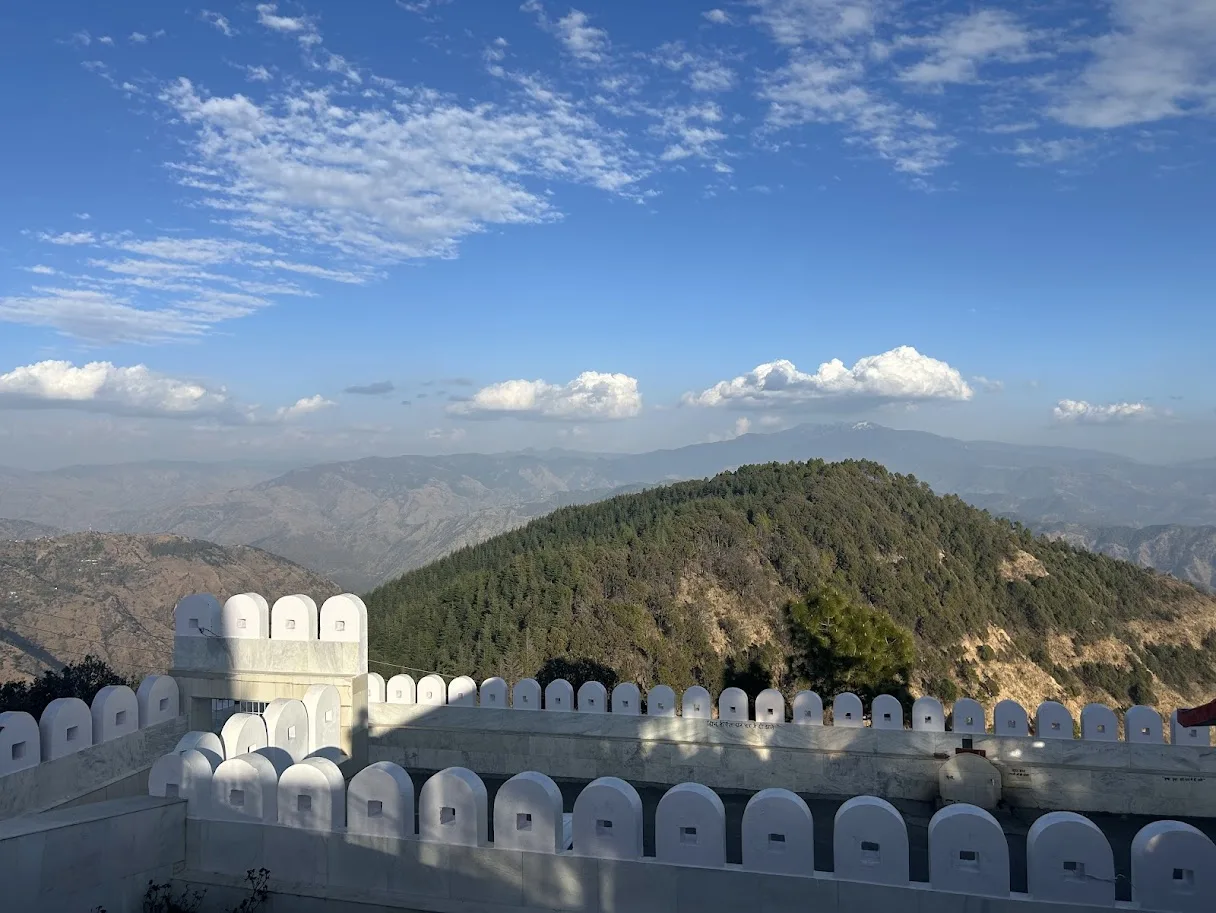
Chail sits among forested hills, with cedar and other conifers forming a prominent part of the landscape. The surrounding slopes and valleys offer views across the lower Himalayas, and walking routes pass through woodland and open patches. Oak and other broadleaf trees occur in the wider region. The nearby Chail Wildlife Sanctuary is associated with forest habitat and wildlife, but access conditions and routes should be checked locally. Mammals and forest birds inhabit the area; sightings are never guaranteed, and quiet observation from a respectful distance is best. Conditions change with altitude and season: monsoon rain can make paths slippery and roads vulnerable to disruption, while winter brings colder weather and possible snow. Carry back all litter and avoid disturbing wildlife or vegetation.
March to June and October to November for most hill towns; May to October for Lahaul-Spiti and high passes
The nearest principal railway station by straight-line distance is Solan, roughly 10 km away. The nearest operating airport by straight-line distance is Shimla Airport (Jubbarhatti), roughly 20 km away. These figures are calculated from map coordinates — hill roads wind a lot, so actual road distance and travel time are usually much longer. Chandigarh, Kalka and Pathankot are the main rail gateways for the hills, and the Kalka–Shimla toy train is itself a heritage journey. For the final leg, Himachal Road Transport Corporation (HRTC) buses and shared taxis link district towns; shared taxis usually leave early in the morning. A private taxi gives more flexibility for remote sites. When comparing train, bus and flight, count the complete door-to-door time: a flight saves the most time only if the onward road transfer is short, while an overnight train plus a road journey can save a hotel night. Book your return before you leave, because seats fill quickly on weekends and holidays. Current train numbers, timings, return services and fares are not listed here; check IRCTC and NTES for trains and the airline's own schedule for flights. No permit is needed for Indian visitors to most of Himachal Pradesh. Some stretches near the international border in Kinnaur and Lahaul-Spiti may have check posts, and foreign nationals should check current registration rules for border areas before travel.
Confirm onward and return timings on IRCTC / NTES, the state bus operator or your airline before travel. A dash means current timings or fares have not been verified.
Getting around
On arrival, visitors can use local taxis or arrange a vehicle through their accommodation for nearby stops. HRTC buses and shared taxis connect district towns, but local services and onward connections should be checked in advance. Shared taxis may be easier to find earlier in the day, though availability varies. Walking suits short distances in the town, but roads can be steep, narrow or without continuous footpaths. Auto-rickshaws should not be assumed to be available. Parking may be limited around popular sites, especially during busy periods; avoid blocking village roads and follow local parking directions.
Hours, tickets & permissions
Chail is a town rather than a single ticketed attraction, so access rules differ between the palace, cricket ground, sanctuary and other managed sites. Some places may require tickets, permission or compliance with site-specific photography rules; entry to private or operational properties may be restricted. Sanctuary access may also be subject to local conservation rules. There is no single set of entry conditions for all of Chail. Confirm current opening arrangements, fees, permitted activities and any identification requirements with the relevant managing authority or your host before setting out.
Facilities
Chail has accommodation, small shops and places to eat, with facilities varying by location and season. Toilets, drinking water and parking may be available at some managed attractions or businesses, but should not be assumed at viewpoints and trailheads. Carry water and any personal supplies needed for a walk. ATMs and broader services may be limited compared with larger towns, so check locally and plan ahead. Guides or local help may be arranged through accommodation providers, but availability is not guaranteed. Confirm meal options, site facilities and access arrangements before travelling to a specific stop.
Accessibility
Chail’s hilly setting means steep gradients, uneven ground and road edges are common. Walking distances between attractions can be longer than they appear, and some paths may be muddy or slippery after rain. Shade varies along roads and trails. The town and outdoor sites should not be assumed to be wheelchair- or stroller-accessible; steps, rough surfaces and the absence of continuous footpaths may make independent access difficult. Older visitors or anyone with limited mobility may find it easier to use a vehicle between stops and choose a single site after checking its entrance and surfaces. Ask the site manager or host about current access before visiting.
No permit is needed for Indian visitors to most of Himachal Pradesh. Some stretches near the international border in Kinnaur and Lahaul-Spiti may have check posts, and foreign nationals should check current registration rules for border areas before travel. Carry a photo ID at all times and save the emergency number 112 and your accommodation's contact offline. Heat in summer and dense fog in winter are the main weather risks; carry water and allow extra travel time on foggy December–January mornings. Respect community rules, private property and posted instructions. Check official advisories for the region before travel, and follow local guidance if access changes.
Photography
Soft morning or late-afternoon light can bring out the forested slopes and valley views; viewpoints suggested locally may offer clearer sightlines than roadside stops. Photography rules differ between the palace, cricket ground, sanctuary and religious sites, so check before taking pictures. Do not photograph people, homes or ceremonies without permission, and follow any restrictions on worship or private property. Drone use can be restricted by aviation rules, local authorities or site managers; do not fly without confirming current permissions. Avoid disturbing wildlife for a photograph and keep equipment clear of roads and walking paths.
Choose a stay by the full journey to Chail, not just the district name. Main towns in Shimla usually offer hotels, state tourism lodges and guesthouses with better transport, meals and medical access, while village homestays offer a closer connection to local life. In the plains, check fans or air-conditioning in summer and heating in the December–January cold wave. Book in advance for weekends, festival dates and the peak season (March to June and October to November for most hill towns; May to October for Lahaul-Spiti and high passes). Confirm the exact location, meals included, check-in time and cancellation terms in writing. Many homestays accept payment on arrival; avoid sending money to unverified contacts. Mobile network and digital payments can be unreliable in remote areas, so carry some cash.
Kufri and Shimla are nearby hill destinations that can be considered for a separate outing, subject to road conditions and travel time. Solan and Kandaghat are other towns in the wider region. Sadhupul is a local riverside outing often visited from the Chail area; check conditions and access before planning a stop. Junga is another place mentioned in connection with regional trekking routes. These locations are not all close enough for a comfortable same-day circuit, and hill roads can make journeys slow. Check the actual route and current road conditions before combining destinations.
For couples, Chail rewards a slow pace: arrive early for soft light and fewer crowds, share a local meal and keep the evening free. Public displays of affection can be frowned upon in conservative communities and at religious sites, so be discreet. A homestay or a small heritage hotel can make the trip memorable — confirm privacy, hot water and transport back. Keep a buffer in your itinerary, because weather and traffic can delay plans in Himachal Pradesh.
Q: How much time should I allow for Chail? A: A half-day can cover one or two main stops; allow a full day if you want to add a walk or nearby excursion. Q: When is a good season to visit? A: March to June and October to November are generally comfortable periods for many hill visits. Monsoon rain can affect roads and trails, so check conditions. Q: Is there an entry fee for Chail? A: Chail itself is a town, not one ticketed site. Individual attractions may have separate entry rules or fees; confirm with their managers. Q: Is Chail suitable for children and elderly visitors? A: It can be, with suitable transport and a modest itinerary, but slopes and uneven paths may be challenging. Check access at each stop. Q: Can I stay nearby? A: Chail has accommodation options, and nearby towns offer alternatives. Availability and access vary by season, so confirm arrangements before travelling.
Be the first to share photos, stories, advice or a helpful contact for Chail.
Loading…