
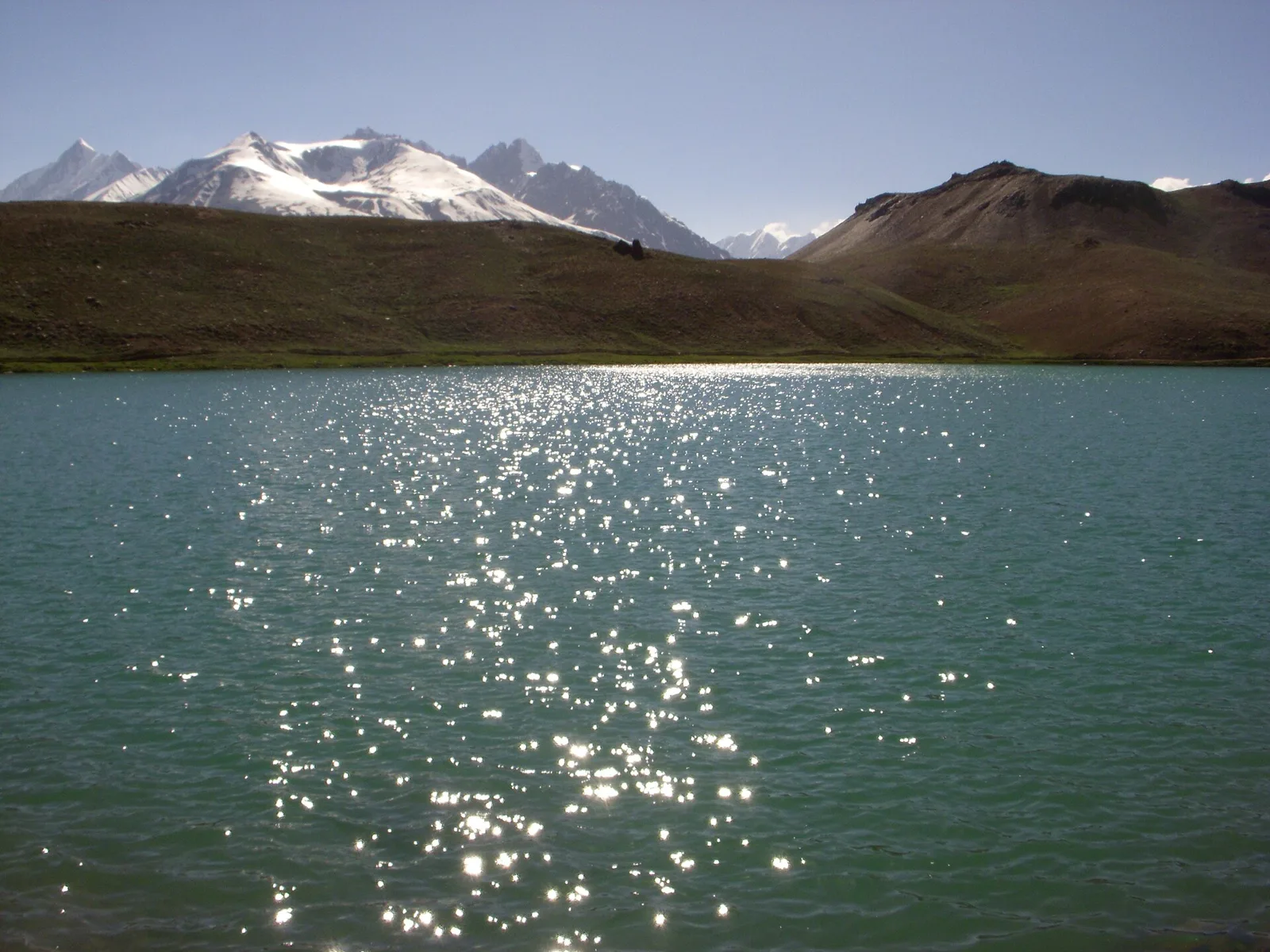
Chandra Taal
Chandra Taal, meaning Moon Lake, lies in Himachal Pradesh’s Lahaul and Spiti district, within the Chandra River catchment. Visitors come for its summer flowers and wildlife, and for high-altitude trekking.
Key facts · verified by Ghumoopedia editors
- Type of place
- Natural attraction
- Best time to visit
- March to June and October to November for most hill towns; May to October for Lahaul-Spiti and high passes
- Nearest railway station
- Joginder Nagar (narrow gauge) · about 95 km (straight line)
- Nearest airport
- Kullu–Manali area heliports (seasonal) · about 60 km (straight line)
- Verified
- 21 Nov 2026
Plan a trip from Chandra Taal — a day-by-day route through places nearby.
The lake occupies the upper Chandra valley, near the Chandra River’s source. Though commonly associated with Spiti, it lies in the river’s watershed on the Lahaul side. Kunzum La divides the Lahaul and Spiti valleys. The landscape is rugged and inhospitable, but a sheltered pocket near the water supports flowers and wildlife in summer. The lake is enclosed by Chandratal Wildlife Sanctuary, where this natural life is present during the warmer season. Tourists and high-altitude trekkers visit the lake, making it a destination for sightseeing and walks in the surrounding landscape. Himachal's hill towns blend Hindu temple traditions, Tibetan Buddhist monasteries and village devta (local deity) customs, with fairs and festivals tied to the farming calendar. Altitude decides the weather: the Shivalik foothills are mild, Shimla and Manali are cool with winter snow, and Lahaul-Spiti is a cold desert closed by snow for months. The July–September monsoon brings landslides and road closures in the hills. The usual best time to visit is March to June and October to November for most hill towns; May to October for Lahaul-Spiti and high passes. Timings, fees and access arrangements must be confirmed locally. For official information, see Himachal Pradesh Tourism at https://himachaltourism.gov.in.
Why it matters
Chandra Taal, meaning “Moon Lake,” is a high-altitude lake in the upper Chandra valley of Himachal Pradesh’s Lahaul and Spiti district. It is valued regionally for its distinctive setting near the source of the Chandra River and locally as a seasonal focus for trekking and nature-based travel. Although often associated with Spiti in travel accounts, the lake lies in the Chandra River watershed of Lahaul; Kunzum La separates the Lahaul and Spiti valleys. The lake and its surroundings are within Chandra Taal Wildlife Sanctuary. The Ramsar Convention lists Chandra Taal as a Wetland of International Importance, recognising its wetland and ecological value. Visitors should follow sanctuary rules and protect its fragile high-altitude environment.
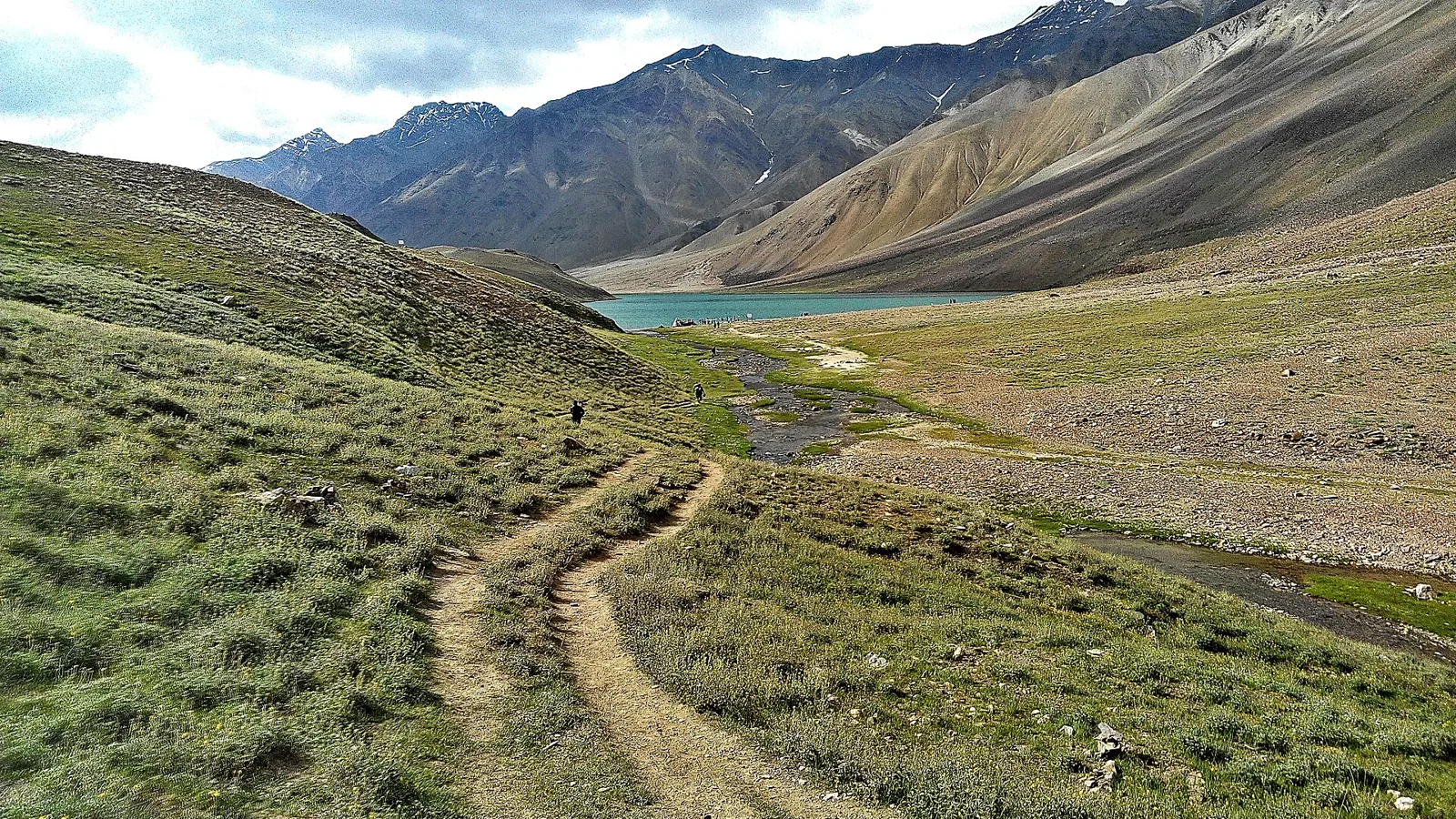
Chandra Taal is a natural lake, not a built monument, and there is no well-established record of a construction date, founding patron or major restoration. Its basin formed through natural geological and glacial processes in the high Himalaya. The name means “Moon Lake,” commonly explained by the lake’s crescent-like outline; the name does not by itself establish when people first began using it. For generations, the wider Lahaul region has been shaped by seasonal movement, herding, trade and connections across high passes, though detailed historical accounts specific to the lake are limited. Kunzum La links the approaches between Lahaul and Spiti when conditions allow, but snow and weather can close high routes for extended periods. In more recent times, trekking and road travel have brought more seasonal visitors to the lake. Chandra Taal is included in a wildlife sanctuary and is recognised under the Ramsar Convention as a Wetland of International Importance. These designations reflect its natural values rather than a human-built heritage history. Access arrangements and conservation measures may change, so visitors should check current guidance from local authorities and respect any restrictions on camping, vehicles and walking near the shore.
Origin stories & folklore
According to a widely repeated regional and visitor tradition, the Pandava Yudhishthira was carried towards heaven in Indra’s chariot from a place near Chandra Taal. This is a religious legend, not a verified account of a historical event, and versions of the story vary. The lake’s name is usually translated as “Moon Lake,” and its curved outline has encouraged associations with the moon. Such stories add a cultural layer to the landscape, but they should not be treated as evidence about the lake’s geological origin. Visitors can appreciate the traditions respectfully without disturbing the shoreline or presenting one version as universal.
Spend unhurried time at Chandra Taal: walk the marked paths, use official viewpoints and ask locally whether a guide, entry ticket or permit is needed. Admire the water from safe points rather than climbing wet rocks or entering unknown currents. Wildlife sightings are never guaranteed — patience and quiet improve your chances. A comfortable itinerary is one main visit in the morning, a local meal at midday and a short nearby stop before an afternoon return. Use the district list on this site to find other places in Lahaul and Spiti, but check the actual road route and its condition before combining stops. If a festival or fair is on, local roads and stays can be busy — and the experience can be unforgettable. Leave no litter: many sites are protected by the communities around them.
Suggested itineraries
Half day: From your base, travel to the permitted lake access point; spend about 1–2 hours walking gently to viewpoints and enjoying the shore; allow time for the return drive. Full day: Set out early from a suitable base; visit Chandra Taal and its viewpoints for about 2–3 hours; take a packed or locally arranged meal; make a short stop at Batal or another safe point on your confirmed route; return before conditions deteriorate. Gentler option: Avoid a full shoreline walk; view the lake from the nearest safe, authorised viewpoint, rest often and keep the vehicle close to the permitted access area.
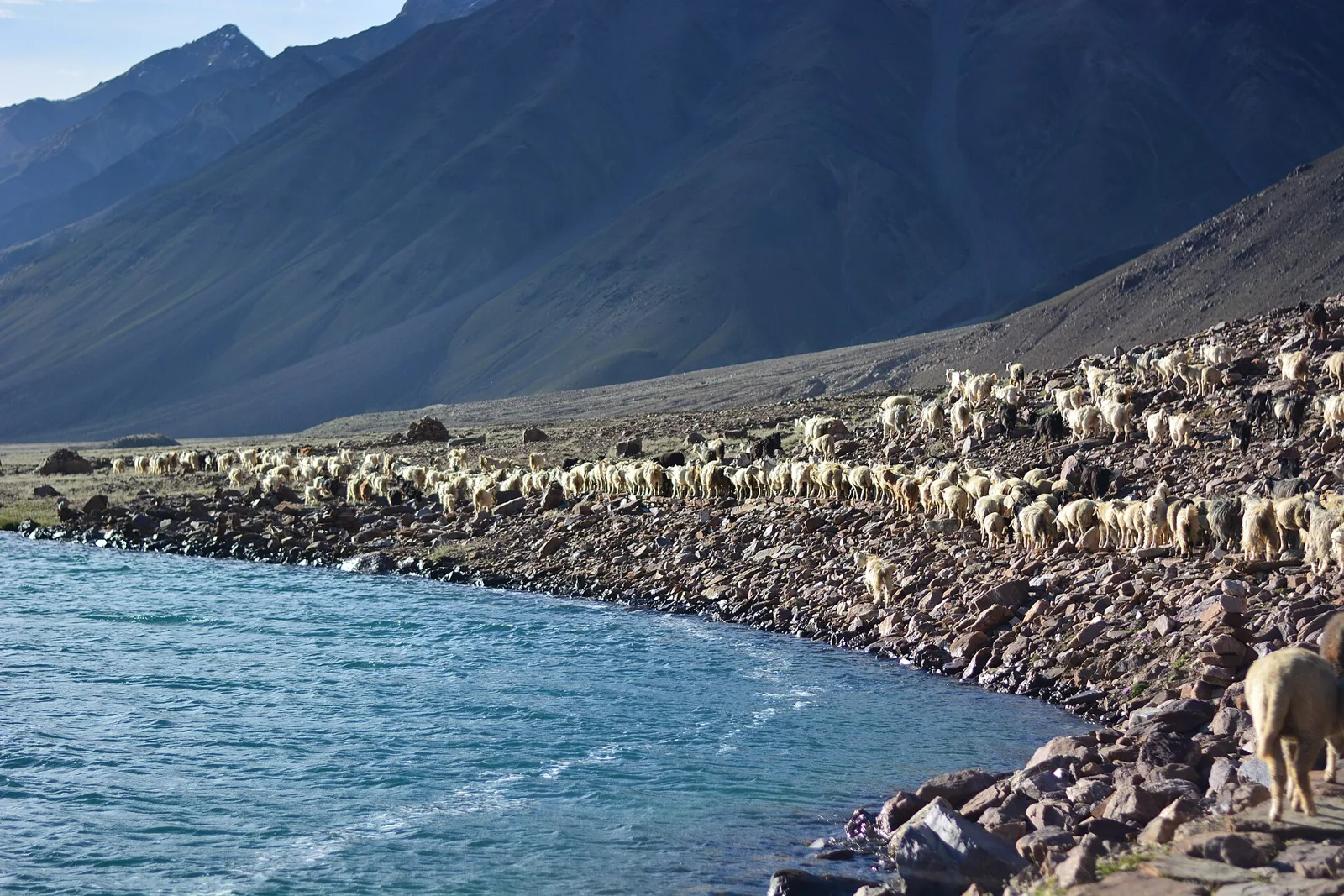
Chandra Taal is remote and has no permanent settlement on its shore, so cultural life is more visible in nearby villages and across Lahaul and Spiti. The wider region brings together Hindu temple traditions, Tibetan Buddhist practice and village customs centred on local deities. Languages and speech varieties differ between communities; Hindi is also used in travel and public services. Seasonal gatherings, music, dance and local dress are most readily encountered at village events rather than at the lake itself. Visitors should ask before photographing people, homes or religious activity, and follow local guidance at monasteries and shrines. The high pass and weather shape travel and daily routines.
Local communities
There is no permanent community at Chandra Taal itself. People connected with the wider area include residents of Lahaul and Spiti villages, seasonal pastoralists, tourism workers and travellers. Livelihoods in the district include farming and animal husbandry, alongside public services, transport and seasonal visitor services. Some accommodation and food provision near the lake operates only during the accessible season and may be run by local or regional businesses. The lake is part of a protected landscape, so visitors should respect local rules, avoid leaving waste and not assume that land, water or camping areas are unrestricted.
Festivals & events
No major annual festival is known to be held at Chandra Taal itself. In villages across Lahaul and Spiti, Buddhist Losar celebrations generally fall in winter, while Hindu and local-deity fairs and seasonal gatherings vary by community and often relate to religious observances or the agricultural year. These events are best experienced in their host villages, with local guidance on etiquette and photography. Festival travel can make accommodation and road transport busier in the relevant settlements. Winter conditions limit access to the lake, so a festival visit and a lake visit may not be practical to combine; check routes and local arrangements before planning.
Local food in Himachal Pradesh includes siddu (steamed stuffed bread), madra, dham (the traditional festive meal), chha gosht, trout from mountain streams, babru and fresh apples and apricots in season. Ask what is fresh that day; many small eateries cook a limited daily menu. Vegetarian travellers eat very well across this region, and most towns also have simple non-vegetarian dhabas. Remote sites may have no restaurant at all. Carry water and snacks, eat a proper breakfast before long drives, and ask your accommodation for a packed lunch if you are heading out early. Try a home-cooked or dhaba meal when you can — it is often the best food on the route. Choose busy, clean places and carry your packaging back to town.
Shopping & local experiences
There is no dependable shopping area at Chandra Taal itself. In larger settlements such as Kaza, visitors may find locally made woollens, knitted items, crafts and practical supplies, though selection varies. Buy respectfully from local makers and ask about the origin of items rather than assuming every souvenir is locally produced. Regional meals and simple local food are worth seeking out in villages or seasonal food stops when available. Carry essentials from a larger town, avoid collecting plants, stones or other natural material, and take packaging and rubbish away from the lake.
Chandra Taal is a high-altitude lake set amid the stark, rocky terrain of the upper Chandra valley. The surrounding landscape is largely cold-desert and alpine, with snow and ice shaping the seasonally accessible slopes and passes. In summer, sheltered ground around the lake can support short-lived wildflowers and other hardy vegetation. The lake and surrounding Chandra Taal Wildlife Sanctuary provide habitat for wildlife adapted to the high Himalaya, but animals and birds are not reliably seen on a visit. Keep noise low, stay on permitted paths and do not feed or approach wildlife. The lake is near the source of the Chandra River, and its shores and water are vulnerable to disturbance and litter. Conditions can change quickly with altitude and weather.
March to June and October to November for most hill towns; May to October for Lahaul-Spiti and high passes
The nearest principal railway station by straight-line distance is Joginder Nagar (narrow gauge), roughly 95 km away. The nearest operating airport by straight-line distance is Kullu–Manali area heliports (seasonal), roughly 60 km away. These figures are calculated from map coordinates — hill roads wind a lot, so actual road distance and travel time are usually much longer. Chandigarh, Kalka and Pathankot are the main rail gateways for the hills, and the Kalka–Shimla toy train is itself a heritage journey. For the final leg, Himachal Road Transport Corporation (HRTC) buses and shared taxis link district towns; shared taxis usually leave early in the morning. A private taxi gives more flexibility for remote sites. When comparing train, bus and flight, count the complete door-to-door time: a flight saves the most time only if the onward road transfer is short, while an overnight train plus a road journey can save a hotel night. Book your return before you leave, because seats fill quickly on weekends and holidays. Current train numbers, timings, return services and fares are not listed here; check IRCTC and NTES for trains and the airline's own schedule for flights. No permit is needed for Indian visitors to most of Himachal Pradesh. Some stretches near the international border in Kinnaur and Lahaul-Spiti may have check posts, and foreign nationals should check current registration rules for border areas before travel.
Confirm onward and return timings on IRCTC / NTES, the state bus operator or your airline before travel. A dash means current timings or fares have not been verified.
Getting around
Chandra Taal is a remote destination, and ordinary town transport such as autos or local buses should not be assumed to reach the lake. In the accessible season, visitors commonly arrange a private vehicle or a shared taxi from a district town, subject to road conditions and local availability. The final approach may involve a walk from the permitted parking or drop-off point; follow signs and local instructions rather than driving onto fragile ground. There are no boats for getting around the lake. For the return journey, arrange transport in advance, as services can be limited and weather may disrupt access.
Hours, tickets & permissions
Access is seasonal and depends on snow, road conditions, weather and sanctuary rules; there is no reliable year-round visitor schedule to assume. Entry arrangements may include restrictions, permits or other rules set by the relevant local or forest authority, and these can change. Do not assume that camping, vehicle access to the shore, swimming or off-trail walking is allowed. Carry identification if requested by officials, and follow posted instructions. Confirm current access, entry requirements, hours and fees with the managing authority or locally before travelling.
Facilities
Facilities at the lake are limited and vary by season. There may be seasonal camps or food options in the wider area, but visitors should not count on permanent shops, toilets or reliable drinking water at the shore. Carry water, food, warm layers and any personal supplies you need, and take all rubbish back with you. Parking and drop-off arrangements can depend on current restrictions. Guides or drivers familiar with the route may be arranged locally, but availability is not guaranteed. There is no ATM at the lake; organise cash and essentials in a larger town before setting out.
Accessibility
The lake is at high altitude in a remote, rugged area, and reaching it involves a long mountain-road journey followed by walking from the permitted access point. Paths may be uneven, rocky or exposed, with little shade and changing weather. The full lakeside walk may not suit everyone. Wheelchair and stroller access should not be expected, and there are no confirmed ramps or other step-free facilities. Older visitors and people with limited mobility may prefer a short visit to the nearest safe viewpoint, with a companion and frequent rest stops. Allow time to acclimatise, and seek medical advice if altitude is a concern.
No permit is needed for Indian visitors to most of Himachal Pradesh. Some stretches near the international border in Kinnaur and Lahaul-Spiti may have check posts, and foreign nationals should check current registration rules for border areas before travel. Carry a photo ID at all times and save the emergency number 112 and your accommodation's contact offline. Altitude sickness is possible above about 2,500 m: ascend gradually, rest on arrival, drink water and turn back if you develop a severe headache, breathlessness or confusion. Hill roads are prone to landslides in the monsoon — avoid night driving and heavy-rain travel. Stay on marked paths, keep away from cliff edges and fast water, and never approach wild animals. Check official advisories for the region before travel, and follow local guidance if access changes.
Photography
The lake and surrounding mountains can be striking in clear morning light, while weather and cloud can change quickly. Use authorised viewpoints and stable ground, and avoid climbing wet or loose rocks for a better angle. Photography is generally suitable for landscapes, but follow any sanctuary restrictions and ask permission before photographing people, homes or religious activity. Drone use may be restricted by wildlife-protection, security or local rules; do not fly without confirming permission from the relevant authority. Keep equipment and tripods away from fragile vegetation and the water’s edge.
Choose a stay by the full journey to Chandra Taal, not just the district name. Main towns in Lahaul and Spiti usually offer hotels, state tourism lodges and guesthouses with better transport, meals and medical access, while village homestays offer a closer connection to local life. At altitude, check heating, hot water and power backup, and expect cold nights for much of the year. Book in advance for weekends, festival dates and the peak season (March to June and October to November for most hill towns; May to October for Lahaul-Spiti and high passes). Confirm the exact location, meals included, check-in time and cancellation terms in writing. Many homestays accept payment on arrival; avoid sending money to unverified contacts. Mobile network and digital payments can be unreliable in remote areas, so carry some cash.
Kunzum La is the principal high pass separating the Lahaul and Spiti valleys and is commonly part of the wider route when open. Batal is a small settlement and road stop in the broader approach area. Losar, Kaza and the monasteries and villages around them are destinations elsewhere in Spiti; Key Monastery, Dhankar Monastery and Tabo Monastery are established cultural sites in the district. They are not quick lakeside stops, and combining them with Chandra Taal depends on the route, road condition and available time. Check current access before making a multi-stop plan, especially during snow or monsoon-related disruption.
For couples, Chandra Taal rewards a slow pace: arrive early for soft light and fewer crowds, share a local meal and keep the evening free. Public displays of affection can be frowned upon in conservative communities and at religious sites, so be discreet. A homestay or a small heritage hotel can make the trip memorable — confirm privacy, hot water and transport back. Keep a buffer in your itinerary, because weather and traffic can delay plans in Himachal Pradesh.
Q: How much time should I allow for Chandra Taal? A: Allow a substantial part of a day for the road journey, a relaxed visit and the return. Actual travel time depends on the route and conditions. Q: When is the best season to visit? A: The usual access season for Lahaul and Spiti is May to October, but snow, weather and road status determine whether the lake is reachable. Q: Is entry permitted, and do I need a ticket or permit? A: Rules can change because the lake is in a protected area. Confirm current access, permits and any fees with local authorities before travelling. Q: Is the visit suitable for children and elderly visitors? A: It may suit visitors who can manage high altitude and uneven ground. Choose a short viewpoint visit, take rests and avoid the full walk if mobility is limited. Q: Can I stay near the lake? A: Seasonal accommodation may be available in the wider area, but it is not guaranteed. Check current local options and consider arranging a base in a nearby settlement.
Be the first to share photos, stories, advice or a helpful contact for Chandra Taal.
Loading…