
District · Himachal Pradesh
Lahaul and Spiti
Lahaul and Spiti offers a view of two contrasting Himalayan regions within Himachal Pradesh: Lahaul’s river valleys and villages, and Spiti’s high, arid plateau and scattered settlements.
Lahaul and Spiti brings together two high Himalayan valleys with distinct landscapes and closely connected mountain cultures. Lahaul has river valleys, cultivated pockets and snow-covered ranges, while Spiti is a stark cold desert of bare slopes, deeply cut valleys and scattered settlements. Kyelang, also called Keylong, is the district’s administrative centre; Kaza serves as Spiti’s principal town. Buddhist monasteries at Key, Dhankar and Tabo reflect longstanding religious and artistic ties with Tibet. Tabo’s monastic history stretches back to the tenth century. Sissu and Jispa offer introductions to Lahaul’s village landscapes, while Chandra Taal lies in the upper Chandra valley. Altitude, severe winters and seasonal road access shape both everyday life and travel.
Lahaul and Spiti offers a view of two contrasting Himalayan regions within Himachal Pradesh: Lahaul’s river valleys and villages, and Spiti’s high, arid plateau and scattered settlements. Travellers come for Buddhist monasteries, high-altitude landscapes and journeys through mountain communities where access changes with the seasons. Key Monastery, Tabo Monastery and Dhankar Gompa are among the region’s best-known cultural sites; Kaza is a practical base for Spiti, while Kyelang serves Lahaul. The district also includes Kibber, Pin Valley National Park and Chandra Taal. Long distances, altitude and weather are central to the experience, so a slower itinerary is often more rewarding.
Lahaul and Spiti have long been connected to Himalayan trade and pilgrimage routes linking the Indian valleys with Tibet and adjoining regions. Their histories were shaped by local chiefs and shifting influence from neighbouring powers, including the kingdoms of Kullu, Chamba and Ladakh; control and allegiance varied over time. Tibetan Buddhist traditions became deeply rooted in Spiti, reflected in the region’s monasteries and religious art. Tabo Monastery, founded in the tenth century, is a major surviving record of this heritage. During British rule, the valleys came under colonial administration, although their remoteness and seasonal routes limited outside access. After Indian independence, Lahaul and Spiti were administered within the changing political framework of Himachal Pradesh. The district was formed in 1960, bringing the two regions together administratively. Himachal Pradesh became a state in 1971. Today, local languages, Buddhist institutions and village customs reflect both the valleys’ distinct identities and their longstanding connections across the western Himalaya.
13 destination guides
Chandra Taal
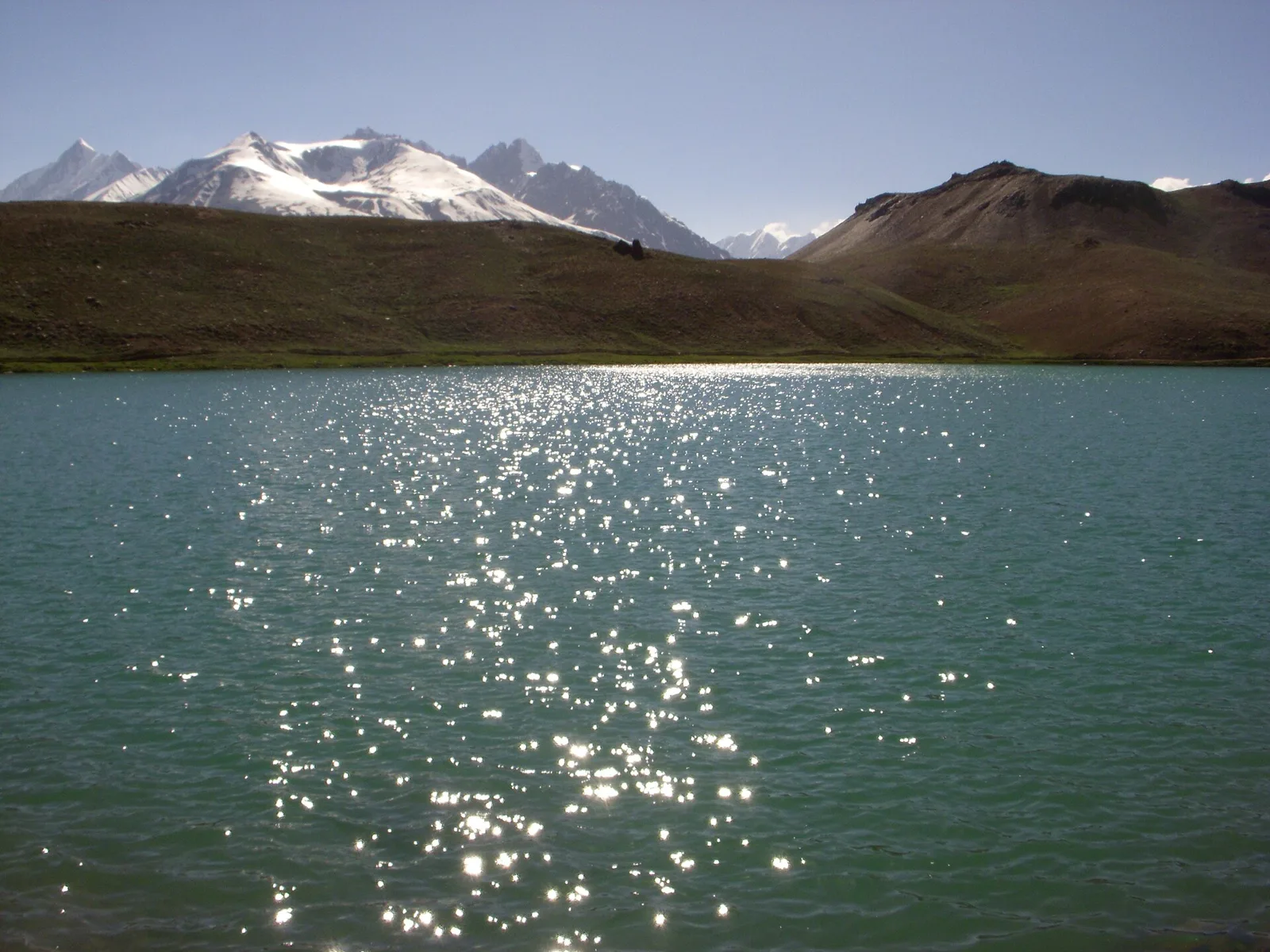
Chandra Taal, meaning Moon Lake, lies in Himachal Pradesh’s Lahaul and Spiti district, within the Chandra River catchment. Visitors come for its summer flowers and wildlife, and for high-altitude trekking.
Dhankar Gompa
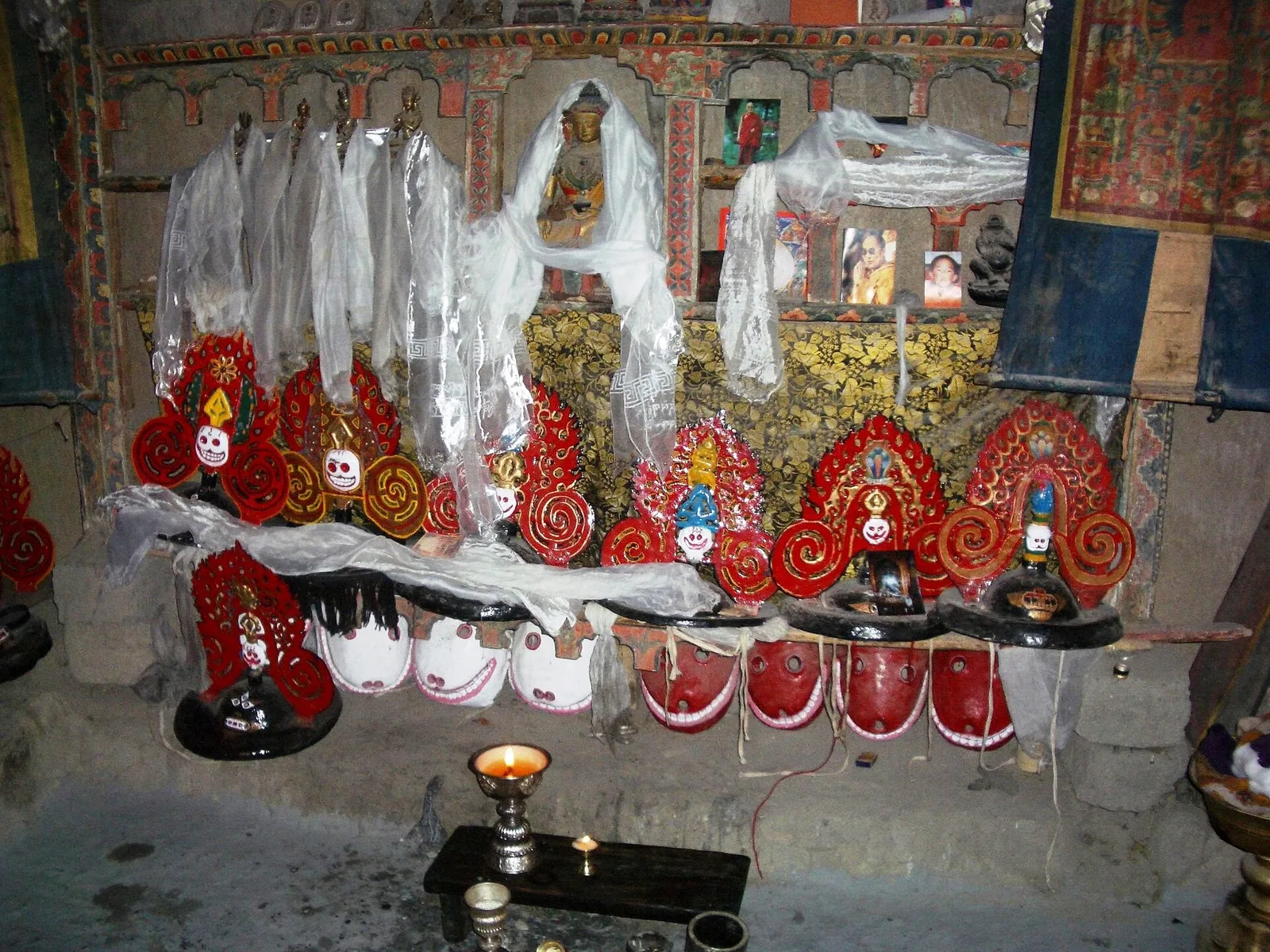
Dhankar Gompa is a Buddhist monastery and settlement in Himachal Pradesh’s Lahaul and Spiti district. Visitors come to see its fortified cliffside setting above the meeting of the Spiti and Pin rivers.
Jispa
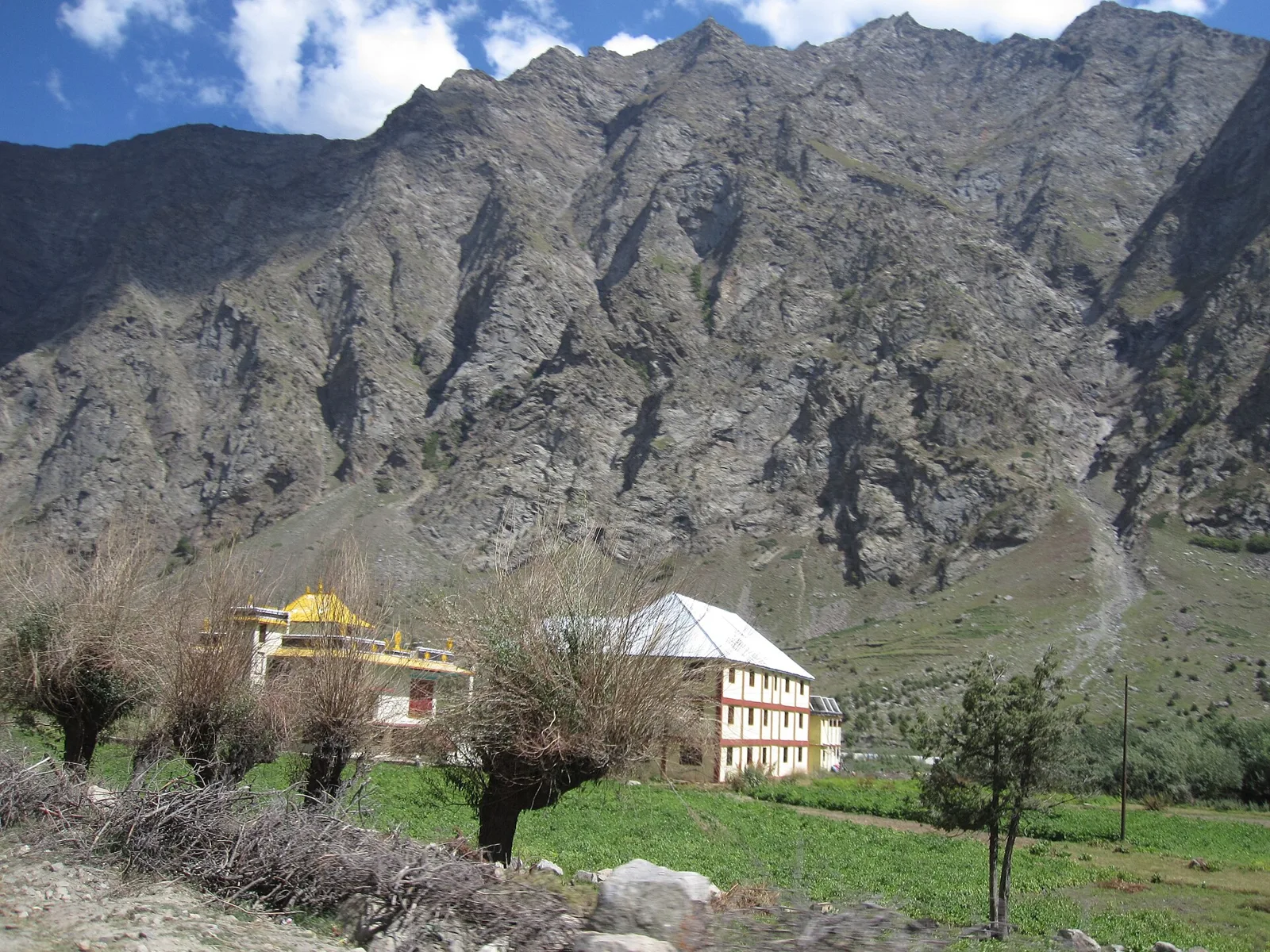
Jispa is a village in Himachal Pradesh’s Lahaul region, on the route towards Ladakh. Travellers often stay overnight while passing through Lahaul-Spiti or continuing to Leh.
Kaza
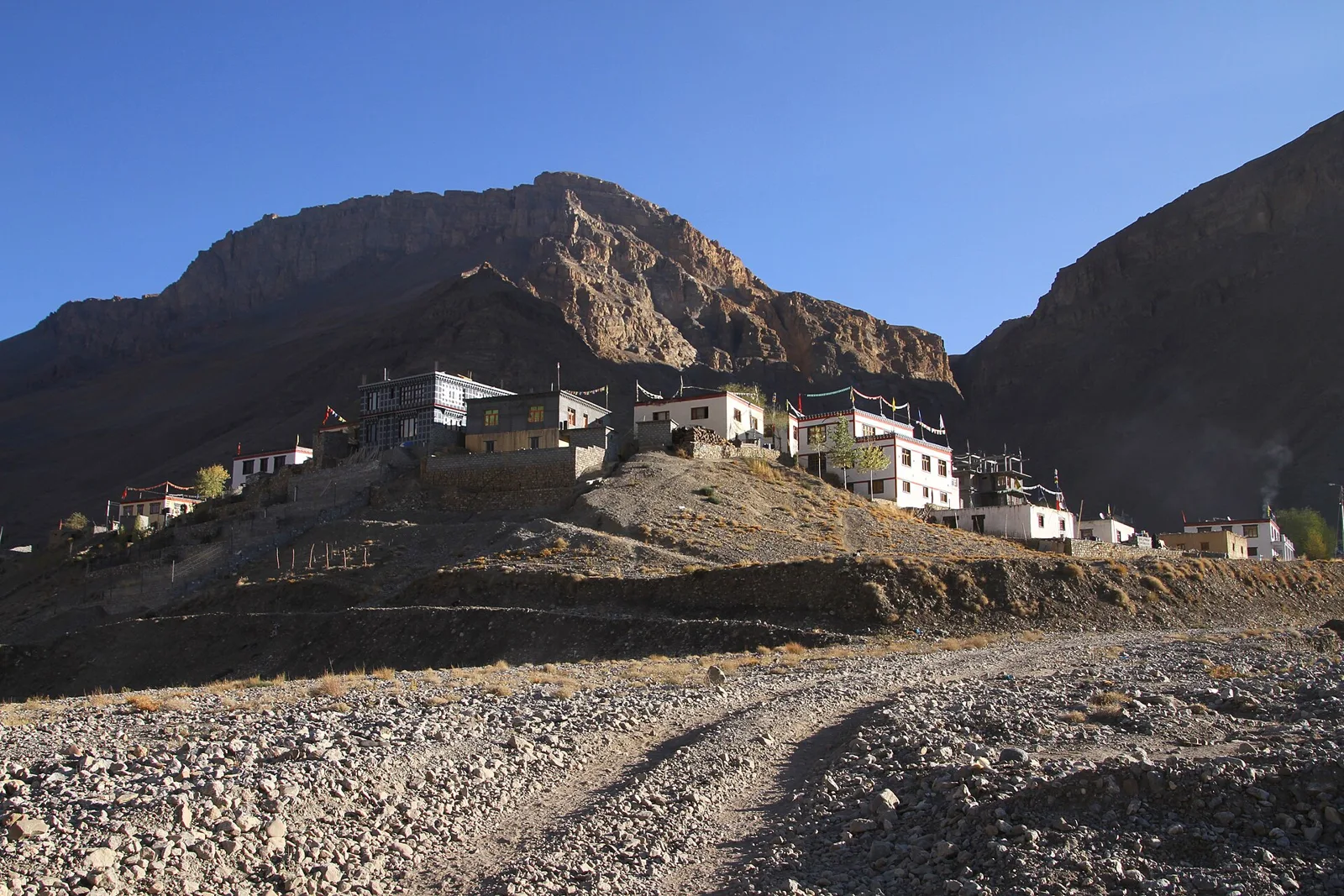
Kaza is a high-altitude town and administrative centre in Spiti, Himachal Pradesh. Travellers visit it as the valley’s main township and commercial hub, amid its cold-desert landscape and Buddhist cultural setting.
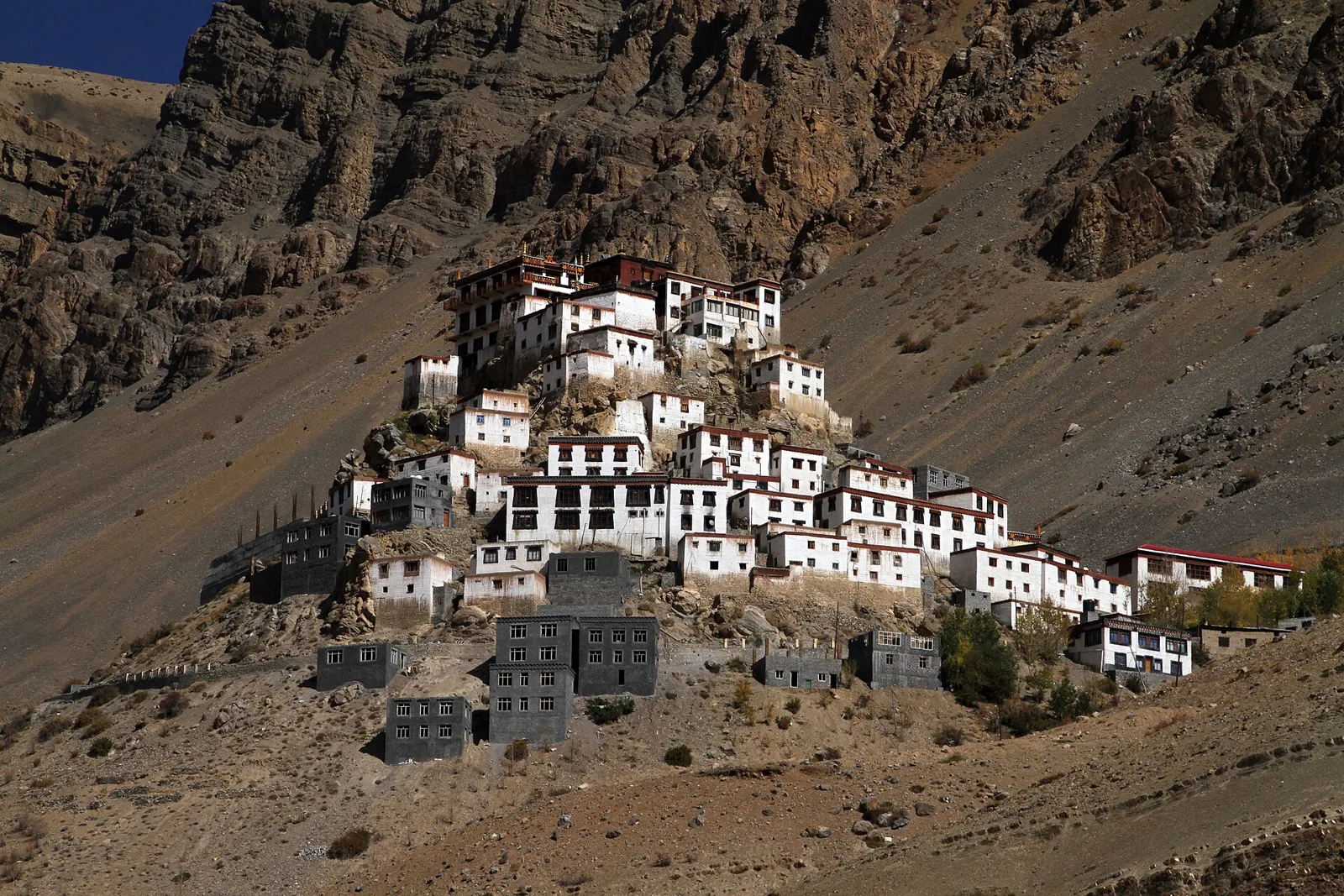
Key Monastery
Key Monastery is a Gelugpa Tibetan Buddhist institution in Spiti Valley, known as the valley’s largest monastery and a centre for lama training. Visitors come to learn about its religious role.
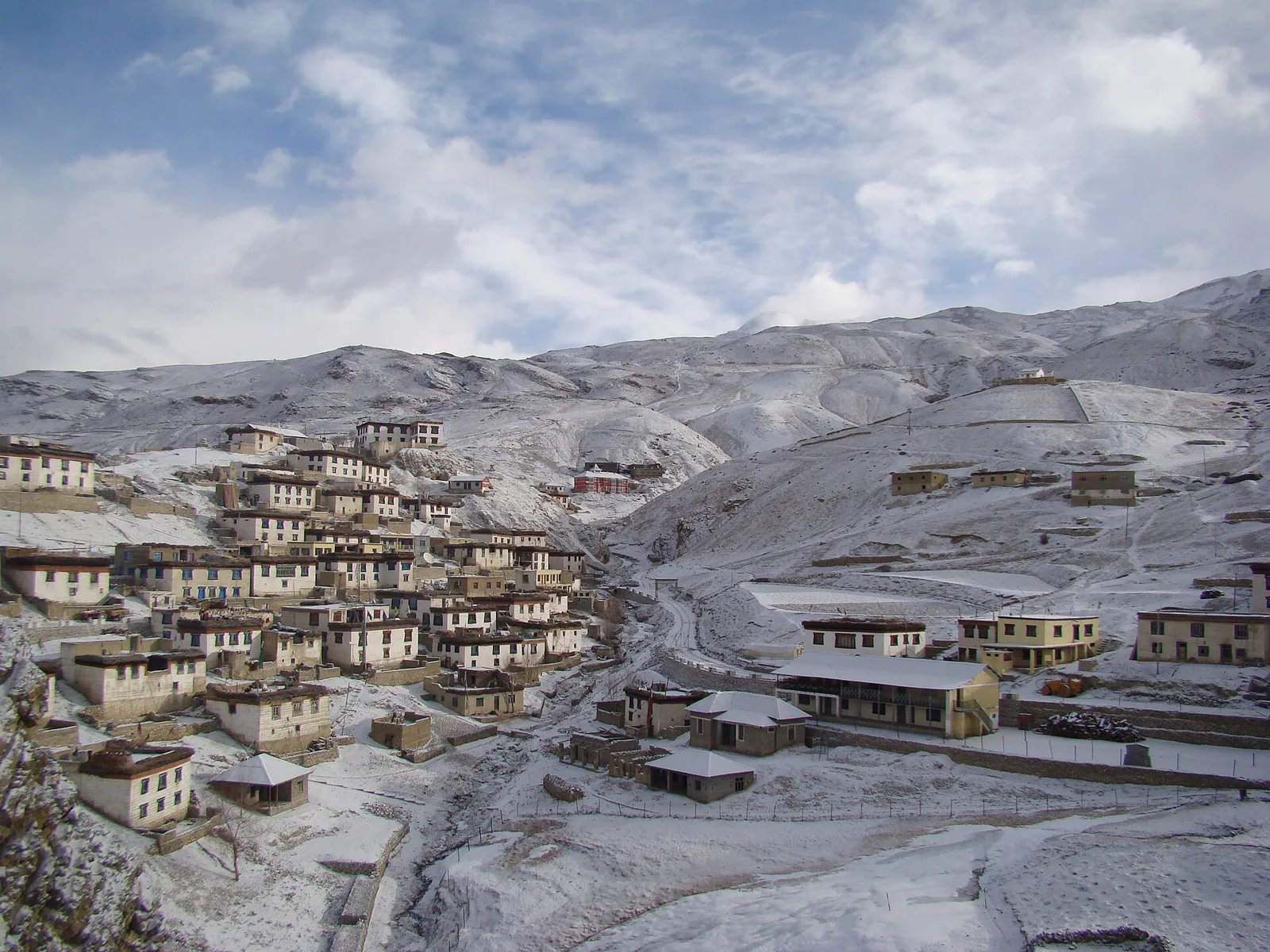
Kibber
Kibber, also called Kibber Khas or Khyipur, is a high-altitude settlement in Spiti, Himachal Pradesh. Visitors come for its monastery, wildlife sanctuary, snow-leopard habitat and trekking routes.
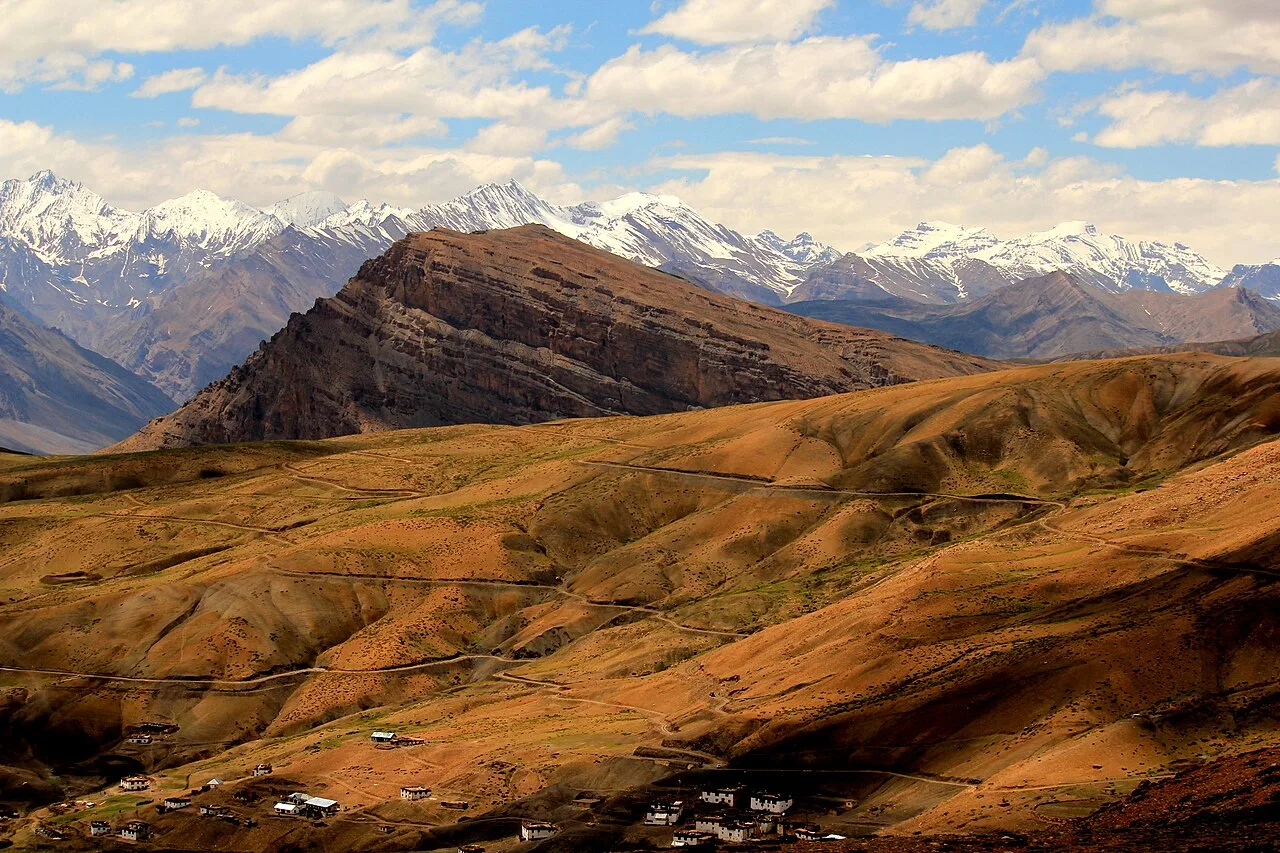
Komic
Komic is a village in Himachal Pradesh’s Lahaul and Spiti district, known for ranking among the world’s highest settlements reachable by motor vehicle. Visitors are drawn by this distinction.
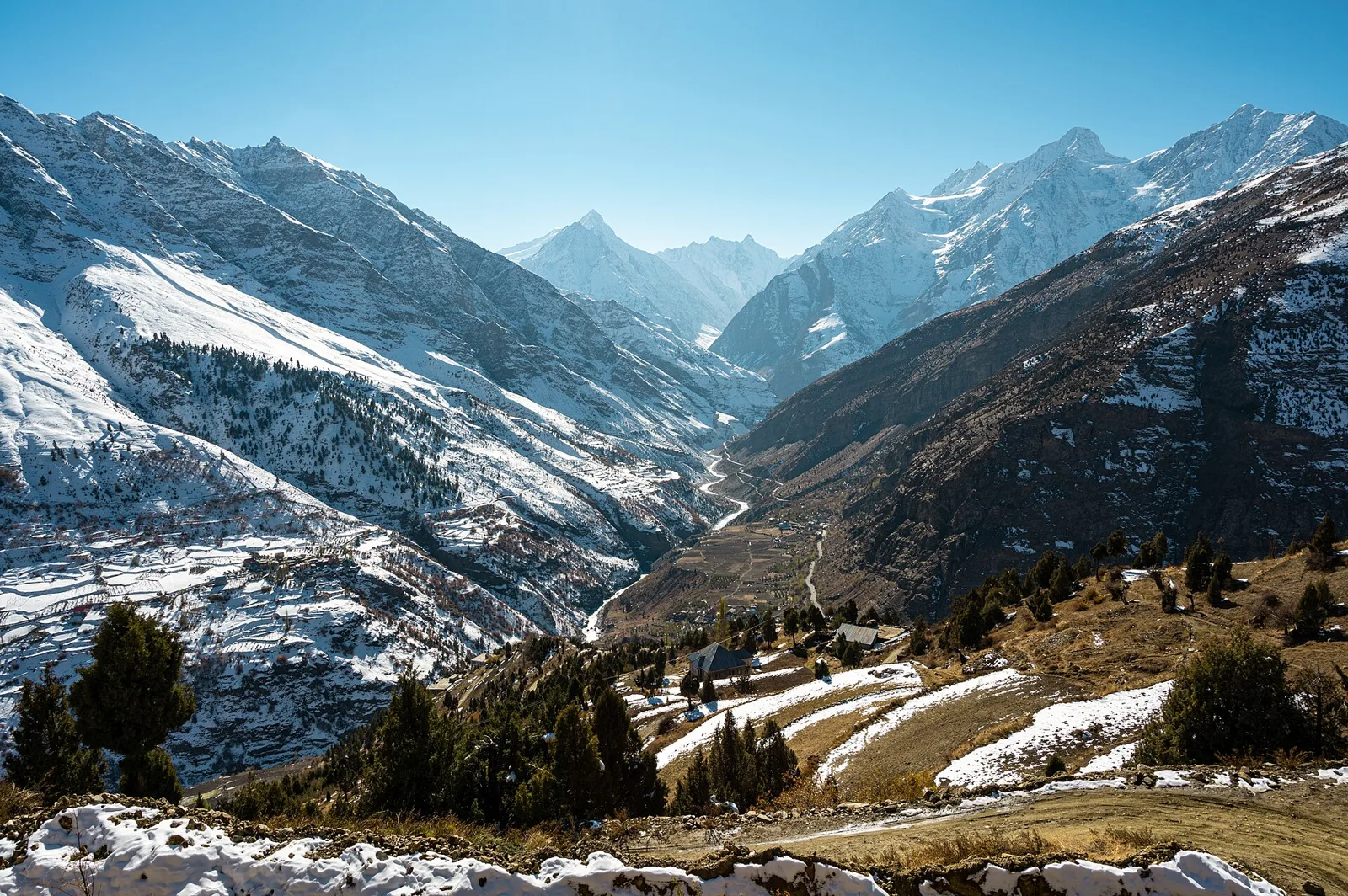
Kyelang
Kyelang, also known as Keylong, is the administrative hub of Himachal Pradesh’s Lahaul and Spiti district. Travellers pass through on the Manali–Leh route, which runs beside the Bhaga River.
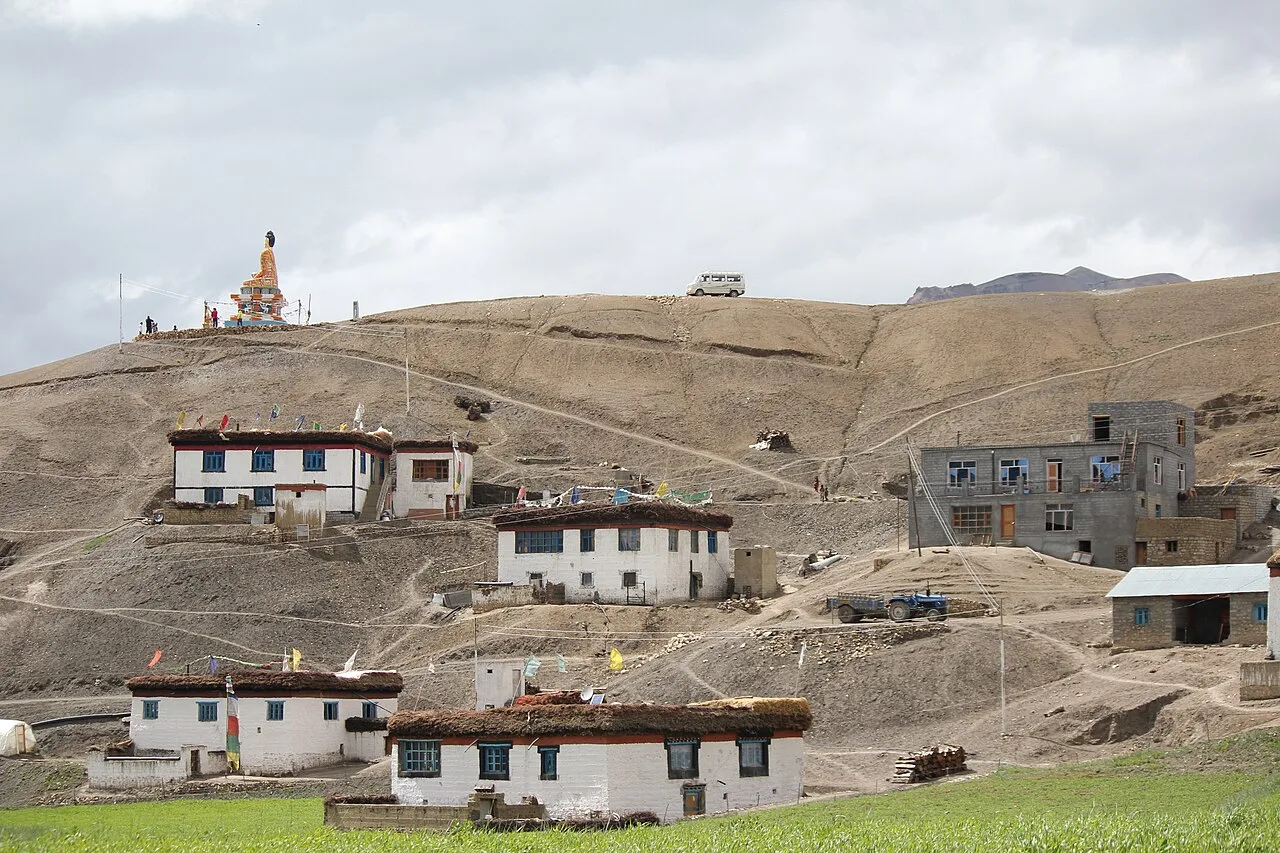
Langza
Langza is a village in Himachal Pradesh’s Lahaul and Spiti district, known for its fossil identity and setting beneath Chau Chau Kang Nilda, or Princess Mountain.
Food here reflects cold-climate farming and Tibetan and Himalayan influences. Barley-based foods, thukpa and momos are familiar across the wider trans-Himalayan region, while butter tea accompanies traditional hospitality in some households. Potatoes, pulses and warming soups suit the mountain climate. The wider Himachali repertoire includes siddu, a steamed stuffed bread, madra and dham, a festive meal; these should not be assumed to appear on every local menu. Small eateries often prepare only a few dishes each day, so ask what is available. Vegetarian meals are generally accessible in towns. Carry drinking water and snacks when visiting remote monasteries or travelling between settlements.
Woollen textiles are an important part of the district’s material culture, suited to its long, cold winters. Hand-knitted socks and woven garments belong to a broader Himalayan tradition, alongside shawls and carpets found across Himachal Pradesh and neighbouring Tibetan cultural regions. Buddhist art is especially significant in Spiti: monastery murals, painted scrolls known as thangkas, and clay sculpture express religious teachings rather than simply serving as decoration. Tabo is particularly associated with historic murals and sculpture. When buying textiles or religious artwork, ask about the maker and place of production rather than assuming everything sold locally was made in the district.
Losar, the Tibetan New Year, is observed in winter in Buddhist communities, with family gatherings, prayers and local celebrations. Fagli is a winter festival associated especially with Lahaul, while monastery festivals and fairs in Spiti commonly take place in the warmer months. The Ladarcha fair in Kaza and the Pauri festival in Lahaul are regional gatherings that bring together residents and visitors. Festival dates vary by local and lunar calendars. Larger events can make accommodation busier in nearby settlements, so travellers planning around a festival should arrange a place to stay ahead of time.
In this district
Elsewhere in Himachal Pradesh
- Kullu DussehraDates to be announced · Seasonal
- Minjar MelaDates to be announced · Seasonal
- International Shivratri Fair, MandiDates to be announced · Seasonal
- Lavi FairDates to be announced · Seasonal
- PhulaichDates to be announced · Seasonal
- Shri Renuka Ji FairDates to be announced · Seasonal
- Shoolini MelaDates to be announced · Seasonal
The district spans two high Himalayan landscapes: Lahaul’s cultivated river valleys and Spiti’s dry, sparsely vegetated cold desert. The Chandra and Bhaga rivers meet at Tandi to form the Chenab, while the Spiti River cuts through a deep valley of bare slopes and high villages. Mountain passes, steep gorges and exposed roads shape travel between settlements. Trees and forest cover are limited in much of Spiti, with more greenery in parts of Lahaul. Routes may be blocked by snow, landslides or river conditions, and journeys between places can take longer than the map suggests.
Summer, broadly from June to September, is the most accessible season, though conditions vary by valley and high passes can still be affected by snow or storms. The monsoon brings heavy rain to parts of Himachal Pradesh, but Spiti is comparatively dry; road access can nevertheless be disrupted, especially on approach routes. Autumn often brings clearer skies and colder nights. Winter is severe, with snow, sub-zero conditions and many road links closed or difficult to use. Late spring and early autumn can be suitable for experienced travellers prepared for changing access. Pack warm layers, windproof and waterproof outerwear, sun protection, sturdy footwear and any personal medicines.
Kullu–Manali Airport at Bhuntar is a useful air gateway for the Manali approach. There is no railway within the district; Chandigarh, Kalka and Pathankot are established rail gateways for onward road travel. From Manali, the Atal Tunnel provides access to Lahaul, including Sissu and onward routes to Keylong and Jispa. Spiti can be approached through Shimla and Kinnaur, or seasonally from the Manali side over Kunzum Pass. The tunnel does not make the Kunzum route or Chandra Taal accessible year-round. Buses, shared vehicles and hired taxis serve parts of the district, but connections can be limited. Allow for acclimatisation and weather delays, and check current services locally.
Road is the main way to move around the district. The Atal Tunnel links the Manali approach with Lahaul, including Sissu and Kyelang, while routes continue towards Jispa. Spiti’s settlements are connected by mountain roads, with Kaza serving as a useful hub for places such as Key Monastery, Kibber, Dhankar and Tabo. Local buses and shared vehicles operate on some routes, but service can be limited or seasonal. Hired taxis offer more flexibility; confirm road conditions and return arrangements locally. The route via Kunzum Pass and access to Chandra Taal are seasonal, not year-round.
2 days: Kaza → Key Monastery → Kibber; sleep in Kaza for the night. 3 days: Kaza → Dhankar Gompa → Tabo Monastery; sleep in Kaza, then Tabo. 4 days: Kyelang → Sissu → Jispa → Chandra Taal; sleep in Kyelang, Jispa, then at an authorised campsite near Chandra Taal when access is open.
Kaza is the most practical base for Spiti circuits, with hotels, guesthouses and homestays, and it offers access to local services. Tabo can suit an overnight stop between Kaza and Dhankar, while Kibber has village homestays. In Lahaul, Kyelang and Jispa provide places to stay, including hotels, homestays and some government lodges. Basic accommodation may be available near seasonal routes, but facilities are limited and can close outside the travel season. Dharamshalas may be available in some settlements; confirm access and arrangements before setting out.
High altitude can cause illness; ascend gradually, rest on arrival and seek medical help if symptoms worsen. Mountain roads are narrow and exposed, and snow, landslides or water crossings can disrupt travel. Check conditions locally and avoid driving after dark where possible. Carry drinking water and use treated or sealed water when its safety is uncertain. Mobile coverage and medical facilities are limited outside larger settlements. Keep distance from wildlife and do not feed animals. Access and permit rules can vary, particularly in border areas and for foreign visitors; confirm current requirements with official authorities before travel. Book ahead during festivals and peak season.
- Changthang · Ladakhabout 76 km
- Kulluabout 78 km
- Kinnaurabout 87 km
- Mandiabout 122 km
- Uttarkashi · Uttarakhandabout 151 km
- Shimlaabout 152 km
- Kangraabout 160 km
- Chambaabout 168 km
Straight-line distance between the centres of each district's destinations; road distance is longer.
Q: How many days should I spend in Lahaul and Spiti? A: Allow at least several days for one valley; a longer trip is needed to combine Lahaul and Spiti without rushing. Q: What is the best time to visit? A: Summer is generally the most accessible season. Check road status, as high routes remain seasonal. Q: Where is the best base? A: Kaza is a practical base for Spiti, while Kyelang is a convenient centre for Lahaul. Q: How do I get there? A: Travel by road from the Manali side into Lahaul or approach Spiti through Shimla and Kinnaur; onward services are limited. Q: Is the district suitable for families or elderly travellers? A: It can suit travellers who are comfortable with long, rough journeys and altitude, but consider health, mobility and acclimatisation needs.
This page draws on our 13 destination guides for Lahaul and Spiti and is updated as our team checks it.
Be the first to share photos, stories, advice or a helpful contact for Lahaul and Spiti.
Loading…