
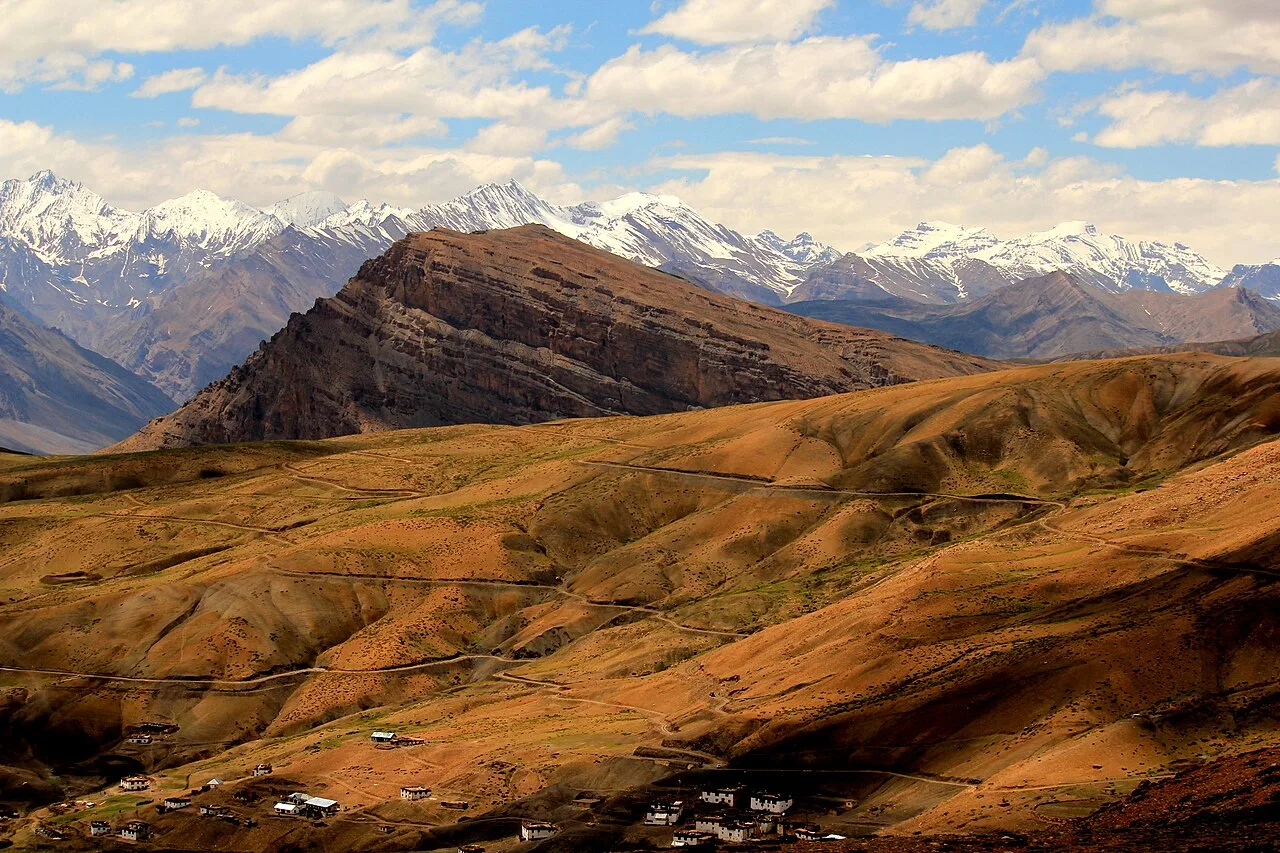
Komic
Komic is a village in Himachal Pradesh’s Lahaul and Spiti district, known for ranking among the world’s highest settlements reachable by motor vehicle. Visitors are drawn by this distinction.
Key facts · verified by Ghumoopedia editors
- Type of place
- Community & living culture
- Best time to visit
- March to June and October to November for most hill towns; May to October for Lahaul-Spiti and high passes
- Nearest railway station
- Joginder Nagar (narrow gauge) · about 125 km (straight line)
- Nearest airport
- Kullu–Manali area heliports (seasonal) · about 90 km (straight line)
- Verified
- 21 Nov 2026
Plan a trip from Komic — a day-by-day route through places nearby.
Komic is located in Lahaul and Spiti district, Himachal Pradesh. Its defining feature is its standing among the world’s highest villages accessible by motor vehicle. The place is associated with both its elevation and its road access. Visitors know Komic for this combination: it is a high-altitude village that can be reached by road. Its distinction is its place among the highest motor-accessible settlements in the world, setting it apart within its district. Himachal's hill towns blend Hindu temple traditions, Tibetan Buddhist monasteries and village devta (local deity) customs, with fairs and festivals tied to the farming calendar. Altitude decides the weather: the Shivalik foothills are mild, Shimla and Manali are cool with winter snow, and Lahaul-Spiti is a cold desert closed by snow for months. The July–September monsoon brings landslides and road closures in the hills. The usual best time to visit is March to June and October to November for most hill towns; May to October for Lahaul-Spiti and high passes. For official information, see Himachal Pradesh Tourism at https://himachaltourism.gov.in.
Why it matters
Komic is a high-altitude village in Spiti, Lahaul and Spiti district, known for its setting among the cold-desert settlements of the Trans-Himalaya. It is commonly described as one of the world’s highest motorable villages; the wording reflects its elevation and road access, rather than a single universally maintained ranking. The village is also associated with Tangyud Monastery, an active Tibetan Buddhist monastery that remains part of local religious life. Komic matters as a living community, not only as a viewpoint or record-setting destination: homes, farming, worship and seasonal travel shape the place. No UNESCO World Heritage or Archaeological Survey of India protected-site status is asserted here; check official sources for any current designation.
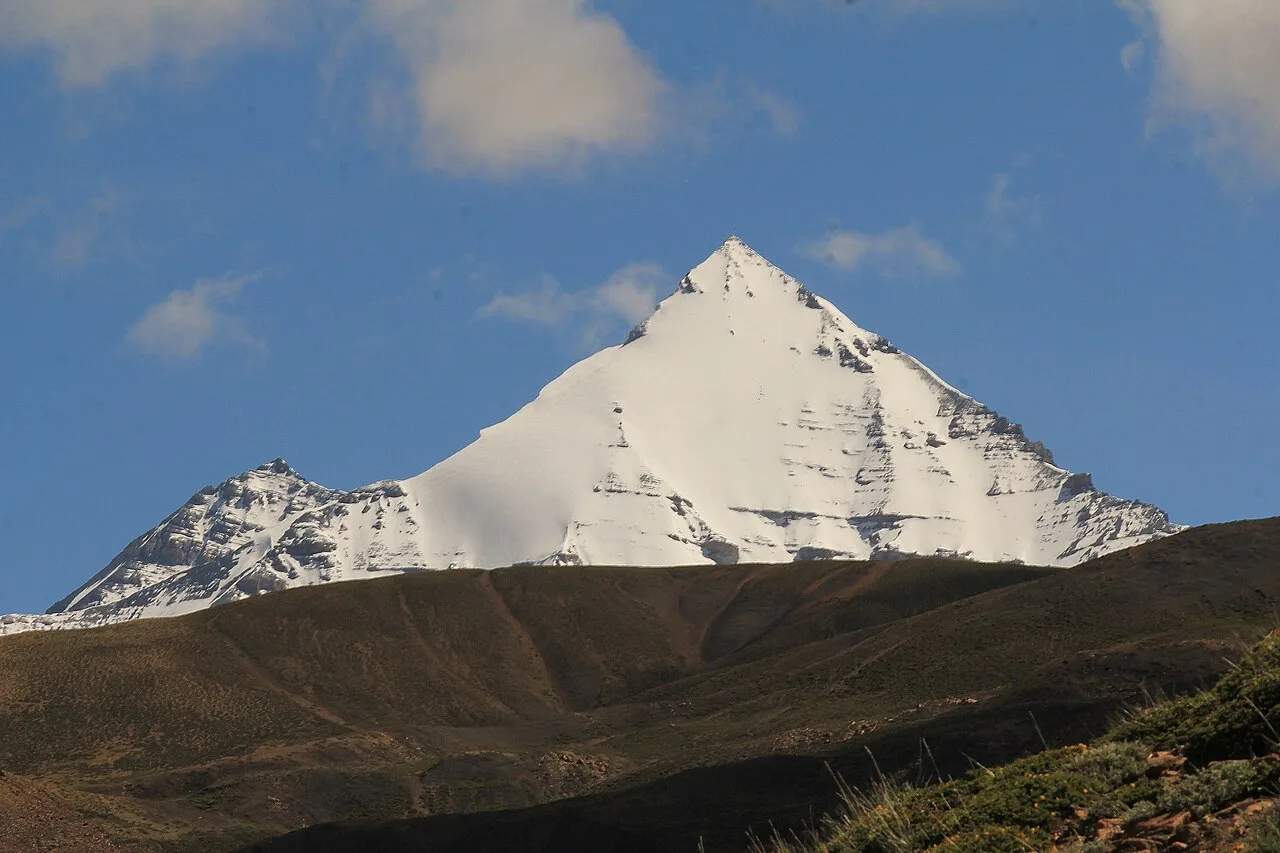
Komic’s history is closely tied to the settlement of Spiti’s high valleys and to Tibetan Buddhist religious networks. The village developed as a small, high-altitude community where cultivation, animal husbandry and close connections among neighbouring settlements helped sustain life in a cold, dry climate. Written accounts of the village’s early growth and the names of its first residents or builders are limited, so a precise founding date should not be assumed. Tangyud Monastery, the principal religious landmark associated with Komic, belongs to the Sakya school of Tibetan Buddhism. It is often described as traditionally dating to the 14th century, although visitors should treat that as a broad historical attribution rather than a precise construction record. Its substantial, fortified-looking form reflects the practical and religious importance of monasteries in the region. The monastery continues to serve worshippers and is maintained as an active religious place; details of individual repairs and restoration phases are not consistently documented in public sources. For generations, residents relied on local paths and seasonal routes. Road access and growing visitor interest have changed how people reach Komic, but the village remains a lived-in settlement rather than a preserved historic site.
Origin stories & folklore
A single, well-documented founding legend specific to Komic is not established in reliable public accounts, and stories may differ between families or local narrators. Tangyud Monastery and the surrounding landscape are part of a Buddhist religious world in which mountains, monasteries and protective forces may hold spiritual meaning. Such beliefs belong to living traditions and should be heard from local people on their own terms, rather than presented as a fixed tourist tale. Visitors can ask a local host or knowledgeable guide whether a story is appropriate to share. Do not enter restricted religious spaces or treat private ritual knowledge as a spectacle.
Walk through Komic slowly to take in its old houses, streets and places of worship, ideally with a local guide or host who can explain the village's history and families. Many heritage houses are private homes — admire them from outside unless you are invited in or the house is open to visitors — and ask before photographing people. Look out for local food, crafts and festivals that are part of the village's living heritage, and combine your visit with nearby temples, forts or towns in Lahaul and Spiti district.
Suggested itineraries
Half day: From Kaza, travel to Komic; spend 1–2 hours walking the village lanes and viewing Tangyud Monastery from permitted areas; return to Kaza. Full day: Travel from Kaza to Komic; explore the village and monastery respectfully; continue to Hikkim and Langza if roads and time allow; return to Kaza before dark. Gentler option: Arrange a vehicle drop near the village centre, take a short, unhurried walk on the easiest accessible lane, and spend time seated with a local host rather than attempting a longer circuit.
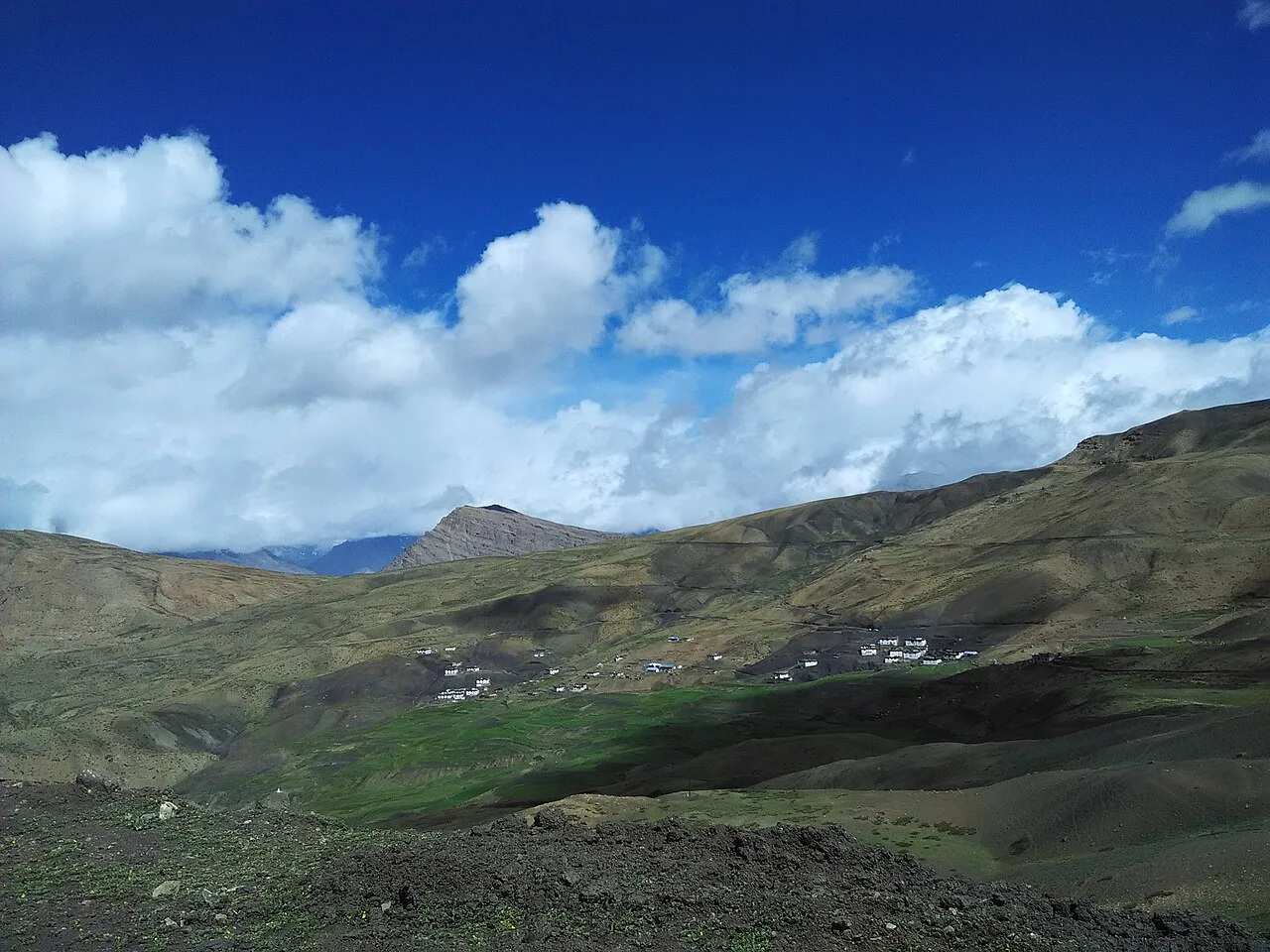
Komic’s culture reflects Spiti’s Tibetan Buddhist heritage and the practical rhythms of life at high altitude. Spiti Bhoti and Hindi are used in the wider region, with language choice varying by household and circumstance. Buddhist prayer, monastery observances and family customs form part of community life, while farming and animal care follow the short growing season. Traditional foods and woollen clothing suit the cold, dry climate, though everyday dress is also contemporary. Music, dance and festive gatherings may be part of celebrations, but programmes vary and should not be assumed to be staged for visitors. A respectful conversation with a host can offer more context than a quick photograph.
Local communities
Komic is home to Spitian residents, many connected through family, farming and Buddhist religious life. Livelihoods in the wider area include cultivation of hardy crops, care of livestock, local services and, increasingly, tourism-related work such as homestays or guiding. Work and income are seasonal, shaped by the short summer growing period and winter conditions. Monks and monastery staff are connected with the village’s religious life, while visitors may also meet people from neighbouring settlements who travel for work, worship or trade. Ask before entering homes or photographing residents, and remember that the village is a community rather than an open-air exhibit.
Festivals & events
Losar, the Tibetan New Year, is observed in Spiti during winter according to the lunar calendar; family and religious customs vary. Monastery ceremonies, including seasonal observances around the Buddhist calendar, may take place in or near Komic, but dates and visitor access are not fixed for travellers. The Ladarcha fair in Kaza is a regional summer gathering, bringing together people for trade and social exchange. Festival crowds can make accommodation and local transport busier, and ceremonies may include private or restricted portions. Confirm locally whether an event is taking place and follow the host community’s guidance rather than expecting a performance.
Village food in Himachal Pradesh is home cooking: siddu (steamed stuffed bread), madra, dham (the traditional festive meal), chha gosht, trout from mountain streams, babru and fresh apples and apricots in season. Komic itself may have only tea stalls and small eateries, so ask your host or guide where to eat, or arrange a home-cooked meal in advance — it is often the highlight of a village visit. Carry water and a snack if you plan to spend the whole day, and eat your main meal in the nearest town if no local option is open.
Shopping & local experiences
Komic is not a large market, so shopping options may be limited or seasonal. In the village or nearby settlements, look for locally made woollen items, knitted goods or small handicrafts where residents offer them for sale. Kaza is more likely to have a broader selection of souvenirs and regional products. Ask who made an item, pay a fair local price and avoid buying objects presented as sacred or removed from heritage sites. A meal or tea at a local homestay, when available by arrangement, can be a meaningful way to support the community; ask about ingredients and availability in advance.
Komic sits in Spiti’s high, dry Trans-Himalayan landscape, where steep slopes, open ridges and sparse vegetation contrast with small cultivated plots. The climate is cold and arid, with snow and freezing conditions possible outside the warmer season. There are no large forests or prominent lake within the village itself; water and greenery are limited by the terrain and depend on seasonal sources and irrigation. Hardy grasses, shrubs and alpine plants occur across the wider landscape. The broader Spiti region provides habitat for wildlife such as ibex, blue sheep, foxes and high-altitude birds, but sightings are never assured and animals may be far from the village. Keep to tracks and avoid disturbing livestock or wildlife.
March to June and October to November for most hill towns; May to October for Lahaul-Spiti and high passes
The nearest principal railway station by straight-line distance is Joginder Nagar (narrow gauge), roughly 125 km away. The nearest operating airport by straight-line distance is Kullu–Manali area heliports (seasonal), roughly 90 km away. These figures are calculated from map coordinates — actual road distance is longer, and hill roads mean even short distances can take hours. undefined Komic is a village, so the last stretch is by road: Himachal Road Transport Corporation (HRTC) buses and shared taxis reach the nearest town, and from there a shared auto, local bus or reserved taxi covers the final few kilometres. Village roads can be narrow and unpaved; a taxi hired for the day from the nearest town is the simplest way to combine Komic with nearby sights and get back before dark. Spiti's high villages are reached via Kaza; the roads over Kunzum and through Kinnaur close or become difficult in winter and after heavy snow, so check road status before setting out. When comparing train, bus and flight, count the complete door-to-door time: a flight saves the most time only if the onward road transfer is short, while an overnight train can save a hotel night. Book your return before you leave, because seats fill quickly on weekends, festivals and holidays. Current train numbers, timings, return services and fares are not listed here; check IRCTC and NTES for trains and the airline's own schedule for flights. No permit is needed for Indian visitors to most of Himachal Pradesh. Some stretches near the international border in Kinnaur and Lahaul-Spiti may have check posts, and foreign nationals should check current registration rules for border areas before travel.
Confirm onward and return timings on IRCTC / NTES, the state bus operator or your airline before travel. A dash means current timings or fares have not been verified.
Getting around
Most visitors use Kaza as a base and travel to Komic by local bus when operating, shared taxi or a reserved vehicle; availability varies by season and road conditions. A vehicle arranged in Kaza is useful for combining nearby villages and returning before dark. There is no reason to expect regular auto-rickshaw service within the village. Once there, the compact settlement is best explored on foot, slowly and with care on uneven lanes. Ask locally about road conditions and suitable parking, and avoid blocking narrow village access for residents or emergency vehicles.
Hours, tickets & permissions
Komic is a lived-in village, not a single ticketed attraction with one visitor gate. Access to Tangyud Monastery or any indoor religious space depends on local and monastic arrangements; worship, ceremonies or maintenance may limit entry. Do not assume that every room or building is open to visitors. Tickets, permits, camera charges, dress requirements and identification rules can change or differ by site. Confirm current access, hours and any fees with the monastery, a local host or the relevant tourism authority before setting out.
Facilities
Facilities in Komic are limited and seasonal. There may be a small eatery, homestay or basic visitor service, but do not rely on these being open; check locally and arrange meals and accommodation ahead. Toilets and drinking water are not guaranteed at every stop, so carry water and use facilities with permission. Parking is informal and space may be limited on narrow village roads. Guides or hosts may be available through local contacts or in Kaza. ATMs and broader services are more likely to be found in larger centres such as Kaza; carry essential supplies before leaving.
Accessibility
Komic’s high altitude, uneven lanes, sloping ground and potentially rough road surfaces can make a visit tiring. Walking distances within the compact settlement may be modest, but there may be loose stones, steps or thresholds, and shade is limited. The village and monastery should not be assumed to be wheelchair- or stroller-accessible; no ramps or lifts are confirmed. Older visitors and people with heart, lung or mobility concerns should consider altitude, cold and exertion, allow time to acclimatise and seek medical advice where appropriate. A vehicle drop-off and a short, flexible visit can reduce walking, but confirm access with a local host.
No permit is needed for Indian visitors to most of Himachal Pradesh. Some stretches near the international border in Kinnaur and Lahaul-Spiti may have check posts, and foreign nationals should check current registration rules for border areas before travel. Carry a photo ID, some cash (card and UPI acceptance varies in villages) and a charged phone with offline maps; save the emergency number 112 and your host's contact. Weather changes quickly in the hills; carry warm layers and rain gear, avoid travelling after dark on mountain roads and allow for altitude if you come from the plains. Respect local customs: dress modestly, remove footwear where asked, and always ask before photographing people, homes or rituals.
Visitor rules
Treat homes, courtyards and religious buildings as private unless invited in or clearly open to visitors. Dress modestly when entering a place of worship and follow any posted or spoken instructions. Remove footwear if requested, keep voices low and do not interrupt prayers. Stay on village paths, respect restricted rooms and do not handle religious objects. Carry out litter, avoid single-use plastic where possible and never leave waste behind. Ask before photographing residents, homes or ceremonies. Local guidance takes precedence if access or behaviour rules change.
Photography
Soft morning or late-afternoon light can bring out the village’s stone-and-earth textures and the open mountain setting; viewpoints are best chosen from public paths without blocking residents. Photography outdoors is generally less intrusive than inside religious spaces, but ask before taking pictures of people, homes or worship. Follow monastery instructions about cameras, and do not photograph private rituals or restricted areas. Drone use may be subject to aviation rules and local restrictions; obtain all required permissions and avoid flying over homes, people, livestock or religious gatherings.
Most visitors see Komic on a day trip from the nearest town, which has the widest choice of hotels. Community homestays, where available, are the best way to experience village life — book through a known operator or the village's own contact, confirm what is included, and expect simple rooms and shared meals. Confirm the booking and the exact location before you travel, because village addresses can be hard to find.
Kaza is the main nearby service centre and a practical base for the area. Hikkim and Langza are other Spiti villages that visitors commonly combine with Komic, subject to road and weather conditions. Kibber and Ki (Key) Monastery are further regional stops; Ki is a major Buddhist monastery in Spiti. Dhankar and Pin Valley are also within Lahaul and Spiti district, but combining them with Komic can make for a long journey and should be planned around current roads. Confirm access locally, especially outside the warmer travel season.
For couples, Komic is a chance to slow down: walk the lanes in the soft morning light, share a home-cooked meal and keep the afternoon free. Stay in a nearby homestay or heritage property to make it a quiet overnight escape.
Q: How much time should I allow for Komic? A: Allow at least a half-day from Kaza for the road journey and a careful village visit; a full day works better if combining nearby villages. Q: When is the best season to visit? A: The warmer travel season, generally May to October, is most suitable for Spiti, but road and weather conditions can change. Q: Is there an entry ticket for the village or monastery? A: The village is not a single ticketed attraction. Monastery access and any current fees should be confirmed locally. Q: Is Komic suitable for children or elderly visitors? A: It can be visited with care, but high altitude, cold and uneven walking can be demanding. Keep plans flexible and allow time to acclimatise. Q: Where can I stay nearby? A: Kaza has the broadest range of services, while local homestays may be available in or near villages; confirm arrangements before travelling.
Be the first to share photos, stories, advice or a helpful contact for Komic.
Loading…