
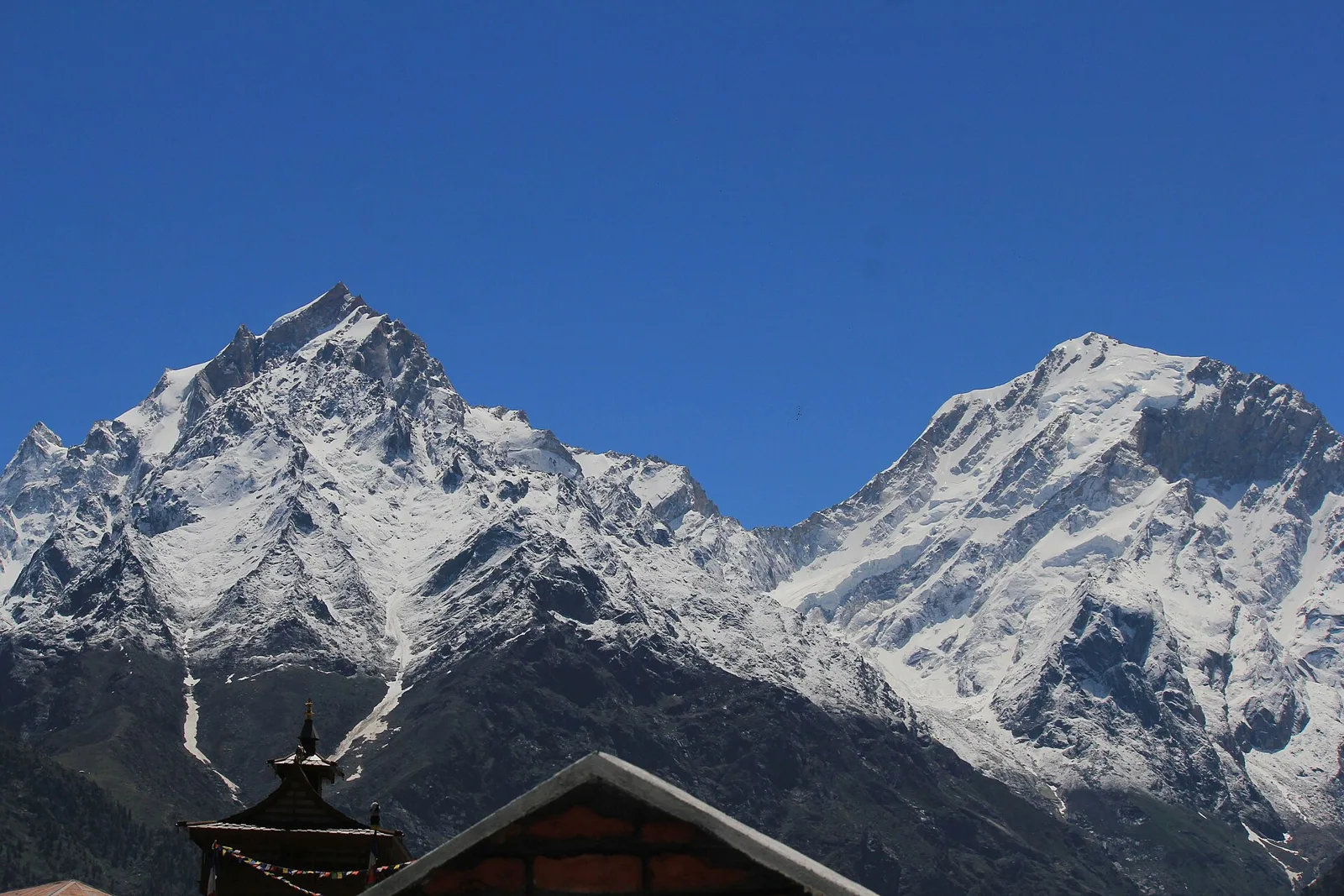
Kinnaur Kailash
Kinnaur Kailash is a sacred mountain in Himachal Pradesh’s Kinnaur district, visited for its association with Shiva and Parvati and the revered Shivling on its slopes.
Key facts · verified by Ghumoopedia editors
- Type of place
- Natural attraction
- Best time to visit
- March to June and October to November for most hill towns; May to October for Lahaul-Spiti and high passes
- Nearest railway station
- Shimla (Kalka–Shimla narrow gauge) · about 120 km (straight line)
- Verified
- 21 Nov 2026
Plan a trip from Kinnaur Kailash — a day-by-day route through places nearby.
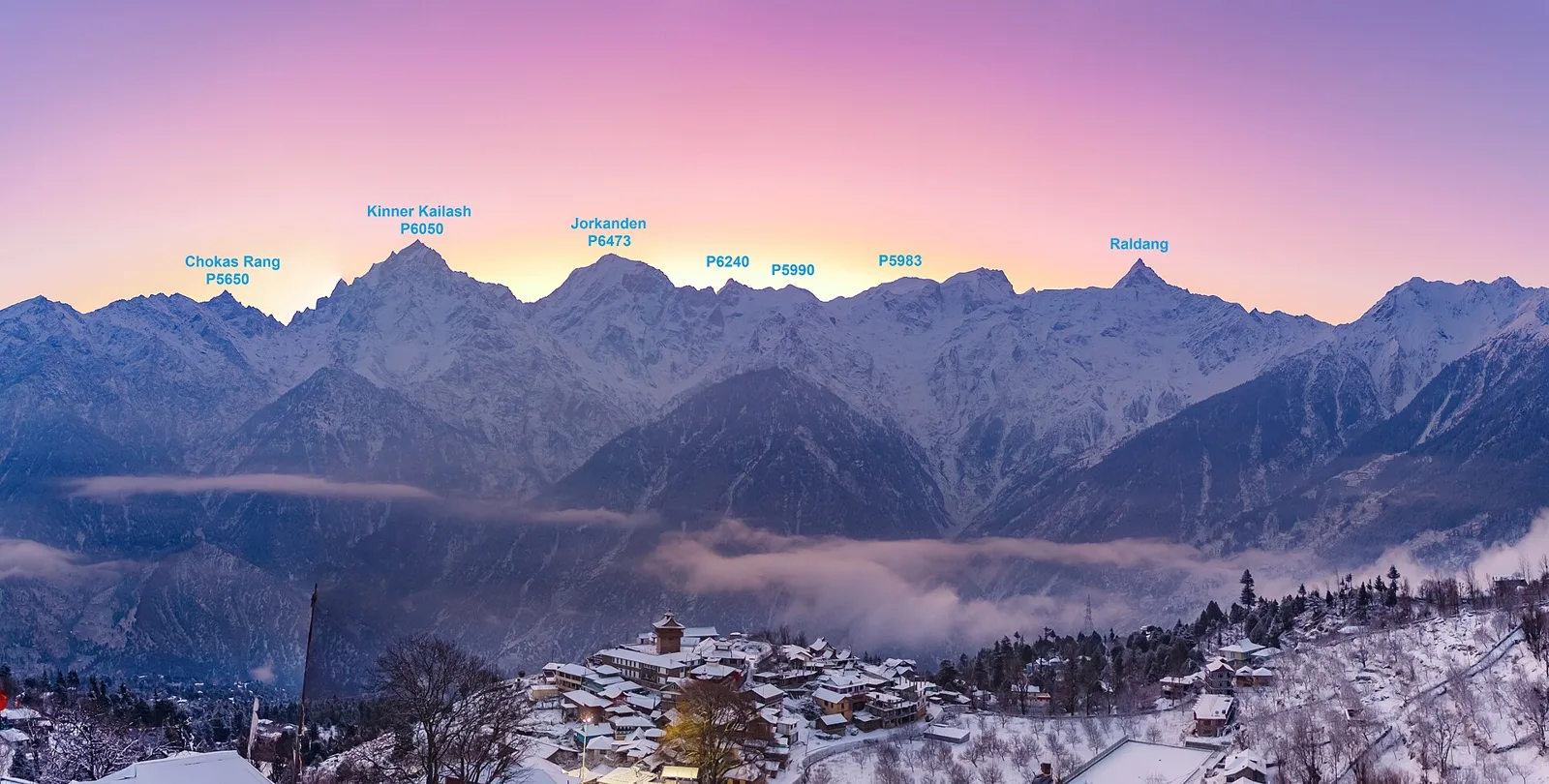
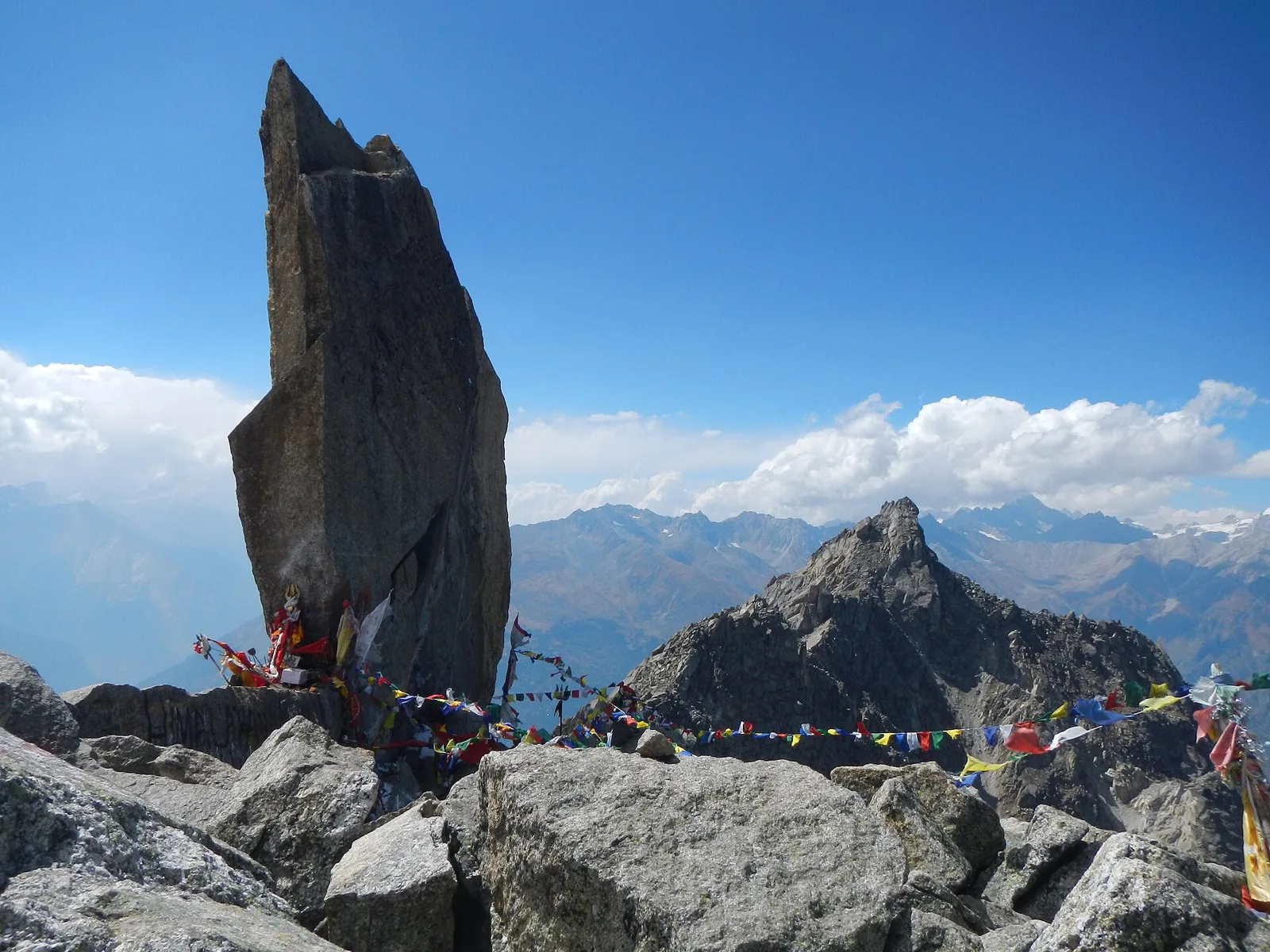
Kinnaur Kailash, known locally as Kinner Kailash, is a mountain in Kinnaur district, Himachal Pradesh. Its peak reaches 6,050 metres, and a monolithic pillar regarded as a Shivling stands at around 4,800 metres. Hindu belief holds that Shiva and Parvati reside here. The mountain is revered by Hindu and Buddhist Kinnauris, and people visit in connection with its religious significance. It ranks fourth in the group of five peaks known collectively as the Panch Kailash. The peaks are in separate locations across the Himalayas. In this ranking, Mount Kailash comes first, Adi Kailash second, Shikhar Kailash—also called Shrikhand Mahadev Kailash—third, and Manimahesh Kailash fifth. The order reflects their relative religious importance. Kinnaur Kailash is sometimes mistaken for Mount Kailash, which is in China. Himachal's hill towns blend Hindu temple traditions, Tibetan Buddhist monasteries and village devta (local deity) customs, with fairs and festivals tied to the farming calendar. Altitude decides the weather: the Shivalik foothills are mild, Shimla and Manali are cool with winter snow, and Lahaul-Spiti is a cold desert closed by snow for months. The July–September monsoon brings landslides and road closures in the hills. The usual best time to visit is March to June and October to November for most hill towns; May to October for Lahaul-Spiti and high passes. Timings, fees and access arrangements must be confirmed locally. For official information, see Himachal Pradesh Tourism at https://himachaltourism.gov.in.
Why it matters
Kinnaur Kailash, also called Kinner Kailash, is a high mountain in Kinnaur district, Himachal Pradesh. The peak is reported to rise to about 6,050 metres, while a distinctive rock pillar revered as a Shivling is described as lying at around 4,800 metres. Hindu belief associates the mountain with Lord Shiva and goddess Parvati; it is also sacred to many Buddhist Kinnauris. In the Panch Kailash tradition, it is counted among five revered Himalayan peaks, though rankings and descriptions belong to religious tradition rather than an official system. The mountain is important to Kinnaur’s pilgrimage life and regional identity.
Kinnaur Kailash is a natural mountain, not a monument known to have been built by a ruler or religious institution. No well-documented construction date, founding account, or programme of architectural restoration is associated with the peak. Its history is instead bound up with the religious traditions of Kinnaur and the journeys made by pilgrims through high-altitude terrain. Hindu tradition identifies the mountain with the home of Shiva and Parvati, while local Buddhist communities also regard it as sacred. The prominent rock pillar on the mountain is worshipped as a Shivling; its appearance and setting have helped sustain that association. Pilgrimage routes and access arrangements have changed with roads, local infrastructure, weather, and administrative guidance, but the mountain remains a demanding destination rather than a conventional developed attraction. Accounts of the route and the sacred landscape are often transmitted through local practice and oral tradition, so details may vary between communities. Visitors should treat the place as a living sacred landscape, follow current local guidance, and avoid presenting customary beliefs as documented historical dates.
Origin stories & folklore
According to Hindu belief, Lord Shiva and goddess Parvati reside at Kinner Kailash. The mountain’s rock pillar is revered as a Shivling, and its changing appearance against the high Himalayan sky is part of the experience described by pilgrims. Local religious accounts connect the landscape with divine presence, but versions of stories and their details can differ. Kinnaur Kailash is also sometimes confused with Mount Kailash in Tibet; they are distinct mountains, each with its own religious associations. These accounts are matters of faith and local tradition, not claims that can be verified as historical events. Visitors can appreciate the site respectfully without seeking out restricted knowledge or treating worship as a spectacle.
Spend unhurried time at Kinnaur Kailash: walk the marked paths, use official viewpoints and ask locally whether a guide, entry ticket or permit is needed. Weather changes fast, so carry a warm or rain layer even on a clear morning. Wildlife sightings are never guaranteed — patience and quiet improve your chances. A comfortable itinerary is one main visit in the morning, a local meal at midday and a short nearby stop before an afternoon return. Use the district list on this site to find other places in Kinnaur, but check the actual road route and its condition before combining stops. If a festival or fair is on, local roads and stays can be busy — and the experience can be unforgettable. Leave no litter: many sites are protected by the communities around them.
Suggested itineraries
Half day: From Kalpa, take time at a locally recommended viewpoint for mountain views (30–60 minutes); visit nearby village lanes or a local place of interest (1–2 hours); return for a meal. Full day: Check conditions in Reckong Peo or Kalpa; make a short, locally approved visit toward the accessible approach or viewpoint; have a local meal; return before weather or road conditions deteriorate. Do not treat the high-altitude pilgrimage to the Shivling as a day trip; it requires substantial preparation and may take multiple days. Gentler option: Stay in Kalpa, enjoy views from accessible village locations, and avoid steep trails.
Kinnaur’s cultural life reflects Hindu traditions, Tibetan Buddhist influences, and village customs centred on local deities, often called devtas. Kinnauri and Hindi are widely used in the district, alongside other local languages and dialects. Religious visits may include prayer, offerings, and observances shaped by local custom; practices vary from village to village. Traditional music, dancing, woven clothing, and community gatherings remain part of festivals and social occasions, though everyday life is also modern and varied. The mountain is a sacred landscape, so visitors should ask before photographing ceremonies or people, dress practically and respectfully, and follow guidance from residents and local authorities.
Local communities
Kinnaur’s villages and communities have long-standing cultural and spiritual ties to the mountain. Residents include Hindu and Buddhist Kinnauris, with customs and beliefs that differ among villages and families. Agriculture, horticulture, animal husbandry, public services, and tourism-related work all contribute to livelihoods in the district; apples and other fruit are important in many areas. Pilgrimage and trekking can bring seasonal visitors and income, but also place demands on fragile routes and local resources. Visitors should use local services where appropriate, respect community rules, and avoid assuming that one person’s account represents every Kinnauri community.
Festivals & events
Kinnaur’s fairs and festivals follow local religious practice and the agricultural seasons, and celebrations vary by village. Fulaich, also called the flower festival, is observed in parts of the district in the late summer or early autumn season. Sazo and Losar are among the other seasonal observances associated with Kinnaur communities, though their customs and timing can differ locally. These are community occasions rather than guaranteed events at the mountain itself. When a fair or festival is taking place, roads, village services, and accommodation may be busier than usual. Ask locally before attending ceremonies, and follow guidance about photography and access.
Local food in Himachal Pradesh includes siddu (steamed stuffed bread), madra, dham (the traditional festive meal), chha gosht, trout from mountain streams, babru and fresh apples and apricots in season. Ask what is fresh that day; many small eateries cook a limited daily menu. Vegetarian travellers eat very well across this region, and most towns also have simple non-vegetarian dhabas. Remote sites may have no restaurant at all. Carry water and snacks, eat a proper breakfast before long drives, and ask your accommodation for a packed lunch if you are heading out early. Try a home-cooked or dhaba meal when you can — it is often the best food on the route. Choose busy, clean places and carry your packaging back to town.
Shopping & local experiences
In Kalpa and Reckong Peo, look for locally made woollen items, Kinnauri caps, woven textiles, and small craft goods, while checking that products are genuinely locally made. Shops and selection vary by season. Kinnaur is also known for apples and other regional produce; availability depends on harvest and local supply. Try food at a local restaurant or homestay and ask about ingredients and customary dishes. Buy thoughtfully, avoid items made from protected wildlife or plants, and do not collect stones, flowers, or other material from the mountain.
Kinnaur Kailash is part of the high Himalaya, with steep rocky slopes, exposed ridges, and large changes in conditions with elevation. Lower valleys and slopes in Kinnaur support forest and woodland, including conifers such as chilgoza pine and deodar in suitable areas; vegetation becomes sparse and alpine higher up. Snow, strong winds, cold, and rapidly changing weather can affect the mountain and its approach routes. Wildlife and birds inhabit the wider district’s varied habitats, but sightings are uncertain and should never be expected. Keep a quiet distance from animals, stay on established routes where advised, and carry out all rubbish. The mountain’s height and terrain make it a sensitive natural setting as well as a sacred one.
March to June and October to November for most hill towns; May to October for Lahaul-Spiti and high passes
The nearest principal railway station by straight-line distance is Shimla (Kalka–Shimla narrow gauge), roughly 120 km away. The nearest operating airport by straight-line distance is Bhuntar Airport, Kullu–Manali, roughly 120 km away. These figures are calculated from map coordinates — hill roads wind a lot, so actual road distance and travel time are usually much longer. Chandigarh, Kalka and Pathankot are the main rail gateways for the hills, and the Kalka–Shimla toy train is itself a heritage journey. For the final leg, Himachal Road Transport Corporation (HRTC) buses and shared taxis link district towns; shared taxis usually leave early in the morning. A private taxi gives more flexibility for remote sites. When comparing train, bus and flight, count the complete door-to-door time: a flight saves the most time only if the onward road transfer is short, while an overnight train plus a road journey can save a hotel night. Book your return before you leave, because seats fill quickly on weekends and holidays. Current train numbers, timings, return services and fares are not listed here; check IRCTC and NTES for trains and the airline's own schedule for flights. No permit is needed for Indian visitors to most of Himachal Pradesh. Some stretches near the international border in Kinnaur and Lahaul-Spiti may have check posts, and foreign nationals should check current registration rules for border areas before travel.
Confirm onward and return timings on IRCTC / NTES, the state bus operator or your airline before travel. A dash means current timings or fares have not been verified.
Getting around
Reckong Peo and Kalpa are useful bases for arranging local transport and checking conditions. HRTC buses and shared taxis connect district towns, while private taxis can offer more flexibility; services and availability vary, particularly for remote trailheads. The Kinnaur Kailash pilgrimage approach is associated with Tangling village, but confirm the current route and road access locally before setting out. Parking near villages or trail access may be limited. Walking is necessary on the trek, and high-altitude routes should not be attempted without suitable preparation. Ask local drivers or authorities about road closures, landslides, and where vehicles may be left safely.
Hours, tickets & permissions
There is no single visitor schedule that can be assumed for the mountain or its trekking route. Access may depend on season, weather, road and trail conditions, and current directions from local authorities or community representatives. A ticket, registration, guide, or permit may or may not be required under current arrangements; confirm before travelling with the district administration, local authorities, or a reputable local trek provider. Check any applicable entry or camera rules and carry identification if advised. Do not rely on old travel reports for current access or fees.
Facilities
Facilities directly on the mountain route are limited and should not be assumed. Toilets, drinking water, food, parking, guides, and mobile connectivity may be unavailable or basic along remote sections; check locally and carry water and supplies appropriate to your plan. Kalpa and Reckong Peo generally offer more services, including places to eat, shops, accommodation, and access to cash services, but availability can vary. Arrange any guide or porter through a reputable local provider and confirm what is included. Carry out all waste and do not depend on facilities being open during poor weather or off-season travel.
Accessibility
The mountain is a high-altitude destination with steep, uneven terrain and exposed sections on the pilgrimage route. Reaching the sacred rock pillar is strenuous and unsuitable for visitors who are not prepared for demanding trekking; it is not a wheelchair- or stroller-accessible outing. The route can involve long walks, substantial climbs, loose ground, and limited shade, with conditions changing quickly. Older visitors and anyone with heart, lung, mobility, or altitude-related concerns should seek medical advice and consider staying at an accessible viewpoint instead. Do not assume there are handrails, ramps, resting shelters, or accessible toilets. Choose the visit according to individual ability and current local guidance.
No permit is needed for Indian visitors to most of Himachal Pradesh. Some stretches near the international border in Kinnaur and Lahaul-Spiti may have check posts, and foreign nationals should check current registration rules for border areas before travel. Carry a photo ID at all times and save the emergency number 112 and your accommodation's contact offline. Altitude sickness is possible above about 2,500 m: ascend gradually, rest on arrival, drink water and turn back if you develop a severe headache, breathlessness or confusion. Hill roads are prone to landslides in the monsoon — avoid night driving and heavy-rain travel. Stay on marked paths, keep away from cliff edges and fast water, and never approach wild animals. Check official advisories for the region before travel, and follow local guidance if access changes.
Photography
Clear mornings can offer good mountain views, though cloud and weather change quickly; use viewpoints recommended locally rather than approaching unstable edges. Photography is generally a way to record the landscape, but confirm any current restrictions at access points and ask permission before photographing residents, worshippers, or ceremonies. Be discreet around offerings and sacred features. Drone use may be restricted by aviation rules, local orders, or community expectations; check before flying and do not launch near people, wildlife, or religious activity. Avoid leaving the path or delaying others for a photograph.
Choose a stay by the full journey to Kinnaur Kailash, not just the district name. Main towns in Kinnaur usually offer hotels, state tourism lodges and guesthouses with better transport, meals and medical access, while village homestays offer a closer connection to local life. At altitude, check heating, hot water and power backup, and expect cold nights for much of the year. Book in advance for weekends, festival dates and the peak season (March to June and October to November for most hill towns; May to October for Lahaul-Spiti and high passes). Confirm the exact location, meals included, check-in time and cancellation terms in writing. Many homestays accept payment on arrival; avoid sending money to unverified contacts. Mobile network and digital payments can be unreliable in remote areas, so carry some cash.
Kalpa is a convenient nearby village for views of the Kinnaur range and a slower visit among traditional settlement surroundings. Reckong Peo, the district headquarters, is useful for services and local travel arrangements. Kothi, near Kalpa, is known for its temple and mountain setting. Farther within Kinnaur, Sangla and Chitkul are notable valley and village destinations; they are better planned as separate road outings after checking current conditions. Distances and travel times on hill roads can be much greater than a map suggests, and landslides or closures may affect routes. Confirm the road condition before combining stops.
For couples, Kinnaur Kailash rewards a slow pace: arrive early for soft light and fewer crowds, share a local meal and keep the evening free. Public displays of affection can be frowned upon in conservative communities and at religious sites, so be discreet. A homestay or a small heritage hotel can make the trip memorable — confirm privacy, hot water and transport back. Keep a buffer in your itinerary, because weather and traffic can delay plans in Himachal Pradesh.
Q: How much time should I allow for Kinnaur Kailash? A: Allow a few hours for a nearby viewpoint or village visit. The high-altitude pilgrimage to the Shivling is a demanding undertaking that may require multiple days. Q: When is the best season to visit? A: Conditions vary with altitude and year. Plan for a suitable clear-weather season, and confirm current trail, road, and weather conditions locally before travelling. Q: Is an entry ticket or permit required? A: Requirements can change and may depend on the route. Check with local authorities or a reputable local trek provider before departure. Q: Can children or elderly visitors go? A: A viewpoint visit may suit some visitors, but the high-altitude trek is strenuous. Assess health and ability carefully, seek medical advice where appropriate, and do not pressure anyone to continue. Q: Where can I stay nearby? A: Kalpa and Reckong Peo are common bases with accommodation options. Confirm availability and road access for your travel dates, especially during busy seasons or bad weather.
Be the first to share photos, stories, advice or a helpful contact for Kinnaur Kailash.
Loading…