
Naggar Castle
A medieval castle in Kullu district, Naggar Castle is visited for its historical origins and its later use as a heritage hotel operated by HPTDC.
Key facts · verified by Ghumoopedia editors
- Type of place
- Heritage monument
- Best time to visit
- March to June and October to November for most hill towns; May to October for Lahaul-Spiti and high passes
- Nearest railway station
- Joginder Nagar (narrow gauge) · about 40 km (straight line)
- Nearest airport
- Kullu–Manali area heliports (seasonal) · about 5 km (straight line)
- Verified
- 21 Nov 2026
Plan a trip from Naggar Castle — a day-by-day route through places nearby.
In Kullu district, within Himachal Pradesh, Naggar Castle is a medieval structure. Its location and age mark it as a historic castle in the region. Construction is credited to Kullu ruler Raja Sidh Singh, at about 1460 AD. This places the building’s origins in the medieval period. In 1978, the Himachal Pradesh Tourism Development Corporation (HPTDC) took over the property to operate it as a heritage hotel. The castle’s history thus includes both its medieval beginnings and its later use for heritage accommodation under HPTDC. Himachal's hill towns blend Hindu temple traditions, Tibetan Buddhist monasteries and village devta (local deity) customs, with fairs and festivals tied to the farming calendar. Altitude decides the weather: the Shivalik foothills are mild, Shimla and Manali are cool with winter snow, and Lahaul-Spiti is a cold desert closed by snow for months. The July–September monsoon brings landslides and road closures in the hills. The usual best time to visit is March to June and October to November for most hill towns; May to October for Lahaul-Spiti and high passes. Timings, fees and access arrangements must be confirmed locally. For official information, see Himachal Pradesh Tourism at https://himachaltourism.gov.in.
Why it matters
Naggar Castle is a historic landmark in Naggar, in Kullu district, and a reminder of the region’s former royal seat and political life. It is traditionally dated to the fifteenth century and associated with Raja Sidh Singh of Kullu. Its stone-and-timber construction reflects building practices suited to the western Himalayan environment. The Himachal Pradesh Tourism Development Corporation took over the property in 1978 to operate it as a heritage hotel, giving it a continuing hospitality use as well as heritage interest.
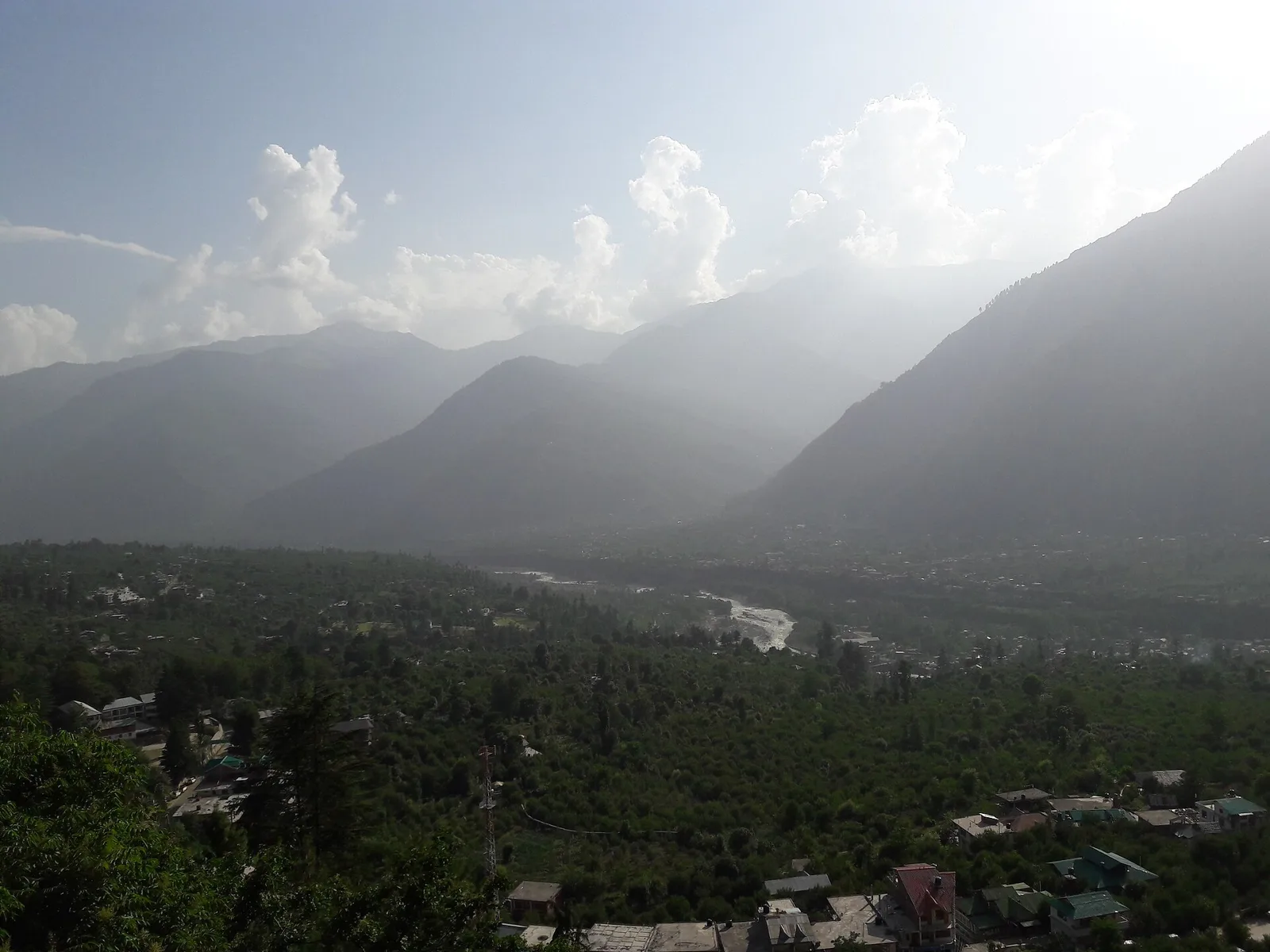
Naggar Castle stands in Naggar, a settlement associated with the former rulers of Kullu. The castle is traditionally dated to around 1460 AD and attributed to Raja Sidh Singh, though accounts of its early history are not equally detailed. Naggar served as an important seat of Kullu’s rulers before the political centre shifted to Sultanpur, now part of Kullu town. The building’s location and substantial stone-and-timber form reflect its role as a royal residence and administrative stronghold in a mountain region where construction had to respond to steep terrain, cold weather and seismic risk. Over time, the castle ceased to function as a royal residence and became a landmark within Naggar’s historic settlement. In 1978, the Himachal Pradesh Tourism Development Corporation took it over to run as a heritage hotel. That change brought a hospitality use alongside its historical role. The property has since been presented to visitors as a place to experience local architectural character and Kullu history. For details about particular repairs, conservation work or the castle’s present management, consult the HPTDC or local authorities; reliable public accounts do not provide a complete chronology of every alteration.
Origin stories & folklore
According to a local story repeated in accounts of Naggar, Raja Sidh Singh had stones carried from his earlier palace at Kullu to build the castle. In some tellings, people formed a human chain across the valley to pass the stones from hand to hand. The story helps explain the building’s association with the Kullu rulers and conveys the scale of effort involved in construction, but it should be understood as folklore rather than a verified account of the building process. Naggar’s wider landscape is also shaped by local beliefs about village deities, whose traditions are distinct from the castle’s documented history.
Architecture & design
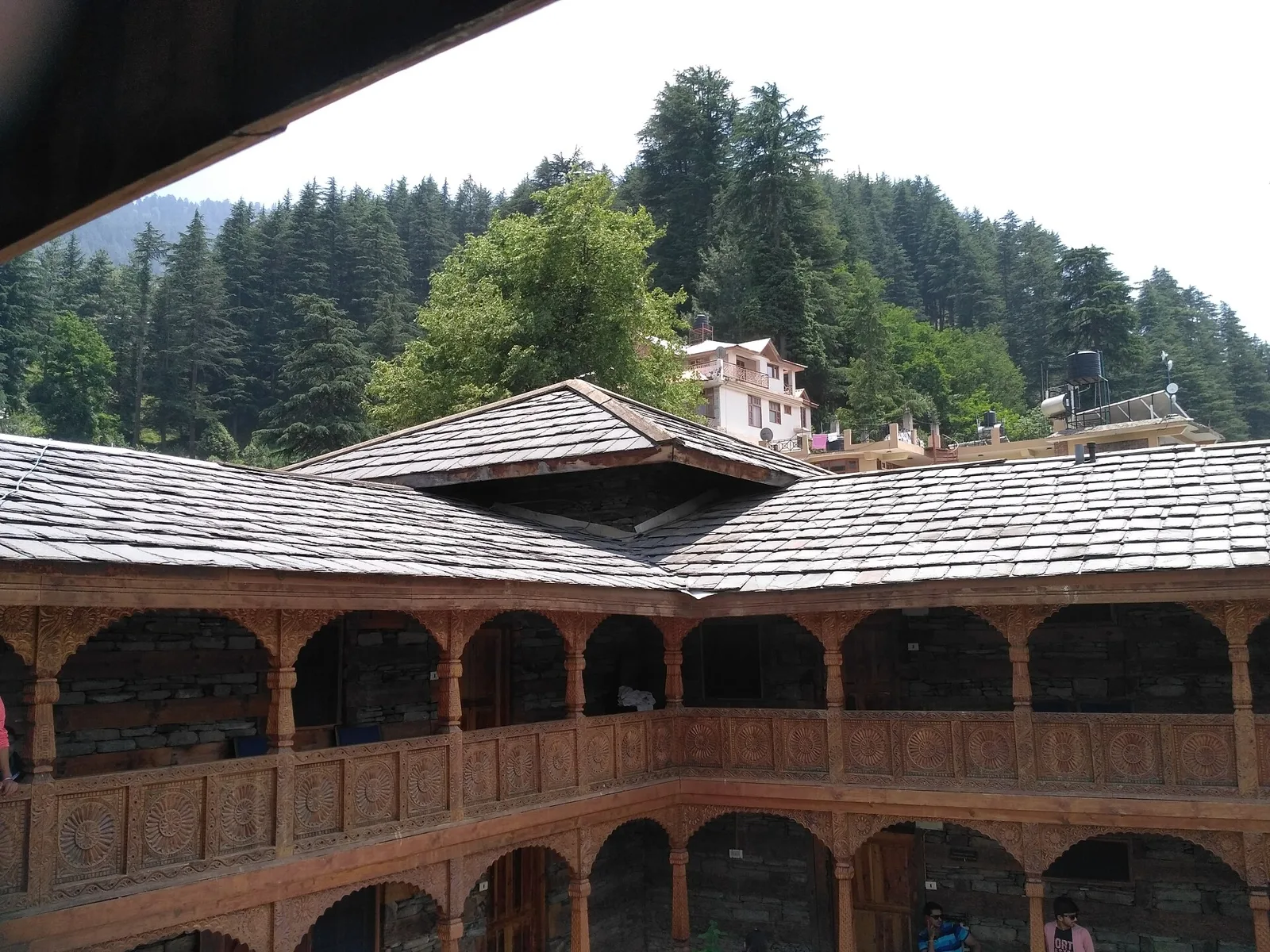
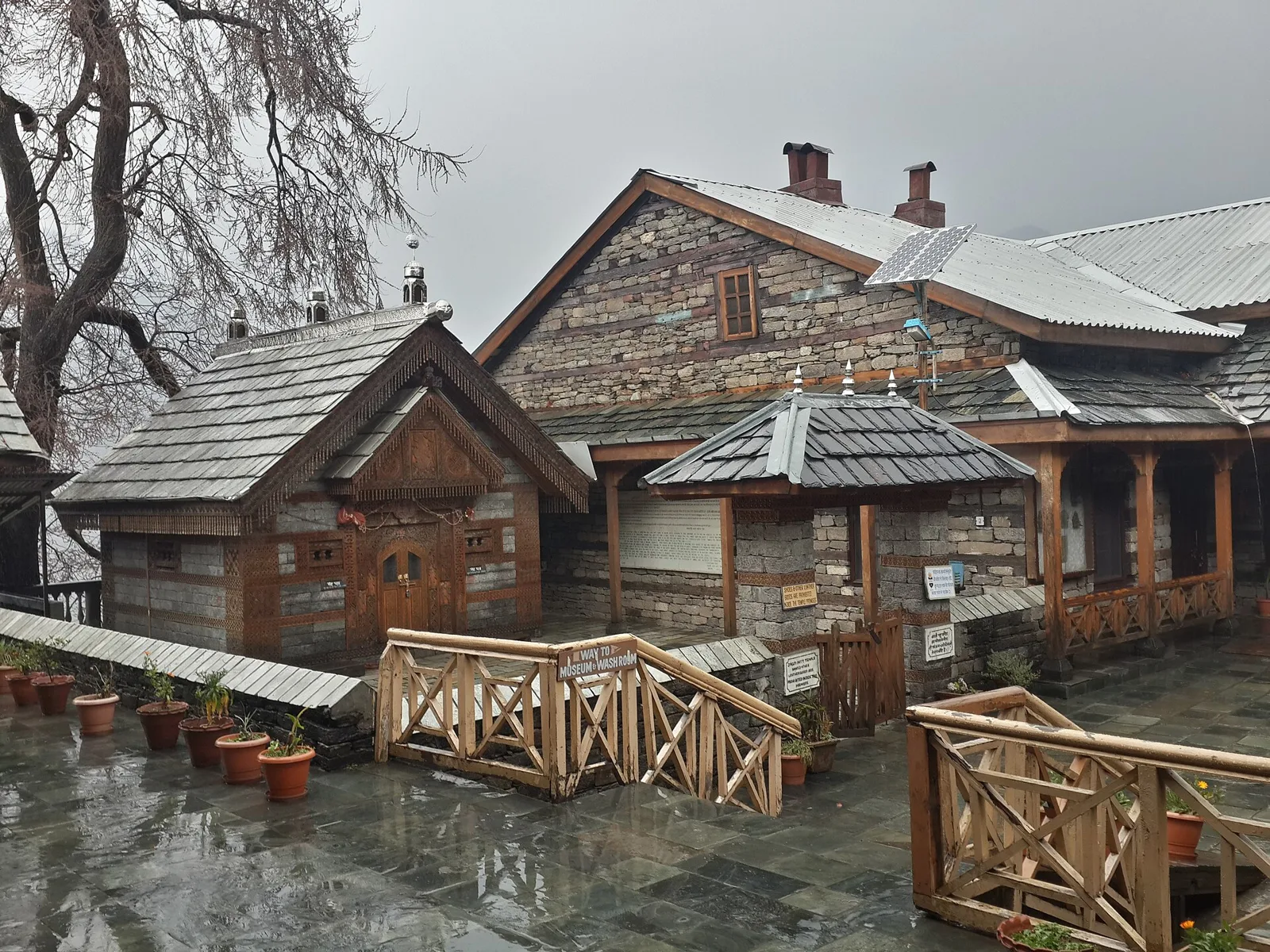
The castle is a substantial mountain building combining stone masonry with timber, a construction approach often associated with traditional Kullu architecture. Timber elements set within masonry help bind the structure and accommodate movement, an important consideration in an earthquake-prone Himalayan region. The building rises over a sloping site, with a compact, layered arrangement rather than the broad courtyards of many lowland forts. Stone walls, wooden balconies and carved timber details give the exterior its distinctive character; roof materials and individual features may have been altered or repaired over time. Inside, rooms and passages reflect its change from royal residence to heritage hotel, so some spaces are adapted for present use. The castle’s setting above the Beas valley also forms part of its architectural experience: the position offers views across the surrounding hills while making the approach steep in places. Visitors should follow any signs about areas closed to hotel guests or under maintenance.
Important objects & sculptures
Look for carved wooden details, timber balconies, traditional doorways and the contrast between stonework and wood that runs through the building. These features are useful clues to local craft and construction, though not every element should be assumed to date from the castle’s original building phase. The site is also associated with displays and interpretation that may explain Naggar and Kullu’s history; what is on view can change with hotel operations. Do not assume that the castle contains a permanent museum collection, a particular set of royal objects or original inscriptions. Read any labels provided, and ask staff or an authorised local guide about the age and meaning of features that are not clearly identified.
Explore Naggar Castle slowly and read the interpretation boards or hire an authorised guide to understand its history. Check opening days and ticket counters in advance, as many monuments and museums close on one weekday and on public holidays. A comfortable itinerary is one main visit in the morning, a local meal at midday and a short nearby stop before an afternoon return. Use the district list on this site to find other places in Kullu, but check the actual road route and its condition before combining stops. If a festival or fair is on, local roads and stays can be busy — and the experience can be unforgettable. Leave no litter: many sites are protected by the communities around them.
Suggested itineraries
Half day: Spend about 1–2 hours exploring the castle and its interpretation, then walk through nearby Naggar lanes and visit a local temple if open. Full day: Allow 1–2 hours for the castle, visit Naggar’s nearby temples and the Nicholas Roerich Art Gallery, pause for a local meal, then choose a short nearby walk or return to your base. Gentler option: Arrange a vehicle drop-off as close as permitted, focus on the castle’s accessible areas, and take breaks at nearby seating or cafés; check steps and access conditions in advance.
Naggar remains part of a living Kullu landscape where village devta traditions, temple customs and seasonal community gatherings are important. Kullui and other local Pahari speech forms are heard alongside Hindi, while visitors may also encounter English in tourism settings. Folk music and dance are associated with community celebrations across the valley, though performances are not a guaranteed feature of a castle visit. Local customs vary by village and occasion; follow guidance around temples, processions and sacred objects, and ask before photographing people. The castle itself now has a heritage-hotel role, so its daily atmosphere can include both local visitors and travellers rather than functioning solely as a historic monument.
Festivals & events
The best-known major celebration in the wider area is Kullu Dussehra, usually held in autumn, often around October. It brings processions and gatherings to Kullu town and can make accommodation and roads busier across the district. Naggar and nearby villages also observe local deity fairs and seasonal festivals, whose dates and scale follow community calendars and may vary from year to year. These events are not necessarily held at the castle. If planning a visit during a festival, check local notices and transport conditions, allow extra time on the roads, and be respectful around processions and religious observances.
Local food in Himachal Pradesh includes siddu (steamed stuffed bread), madra, dham (the traditional festive meal), chha gosht, trout from mountain streams, babru and fresh apples and apricots in season. Ask what is fresh that day; many small eateries cook a limited daily menu. Vegetarian travellers eat very well across this region, and most towns also have simple non-vegetarian dhabas. Remote sites may have no restaurant at all. Carry water and snacks, eat a proper breakfast before long drives, and ask your accommodation for a packed lunch if you are heading out early. Try a home-cooked or dhaba meal when you can — it is often the best food on the route. Choose busy, clean places and carry your packaging back to town.
Shopping & local experiences
Naggar and nearby market areas offer opportunities to look for Kullu shawls, woollens, woven goods and small locally made souvenirs. Ask sellers about materials and provenance, particularly for products described as handmade or traditional. Food shops and cafés may serve Himachali dishes and regional snacks, though menus vary by season and business. Shopping options immediately around the castle can be limited, so allow time in a larger village or town market if you want more choice. Choose items responsibly and avoid buying objects presented as old artefacts or taken from heritage sites.
March to June and October to November for most hill towns; May to October for Lahaul-Spiti and high passes
The nearest principal railway station by straight-line distance is Joginder Nagar (narrow gauge), roughly 40 km away. The nearest operating airport by straight-line distance is Kullu–Manali area heliports (seasonal), roughly 5 km away. These figures are calculated from map coordinates — hill roads wind a lot, so actual road distance and travel time are usually much longer. Chandigarh, Kalka and Pathankot are the main rail gateways for the hills, and the Kalka–Shimla toy train is itself a heritage journey. For the final leg, Himachal Road Transport Corporation (HRTC) buses and shared taxis link district towns; shared taxis usually leave early in the morning. A private taxi gives more flexibility for remote sites. When comparing train, bus and flight, count the complete door-to-door time: a flight saves the most time only if the onward road transfer is short, while an overnight train plus a road journey can save a hotel night. Book your return before you leave, because seats fill quickly on weekends and holidays. Current train numbers, timings, return services and fares are not listed here; check IRCTC and NTES for trains and the airline's own schedule for flights. No permit is needed for Indian visitors to most of Himachal Pradesh. Some stretches near the international border in Kinnaur and Lahaul-Spiti may have check posts, and foreign nationals should check current registration rules for border areas before travel.
Confirm onward and return timings on IRCTC / NTES, the state bus operator or your airline before travel. A dash means current timings or fares have not been verified.
Getting around
Naggar is best explored on foot once you reach the village, though the lanes are narrow and some approaches are steep. Local buses and shared or private taxis connect the area with larger settlements in Kullu district; services and road conditions can vary. A taxi offers more flexibility for combining stops, while bus users should check the return options locally rather than relying on a fixed schedule. Vehicles may not be able to reach every narrow lane or the castle entrance. Ask locally about suitable drop-off points and parking, and avoid blocking village roads.
Hours, tickets & permissions
Entry arrangements can vary because the castle is also operated as a heritage hotel. Sightseeing access, ticketing, photography rules and access to guest areas may depend on current management decisions or private functions. No permit or special dress rule should be assumed, but visitors should follow posted notices and staff instructions, especially around religious or private spaces. Confirm current opening days, hours and fees directly with the managing authority or locally before setting out. Carry identification if requested by the hotel or local security staff.
Facilities
Facilities at the castle may reflect its heritage-hotel operation, and access for day visitors can vary. Toilets, food or drink and indoor seating are usually easier to find in the village or at nearby hospitality businesses than at every point of the site. Check locally whether visitors may use hotel facilities. Parking may be limited near the narrow village lanes, and an ATM should not be assumed close by; carry suitable payment options. Guide availability is not guaranteed, so arrange an authorised guide in advance if detailed interpretation is important.
Accessibility
Naggar is on a hillside, and the approach to the castle and surrounding lanes can be steep, uneven or stepped. Inside, traditional layouts may include thresholds, narrow passages and stairs; do not assume wheelchair access, lifts or ramps. Strollers may be difficult to manoeuvre on rough lanes and steps. Older visitors or anyone with limited mobility may prefer a vehicle drop-off where permitted, a slower visit with rests, and a companion for uneven sections. Shade and seating can be intermittent. Ask the managing authority about current access before travelling, since building use and maintenance may affect which areas are open.
No permit is needed for Indian visitors to most of Himachal Pradesh. Some stretches near the international border in Kinnaur and Lahaul-Spiti may have check posts, and foreign nationals should check current registration rules for border areas before travel. Carry a photo ID at all times and save the emergency number 112 and your accommodation's contact offline. Altitude sickness is possible above about 2,500 m: ascend gradually, rest on arrival, drink water and turn back if you develop a severe headache, breathlessness or confusion. Hill roads are prone to landslides in the monsoon — avoid night driving and heavy-rain travel. Respect community rules, private property and posted instructions. Check official advisories for the region before travel, and follow local guidance if access changes.
Photography
Soft morning or late-afternoon light can bring out the contrast of stone, timber and the surrounding valley; views from public village lanes may offer additional perspectives. Photography rules can differ between public areas and hotel interiors, so check signs and ask staff before taking pictures inside. Do not photograph guests, staff or local residents without consent, and avoid interrupting worship or community events. Drone use may be restricted by aviation rules, local security concerns or the managing authority; obtain permission and check current regulations before flying.
Choose a stay by the full journey to Naggar Castle, not just the district name. Main towns in Kullu usually offer hotels, state tourism lodges and guesthouses with better transport, meals and medical access, while village homestays offer a closer connection to local life. At altitude, check heating, hot water and power backup, and expect cold nights for much of the year. Book in advance for weekends, festival dates and the peak season (March to June and October to November for most hill towns; May to October for Lahaul-Spiti and high passes). Confirm the exact location, meals included, check-in time and cancellation terms in writing. Many homestays accept payment on arrival; avoid sending money to unverified contacts. Mobile network and digital payments can be unreliable in remote areas, so carry some cash.
Within Naggar, visitors can combine the castle with the Nicholas Roerich Art Gallery and nearby temples, including the Gauri Shankar Temple and Tripura Sundari Temple. These are distinct sites with their own access and customs, so check locally whether they are open and observe any religious guidance. Kullu town offers another perspective on the district and is associated with the region’s major Dussehra celebrations. Manali is a larger nearby visitor base with its own temples, markets and attractions. Road time depends on conditions, so check the route before planning several stops in one day.
For couples, Naggar Castle rewards a slow pace: arrive early for soft light and fewer crowds, share a local meal and keep the evening free. Public displays of affection can be frowned upon in conservative communities and at religious sites, so be discreet. A homestay or a small heritage hotel can make the trip memorable — confirm privacy, hot water and transport back. Keep a buffer in your itinerary, because weather and traffic can delay plans in Himachal Pradesh.
Q: How much time should I allow for Naggar Castle? A: Allow around one to two hours for the castle itself, with extra time for Naggar’s temples, gallery or a meal. Q: When is a good season to visit? A: Spring through early summer and autumn are often comfortable for Kullu hill visits. Check weather and road conditions, especially during the monsoon and winter. Q: Is there an entry fee, and can day visitors enter? A: Access and fees may depend on current hotel operations. Confirm entry arrangements and charges with the managing authority before visiting. Q: Is the castle suitable for children and elderly visitors? A: Families can visit, but steep lanes, uneven surfaces and stairs may be challenging. Plan a slower visit and check access needs in advance. Q: Where can I stay nearby? A: Naggar has local accommodation, and Kullu town and Manali offer additional options. Check availability and road conditions before booking.
Be the first to share photos, stories, advice or a helpful contact for Naggar Castle.
Loading…