
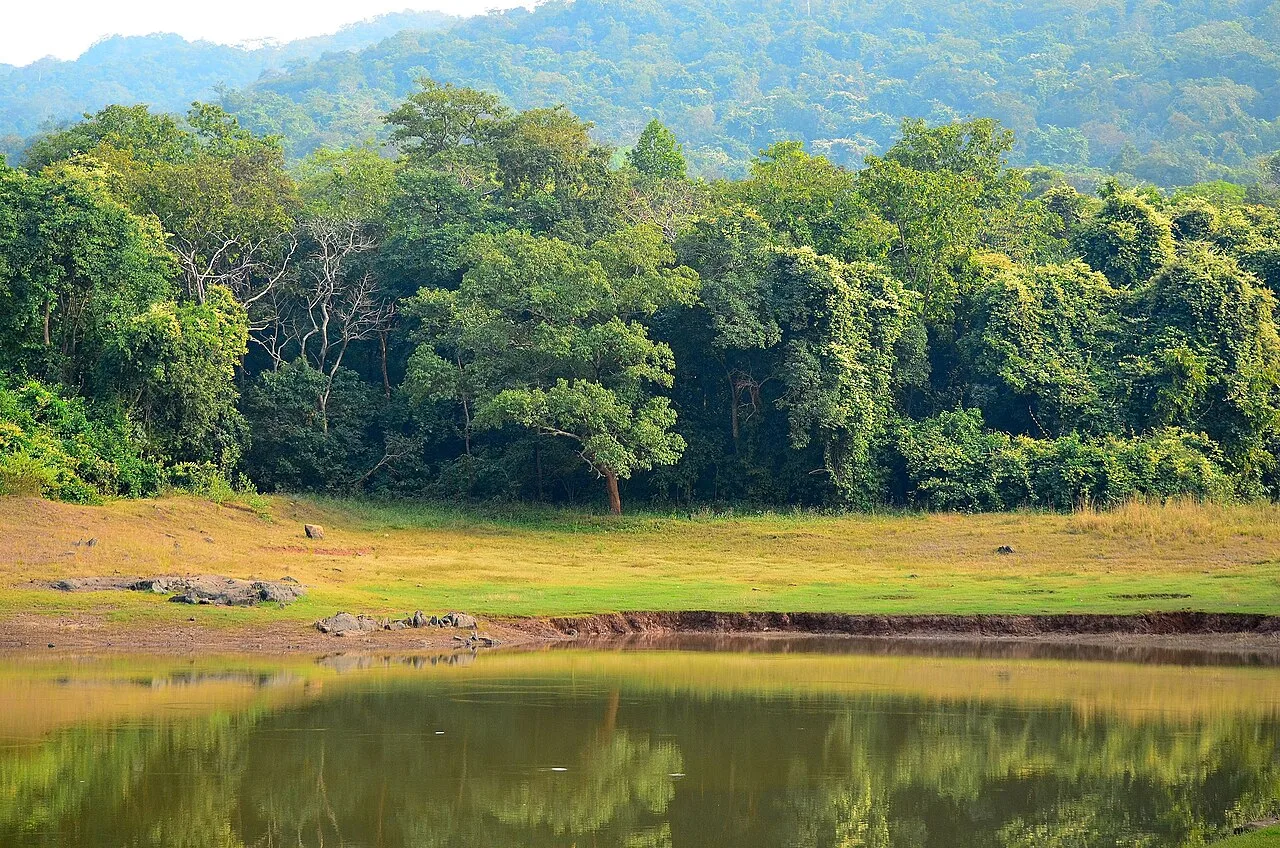
Dalma Wildlife Sanctuary
In Jharkhand’s East Singhbhum district, Dalma Wildlife Sanctuary is a wildlife refuge supporting Indian elephants. Visitors come to encounter its wildlife and elephant habitat.
Key facts · verified by Ghumoopedia editors
- Type of place
- National park / sanctuary
- Best time to visit
- October to February for sightseeing; July to September for waterfalls at full flow (expect slippery paths)
- Verified
- 21 Nov 2026
Plan a trip from Dalma Wildlife Sanctuary — a day-by-day route through places nearby.
Dalma Wildlife Sanctuary lies in East Singhbhum district, in the state of Jharkhand. It is a wildlife sanctuary, inaugurated in 1975. The sanctuary provides habitat for an Indian elephant population. These elephants are an important part of its wildlife role and identity. Its key details are its district and state, the year it was inaugurated, and the elephant population whose habitat it provides. Together, these facts describe the sanctuary’s location, history and wildlife significance. Its place in Jharkhand and elephant habitat are central to its profile. Jharkhand is the land of forests, waterfalls and Adivasi communities such as the Santhal, Ho and Munda, with major pilgrimages at Baidyanath Dham (Deoghar) and Shikharji (Parasnath). Jharkhand has hot summers from March to June, a monsoon from June to September when the waterfalls are at their fullest, and cool winters from November to February; the Netarhat plateau stays pleasant for much of the year. The usual best time to visit is October to February for sightseeing; July to September for waterfalls at full flow (expect slippery paths). Timings, fees and access arrangements must be confirmed locally. For official information, see Jharkhand Tourism at https://www.jharkhandtourism.gov.in.
Why it matters
Dalma Wildlife Sanctuary is a protected wildlife area in East Singhbhum district, Jharkhand, associated especially with habitat for Indian elephants. Its location in the Dalma Hills, close to Jamshedpur, gives it regional importance for wildlife conservation and nature-based visits from the city and surrounding districts. It is part of Jharkhand’s wider forest landscape, where protected areas sit alongside communities with longstanding connections to forest and farming livelihoods. No UNESCO designation or Archaeological Survey of India protected-monument status is identified here. Visitors should check with the managing forest authority for current access arrangements and conservation guidance.
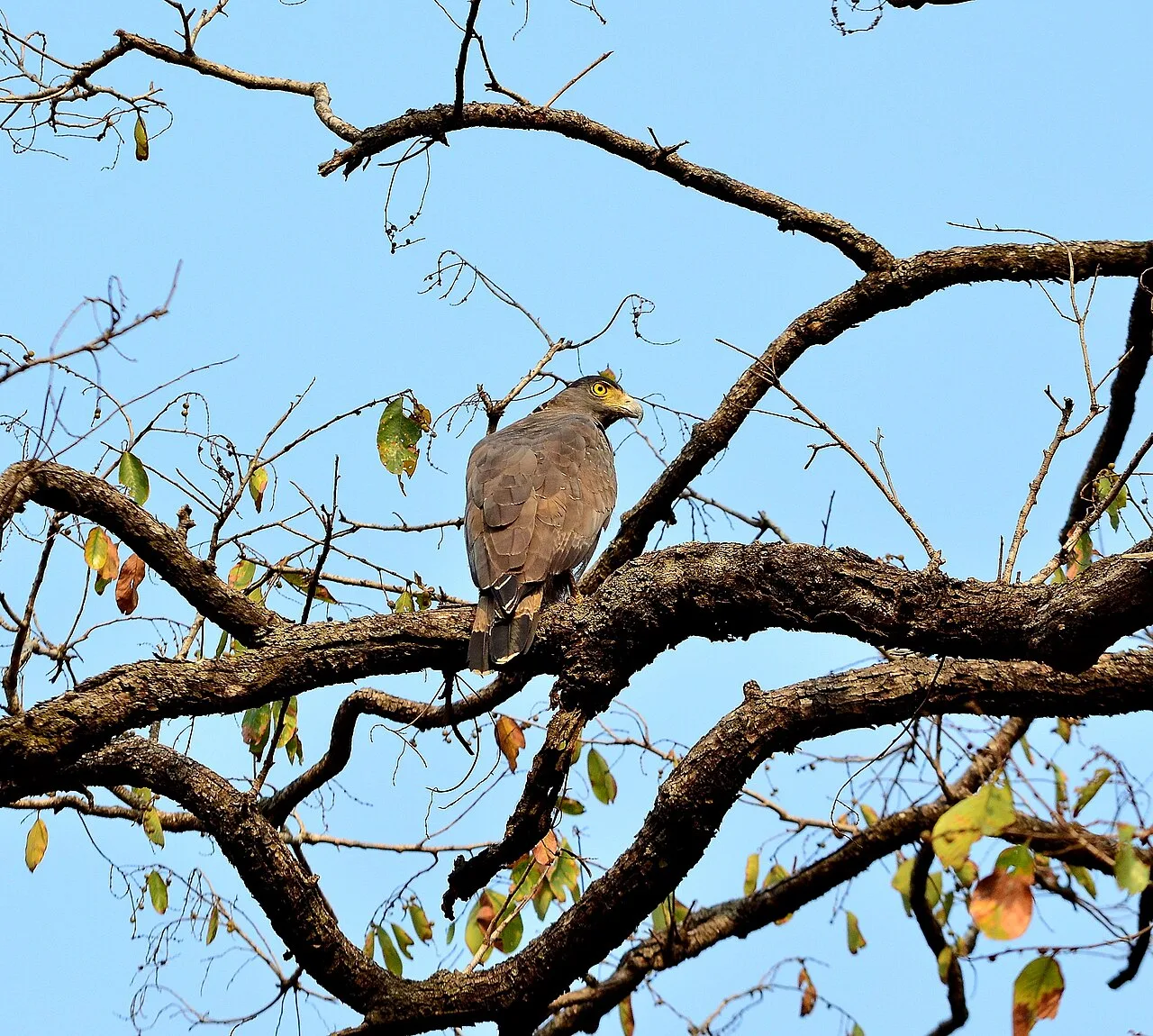
Dalma Wildlife Sanctuary is in the Dalma Hills of East Singhbhum district, north of the Jamshedpur area. The sanctuary was inaugurated in 1975. This is the documented milestone used here; details about the specific declaration process, original builders or an earlier formal boundary are not established in the available guide, so they should not be assumed. The landscape had long been part of the wider forest and hill environment used by communities in the region, but a detailed account of historical land use at particular sites requires reliable local or archival sources. Since its establishment, the area has been managed as a wildlife sanctuary, with protection of forest habitat and its Indian elephant population among its central roles. Its proximity to Jamshedpur has also made it a familiar destination for day visits, while wildlife protection means that visitor access may be guided by forest rules and current conditions. Conservation priorities, permitted routes and facilities can change over time. Ask the managing authority for current information rather than relying on older descriptions or treating all parts of the sanctuary as open to visitors.
Spend unhurried time at Dalma Wildlife Sanctuary: walk the marked paths, use official viewpoints and ask locally whether a guide, entry ticket or forest permission is needed. Weather can change quickly, so carry a rain layer even on a clear morning. Wildlife sightings are never guaranteed — patience and quiet improve your chances. A comfortable itinerary is one main visit in the morning, a local meal at midday and a short nearby stop before an afternoon return. Use the district list on this site to find other places in East Singhbhum, but check the route and its condition before combining stops. If a festival or fair is on — such as the Shravani Mela at Deoghar or Sarhul — roads and stays can be busy, and the experience can be unforgettable. Leave no litter: many sites are protected by the communities around them.
Suggested itineraries
Half day: From Jamshedpur, travel to the authorised access point; allow time for entry formalities, then spend a few unhurried hours on permitted paths or at approved viewpoints before returning. Full day: Set out in the morning; complete entry formalities, explore an authorised route with a guide if required, pause for a packed or locally arranged meal, then make a short stop in Jamshedpur before returning. Gentler option: Choose the shortest approved route or an accessible viewpoint, keep walking to a minimum, and arrange transport close to the entry point; confirm terrain and vehicle access in advance.
The sanctuary is a natural area rather than a cultural attraction with scheduled performances. Around East Singhbhum, everyday cultural life includes Adivasi and other regional traditions, with languages such as Ho, Santhali, Hindi and Bengali heard in the wider area. Sarhul, Karma and Sohrai are among the seasonal festivals observed by communities in Jharkhand, though celebrations vary by village and are not necessarily held inside the sanctuary. Jamshedpur also has a diverse urban cultural life shaped by migration and industry. Visitors can experience local food and customs respectfully by asking before photographing people, ceremonies or community spaces, and by following any guidance from residents or forest staff.
Local communities
Ho, Santhal and Munda communities are among the Adivasi peoples of the wider Jharkhand region; the communities around Dalma are diverse, and their connections to particular parts of the landscape should not be presumed. Livelihoods in the surrounding district include farming, wage work, forest-related activities where permitted, and employment in nearby towns and Jamshedpur. The sanctuary’s protected status means that access and resource use are subject to rules. Visitors should respect local privacy, avoid treating communities as attractions, and seek permission before taking photographs or entering private or community spaces.
Festivals & events
Sarhul, a spring festival, and Karma, commonly associated with the monsoon season, are observed in parts of Jharkhand; Sohrai is associated with the post-harvest period. Tusu festivities are also part of the wider regional calendar. Practices and dates vary between communities, and these events are not necessarily held within Dalma Wildlife Sanctuary. Durga Puja brings public celebrations in Jamshedpur and other nearby towns, while major events can make roads, accommodation and markets busier. Check local information before planning a visit around a festival, and do not enter ceremonies or photograph participants without permission.
Local food in Jharkhand includes dhuska, rugra (bamboo shoot and mushroom dishes), handia (rice beer, offered by tribal communities), litti, arsa roti, pittha, chilka roti and mahua-based preparations. Ask what is fresh that day; many small eateries cook a limited daily menu. Vegetarian travellers eat very well across this region, and most towns also have non-vegetarian options. Remote sites may have no restaurant at all. Carry water and snacks, eat a proper breakfast before long drives, and ask your accommodation for a packed lunch if you are heading out early. Try a home-cooked or dhaba meal when you can — it is often the best food on the route. Choose busy, clean places, drink sealed or filtered water, and carry your packaging back with you.
Shopping & local experiences
Jamshedpur markets are the most practical places nearby to look for everyday regional foods, snacks and locally made goods. Depending on availability, visitors may find textiles, household items and crafts associated with Jharkhand’s diverse communities; ask sellers about origin rather than assuming an item represents one group. Buy from legitimate shops and avoid products made from wildlife, forest materials taken unlawfully or animal parts. A meal in town can be an easy way to sample regional cooking. There may be few or no dependable shops at the sanctuary itself, so bring essentials from Jamshedpur.
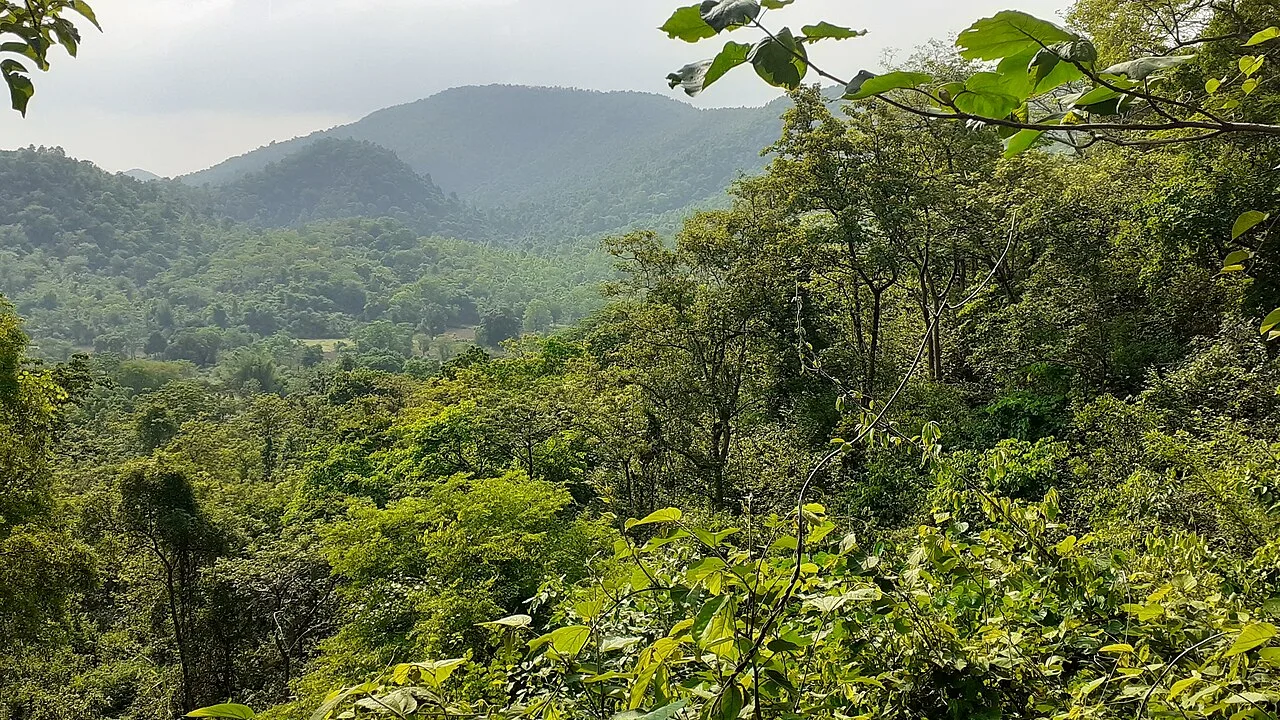
Dalma Wildlife Sanctuary covers forested hills in the Dalma range, within the broader landscape of East Singhbhum. Its forests provide habitat for an Indian elephant population, the wildlife feature most strongly associated with the sanctuary. The region’s dry deciduous woodland includes trees such as sal and bamboo in parts of the landscape, though vegetation varies with slope, season and local conditions. Other mammals and forest birds may occur, but sightings are unpredictable and should never be expected. The monsoon brings greener growth and can make paths slippery; the dry months may offer clearer walking conditions. Keep to permitted routes, maintain a quiet distance from wildlife, and follow forest staff instructions, especially where elephants may be present.
October to February for sightseeing; July to September for waterfalls at full flow (expect slippery paths)
The nearest principal railway station by straight-line distance is Tatanagar Junction, Jamshedpur, roughly 15 km away. The nearest operating airport by straight-line distance is Sonari Airport, Jamshedpur (limited flights), roughly 10 km away. These figures are calculated from map coordinates — actual road distance is longer. Ranchi, Dhanbad, Tatanagar (Jamshedpur), Bokaro and Gomoh are the main rail gateways, and Ranchi, Deoghar and Durgapur have airports. For the final leg, Jharkhand State Transport buses, private buses and shared Sumo and Bolero jeeps link district towns; shared jeeps usually leave early in the morning. A private taxi gives more flexibility for remote sites. When comparing train, bus and flight, count the complete door-to-door time: a flight saves the most time only if the onward road transfer is short, while an overnight train can save a hotel night. Book your return before you leave, because seats fill quickly on weekends, festivals and holidays. Current train numbers, timings, return services and fares are not listed here; check IRCTC and NTES for trains and the airline's own schedule for flights. No permit is needed to visit Jharkhand. Some forest and mining areas have check posts, and a few interior pockets are affected by Left-wing extremism — check current advisories with your host or the district administration before travelling to remote areas, and avoid travelling on isolated roads after dark.
Confirm onward and return timings on IRCTC / NTES, the state bus operator or your airline before travel. A dash means current timings or fares have not been verified.
Getting around
Jamshedpur is the usual urban base for reaching the sanctuary area. Autos and taxis can be used to get around the city, while a private taxi or arranged vehicle is generally more flexible for the forest approach and return. Local buses and shared vehicles serve parts of the district, but their routes may not take visitors to the required entry point. Confirm the last leg and road condition locally before travelling. Walking is appropriate only on routes open to visitors; do not enter forest tracks independently. Check whether vehicle access and parking are currently permitted at your chosen entry point.
Hours, tickets & permissions
Entry arrangements depend on the access point, forest conditions and current sanctuary rules. Visitors may need to register, obtain an entry ticket or secure permission, and some routes may require an authorised guide or vehicle. Camera restrictions or separate photography conditions may apply. Carry identification if requested and follow instructions from the managing forest authority. Do not rely on old online listings for opening periods, fees or access. Confirm current hours, fees, permitted routes and any required permissions with the authority before setting out.
Facilities
Facilities inside the sanctuary may be limited and can vary by entry point and season. Toilets, drinking water, food stalls, guides and parking should not be assumed to be available at every location; check locally before departure. Jamshedpur is the more reliable place to arrange meals, cash and other essentials. Carry drinking water and any personal medicines, and take all rubbish back with you. If a guide or forest permission is required, confirm how to arrange it with the managing authority rather than relying on informal offers.
Accessibility
The sanctuary is a forested hill landscape, so paths may be uneven, sloped, muddy or rocky, and some routes may include steps. Walking distance and shade vary by route and weather. Wheelchair and stroller access should not be assumed; confirm the exact entry point, surface and vehicle arrangements before travelling. Older visitors or anyone with limited mobility may find a short visit to an approved viewpoint more manageable than a longer trail. Heat, rain and the possibility of wildlife on routes also affect comfort. A companion and suitable footwear can help, but follow forest staff advice about where it is safe to walk.
No permit is needed to visit Jharkhand. Some forest and mining areas have check posts, and a few interior pockets are affected by Left-wing extremism — check current advisories with your host or the district administration before travelling to remote areas, and avoid travelling on isolated roads after dark. Carry a photo ID at all times and save the emergency number 112 and your accommodation's contact offline. Heat in summer and fog in winter are the main weather risks; carry water and allow extra travel time on foggy December–January mornings. Stay on marked paths, keep away from cliff edges and fast water, and never approach wild animals. Follow local guidance if access changes.
Visitor rules
Follow all instructions from forest staff and remain within authorised visitor areas; some tracks or forest sections may be restricted. Wear practical, subdued clothing and sturdy footwear suited to uneven ground. Do not approach, feed, call or chase wildlife, and keep noise low. Carry plastic only where permitted and take all waste away; do not leave food scraps. Ask before photographing residents, workers or ceremonies. Photography may be limited in some places, and drones should not be used without explicit permission. Check current sanctuary rules before entry, as restrictions can change with wildlife and forest conditions.
Photography
Soft morning or late-afternoon light can suit the hills and forest, but access and weather matter more than a particular viewpoint. Photograph only from permitted paths and approved viewpoints, and do not approach wildlife to improve a shot. Ordinary photography may be subject to local restrictions or fees, so check with the forest authority before entering. Do not assume drones are allowed; obtain explicit permission if considering one. Ask people before taking their portraits, and avoid photographing rituals or private community spaces without consent. Never use flash or sound to attract animals.
Choose a stay by the full journey to Dalma Wildlife Sanctuary, not just the district name. Ranchi, Jamshedpur and Deoghar offer the widest choice; forest rest houses near the sanctuaries must be booked through the forest department. In summer, check air-conditioning or coolers; in December and January, check hot water. Book in advance for weekends, festivals and the peak season (October to February for sightseeing; July to September for waterfalls at full flow (expect slippery paths)). Confirm the exact location, meals included, check-in time and cancellation terms in writing. Avoid sending money to unverified contacts or touts at stations. Carry some cash, as card and digital payments can be unreliable in remote areas.
Jamshedpur offers urban stops that can be combined with a sanctuary visit, including Jubilee Park and Tata Steel Zoological Park. Dimna Lake is another known destination in the Jamshedpur area; check local access and conditions before planning a visit. These are separate attractions, so allow for road travel and avoid trying to fit too many stops into a short day. Tatanagar Junction serves the city as a major rail gateway. Confirm routes and current opening or access arrangements for each place independently, especially during heavy rain or festival periods.
For couples, Dalma Wildlife Sanctuary rewards a slow pace: arrive early for soft light and fewer crowds, share a local meal and keep the evening free. A waterfall viewpoint after the monsoon or a sunset from a hill temple makes the trip memorable. Public displays of affection can be frowned upon in conservative communities and at religious sites, so be discreet. Keep a buffer in your itinerary, because weather and road conditions can delay plans.
Q: How much time should I allow for Dalma Wildlife Sanctuary? A: A half-day visit can work from Jamshedpur, but allow extra time for travel, entry arrangements and walking at an unhurried pace. Q: When is a good season to visit? A: October to February is generally suitable for sightseeing. The monsoon brings lush conditions but can make paths slippery; check access locally. Q: Is entry ticketed, and do I need permission? A: Tickets, registration, permissions or a guide may be required depending on current rules and route. Confirm with the managing forest authority before travelling. Q: Is the sanctuary suitable for children and older visitors? A: It can be, with supervision and a short approved route, but uneven terrain, weather and wildlife mean visitors should assess mobility and comfort carefully. Q: Where should I stay nearby? A: Jamshedpur is the most practical base for accommodation and services. Confirm your stay and transport arrangements before setting out.
Be the first to share photos, stories, advice or a helpful contact for Dalma Wildlife Sanctuary.
Loading…