
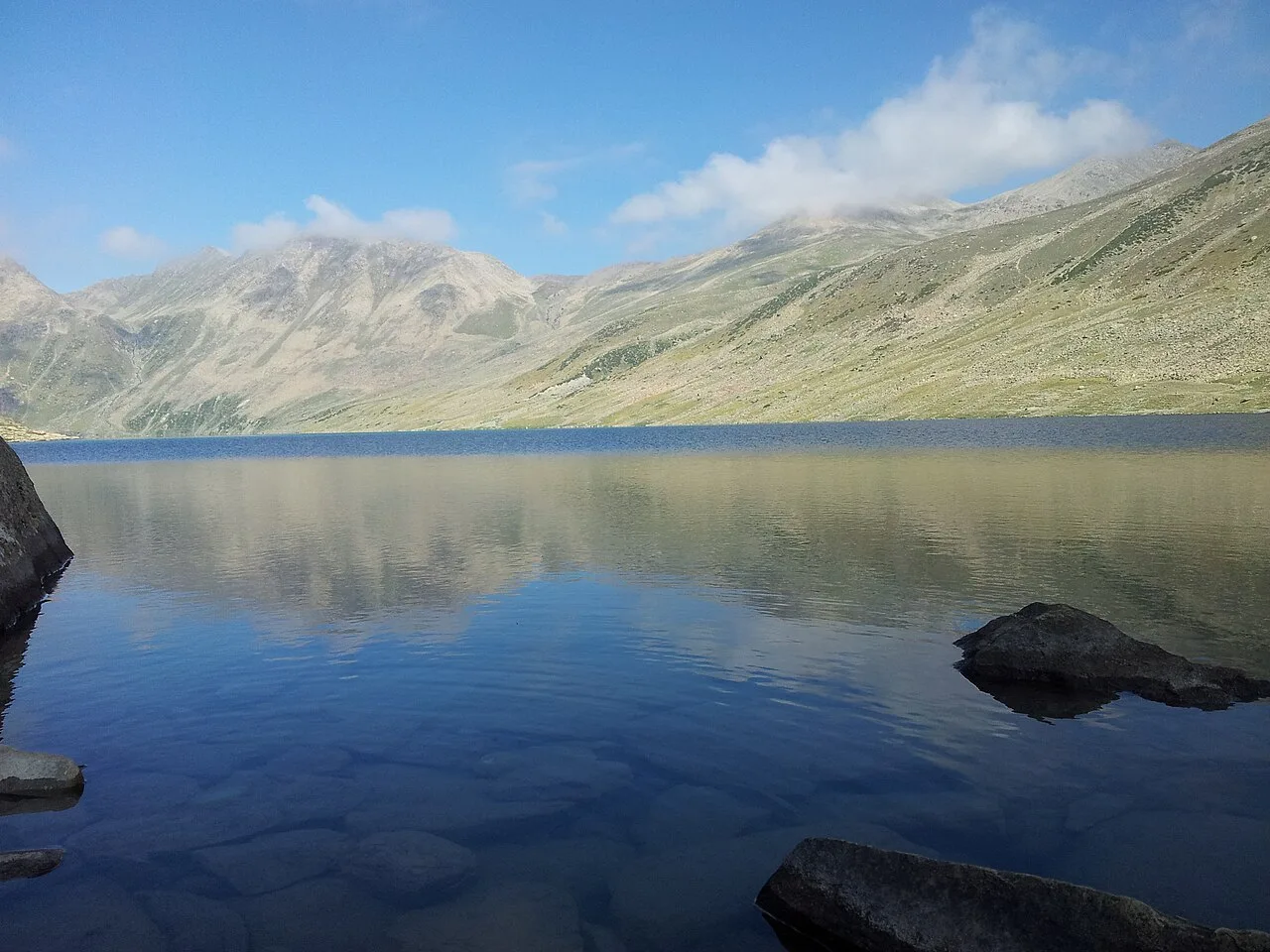
Gangabal Lake
Gangabal is a high-altitude glacial lake in Jammu and Kashmir. Visitors come for its Hindu significance, including pilgrimage and Kashmiri Hindu rites honouring ancestors and the dead.
Key facts · verified by Ghumoopedia editors
- Type of place
- Natural attraction
- Best time to visit
- April to October for the Kashmir Valley and meadows; December to February for snow at Gulmarg; October to March for Jammu and the plains
- Nearest railway station
- Srinagar (Nowgam) · about 45 km (straight line)
- Verified
- 21 Nov 2026
Plan a trip from Gangabal Lake — a day-by-day route through places nearby.
Gangabal, also known as Haramukh Ganga, is a glacial lake in Ganderbal district of Jammu and Kashmir. Its name refers to a place associated with Ganga. It lies high in the Himalayas beneath Mount Harmukh. At its greatest extent, the lake measures 2.5 kilometres in length and 1 kilometre in width. Rain, glacier meltwater and springs replenish the lake. Oligotrophic in character, its waters support several fish species, including brown trout. Water flows from Gangabal into nearby Nundkol Lake, then reaches the Sind River by way of Wangath Nallah. Tradition identifies Gangabal as the source of the Sind. Hindu belief regards the lake as a sacred dwelling of Shiva, and it is a pilgrimage destination. Kashmiri Hindus visit to conduct ancestral observances and rites connected with death. Kashmir is known for its Sufi shrines, Mughal gardens, houseboats and crafts such as pashmina, papier-mâché and carpets, while the Jammu region is the land of Dogra heritage and major Hindu pilgrimages. The Kashmir Valley has mild summers, colourful autumns and snowy winters, with Chillai Kalan (late December to January) the coldest spell; meadows such as Gulmarg and Sonamarg get heavy snow. Jammu and the plains are hot from April to June. Snow and landslides can close the Jammu–Srinagar highway and mountain roads. The usual best time to visit is April to October for the Kashmir Valley and meadows; December to February for snow at Gulmarg; October to March for Jammu and the plains. Timings, fees and access arrangements must be confirmed locally. For official information, see Jammu and Kashmir Tourism at https://jktourism.jk.gov.in.
Why it matters
Gangabal Lake is a high-altitude glacial lake in Ganderbal district, at the foot of Mount Harmukh. Also known as Haramukh Ganga, it is notable in Kashmir’s mountain landscape and is regarded in Hindu tradition as a sacred abode of Shiva. Kashmiri Hindu pilgrims visit the lake and perform ancestral and death rites there. Its water flows to nearby Nundkol Lake and then towards the Sind River through Wangath Nallah; tradition identifies this watershed with the river’s source. The lake also has ecological importance: it is oligotrophic and supports fish, including brown trout. No UNESCO or ASI protected-site designation for the lake itself is confirmed here; check with local authorities for current conservation or access status.
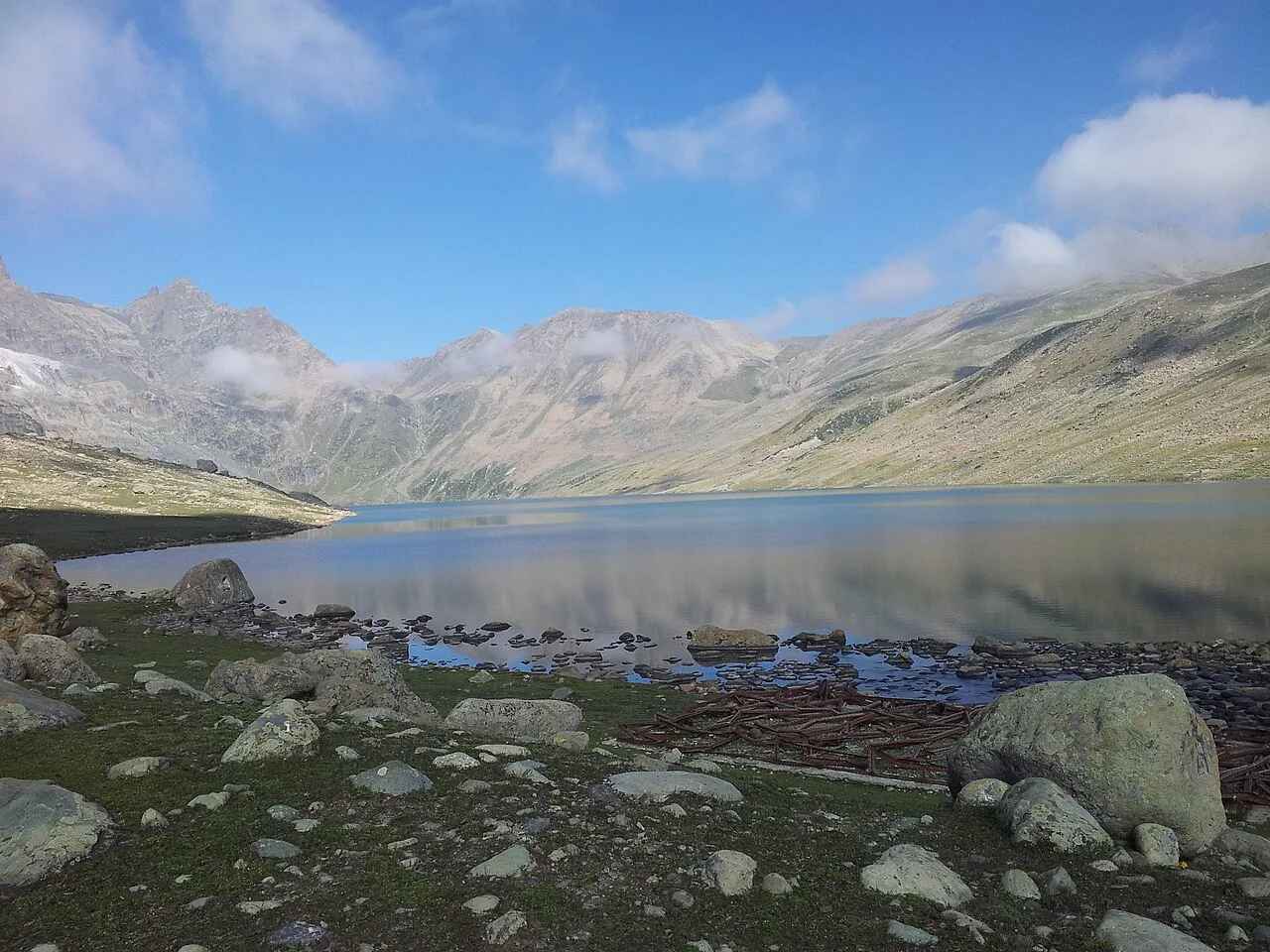
Gangabal is a natural lake, not a built monument, and there is no documented builder or construction period associated with it. Its long-standing importance is instead tied to the landscape, pilgrimage and local memory. Hindu tradition identifies the lake with Shiva and gives it the name Haramukh Ganga, while Gangabal is commonly interpreted as “place of Ganga.” Kashmiri Hindu pilgrims have used the area for worship and for rites connected with ancestors and the dead. A seasonal pilgrimage to the lake is part of this religious history, although practices and access can vary over time. The wider Wangath–Naranag area contains the remains of a historic stone temple complex. The Naranag temples are often associated with the Karkota ruler Lalitaditya, traditionally dated to the eighth century; this attribution concerns the nearby complex, not the lake. The high mountain setting has meant that access has historically depended on foot routes and seasonal conditions. There is no well-established account of major restoration works at Gangabal itself. Today, pilgrimage, trekking and interest in the lake’s natural environment are balanced with the need to follow local guidance and protect a fragile high-altitude setting.
Origin stories & folklore
According to Hindu belief, Mount Harmukh is associated with Shiva, and Gangabal is one of his abodes. The name Haramukh Ganga reflects this sacred association, while Gangabal is commonly understood as “place of Ganga.” Local religious tradition also connects the lake with the Sind River’s beginnings, although its water reaches the river system by way of Nundkol Lake and Wangath Nallah. These are beliefs and customary explanations rather than claims about the lake’s geological formation. Pilgrims have regarded the water and surrounding landscape as sacred, and some visit to perform rites for ancestors and the dead. Visitors should observe ceremonies respectfully and ask before photographing people or rituals.
Spend unhurried time at Gangabal Lake: walk the marked paths, use official viewpoints and ask locally whether a guide, entry ticket or permit is needed. Enjoy the water from safe points; take boats only from licensed operators and wear a life jacket where offered. Wildlife sightings are never guaranteed — patience and quiet improve your chances. A comfortable itinerary is one main visit in the morning, a local meal at midday and a short nearby stop before an afternoon return. Use the district list on this site to find other places in Ganderbal, but check the route and its condition before combining stops. If a festival or fair is on, roads and stays can be busy — and the experience can be unforgettable. Leave no litter: many sites are protected by the communities around them.
Suggested itineraries
Half day: Visit the Naranag temple complex (about 1–2 hours) and take a short, locally advised walk on the lower trail; this is an alternative, not enough time to reach Gangabal and return. Full day: Start at Naranag with an early departure and local route check; hike towards Gangabal with several hours allowed each way, take a brief lakeside rest, then return only if conditions and daylight permit. The trek is demanding; an overnight plan may be safer. Gentler option: Spend time at Naranag and its lower-access viewpoints, avoiding the steep high-altitude trek.
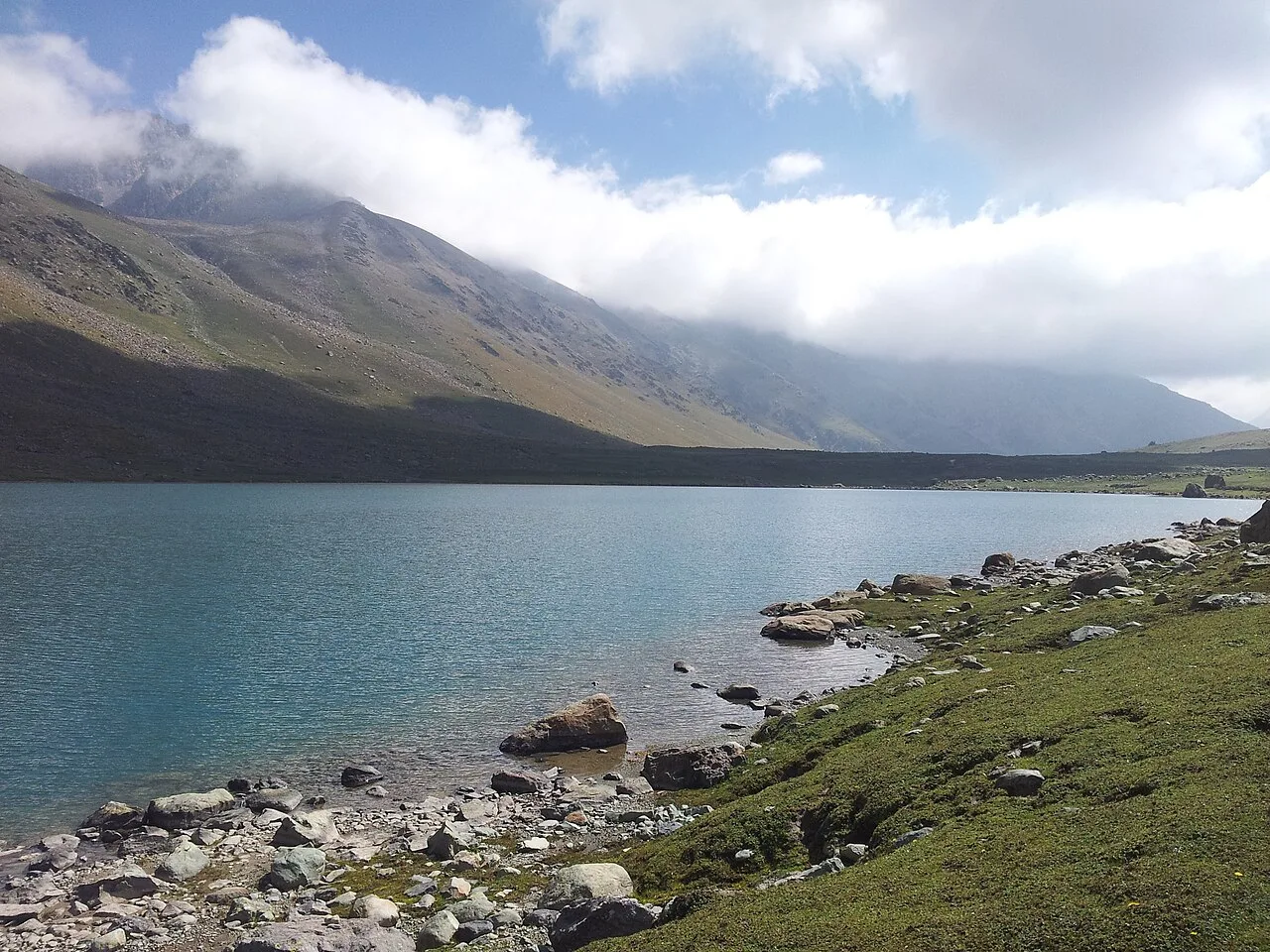
The lake’s cultural life is shaped by both Kashmiri Hindu pilgrimage and the wider traditions of Ganderbal district. The seasonal journey to Gangabal brings worshippers into a high mountain environment where religious observances are conducted in keeping with family and community customs. Kashmiri is widely spoken in the region; Urdu and other languages, including Gojri, may also be heard. In nearby towns, everyday cultural life includes local foods, hospitality, and Kashmiri crafts. Music, dress and celebrations vary across communities and occasions, so visitors should avoid treating one custom as representative of everyone. At the lake, modest conduct, quiet around worshippers, and asking permission before taking portraits are considerate practices.
Local communities
Kashmiri Hindu pilgrims have a longstanding religious connection with Gangabal, including through worship and rites for ancestors. People from Ganderbal and nearby settlements also connect with the surrounding mountains through guiding, transport, seasonal work and hospitality. Pastoral communities use highland areas for grazing according to local practice and conditions; visitors should not enter camps or photograph people without permission. The wider district is home to communities with varied languages, faiths and livelihoods. Local knowledge is especially important for understanding trail conditions, weather and access, so visitors should seek advice from people familiar with the route and follow their guidance without assuming that all residents share the same customs or views.
Festivals & events
The main event associated with the lake is the seasonal Harmukh-Gangbal pilgrimage, traditionally undertaken by Kashmiri Hindu devotees in late summer or early autumn. Its timing can vary with the religious calendar, weather and access conditions, so confirm locally rather than relying on a fixed date. Pilgrimage periods can bring more people onto the trail and increase demand for transport, guides and nearby accommodation. Hindu festivals such as Shivratri are observed by communities in the wider region, but they are not necessarily events held at the lake. Conditions at this altitude can change quickly; visitors should not assume that a festival guarantees safe or open access.
Local food in Jammu and Kashmir includes Kashmiri Wazwan dishes such as rogan josh, yakhni, gushtaba and rista, nadru (lotus stem), haak saag, dum aloo, kahwa and salty noon chai; in the Jammu region, rajma-chawal, kalari cheese and Dogra dishes such as ambal and auria. Ask what is fresh that day; many small eateries cook a limited daily menu. Vegetarian travellers eat very well across this region, and most towns also have non-vegetarian options. Remote sites may have no restaurant at all. Carry water and snacks, eat a proper breakfast before long drives, and ask your accommodation for a packed lunch if you are heading out early. Try a home-cooked or dhaba meal when you can — it is often the best food on the route. Choose busy, clean places and carry your packaging back with you.
Shopping & local experiences
There is no dependable shopping at Gangabal, so bring trekking essentials from Ganderbal or Srinagar. In town markets, visitors may find Kashmiri crafts such as pashmina, carpets and papier-mâché, but check provenance and quality before buying. Local food and tea are better sought in settlements along the road than at the lake; availability can be seasonal. Buy from local businesses where possible, avoid purchasing items made from wildlife or protected plants, and carry reusable containers to reduce waste in the mountain environment.
Gangabal lies in a rugged high-altitude setting beneath Mount Harmukh, with glacially shaped slopes, open alpine ground and a cold-water lake. It is fed by precipitation, glaciers and springs. The lake is oligotrophic, meaning its waters are relatively low in nutrients, and brown trout are among the fish reported here. Water flows onward to Nundkol Lake and through Wangath Nallah towards the Sind River. Alpine grasses and seasonal wildflowers may appear during the warmer months, while snow and harsh weather shape the landscape for much of the year. The surrounding mountain habitat may support wildlife and birdlife, but sightings are never assured. Stay on established paths, carry out rubbish and avoid disturbing animals or fragile vegetation.
April to October for the Kashmir Valley and meadows; December to February for snow at Gulmarg; October to March for Jammu and the plains
The nearest principal railway station by straight-line distance is Srinagar (Nowgam), roughly 45 km away. The nearest operating airport by straight-line distance is Sheikh ul-Alam International Airport, Srinagar, roughly 50 km away. These figures are calculated from map coordinates — mountain roads wind a lot, so actual road distance and travel time are usually much longer. Jammu Tawi and Shri Mata Vaishno Devi Katra are the main long-distance rail gateways, and the line through the Chenab bridge now continues into the Kashmir Valley — check current services to Srinagar. Srinagar and Jammu airports have the most flights. For the final leg, J&K Road Transport Corporation (JKRTC) buses, private minibuses and shared Sumo taxis link district towns; shared taxis usually leave early in the morning. A private taxi gives more flexibility for remote sites. When comparing train, bus and flight, count the complete door-to-door time: a flight saves the most time only if the onward road transfer is short, while an overnight train can save a hotel night. Book your return before you leave, because seats fill quickly on weekends, festivals and holidays. Current train numbers, timings, return services and fares are not listed here; check IRCTC and NTES for trains and the airline's own schedule for flights. Indian visitors do not need a permit for the main destinations in Jammu and Kashmir. Areas close to the Line of Control, such as Gurez, Bangus, Keran and Machil, may require registration at police or army check posts, and foreign nationals face extra restrictions in some areas. Prepaid mobile SIM cards issued outside Jammu and Kashmir do not work here, so carry a postpaid connection. The Amarnath Yatra needs advance registration and a compulsory health certificate, and Vaishno Devi pilgrims need a yatra registration (RFID) card. Read your government's travel advisory and current local advisories before you go.
Confirm onward and return timings on IRCTC / NTES, the state bus operator or your airline before travel. A dash means current timings or fares have not been verified.
Getting around
Most visitors travel by road from Srinagar or Ganderbal towards Naranag, then continue on foot along the mountain trail; there is no ordinary road transfer to the lakeshore. Shared vehicles, private taxis or local transport may be available for the road leg, but availability can vary and should be checked in advance. Arrange a return plan before starting the trek, as transport may be limited later in the day. Walking is essential for the final approach, and local guides can advise on route conditions. Do not expect autos, boats, regular buses or dependable parking at the lake itself.
Hours, tickets & permissions
Gangabal is an outdoor mountain destination rather than a conventional attraction with a dependable staffed gate, so fixed public opening hours may not apply. Access can depend on weather, trail condition, security advice and any current administrative or forest rules. Registration, a local guide or other permission may be required in some circumstances; do not assume that entry is unrestricted. Camera rules can also vary, particularly around people, ceremonies or restricted areas. Confirm current access arrangements, permitted routes, hours and any fees with the district administration, tourism officials or other relevant local authority before setting out.
Facilities
Facilities at the lake are very limited or absent; do not count on toilets, treated drinking water, food stalls, mobile coverage or an ATM there. Carry sufficient water, food, suitable clothing and any personal medicines, and pack out all rubbish. Basic services may be available in Naranag or larger nearby towns, but confirm what is open before travelling. Guides and transport should be arranged locally in advance where possible. Overnight camping or other stays may be subject to local rules and conditions, so ask authorities or a knowledgeable local operator before planning to camp.
Accessibility
Reaching Gangabal involves a long mountain walk from Naranag over uneven, steep and potentially slippery terrain, with no confirmed step-free route to the lake. The high altitude and exposure to changing weather make the trek strenuous, and shade and resting places may be limited. It is generally unsuitable for wheelchairs and strollers, and may be difficult for elderly visitors or anyone with mobility, heart or breathing concerns. There is no dependable lakeside assistance or surfaced accessible path. A gentler alternative is to visit the Naranag temple area or remain on a lower, locally recommended section of the route. Seek medical and local advice before attempting the trek.
Indian visitors do not need a permit for the main destinations in Jammu and Kashmir. Areas close to the Line of Control, such as Gurez, Bangus, Keran and Machil, may require registration at police or army check posts, and foreign nationals face extra restrictions in some areas. Prepaid mobile SIM cards issued outside Jammu and Kashmir do not work here, so carry a postpaid connection. The Amarnath Yatra needs advance registration and a compulsory health certificate, and Vaishno Devi pilgrims need a yatra registration (RFID) card. Read your government's travel advisory and current local advisories before you go. Carry a photo ID at all times and save the emergency number 112 and your accommodation's contact offline. Altitude sickness is possible above about 2,500 m: ascend gradually, rest on arrival, drink water and turn back if you develop a severe headache, breathlessness or confusion. Snow and landslides can close roads at short notice — avoid night driving and keep a spare day. Stay on marked paths, keep away from cliff edges and fast water, and never approach wild animals. Follow local guidance if access changes.
Photography
Clear mornings can offer crisp views of the lake and Mount Harmukh, while changing cloud and late-day light may add atmosphere; conditions are unpredictable. Photograph from stable ground and established paths, and keep a safe distance from the water’s edge. General landscape photography is usually possible, but confirm any local restrictions before taking pictures. Ask permission before photographing residents, pilgrims, camps or ceremonies, and do not interrupt religious observances. Drone use may be restricted by security, aviation or local rules; check with the relevant authority and do not fly without permission.
Choose a stay by the full journey to Gangabal Lake, not just the district name. Srinagar houseboats, Jammu and Katra hotels and resort towns such as Gulmarg and Pahalgam offer the widest choice; book houseboats only through registered owners. At altitude, check heating, hot water and power backup, and expect cold nights for much of the year. Book in advance for weekends, festivals and the peak season (April to October for the Kashmir Valley and meadows; December to February for snow at Gulmarg; October to March for Jammu and the plains). Confirm the exact location, meals included, check-in time and cancellation terms in writing. Avoid sending money to unverified contacts or touts at stations. Carry some cash, as card and digital payments can be unreliable in remote areas.
The Naranag stone temple complex, near the usual trail approach, is a significant historic stop and can be visited separately from the trek. Nundkol Lake lies beyond Gangabal in the same high mountain area, but reaching it also requires trekking and suitable conditions. In Ganderbal district, Manasbal Lake offers a very different, lower-altitude lakeside visit, while the Kheer Bhawani temple at Tulmulla is an important Hindu pilgrimage site. Sonamarg is another well-known mountain destination in the wider region, though it is not a simple lakeside side trip from Gangabal. Check road conditions and travel times before combining places.
For couples, Gangabal Lake rewards a slow pace: arrive early for soft light and fewer crowds, share a local meal and keep the evening free. A shikara ride or a houseboat night in Srinagar is a classic addition. Public displays of affection can be frowned upon in conservative communities and at religious sites, so be discreet. Keep a buffer in your itinerary, because weather and traffic can delay plans.
Q: How much time should I allow for Gangabal? A: Reaching the lake requires a demanding trek from Naranag and a return journey. Allow a full day at minimum, and consider an overnight plan after checking conditions locally. Q: When is the best season to visit? A: The warmer trekking season, generally from late spring into early autumn, is the practical period, but snow, rain and trail conditions vary. Confirm access before travelling. Q: Is there an entry ticket or permit? A: Requirements can change and may depend on current local rules. Check with the district administration or tourism officials before setting out; do not assume access is unrestricted. Q: Can children or elderly visitors make the trek? A: The route is steep, high and strenuous. Suitability depends on fitness and health; seek medical and local advice, and choose the lower Naranag area if in doubt. Q: Where can I stay nearby? A: Do not assume there is accommodation at the lake. Check for current options in Naranag or Ganderbal, or use Srinagar as a base and plan transport in advance.
Be the first to share photos, stories, advice or a helpful contact for Gangabal Lake.
Loading…