
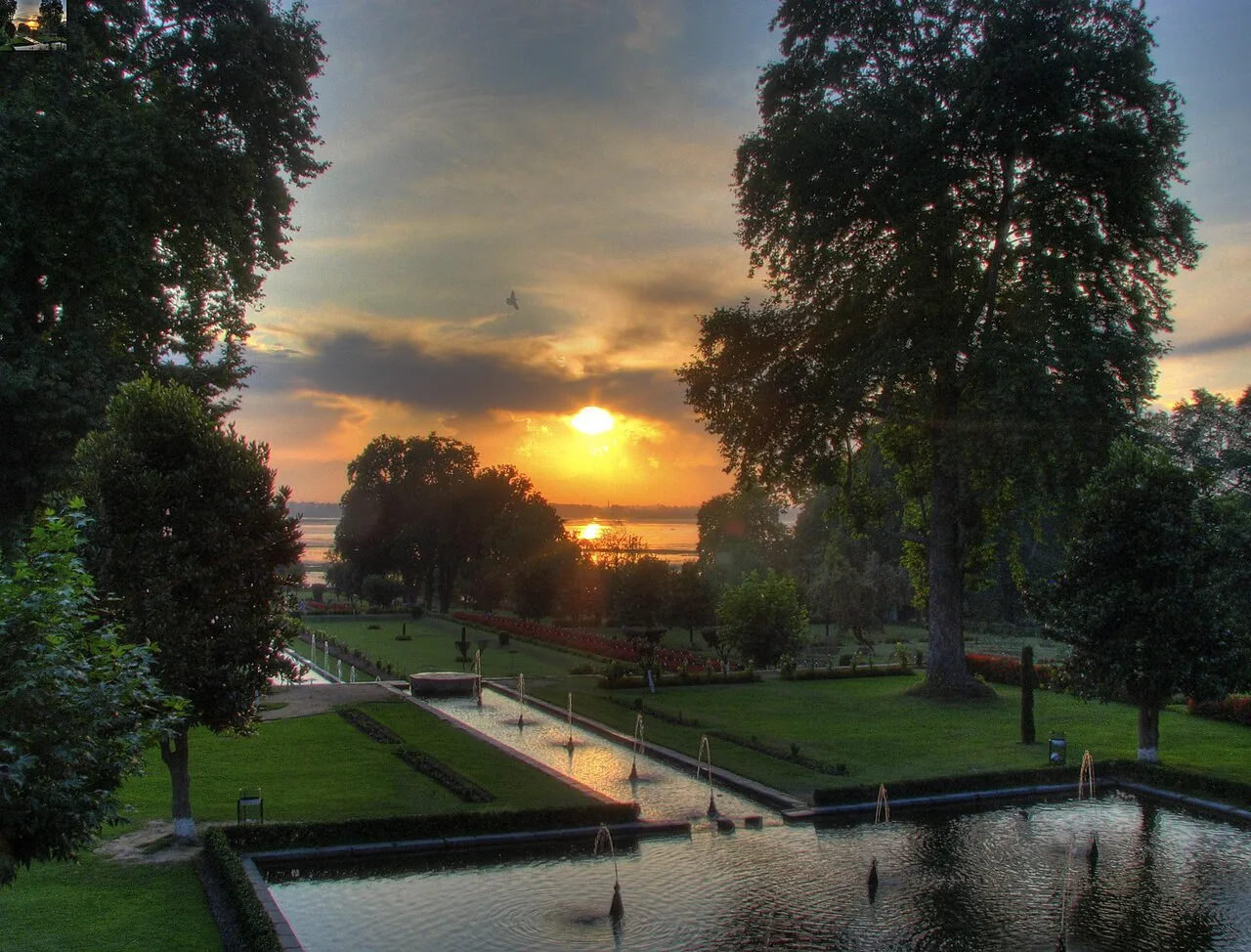
Nishat Bagh
Nishat Bagh is a terraced Mughal garden beside Dal Lake in Srinagar. Visitors come to see its stepped layout and lakeside setting; among Mughal gardens in the Kashmir Valley, it ranks second in size.
Key facts · verified by Ghumoopedia editors
- Type of place
- Natural attraction
- Best time to visit
- April to October for the Kashmir Valley and meadows; December to February for snow at Gulmarg; October to March for Jammu and the plains
- Nearest railway station
- Srinagar (Nowgam) · about 15 km (straight line)
- Verified
- 21 Nov 2026
Plan a trip from Nishat Bagh — a day-by-day route through places nearby.
Within Srinagar district in Jammu and Kashmir, Nishat Bagh lies on Dal Lake’s eastern shore, close to Srinagar. Its name is translated as Garden of Joy or Garden of Delight. Nishat Bagh is arranged across terraces, giving the Mughal garden a tiered form. Among Mughal gardens in the Kashmir Valley, it is exceeded in size only by Shalimar Bagh. Its position beside the lake and its sequence of elevated levels are defining features of the site. Kashmir is known for its Sufi shrines, Mughal gardens, houseboats and crafts such as pashmina, papier-mâché and carpets, while the Jammu region is the land of Dogra heritage and major Hindu pilgrimages. The Kashmir Valley has mild summers, colourful autumns and snowy winters, with Chillai Kalan (late December to January) the coldest spell; meadows such as Gulmarg and Sonamarg get heavy snow. Jammu and the plains are hot from April to June. Snow and landslides can close the Jammu–Srinagar highway and mountain roads. The usual best time to visit is April to October for the Kashmir Valley and meadows; December to February for snow at Gulmarg; October to March for Jammu and the plains. Timings, fees and access arrangements must be confirmed locally. For official information, see Jammu and Kashmir Tourism at https://jktourism.jk.gov.in.
Why it matters
Nishat Bagh is a historic Mughal garden on the eastern shore of Dal Lake in Srinagar. Its name is commonly translated as “Garden of Joy” or “Garden of Delight.” The garden is valued for its terraced design, water channels and views across the lake towards the surrounding mountains. It is the second-largest Mughal garden in the Kashmir Valley after Shalimar Bagh, according to the existing guide. Together with other Mughal gardens in Srinagar, it reflects the region’s history as a centre of formal garden design and courtly life. It is a prominent heritage attraction, but visitors should not assume UNESCO or ASI recognition; confirm any current official designation with the relevant authority.
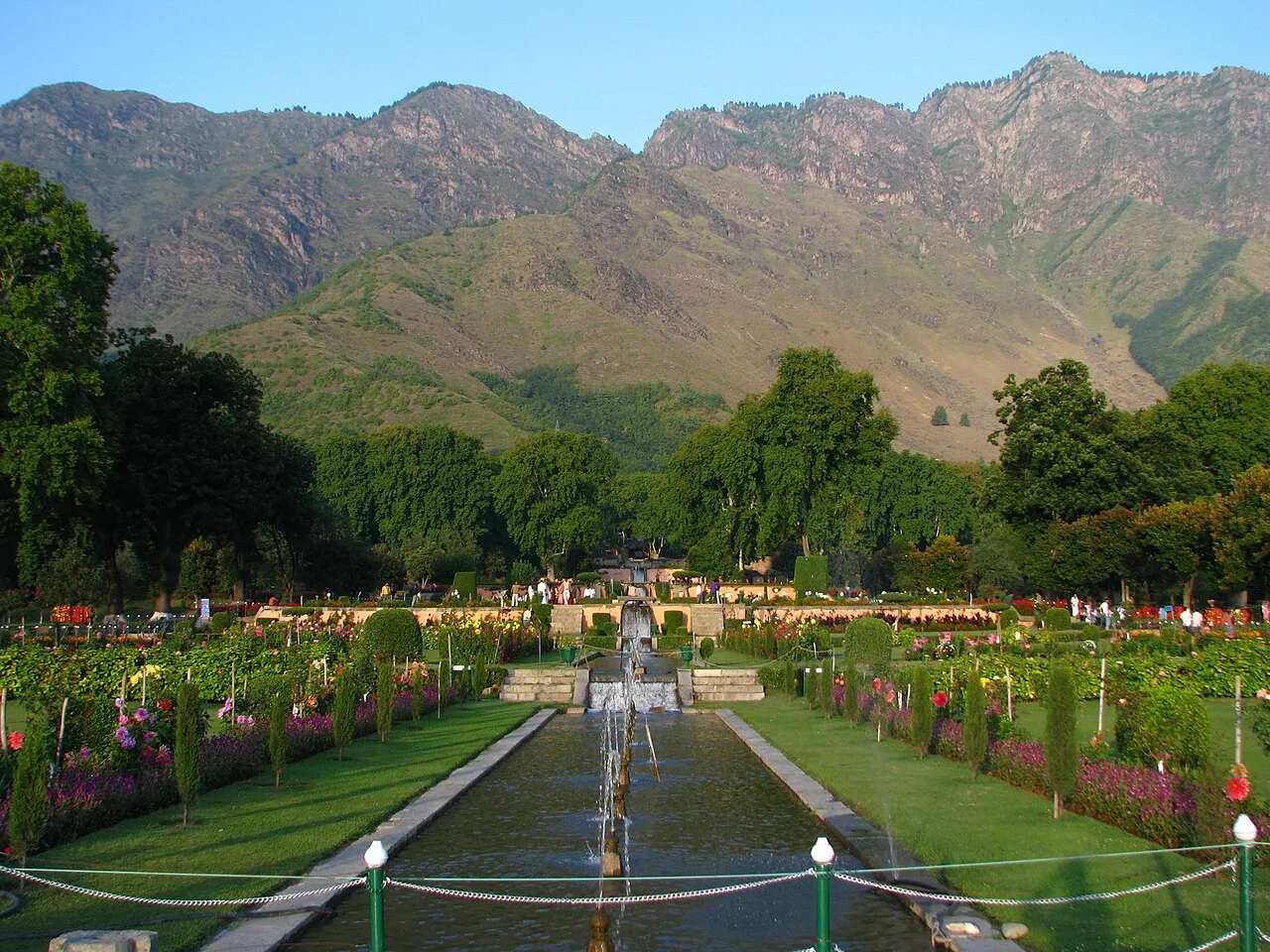
Nishat Bagh was created during Mughal rule, traditionally dated to the seventeenth century. Historical accounts credit its design and construction to Asif Khan, the brother of Nur Jahan, during the reign of Shah Jahan. Its terraced layout rises from the Dal Lake shore towards the foothills, using a central watercourse, channels and fountains to link the levels. The garden is commonly described as having twelve terraces, sometimes interpreted as representing the signs of the zodiac; that interpretation should be treated as a design tradition rather than a proven explanation of the original plan. The garden formed part of the Mughal landscape around Srinagar, where formal gardens combined water, planting, pathways and views. It remained a notable landmark as political authority in Kashmir changed over subsequent centuries. Later caretakers and public garden authorities have maintained its paths, water features and planting, with periodic repair and horticultural work. The current appearance reflects both the original Mughal conception and continuing upkeep; details of individual restoration campaigns should be checked with the managing authority. The garden is now visited as a historic landscape and public attraction beside Dal Lake.
Origin stories & folklore
A popular story associated with Nishat Bagh tells of Shah Jahan visiting the garden and admiring its design. In some versions, the emperor’s praise or request for the garden prompted Asif Khan to stop the water supply, unwilling to hand over the work; a servant later restored the flow, and the emperor rewarded the servant. Versions differ, and this anecdote is best understood as local garden lore rather than verified history. The garden’s twelve terraces are also sometimes linked in popular explanations to the zodiac. Visitors may encounter these stories in guide narratives, but the documented history is the Mughal-period garden attributed to Asif Khan.
Explore Nishat Bagh slowly and read the interpretation boards, use the official audio guide where available or hire an authorised guide to understand its history. Check opening days, ticket counters and camera rules in advance; many monuments and museums close on one weekday and on some public holidays. Gardens are at their best in the morning and, in Kashmir, during the spring bloom. A comfortable itinerary is one main visit in the morning, a local meal at midday and a short nearby stop before an afternoon return. Use the district list on this site to find other places in Srinagar, but check the route and its condition before combining stops. If a festival or fair is on, roads and stays can be busy — and the experience can be unforgettable. Leave no litter: many sites are protected by the communities around them.
Suggested itineraries
Half day: Spend 1–2 hours exploring Nishat Bagh’s terraces and water channels; take a short Dal Lake-side break; return to Srinagar for a meal. Full day: Allow 1–2 hours at Nishat Bagh; visit Shalimar Bagh; pause for lunch; choose Chashme Shahi or Pari Mahal before returning to the city. Gentler option: Visit the lower garden terraces at an unhurried pace, rest often and enjoy the lake views; skip upper levels if steps or slopes are difficult.
Nishat Bagh is part of Srinagar’s living cultural landscape, where Mughal-era heritage sits alongside the everyday life of Dal Lake and its neighbourhoods. Kashmiri is widely spoken locally, with Urdu and Hindi also commonly understood; English is used in many visitor services. Residents and visitors may hear regional music at cultural events, though performances are not a regular feature of the garden itself. Kashmiri dress, including the pheran in colder weather, is part of daily life. Visitors can show consideration by dressing comfortably and respectfully, keeping voices low around other visitors and not disturbing planted areas or water features.
Local communities
The garden is connected with Srinagar’s residents, heritage and horticultural workers, guides, vendors and tourism-service providers. Garden staff care for paths, planting and water features, while local guides and drivers help visitors understand and reach the site. Houseboat operators and other Dal Lake businesses are part of the wider visitor economy. Kashmiri communities have diverse religious, linguistic and cultural identities; the garden is a shared public heritage place rather than a setting for one community alone. Buy from local businesses respectfully and follow staff instructions, especially where maintenance work or conservation needs limit access.
Festivals & events
Nishat Bagh is not known as the venue for a major annual festival. Srinagar’s spring tulip season, centred on the nearby Tulip Garden, can bring increased visitor numbers to the city and the Dal Lake area. Eid celebrations, Kashmiri New Year observances such as Navroz, and other religious or cultural occasions are marked across the region, but dates follow their respective calendars and events are not necessarily held at Nishat Bagh. During holidays and peak spring travel, roads, popular gardens and nearby waterfront areas may be busier. Check local notices before planning around an event.
Local food in Jammu and Kashmir includes Kashmiri Wazwan dishes such as rogan josh, yakhni, gushtaba and rista, nadru (lotus stem), haak saag, dum aloo, kahwa and salty noon chai; in the Jammu region, rajma-chawal, kalari cheese and Dogra dishes such as ambal and auria. Ask what is fresh that day; many small eateries cook a limited daily menu. Vegetarian travellers eat very well across this region, and most towns also have non-vegetarian options. Remote sites may have no restaurant at all. Carry water and snacks, eat a proper breakfast before long drives, and ask your accommodation for a packed lunch if you are heading out early. Try a home-cooked or dhaba meal when you can — it is often the best food on the route. Choose busy, clean places and carry your packaging back with you.
Shopping & local experiences
Look for Kashmiri crafts such as pashmina shawls, papier-mâché objects, handwoven carpets, woodwork and embroidered textiles in Srinagar’s established markets and reputable shops. Ask about materials, provenance and care, and compare items before buying; not every product described as handmade or local can be verified at a glance. Small vendors may offer snacks or souvenirs near visitor areas, but availability varies. For food, try Kashmiri dishes at a local restaurant in Srinagar rather than expecting a full dining choice inside the garden. Avoid buying items made from protected wildlife or plants.
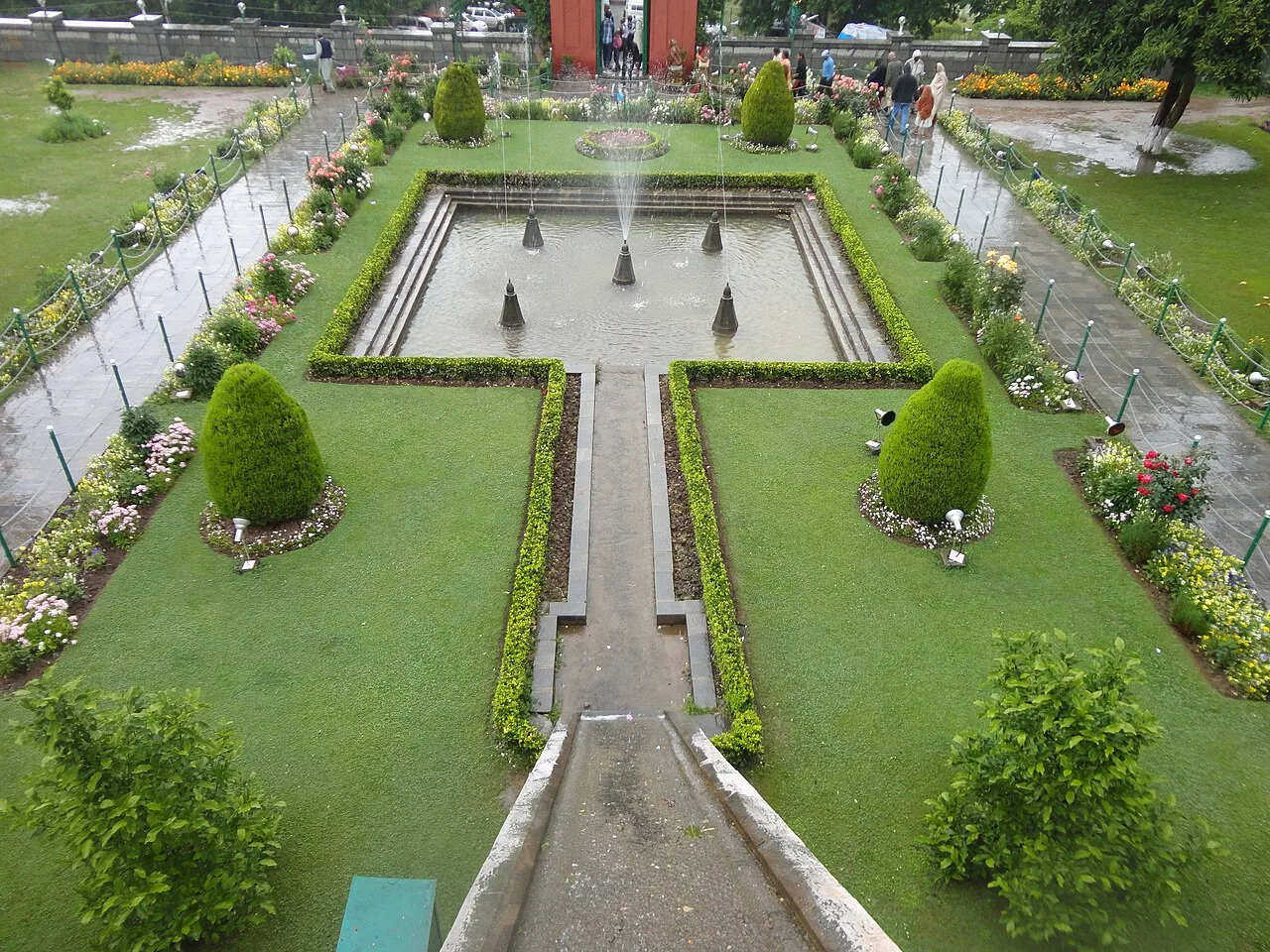
Nishat Bagh is a designed garden set between the Dal Lake shoreline and the foothills of the Zabarwan range. Its stepped lawns and planted terraces create changing views over the lake, while channels and fountains bring water through the garden when operating. Chinar trees are a notable feature, alongside seasonal flowers, shrubs and other ornamental plantings that vary with maintenance and the time of year. Dal Lake and its wetland edges support waterbirds and other wildlife, but sightings are never guaranteed. Spring brings fresh growth and blooms; autumn colours the trees, while winter can bring cold conditions and reduced flowering. Stay on paths, avoid picking flowers and leave no litter.
April to October for the Kashmir Valley and meadows; December to February for snow at Gulmarg; October to March for Jammu and the plains
The nearest principal railway station by straight-line distance is Srinagar (Nowgam), roughly 15 km away. The nearest operating airport by straight-line distance is Sheikh ul-Alam International Airport, Srinagar, roughly 20 km away. These figures are calculated from map coordinates — mountain roads wind a lot, so actual road distance and travel time are usually much longer. Jammu Tawi and Shri Mata Vaishno Devi Katra are the main long-distance rail gateways, and the line through the Chenab bridge now continues into the Kashmir Valley — check current services to Srinagar. Srinagar and Jammu airports have the most flights. For the final leg, J&K Road Transport Corporation (JKRTC) buses, private minibuses and shared Sumo taxis link district towns; shared taxis usually leave early in the morning. A private taxi gives more flexibility for remote sites. When comparing train, bus and flight, count the complete door-to-door time: a flight saves the most time only if the onward road transfer is short, while an overnight train can save a hotel night. Book your return before you leave, because seats fill quickly on weekends, festivals and holidays. Current train numbers, timings, return services and fares are not listed here; check IRCTC and NTES for trains and the airline's own schedule for flights. Indian visitors do not need a permit for the main destinations in Jammu and Kashmir. Areas close to the Line of Control, such as Gurez, Bangus, Keran and Machil, may require registration at police or army check posts, and foreign nationals face extra restrictions in some areas. Prepaid mobile SIM cards issued outside Jammu and Kashmir do not work here, so carry a postpaid connection. The Amarnath Yatra needs advance registration and a compulsory health certificate, and Vaishno Devi pilgrims need a yatra registration (RFID) card. Read your government's travel advisory and current local advisories before you go.
Confirm onward and return timings on IRCTC / NTES, the state bus operator or your airline before travel. A dash means current timings or fares have not been verified.
Getting around
Taxis and auto-rickshaws can take visitors from central Srinagar and Dal Lake-area accommodation towards Nishat Bagh; confirm the drop-off point and return arrangements locally. Local buses and shared transport serve parts of Srinagar, but routes and access near the entrance may vary. The garden is best explored on foot once inside, although its terraces involve steps and slopes. Parking may be available nearby but can be limited when the area is busy. Shikara rides operate on Dal Lake from designated ghats; arrange these separately and agree on the route before boarding.
Hours, tickets & permissions
Entry may be subject to a ticket, and rules can apply to photography, commercial filming, group visits or access to particular areas. Permit requirements, camera restrictions and visitor procedures can change, so check notices at the entrance and confirm current details with the managing authority before setting out. Carry identification if requested by local security or officials. Do not rely on old online listings for opening days, hours or fees, and allow time for possible checks at the gate.
Facilities
Facilities vary and may change with the season. There are usually paths and places to pause within the garden, and basic visitor services may be available near the entrance. Toilets, drinking water, snacks, guides and parking should be checked locally rather than assumed. Food options and shops are more likely to be found along nearby roads or back in Srinagar than throughout the garden. ATMs are not a dependable on-site facility. Carry water and any personal essentials, and take rubbish away if bins are full or unavailable.
Accessibility
The garden is terraced on sloping ground, with steps and changes in level between sections. Exploring the full layout can involve considerable walking, and routes may be uneven or slippery when wet. Shade and places to rest vary by terrace and season. A wheelchair or stroller may be manageable only in limited, flatter areas; do not assume step-free access to the upper garden. Older visitors and anyone with reduced mobility may prefer to stay near the entrance or lower levels, go slowly and visit with a companion. Ask staff about current path conditions before entering.
Indian visitors do not need a permit for the main destinations in Jammu and Kashmir. Areas close to the Line of Control, such as Gurez, Bangus, Keran and Machil, may require registration at police or army check posts, and foreign nationals face extra restrictions in some areas. Prepaid mobile SIM cards issued outside Jammu and Kashmir do not work here, so carry a postpaid connection. The Amarnath Yatra needs advance registration and a compulsory health certificate, and Vaishno Devi pilgrims need a yatra registration (RFID) card. Read your government's travel advisory and current local advisories before you go. Carry a photo ID at all times and save the emergency number 112 and your accommodation's contact offline. Heat in summer and fog in winter are the main weather risks; carry water and allow extra travel time on foggy December–January mornings. Respect community rules, private property and posted instructions. Follow local guidance if access changes.
Photography
Morning light can be pleasant for garden details and views over Dal Lake; softer late-day light may also suit the terraces, depending on weather. Paths and public garden areas are generally popular for casual photography, but check entrance notices for current camera or commercial-use restrictions. Do not fly a drone without confirming applicable permissions and security rules; restricted airspace or local controls may apply. Avoid blocking paths, damaging plants or photographing people closely without consent. Be especially considerate around worship, private gatherings and anyone who does not wish to be photographed.
Choose a stay by the full journey to Nishat Bagh, not just the district name. Srinagar houseboats, Jammu and Katra hotels and resort towns such as Gulmarg and Pahalgam offer the widest choice; book houseboats only through registered owners. In summer, check air-conditioning or coolers; in December and January, check heating and hot water. Book in advance for weekends, festivals and the peak season (April to October for the Kashmir Valley and meadows; December to February for snow at Gulmarg; October to March for Jammu and the plains). Confirm the exact location, meals included, check-in time and cancellation terms in writing. Avoid sending money to unverified contacts or touts at stations. Carry some cash, as card and digital payments can be unreliable in remote areas.
Shalimar Bagh, another major Mughal garden, is a natural companion visit in Srinagar. Chashme Shahi and Pari Mahal are other historic garden and viewpoint attractions in the city. Dal Lake itself offers waterfront scenery and, from designated locations, boat excursions. Hazratbal Shrine is a prominent religious and architectural landmark by the lake; observe local visitor guidance and dress expectations. The Shankaracharya Temple is another well-known Srinagar landmark, though reaching it involves an uphill approach and steps. Check road conditions and travel time before combining several stops, as city traffic and access arrangements can affect the plan.
For couples, Nishat Bagh rewards a slow pace: arrive early for soft light and fewer crowds, share a local meal and keep the evening free. A shikara ride or a houseboat night in Srinagar is a classic addition. Public displays of affection can be frowned upon in conservative communities and at religious sites, so be discreet. Keep a buffer in your itinerary, because weather and traffic can delay plans.
Q: How much time should I allow for Nishat Bagh? A: Allow around one to two hours for a relaxed visit; exploring all terraces takes longer. Q: When is the best season to visit? A: Spring is known for garden blooms, while April to October is generally a comfortable period for the Kashmir Valley; autumn offers changing foliage. Q: Is there an entry fee or permit? A: Entry rules and fees may apply and can change. Confirm current requirements with the managing authority before visiting. Q: Is the garden suitable for children and elderly visitors? A: Children can enjoy the open garden with supervision. Steps and slopes may make a full visit difficult for some older visitors or people with limited mobility. Q: Can I stay near Nishat Bagh? A: Srinagar has hotels, guesthouses and Dal Lake houseboats. Check location, access and current conditions when booking.
Be the first to share photos, stories, advice or a helpful contact for Nishat Bagh.
Loading…