
Gol Gumbaz
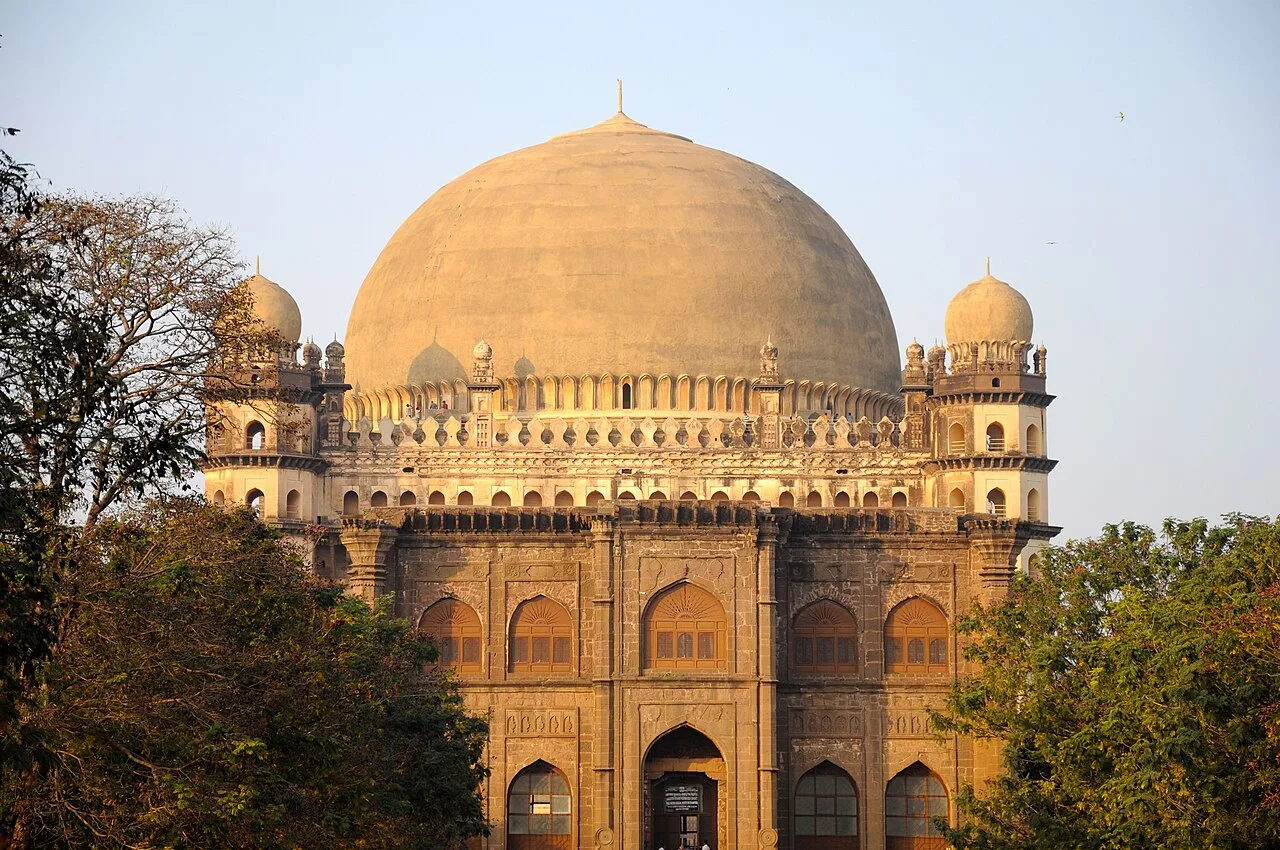
Gol Gumbaz is a basalt mausoleum in Bijapur, Karnataka, built for Mohammad Adil Shah. Visitors come to see its great dome, Indo-Islamic design and famous whispering gallery.
Key facts · verified by Ghumoopedia editors
- Type of place
- Destination
- Best time to visit
- October to February; June to September for monsoon greenery in the Western Ghats
- Nearest railway station
- Vijayapura (Bijapur) · about 3 km (straight line)
- Nearest airport
- Kalaburagi Airport · about 140 km (straight line)
- Verified
- 21 Nov 2026
Plan a trip from Gol Gumbaz — a day-by-day route through places nearby.
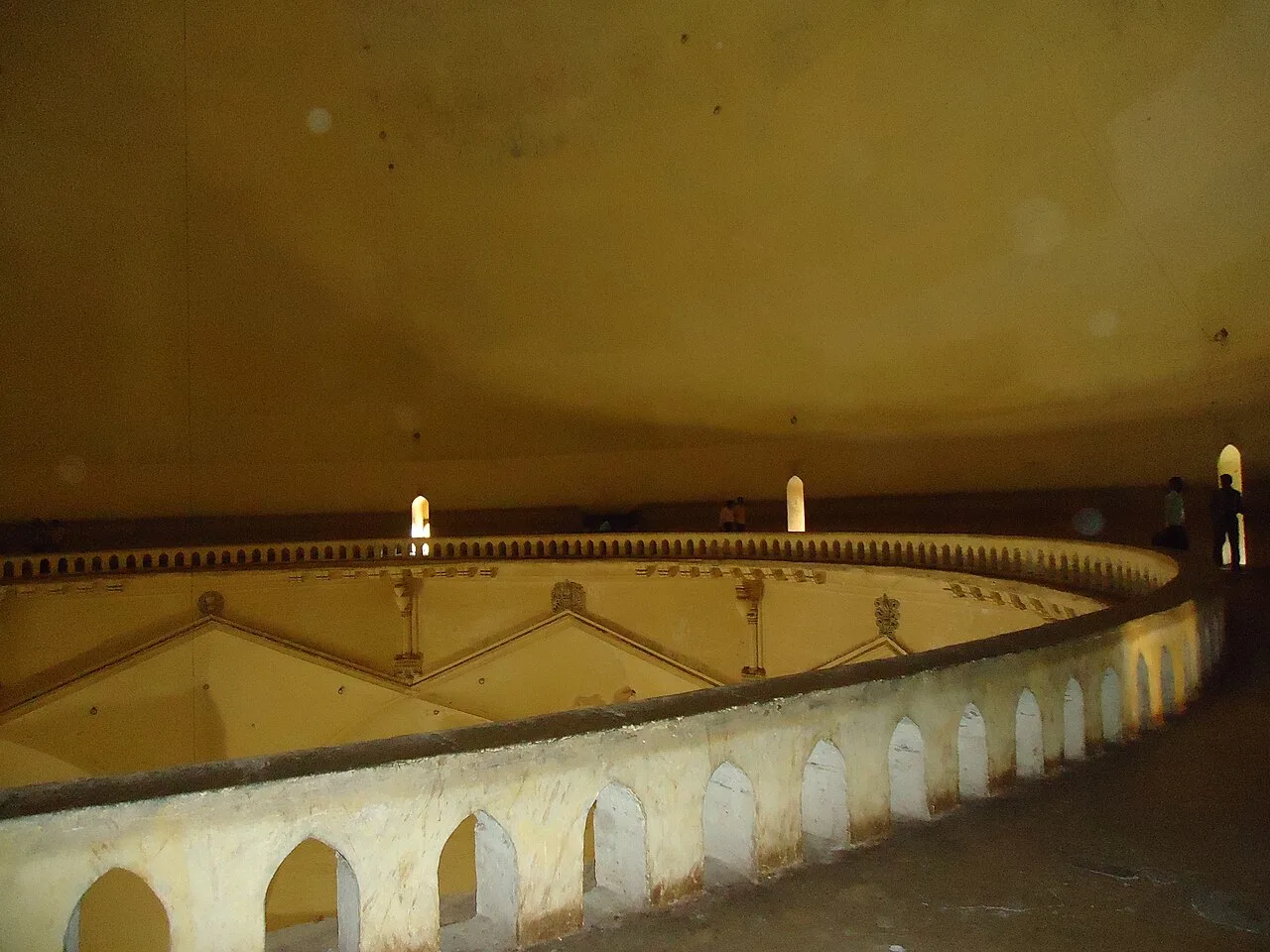
Known also by the spelling Gol Gumbad, this dark-grey basalt mausoleum stands in Bijapur, within Karnataka’s Vijayapura district in the state’s north. Its burial chamber holds Mohammad Adil Shah, the seventh sovereign of the Bijapur Sultanate, as well as two of his wives, his mistress, daughter and grandson. Work commenced in the opening years of the seventeenth century, after Mohammad Adil Shah took the throne. Building stopped in 1656 when he died, leaving portions of the ornament unfinished. The monument reflects Indo-Islamic building traditions in the Deccan, bringing Persian and Mughal influences together with regional forms. The interruption meant the planned decorative work was not fully completed. At its centre rises a hemispherical cupola, measuring 44 m across on the outside. When completed, it was regarded as India’s largest dome without internal supports, and ranked among the biggest of the medieval era. The gallery around its interior is known for carrying whispers across the space and draws visitors. The mausoleum opened for public entry in 1892 under British rule, and the Gol Gumbaz Archaeological Museum was established within the precinct. Its role as a burial place and its architectural form are expressed in the tomb chamber, the dome and the surrounding buildings. The larger ensemble includes other Indo-Persian structures: a mosque, dargah and naqqar khana, set around a charbagh garden. After India became independent, responsibility for upkeep and administration passed to the Archaeological Survey of India in 1962. In 2014, UNESCO placed Gol Gumbaz within the proposed Monuments and Forts of the Deccan Sultanate group on its tentative World Heritage list. Karnataka holds the boulder-strewn ruins of Hampi, the Hoysala temple jewels of Belur and Halebidu, the Chalukyan monuments of Badami, Aihole and Pattadakal, the palaces of Mysuru, the coffee hills of Coorg and Chikkamagaluru, the temple-and-beach town of Gokarna and the tiger forests of Bandipur and Nagarhole. Bengaluru and the plateau are mild most of the year; the coast is hot and humid; the Malnad hills (Coorg, Chikkamagaluru, Agumbe) get very heavy monsoon rain from June to September. October to February is pleasant almost everywhere. The usual best time to visit is October to February; June to September for monsoon greenery in the Western Ghats. Timings, fees and access arrangements must be confirmed locally. For official information, see Karnataka Tourism at https://karnatakatourism.org.
Why it matters
Gol Gumbaz, also called Gol Gumbad, is a landmark of Vijayapura and an important example of Indo-Islamic architecture in the Deccan. Its monumental hemispherical dome and distinctive whispering gallery are defining features of the city’s historic skyline. The mausoleum holds the tomb of Mohammad Adil Shah, the seventh ruler of the Bijapur Sultanate, and members of his family. The Archaeological Survey of India manages and maintains the complex; it has done so since 1962. UNESCO included Gol Gumbaz within the Monuments and Forts of the Deccan Sultanate, a group placed on its Tentative List in 2014. This is a proposed World Heritage listing, not inscription on the World Heritage List. The site also reflects the region’s Persianate, Mughal and local architectural influences.
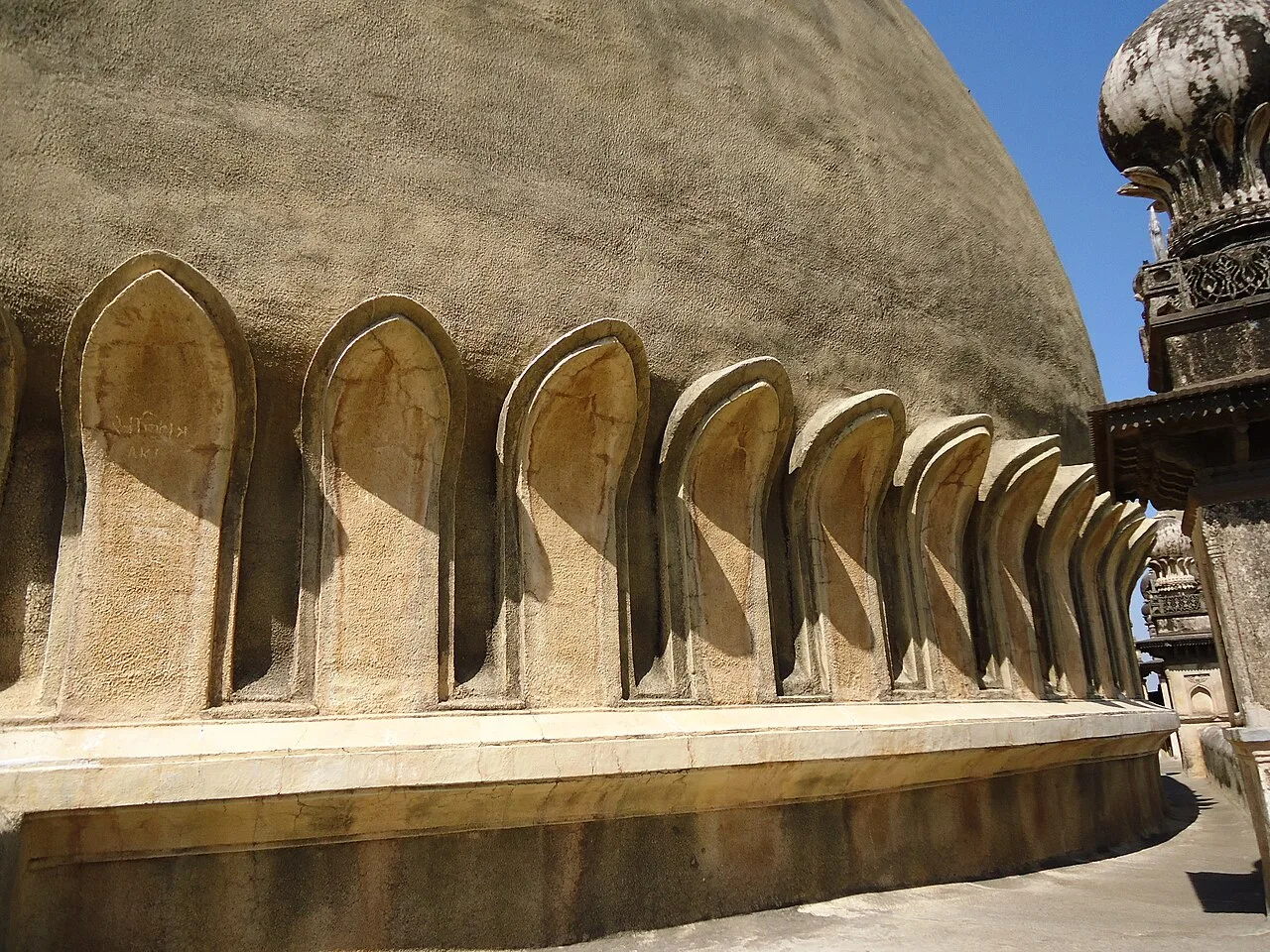
Construction of Gol Gumbaz began in the early 17th century, after Mohammad Adil Shah became ruler of the Bijapur Sultanate. The sultan commissioned the mausoleum as his tomb. Work continued during his reign and stopped after his death in 1656, leaving parts of the structure and its decoration unfinished. The tomb also contains the remains of two of his wives, a mistress, daughter and grandson. Built principally of dark gray basalt, the monument is associated with the skilled builders and craftsmen working under the Adil Shahi court. Its central dome, supported without internal columns, is a major feature of its design; the gallery around the dome is known for carrying faint sounds across its interior. The complex includes other structures, including a mosque, a dargah and a naqqar khana, set within a charbagh garden. During British rule, the mausoleum opened to the public in 1892, and an archaeological museum was established within the complex. After Indian independence, responsibility for management and maintenance passed to the Archaeological Survey of India in 1962. Visitors can still see the building’s unfinished elements alongside its monumental architecture.
Explore Gol Gumbaz slowly and read the interpretation boards, use the official audio guide where available or hire an authorised guide to understand its history. Check opening days, ticket counters and camera rules in advance; many monuments and museums close on one weekday and on some public holidays. Early morning gives softer light, cooler air and smaller crowds. A comfortable itinerary is one main visit in the morning, a local meal at midday and a short nearby stop before an afternoon return. Use the district list on this site to find other places in Vijayapura, but check the route and its condition before combining stops. If a festival is on — such as Mysuru Dasara, the Hampi Utsav, the Kambala buffalo races on the coast or the Karaga in Bengaluru — roads and stays can be busy, and the experience can be unforgettable. Leave no litter: many sites are protected by the communities around them.
Suggested itineraries
Half day: Gol Gumbaz complex and interpretation boards (2–3 hours); take a break for a local meal; visit Ibrahim Rauza (about 1–2 hours). Full day: Gol Gumbaz and museum (2–3 hours); lunch in town; visit Jami Masjid and Malik-e-Maidan (about 2–3 hours); finish at Ibrahim Rauza (about 1–2 hours), allowing time for travel between sites. Gentler option: Spend the morning at Gol Gumbaz, rest in the city during the hottest part of the day, then choose one nearby site reachable by vehicle; skip the dome gallery if stairs are difficult.
Vijayapura’s culture reflects its Deccan history, with Kannada widely spoken alongside Urdu and other regional languages. The city’s historic mosques, tombs and dargahs remain part of a living religious landscape, while markets and neighbourhoods bring together different communities. Visitors may encounter devotional music and prayer at religious sites, but practices vary and should be observed respectfully. Everyday dress is generally practical and varied; modest clothing is considerate when visiting places of worship. Local food draws on North Karnataka and Deccani traditions, including jowar-based dishes and richly spiced preparations. Ask before photographing people, worshippers or ceremonies, and follow any instructions at active religious spaces within or near the monument complex.
Festivals & events
Vijayapura observes major Muslim festivals, including Eid al-Fitr and Eid al-Adha, as well as Muharram, whose dates follow the Islamic lunar calendar. Hindu festivals such as Ganesh Chaturthi and Dasara are also marked in the city and surrounding region. Celebrations are held across neighbourhoods and religious institutions; they are not necessarily organised at Gol Gumbaz itself. During festival periods, local roads, markets and accommodation can be busier, and processions may affect movement in parts of town. Check local notices before planning a visit, and be respectful around prayers, processions and shrine observances.
Local food in Karnataka includes bisi bele bath, Mysore masala dosa, ragi mudde with sambar, Coorg's pandi (pork) curry, Mangalorean fish curry with neer dosa, Davangere benne dosa, Dharwad pedha and filter coffee everywhere. Ask what is fresh that day; many small eateries cook a limited daily menu. Vegetarian travellers eat very well across the state; the coast is the place for seafood, and Coorg has its own distinctive cuisine. Don't miss a tiffin breakfast of idli, vada and filter coffee. Remote sites may have no restaurant at all. Carry water and snacks, eat a proper breakfast before long drives, and ask your accommodation for a packed lunch if you are heading out early. Try a home-cooked or local thali meal when you can — it is often the best food on the route. Choose busy, clean places, drink sealed or filtered water, and carry your packaging back with you.
Shopping & local experiences
Vijayapura’s markets are a place to look for regional food products, everyday textiles, household goods and locally made souvenirs. North Karnataka snacks and jowar-based foods make practical edible gifts when properly packed. Craft and souvenir selection can vary, so ask locally about the origin of an item rather than assuming it was made in the city. Markets and small shops are generally a better option than expecting a large selection at the monument. Try local Deccani and North Karnataka dishes at eateries in town, and be mindful of food hygiene and your own dietary needs.
October to February; June to September for monsoon greenery in the Western Ghats
The nearest principal railway station by straight-line distance is Vijayapura (Bijapur), roughly 3 km away. The nearest operating airport by straight-line distance is Kalaburagi Airport, roughly 140 km away. These figures are calculated from map coordinates — actual road distance is longer. Bengaluru is the hub for the south and centre; Hubballi and Belagavi serve the north; Mangaluru serves the coast; Mysuru is the gateway to Coorg, and Hosapete is the railhead for Hampi. KSRTC buses connect the district towns, and the coast is served by the Konkan Railway with frequent buses from Mangaluru and Udupi. For Hampi, take a train or bus to Hosapete and an autorickshaw for the last 13 km. When comparing train, bus and flight, count the complete door-to-door time: a flight saves the most time only if the onward road transfer is short, while an overnight train can save a hotel night. Book your return before you leave, because seats fill quickly on weekends, festivals and holidays. Current train numbers, timings, return services and fares are not listed here; check IRCTC and NTES for trains and the airline's own schedule for flights. No permit is needed to visit Karnataka. Tiger safaris in Bandipur, Nagarhole and the Kali Tiger Reserve must be booked in advance through the forest department or authorised lodges — weekend slots sell out. Treks in Kudremukh National Park and some Western Ghat peaks need forest entry permission. Hampi's monuments have ASI entry tickets; the core zone is best seen with a bicycle, moped or autorickshaw for the day.
Confirm onward and return timings on IRCTC / NTES, the state bus operator or your airline before travel. A dash means current timings or fares have not been verified.
Getting around
Vijayapura railway station is close to Gol Gumbaz, and autorickshaws and taxis are practical options for reaching the entrance or continuing to other monuments. Local buses serve parts of the city, though visitors may find an auto or taxi more direct for a short sightseeing circuit. Walking between Gol Gumbaz and nearby historic sites is possible for some visitors, but allow for heat, uneven pavements and traffic. Check locally where vehicles may park and whether parking is available near the entrance. Agree on the destination with a driver, and allow extra time when city streets are busy.
Hours, tickets & permissions
Entry to the monument complex is generally subject to admission rules and a ticket, with separate conditions potentially applying to the museum or photography. Rules can change, and some monuments or museums may close on a weekday or public holiday. Confirm current opening hours, closure days, entry fees and camera permissions with the Archaeological Survey of India or on-site staff before travelling. Follow signs about restricted areas, footwear or conduct, and ask staff if you are unsure whether a particular activity or item is permitted.
Facilities
The complex usually has basic visitor facilities, but availability and condition can change; check locally for toilets, drinking water and seating. Food and refreshments are more readily found in Vijayapura than inside the monument grounds. Parking may be available near the entrance, though spaces can be limited when visitor numbers are high. Guides may be available locally; confirm that a guide is authorised and agree on the scope of the visit before starting. ATMs and a wider choice of shops, restaurants and accommodation are in the city, rather than guaranteed within the complex.
Accessibility
The grounds require walking, and surfaces may be uneven in places. Reaching the whispering gallery involves climbing stairs, so it is unsuitable for visitors who cannot manage a substantial stair climb; do not assume there is a lift. Shade inside and around the monument is limited, so carry water and plan rests, especially in warm weather. Wheelchair and stroller access may be restricted by steps, surfaces and the historic layout. Older visitors or anyone with limited mobility may prefer to explore the lower-level areas at a slow pace and confirm current access arrangements with site staff before visiting.
No permit is needed to visit Karnataka. Tiger safaris in Bandipur, Nagarhole and the Kali Tiger Reserve must be booked in advance through the forest department or authorised lodges — weekend slots sell out. Treks in Kudremukh National Park and some Western Ghat peaks need forest entry permission. Hampi's monuments have ASI entry tickets; the core zone is best seen with a bicycle, moped or autorickshaw for the day. Carry a photo ID at all times and save the emergency number 112 and your accommodation's contact offline. Heat in summer and heavy rain in the monsoon are the main weather risks; carry water, avoid midday sun and allow extra time when roads flood. Watch your belongings in crowds and on public transport, and follow posted instructions.
Photography
Early morning or late afternoon often gives softer light on the dark stone and dome, while the exterior and surrounding garden offer useful viewpoints. Photography is generally possible in visitor areas, but camera rules or fees may apply and can change; confirm with staff before taking pictures inside the museum or monument. The whispering gallery can be crowded and echoing, so avoid blocking circulation or disturbing other visitors. Do not fly a drone without the required permissions and confirmation that it is allowed. Ask before photographing people, worshippers or religious activity.
Choose a stay by the full journey to Gol Gumbaz, not just the district name. Bengaluru, Mysuru and Mangaluru offer the widest choice; Hampi has guesthouses on both banks of the Tungabhadra, Coorg has plantation homestays and resorts, and the forest lodges at Bandipur and Nagarhole book out early. In summer, check air-conditioning; in the monsoon, check that the property is accessible if roads flood. Book in advance for weekends, festivals and the peak season (October to February; June to September for monsoon greenery in the Western Ghats). Confirm the exact location, meals included, check-in time and cancellation terms in writing. Avoid sending money to unverified contacts or touts at stations. Carry some cash, as card and digital payments can be unreliable in remote areas.
Within Vijayapura, visitors can combine Gol Gumbaz with Ibrahim Rauza, another major Adil Shahi-era mausoleum, and the historic Jami Masjid. Malik-e-Maidan, known for its large cannon, and Bara Kaman, an unfinished royal mausoleum complex, offer further perspectives on the city’s Sultanate history. The Archaeological Museum is within the Gol Gumbaz complex. Distances and travel times between attractions vary with traffic, so check a current map before planning a circuit. These sites are in the same city; visiting several in one day is possible, but allow time for walking, rest and entry arrangements.
For couples, Gol Gumbaz rewards a slow pace: arrive early for soft light and fewer crowds, share a local meal and keep the evening free. A sunset over Hampi's boulders, a coffee-estate walk in Coorg or a quiet evening on a Gokarna beach makes the trip memorable. Public displays of affection can be frowned upon in conservative communities and at religious sites, so be discreet. Keep a buffer in your itinerary, because weather and road conditions can delay plans.
Q: How much time should I allow for Gol Gumbaz? A: Allow a few hours to see the mausoleum, grounds and museum at an unhurried pace. Add time if you plan to climb to the whispering gallery or visit nearby monuments. Q: What is the best season to visit? A: October to February is generally more comfortable for sightseeing in Karnataka. Carry water and expect hotter conditions during warmer months. Q: Is entry permitted, and are there rules to check? A: The complex is open to visitors under current site rules, which may include a ticket and separate camera conditions. Confirm current hours, fees and restrictions with the Archaeological Survey of India before setting out. Q: Is the visit suitable for children and older visitors? A: The grounds and lower areas can suit many visitors, but stairs to the dome gallery are demanding. Supervise children and consider mobility needs before attempting the climb. Q: Where can I stay nearby? A: Vijayapura has accommodation options in the city. Choose a place based on your transport needs and check current availability and facilities before booking.
Be the first to share photos, stories, advice or a helpful contact for Gol Gumbaz.
Loading…