
District · Karnataka
Vijayapura
Vijayapura is an important historic district in northern Karnataka, set on the dry Deccan plateau near the Maharashtra border.
Vijayapura district lies on the dry Deccan plateau of northern Karnataka, with open agricultural country, black-soil fields and a landscape shaped by seasonal rainfall. Its headquarters, still widely known as Bijapur, was a major capital of the Adil Shahi dynasty. That history gives the city its distinctive character: monumental tombs, mosques, fortifications and architectural experiments stand amid everyday neighbourhoods. Gol Gumbaz, the garden-set Ibrahim Rauza and the unfinished Bara Kaman offer contrasting expressions of its funerary architecture. Jama Masjid preserves the city’s congregational religious heritage, while the Malik-e-Maidan cannon recalls its military past. Beyond these landmarks, Vijayapura remains a working regional centre rather than simply a monument precinct.
Vijayapura is an important historic district in northern Karnataka, set on the dry Deccan plateau near the Maharashtra border. Travellers come chiefly for the Adil Shahi-era monuments of its headquarters, still commonly called Bijapur: Gol Gumbaz, Ibrahim Rauza, Bara Kaman, Jama Masjid and the Malik-e-Maidan cannon. Together, they show different sides of the city’s architectural and military history, within a living regional centre rather than an isolated heritage site. Beyond the monuments, the district offers a view of northern Karnataka’s agricultural country, with broad black-soil fields and settlements shaped by seasonal rainfall.
The Deccan around present-day Vijayapura has been ruled by successive regional powers, including the Chalukyas and the Yadavas, before becoming part of the Bahmani Sultanate. In the late fifteenth century, Yusuf Adil Shah established an independent kingdom centred on Bijapur. The Adil Shahi dynasty, which ruled until 1686, made the city a major political and cultural centre and built many of its best-known monuments. Mughal forces under Aurangzeb captured Bijapur in 1686, after which the region passed through changing Deccan administrations and Maratha influence. Following the expansion of British power in the early nineteenth century, Bijapur became part of the Bombay Presidency. After Indian independence it remained in Bombay State until the 1956 reorganisation of states, when it joined Mysore State, later renamed Karnataka. The district was officially renamed Vijayapura in 2014, though Bijapur remains widely used for the city and its heritage.
5 destination guides
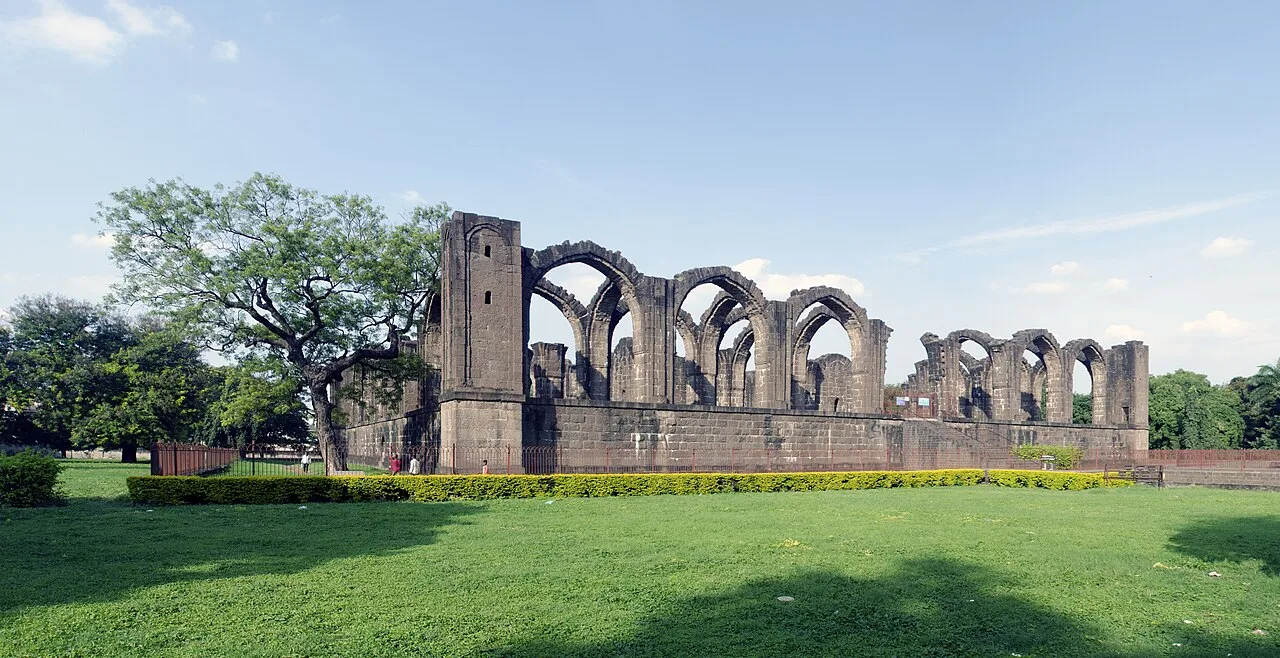
Bara Kaman
Bara Kaman is an incomplete royal burial complex in Vijayapura, Karnataka. Visitors come to see its surviving arches and learn about the ambitious mausoleum planned for Ali Adil Shah II.
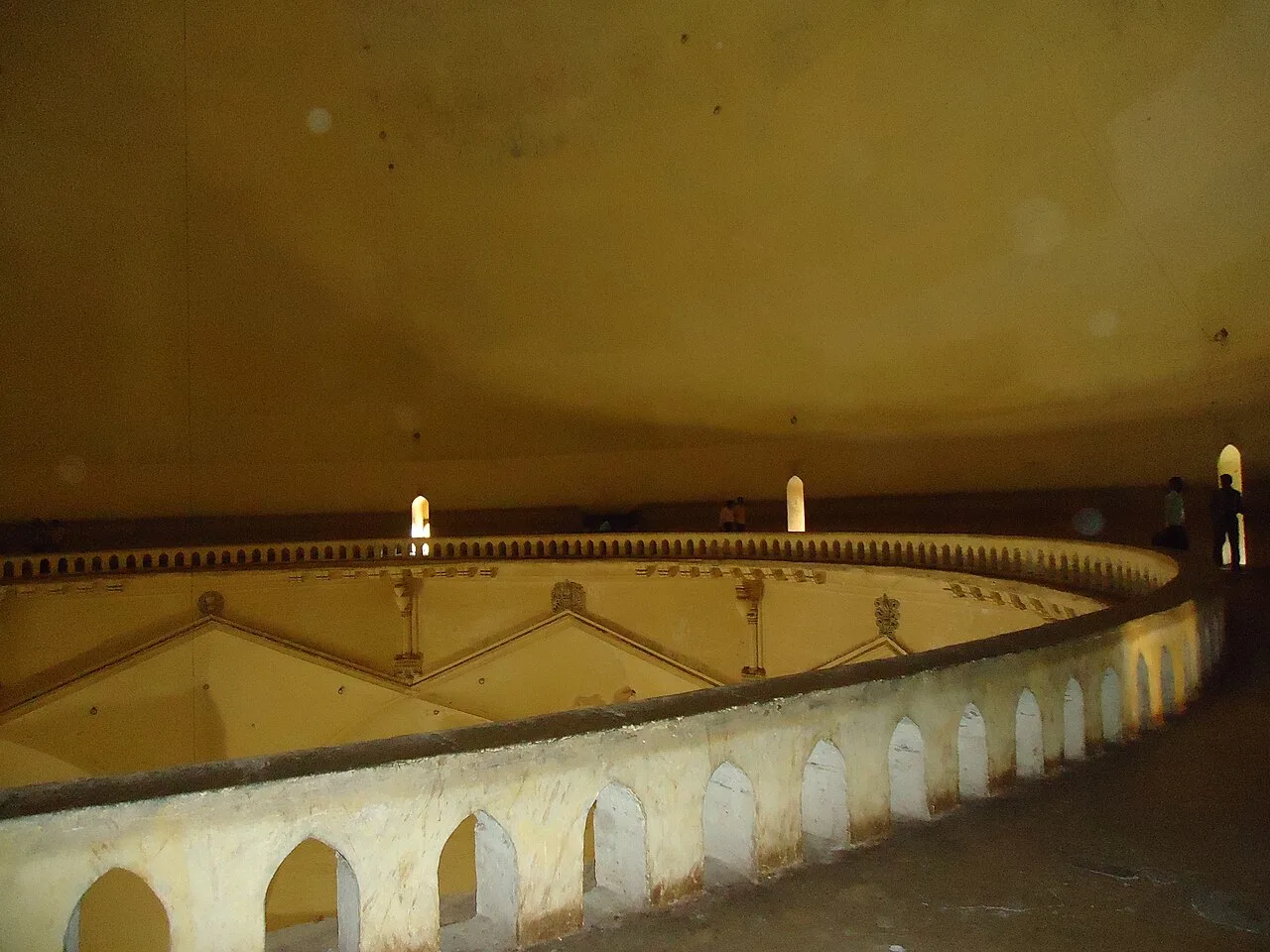
Gol Gumbaz
Gol Gumbaz is a basalt mausoleum in Bijapur, Karnataka, built for Mohammad Adil Shah. Visitors come to see its great dome, Indo-Islamic design and famous whispering gallery.
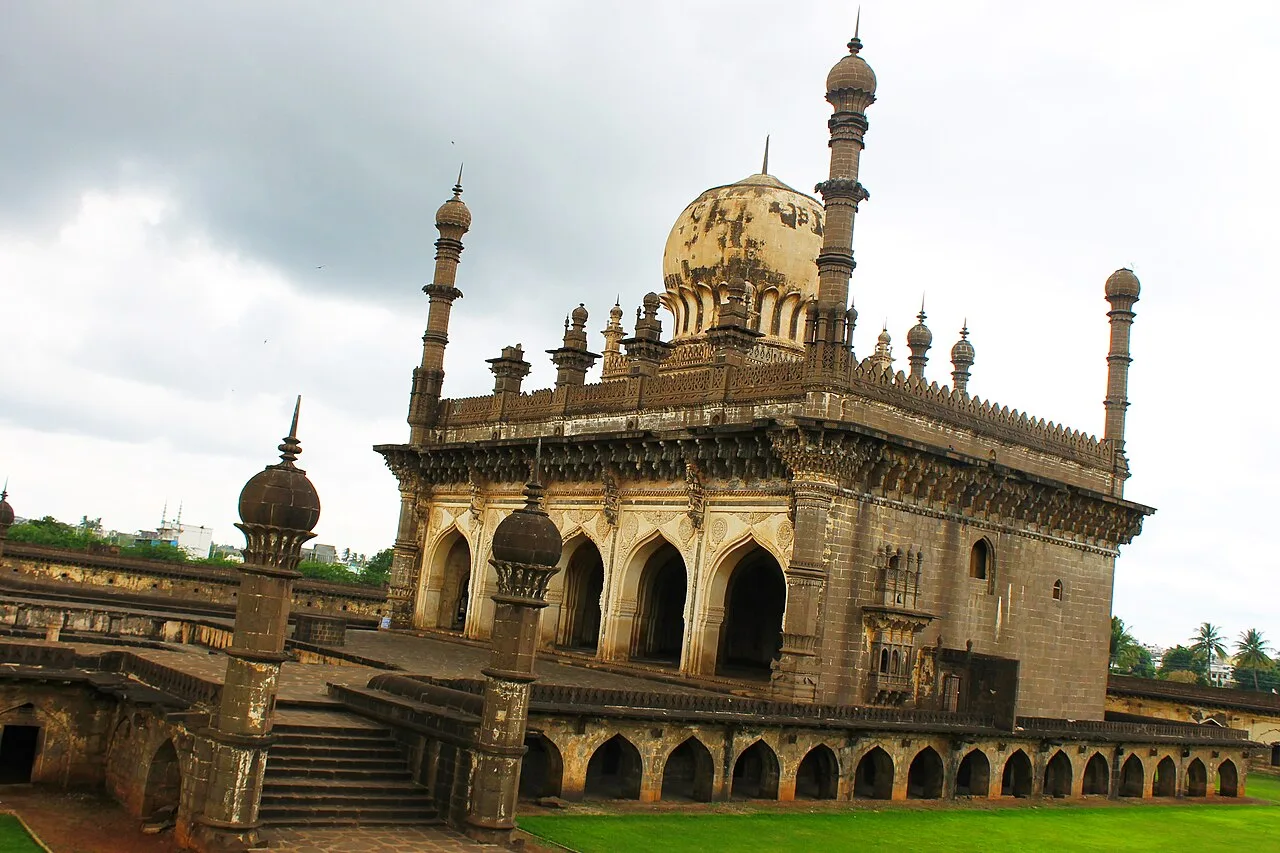
Ibrahim Rauza
Ibrahim Rauza is a funerary complex in Vijayapura, Karnataka, bringing together a mausoleum, mosque and gardens. Visitors come to see its paired buildings, fountain and Adil Shahi architecture.
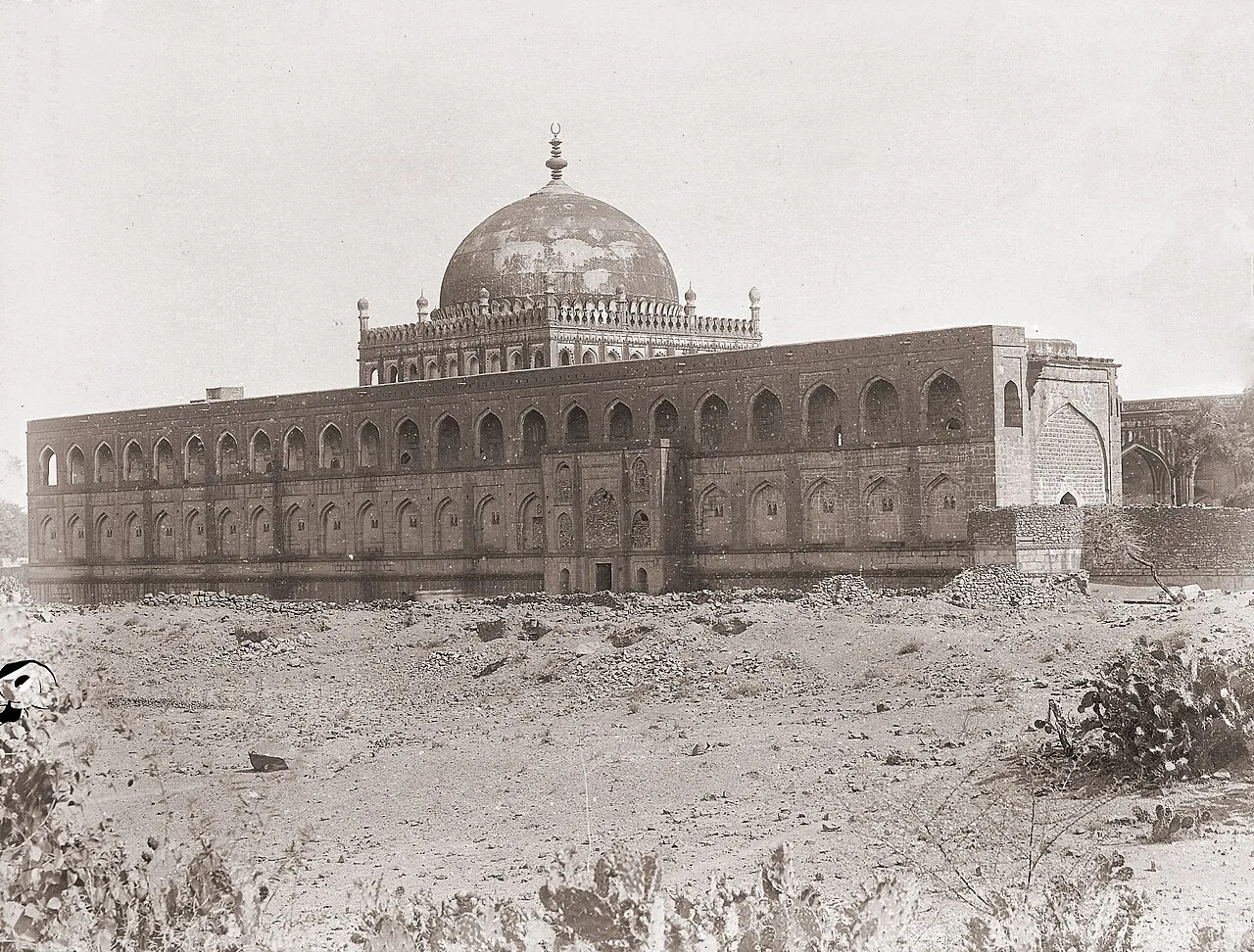
Jama Masjid, Vijayapura
Jama Masjid is a 16th-century congregational mosque in Vijayapura, Karnataka, begun under Ali Adil Shah I. Visitors come to see Bijapur’s largest mosque and its unfinished historic landmark.
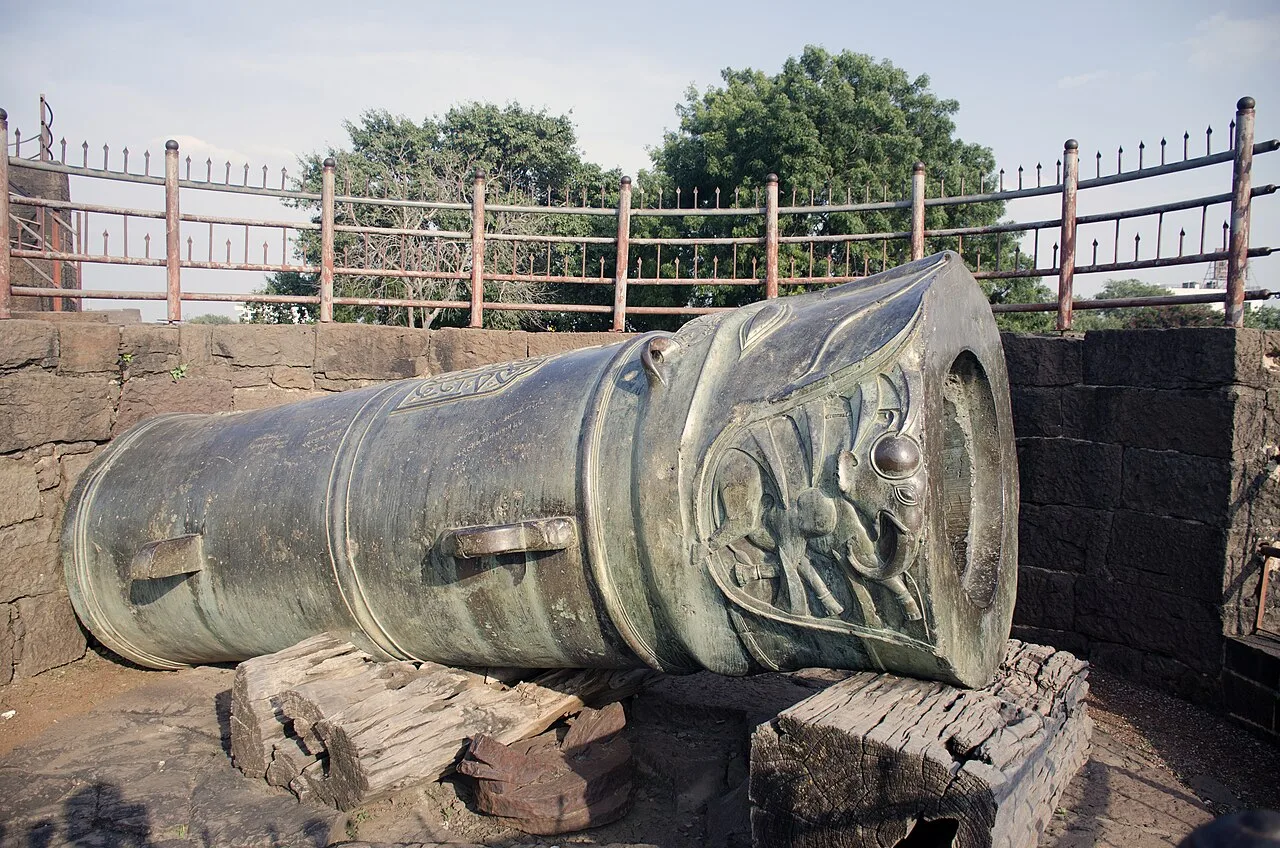
Malik-e-Maidan Cannon
Malik-e-Maidan is a sixteenth-century cannon at Bijapur Fort, notable as the largest surviving artillery example from the medieval period and for its substantial size.
Vijayapura’s food belongs broadly to the northern Karnataka tradition, where jowar rotti, pulse preparations, vegetable dishes and assertive chutneys are familiar parts of a meal. Look for rotti served with brinjal curry, greens or other seasonal accompaniments; groundnut-based chutneys are common across the wider region. Simple vegetarian meals are a practical way to explore this everyday cooking. Idli, vada and dosa are also useful breakfast choices, though they represent wider Karnataka and southern Indian food traditions rather than district specialities. Ask small eateries what has been freshly prepared, since their daily selection may be limited.
Vijayapura’s most visible artistic inheritance is its historic architecture: stone carving, decorative plasterwork, arches and carefully composed mosque and tomb complexes. Ibrahim Rauza is especially rewarding for observing architectural ornament. For textiles, distinguish the district from the wider northern Karnataka region. Ilkal saris belong to the weaving tradition centred on Ilkal in neighbouring Bagalkot district, while Kasuti embroidery is associated more broadly with Karnataka, particularly its northern areas. Such textiles may be worth seeking through regional retailers, but ask where an item was woven or embroidered rather than assuming local production.
Ugadi, Sankranti, Dussehra, Diwali and Ganesh Chaturthi are observed across the district, with celebrations generally following the seasonal calendar. Muslim communities mark Eid and Muharram, and local religious observances may draw visitors to shrines and neighbourhoods. Village jatre (fairs) are held at different times of year and vary by locality. These events can make particular areas busier and reduce room availability, especially around major celebrations. Festival dates shift from year to year, so check local calendars when planning a stay.
Vijayapura lies on a mostly open stretch of the northern Deccan plateau, with gently rolling ground, occasional rocky rises and extensive black-soil farmland. The Krishna River and its tributaries are important features of the wider district, though much of the countryside appears dry outside the rainy season. There is no coastline, and woodland is limited compared with heavily forested parts of Karnataka. Settlements and monuments are spread across a broad agricultural region; travel between them is mainly by road. Shade can be scarce on rural stretches, so plan outdoor stops around the heat and carry water.
The district has a hot, dry climate for much of the year. Summer, roughly from March into May, can make exposed monument visits tiring, particularly around midday. The monsoon usually brings rain from about June into September, refreshing fields but sometimes affecting rural road conditions. Winter, from around November to February, is generally more comfortable for walking and sightseeing. These cooler months are usually the best time to visit, though mornings and evenings can feel cool. Pack sun protection and light clothing year-round; in the rainy season, bring a light rain layer and footwear suitable for wet surfaces.
Vijayapura railway station, also encountered under the older name Bijapur, is the principal rail gateway for the city. Kalaburagi Airport is an air-access option, with an onward road journey required; confirm available flights before planning around it. Road connections link Vijayapura with other northern Karnataka centres and neighbouring Maharashtra, with state transport and private buses providing intercity travel. Within the city, auto-rickshaws and hired cars are practical for moving between monuments, while shorter stretches can be explored on foot when the weather permits. Check current services locally.
Vijayapura city is the most practical base for its monuments. Auto-rickshaws and hired cars can connect the sites, while some central stretches are manageable on foot in suitable weather. Local and state buses serve the district’s towns, including Indi, Sindgi, Muddebihal and Basavana Bagewadi, but services and onward connections vary. Shared vehicles may operate on some routes; confirm their availability locally. Taxis or a hired car are useful for combining towns or making rural stops. There are no passenger boat routes that are a practical way to visit the listed sights.
2 days: Jama Masjid, Malik-e-Maidan Cannon, Gol Gumbaz, Ibrahim Rauza, Bara Kaman; sleep in Vijayapura. 3 days: Jama Masjid, Malik-e-Maidan Cannon; sleep in Vijayapura. Gol Gumbaz, Ibrahim Rauza, Bara Kaman; sleep in Vijayapura.
Vijayapura city is the best base for visiting all five listed monuments, with hotels and guesthouses across a range of styles, as well as some simpler lodgings. It suits both a short visit and a slower three-day circuit. Travellers continuing through the district may find basic hotels or lodges in larger towns, but choice is generally more limited than in the city. Homestays and dharamshalas may be available in some places; confirm facilities and access directly before relying on them.
Carry water and sun protection, and avoid long walks in the hottest part of the day. Monument surfaces and steps can be uneven; take particular care on elevated or enclosed sections, and older visitors should assess steep stairs before climbing. Use drinking water that is sealed or reliably treated. Rural roads may be narrow, rough or poorly lit, so allow for changing conditions and avoid unnecessary night driving. Mobile coverage is generally available in populated areas but can vary outside them. Ordinary visits do not generally require a special district permit; confirm any site-specific access rules with official sources.
- Bagalkotabout 100 km
- Solapur · Maharashtraabout 102 km
- Kalaburagiabout 131 km
- Belagaviabout 138 km
- Dharashiv · Maharashtraabout 138 km
- Koppalabout 156 km
Straight-line distance between the centres of each district's destinations; road distance is longer.
Q: How many days should I spend in Vijayapura? A: Two days can cover the principal city monuments; three days allows a more relaxed visit. Q: When is the best time to visit? A: November to February is generally the most comfortable season for sightseeing. Q: Where is the best base for the monuments? A: Stay in Vijayapura city, which is the most convenient base for the listed sites. Q: How do I get to Vijayapura? A: The city has a railway station and intercity road connections. Kalaburagi Airport is an air-access option, with onward travel by road; check current services before planning. Q: Is Vijayapura suitable for families and elderly travellers? A: Yes, but allow time between visits, take precautions against heat, and consider uneven surfaces and steep monument stairs when planning.
This page draws on our 5 destination guides for Vijayapura and is updated as our team checks it.
Be the first to share photos, stories, advice or a helpful contact for Vijayapura.
Loading…