
District · Karnataka
Bidar
Bidar sits in northeastern Karnataka, where the Deccan plateau meets routes and cultural influences from Maharashtra and Telangana.
Bidar lies on the Deccan plateau in northeastern Karnataka, near the borders of Maharashtra and Telangana. Its landscape combines cultivated plains, gently rolling uplands and settlements built around a long history of trade, faith and political power. The city became a major Bahmani capital in the fifteenth century, and Bidar Fort and the Bahmani Tombs remain central to understanding that legacy. Persianate architectural influences sit alongside the district’s Kannada and wider Deccani cultural traditions. Guru Nanak Jhira Sahib is an important Sikh shrine, while Narasimha Jharni Cave Temple adds another dimension to its pilgrimage landscape. Bidar rewards an unhurried visit, combining substantial monuments with living religious sites and a celebrated metalworking tradition.
Bidar sits in northeastern Karnataka, where the Deccan plateau meets routes and cultural influences from Maharashtra and Telangana. It is best known for Bidar Fort and the Bahmani Tombs, which recall the city’s importance as a fifteenth-century capital. The district also brings together living places of worship, including the Sikh shrine Guru Nanak Jhira Sahib and Narasimha Jharni Cave Temple. Bidriware, a distinctive metalworking tradition associated with the city, adds a craft dimension to a visit. Travellers can explore substantial historic sites alongside active religious centres, while the region’s Kannada and wider Deccani traditions reflect its position at a cultural crossroads.
Bidar’s strategic position on the Deccan plateau made it important to successive regional powers. The Bahmani Sultanate shifted its capital from Gulbarga to Bidar in the fifteenth century, and the city developed as a centre of courtly life, learning and architecture. Bidar Fort and the Bahmani Tombs preserve evidence of this period. As the Bahmani kingdom fragmented in the early sixteenth century, the Barid Shahi dynasty established its rule from Bidar. The region later came under Mughal authority, including during Aurangzeb’s campaigns in the Deccan, and subsequently formed part of the Hyderabad state ruled by the Nizams. Hyderabad was integrated into the Indian Union in 1948. In the reorganisation of states in 1956, Bidar became part of Mysore State, renamed Karnataka in 1973. The district’s history is also shaped by religious and cultural networks: Sikh tradition associates Guru Nanak with the spring at Bidar, while local Kannada and Deccani communities have sustained varied traditions of worship, language and craft.
4 destination guides
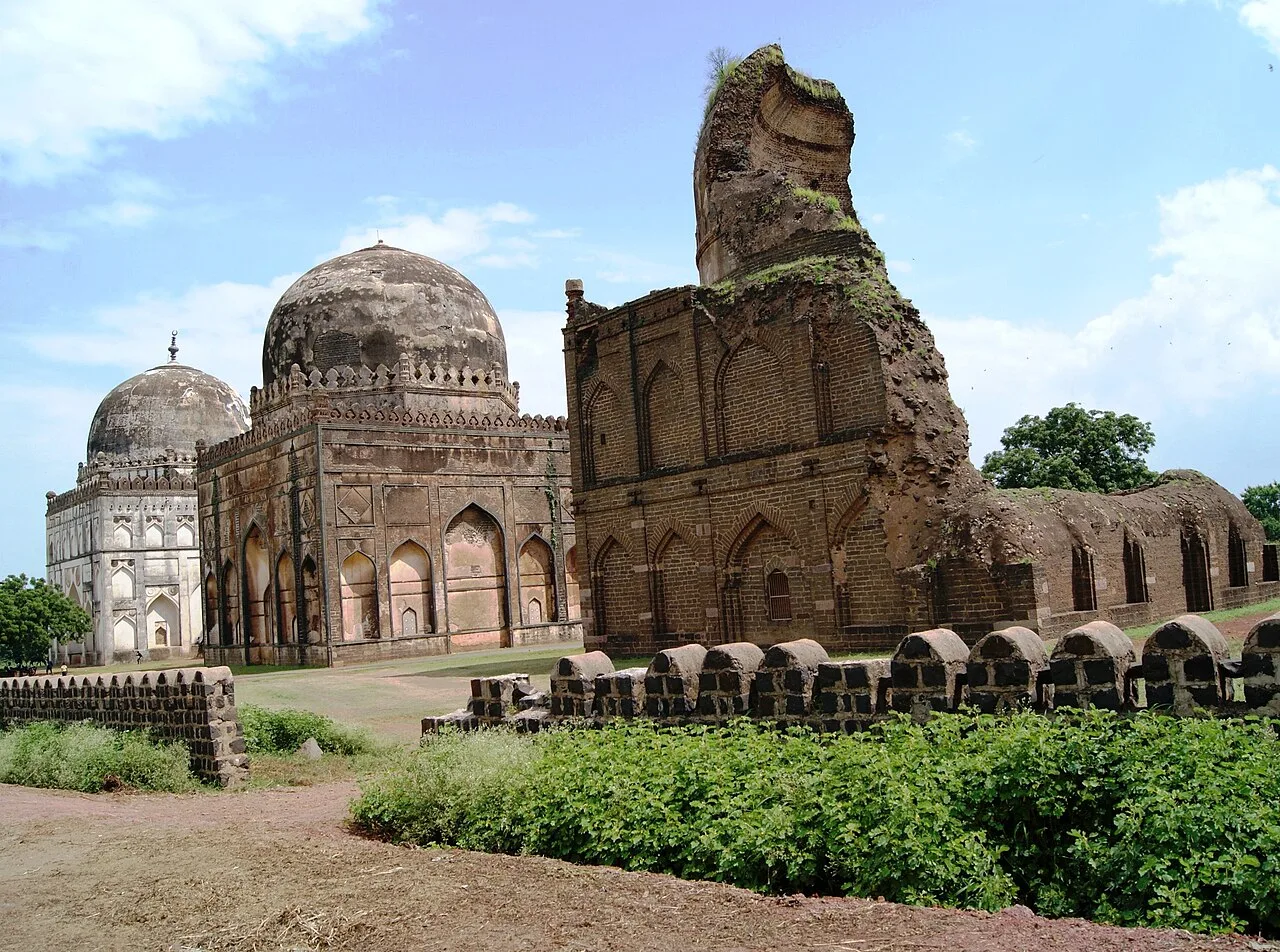
Bahmani Tombs
The Bahmani Tombs are a burial complex in Bidar, Karnataka, dating from the fifteenth and sixteenth centuries. Visitors come to see their distinctive Deccan architecture and blend of influences.
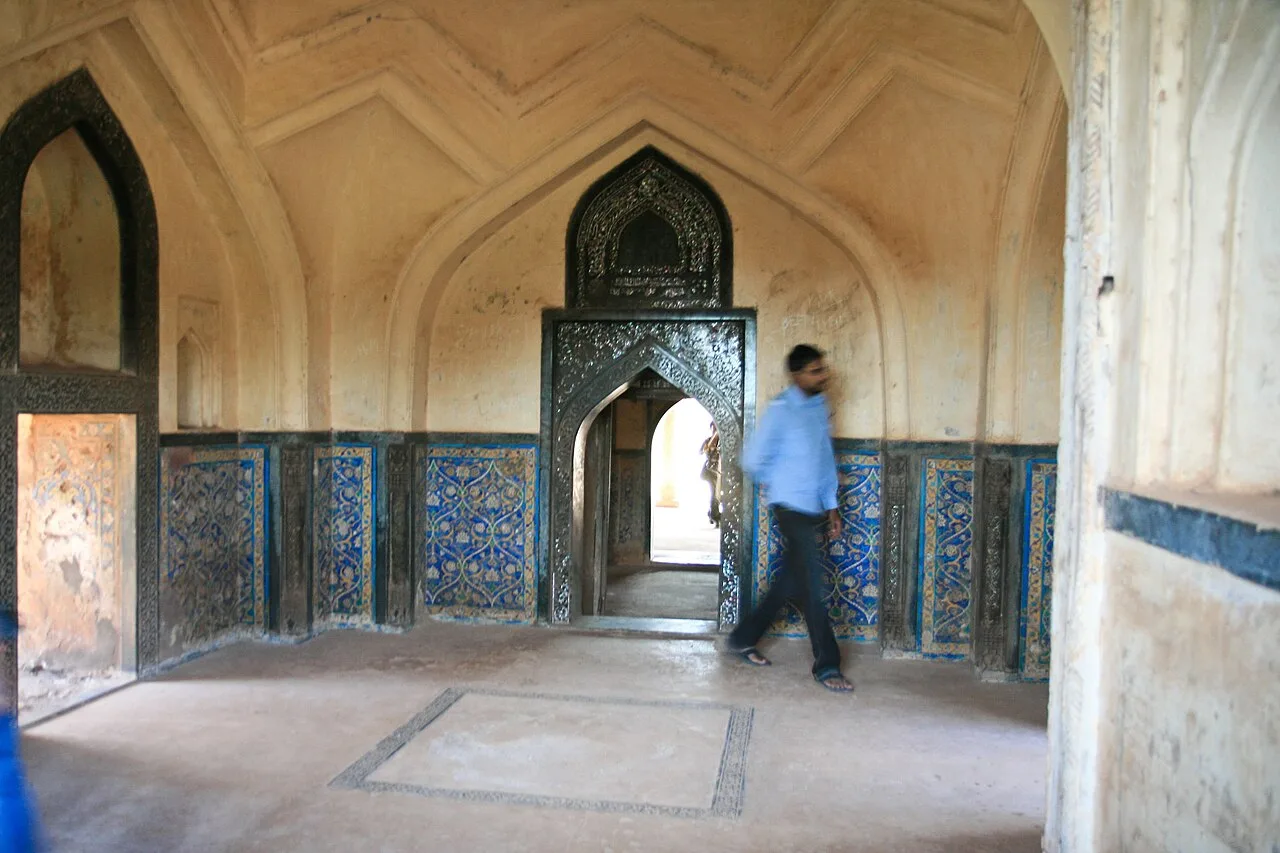
Bidar Fort
Bidar Fort is a historic complex in Bidar, Karnataka, where visitors can explore more than 30 monuments and learn about the changing powers of the Deccan.
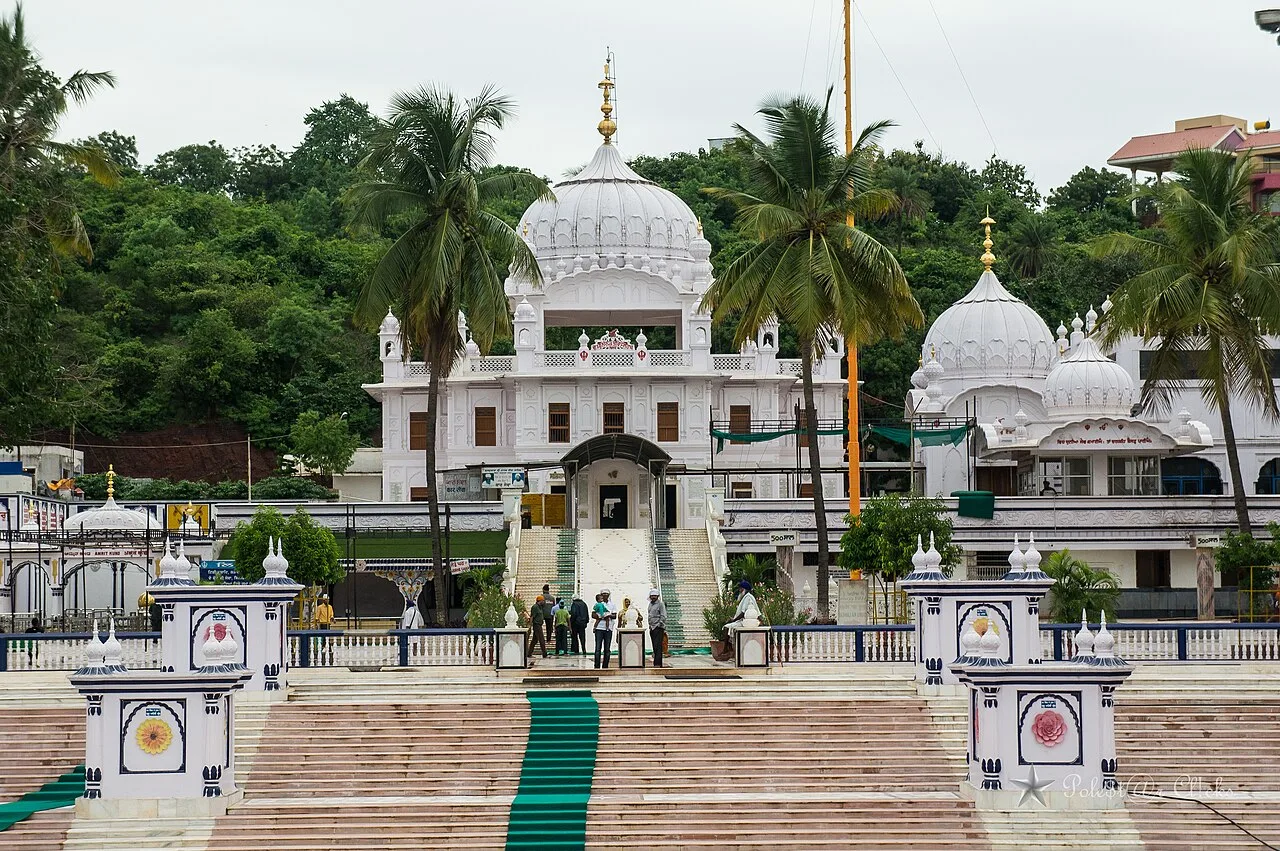
Guru Nanak Jhira Sahib
Guru Nanak Jhira Sahib is a Sikh shrine in Bidar, Karnataka, associated with Guru Nanak and the region’s Sikh history; visitors come to honour the first Sikh guru.
Narasimha Jharni Cave Temple
Narasimha Jharni Cave Temple is a shrine in Bidar district, Karnataka, linked to Vishnu’s Narasimha avatar. Visitors come to worship at the cave temple and recognise its place in Vaishnavite tradition.
Food in Bidar reflects northern Karnataka and the wider Deccan rather than the coastal or southern Karnataka cuisines often associated with the state. Jowar rotti, made from sorghum, is a regional staple, eaten with vegetable preparations, pulses and chutneys. Ennegayi, a stuffed brinjal dish, and peanut-based accompaniments belong to this broader northern Karnataka food tradition. Deccani influences also appear in rice and meat preparations, including biryani. For a simple breakfast, look for idli, vada or dosa at local eateries. Vegetarian meals are readily available; asking what has been freshly prepared is often more useful than expecting an extensive menu.
Bidar is especially associated with Bidriware, a metalworking tradition that developed under the patronage of the Bahmani court. Artisans typically inlay silver into a zinc-rich alloy, then darken the surface to create the characteristic contrast between a black ground and bright decoration. Floral patterns, geometric designs and calligraphic motifs appear on objects such as vases, boxes and ornamental plates. This is a living craft rather than simply a museum tradition. When buying, ask about the base metal, inlay material and maker, since workmanship and materials vary across pieces.
Religious observances reflect Bidar’s diverse communities. Guru Nanak Gurpurab draws devotees to Guru Nanak Jhira Sahib, while Sikh observances through the year can bring larger congregations. Eid and Muharram are marked by Muslim communities, and Hindu festivals such as Basava Jayanti and Narasimha Jayanti are observed locally or regionally. The timing of these festivals follows religious calendars, so dates vary from year to year. Crowds and demand for rooms may rise around major observances, particularly at prominent shrines; visitors planning to attend should check local event information and arrange accommodation ahead.
Bidar occupies an elevated stretch of the Deccan plateau, with broad cultivated plains, gently rolling uplands and shallow valleys. Seasonal streams and river systems drain the area toward the Godavari basin; reservoirs and agricultural land are part of the rural landscape. There is no coast, and travel is mainly across open plateau country, with historic sites concentrated in and around Bidar city. Rural roads connect settlements and farmland, but journeys beyond the city can take longer than the terrain suggests. The exposed landscape also means shade and water are useful during outdoor visits in warmer months.
Bidar has a generally hot, dry climate for much of the year. Summer, especially the months before the monsoon, can make outdoor sightseeing tiring; plan breaks and carry water. The monsoon usually brings rain from around June into September, which can refresh the countryside but may affect road conditions. Winter is comparatively mild and comfortable for walking around the fort, tombs and shrines. October to February is generally the most pleasant period for a visit. Pack light, breathable clothing for warm days, a layer for cooler evenings in winter, sun protection, and a rain jacket or umbrella during the monsoon.
Bidar railway station is the principal rail gateway for the city and its nearby sights. Bidar Airport is the closest airport, but confirm whether suitable passenger flights are operating before planning around it. Hyderabad’s Rajiv Gandhi International Airport is another option for air arrivals, followed by a road journey. Road links connect Bidar with Hyderabad, Kalaburagi and neighbouring towns in Karnataka, Telangana and Maharashtra. State transport and private buses serve the region. Within Bidar, auto-rickshaws and hired cars are practical for linking the fort, shrines and tombs; agree on the route before setting out. Check current services locally.
Bidar city is the practical hub for visiting the fort, tombs and religious sites. Auto-rickshaws and hired cars can link these places; agree on the route before setting out, especially if combining several stops. Local and regional buses connect Bidar with nearby towns and settlements, while shared vehicles may be available on some routes. A hired car is often more convenient for reaching sites outside the city or making a flexible day circuit. Roads link the district with Kalaburagi, Hyderabad and neighbouring areas, but services and road conditions can vary. Check current transport locally; there are no usual sightseeing boat routes.
2 days: Bidar Fort → Bahmani Tombs; Guru Nanak Jhira Sahib → Narasimha Jharni Cave Temple. Sleep in Bidar. 3 days: Guru Nanak Jhira Sahib → Bidar Fort; Bahmani Tombs; Narasimha Jharni Cave Temple. Sleep each night in Bidar.
Bidar city is the best base for both short visits and a slower circuit, as the listed monuments and shrines are reachable from here. The town has hotels and guesthouse-style accommodation, with options across a range of comfort levels. Dharamshalas or other religious accommodation may be available near places of worship, subject to their own arrangements and availability. For a three-day visit, staying in Bidar throughout avoids unnecessary packing and transfers. Confirm facilities and availability in advance during major religious observances.
Bidar’s main sights involve walking over uneven historic surfaces, steps and, at the cave temple, a wet route; wear secure footwear and follow site guidance. Heat can be tiring, so carry drinking water, use sun protection and take breaks. During monsoon, check local road conditions before rural journeys. Use reputable transport and take care on intercity roads, particularly after dark. Keep valuables secure in crowded shrine areas and follow photography or visitor instructions. Mobile connectivity is generally available in town but may be less reliable in rural areas. No special protected-area permit is generally associated with these listed sights; confirm any current entry requirements with official local sources.
- Sangareddy · Telanganaabout 56 km
- Nizamabad · Telanganaabout 75 km
- Medak · Telanganaabout 78 km
- Kalaburagiabout 99 km
- Kamareddy · Telanganaabout 102 km
- Ranga Reddy · Telanganaabout 106 km
- Medchal–Malkajgiri · Telanganaabout 114 km
- Hyderabad · Telanganaabout 116 km
Straight-line distance between the centres of each district's destinations; road distance is longer.
Q: How many days should I spend in Bidar? A: Two days cover the principal listed sights at a measured pace; a third day allows more time for visits and rest. Q: When is the best time to visit? A: October to February is generally the most comfortable season for sightseeing. Q: Where is the best base for visiting the district? A: Bidar city is the most practical base for the fort, tombs and shrines. Q: How do I get to Bidar? A: Bidar railway station serves the city. Bidar Airport may have limited or changing passenger services, so check before planning; Hyderabad is another air gateway, with onward road travel. Q: Is Bidar suitable for families or elderly travellers? A: Yes, though historic steps, uneven ground and the cave temple’s wet passage may be challenging. Plan breaks and check site conditions before visiting.
This page draws on our 4 destination guides for Bidar and is updated as our team checks it.
Be the first to share photos, stories, advice or a helpful contact for Bidar.
Loading…