
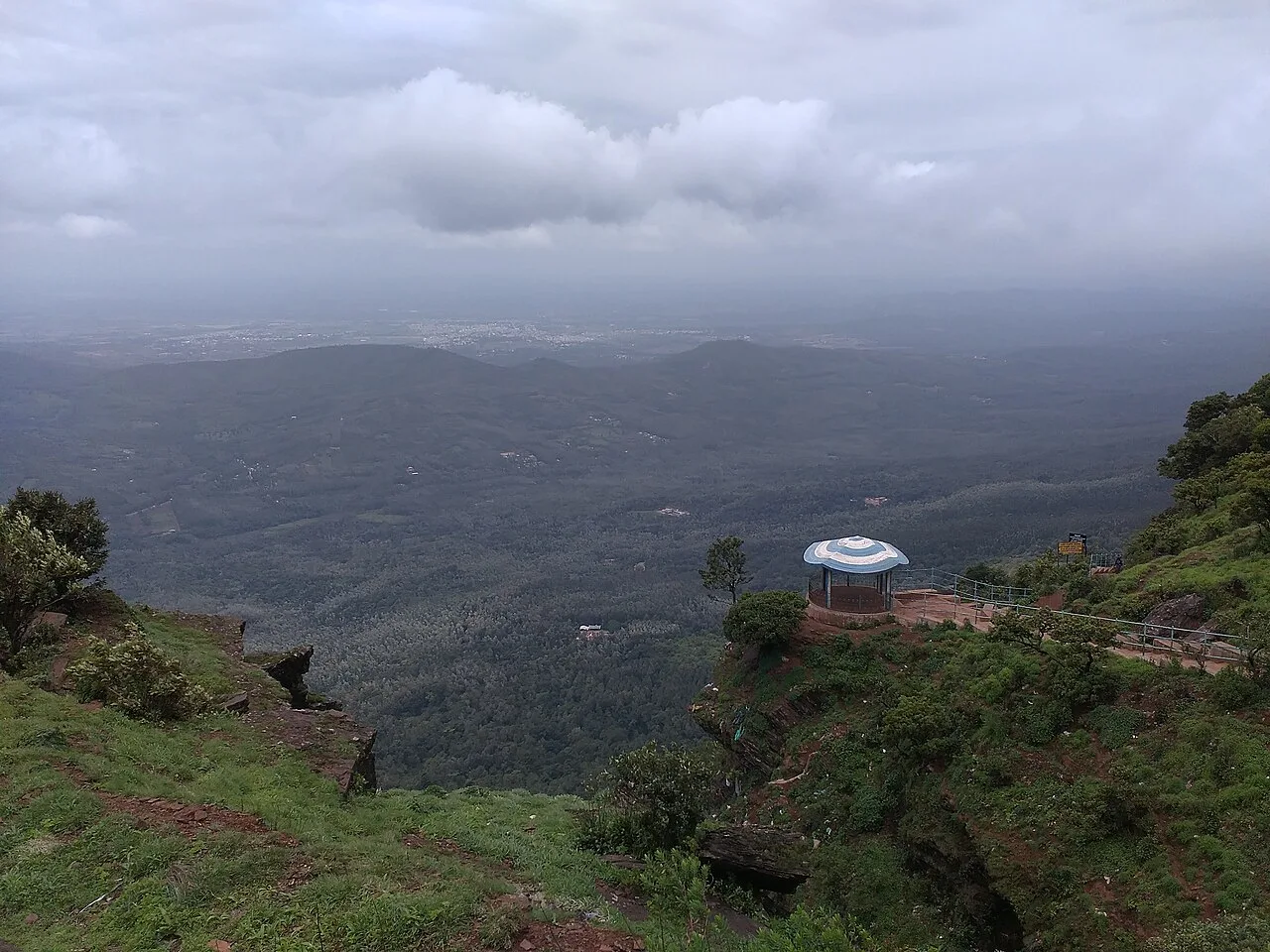
District · Karnataka
Chikkamagaluru
Chikkamagaluru brings together the Western Ghats and the agricultural uplands of inland Karnataka.
Chikkamagaluru district stretches across Karnataka’s Western Ghats and adjoining uplands, with coffee estates, forested slopes, river valleys and quieter agricultural country shaping its character. Mullayyanagiri, Karnataka’s highest peak, and the Baba Budangiri range dominate its best-known hill scenery, while Kudremukha offers another striking mountain landscape. Hebbe Falls lies near the hill station of Kemmangundi. The district’s religious heritage is equally important: Sringeri’s Sharadamba Temple stands beside the Tunga, and Horanadu is known for its Annapoorneshwari Temple. Local tradition links Baba Budan with the introduction of coffee cultivation to these hills. Together, plantation life, pilgrimage centres and the rain-fed landscapes of Malnad give the district a character that rewards unhurried travel rather than a hurried circuit of viewpoints.
Chikkamagaluru brings together the Western Ghats and the agricultural uplands of inland Karnataka. It is best known for coffee-growing country, forested mountains and pilgrimage centres, with journeys between them often as memorable as the destinations. Mullayyanagiri and Baba Budangiri define the district’s familiar hill scenery; Kudremukha offers a different, more remote mountain landscape. Sringeri and Horanadu draw pilgrims, while Hebbe Falls is among the region’s notable waterfall visits. Traditions associate Baba Budan with coffee’s arrival in these hills. The district suits travellers who can allow time for winding roads, changing weather and a mix of outdoor and cultural experiences.
The hills and valleys of this region formed part of the territories influenced over time by early Kannada powers, including the Kadambas and Western Gangas, and later by the Hoysalas. The Hoysala kingdom had important centres in the wider region, including Belur and Halebidu, now in neighbouring Hassan district. Later, the area came under the influence of Vijayanagara and regional Nayaka rulers, before becoming part of the Mysore kingdom. From the 18th century, changes in control across Mysore brought the region into the orbit of British colonial administration; Mysore was subsequently ruled by the Wodeyars under British paramountcy. Coffee cultivation expanded in the hills during the colonial period, alongside older farming and forest-based livelihoods. Local tradition credits Baba Budan with bringing coffee seeds to the region, though accounts of coffee’s introduction vary. After Indian independence, the district remained part of Mysore State, which became Karnataka in 1973. Administrative boundaries and district arrangements have changed over time; Chikkamagaluru is now one of Karnataka’s districts.
6 destination guides
Baba Budangiri
Baba Budangiri is a Western Ghats hill range in Karnataka, visited for its high peaks, coffee-growing heritage, trekking route and shrine revered by Hindu and Muslim pilgrims.
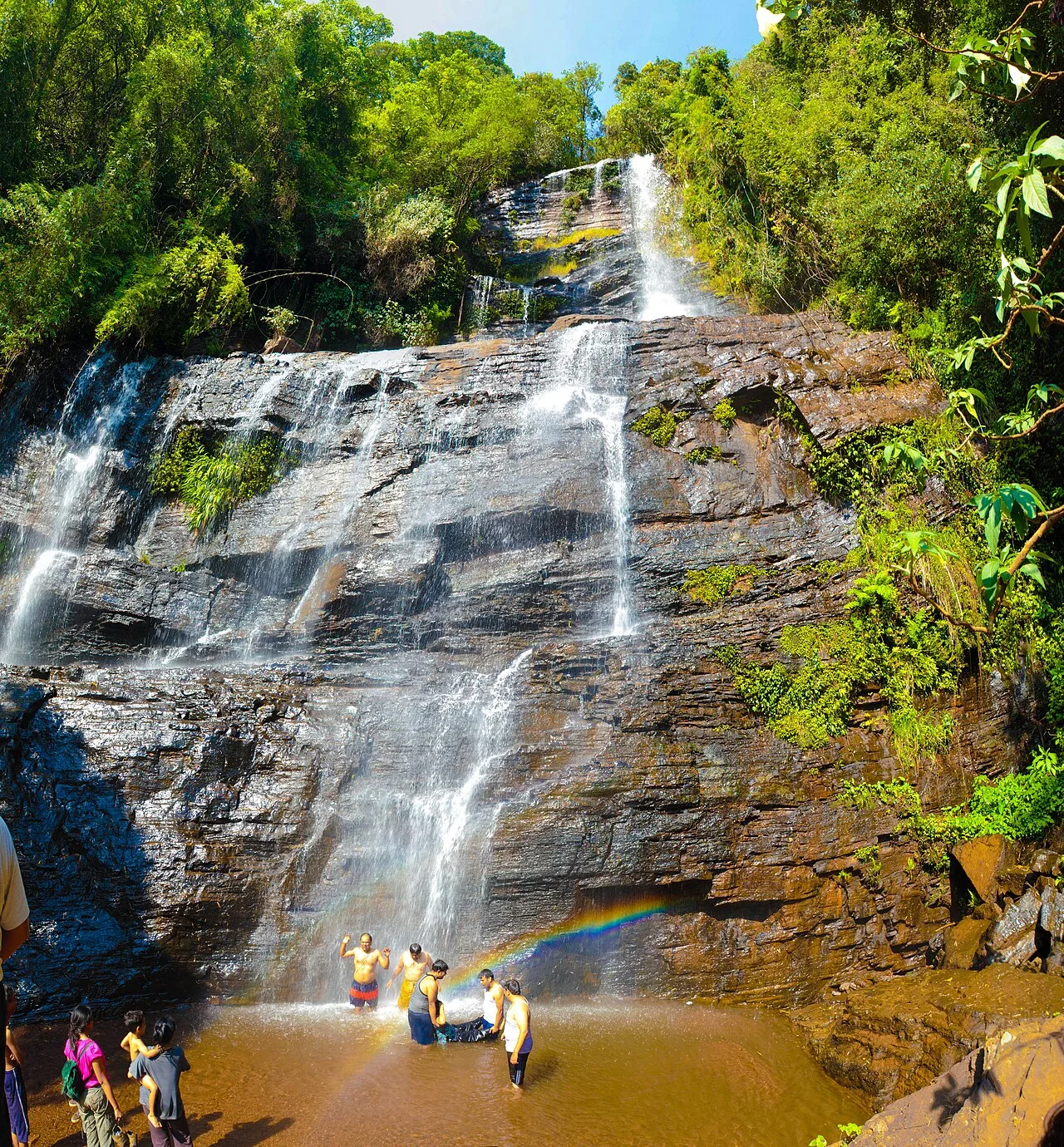
Hebbe Falls
Set within a coffee estate in Karnataka’s Chikkamagaluru district, Hebbe Falls attracts visitors to see its 551-foot cascade, which divides into two named sections near Kemmangundi.
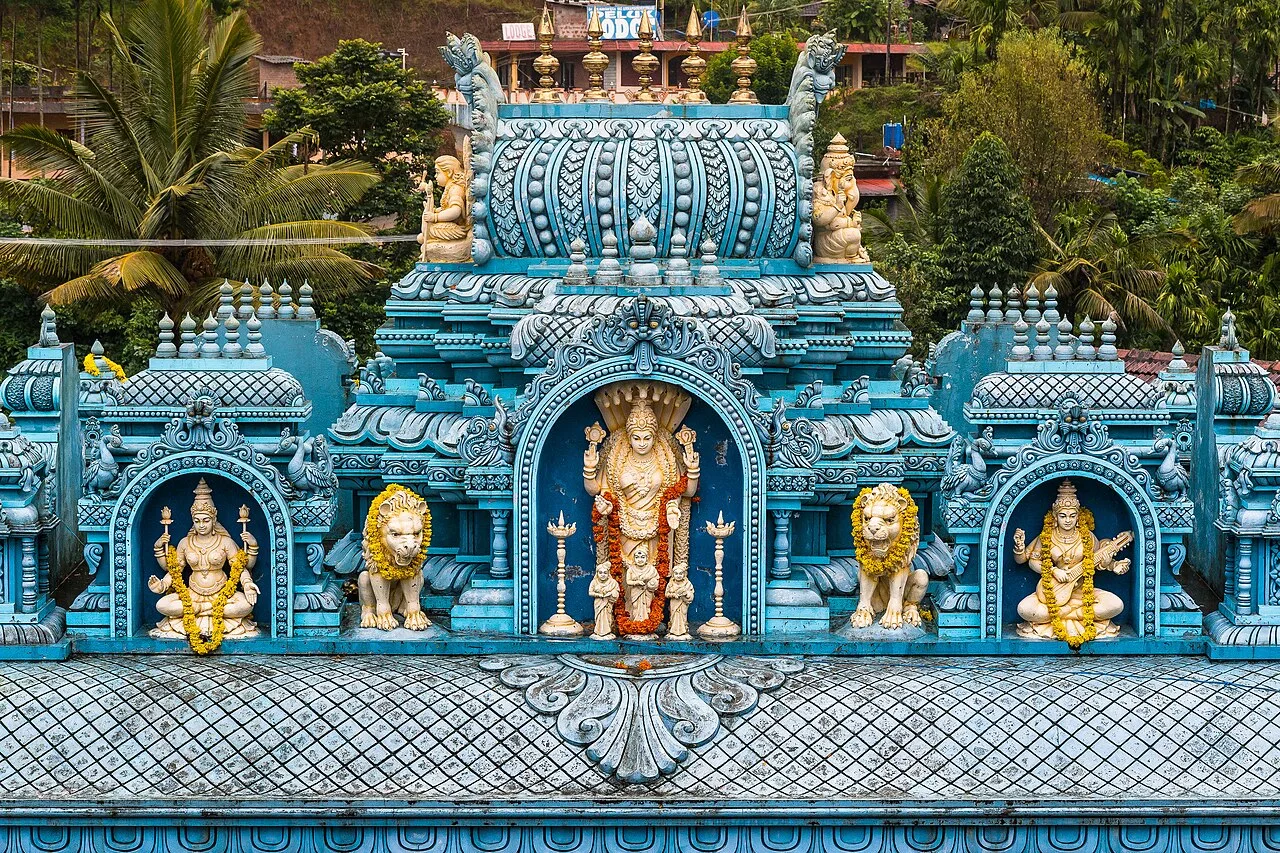
Horanadu Annapoorneshwari Temple
Horanadu Annapoorneshwari Temple is a religious site in Horanadu, Karnataka. Visitors come to worship at the temple, which gives the village its association with Annapoorneshwari.
Kudremukha
Kudremukha is a mountain range and peak in Karnataka’s Chikmagalur district, known for its horse-like profile and its setting in a region rich in biological diversity.
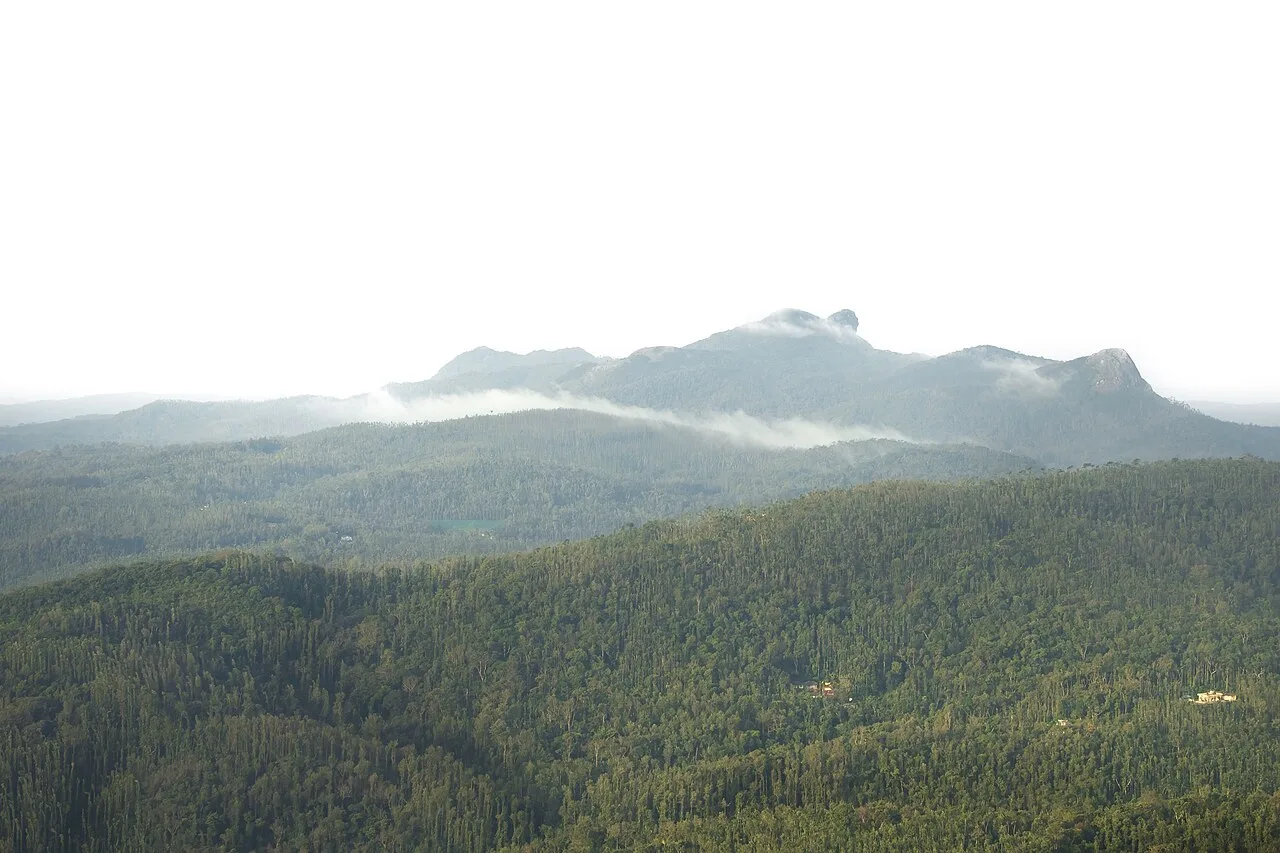
Mullayyanagiri
Mullayyanagiri is Karnataka’s highest mountain summit, set in the Western Ghats. People visit to reach its high point and see the small temple there.
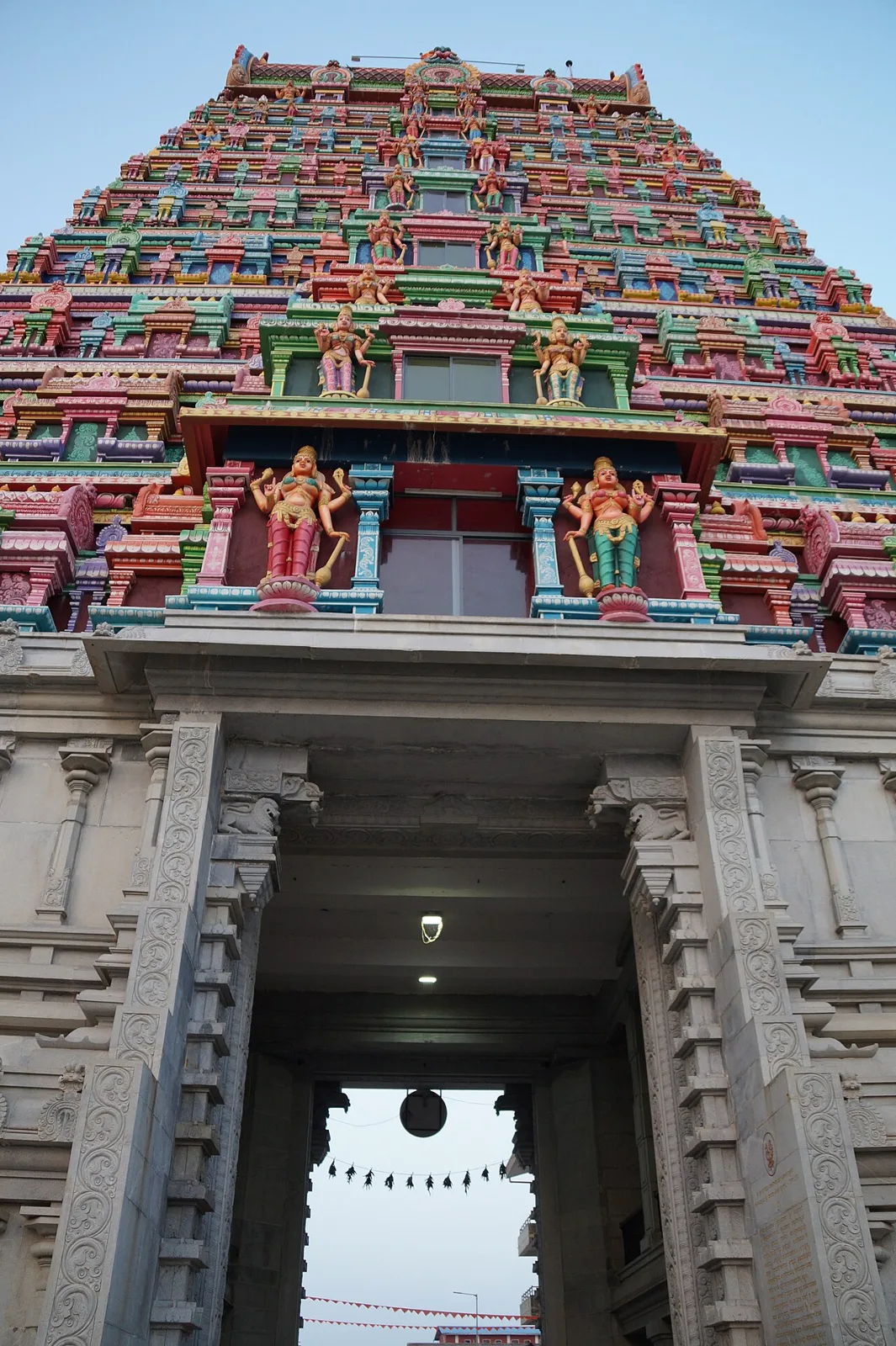
Sringeri Sharadamba Temple
A shrine to the goddess Sharadamba beside the Tunga in Sringeri, it draws worshippers and visitors interested in the monastic institution established there by Adi Shankara.
Food in Chikkamagaluru reflects the wider Malnad and Karnataka traditions rather than a single district-specific cuisine. Rice-based meals, vegetable preparations, sambar and chutneys are dependable choices, while akki rotti and kadubu belong to the broader regional repertoire. Small eateries commonly serve idli, vada and dosa for breakfast; bisi bele bath is another familiar Karnataka dish. Coffee is especially relevant in this plantation district, and filter coffee is a natural accompaniment to a tiffin stop. Vegetarian meals are easy to find around pilgrimage towns such as Sringeri and Horanadu. Ask what has been cooked fresh, since smaller establishments may offer only a limited daily menu.
The district’s artistic heritage is most readily encountered in its temple architecture, stone sculpture and religious settings, particularly at Sringeri. These belong to wider Karnataka traditions rather than a craft exclusive to Chikkamagaluru. Woodcarving and practical bamboo or cane work are also associated with the broader Malnad region, though availability varies between towns and shops. Yakshagana, a performance tradition combining elaborate costume, makeup, music and storytelling, is associated with coastal Karnataka and parts of Malnad. When shopping for handmade objects or textiles, ask where they were produced rather than assuming that everything sold near a tourist attraction is locally made.
Sringeri’s religious calendar includes Navaratri celebrations in autumn, when the Sharadamba Temple draws devotees. Horanadu also sees larger pilgrim gatherings around important temple festivals, while local village fairs and harvest-season observances take place across the district. Baba Budangiri has religious significance for different communities, and observances there can bring visitors to the hills. These events are regional in character and their dates vary by calendar and locality. Temple towns and nearby accommodation can become busier during major festivals and holiday periods, so booking ahead is sensible if travel dates coincide.
The district spans steep Western Ghats ridges, forested slopes, coffee-growing hills and gentler agricultural uplands. Mullayyanagiri and Baba Budangiri rise above the Chikkamagaluru area, while the Kudremukha region has broad, rugged mountain terrain. Rivers and streams feed the Tunga and other waterways, and waterfalls are most impressive after the rains. This varied terrain makes travel scenic but slow: winding roads, steep gradients and rain-affected stretches can turn short map distances into longer journeys.
Conditions vary between the warmer uplands and the cooler, higher hills. Summer, broadly from March to May, can be warm in towns, while elevated areas are often more comfortable. The monsoon, usually from June into September, brings heavy rain, lush scenery and possible travel disruption from slippery roads, poor visibility or local closures. October to February is generally a more settled period for sightseeing, with cooler mornings and evenings in the hills. Many visitors prefer these months, though conditions vary year to year. Pack layers, a light rain shell, sturdy footwear and sun protection; carry extra warm clothing for early starts at higher elevations.
The most useful gateway depends on which part of this large hill district you plan to visit. Mangaluru International Airport and Shivamogga’s Kuvempu Airport are options to compare against your itinerary and available flights. Chikkamagaluru has a railway station, while Kadur Junction is another useful rail gateway for the district headquarters and nearby hills. Road approaches connect the district with Bengaluru, Hassan, Shivamogga and Mangaluru. State-run and private buses serve major towns; taxis are more practical for dispersed hill sights and onward travel from transport hubs. Allow extra time for winding roads, especially during heavy rain, and check current services locally.
Chikkamagaluru town is a practical road hub, with routes linking it to Kadur, Mudigere, Kalasa, Koppa and Sringeri. State-run and private buses connect larger towns, but services may be limited for remote trailheads and waterfall approaches. Autos and shared vehicles can help with shorter local journeys where available; a taxi or hired car is usually more flexible for combining hill sights. Road conditions can change during the monsoon, and some approaches may require a local vehicle or guided transport. There are no useful passenger boat routes for these itineraries. Confirm onward transport locally, especially for early starts or rural destinations.
2 days: Mullayyanagiri → Baba Budangiri; sleep in Chikkamagaluru. 3 days: Hebbe Falls → Mullayyanagiri → Baba Budangiri; sleep near Kemmangundi, then in Chikkamagaluru. 4 days: Kudremukha → Horanadu Annapoorneshwari Temple → Sringeri Sharadamba Temple; sleep near Kudremukha, in Horanadu, then in Sringeri.
Chikkamagaluru town is the most convenient base for Mullayyanagiri and Baba Budangiri, with hotels, homestays and some budget lodgings. For Hebbe Falls and Kemmangundi, look for homestays or lodges in the surrounding hill area and check access arrangements before booking. Kalasa and Horanadu are useful for the Kudremukha and Horanadu side of the district; Sringeri suits temple visits and the Tunga valley. Accommodation ranges from simple guesthouses and homestays to hotels and some government-run lodges. Pilgrim facilities, including dharamshalas, may be available near temples.
Trails and waterfall approaches may involve uneven ground, so use sturdy footwear and do not enter strong currents. Keep food secured and maintain distance from wildlife, especially near forest edges. Use treated or boiled drinking water where its safety is uncertain. Mobile coverage can be patchy in remote valleys and hills; share plans and carry essential supplies. Access to protected areas or particular trekking routes may require permission or be restricted. Confirm current rules and permits with official Forest Department or park authorities before travel.
- Hassanabout 66 km
- Shivamoggaabout 69 km
- Udupiabout 93 km
- Dakshina Kannadaabout 96 km
- Kodaguabout 116 km
- Kasaragod · Keralaabout 120 km
- Chitradurgaabout 130 km
- Mandyaabout 163 km
Straight-line distance between the centres of each district's destinations; road distance is longer.
Q: How many days should I spend in Chikkamagaluru district? A: Allow at least two days for the main hill sights; three or four days gives more time for waterfalls, temple towns and longer road journeys. Q: When is the best time to visit? A: October to February is generally suitable for sightseeing. The monsoon is scenic but can bring heavy rain and road disruption. Q: Where is the best base? A: Chikkamagaluru town works well for the nearby hills; use Sringeri, Horanadu or the Kalasa area for itineraries farther west. Q: How do I get to the district? A: Compare flights to Mangaluru or Shivamogga with your route, or travel by rail to Chikkamagaluru or Kadur; buses and taxis connect onward. Q: Is the district suitable for families or elderly travellers? A: Yes, with a flexible itinerary. Choose accessible temple visits and road viewpoints, and consider that steep trails, winding roads and long drives may not suit everyone.
This page draws on our 6 destination guides for Chikkamagaluru and is updated as our team checks it.
Be the first to share photos, stories, advice or a helpful contact for Chikkamagaluru.
Loading…