
District · Karnataka
Bagalkot
Bagalkot lies in northern Karnataka, in the Deccan region, and is one of the state’s most rewarding districts for exploring early temple architecture.
Bagalkot district in northern Karnataka brings together sandstone hills, cultivated plains and historic settlements along the Malaprabha valley. Its best-known monuments belong to the world of the Early Chalukyas, whose capital at Badami became an important centre of temple building. The Badami cave temples, Aihole’s varied monuments and Pattadakal’s seventh- and eighth-century temples reveal different approaches to sacred architecture; Pattadakal is a UNESCO World Heritage Site. Beyond these celebrated sites, the Mahakuta temples and Banashankari Temple at Cholachagudda remain important places of worship. The district’s character combines archaeological richness with living religious traditions, weaving towns and everyday agricultural life. Allow time for both the major monument complexes and the quieter temple settings around Badami.
Bagalkot lies in northern Karnataka, in the Deccan region, and is one of the state’s most rewarding districts for exploring early temple architecture. Its best-known sites—Badami, Aihole and Pattadakal—show how Early Chalukya builders developed and adapted forms of Hindu, Jain and Buddhist sacred architecture. Pattadakal is a UNESCO World Heritage Site, while the Badami cave temples and Aihole’s wide-ranging monuments offer complementary perspectives on the region’s past. The district also has active places of worship, including Banashankari Temple and the Mahakuta temples. Come for a heritage circuit that combines archaeological sites with living religious traditions and the quieter rural settings between them.
The area’s recorded history is closely associated with the Early Chalukyas, who established Badami—ancient Vatapi—as their capital in the sixth century. From the sixth to eighth centuries, rulers and communities supported temple building at Badami, Aihole and Pattadakal, where architectural forms developed through experimentation and exchange. After the Early Chalukyas, the region came under the Rashtrakutas and later the Western Chalukyas of Kalyani. It was subsequently shaped by the Vijayanagara Empire and, in parts of the wider region, the Adil Shahi kingdom of Bijapur; control shifted again during the expansion of Maratha power. Under British rule, this area formed part of the Bombay Presidency. Following the reorganisation of Indian states in 1956, it became part of Mysore State, renamed Karnataka in 1973. Bagalkot district was formed in 1997 from the former Bijapur district. Its towns and villages retain religious and agricultural traditions alongside the monuments that record these successive periods.
5 destination guides
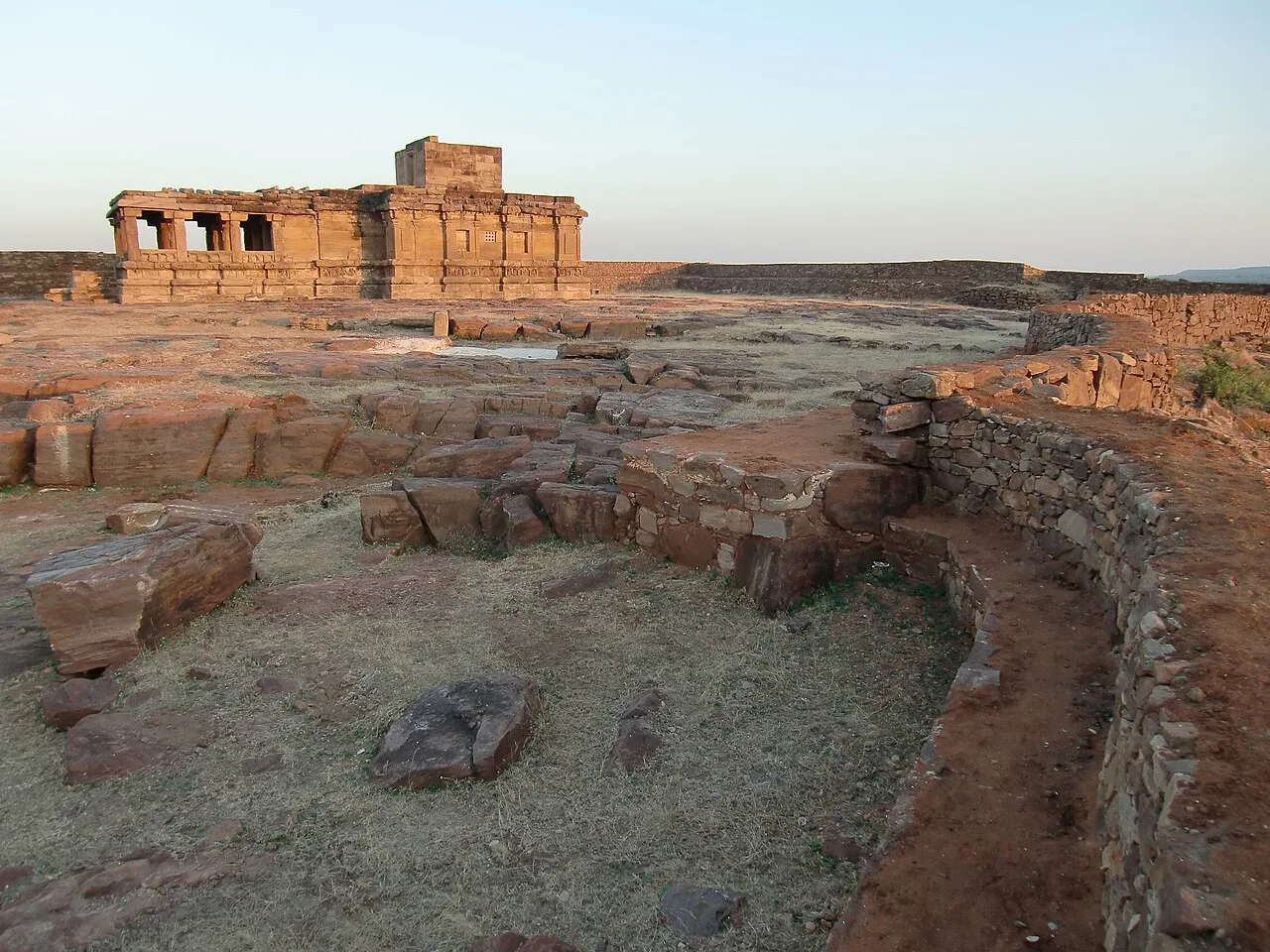
Aihole
Aihole is a historic temple site in Karnataka, known for its Buddhist, Hindu and Jain monuments and for architectural experiments that influenced nearby Chalukya-era works.
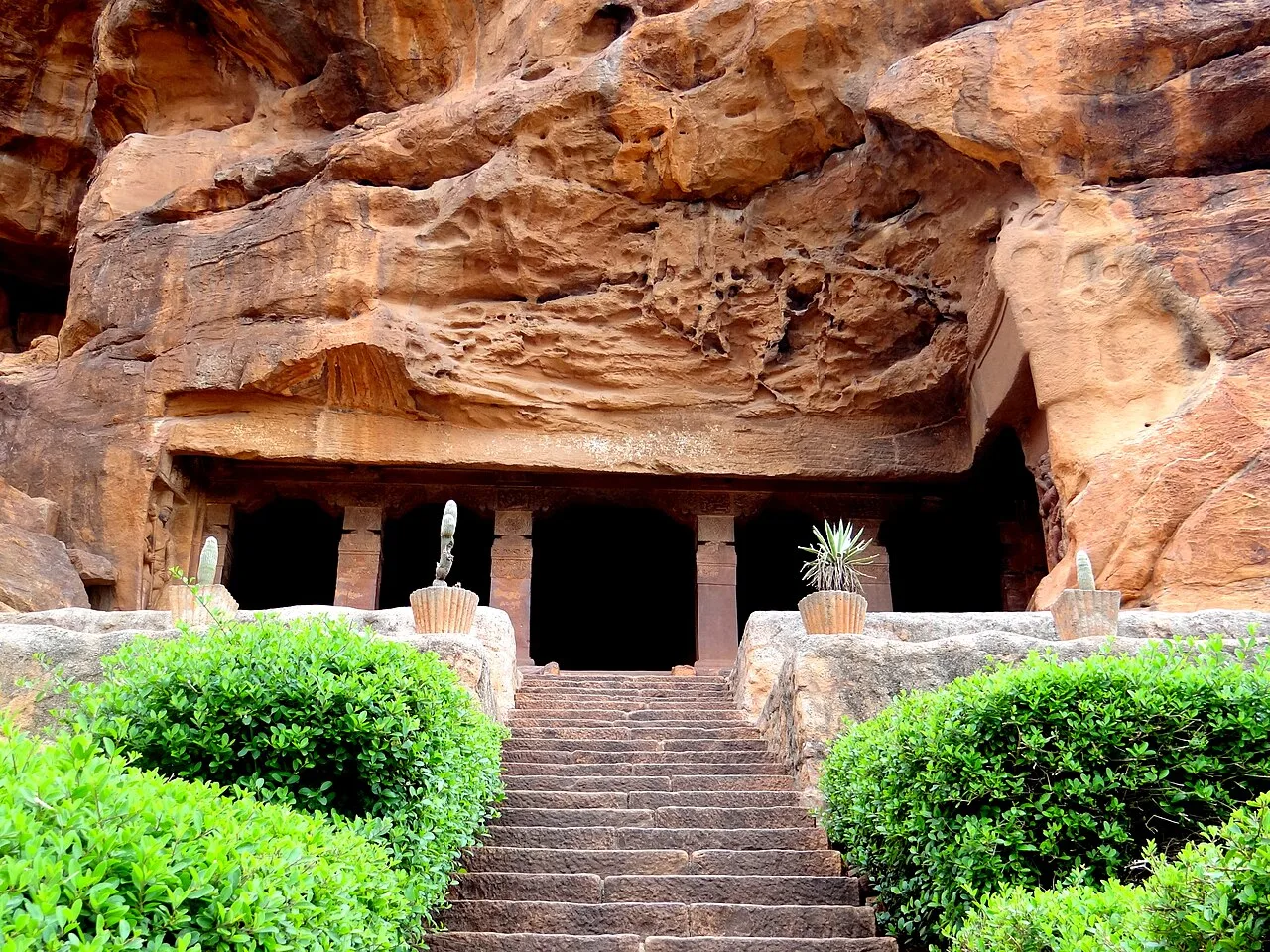
Badami cave temples
These rock-cut shrines in Badami, Karnataka, reflect Buddhist, Hindu and Jain traditions and early Chalukya-era art. Visitors come to see the sandstone architecture and carved religious figures.
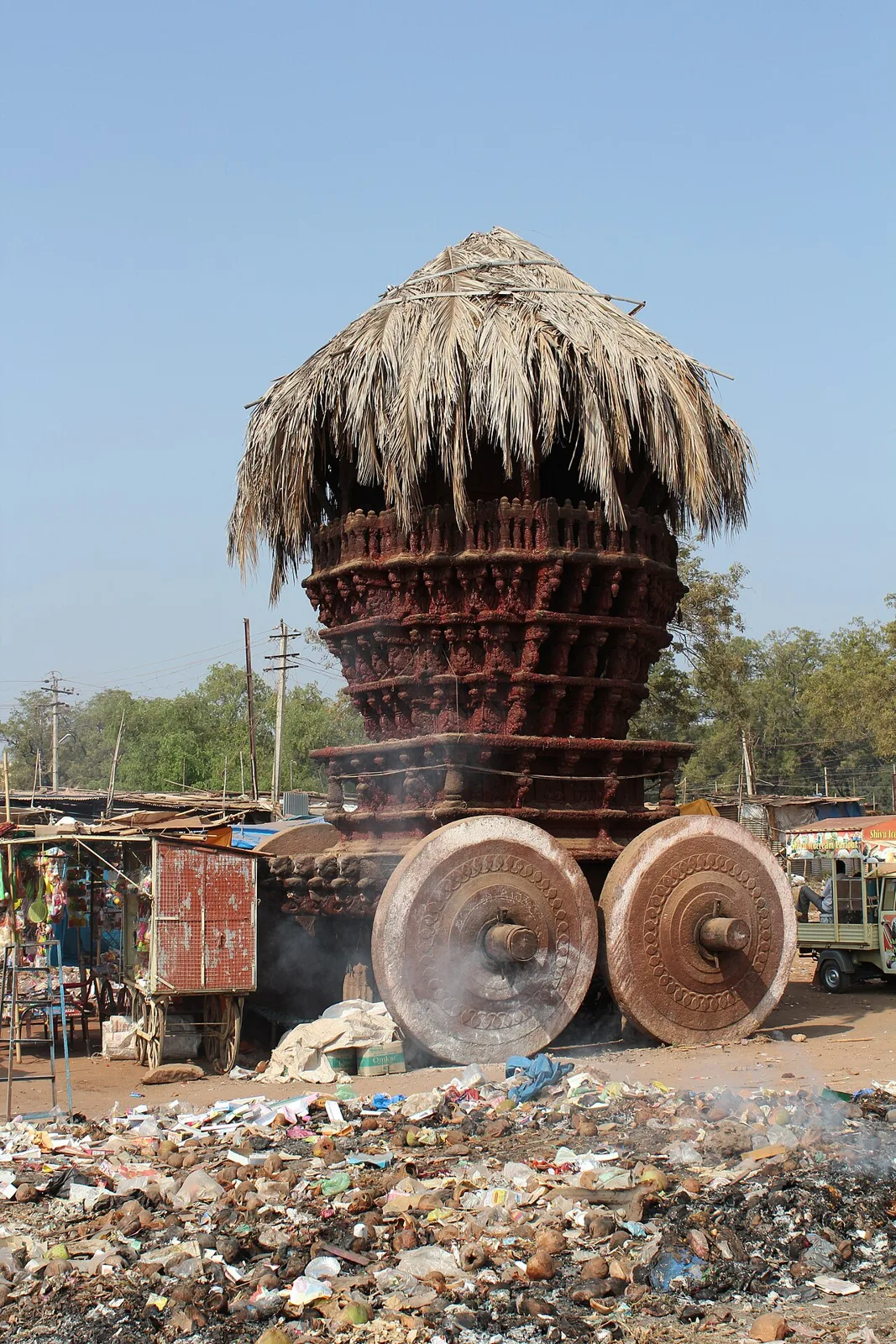
Banashankari Temple, Badami
Banashankari Temple is a Hindu shrine at Cholachagudda near Badami, Karnataka. Visitors come to worship its goddess and attend the yearly jatre, which features cultural events, a boat festival and a chariot procession.
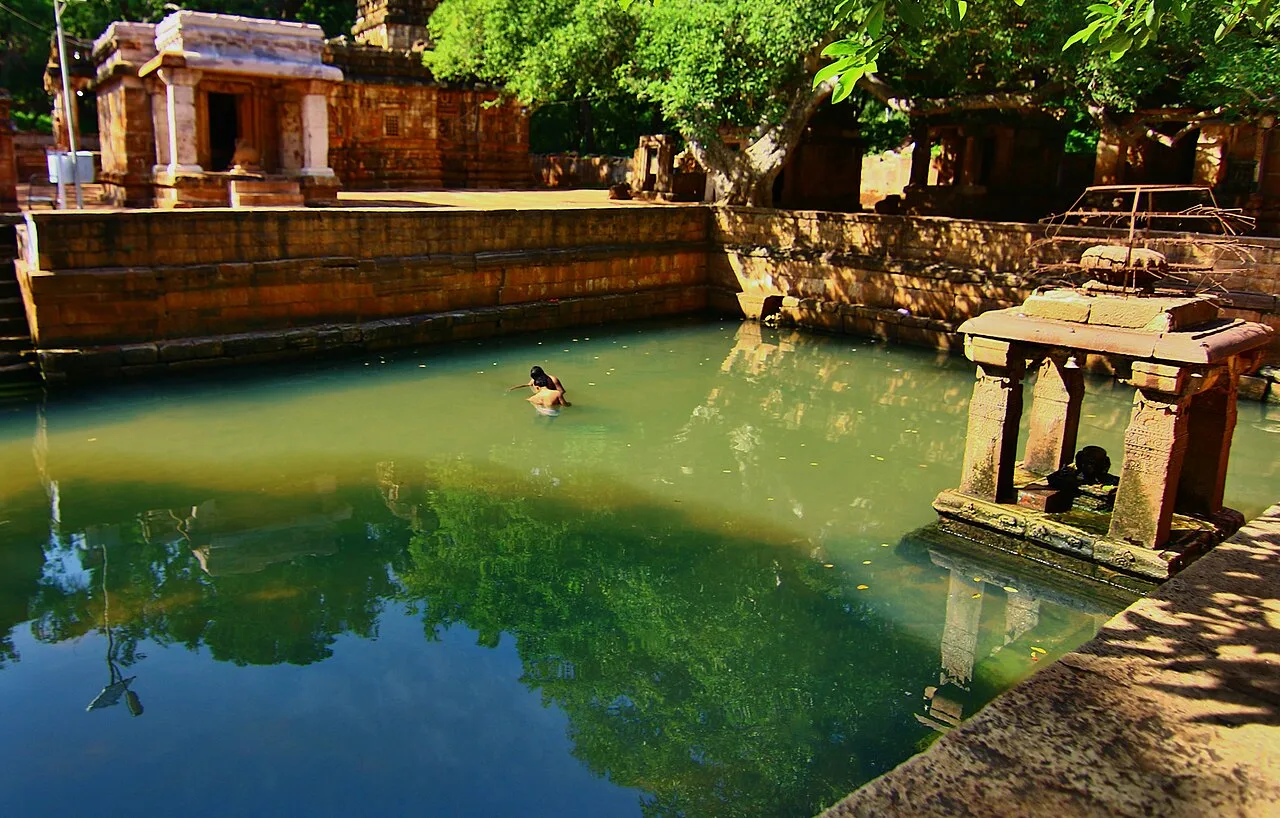
Mahakuta Temples
Mahakuta Temples is a Hindu temple complex and Shaiva monastic centre in Bagalkot district, Karnataka. People visit to worship and view its early Chalukyan architecture and inscriptions.
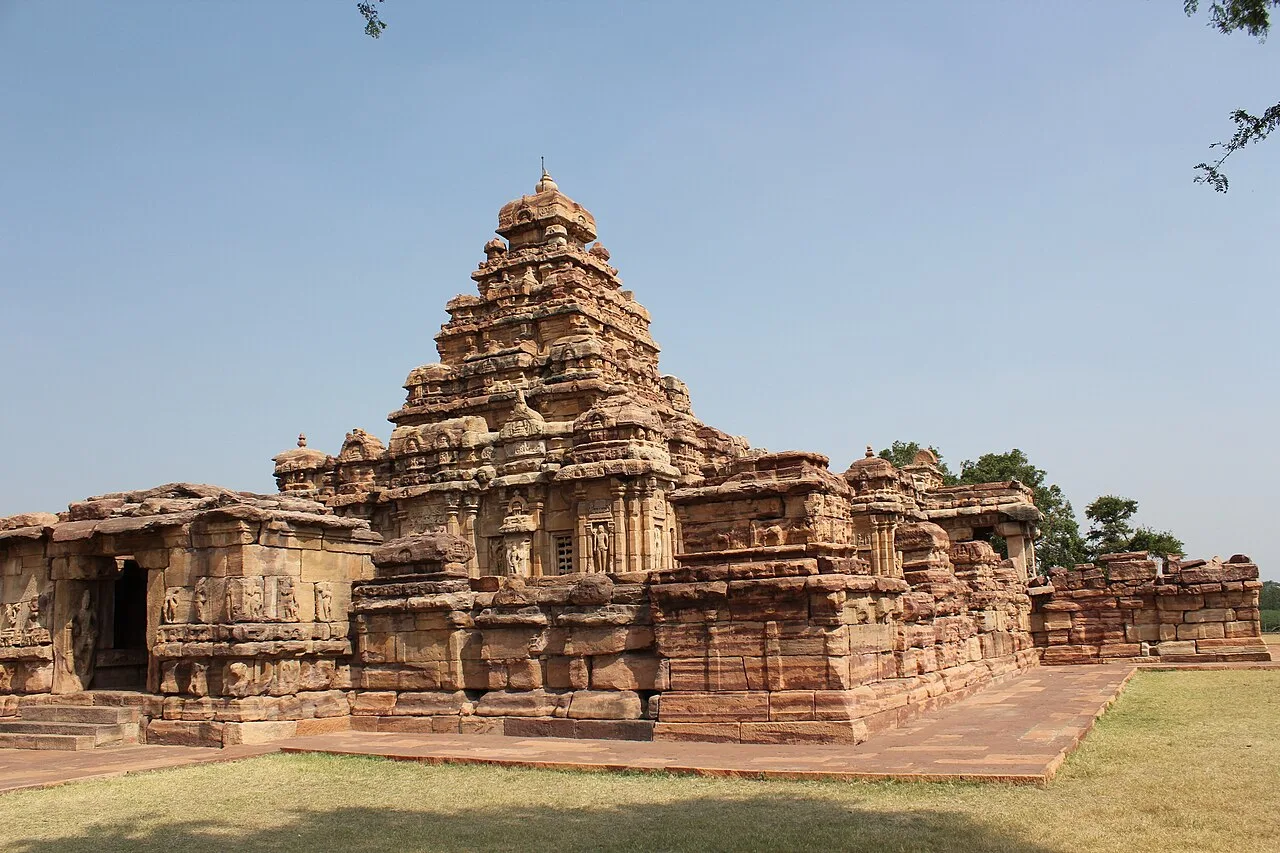
Pattadakal
Pattadakal is a UNESCO-listed temple complex in Karnataka, with Hindu and Jain monuments from the seventh and eighth centuries. Visitors come to see its distinctive mix of northern and southern architectural traditions and its carved religious narratives.
Food in Bagalkot fits the wider northern Karnataka tradition, where jolada rotti, or sorghum flatbread, is a familiar staple. It is commonly paired with vegetable preparations, pulses and chutneys; ennegayi, a stuffed brinjal dish, and shenga chutney made with peanuts are regional favourites. Meals may also include rice, saaru and curd. Small vegetarian eateries are useful places to try a straightforward regional meal, while idli, vada, dosa and filter coffee are common breakfast options across Karnataka. Ask what has been freshly prepared, since smaller establishments may offer only a limited daily menu.
Bagalkot district has a strong textile identity through Ilkal sarees and the khana fabrics associated with Guledgudda. Ilkal sarees are known for their distinctive borders and pallus, with cotton and silk used in traditional weaving. Guledgudda khana is a patterned fabric traditionally used for blouse pieces, valued for its textured surface and small motifs. When shopping, ask about fibre content, weaving method and the place of production rather than assuming every item is handwoven. The district’s historic stone carving is another important artistic legacy, best appreciated at Badami, Aihole and Pattadakal.
Banashankari Temple’s annual fair at Cholachagudda is a major regional gathering, usually held in winter around January and February. Pilgrims and traders can make the temple area busy, so rooms in and around Badami may be harder to find during the fair. The Pattadakal Dance Festival is generally held in winter and brings visitors to the monument complex for performances. Ugadi, Ganesh festivals and Dasara are also observed in the region, with celebrations varying between towns and communities. Check local event information before travelling, especially if you need accommodation during a festival.
Bagalkot is an inland district of the Deccan plateau, with broad cultivated plains, dry scrub and scattered sandstone and rocky hills. The Malaprabha valley links many of the heritage sites; the Krishna and Ghataprabha are also important rivers in the wider district landscape. The terrain is generally open, but rocky ground and uneven steps around monuments can make walking slower. Settlements and sites are spread across rural areas, so journeys between them are mostly by road. Shade can be limited at exposed archaeological complexes, particularly in the hotter months.
The district has hot summers, a monsoon season and comparatively mild, drier winters. Summer heat can make visits to open temple complexes tiring, so plan outdoor sightseeing for cooler parts of the day and carry water and sun protection. Monsoon weather brings rain and can make rural roads or uneven stone surfaces slippery, though conditions vary from year to year. The cooler months, broadly from October to February, are generally the most comfortable for heritage travel. Pack light clothing, a hat and sunscreen; add a light layer for winter evenings and rain protection during the monsoon. Wear sturdy footwear for rocky paths and steps.
Hubballi Airport is a practical nearby air gateway for the Badami, Pattadakal and Aihole circuit, with onward travel by road. Bagalkot and Badami have railway stations; choose between them according to available connections and your first destination. Roads link the district with Hubballi, Vijayapura and other northern Karnataka centres, while Karnataka state transport buses serve major towns. Badami is a convenient base for the main heritage circuit. Local buses, auto-rickshaws and hired cars can help with onward journeys, though direct connections between smaller sites may be limited. Check current services locally.
Road travel is the practical way to connect Badami, Aihole, Pattadakal, Mahakuta and Cholachagudda. Karnataka state transport buses link the district’s larger towns, but services to smaller sites may be less frequent or require changes. Auto-rickshaws are useful for shorter local trips, while a hired car or taxi gives more flexibility for a multi-site day. Shared vehicles may be available on some routes, but do not rely on them for a tight itinerary. Bagalkot and Badami have railway stations; onward travel from either station is by road. Check current transport options locally before setting out.
2 days: Badami cave temples, Mahakuta Temples, Banashankari Temple, Pattadakal, Aihole; sleep both nights in Badami. 3 days: Badami cave temples, Mahakuta Temples, Banashankari Temple, Pattadakal, Aihole; sleep the first two nights in Badami and the third night in Bagalkot or Badami. 4 days: Badami cave temples, Mahakuta Temples, Banashankari Temple, Pattadakal, Aihole; sleep three nights in Badami and the final night in Bagalkot or Badami, allowing more time at each site.
Badami is the most convenient base for the cave temples, Mahakuta, Banashankari Temple and day trips to Pattadakal and Aihole. It has a range of hotels and guesthouses, with some homestay options in the surrounding area. Bagalkot can suit travellers arriving by rail or wanting a larger town for an overnight stop, though it is less convenient for repeated visits to the Badami sites. Simple lodges and religious accommodation may be available in the wider area, but facilities vary; confirm access and availability directly, particularly during festival periods.
Wear sturdy shoes at the rocky, uneven monument sites, and take care on steps and stone surfaces, especially after rain. Summer heat and limited shade make water, sun protection and rest breaks important; use safe drinking water. During the monsoon, allow extra time for road journeys and watch for slippery paths or poor rural-road conditions. Keep valuables secure in busy festival crowds, and avoid walking alone on poorly lit rural routes after dark. Mobile connectivity can be inconsistent away from larger towns. No special permit is generally needed for the main heritage circuit, but confirm any current access rules with official site authorities before travel.
- Gadagabout 60 km
- Koppalabout 64 km
- Dharwadabout 90 km
- Vijayapuraabout 100 km
- Belagaviabout 104 km
- Vijayanagaraabout 105 km
- Haveriabout 131 km
- Chitradurgaabout 204 km
Straight-line distance between the centres of each district's destinations; road distance is longer.
Q: How many days should I spend in Bagalkot district? A: Two days can cover the main heritage sites at a brisk pace. Three or four days allow more time at Aihole, Pattadakal and the Badami area. Q: When is the best time to visit? A: The cooler months, broadly October to February, are usually most comfortable for sightseeing. Summer is hot, while monsoon rain can affect road and walking conditions. Q: What is the best base for the heritage circuit? A: Badami is the most convenient base for the principal sites. Bagalkot can work well for rail arrivals or as an additional overnight stop. Q: How do I get to the district? A: Hubballi Airport is a practical nearby air gateway, with onward travel by road. Bagalkot and Badami have railway stations, and buses connect major towns. Q: Is the district suitable for families or elderly travellers? A: Yes, with planning. Some sites involve uneven ground, steps and exposed walks, so choose a manageable pace and check accessibility needs in advance.
This page draws on our 5 destination guides for Bagalkot and is updated as our team checks it.
Be the first to share photos, stories, advice or a helpful contact for Bagalkot.
Loading…