
Pattadakal
Pattadakal is a UNESCO-listed temple complex in Karnataka, with Hindu and Jain monuments from the seventh and eighth centuries. Visitors come to see its distinctive mix of northern and southern architectural traditions and its carved religious narratives.
Key facts · verified by Ghumoopedia editors
- Type of place
- Heritage monument
- Best time to visit
- October to February; June to September for monsoon greenery in the Western Ghats
- Nearest railway station
- Badami · about 29 km (straight line)
- Nearest airport
- Hubballi Airport · about 102 km (straight line)
- Verified
- 21 Nov 2026
Plan a trip from Pattadakal — a day-by-day route through places nearby.
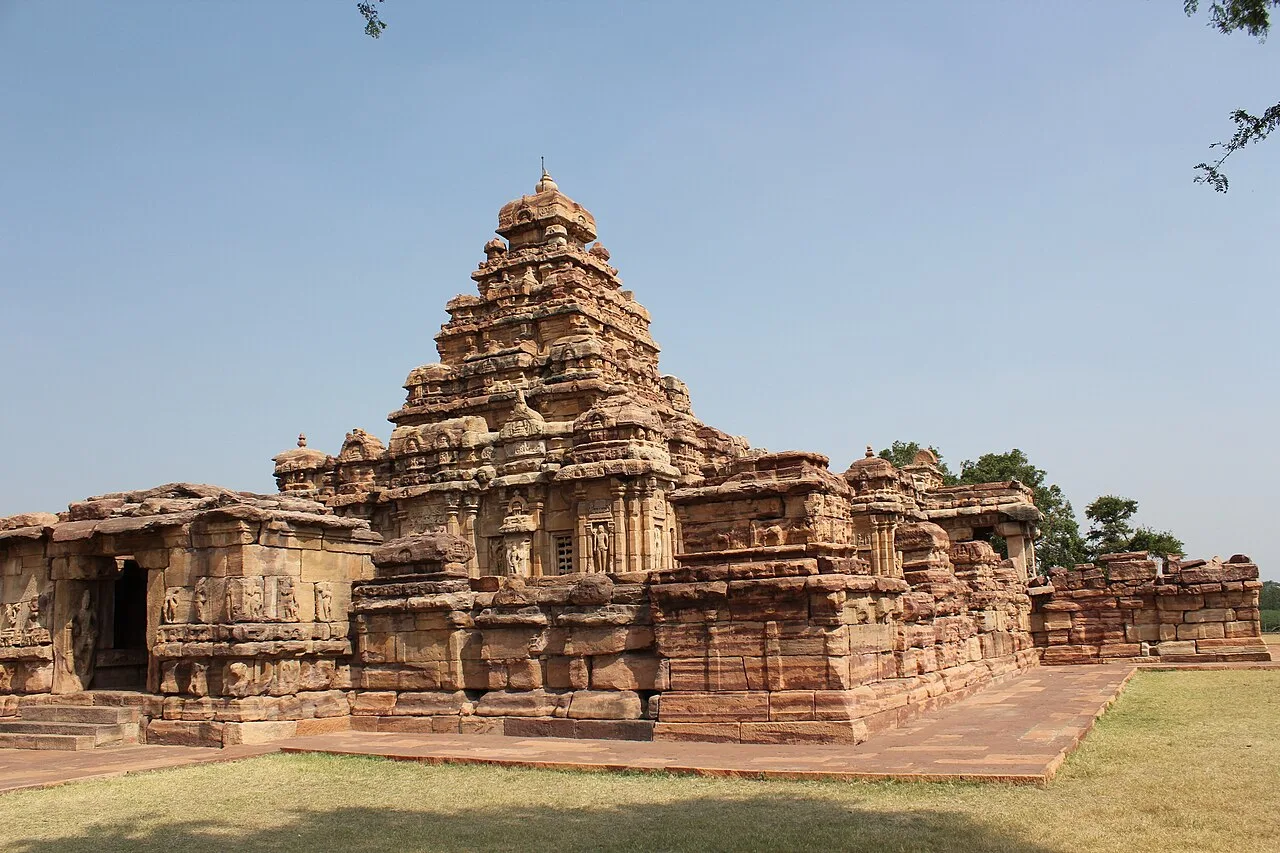
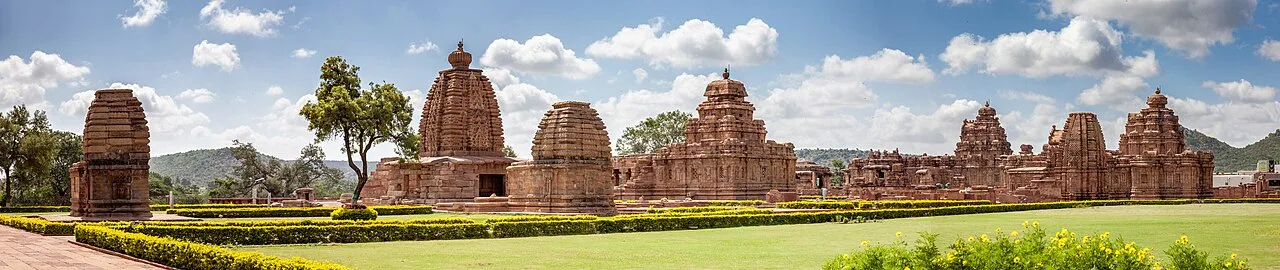
In northern Karnataka, Pattadakal—also known as Pattadakallu and Raktapura—is a group of Hindu and Jain temples raised during the seventh and eighth centuries CE. The site stands in Bagalkot district beside the Malaprabha River, on its western bank. It lies 23 kilometres from Badami and about 9.7 kilometres from Aihole, two places associated with Chalukya monuments. Recognised by UNESCO as a World Heritage Site, the complex is protected under Indian law and administered by the Archaeological Survey of India (ASI). Pattadakal’s architecture brings together forms associated with India’s northern and southern regions, and UNESCO has cited the site as an outstanding expression of eclectic art. Most Hindu shrines honour Shiva, while imagery and stories also draw on Vaishnava and Shakta beliefs. Carved panels refer to Vedic and Puranic ideas and recount episodes from the Ramayana, Mahabharata and Bhagavata Purana. Other literary material appears too, including themes from the Panchatantra and the Kirātārjunīya. The Jain shrine is devoted to one Jina. The Papanatha and Virupaksha temples are noted for elaborate carved programmes and for combining northern and southern architectural approaches. Virupaksha remains a place of Hindu worship. The Malaprabha, a tributary of the Krishna River, runs through a valley framed by mountains and plains and has an important place in South India’s history. Its source is at Kanakumbi in Belagavi district, within the Western Ghats; from there, it travels east. Roughly one kilometre before Pattadakal, the river turns to flow from south towards north. This change in direction occurs close to the temple complex. Hindu tradition attaches particular significance to rivers that run northward. Karnataka holds the boulder-strewn ruins of Hampi, the Hoysala temple jewels of Belur and Halebidu, the Chalukyan monuments of Badami, Aihole and Pattadakal, the palaces of Mysuru, the coffee hills of Coorg and Chikkamagaluru, the temple-and-beach town of Gokarna and the tiger forests of Bandipur and Nagarhole. Bengaluru and the plateau are mild most of the year; the coast is hot and humid; the Malnad hills (Coorg, Chikkamagaluru, Agumbe) get very heavy monsoon rain from June to September. October to February is pleasant almost everywhere. The usual best time to visit is October to February; June to September for monsoon greenery in the Western Ghats. Timings, fees and access arrangements must be confirmed locally. For official information, see Karnataka Tourism at https://karnatakatourism.org.
Why it matters
Pattadakal is an important centre of early Chalukya temple architecture in northern Karnataka, where forms associated with northern and southern India appear side by side. UNESCO inscribed the Group of Monuments at Pattadakal on the World Heritage List in 1987, describing the site as a meeting of architectural traditions. The Archaeological Survey of India protects and manages the monument complex under Indian law. Its temples, built mainly in the 7th and 8th centuries CE, reflect religious and artistic life under the Chalukyas of Badami. Virupaksha remains an active Hindu place of worship, while the wider complex is valued for its sculpture, inscriptions and evidence of historic connections between regional kingdoms and artistic communities.
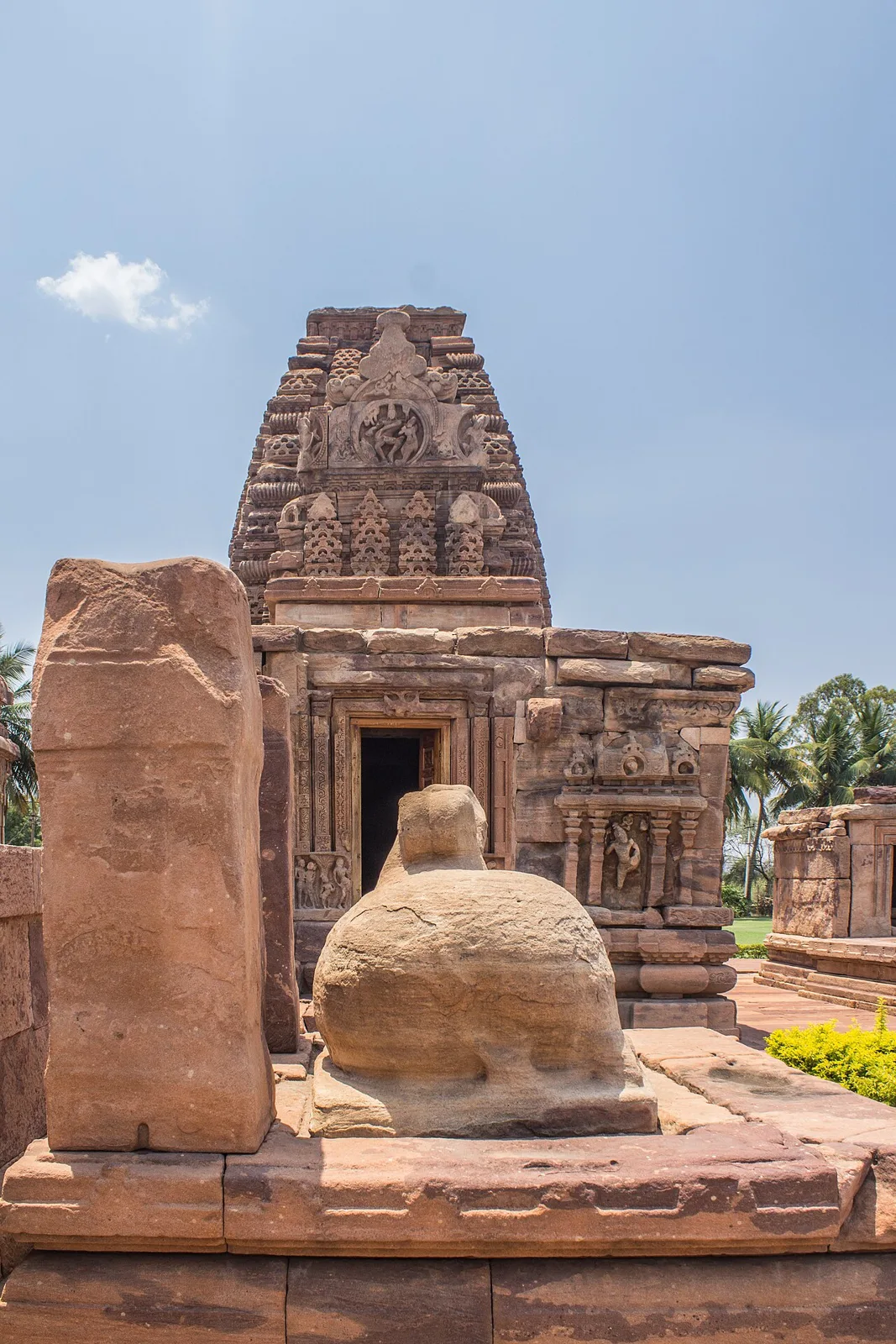
Pattadakal developed as a major temple-building centre under the Early Chalukyas of Badami, especially during the 7th and 8th centuries CE. The dynasty’s rulers and their families supported temple construction, and the inscriptions at the site help document patronage and religious life. The Virupaksha Temple was commissioned by Queen Lokamahadevi, traditionally understood to commemorate her husband Vikramaditya II’s victories over the Pallavas. A related temple, now called Mallikarjuna, was commissioned by her sister and co-queen Trailokyamahadevi. Other shrines represent different phases and patrons of Chalukya rule. Their architecture shows experimentation with temple forms associated with both northern and southern India. The complex also includes a Jain temple, generally dated to a later period. Pattadakal’s importance continued to be recognised after the Chalukya period, although the temples underwent changes in use and condition over time. The Archaeological Survey of India now protects and maintains the monuments. UNESCO inscribed the Group of Monuments at Pattadakal as a World Heritage Site in 1987. Conservation work and archaeological study have helped preserve the complex, but its stone surfaces remain vulnerable to weathering and visitor wear.
Origin stories & folklore
According to local tradition, Pattadakal was a place where Chalukya rulers were ceremonially crowned. The name Pattadakallu is often associated with a coronation stone, though explanations of place names can vary. The Malaprabha River is central to the landscape and its religious associations. Near Pattadakal, it turns to flow northward; in Hindu belief, a north-flowing river is considered auspicious. This sacred geography helps explain the site’s setting, but it should be understood as religious tradition rather than a historical account of why the temples were built. Local stories and devotional beliefs continue to shape how visitors and worshippers experience the river and temples.
Architecture & design
The temples are built chiefly of locally available sandstone and are arranged across a compact complex near the Malaprabha River. Pattadakal is noted for the coexistence of northern Indian Nagara forms and southern Indian Dravida forms, as well as buildings that combine elements of both. Most shrines have a sanctum, a covered hall and a tower above the sanctum; their plans and proportions vary. Virupaksha is among the most elaborate buildings, with a substantial tower, pillared halls and richly carved surfaces. Papanatha is notable for its extended layout and mixture of stylistic features. Sculpted doorways, columns, ceilings and wall panels make the architecture especially rewarding to examine closely. The stone construction and temple layouts reflect skilled planning, but the site is an archaeological complex rather than a single uniform design.
Important objects & sculptures
Look for narrative reliefs and sculpted figures on temple walls, pillars and doorways. Panels at the Hindu temples draw on the Ramayana, Mahabharata and Puranic traditions, alongside scenes and motifs from other literary and religious sources. Images of Shiva and other Hindu deities appear with attendants, guardians and decorative figures. The Virupaksha and Papanatha temples are particularly rich in carved detail. Inscriptions are also important: they record aspects of royal and religious patronage and help researchers understand the complex. The Jain temple is dedicated to a Jina and offers a different devotional focus from the Hindu shrines. Please do not touch, climb on or mark carvings; close observation from the paths helps protect the stone.
Explore Pattadakal slowly and read the interpretation boards, use the official audio guide where available or hire an authorised guide to understand its history. Check opening days, ticket counters and camera rules in advance; many monuments and museums close on one weekday and on some public holidays. Early morning gives softer light, cooler air and smaller crowds. A comfortable itinerary is one main visit in the morning, a local meal at midday and a short nearby stop before an afternoon return. Use the district list on this site to find other places in Bagalkot, but check the route and its condition before combining stops. If a festival is on — such as Mysuru Dasara, the Hampi Utsav, the Kambala buffalo races on the coast or the Karaga in Bengaluru — roads and stays can be busy, and the experience can be unforgettable. Leave no litter: many sites are protected by the communities around them.
Suggested itineraries
Half day: Allow about 2–3 hours to walk the temple complex, read the interpretation boards and spend extra time at Virupaksha and Papanatha. Full day: Spend about 3–4 hours at Pattadakal, pause for a local meal, then visit Aihole or Badami; allow additional time for road travel and check route conditions. Gentler option: Focus on the main approach and a few accessible temple exteriors, take seated rest breaks, and ask locally about the easiest paths before setting out.
Pattadakal is both a protected heritage site and a living religious landscape. Worship continues at the Virupaksha Temple, so visitors may encounter prayers, offerings and customary practices; follow signs and ask before photographing worshippers. Kannada is widely spoken in the region, and local customs reflect the broader cultural life of northern Karnataka. The temples preserve evidence of historic religious and artistic traditions, while cultural programmes held at Pattadakal at times bring classical dance and music into the monument setting. These events and their schedules can vary. Modest clothing and respectful conduct are appropriate, especially near active shrines. The archaeological site is shared by worshippers, local residents, guides and visitors, so keep paths clear and avoid disturbing ceremonies.
Festivals & events
The Pattadakal Dance Festival, also known in some contexts as Chalukya Utsava, is a cultural programme associated with the site and may feature classical dance and music. It is generally held during the cooler season, but its organisation and schedule can vary; check locally before planning around it. Religious observances at the active Virupaksha Temple follow Hindu calendars, so activity may increase on festival days. Nearby towns also celebrate regional and temple festivals at different times of year. Events can bring extra visitors and make local transport or accommodation busier. Confirm current arrangements with local tourism or cultural authorities.
Local food in Karnataka includes bisi bele bath, Mysore masala dosa, ragi mudde with sambar, Coorg's pandi (pork) curry, Mangalorean fish curry with neer dosa, Davangere benne dosa, Dharwad pedha and filter coffee everywhere. Ask what is fresh that day; many small eateries cook a limited daily menu. Vegetarian travellers eat very well across the state; the coast is the place for seafood, and Coorg has its own distinctive cuisine. Don't miss a tiffin breakfast of idli, vada and filter coffee. Remote sites may have no restaurant at all. Carry water and snacks, eat a proper breakfast before long drives, and ask your accommodation for a packed lunch if you are heading out early. Try a home-cooked or local thali meal when you can — it is often the best food on the route. Choose busy, clean places, drink sealed or filtered water, and carry your packaging back with you.
Shopping & local experiences
There is limited reason to expect a large shopping area within the protected complex. Check nearby village shops or markets for locally made items and practical refreshments, and buy souvenirs from legitimate sellers rather than removing anything from the site. Bagalkot district is associated with Ilkal sarees and Guledgudd khana textiles, which may be found in regional markets. North Karnataka meals, including dishes such as jolada rotti, are a useful way to experience local food; availability varies by town. Avoid disposable litter and support shops that clearly identify the origin of their goods.
October to February; June to September for monsoon greenery in the Western Ghats
The nearest principal railway station by straight-line distance is Badami, roughly 29 km away. The nearest operating airport by straight-line distance is Hubballi Airport, roughly 102 km away. These figures are calculated from map coordinates — actual road distance is longer. Bengaluru is the hub for the south and centre; Hubballi and Belagavi serve the north; Mangaluru serves the coast; Mysuru is the gateway to Coorg, and Hosapete is the railhead for Hampi. KSRTC buses connect the district towns, and the coast is served by the Konkan Railway with frequent buses from Mangaluru and Udupi. For Hampi, take a train or bus to Hosapete and an autorickshaw for the last 13 km. When comparing train, bus and flight, count the complete door-to-door time: a flight saves the most time only if the onward road transfer is short, while an overnight train can save a hotel night. Book your return before you leave, because seats fill quickly on weekends, festivals and holidays. Current train numbers, timings, return services and fares are not listed here; check IRCTC and NTES for trains and the airline's own schedule for flights. No permit is needed to visit Karnataka. Tiger safaris in Bandipur, Nagarhole and the Kali Tiger Reserve must be booked in advance through the forest department or authorised lodges — weekend slots sell out. Treks in Kudremukh National Park and some Western Ghat peaks need forest entry permission. Hampi's monuments have ASI entry tickets; the core zone is best seen with a bicycle, moped or autorickshaw for the day.
Confirm onward and return timings on IRCTC / NTES, the state bus operator or your airline before travel. A dash means current timings or fares have not been verified.
Getting around
Pattadakal is a small settlement, and the temple complex is best explored on foot once you arrive. Auto-rickshaws and hired cars may be available in nearby towns, but arrange onward travel in advance if you need a return pickup. Local buses serve district routes, though service frequency and convenient stops can vary; check locally. Parking is generally available near the visitor approach, subject to site arrangements. The paths between monuments are walkable but can be uneven, so allow time and wear secure footwear. There are no regular visitor boat services to rely on along the Malaprabha River.
Hours, tickets & permissions
Entry arrangements may include a ticket, and separate rules can apply to cameras, equipment or special access. Rules may differ between the protected monument area and the active Virupaksha Temple. Visitors should dress respectfully and follow notices about photography, restricted areas and worship. Carry identification if required by current entry procedures. Opening days, entry conditions, ticketing and any camera permissions can change, so confirm current hours and fees with the Archaeological Survey of India or the managing authority before travelling.
Facilities
Facilities at the monument and in the nearby settlement can vary. Toilets and parking are usually available in or near the visitor area, but check locally about their condition and access. Carry drinking water, especially in warm weather, and do not assume there are food stalls inside the complex; simple meals and refreshments may be easier to find in nearby villages or towns. Guides may be available locally, and an official audio guide may be offered, but availability is not guaranteed. ATMs are more likely in larger nearby towns than at the site.
Accessibility
The temple complex involves walking between separate buildings on outdoor paths that may be uneven, exposed and occasionally stepped. Stone thresholds and steps can make access to temple interiors difficult. Shade is limited in parts of the site, so plan rest stops and bring sun protection and water. Wheelchair and stroller access may be restricted by the surfaces, level changes and narrow approaches; do not assume ramps or step-free entry. Older visitors and people with limited mobility may prefer to concentrate on a smaller part of the complex and check path conditions with staff before entering.
No permit is needed to visit Karnataka. Tiger safaris in Bandipur, Nagarhole and the Kali Tiger Reserve must be booked in advance through the forest department or authorised lodges — weekend slots sell out. Treks in Kudremukh National Park and some Western Ghat peaks need forest entry permission. Hampi's monuments have ASI entry tickets; the core zone is best seen with a bicycle, moped or autorickshaw for the day. Carry a photo ID at all times and save the emergency number 112 and your accommodation's contact offline. Heat in summer and heavy rain in the monsoon are the main weather risks; carry water, avoid midday sun and allow extra time when roads flood. Watch your belongings in crowds and on public transport, and follow posted instructions.
Photography
Early morning and later afternoon often offer softer light for the sandstone and reduce harsh shadows; the temple exteriors provide the main viewpoints. Photography rules can vary by monument, and restrictions may apply inside active shrines or to certain equipment, so follow posted notices and ask staff when unsure. Do not use a drone without confirming the relevant permissions and airspace rules; protected heritage sites may have strict restrictions. Photograph worshippers, ceremonies and local residents only with consideration and, where appropriate, their consent. Avoid touching or leaning equipment against carvings.
Choose a stay by the full journey to Pattadakal, not just the district name. Bengaluru, Mysuru and Mangaluru offer the widest choice; Hampi has guesthouses on both banks of the Tungabhadra, Coorg has plantation homestays and resorts, and the forest lodges at Bandipur and Nagarhole book out early. In summer, check air-conditioning; in the monsoon, check that the property is accessible if roads flood. Book in advance for weekends, festivals and the peak season (October to February; June to September for monsoon greenery in the Western Ghats). Confirm the exact location, meals included, check-in time and cancellation terms in writing. Avoid sending money to unverified contacts or touts at stations. Carry some cash, as card and digital payments can be unreliable in remote areas.
Aihole, another major Chalukya-era temple centre, is a natural companion visit for understanding regional architectural experimentation. Badami is known for its rock-cut cave temples and historic monuments. Mahakuta is a temple complex associated with the Badami region, while Banashankari is a well-known temple destination in Bagalkot district. These places can be combined by road, but travel time and road conditions vary. Check the route and opening arrangements before planning several sites in one day, and leave enough time to explore Pattadakal without rushing.
For couples, Pattadakal rewards a slow pace: arrive early for soft light and fewer crowds, share a local meal and keep the evening free. A sunset over Hampi's boulders, a coffee-estate walk in Coorg or a quiet evening on a Gokarna beach makes the trip memorable. Public displays of affection can be frowned upon in conservative communities and at religious sites, so be discreet. Keep a buffer in your itinerary, because weather and road conditions can delay plans.
Q: How much time should I allow for Pattadakal? A: A few hours lets you see the main temples at a comfortable pace; allow longer if you want to study the carvings or combine nearby sites. Q: When is the best season to visit? A: October to February is generally pleasant in the region. Monsoon months can bring greener scenery and rain, so check conditions. Q: Is there an entry fee, and can I take photographs? A: Entry and camera rules may apply and can change. Confirm current requirements with the managing authority and follow signs on site. Q: Is Pattadakal suitable for children and elderly visitors? A: Families can visit, but paths are uneven and shade is limited. Older visitors or anyone with limited mobility may prefer a shorter route and frequent rests. Q: Where should I stay nearby? A: Badami is a practical nearby base with accommodation options; check availability and transport arrangements before your visit.
Be the first to share photos, stories, advice or a helpful contact for Pattadakal.
Loading…