
District · Maharashtra
Solapur
Solapur offers a view of southeastern Maharashtra’s Deccan plateau and its meeting point with Karnataka-influenced cultures.
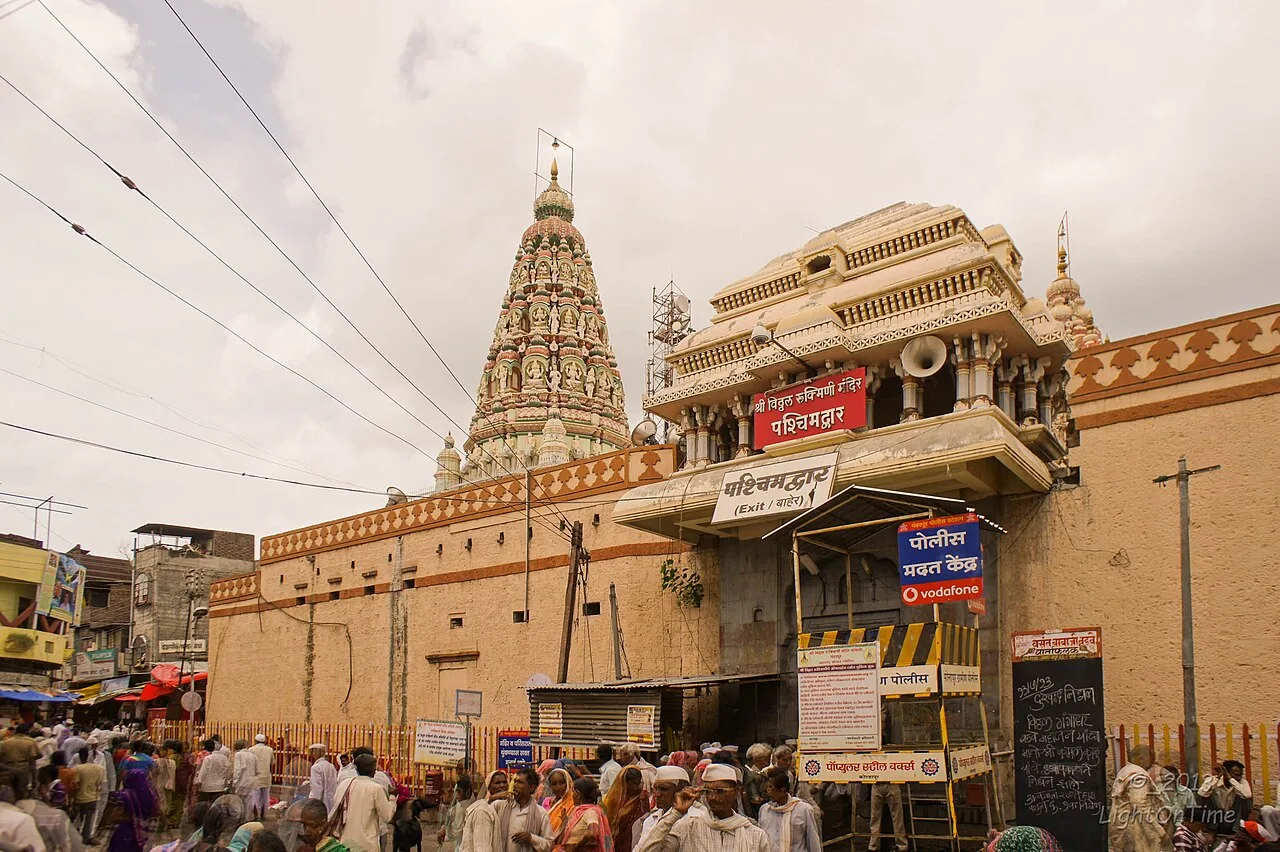
Solapur district lies in southeastern Maharashtra, on the Deccan plateau near the Karnataka border. Its largely dry landscape includes open farmland, grasslands and the Bhima river basin, with cultivation shaped by rainfall and irrigation. Solapur city has a long-standing textile industry, while its fort and Siddheshwar Temple reflect the area's layered history. Pandharpur is the district's major pilgrimage centre: Shri Vitthal-Rukmini Mandir, also called the Vithoba Temple, anchors the devotional life of the Varkari tradition. The great wari pilgrimages bring streams of devotees here, especially around Ashadhi Ekadashi. Across the district, Marathi and Kannada cultural influences meet, giving its markets, food and everyday life a distinct borderland character.
Solapur offers a view of southeastern Maharashtra’s Deccan plateau and its meeting point with Karnataka-influenced cultures. The district is best known for Solapur city’s textile industry and for Pandharpur, a major centre of Varkari devotion. Shri Vitthal-Rukmini Mandir, also called the Vithoba Temple, draws pilgrims throughout the year and especially during the Ashadhi and Kartiki wari seasons. Beyond the pilgrimage town, the district’s dry farmland, river basin and historic urban centre show how life in this region has been shaped by seasonal water, trade and faith. It suits travellers interested in religious traditions, regional history and everyday life beyond Maharashtra’s larger cities.
The Solapur region has been shaped by successive powers that contested the Deccan. In earlier centuries, parts of the wider area were associated with the Seuna Yadavas and other regional kingdoms. From the medieval period, the Deccan Sultanates, including the Bahmani and Bijapur Adil Shahi states, held influence here; the surviving fort in Solapur city reflects this layered political past. Mughal and Maratha power later extended across the region, and the area came under British control after the defeat of the Peshwa in 1818. Under colonial rule it was administered within the Bombay Presidency, with district boundaries and administration changing over time. Solapur also took part in India’s nationalist movement during the twentieth century. After independence, it remained within Bombay State until Maharashtra was formed in 1960. Pandharpur’s importance has a different history: devotion to Vithoba and the growth of the Varkari tradition made it a major pilgrimage centre, drawing pilgrims from across Maharashtra and neighbouring regions over generations.
Jowar bhakri is a familiar staple in Solapur's dryland food culture, often eaten with vegetable preparations, dal or pithla, a gram-flour dish found more widely across Maharashtra. Shenga chutney, made with peanuts, is especially associated with Solapur and adds a robust accompaniment to a simple meal. Poha, misal pav and vada pav are common wider-Maharashtrian choices rather than district-specific specialities. Puran poli belongs to the region's festive cooking. Around Pandharpur's pilgrimage area, vegetarian meals are easy to find. Ask small eateries what has been prepared that day, and carry drinking water and snacks when travelling beyond the towns.
Solapur is best known for its textile traditions, particularly Solapuri chaddars and terry towels. Chaddars are woven cotton bedcovers, commonly featuring geometric patterns, contrasting borders and strong colours. Their production forms part of a substantial weaving and powerloom economy, so not every item sold as a local textile is handwoven. Shops in Solapur offer a useful introduction to these everyday household fabrics. When buying, ask about fibre content, where the piece was made and whether it is handloom or powerloom work; compare the weave and finishing rather than relying only on labels.
Pandharpur’s largest pilgrimage gatherings accompany the Ashadhi and Kartiki wari, which usually fall around the early monsoon and late autumn seasons. Varkari pilgrims travel on foot in devotional processions, and accommodation and roads can become crowded, so visitors should plan ahead. The town also observes other religious occasions connected with Vithoba. In Solapur city, the Siddheshwar Yatra, generally held in January around Makar Sankranti, brings local festivities and visitors. Ganeshotsav, Diwali and Gudi Padwa are widely observed across the district. Festival dates follow religious calendars and vary from year to year.
Solapur lies on the dry Deccan plateau, with broad stretches of farmland, grassland and gently rolling terrain rather than high mountains or coast. The Bhima and its tributary basin shape settlement and cultivation; irrigation supports farming in some areas, while other fields depend more heavily on seasonal rain. Tree cover is generally sparse, and open country can feel exposed in the hotter months. Towns are linked by road across this largely level landscape, but rural journeys may pass through long stretches with few services. The seasonal state of roads and water availability can affect travel outside the main towns.
The district has a generally hot, dry climate. Summer, from roughly March to May, can bring strong heat, so outdoor visits are more comfortable early or later in the day. The monsoon usually runs from June into September; rain can refresh the landscape but may make some rural roads slower or less predictable. Winter, broadly from October to February, is usually the most comfortable season for sightseeing and pilgrimage visits. October to February is a good general time to come, though major wari periods bring crowds. Pack sun protection and light clothing for warm days, plus a light layer for cooler evenings; carry rain protection during the monsoon.
Solapur railway station is a major rail access point for the district, while Pandharpur railway station serves the principal pilgrimage town. Pune Airport is a practical air gateway; Kolhapur Airport is another option to consider for Pandharpur, depending on available connections and onward road travel. Solapur lies on the main road corridor linking Pune and Hyderabad, with connecting roads to Pandharpur and other district towns. State transport buses link major settlements, while auto-rickshaws and hired cars help with local journeys. Pilgrimage crowds can affect access and accommodation around Pandharpur. Check current services locally.
Solapur city and Pandharpur are connected by road, as are other district towns and larger villages. State transport buses serve many routes, though frequency and availability vary by place and day. In towns, auto-rickshaws are useful for short journeys; hired cars or taxis offer more flexibility for visiting places beyond regular bus routes. Shared vehicles may operate on some local routes, but services can be informal and should be checked locally. During major pilgrimages, traffic restrictions, crowds and road congestion can slow journeys around Pandharpur. There are no routine sightseeing boat services to rely on for district travel.
2 days: Vithoba Temple; sleep both nights in Pandharpur. 3 days: Vithoba Temple; sleep in Pandharpur each night, allowing an additional day for a slower visit or a pilgrimage-season experience.
Pandharpur is the most practical base for visiting Vithoba Temple and experiencing the pilgrimage town. It has hotels, guesthouses, dharamshalas and other pilgrim-oriented accommodation, with availability tightening during wari periods. Solapur city offers a broader choice of hotels and works better as a base for rail connections or journeys focused on the city. Smaller towns may have simpler lodging, but choices can be limited. Homestays and government lodges may be available in some places; check current availability and suitability before setting out, especially during festivals.
Carry drinking water and sun protection, particularly during hot weather and long outdoor visits; use treated or sealed water if unsure about local supplies. Monsoon rain can affect rural road conditions, so check locally before travelling through the countryside. Expect dense crowds and slower movement in Pandharpur during wari gatherings, and keep valuables secure. Mobile connectivity is generally more reliable in towns than in remote areas. Wildlife is not a major concern on ordinary town and pilgrimage routes, but avoid approaching animals in the countryside. No special permit is generally needed for routine visits to Solapur or Pandharpur; confirm requirements officially if your plans include restricted sites.
- Dharashivabout 92 km
- Vijayapura · Karnatakaabout 102 km
- Kolhapurabout 158 km
- Beedabout 182 km
- Puneabout 199 km
- Ahilyanagarabout 211 km
Straight-line distance between the centres of each district's destinations; road distance is longer.
Q: How many days should I spend in Solapur district? A: Two days can suit a focused visit to Pandharpur; allow three or more for a slower pilgrimage visit or wider district travel. Q: When is the best time to visit? A: October to February is generally more comfortable. Wari seasons are spiritually significant but much busier. Q: What is the best base for visiting the Vithoba Temple? A: Stay in Pandharpur for the temple and pilgrimage experience; Solapur city is useful for rail connections and city-based travel. Q: How do I get to the district? A: Solapur and Pandharpur have railway stations, and both are connected by road. Pune Airport is a practical air gateway, followed by onward travel. Q: Is the district suitable for families or elderly travellers? A: Yes, with planning. Choose accommodation close to the places you intend to visit, avoid peak crowd periods if mobility is a concern, and allow time for rest.
This page draws on our 1 destination guides for Solapur and is updated as our team checks it.
Be the first to share photos, stories, advice or a helpful contact for Solapur.
Loading…