
District · Maharashtra
Wardha
Wardha lies in eastern Maharashtra’s Vidarbha region, where agricultural towns and villages spread across the Wardha River basin.
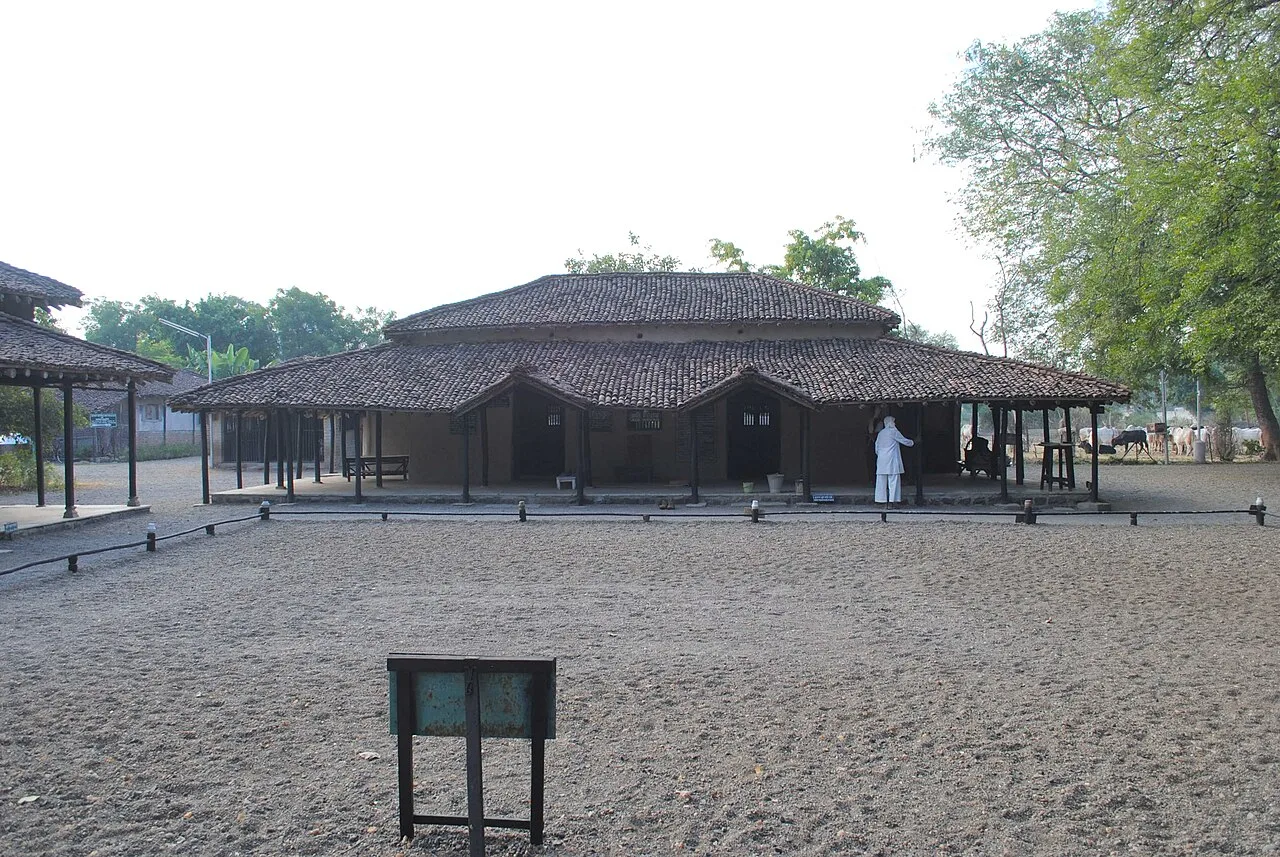
Wardha district lies in the eastern part of Maharashtra’s Vidarbha region, amid the broad plains and gently rolling farmland of the Wardha River basin. Much of the countryside has black cotton soil, and cotton and other crops shape its rural economy and seasonal landscape. The district is best known nationally for its place in India’s independence movement: Mahatma Gandhi established Sevagram Ashram here, while Vinoba Bhave’s ashram at Paunar is another landmark of social reform. Today, Wardha combines working towns and agricultural villages with sites associated with non-violence, self-reliance and rural development. Sevagram offers a quieter, reflective destination, while Wardha city provides a practical base for exploring the district.
Wardha lies in eastern Maharashtra’s Vidarbha region, where agricultural towns and villages spread across the Wardha River basin. It is best known for its association with India’s independence movement and the ideas of non-violence and self-reliance. Mahatma Gandhi made Sevagram his base in the 1930s, and Vinoba Bhave’s ashram at Paunar reflects a related legacy of social reform. Visitors can explore these places alongside the working life of Wardha city and the surrounding cotton-growing countryside. The district is a worthwhile stop for travellers interested in modern Indian history, rural development and a quieter, reflective side of Maharashtra.
Vidarbha has a long history of changing regional powers. The Vakatakas, who ruled parts of the region from about the third to sixth centuries, were among its important early dynasties. In later centuries, the area came under successive Deccan and central Indian powers. By the eighteenth century, much of the region was associated with the Bhonsle kingdom of Nagpur. After the British took control of Nagpur in the nineteenth century, Wardha became part of the Central Provinces; the district is generally dated to 1862. The Central Provinces were later administered with Berar as the Central Provinces and Berar. Following independence, Wardha remained within the state of Bombay until Maharashtra was formed in 1960. In 1936, Mahatma Gandhi moved his residence and work to Segaon, which became known as Sevagram. Vinoba Bhave established an ashram at Paunar, strengthening the district’s later association with non-violent social reform and constructive rural work.
Wardha’s everyday food reflects the wider Vidarbha and Maharashtrian kitchen. Meals commonly include bhakri or chapati with vegetables, lentils, rice, and preparations such as pithla; seasonal produce and home-style cooking are central in many smaller towns. The region is also known for bold, spicy flavours, and Saoji dishes are associated particularly with nearby Nagpur, rather than being unique to Wardha. Across Maharashtra, snacks such as poha and vada pav are easy to find, while puran poli is a familiar festive sweet. Ask what is freshly prepared, as small eateries may offer a limited daily menu.
Wardha’s craft story is closely linked to the khadi and village-industry movement promoted at Sevagram. Gandhi’s emphasis on spinning and handspun cloth made the charkha a powerful symbol of self-reliance, and khadi remains an important part of the ashram’s heritage. This is best understood as a historical and regional association, not a claim that all cloth sold locally is made in the district. Visitors may find khadi textiles and other handmade goods through ashram or village-industry outlets; availability and origin can vary, so ask sellers about how an item was made.
Ganesh Chaturthi, Diwali, Holi and Dussehra are observed across Wardha, while Pola, a festival honouring working cattle, has particular resonance in this farming district and is usually celebrated in the monsoon season. Makar Sankranti falls in winter, and Gandhi Jayanti in October may draw visitors to Sevagram for commemorative activities. These occasions can make town centres and religious sites busier, though district-wide room pressure is generally limited. Visitors planning around major celebrations should check local arrangements and reserve accommodation ahead where possible.
Wardha district is predominantly a broad agricultural plain, with gently rolling ground and extensive fields, including areas of black cotton soil. The Wardha River and its tributaries shape drainage and farming, while woodland and low hill country occur in parts of the wider region. The landscape is largely open rather than mountainous, so most sightseeing is by road between towns and rural settlements. During the monsoon, field roads can become muddy or slow, while dry-season travel is generally more straightforward. Agricultural activity and harvest periods give the countryside a changing seasonal character.
Wardha has hot summers, a monsoon season and a comparatively mild, drier winter. Summer, broadly from March to May, can make midday outdoor visits uncomfortable; carry sun protection, light clothing and water. Monsoon rains generally arrive from June and continue into September, bringing greener fields but sometimes slower rural road travel. October to February is usually the most comfortable period for sightseeing, especially for visiting Sevagram and travelling between towns. Pack breathable clothes year-round, a light layer for winter mornings and evenings, and rain protection during the monsoon. Check the forecast before rural excursions.
Wardha is served by Wardha Junction, while Sevagram railway station is convenient for reaching Sevagram Ashram. The nearest major airport is Dr. Babasaheb Ambedkar International Airport in Nagpur; onward travel is by road or rail. Wardha has road connections with Nagpur and other towns in Vidarbha, and buses and private vehicles are common ways to travel between district towns and rural sites. Auto-rickshaws and taxis can help with shorter journeys, though transport may be less frequent outside town centres. Check current services locally before setting out.
Wardha city is the district’s main practical transport hub, with road links to Sevagram and other towns and villages. Local and inter-town buses serve established routes, while shared vehicles and auto-rickshaws may be available for shorter journeys; services can be less frequent away from town centres. Taxis or hired cars offer more flexibility for visiting rural sites and managing return journeys. Agree on arrangements in advance where public transport is limited. There are no usual visitor boat journeys for this inland district, and road conditions can change during heavy monsoon rain.
2 days: Sevagram Ashram on day one, with time for a slower visit on day two; sleep in Wardha city both nights. 3 days: Sevagram Ashram, allowing an unhurried visit and time to explore its surroundings; sleep in Wardha city each night.
Wardha city is the most practical base for the district, with a wider choice of hotels and ordinary town services. It works well for visitors making a day trip to Sevagram Ashram. Simple guesthouses or Ashram-linked accommodation may be available nearer Sevagram, but availability and visitor arrangements should be confirmed directly before travel. Basic lodgings and dharamshalas may be found in some towns, though facilities can be limited. A homestay may be an option where locally arranged; do not assume rooms are available in smaller villages.
Wardha’s main visitor routes are through settled countryside, but rural roads may be narrow, uneven or slower after monsoon rain. Summer heat and strong sun call for regular water, shade and breaks; use safe drinking water and take ordinary precautions with food. Wildlife is not usually a central concern on the listed itinerary, but avoid approaching animals in rural areas. Crowds may increase during local festivals and commemorations. Mobile coverage and services can be weaker outside towns, so plan return transport in advance. No special permit is generally associated with visiting Sevagram Ashram, but confirm official requirements if adding other restricted sites.
- Chandrapurabout 93 km
- Nagpurabout 95 km
- Seoni · Madhya Pradeshabout 123 km
- Betul · Madhya Pradeshabout 132 km
- Amravatiabout 141 km
Straight-line distance between the centres of each district's destinations; road distance is longer.
Q: How many days should I spend in Wardha? A: Two days is enough for a focused visit to Sevagram Ashram and time in Wardha city; allow longer for a slower rural itinerary. Q: When is the best time to visit? A: October to February is generally the most comfortable season. Summer is hot, while monsoon rain can slow road travel. Q: Where is the best base? A: Wardha city is the most practical base for transport, services and day visits to Sevagram. Q: How do I get to Wardha? A: Wardha Junction serves the district, and Nagpur’s Dr. Babasaheb Ambedkar International Airport is the nearest major airport. Continue by road or rail and check current connections locally. Q: Is Wardha suitable for families or elderly travellers? A: Yes, particularly for a measured visit to Sevagram Ashram. Plan for heat, check walking needs at sites and arrange reliable local transport.
This page draws on our 1 destination guides for Wardha and is updated as our team checks it.
Be the first to share photos, stories, advice or a helpful contact for Wardha.
Loading…