
District · Maharashtra
Buldhana
Buldhana lies in western Vidarbha, where basalt uplands give way to cultivated plains and small market towns.
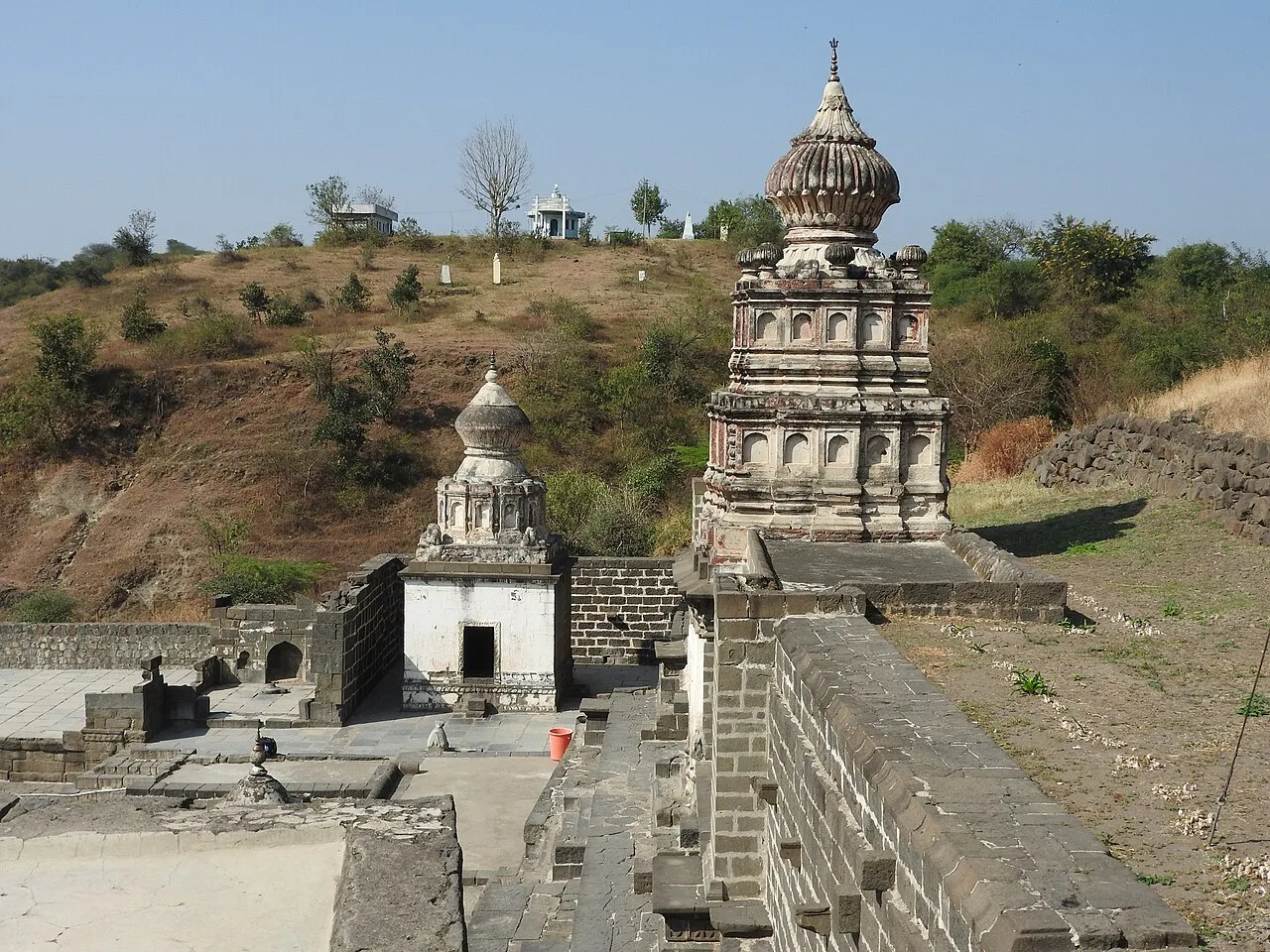
Buldhana lies in western Vidarbha, where the Deccan’s basalt uplands meet cultivated plains and small market towns. Its best-known natural landmark is Lonar Lake, a saline, alkaline lake occupying a meteorite-impact crater near Lonar town. The crater’s wooded slopes and historic temples bring geology, ecology and religious heritage together in an unusually compact landscape. Elsewhere, farming shapes much of the district’s everyday character, while Shegaon draws pilgrims to the shrine of Shri Gajanan Maharaj. Sindkhed Raja, associated with the birth of Jijabai, mother of Chhatrapati Shivaji Maharaj, adds an important strand of Maratha history. Buldhana rewards travellers interested in distinctive landscapes and living traditions rather than a continuous circuit of heavily developed attractions.
Buldhana lies in western Vidarbha, where basalt uplands give way to cultivated plains and small market towns. Its defining natural landmark is Lonar Lake, a saline, alkaline lake within a meteorite-impact crater: the surrounding slopes and historic temples make it a distinctive place to explore geology, ecology and religious heritage together. The district is also known for Shegaon, an important pilgrimage centre associated with Shri Gajanan Maharaj, and Sindkhed Raja, linked to Jijabai, mother of Chhatrapati Shivaji Maharaj. Buldhana suits travellers seeking a striking landscape and living regional traditions rather than a dense circuit of developed attractions.
Buldhana’s wider region has been shaped by successive powers that held parts of the Deccan and Vidarbha, including the Vakatakas, later Deccan kingdoms, the Mughals and the Marathas. Local political control changed over time, so these dynasties should be understood as part of the region’s wider history rather than a continuous rule over today’s district. Sindkhed Raja is associated with the birth of Jijabai in the late sixteenth century; her role in Maratha history gives the town lasting significance. In the nineteenth century, the area formed part of Berar, which came under British administration after being assigned to the British in 1853. Buldhana district was constituted in the British period, in 1864. Berar was administered with the Central Provinces from 1903, and the area later became part of Madhya Pradesh when India became independent. With the formation of Maharashtra in 1960, Buldhana became part of that state. In more recent religious history, Shegaon grew in prominence through the legacy of Shri Gajanan Maharaj, who lived there in the late nineteenth and early twentieth centuries.
Food in Buldhana belongs broadly to the Maharashtrian and Vidarbha repertoire rather than a separately defined district cuisine. Look for everyday meals built around bhakri or chapati, dal, seasonal vegetables and chutneys; pithla is another familiar Maharashtrian accompaniment. Poha makes a common breakfast, while vada pav and misal pav are widely available snacks. Puran poli is associated with festive cooking across Maharashtra, and modak is especially linked with Ganesh Chaturthi. Vegetarian travellers generally have straightforward options, though menus vary by town and establishment. Near Lonar and other quieter sites, ask what has been cooked that day and carry drinking water and snacks.
For craft context, look to the wider region rather than assuming Buldhana has a single signature textile. Maharashtra’s established traditions include Paithani silk weaving from Paithan and Himroo weaving associated with Chhatrapati Sambhajinagar, both in neighbouring Marathwada rather than Buldhana itself. Their patterned textiles offer useful regional context, but an item sold locally is not necessarily locally made. Ask sellers about the place of production, fibre and weaving method. Around Lonar, historic temple stonework is also worth observing as architectural craftsmanship, distinct from contemporary souvenir production.
Ganesh Chaturthi, Diwali, Holi and Makar Sankranti are observed across the district, with local customs varying between towns and villages. Religious gatherings linked to Shri Gajanan Maharaj at Shegaon draw especially large numbers of pilgrims at festival times, and Mahashivratri can bring visitors to temples in the region, including around Lonar. These periods may mean busier roads, crowded public spaces and greater demand for rooms near pilgrimage centres. If travelling during a major festival, arrange a place to stay ahead of time and allow extra time for local journeys.
The district’s terrain combines the basaltic Deccan uplands with gentler cultivated plains and low, broken hill country. Lonar’s crater forms a striking enclosed landscape, with wooded slopes descending towards its saline, alkaline lake. The Penganga and Purna river systems drain parts of the wider region, while fields and small settlements dominate much of the countryside. Roads link the principal towns, but journeys to quieter sites can take longer than the map suggests. At Lonar, exploring the crater involves walking on uneven, sometimes steep ground; weather and trail conditions affect access and comfort.
Buldhana has hot summers, a monsoon season and generally milder, drier winters. The hottest conditions are usually before the rains, when midday walks around the crater can be tiring. Monsoon weather brings greener surroundings but may make paths slippery and rural road journeys less predictable. The cooler months, broadly from November to February, are often the most comfortable for sightseeing and walking. Light, breathable clothing and sun protection are useful for much of the year; carry a rain layer during the monsoon and warmer layers for cool winter mornings. Sturdy footwear is advisable at Lonar.
The best approach depends on which part of Buldhana district you are visiting. For Lonar, Chhatrapati Sambhajinagar (Aurangabad) Airport is a practical air gateway, and Jalna is a useful railway access point; both require an onward road journey. Malkapur and Shegaon provide railway access within the district and may suit other itineraries better. State transport buses connect major towns, while hired cars or taxis offer more flexibility for Lonar and scattered heritage sites. Auto-rickshaws are useful for short journeys in towns, but do not assume transport will be waiting at quieter sites. Check current services locally.
Roads connect Buldhana’s main towns, including Lonar, Mehkar, Khamgaon, Shegaon and Sindkhed Raja. State transport buses serve major routes, while local buses and shared vehicles may be available for some shorter journeys; services to quieter sites can be limited or irregular. Hired cars or taxis offer more flexibility for combining towns and reaching Lonar. Auto-rickshaws are useful for short trips within towns, but should not be relied on for the return from remote locations. Exploring the crater itself is on foot, and there is no need to plan a boat journey on the lake. Confirm onward transport locally.
2 days: Lonar Lake; sleep in Lonar on the night between days. 3 days: Lonar Lake; sleep in Lonar on both nights for a slower visit and time to explore the crater surroundings.
Lonar is the most practical base for visiting the crater, with basic hotels and guesthouse-style accommodation; availability and comfort can vary, so check conditions before arrival. Buldhana town offers a wider range of ordinary hotels and can suit travellers using it as a road base for parts of the district. Shegaon has accommodation serving pilgrims, including dharamshalas and hotels. Homestays and government lodges may be available in some places, but should not be assumed at every stop. For quieter travel periods or festival visits, confirm a room in advance.
Lonar’s crater paths can be steep, uneven and slippery after rain; wear secure footwear, take care near edges and avoid walking in strong midday heat. Do not drink lake water, and carry safe drinking water for outings. Monsoon showers can affect rural roads and trails, so check local conditions before setting out. Wildlife and insects may be encountered around wooded areas; observe them from a distance. Mobile connectivity can be patchy outside towns, and transport back from quieter sites may not be readily available. No special permit is generally required for an ordinary visit, but confirm any current access rules with official local authorities.
- Hingoliabout 74 km
- Nandedabout 125 km
- Beedabout 126 km
- Chhatrapati Sambhajinagarabout 130 km
- Amravatiabout 180 km
Straight-line distance between the centres of each district's destinations; road distance is longer.
Q: How many days should I spend in Buldhana? A: Two days can suit a focused visit to Lonar Lake; allow three or more if you want a slower pace or to include other parts of the district. Q: When is the best time to visit? A: November to February is generally most comfortable for sightseeing and walking. The monsoon is greener, but paths and roads may be wet. Q: What is the best base for Lonar Lake? A: Lonar is the most convenient base for the crater. Buldhana town or Shegaon may suit wider road or pilgrimage itineraries. Q: How do I get to Buldhana district? A: Rail access at Malkapur and Shegaon suits some itineraries; Jalna is another useful rail point for Lonar. Chhatrapati Sambhajinagar Airport is a practical air gateway for Lonar, followed by a road journey. Q: Is Buldhana suitable for families or elderly travellers? A: Yes, with planning. Town visits are generally straightforward, but crater paths can be steep and uneven, so some visitors may prefer to view the area without walking far.
This page draws on our 1 destination guides for Buldhana and is updated as our team checks it.
Be the first to share photos, stories, advice or a helpful contact for Buldhana.
Loading…