
District · Maharashtra
Palghar
Palghar occupies the northern Konkan of Maharashtra, between the Mumbai region and the Gujarat border.
Palghar district stretches from the Arabian Sea coast into the forested foothills of the Sahyadris in northern Maharashtra. Its landscape includes beaches, creeks, rivers, farmland and wooded uplands. Coastal towns such as Dahanu and Vasai contrast with inland places including Jawhar and Mokhada, where Adivasi communities form an important part of local life. The Warli community is especially associated with the district and its distinctive visual traditions. Palghar also has layers of older history: Vasai Fort reflects the region’s Portuguese period, while Jawhar was once a princely state. The district was formed from Thane district in 2014 and retains a varied character shaped by coastal trade, rural life and nearby Mumbai.
Palghar occupies the northern Konkan of Maharashtra, between the Mumbai region and the Gujarat border. Its mix of Arabian Sea coast, creeks, farmland and wooded uplands offers a change of pace from the nearby metropolis, while towns such as Dahanu and Vasai reflect different coastal histories and ways of life. The district is especially associated with the Warli community and its distinctive visual traditions; Ganjad is one village linked with that heritage. Visitors can also encounter the contrast between the coast and the inland foothills, and explore the area’s Portuguese and princely-state past. Palghar suits travellers interested in rural culture and varied landscapes rather than a single resort centre.
The Palghar region forms part of the northern Konkan, a coastal corridor shaped over centuries by local kingdoms, maritime exchange and control of ports. The Shilahara dynasty held power in parts of the Konkan during the medieval period; later, the area came under changing regional authorities, including the Gujarat Sultanate. The Portuguese established themselves at Vasai, then known as Bassein, in the sixteenth century and made it an important fortified centre. Maratha forces took Vasai in 1739. British rule followed in the nineteenth century, and the region was later administered within the Bombay Presidency and then Maharashtra. Adivasi communities, including the Warli, have long been part of the region’s social and cultural history. Vasai’s fortifications and Jawhar’s history as a princely state reflect these distinct strands. Palghar remained part of Thane district after Maharashtra’s formation in 1960. Palghar district was created from Thane district in 2014, bringing together coastal towns, rural areas and forested inland talukas under a separate administration.
Food in Palghar reflects both the Konkan coast and inland Maharashtra. Along the coast, rice and fish are common, with coconut, tamarind and kokum used in regional preparations; sol kadhi is a familiar kokum-based drink. Inland meals may draw on local grains and seasonal produce, though dishes vary between communities and households. Dahanu is widely known for its chikoo orchards and fruit. In villages such as Ganjad, small eateries may be limited, so visitors can ask a host or guide about a home-cooked meal. Carry water and a snack when travelling between villages.
Warli painting is the best-known art tradition associated with Palghar and the wider northern Konkan region. Traditionally, Warli artists painted on the mud walls of homes using white pigment, often made from rice paste, against an earthy background. Simple geometric forms depict people, animals, farming, ceremonies and everyday life. The art is now also made on paper, cloth and other surfaces, and styles vary among artists. Visitors may encounter Warli work in villages or through local cultural initiatives; it is best to ask before photographing people or private home murals.
Warli and other Adivasi communities mark seasonal and harvest occasions with local rituals, music and dance; celebrations vary between villages. Bohada, a traditional masked dance and festival found in parts of the region, is generally held in the warmer months. Ganesh Chaturthi is widely observed in coastal Maharashtra, usually in August or September, while Diwali and Holi bring family and community gatherings. Village fairs can draw visitors from surrounding settlements. Crowds and demand for rooms may rise around local festival periods and holiday weekends, so check with your intended host or accommodation before travelling.
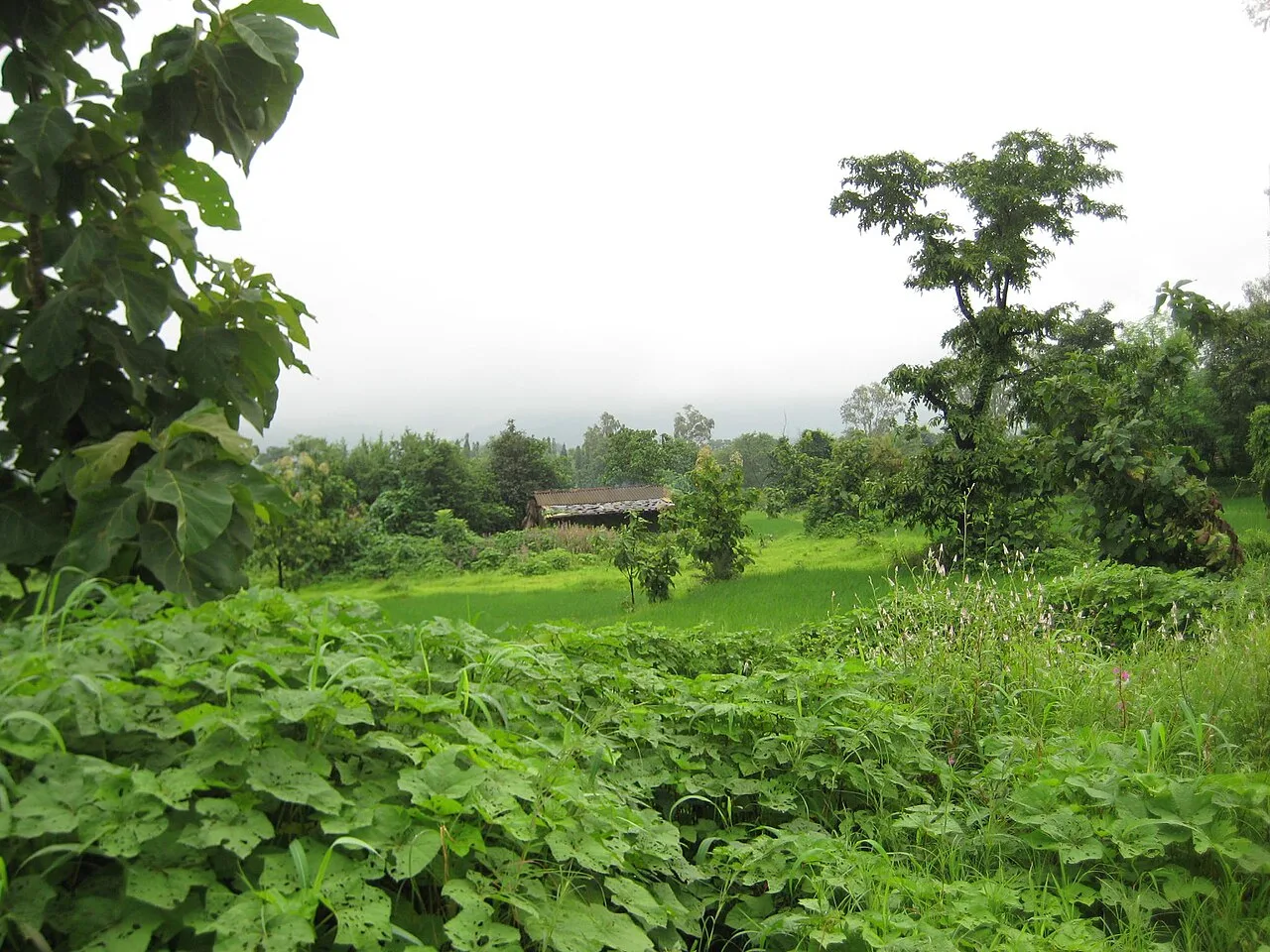
Palghar runs from the Arabian Sea and its creeks through a broad belt of farms and settlements to wooded foothills inland. The Vaitarna and Surya river systems and smaller waterways shape parts of the district, while the uplands around Jawhar and Mokhada have more undulating, forested terrain. Coastal roads connect larger towns, but inland journeys can take longer because roads become narrower and more winding. Monsoon rain may affect river crossings, rural tracks and access to village areas. Distances on a map can therefore understate travel time, particularly when combining the coast with the interior.
Palghar has a hot season before the monsoon, a wet and humid monsoon, and a generally milder, drier winter. Summer can feel oppressive, especially on the coast, so plan outdoor activity for cooler parts of the day and carry water. Monsoon rains make the landscape green but can bring slippery paths, waterlogging and travel disruption. November to February is usually the most comfortable period for combining coastal and inland visits. Pack light clothing, sun protection and insect repellent; take a rain jacket or waterproof footwear during the monsoon. Even in winter, a light layer can be useful in the evenings inland.
Palghar district is served by the Western Railway corridor, with stations including Palghar, Boisar and Dahanu Road; the most useful station depends on your destination. Chhatrapati Shivaji Maharaj International Airport in Mumbai is the principal nearby airport for most visitors. National Highway 48 links the region with Mumbai and Gujarat, while state highways connect the coast with inland towns such as Jawhar. Buses and trains serve larger settlements, but reaching villages and less-visited sites may require a local bus, taxi or auto-rickshaw, with onward transport arranged in advance. Check current services locally before travelling.
The Western Railway corridor serves Palghar, Boisar and Dahanu Road, but the best station depends on your destination. Roads link these towns with Vasai and with inland centres such as Jawhar; local buses serve larger settlements, while shared jeeps and auto-rickshaws may help on shorter routes where available. For Ganjad and other village visits, arrange onward transport in advance, as services may be limited or irregular. Taxis can offer more flexibility for a multi-stop day. Boats operate on selected waterways, but should not be assumed to provide a practical connection; confirm locally before planning around one.
2 days: Palghar to Ganjad (Warli Village); sleep in Dahanu on night 1. 3 days: Dahanu to Ganjad (Warli Village), then return towards Palghar; sleep in Dahanu on night 1 and Palghar on night 2.
Dahanu is a practical base for Ganjad and nearby coastal travel, while Palghar town suits rail connections and journeys across the district. Boisar can work for visitors travelling around the central industrial and rail corridor; Jawhar is a useful inland base where suitable accommodation is available. Larger towns generally offer hotels and modest lodgings, while some rural areas may have homestays or limited guest accommodation. Availability and standards vary, so confirm facilities, meals and transport arrangements before setting out. Do not assume that government lodges or dharamshalas are available at every stop.
Coastal heat and monsoon conditions can make travel tiring; carry drinking water, use sun protection and avoid entering swollen streams or creeks. Keep a respectful distance from wildlife and do not enter forests or private land without local guidance. Mobile coverage can be patchy in some inland areas; share your route and arrange return transport beforehand. Use sealed or reliably treated water. Crowds may build at festivals and popular coastal spots. Confirm any site-specific access requirements with local authorities; do not assume a permit is needed.
- Dadra and Nagar Haveli · Dadra and Nagar Haveli and Daman and Diuabout 34 km
- Daman · Dadra and Nagar Haveli and Daman and Diuabout 51 km
- Mumbai Suburbanabout 87 km
- Nashikabout 95 km
- Navsari · Gujaratabout 104 km
- Mumbai Cityabout 112 km
- Dang · Gujaratabout 112 km
- Surat · Gujaratabout 127 km
Straight-line distance between the centres of each district's destinations; road distance is longer.
Q: How many days should I spend in Palghar district? A: Two or three days allow time for Ganjad and a coastal base; add time if travelling into the inland hills. Q: When is the best time to visit? A: November to February is generally the most comfortable season. Monsoon visits are scenic but can be disrupted by rain. Q: What is the best base for visiting Ganjad? A: Dahanu is a practical base for Ganjad, while Palghar town can suit rail connections and broader district travel. Q: How do I get to Palghar district? A: Reach a suitable Western Railway station such as Palghar, Boisar or Dahanu Road, or travel by road from Mumbai; arrange local transport onward. Q: Is Palghar suitable for families or elderly travellers? A: Yes, with planning. Choose accessible accommodation, allow extra road time and check walking conditions and transport availability before visiting village or hill areas.
This page draws on our 1 destination guides for Palghar and is updated as our team checks it.
Be the first to share photos, stories, advice or a helpful contact for Palghar.
Loading…