
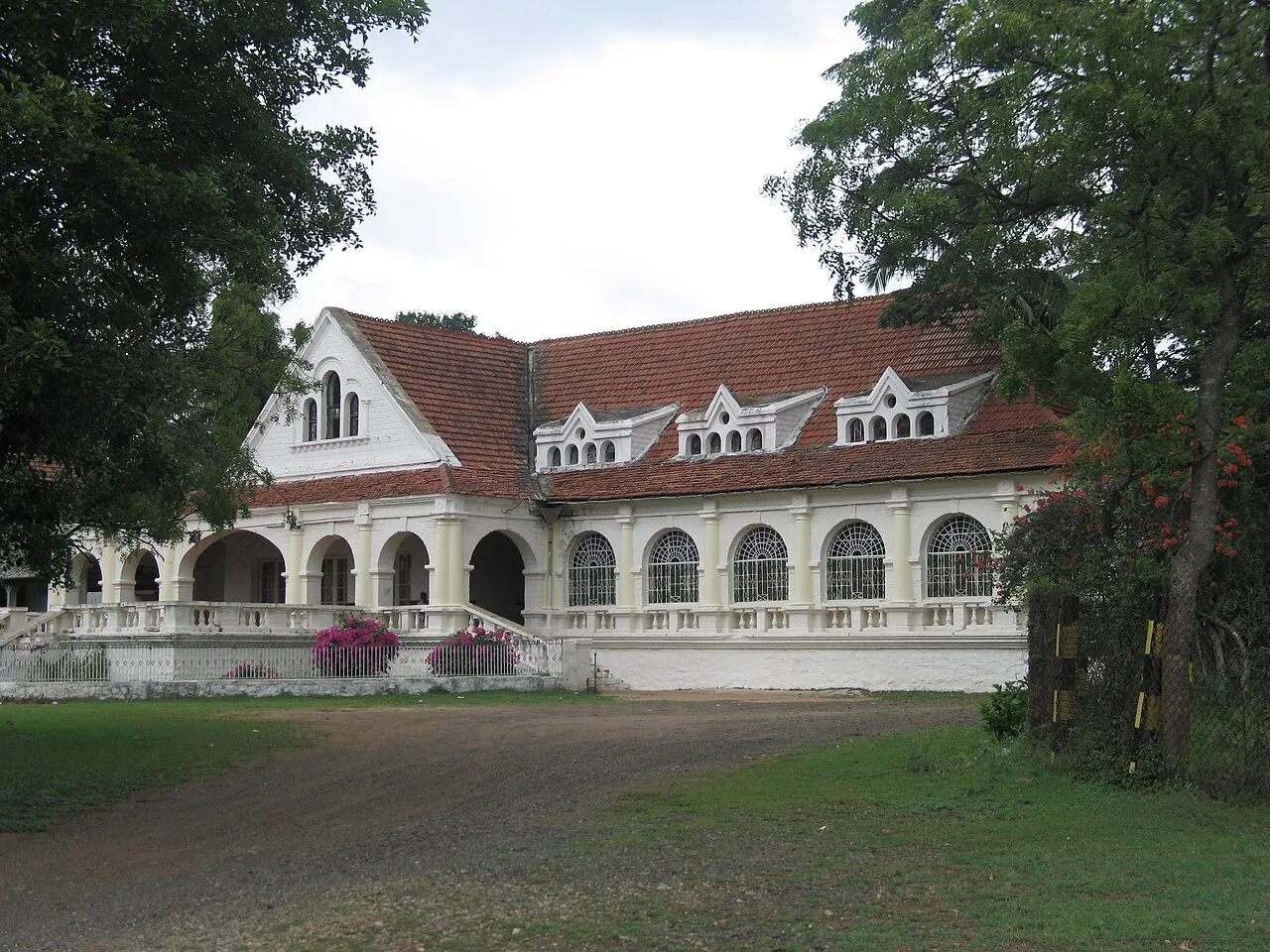
Kolar Gold Fields
Kolar Gold Fields is a mining area in Karnataka’s Kolar district. Its gold-mining past, early electricity infrastructure and links to particle-physics research give visitors reasons to explore its history.
Key facts · verified by Ghumoopedia editors
- Type of place
- Destination
- Best time to visit
- October to February; June to September for monsoon greenery in the Western Ghats
- Nearest railway station
- Kolar · about 24 km (straight line)
- Verified
- 21 Nov 2026
Plan a trip from Kolar Gold Fields — a day-by-day route through places nearby.
Located in Kolar district, Karnataka, Kolar Gold Fields is part of the K.G.F. taluk. Robertsonpet is its administrative centre and home to employees of Bharat Gold Mines Limited (BGML) and BEML Limited, formerly Bharat Earth Movers Limited, along with their families. K.G.F. is about 30 kilometres from Kolar and 100 kilometres from Bengaluru, Karnataka’s capital. Gold mining defined the area for more than a century. Work at the mines stopped on 28 February 2001 as gold prices fell, although gold remained underground. An electricity-generating facility, among the first built in India, began operating in 1889 to serve the mines. The mine complex was also used for particle-physics experiments from the 1960s until 1992. Karnataka holds the boulder-strewn ruins of Hampi, the Hoysala temple jewels of Belur and Halebidu, the Chalukyan monuments of Badami, Aihole and Pattadakal, the palaces of Mysuru, the coffee hills of Coorg and Chikkamagaluru, the temple-and-beach town of Gokarna and the tiger forests of Bandipur and Nagarhole. Bengaluru and the plateau are mild most of the year; the coast is hot and humid; the Malnad hills (Coorg, Chikkamagaluru, Agumbe) get very heavy monsoon rain from June to September. October to February is pleasant almost everywhere. The usual best time to visit is October to February; June to September for monsoon greenery in the Western Ghats. Timings, fees and access arrangements must be confirmed locally. For official information, see Karnataka Tourism at https://karnatakatourism.org.
Why it matters
Kolar Gold Fields (K.G.F.) is a historic mining region and township in K.G.F. taluk, Kolar district, Karnataka. Its gold mines shaped local settlement, employment and infrastructure for more than a century, and their legacy remains central to the area’s identity. The mines closed in 2001, but gold mining had brought workers and families from different parts of southern India to live in the region. K.G.F. also has a place in the history of Indian science: particle-physics experiments were conducted in the mine complex from the 1960s until 1992. These industrial and scientific associations give the township significance beyond the district.
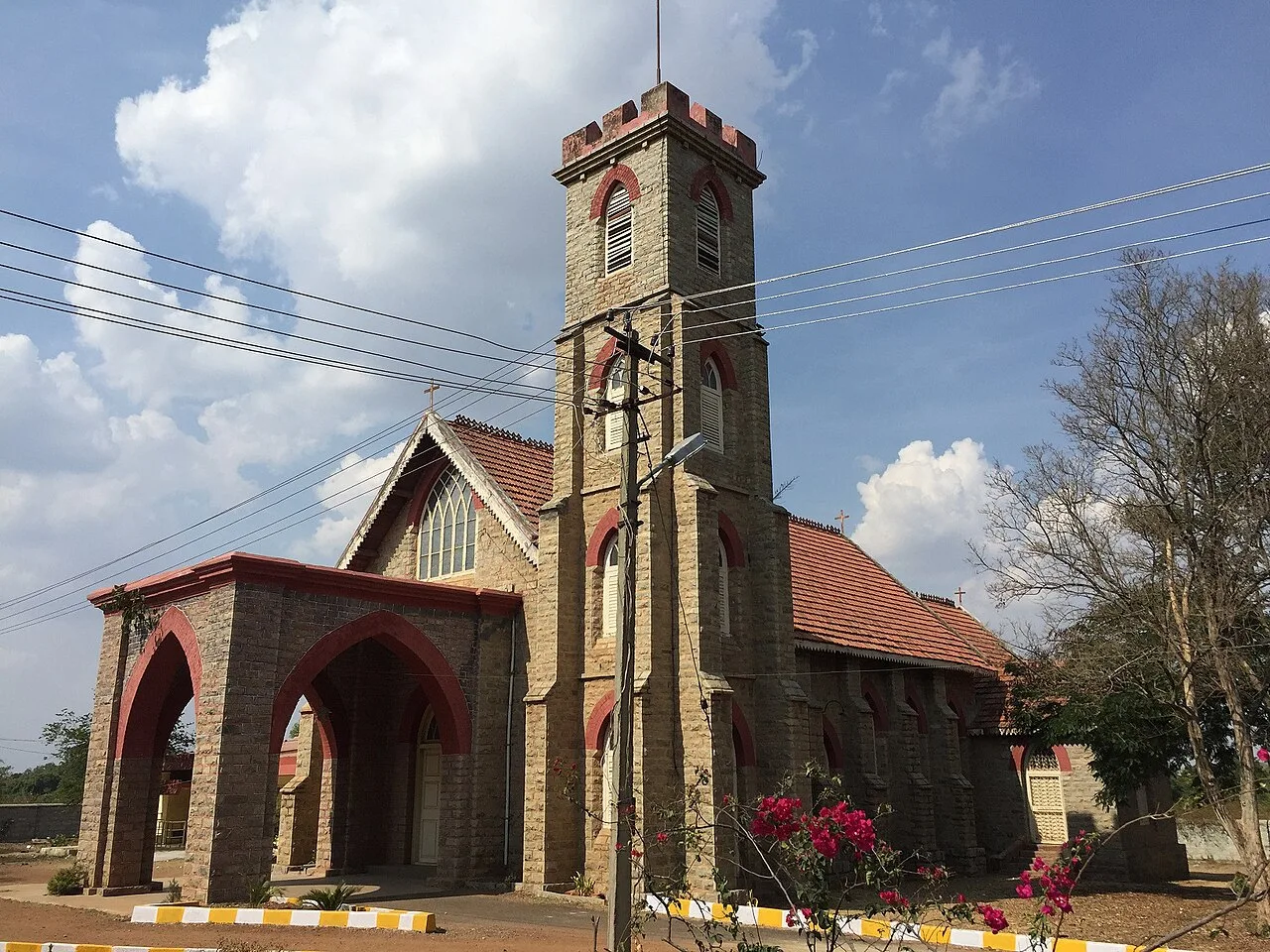
Gold-bearing ground in the Kolar region attracted prospectors in the nineteenth century. Mining developed into a large industrial undertaking under British-era companies, with John Taylor and Sons among the firms associated with its operation. Mining expanded around settlements such as Robertsonpet, which became the township’s administrative and residential centre. Workers came from across southern India, including Tamil-speaking communities, and the growing workforce supported shops, schools and other services. The mines also required substantial infrastructure: published accounts note that a power-generation unit was built in 1889 to support operations. K.G.F. later became a site for underground particle-physics research, with experiments conducted in the mine complex from the 1960s to 1992. Bharat Gold Mines Limited (BGML) was the public-sector operator in the later period, while BEML also became an important employer in the township. Mining ceased on 28 February 2001 after falling gold prices made operations unviable, although gold remained underground. The closed workings are not an ordinary public attraction, and visitors should not enter mine property without explicit permission. The town’s present character reflects this shift from active mining to a residential and industrial legacy.
Explore Kolar Gold Fields slowly and read the interpretation boards, use the official audio guide where available or hire an authorised guide to understand its history. Check opening days, ticket counters and camera rules in advance; many monuments and museums close on one weekday and on some public holidays. Early morning gives softer light, cooler air and smaller crowds. A comfortable itinerary is one main visit in the morning, a local meal at midday and a short nearby stop before an afternoon return. Use the district list on this site to find other places in Kolar, but check the route and its condition before combining stops. If a festival is on — such as Mysuru Dasara, the Hampi Utsav, the Kambala buffalo races on the coast or the Karaga in Bengaluru — roads and stays can be busy, and the experience can be unforgettable. Leave no litter: many sites are protected by the communities around them.
Suggested itineraries
Half day: Robertsonpet township streets and public-facing industrial heritage context (1–2 hours); local meal; continue to Kolar town for Kolaramma Temple or Someshwara Temple (allow 1–2 hours, subject to access). Full day: Robertsonpet and K.G.F. township context (2–3 hours, without entering restricted mine property); lunch; Kolar town temples; finish at Antaragange if travel conditions and mobility allow. Gentler option: Keep to a short, level visit around central Robertsonpet, take a seated break and meal, then visit one accessible public site in Kolar by car; confirm steps and access locally.
K.G.F.’s everyday culture reflects its history as a workplace and home for people who came from across southern India. Kannada is the state language, while Tamil and Telugu are also heard in local communities; English is used in some institutional and commercial settings. Family life, local markets, neighbourhood temples and religious observances shape the township’s daily rhythms. Kannada and Tamil film music, devotional songs and popular Indian music are part of contemporary life, rather than a performance tradition specific to the mines. Clothing is generally modern everyday dress, with customary attire worn for worship and celebrations. Visitors should ask before photographing residents, workers or religious activity, and should follow local temple customs.
Festivals & events
Ugadi, Deepavali and Ganesh Chaturthi are observed in K.G.F. and the wider Kolar region, with dates varying by the lunar calendar. Local temple festivals and processions may take place around K.G.F. and neighbouring towns; schedules are set locally and can change. Kolar’s Kolaramma Temple is associated with local worship and annual observances, but visitors should confirm whether a public festival is taking place during their visit. Festival periods can bring larger crowds, temporary road congestion and busier food and shopping areas. Keep a respectful distance from processions, follow organisers’ directions and avoid blocking routes for photographs.
Local food in Karnataka includes bisi bele bath, Mysore masala dosa, ragi mudde with sambar, Coorg's pandi (pork) curry, Mangalorean fish curry with neer dosa, Davangere benne dosa, Dharwad pedha and filter coffee everywhere. Ask what is fresh that day; many small eateries cook a limited daily menu. Vegetarian travellers eat very well across the state; the coast is the place for seafood, and Coorg has its own distinctive cuisine. Don't miss a tiffin breakfast of idli, vada and filter coffee. Remote sites may have no restaurant at all. Carry water and snacks, eat a proper breakfast before long drives, and ask your accommodation for a packed lunch if you are heading out early. Try a home-cooked or local thali meal when you can — it is often the best food on the route. Choose busy, clean places, drink sealed or filtered water, and carry your packaging back with you.
Shopping & local experiences
Robertsonpet and Kolar town have ordinary neighbourhood shops and markets for snacks, household goods and daily needs. Kolar is known for its agricultural produce, including mangoes in season, though availability varies by market and time of year. Visitors may find locally made foods and sweets, but K.G.F. does not have a guaranteed official mining souvenir shop. Treat claims that an item comes from the old mines cautiously, and do not buy minerals or artefacts removed from restricted property. For a local food experience, try a meal at a town eatery and ask residents about seasonal produce and regional dishes.
October to February; June to September for monsoon greenery in the Western Ghats
The nearest principal railway station by straight-line distance is Kolar, roughly 24 km away. The nearest operating airport by straight-line distance is Kempegowda International Airport, Bengaluru, roughly 67 km away. These figures are calculated from map coordinates — actual road distance is longer. Bengaluru is the hub for the south and centre; Hubballi and Belagavi serve the north; Mangaluru serves the coast; Mysuru is the gateway to Coorg, and Hosapete is the railhead for Hampi. KSRTC buses connect the district towns, and the coast is served by the Konkan Railway with frequent buses from Mangaluru and Udupi. For Hampi, take a train or bus to Hosapete and an autorickshaw for the last 13 km. When comparing train, bus and flight, count the complete door-to-door time: a flight saves the most time only if the onward road transfer is short, while an overnight train can save a hotel night. Book your return before you leave, because seats fill quickly on weekends, festivals and holidays. Current train numbers, timings, return services and fares are not listed here; check IRCTC and NTES for trains and the airline's own schedule for flights. No permit is needed to visit Karnataka. Tiger safaris in Bandipur, Nagarhole and the Kali Tiger Reserve must be booked in advance through the forest department or authorised lodges — weekend slots sell out. Treks in Kudremukh National Park and some Western Ghat peaks need forest entry permission. Hampi's monuments have ASI entry tickets; the core zone is best seen with a bicycle, moped or autorickshaw for the day.
Confirm onward and return timings on IRCTC / NTES, the state bus operator or your airline before travel. A dash means current timings or fares have not been verified.
Getting around
Robertsonpet is the main township hub. Auto-rickshaws and local buses can help with movement around built-up areas; taxis or a hired car are more practical for visiting Kolar and other dispersed sites. Walking is possible for short town-centre errands, but the mine area is spread out and some roads serve industrial or restricted premises. Ask locally which routes are public and where parking is permitted. Do not follow workers or vehicles through mine gates, and do not assume that a site can be reached on foot simply because it appears close on a map. Check onward transport before leaving the town centre.
Hours, tickets & permissions
The underground mines are closed and should be treated as restricted industrial property, not as a walk-in attraction. Access to mine grounds, buildings or work sites may require permission from the managing authority, and permission is not guaranteed. Public streets and township areas have their own local access conditions. Any museum, memorial or other visitor facility should be checked separately before travel. Ticketing, identity checks, camera restrictions and rules for groups may vary by site. Confirm current access arrangements, opening days and fees with the relevant managing authority or local tourism office before setting out.
Facilities
Robertsonpet has everyday shops and food options, and visitors can usually find basic services in the township or Kolar town. Toilets, drinking water, parking and seating are not assured at historic or industrial locations; check locally and carry water, especially in warm weather. ATMs and pharmacies are more likely in built-up commercial areas than at outlying sites. Do not expect visitor facilities, ticket counters or staffed guides at the closed mine complex. An authorised local guide may help explain the area’s history, but confirm credentials and whether any guided access is permitted before booking.
Accessibility
K.G.F. is an inhabited township rather than a single visitor site, so walking conditions vary between paved streets, uneven edges and busy roads. Mine grounds and industrial buildings may have rough surfaces, steps, barriers or no public access; do not attempt entry to assess them. Shade and seating can be limited outdoors, and summer heat may make longer walks uncomfortable. Wheelchair and stroller access cannot be assumed, particularly at older buildings and temples, where steps may be present. Older visitors or anyone with limited mobility may find a car-based visit with one short stop more manageable. Check access directly with each site before travelling.
No permit is needed to visit Karnataka. Tiger safaris in Bandipur, Nagarhole and the Kali Tiger Reserve must be booked in advance through the forest department or authorised lodges — weekend slots sell out. Treks in Kudremukh National Park and some Western Ghat peaks need forest entry permission. Hampi's monuments have ASI entry tickets; the core zone is best seen with a bicycle, moped or autorickshaw for the day. Carry a photo ID at all times and save the emergency number 112 and your accommodation's contact offline. Heat in summer and heavy rain in the monsoon are the main weather risks; carry water, avoid midday sun and allow extra time when roads flood. Watch your belongings in crowds and on public transport, and follow posted instructions.
Photography
Morning or late-afternoon light is generally more comfortable for street and building photography, while midday can be harsh. Public streets and ordinary township scenes may be photographed where no local restriction applies, but mine premises, security points and industrial operations may prohibit cameras. Ask before photographing residents, workers, religious ceremonies or private property. Drone use can be restricted around industrial, security-sensitive and built-up areas; obtain the necessary permissions and follow current aviation rules rather than launching without approval. Do not trespass for a viewpoint or obstruct traffic to take pictures.
Choose a stay by the full journey to Kolar Gold Fields, not just the district name. Bengaluru, Mysuru and Mangaluru offer the widest choice; Hampi has guesthouses on both banks of the Tungabhadra, Coorg has plantation homestays and resorts, and the forest lodges at Bandipur and Nagarhole book out early. In summer, check air-conditioning; in the monsoon, check that the property is accessible if roads flood. Book in advance for weekends, festivals and the peak season (October to February; June to September for monsoon greenery in the Western Ghats). Confirm the exact location, meals included, check-in time and cancellation terms in writing. Avoid sending money to unverified contacts or touts at stations. Carry some cash, as card and digital payments can be unreliable in remote areas.
Kolar town offers Kolaramma Temple and Someshwara Temple, both established local landmarks. Antaragange, known for its rocky landscape and temple setting, is another regional outing; its uneven terrain may not suit every visitor. Kotilingeshwara Temple at Kammasandra is a prominent temple destination in the wider district. Avani is known for its group of historic temples and is another possible excursion, subject to route and site access. These places are spread across the district, so check road conditions and allow for travel time rather than combining every stop in one day. Confirm temple access and local rules before departure.
For couples, Kolar Gold Fields rewards a slow pace: arrive early for soft light and fewer crowds, share a local meal and keep the evening free. A sunset over Hampi's boulders, a coffee-estate walk in Coorg or a quiet evening on a Gokarna beach makes the trip memorable. Public displays of affection can be frowned upon in conservative communities and at religious sites, so be discreet. Keep a buffer in your itinerary, because weather and road conditions can delay plans.
Q: How much time should I allow for Kolar Gold Fields? A: Allow a half day for a township visit and nearby Kolar stop; a full day suits a broader district outing. The closed mine itself is not a routine visitor attraction. Q: When is a good season to visit? A: October to February is generally more comfortable across Karnataka. Check local weather, especially during the rainy season, before planning outdoor stops. Q: Can visitors enter the gold mines? A: The mines are closed and access is restricted. Do not enter mine property unless the managing authority has explicitly granted permission. Q: Is the area suitable for children or elderly visitors? A: Town visits can be manageable with breaks, but uneven surfaces, traffic, heat and temple steps may pose difficulties. Choose short stops and check accessibility in advance. Q: Where can I stay nearby? A: Look for accommodation in K.G.F. or Kolar town and verify current availability and facilities before booking. Bengaluru offers a wider choice but requires additional travel.
Be the first to share photos, stories, advice or a helpful contact for Kolar Gold Fields.
Loading…