
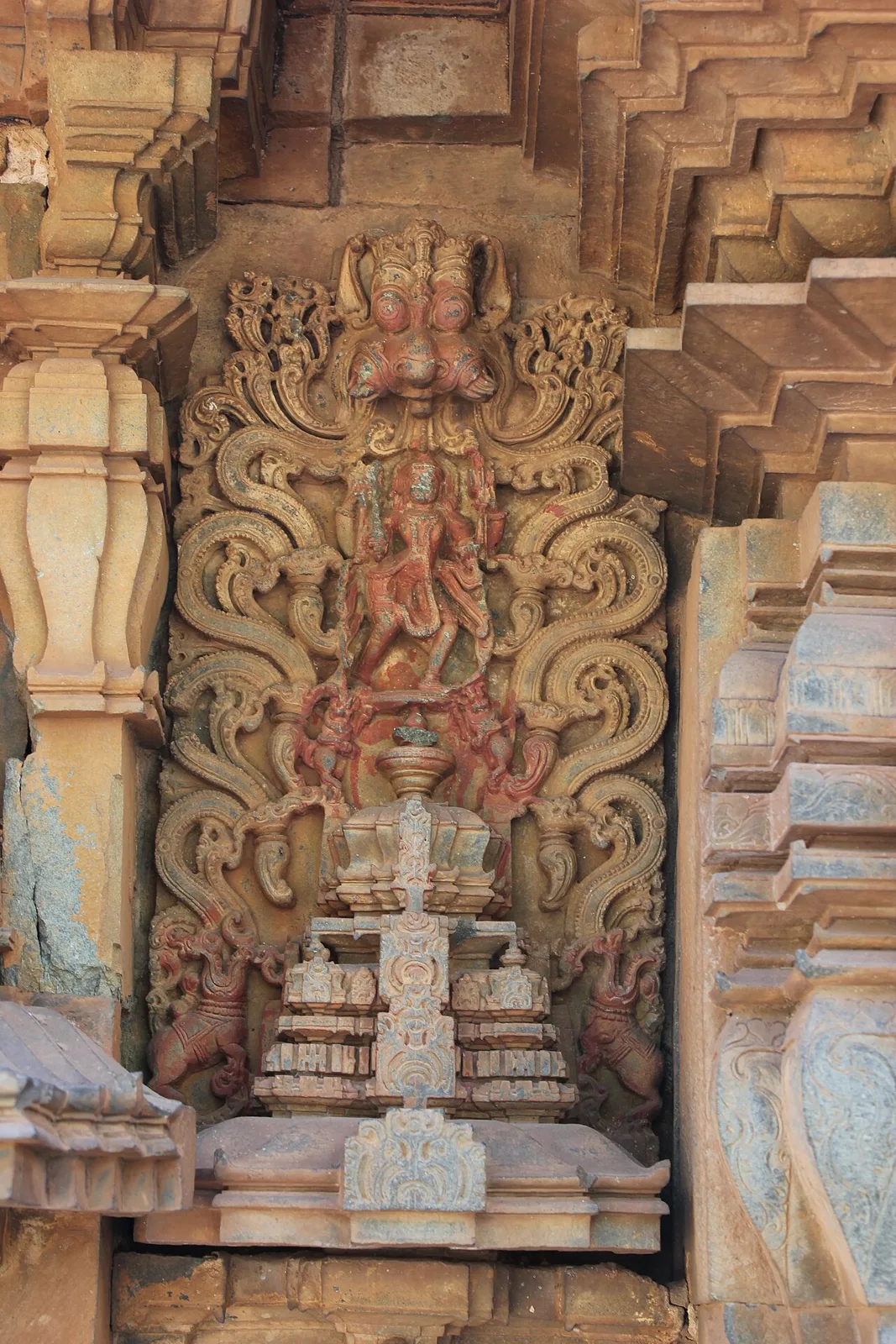
Siddhesvara Temple, Haveri
Siddhesvara Temple in Haveri, Karnataka, is visited for worship and valued for its Western Chalukyan design and sculptures of Hindu deities.
Key facts · verified by Ghumoopedia editors
- Type of place
- Temple / pilgrimage site
- Best time to visit
- October to February; June to September for monsoon greenery in the Western Ghats
- Nearest railway station
- Haveri · about 1 km (straight line)
- Nearest airport
- Hubballi Airport · about 73 km (straight line)
- Verified
- 21 Nov 2026
Plan a trip from Siddhesvara Temple, Haveri — a day-by-day route through places nearby.
Known also as Purada Siddeshwara, this temple stands in Haveri, Karnataka. Its name appears in variant forms, including Siddheshvara and Siddheshwara. The building is regarded as an elaborate expression of Western Chalukyan art from the twelfth century, and is notable for numerous freestanding images of Hindu divinities. Although the monument is now used for worship of Shiva within the Shaiva tradition, its original religious affiliation and presiding deity remain uncertain to historians. Inscriptions point to its first consecration in the latter part of the eleventh century. Its westward orientation is another unusual feature: Chalukyan temples were ordinarily aligned towards the east, where the sun rises. Many surviving images of Shiva show him in meditation. Interpretations differ over whether he is portrayed contemplating himself; a reference to the Devi-Bhagavata Purana has also been cited as indicating that Shiva meditates upon another god. Unattached deity sculptures within the building, together with the deterioration of the principal images on its walls, may help explain why the temple’s original dedication is difficult to establish. Visitors continue to come for religious reasons. The passage about visitors also invokes Bhagavad Gita, chapter 17, verse 23, but does not explain how that verse bears on temple-going. Karnataka holds the boulder-strewn ruins of Hampi, the Hoysala temple jewels of Belur and Halebidu, the Chalukyan monuments of Badami, Aihole and Pattadakal, the palaces of Mysuru, the coffee hills of Coorg and Chikkamagaluru, the temple-and-beach town of Gokarna and the tiger forests of Bandipur and Nagarhole. Bengaluru and the plateau are mild most of the year; the coast is hot and humid; the Malnad hills (Coorg, Chikkamagaluru, Agumbe) get very heavy monsoon rain from June to September. October to February is pleasant almost everywhere. The usual best time to visit is October to February; June to September for monsoon greenery in the Western Ghats. Timings, fees and access arrangements must be confirmed locally. For official information, see Karnataka Tourism at https://karnatakatourism.org.
Why it matters
Siddhesvara Temple is an important medieval monument in Haveri, reflecting the artistic and religious life of the region under the Western Chalukyas. It is commonly associated with 12th-century Chalukyan art, while inscriptional evidence has been interpreted as placing its initial consecration in the late 11th century. Its west-facing orientation and numerous surviving sculptures make it notable among the area’s historic temples. Today it serves as a Shaiva place of worship dedicated to Shiva as Siddhesvara, as well as a heritage site visited for its stonework and sculptural remains. The temple is locally known as Purada Siddeshwara. No UNESCO or other formal heritage designation is asserted here; check with the relevant authorities for current protection and access information.
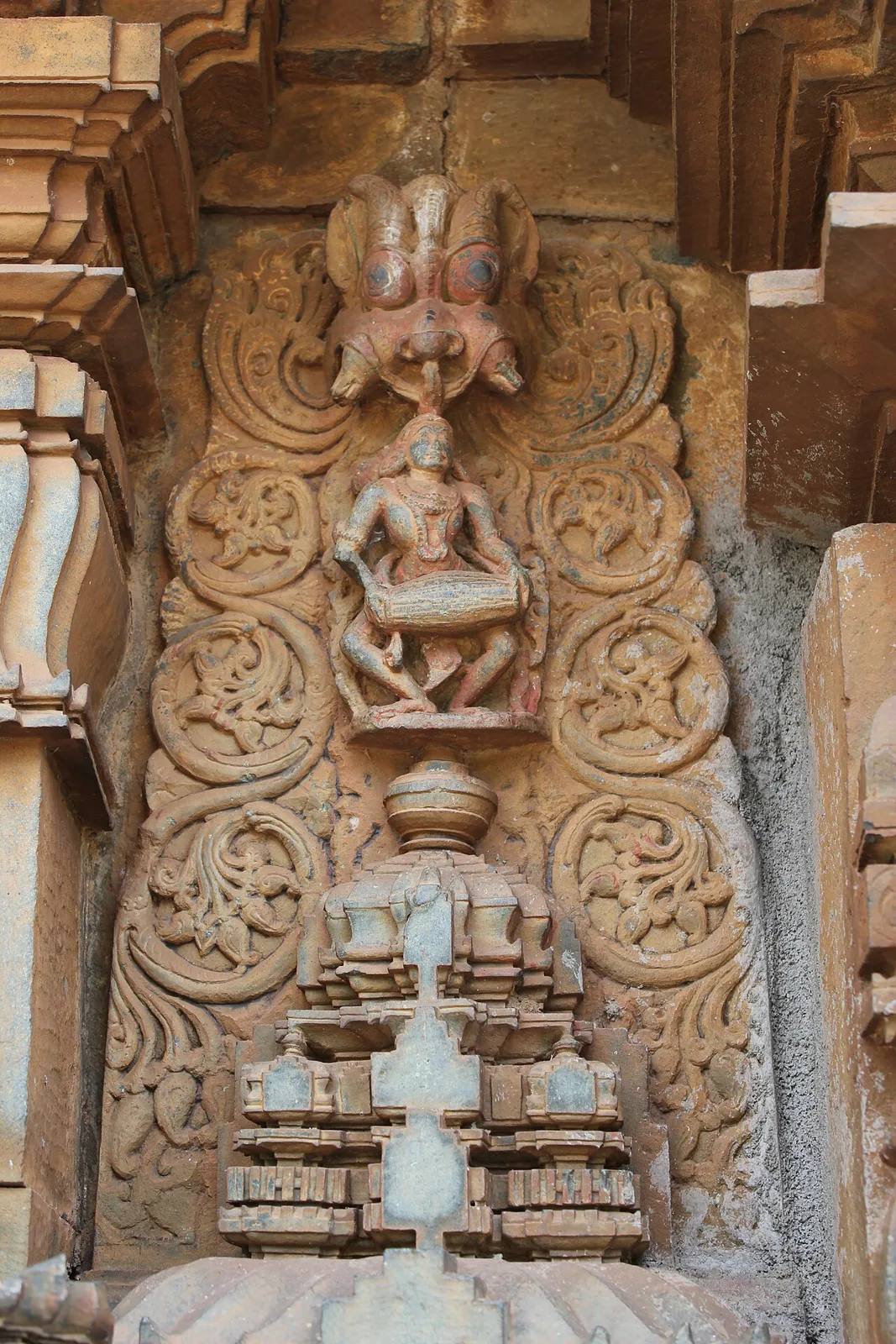
The temple belongs to the period of Western Chalukyan rule in Karnataka. Its architectural style is generally associated with the 12th century, although inscriptional evidence has been read as indicating that its initial consecration took place in the late 11th century. The identity of its original patron or builder is not established with confidence, so specific royal or community sponsorship should not be assumed. Historians have also not reached certainty about the religious affiliation or principal deity for which it was first consecrated. Its present use is Shaiva, with worship focused on Shiva as Siddhesvara. Over time, the building’s primary wall images have deteriorated, and many sculptures are now loose rather than in their original positions. This has contributed to questions about the temple’s earlier religious character. The surviving structure and sculptural fragments nonetheless preserve evidence of the region’s medieval stone-carving tradition. The temple continues to function as a place of worship alongside its historical role. For precise information on inscriptions, conservation work and any current archaeological protections, visitors should consult the managing authority or a reliable monument record; a detailed restoration history is not stated here.
Origin stories & folklore
The name Siddhesvara links the temple in present-day worship to Shiva, but a reliably documented founding legend is not established here. Local devotees may understand the shrine through Shaiva beliefs and the presence of the linga, while the temple’s loose sculptures and damaged wall images have prompted different interpretations of its earlier identity. These interpretations are historical questions rather than settled local folklore. Stories about Shiva meditating or the original purpose of the temple should therefore be treated as belief or speculation unless a local priest or caretaker identifies a specific tradition. Visitors can ask respectfully about oral accounts, keeping them distinct from what inscriptions and architectural study can establish.
Architecture & design
Siddhesvara Temple is a stone monument associated with the Western Chalukyan style of medieval Karnataka. It is notable for facing west, unlike the east-facing orientation common in many temples. The surviving building includes a shrine space and pillared interior; carved stone pillars and architectural details reward a slow look. Its sculptural programme is unusually varied, although many figures are now loose and the original wall images have suffered deterioration. The plan and original arrangement are not fully clear from the surviving fabric, so visitors should avoid assuming that every sculpture remains in its first position. The temple’s stone construction and carved surfaces show the skilled workmanship associated with Chalukyan-era building. Rather than relying on a single monumental tower, the interest here lies in the relationship between the shrine, interior supports and sculptural details. Observe the structure from outside before entering, and allow time for the changing views of the carvings in natural light.
Important objects & sculptures
Look for the temple’s sculpted figures of Hindu deities, including representations associated with Shiva and other traditions. Images of Shiva in meditative poses are among the details noted by observers, while the presence of varied deity sculptures reflects the uncertainty about the building’s original dedication. Many figures are loose or no longer occupy their original architectural positions, so avoid touching or moving them. The principal object of worship today is the Shiva linga in the shrine. Carved pillars and stone details are also worth examining at close range, where access permits. Inscriptions are important to the temple’s dating and history, but their location, legibility and visitor access can vary; ask the caretaker before approaching any marked or restricted surface.
Religious significance
The temple is currently used as a Shaiva shrine, with Siddhesvara understood as a form or name of Shiva. Worshippers visit to offer prayers and seek blessings; the linga in the sanctum is the focus of devotion. Daily worship and other rites may take place, but their schedule can vary, so visitors should ask locally rather than assume a particular service is underway. Historians remain uncertain about the temple’s original sectarian affiliation and principal deity, partly because of the varied loose sculptures and deterioration of earlier wall images. This historical uncertainty does not diminish the shrine’s present religious meaning to devotees. Visitors who are not participating in worship should remain quiet, follow instructions from temple staff and give worshippers space, especially near the sanctum.
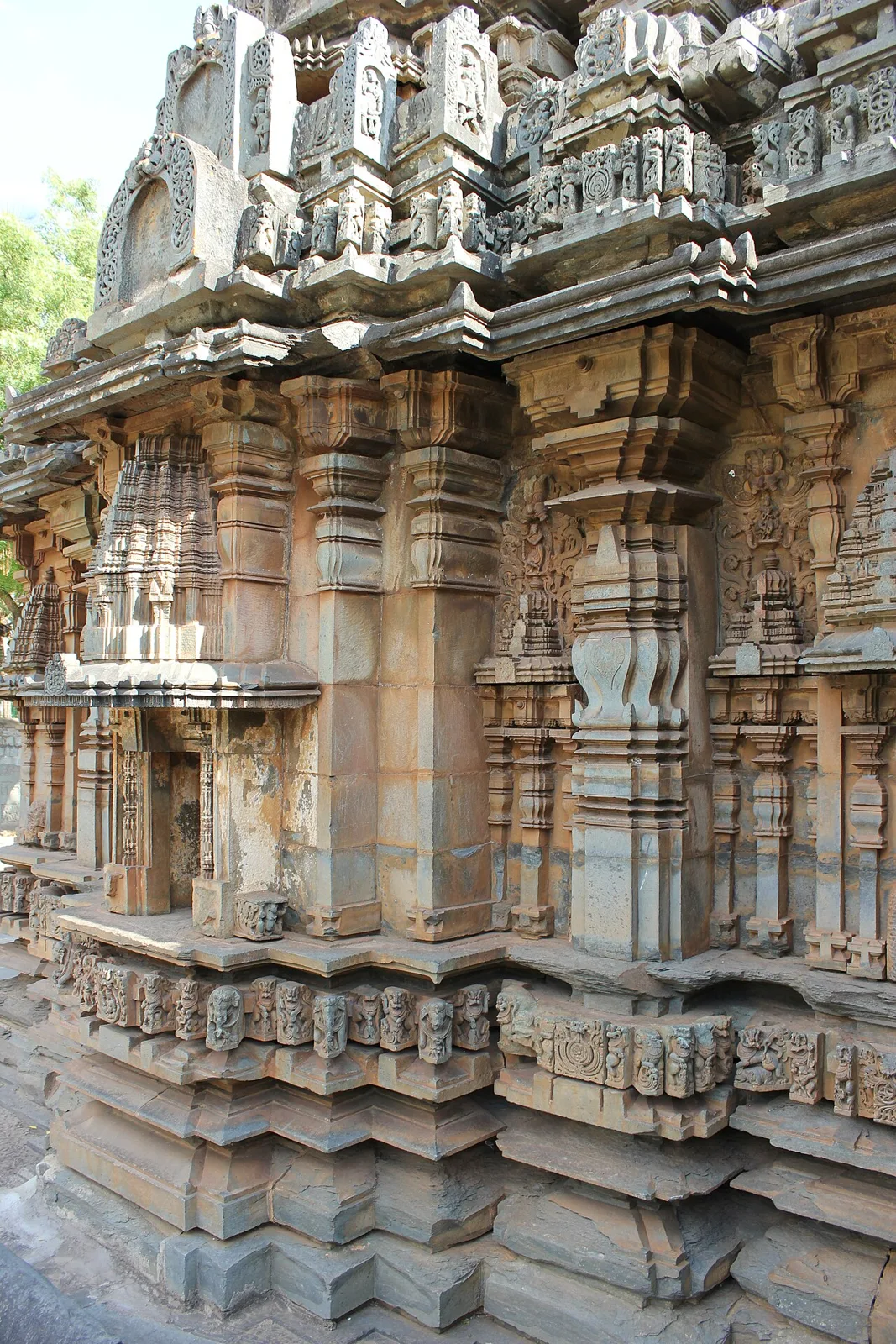
Visit Siddhesvara Temple with time to observe daily prayers and rituals respectfully. Follow the posted rules on footwear, photography, phones, head covering and dress — many major temples require modest clothing, prohibit leather items and phones inside, and have separate darshan queues; non-Hindus may not be admitted to some sanctums. Ask caretakers which areas are open to visitors, and beware of unofficial 'guides' or agents offering quick darshan for a fee. A comfortable itinerary is one main visit in the morning, a local meal at midday and a short nearby stop before an afternoon return. Use the district list on this site to find other places in Haveri, but check the route and its condition before combining stops. If a festival is on — such as Mysuru Dasara, the Hampi Utsav, the Kambala buffalo races on the coast or the Karaga in Bengaluru — roads and stays can be busy, and the experience can be unforgettable. Leave no litter: many sites are protected by the communities around them.
Suggested itineraries
Half day: Spend 1–2 hours at Siddhesvara Temple, allowing time for worship and a careful look at the carvings; have a local meal; take a short stop elsewhere in Haveri town if time and access permit. Full day: Visit Siddhesvara Temple in the morning; pause for a meal in Haveri; choose one district heritage stop, such as Bankapura or Galaganath, after checking the route and site access; return to Haveri with time to spare. Gentler option: Arrange a drop-off close to the temple, rest between short periods of viewing, and focus on the accessible exterior and main worship area only if the caretaker confirms access.
The temple is part of Haveri’s living religious landscape as well as its medieval heritage. Kannada is widely used in the region, and visitors may also hear other languages spoken by residents and pilgrims. Worshippers generally dress modestly and may remove footwear before entering sacred areas; follow local signs and the caretaker’s guidance. Music, chanting or ritual activity may be heard during worship, but performances should not be assumed to occur on a visitor’s schedule. The temple’s sculptures connect present-day visits with the area’s long history of stone craftsmanship. Ask before photographing people or ceremonies, and avoid interrupting prayer to get a closer view of carvings.
Festivals & events
Maha Shivaratri is an important occasion for Shiva worship and may bring additional prayers and visitors to the temple. The scale and arrangements can differ from year to year, so confirm locally before planning around it. Other observances in the Hindu calendar may be marked through worship at the shrine, though a major annual fair is not asserted here. Festivals across Haveri district can also affect local traffic and accommodation, particularly when events draw visitors from surrounding towns. During busy observances, expect more people around the entrance and allow worshippers priority. Ask temple staff about access restrictions and photography before attending a ritual.
Local food in Karnataka includes bisi bele bath, Mysore masala dosa, ragi mudde with sambar, Coorg's pandi (pork) curry, Mangalorean fish curry with neer dosa, Davangere benne dosa, Dharwad pedha and filter coffee everywhere. Ask what is fresh that day; many small eateries cook a limited daily menu. Vegetarian travellers eat very well across the state; the coast is the place for seafood, and Coorg has its own distinctive cuisine. Don't miss a tiffin breakfast of idli, vada and filter coffee. Remote sites may have no restaurant at all. Carry water and snacks, eat a proper breakfast before long drives, and ask your accommodation for a packed lunch if you are heading out early. If prasad is offered, accept it according to local custom. Choose busy, clean places, drink sealed or filtered water, and carry your packaging back with you.
Shopping & local experiences
Haveri town is the practical place to look for everyday supplies and local snacks before or after a temple visit. Visitors may find regional sweets, savoury foods and household goods in local shops or markets, though availability varies. The temple is not presented as a dedicated craft market, and specific souvenirs should not be expected on site. If buying religious offerings, ask what is appropriate and where they may be placed. Choose locally made items when their origin is clear, avoid purchasing old-looking sculptures or archaeological objects, and carry reusable bags to reduce waste.
October to February; June to September for monsoon greenery in the Western Ghats
The nearest principal railway station by straight-line distance is Haveri, roughly 1 km away. The nearest operating airport by straight-line distance is Hubballi Airport, roughly 73 km away. These figures are calculated from map coordinates — actual road distance is longer. Bengaluru is the hub for the south and centre; Hubballi and Belagavi serve the north; Mangaluru serves the coast; Mysuru is the gateway to Coorg, and Hosapete is the railhead for Hampi. KSRTC buses connect the district towns, and the coast is served by the Konkan Railway with frequent buses from Mangaluru and Udupi. For Hampi, take a train or bus to Hosapete and an autorickshaw for the last 13 km. When comparing train, bus and flight, count the complete door-to-door time: a flight saves the most time only if the onward road transfer is short, while an overnight train can save a hotel night. Book your return before you leave, because seats fill quickly on weekends, festivals and holidays. Current train numbers, timings, return services and fares are not listed here; check IRCTC and NTES for trains and the airline's own schedule for flights. No permit is needed to visit Karnataka. Tiger safaris in Bandipur, Nagarhole and the Kali Tiger Reserve must be booked in advance through the forest department or authorised lodges — weekend slots sell out. Treks in Kudremukh National Park and some Western Ghat peaks need forest entry permission. Hampi's monuments have ASI entry tickets; the core zone is best seen with a bicycle, moped or autorickshaw for the day.
Confirm onward and return timings on IRCTC / NTES, the state bus operator or your airline before travel. A dash means current timings or fares have not been verified.
Getting around
The temple is within Haveri town, so local autorickshaws or a taxi can usually bring visitors close to the site. Haveri railway station is nearby in straight-line terms, but the actual route on foot or by road may differ; check a map on arrival. Local buses serve the town and district, though the most convenient stop for the temple should be confirmed locally. Walking may suit visitors already staying nearby, but account for heat, uneven pavements and traffic. Ask about parking before arriving by car, as arrangements can vary and should not be assumed to be immediately beside the entrance.
Hours, tickets & permissions
Entry arrangements can depend on worship, maintenance and local management. There may be separate expectations for access to the shrine and other parts of the temple, and some areas may be restricted during rituals. Do not assume that every interior space is open to visitors. Ask the caretaker about any entry requirements, permitted items, photography rules or visitor registration. No ticket, permit or camera charge is stated here. Confirm current opening hours and any fees with the managing authority before travelling, since these details can change.
Facilities
Facilities at the temple itself may be limited. Toilets, drinking water, seating and parking should be checked locally rather than assumed to be available on site. Haveri town has places to eat and general services, and visitors can ask locally about the nearest suitable facilities. ATMs and shops are more likely to be found in the town centre than within the temple precinct. A caretaker may be able to answer basic questions, but a formal guide service is not guaranteed. Carry water for the approach, particularly in warm weather, and take all rubbish away if bins are not available.
Accessibility
The temple is a historic stone building, so the approach and interior may include uneven surfaces, raised thresholds or steps. The exact conditions can vary, and wheelchair ramps, lifts or accessible toilets should not be assumed. Ask the caretaker about the route and which areas can be reached before entering. The site may be manageable for some older visitors with support, but standing and walking on stone floors can be tiring. Strollers may be difficult to manoeuvre over uneven ground. Shade and seating are not guaranteed throughout the visit; consider a short, unhurried stop and avoid the hottest part of the day where possible.
No permit is needed to visit Karnataka. Tiger safaris in Bandipur, Nagarhole and the Kali Tiger Reserve must be booked in advance through the forest department or authorised lodges — weekend slots sell out. Treks in Kudremukh National Park and some Western Ghat peaks need forest entry permission. Hampi's monuments have ASI entry tickets; the core zone is best seen with a bicycle, moped or autorickshaw for the day. Carry a photo ID at all times and save the emergency number 112 and your accommodation's contact offline. Heat in summer and heavy rain in the monsoon are the main weather risks; carry water, avoid midday sun and allow extra time when roads flood. Watch your belongings in crowds and on public transport, and follow posted instructions.
Visitor rules
Follow signs and instructions from temple staff. Remove footwear where required, dress modestly and keep voices low, especially near worshippers and the shrine. Do not enter restricted areas, touch or move loose sculptures, or interrupt rituals. Photography, phones and head coverings may be subject to local rules; ask before using a camera or entering the sanctum. Some temples restrict leather items, but confirm the rule here rather than assume. Avoid littering and leave plastic and offerings only where permitted. Be wary of anyone offering unofficial paid access or expedited darshan.
Photography
The exterior and carved stonework can be easier to photograph in soft morning or late-afternoon light, when shadows reveal surface detail. Ask the caretaker whether photography is permitted inside; restrictions may apply near the shrine, during worship or around particular sculptures. Do not use flash if it disturbs worshippers or is prohibited. Seek consent before photographing people, priests or rituals, and do not block paths for a picture. Drone use should not be assumed to be allowed; check current local and aviation rules before bringing one. Respect any signs and requests to stop.
Choose a stay by the full journey to Siddhesvara Temple, not just the district name. Bengaluru, Mysuru and Mangaluru offer the widest choice; Hampi has guesthouses on both banks of the Tungabhadra, Coorg has plantation homestays and resorts, and the forest lodges at Bandipur and Nagarhole book out early. In summer, check air-conditioning; in the monsoon, check that the property is accessible if roads flood. Book in advance for weekends, festivals and the peak season (October to February; June to September for monsoon greenery in the Western Ghats). Confirm the exact location, meals included, check-in time and cancellation terms in writing. Avoid sending money to unverified contacts or touts at stations. Carry some cash, as card and digital payments can be unreliable in remote areas.
Within Haveri district, visitors interested in medieval architecture can consider the Galageshwara Temple at Galaganath, the Tarakeshwara Temple at Hangal and the Mukteshwara Temple at Choudadanapur. Bankapura Fort and the nearby peacock sanctuary are other possible district stops. These sites are not all within a short walk of Haveri, so check road conditions, opening arrangements and travel time before combining them. For a simpler visit, explore Haveri town and return to the temple at a quieter time if worship and access permit. Confirm that any chosen site is open before setting out.
For couples, Siddhesvara Temple rewards a slow pace: arrive early for soft light and fewer crowds, share a local meal and keep the evening free. A sunset over Hampi's boulders, a coffee-estate walk in Coorg or a quiet evening on a Gokarna beach makes the trip memorable. Public displays of affection can be frowned upon in conservative communities and at religious sites, so be discreet. Keep a buffer in your itinerary, because weather and road conditions can delay plans.
Q: How much time should I allow for a visit? A: Around one to two hours is a reasonable starting point for worship and looking at the architecture; allow more time if you are combining it with other Haveri stops. Q: When is a good season to visit? A: October to February is generally pleasant across Karnataka. Monsoon months can bring rain, so check local conditions before travelling. Q: Is there an entry fee, and when is the temple open? A: Current entry arrangements, hours and any fees should be confirmed with the managing authority; they are not specified here. Q: Is the temple suitable for children or elderly visitors? A: Families can visit respectfully, but uneven stone surfaces or steps may be challenging. Stay with children and check access conditions for older visitors in advance. Q: Where can I stay nearby? A: Haveri town is the most practical base to investigate for accommodation. Confirm availability and transport locally, especially during busy festival periods.
Be the first to share photos, stories, advice or a helpful contact for Siddhesvara Temple, Haveri.
Loading…