
Talakaveri (Kaveri Origin)
Talakaveri is a sacred site in Karnataka’s Kodagu district, traditionally regarded as the Kaveri’s birthplace. Pilgrims visit its spring and temple, especially for the annual Kaveri Sankramana observance.
Key facts · verified by Ghumoopedia editors
- Type of place
- Temple / pilgrimage site
- Best time to visit
- October to February; June to September for monsoon greenery in the Western Ghats
- Nearest railway station
- Subrahmanya Road · about 37 km (straight line)
- Nearest airport
- Mangaluru International Airport · about 91 km (straight line)
- Verified
- 21 Nov 2026
Plan a trip from Talakaveri (Kaveri Origin) — a day-by-day route through places nearby.
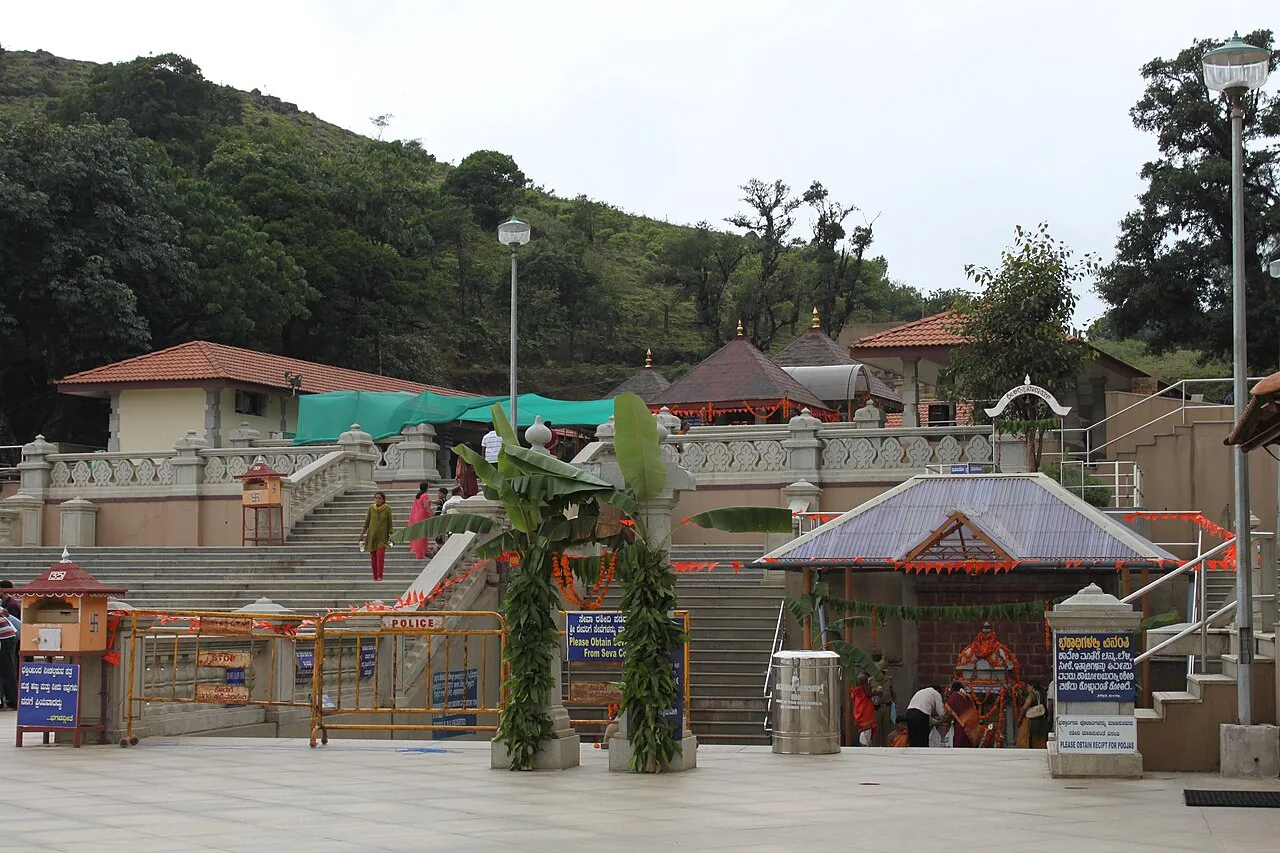
Talakaveri, also called Talacauvery, is a sacred site in Kodagu district, Karnataka. It stands in the Brahmagiri hills near Bhagamandala, at an elevation of 1,276 metres. The location is close to the Kerala boundary in Kasaragod district. Many Hindus identify it as the Kaveri’s beginning. However, a lasting surface stream does not flow from the spring to the main river except during monsoon rains. A tank, known locally as a kundike, marks the spot associated with the river’s birth on a hillside. A spring feeds the basin, which devotees regard as sacred and may bathe in on particular days. According to belief, the water passes below ground after leaving the tank and resurfaces farther away as the Kaveri. A small temple stands at the site, which draws pilgrims. The state government undertook extensive renovation of the temple, most recently in 2007. Kaveri Sankramana, also colloquially called changrandi, falls on Tula Masa’s first day in the Hindu almanac, usually in mid-October. Thousands of pilgrims from nearby areas gather to see water rise from the spring at a set time. The observance is also marked in pilgrimage towns along the Kaveri. Talakaveri is about 8 km from Bhagamandala, 36 km from Panathur in Kerala and 48 km from Madikeri, Kodagu district’s headquarters. Karnataka holds the boulder-strewn ruins of Hampi, the Hoysala temple jewels of Belur and Halebidu, the Chalukyan monuments of Badami, Aihole and Pattadakal, the palaces of Mysuru, the coffee hills of Coorg and Chikkamagaluru, the temple-and-beach town of Gokarna and the tiger forests of Bandipur and Nagarhole. Bengaluru and the plateau are mild most of the year; the coast is hot and humid; the Malnad hills (Coorg, Chikkamagaluru, Agumbe) get very heavy monsoon rain from June to September. October to February is pleasant almost everywhere. The usual best time to visit is October to February; June to September for monsoon greenery in the Western Ghats. Timings, fees and access arrangements must be confirmed locally. For official information, see Karnataka Tourism at https://karnatakatourism.org.
Why it matters
Talakaveri, also called Talacauvery, is in the Brahmagiri hills of Kodagu and is generally regarded in Hindu tradition as the source of the Kaveri River. A spring and sacred tank mark the place, making it an important pilgrimage destination for people from Kodagu and communities across the Kaveri basin. Its religious importance is especially visible during Kaveri Sankramana, when pilgrims gather to witness the spring’s seasonal rise. The site also holds regional meaning as a highland landmark associated with the river that sustains towns and farms downstream. It is not generally identified as a UNESCO World Heritage Site or an ASI-protected monument; confirm any current local protections with the authorities.
Talakaveri’s history is closely connected to the religious understanding of the Kaveri’s origins. The spring, tank and temple have drawn worshippers for generations, but a securely documented founding date or named original builder is not established in the available account. The site is traditionally treated as the river’s birthplace, even though there is no permanent visible stream running from the tank to the main rivercourse; the water is said to travel underground and emerge farther away. The temple and sacred tank are part of a living pilgrimage landscape rather than a preserved archaeological complex with a clearly documented sequence of building phases. The temple has undergone extensive renovation. Published accounts record the most recent major renovation as having been carried out by the Karnataka state government in 2007. Pilgrimage practices continue to shape the place, particularly during the annual observance of Kaveri Sankramana. The nearby settlement of Bhagamandala and the wider Kodagu region are also part of the cultural setting through which visitors encounter the river’s sacred geography.
Origin stories & folklore
According to local Hindu tradition, Kaveri is a sacred river goddess whose earthly course began at this spring. One widely told story links her to the sage Agastya: Kaveri was held in his water pot, or kamandalu, and the god Ganesha, taking the form of a crow, tipped it over. The water then flowed forth as the river. Versions of the story vary, and it is best understood as religious tradition rather than a historical account. At Talakaveri, devotees regard the tank as the place where the river first appears. The belief that its waters pass underground before emerging elsewhere helps explain why a continuous surface stream is not visible from the shrine.
Architecture & design
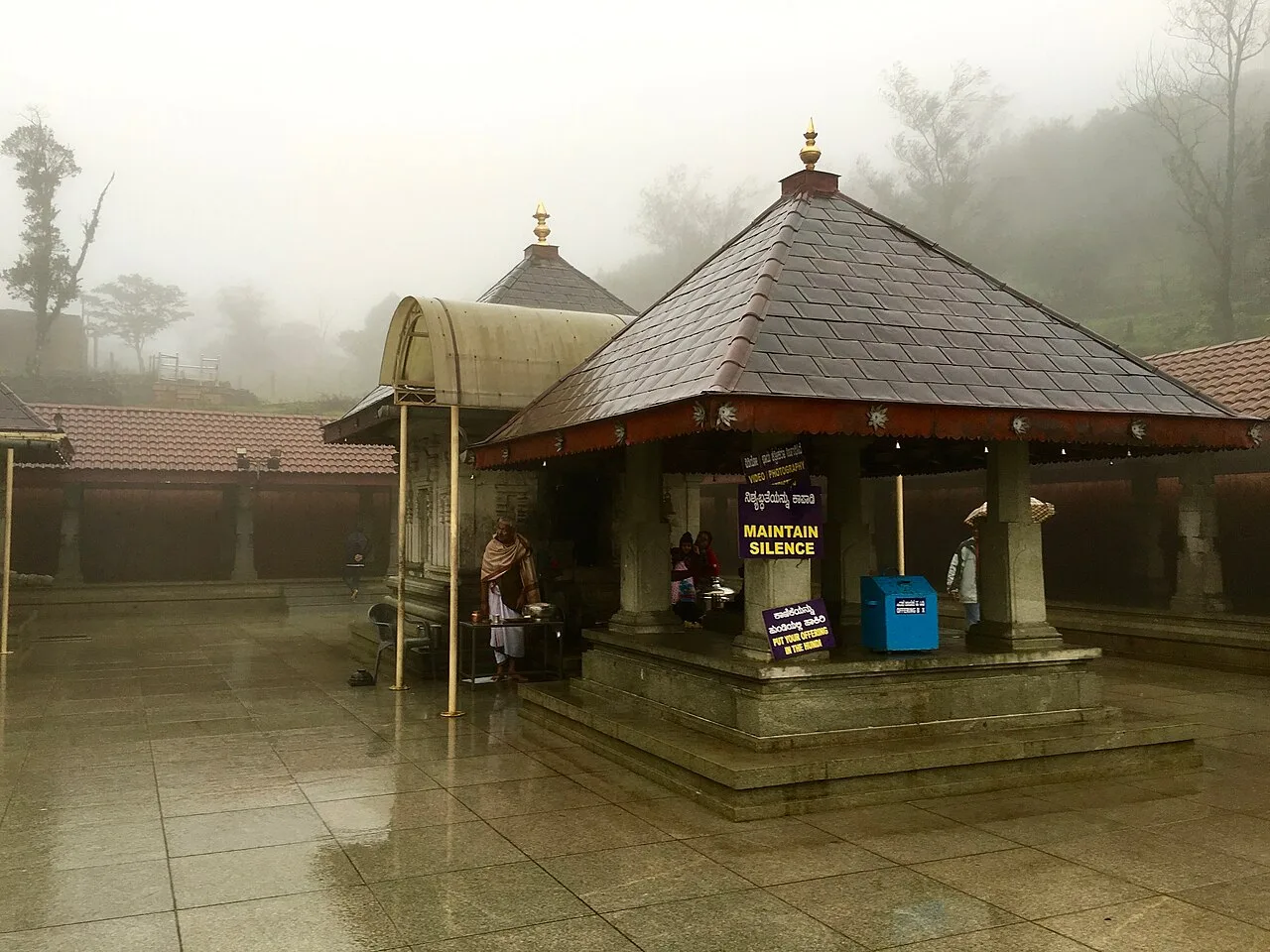
Talakaveri is a compact hillside temple setting rather than a large monumental complex. Its principal features are the shrine area and a constructed tank, or kundike, built around the spring traditionally identified as the Kaveri’s source. The tank provides a visible focus for worship and ritual bathing on significant occasions. The temple buildings have been extensively renovated, so the present appearance reflects modern repair as well as continuing religious use; published accounts record a state-government renovation in 2007. The setting on the Brahmagiri slope shapes the approach, with steps and changes in level around the temple precinct. The buildings are functional places of worship, and visitors should not assume that every surface or feature belongs to an ancient construction phase. The spring, tank, shrine and hill landscape together form the site’s distinctive layout.
Important objects & sculptures
The most significant feature to look for is the sacred kundike, the tank associated with the spring from which the Kaveri is traditionally said to originate. It is both a physical landmark and a focus of devotion, particularly during ritual observances. The temple’s shrines are associated with Kaveri and Agastheeswara, though access to individual sanctums and the details visible inside may vary. Visitors should not assume that photography or close viewing is permitted. The site is not known primarily as a museum collection or as a place with a widely documented set of inscriptions or monumental sculptures. Ask temple caretakers which areas are open, and avoid touching ritual objects or entering restricted spaces.
Religious significance
Talakaveri is a Hindu pilgrimage site centred on the sacred spring associated with the Kaveri River. Devotees honour Kaveri as a river goddess, and temple worship is also associated with Agastheeswara. The tank is considered holy, and bathing there is especially significant on auspicious occasions, subject to local arrangements and rules. Worshippers visit to pray, make offerings and seek blessings connected with the river and its life-giving waters. Kaveri Sankramana is the major annual observance: pilgrims gather for the moment when the spring is believed to rise. Practices and access to the sanctum are governed by temple customs. Visitors should follow instructions from temple staff and approach worshippers’ observances respectfully, whether or not they share the religious beliefs.
Visit Talakaveri (Kaveri Origin) with time to observe daily prayers and rituals respectfully. Follow the posted rules on footwear, photography, phones, head covering and dress — many major temples require modest clothing, prohibit leather items and phones inside, and have separate darshan queues; non-Hindus may not be admitted to some sanctums. Ask caretakers which areas are open to visitors, and beware of unofficial 'guides' or agents offering quick darshan for a fee. A comfortable itinerary is one main visit in the morning, a local meal at midday and a short nearby stop before an afternoon return. Use the district list on this site to find other places in Kodagu, but check the route and its condition before combining stops. If a festival is on — such as Mysuru Dasara, the Hampi Utsav, the Kambala buffalo races on the coast or the Karaga in Bengaluru — roads and stays can be busy, and the experience can be unforgettable. Leave no litter: many sites are protected by the communities around them.
Suggested itineraries
Half day: Travel from Bhagamandala; allow time to visit the temple and sacred tank; pause at the viewpoint if conditions permit; return to Bhagamandala for a meal (about 3–4 hours on site and in transit, depending on the starting point). Full day: Begin at Bhagamandala; continue to Talakaveri for worship and a relaxed visit; have a local meal; return toward Madikeri for a short town visit or another nearby stop (allow most of the day, with road conditions in mind). Gentler option: Spend time near the temple and tank, take seated breaks, and skip the uphill walk or any longer stair climb; arrange a vehicle close to the visitor area where permitted.
Talakaveri sits within Kodagu, a region with distinctive Kodava cultural traditions and a strong connection to its hills, rivers and agricultural landscape. Kannada and Kodava are heard locally, alongside other languages used by visitors and residents. On pilgrimage days, families and groups travel to the shrine, offer prayers and take part in customs centred on the sacred water. Dress is generally modest at religious spaces, and visitors should observe posted guidance rather than treating ceremonies as performances. The cultural atmosphere is shaped by both everyday temple worship and the larger annual gathering at Kaveri Sankramana. Local food and hospitality are part of a wider Kodagu visit, though facilities at the hilltop site itself may be limited.
Festivals & events
Kaveri Sankramana, also called Tula Sankramana, is Talakaveri’s principal annual observance. It falls at the beginning of the Hindu month of Tula, usually in October, and draws pilgrims who gather to witness the spring’s ritual rise. The occasion is also observed in other communities and pilgrimage towns along the Kaveri. Crowds, traffic and demand for accommodation in the wider area can increase substantially around the festival, so check local arrangements and plan extra time. Bhagamandala, nearby, is another important pilgrimage stop, especially for worshippers visiting the Kaveri’s sacred landscape. Festival practices and access arrangements can change from year to year.
Local food in Karnataka includes bisi bele bath, Mysore masala dosa, ragi mudde with sambar, Coorg's pandi (pork) curry, Mangalorean fish curry with neer dosa, Davangere benne dosa, Dharwad pedha and filter coffee everywhere. Ask what is fresh that day; many small eateries cook a limited daily menu. Vegetarian travellers eat very well across the state; the coast is the place for seafood, and Coorg has its own distinctive cuisine. Don't miss a tiffin breakfast of idli, vada and filter coffee. Remote sites may have no restaurant at all. Carry water and snacks, eat a proper breakfast before long drives, and ask your accommodation for a packed lunch if you are heading out early. If prasad is offered, accept it according to local custom. Choose busy, clean places, drink sealed or filtered water, and carry your packaging back with you.
Shopping & local experiences
Talakaveri is primarily a place of worship, so do not expect a large market or a dependable range of souvenirs at the temple. In Bhagamandala or Madikeri, visitors may find Kodagu coffee, spices, local food products and small devotional items. Availability and sourcing vary, so buy from established local shops and check product labels. Kodava crafts and cultural products may be easier to find in town than at the hilltop shrine. Keep purchases modest during crowded pilgrimage visits, and avoid leaving packaging or plastic at the site.
October to February; June to September for monsoon greenery in the Western Ghats
The nearest principal railway station by straight-line distance is Subrahmanya Road, roughly 37 km away. The nearest operating airport by straight-line distance is Mangaluru International Airport, roughly 91 km away. These figures are calculated from map coordinates — actual road distance is longer. Bengaluru is the hub for the south and centre; Hubballi and Belagavi serve the north; Mangaluru serves the coast; Mysuru is the gateway to Coorg, and Hosapete is the railhead for Hampi. KSRTC buses connect the district towns, and the coast is served by the Konkan Railway with frequent buses from Mangaluru and Udupi. For Hampi, take a train or bus to Hosapete and an autorickshaw for the last 13 km. When comparing train, bus and flight, count the complete door-to-door time: a flight saves the most time only if the onward road transfer is short, while an overnight train can save a hotel night. Book your return before you leave, because seats fill quickly on weekends, festivals and holidays. Current train numbers, timings, return services and fares are not listed here; check IRCTC and NTES for trains and the airline's own schedule for flights. No permit is needed to visit Karnataka. Tiger safaris in Bandipur, Nagarhole and the Kali Tiger Reserve must be booked in advance through the forest department or authorised lodges — weekend slots sell out. Treks in Kudremukh National Park and some Western Ghat peaks need forest entry permission. Hampi's monuments have ASI entry tickets; the core zone is best seen with a bicycle, moped or autorickshaw for the day.
Confirm onward and return timings on IRCTC / NTES, the state bus operator or your airline before travel. A dash means current timings or fares have not been verified.
Getting around
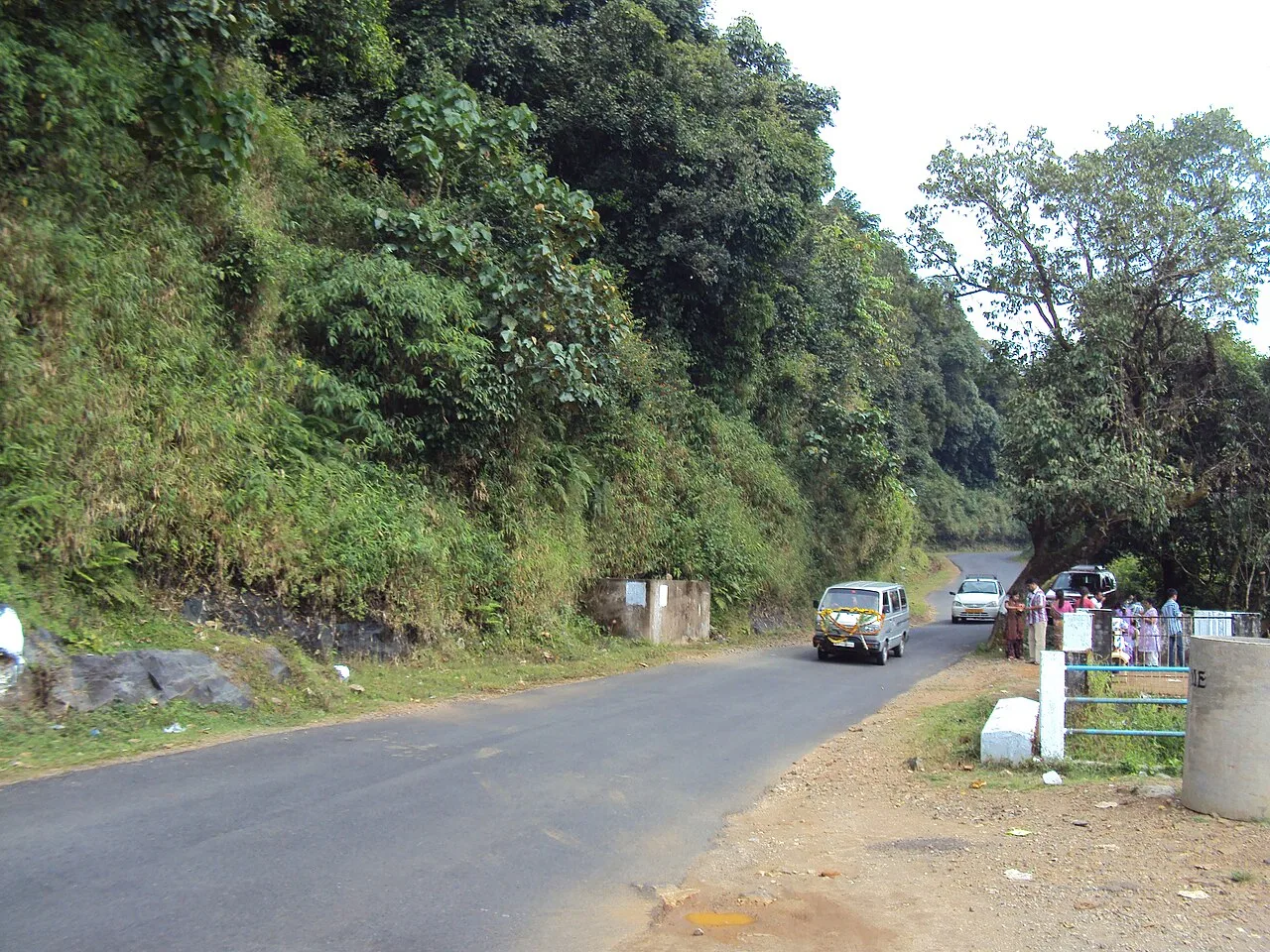
Most visitors reach Talakaveri by road from Bhagamandala or Madikeri, using a private vehicle, hired taxi or local transport where available. The approach is hilly and winding, so allow time and check road conditions, especially during heavy monsoon rain. Local buses serve district towns, but the final connection may require advance planning; confirm services locally rather than relying on a particular schedule. Parking is usually arranged near the visitor area, though spaces may be constrained on festival days. The temple precinct is explored on foot, with steps and uneven slopes. There are no boats or water transport at this hilltop site.
Hours, tickets & permissions
Entry arrangements may differ between the temple precinct, tank and any restricted worship areas. Temple rules can include footwear removal, modest clothing, limits on phones or cameras, and separate arrangements for worshippers and other visitors. Tickets, permits or camera fees should not be assumed; check locally whether any apply. Confirm current opening hours, access conditions and fees with the temple or managing authority before travelling, particularly during Kaveri Sankramana or other busy religious occasions. Follow notices and staff instructions on arrival.
Facilities
Basic visitor facilities such as toilets, drinking water points and parking are usually available in or near the pilgrimage area, but their condition and availability can vary. Food options may be limited at Talakaveri itself; Bhagamandala and Madikeri offer more choice. Do not assume that an ATM, medical service or formal guide desk is available at the site. Carry essential medicines and water, and check locally before relying on facilities. During festival periods, expect busier services and possible queues. Use bins where provided and take litter away if there is no suitable disposal point.
Accessibility
The temple is on a hillside, and movement around the precinct can involve steps, sloping paths and uneven ground. The approach road brings visitors close to the site, but this does not guarantee step-free access to every shrine, the tank or viewpoints. Wheelchair users and visitors with strollers may find parts of the complex difficult to navigate; check current access conditions with the temple before setting out. Older visitors or anyone with limited mobility should allow time for pauses and avoid attempting a longer uphill stair climb unless comfortable. Shade and seating may be limited, so plan rest breaks and carry water, particularly in warm weather.
No permit is needed to visit Karnataka. Tiger safaris in Bandipur, Nagarhole and the Kali Tiger Reserve must be booked in advance through the forest department or authorised lodges — weekend slots sell out. Treks in Kudremukh National Park and some Western Ghat peaks need forest entry permission. Hampi's monuments have ASI entry tickets; the core zone is best seen with a bicycle, moped or autorickshaw for the day. Carry a photo ID at all times and save the emergency number 112 and your accommodation's contact offline. Heat in summer and heavy rain in the monsoon are the main weather risks; carry water, avoid midday sun and allow extra time when roads flood. Watch your belongings in crowds and on public transport, and follow posted instructions.
Visitor rules
Follow posted temple instructions and the directions of staff. Remove footwear where required, dress modestly and keep a respectful distance from worshippers and ritual areas. Do not enter restricted spaces, touch offerings or bathe in the tank unless local rules permit it. Phone use, leather items and photography may be restricted in some areas; check signs before entering. Keep noise low during prayers, avoid littering and do not leave plastic behind. There may be separate arrangements for darshan or access to sanctums. Do not pay unofficial agents who promise special or faster entry.
Photography
The hill setting can be attractive in the softer light of morning or later afternoon, when weather and visibility allow. Views around the temple and tank may be photographed only where signs and staff permit; restrictions can apply inside shrines and during rituals. Ask before photographing worshippers, priests or close-up ceremonies, and never obstruct a prayer or queue for a picture. Do not use a drone without confirming applicable permissions and local restrictions. Monsoon cloud and rain can change visibility quickly, so protect equipment and take care on wet steps.
Choose a stay by the full journey to Talakaveri (Kaveri Origin), not just the district name. Bengaluru, Mysuru and Mangaluru offer the widest choice; Hampi has guesthouses on both banks of the Tungabhadra, Coorg has plantation homestays and resorts, and the forest lodges at Bandipur and Nagarhole book out early. In summer, check air-conditioning; in the monsoon, check that the property is accessible if roads flood. Book in advance for weekends, festivals and the peak season (October to February; June to September for monsoon greenery in the Western Ghats). Confirm the exact location, meals included, check-in time and cancellation terms in writing. Avoid sending money to unverified contacts or touts at stations. Carry some cash, as card and digital payments can be unreliable in remote areas.
Bhagamandala is the closest major pilgrimage stop and is commonly combined with Talakaveri; its temple complex is associated with the Kaveri and nearby sacred confluence. Madikeri, the district headquarters, offers town sights including Raja’s Seat and the Omkareshwara Temple. Abbey Falls is another well-known Kodagu attraction, though access and road conditions should be checked before combining it with a hill visit. These stops are spread across the district, so avoid planning too many in one day without checking the route. The drive through the Brahmagiri and Kodagu landscape is itself part of the experience.
For couples, Talakaveri (Kaveri Origin) rewards a slow pace: arrive early for soft light and fewer crowds, share a local meal and keep the evening free. A sunset over Hampi's boulders, a coffee-estate walk in Coorg or a quiet evening on a Gokarna beach makes the trip memorable. Public displays of affection can be frowned upon in conservative communities and at religious sites, so be discreet. Keep a buffer in your itinerary, because weather and road conditions can delay plans.
Q: How much time should I allow for Talakaveri? A: Allow a few hours for the temple, tank and nearby viewpoints, with additional time for travel from Bhagamandala or Madikeri. Q: When is the best season to visit? A: October to February is generally pleasant in Karnataka; the monsoon brings greenery but can mean heavy rain and difficult road conditions. Kaveri Sankramana is especially busy. Q: Is entry open to all visitors? A: The outer visitor areas may be accessible, but temple and sanctum rules can differ. Confirm current access arrangements with the managing authority. Q: Can children and elderly visitors visit? A: Yes, but the hillside setting, steps and uneven paths may be challenging. Take breaks and avoid longer climbs if needed. Q: Where should I stay nearby? A: Madikeri has a wider choice of accommodation than the hilltop site. Check availability well ahead of Kaveri Sankramana.
Be the first to share photos, stories, advice or a helpful contact for Talakaveri (Kaveri Origin).
Loading…