
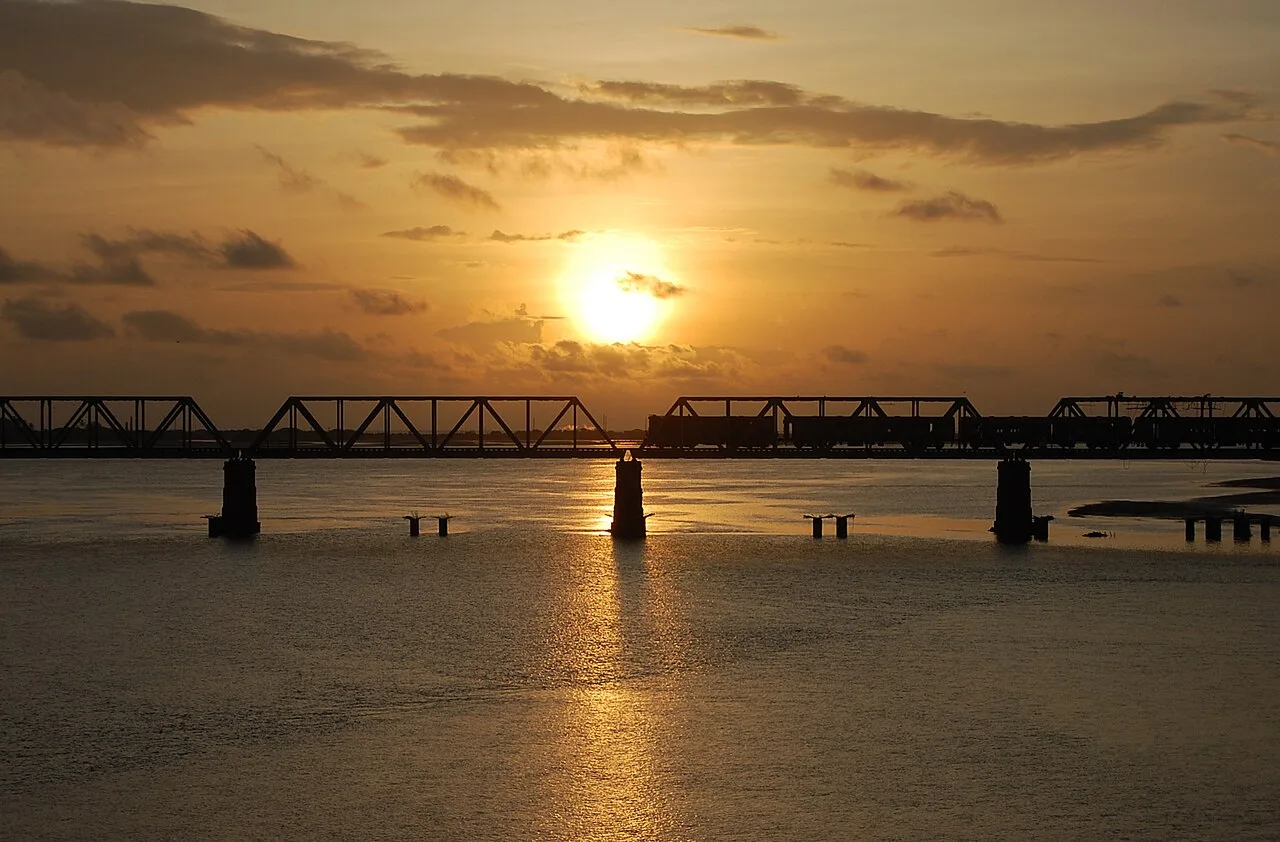
Ullal Beach
Ullal Beach lies beside the historic coastal city of Ullal in Karnataka. Visitors come for its shore and nearby temples, churches and sites linked with Queen Abbakka.
Key facts · verified by Ghumoopedia editors
- Type of place
- Natural attraction
- Best time to visit
- October to February; June to September for monsoon greenery in the Western Ghats
- Nearest railway station
- Mangaluru Central · about 5 km (straight line)
- Nearest airport
- Mangaluru International Airport · about 17 km (straight line)
- Verified
- 21 Nov 2026
Plan a trip from Ullal Beach — a day-by-day route through places nearby.
Ullal is a coastal city in Karnataka’s Dakshina Kannada district, on the Arabian Sea. Its municipal council and Mangaluru City Corporation form one continuous urban settlement, ranked fourth in the state after Bengaluru, Mysore and Hubli-Dharwad. A proposed Greater Mangalore arrangement would bring the Ullal municipality and some gram panchayats together with Mangaluru’s corporation. Counted among India’s oldest towns, Ullal came under Portuguese rule during the 15th century. Sites associated with its history and local life include Sri Cheerumba Bagavathi Temple, Someshwara Temple, Someshwar Beach and Summer Sands Beach Resort. Others are Queen Abbakka Chowta’s Fort at Ranipura, K Pandyarajah Ballal Institutes and college of nursing, St. Sebastian Church Permannur, the Fish Meal & Oil Plant and Queen Abbakka’s Jain temple at Melangadi. The town’s landmarks and coast draw visitors interested in its heritage and places of worship. Severe coastal erosion affected Ullal in the late 1990s and the early years of the new millennium. Ullal is Karnataka’s first city to be free of kerosene. It is also an important centre for trade in fish and fish manure. Fishing and beedi rolling are among the main occupations of local residents. Karnataka holds the boulder-strewn ruins of Hampi, the Hoysala temple jewels of Belur and Halebidu, the Chalukyan monuments of Badami, Aihole and Pattadakal, the palaces of Mysuru, the coffee hills of Coorg and Chikkamagaluru, the temple-and-beach town of Gokarna and the tiger forests of Bandipur and Nagarhole. Bengaluru and the plateau are mild most of the year; the coast is hot and humid; the Malnad hills (Coorg, Chikkamagaluru, Agumbe) get very heavy monsoon rain from June to September. October to February is pleasant almost everywhere. The usual best time to visit is October to February; June to September for monsoon greenery in the Western Ghats. Timings, fees and access arrangements must be confirmed locally. For official information, see Karnataka Tourism at https://karnatakatourism.org.
Why it matters
Ullal Beach is a stretch of Arabian Sea coastline in Ullal, a coastal town in Dakshina Kannada district, Karnataka. It is part of the wider Mangaluru urban area and is valued locally for its shoreline, sea views and connection to the town’s fishing and trading life. Ullal’s history is also associated with Queen Abbakka Chowta, who is remembered for resisting Portuguese expansion along the coast. Nearby temples and historic places make the area a useful stop for visitors exploring coastal heritage as well as the beach. The shoreline has faced serious erosion, particularly around the late 1990s and early 2000s, and coastal conditions can change. No UNESCO World Heritage or ASI-protected status for Ullal Beach itself is known; check locally for current access or conservation measures.
Ullal is an old coastal settlement in Dakshina Kannada, though its precise founding date is not firmly established. Its position beside the Arabian Sea and near the Netravati estuary helped make it a centre for fishing and coastal trade. In the medieval period, Ullal was associated with the Chowta rulers, a Tulu-speaking Jain dynasty whose territories included parts of the coast. Queen Abbakka Chowta, remembered in regional history for opposing Portuguese power, is closely linked with Ullal. Portuguese influence in the region expanded during the sixteenth century, a period of conflict and shifting coastal alliances. The town’s heritage is reflected in local religious sites, including temples and a Jain temple associated with Abbakka’s memory; nearby historic structures are also attributed to her in local accounts. Ullal later developed as a trading centre for fish and fish manure, while fishing and beedi rolling became important livelihoods. The town is now part of the continuous Mangaluru urban agglomeration. Its exposed shoreline has experienced substantial sea erosion, especially from the late 1990s into the early 2000s. Authorities have used measures such as sandbags to limit damage, although coastal protection and beach conditions remain matters to check locally.
Origin stories & folklore
According to local tradition, Queen Abbakka Chowta of Ullal was a courageous ruler who resisted Portuguese attempts to control the coast. Stories of her strategic skill and defiance remain part of regional memory, though details can vary between oral accounts and written histories. The nearby Someshwara Temple is dedicated to Shiva, worshipped here as Someshwara; local belief and temple tradition connect the deity with the surrounding coast and its rocky shore. Such accounts are part of the living religious landscape rather than a verified explanation for the beach’s formation. Visitors can learn more from local residents and temple sources, while being considerate around worship and avoiding assumptions about private or restricted practices.
Enjoy Ullal Beach early in the morning or at sunset, when the sand is cooler and the light is best. Swim only where lifeguards are posted — the Bay of Bengal and the Arabian Sea both have strong rip currents, and several famous city beaches (such as Marina) are unsafe for swimming. Agree boat, taxi and water-sports prices before you start, and never leave valuables unattended on the sand. A comfortable itinerary is one main visit in the morning, a local meal at midday and a short nearby stop before an afternoon return. Use the district list on this site to find other places in Dakshina Kannada, but check the route and its condition before combining stops. If a festival is on — such as Mysuru Dasara, the Hampi Utsav, the Kambala buffalo races on the coast or the Karaga in Bengaluru — roads and stays can be busy, and the experience can be unforgettable. Leave no litter: many sites are protected by the communities around them.
Suggested itineraries
Half day: Reach Ullal in the morning; spend 1–2 hours enjoying the shoreline and views; have a local meal; make a short visit to Someshwara Temple or another nearby stop before returning. Full day: Begin with Ullal Beach; allow time for a relaxed meal in town; visit Someshwara Temple and Someshwar Beach; continue to a suitable Mangaluru heritage or religious site, checking access and travel conditions; return before dark. Gentler option: Choose one accessible beach viewpoint, keep the walk short, rest in shade where available and arrange a vehicle to avoid combining multiple stops.
Ullal’s culture reflects the wider coastal mix of Dakshina Kannada. Tulu and Kannada are widely used, alongside languages such as Beary, Konkani and others spoken in the region. Fishing, seafood preparation and local markets shape everyday life, while religious institutions serve Hindu, Muslim, Jain and Christian communities. Yakshagana, a distinctive coastal theatre tradition combining music, dance and storytelling, is performed in the region, though not necessarily at the beach itself. Kambala buffalo races are another well-known coastal tradition, usually held at venues around the district. Visitors may encounter regional coastal clothing and food customs, but should dress considerately near places of worship and ask before photographing ceremonies or people.
Local communities
Ullal is home to a diverse coastal population, including people connected with fishing, fish trading and fish processing. Fishing and the trade in fish and fish manure have long been important to the town’s economy; beedi rolling has also been a traditional occupation. Residents include Tulu, Kannada, Beary, Konkani and other language communities, with varied religious and cultural backgrounds. The beach is both a visitor destination and part of a lived coastal environment, so seasonal work, weather and sea conditions matter to local livelihoods. Buy from local businesses where practical, respect working areas and ask before photographing fishers or their equipment.
Festivals & events
Ullal and nearby Mangaluru observe a range of religious festivals, including temple celebrations, Eid and Christmas; the particular events and schedules vary by community and year. Navaratri and the wider Dasara season in autumn can bring additional activity around the district. Kambala races are held at coastal venues during the cooler months, but are not necessarily staged at Ullal Beach. Festival crowds may affect roads, parking and accommodation, especially around major local events. Confirm current programmes with local organisers, and be respectful around processions, worship and community spaces.
Local food in Karnataka includes bisi bele bath, Mysore masala dosa, ragi mudde with sambar, Coorg's pandi (pork) curry, Mangalorean fish curry with neer dosa, Davangere benne dosa, Dharwad pedha and filter coffee everywhere. Ask what is fresh that day; many small eateries cook a limited daily menu. Vegetarian travellers eat very well across the state; the coast is the place for seafood, and Coorg has its own distinctive cuisine. Don't miss a tiffin breakfast of idli, vada and filter coffee. Remote sites may have no restaurant at all. Carry water and snacks, eat a proper breakfast before long drives, and ask your accommodation for a packed lunch if you are heading out early. Try a home-cooked or local thali meal when you can — it is often the best food on the route. Choose busy, clean places, drink sealed or filtered water, and carry your packaging back with you.
Shopping & local experiences
Look for fresh seafood and coastal meals in Ullal and the wider Mangaluru area, while respecting fishing work areas and local customs. Town markets may offer everyday produce, snacks and locally made goods; availability varies by day. Coastal Karnataka specialities such as fish preparations and regional sweets are worth exploring at established eateries. Beedi rolling is a local occupation, but visitors should not treat workers or workplaces as tourist displays. Ask before photographing vendors or their goods, buy only what you can carry responsibly and avoid collecting shells, plants or other natural material from the shore.
Ullal Beach faces the Arabian Sea, with an open sandy shoreline and a coastal landscape shaped by waves, tides and seasonal weather. The nearby estuary and waterways around Mangaluru add to the area’s varied coastal environment, although the beach itself is exposed and conditions can change quickly. Sea erosion has affected parts of the Ullal coast, and the visible width or stability of the shore may vary over time. Coastal vegetation and planted greenery occur in the wider area, alongside urban development. Gulls, shorebirds and other coastal birds may be seen, but sightings depend on season and conditions and should not be expected. Strong currents and rough surf can make swimming dangerous; follow local warnings and enter the water only where authorities confirm it is safe.
October to February; June to September for monsoon greenery in the Western Ghats
The nearest principal railway station by straight-line distance is Mangaluru Central, roughly 5 km away. The nearest operating airport by straight-line distance is Mangaluru International Airport, roughly 17 km away. These figures are calculated from map coordinates — actual road distance is longer. Bengaluru is the hub for the south and centre; Hubballi and Belagavi serve the north; Mangaluru serves the coast; Mysuru is the gateway to Coorg, and Hosapete is the railhead for Hampi. KSRTC buses connect the district towns, and the coast is served by the Konkan Railway with frequent buses from Mangaluru and Udupi. For Hampi, take a train or bus to Hosapete and an autorickshaw for the last 13 km. When comparing train, bus and flight, count the complete door-to-door time: a flight saves the most time only if the onward road transfer is short, while an overnight train can save a hotel night. Book your return before you leave, because seats fill quickly on weekends, festivals and holidays. Current train numbers, timings, return services and fares are not listed here; check IRCTC and NTES for trains and the airline's own schedule for flights. No permit is needed to visit Karnataka. Tiger safaris in Bandipur, Nagarhole and the Kali Tiger Reserve must be booked in advance through the forest department or authorised lodges — weekend slots sell out. Treks in Kudremukh National Park and some Western Ghat peaks need forest entry permission. Hampi's monuments have ASI entry tickets; the core zone is best seen with a bicycle, moped or autorickshaw for the day.
Confirm onward and return timings on IRCTC / NTES, the state bus operator or your airline before travel. A dash means current timings or fares have not been verified.
Getting around
On arrival in Ullal, local buses and auto-rickshaws can help with travel between the town, nearby neighbourhoods and the beach. Taxis or app-based rides may be available from the wider Mangaluru area, but availability can vary. Ask the driver to confirm the precise beach access point, as coastal roads and approaches may differ. Walking is possible around accessible parts of the shoreline, but sand, heat and changing beach conditions can make longer walks tiring. Parking may be limited or informal near popular access points; check signs and avoid blocking residents’ routes. Do not assume boats or water-sports services operate here.
Hours, tickets & permissions
The beach is an open public shoreline, but access may be affected by weather, erosion-control work, local restrictions or safety warnings. There may not be a formal ticket gate or staffed visitor entrance; do not assume that every adjoining facility or religious site has the same access rules. Photography rules, parking arrangements and any temporary closures can vary. No fixed entry fee or permit requirement is stated here. Confirm current access, safety notices, hours and any fees with local authorities or the relevant site managers before travelling.
Facilities
Facilities directly on the shoreline may be limited and can change with coastal conditions. Food stalls or small eateries may be found in the surrounding town, while more options are available in Mangaluru. Public toilets, drinking-water points, changing areas, lifeguards and formal visitor desks should not be assumed to be present; check locally before relying on them. Parking is usually informal or situated near access roads rather than directly on the sand. ATMs and pharmacies are more readily found in town. Carry drinking water, sun protection and any essentials you need, and take all rubbish away.
Accessibility
Access and terrain vary along the beach, and the final approach may involve uneven ground, sand or steps. Soft sand is difficult for wheelchairs, walkers and strollers, and there may be no continuous firm, step-free route to the water. The shoreline can change after erosion or rough weather, so check the approach on arrival. Shade may be limited on the open beach. Older visitors and people with limited mobility may prefer a short visit from a nearby viewpoint or access road, with a companion and transport close by. Avoid walking on unstable edges or over rocks, and do not enter the sea without current local safety guidance.
No permit is needed to visit Karnataka. Tiger safaris in Bandipur, Nagarhole and the Kali Tiger Reserve must be booked in advance through the forest department or authorised lodges — weekend slots sell out. Treks in Kudremukh National Park and some Western Ghat peaks need forest entry permission. Hampi's monuments have ASI entry tickets; the core zone is best seen with a bicycle, moped or autorickshaw for the day. Carry a photo ID at all times and save the emergency number 112 and your accommodation's contact offline. The sea is the main risk: obey lifeguard flags, never swim where boards warn of currents (many city beaches are no-swimming zones), and avoid the water during the monsoon and cyclone warnings. Stay on marked paths, keep away from cliff edges and fast water, and never approach wild animals.
Photography
Early morning and late afternoon often provide softer light for the shoreline, sea and coastal scenes. Choose stable ground and keep a safe distance from eroding edges, rocks and breaking waves. General landscape photography is usually appropriate in public areas, but rules may differ at temples or other managed sites. Ask permission before photographing residents, fishers, children or religious activities, and do not interrupt work or worship. Drone use may be restricted by aviation rules, local authorities or nearby sensitive sites; check current requirements and obtain permission where needed. Avoid leaving equipment unattended on the sand.
Choose a stay by the full journey to Ullal Beach, not just the district name. Bengaluru, Mysuru and Mangaluru offer the widest choice; Hampi has guesthouses on both banks of the Tungabhadra, Coorg has plantation homestays and resorts, and the forest lodges at Bandipur and Nagarhole book out early. In summer, check air-conditioning; in the monsoon, check that the property is accessible if roads flood. Book in advance for weekends, festivals and the peak season (October to February; June to September for monsoon greenery in the Western Ghats). Confirm the exact location, meals included, check-in time and cancellation terms in writing. Avoid sending money to unverified contacts or touts at stations. Carry some cash, as card and digital payments can be unreliable in remote areas.
Someshwar Beach and Someshwara Temple are nearby coastal stops associated with the Ullal area; check local access and conditions before visiting. Ullal also has religious and historic places connected with Queen Abbakka Chowta, including the Jain temple at Melangadi and a fort site locally associated with her at Ranipura; access and interpretation may vary. In Mangaluru, visitors can consider Mangaladevi Temple, Sultan Battery and St Aloysius Chapel. These stops are in the wider urban area rather than all being within walking distance of Ullal Beach. Check routes and opening arrangements locally before combining visits.
For couples, Ullal Beach rewards a slow pace: arrive early for soft light and fewer crowds, share a local meal and keep the evening free. A sunset over Hampi's boulders, a coffee-estate walk in Coorg or a quiet evening on a Gokarna beach makes the trip memorable. Public displays of affection can be frowned upon in conservative communities and at religious sites, so be discreet. Keep a buffer in your itinerary, because weather and road conditions can delay plans.
Q: How much time should I allow for Ullal Beach? A: A short visit can fit into a half-day plan; allow longer if you are combining it with nearby temples or Mangaluru sights. Q: When is a good season to visit? A: October to February is generally more comfortable on the Karnataka coast. Monsoon weather can bring heavy rain and rough seas; check conditions before travelling. Q: Is there an entry ticket? A: The beach is an open shoreline and a formal ticket may not apply, but access rules and any charges at adjoining sites can vary. Confirm locally. Q: Is the beach suitable for children and elderly visitors? A: It can be enjoyable with supervision, but surf and currents may be dangerous and soft sand can be tiring. Choose a safe viewpoint and follow local warnings. Q: Where can I stay nearby? A: Ullal and the wider Mangaluru area have accommodation options. Check current availability and choose based on your transport plans and preferred facilities.
Be the first to share photos, stories, advice or a helpful contact for Ullal Beach.
Loading…