
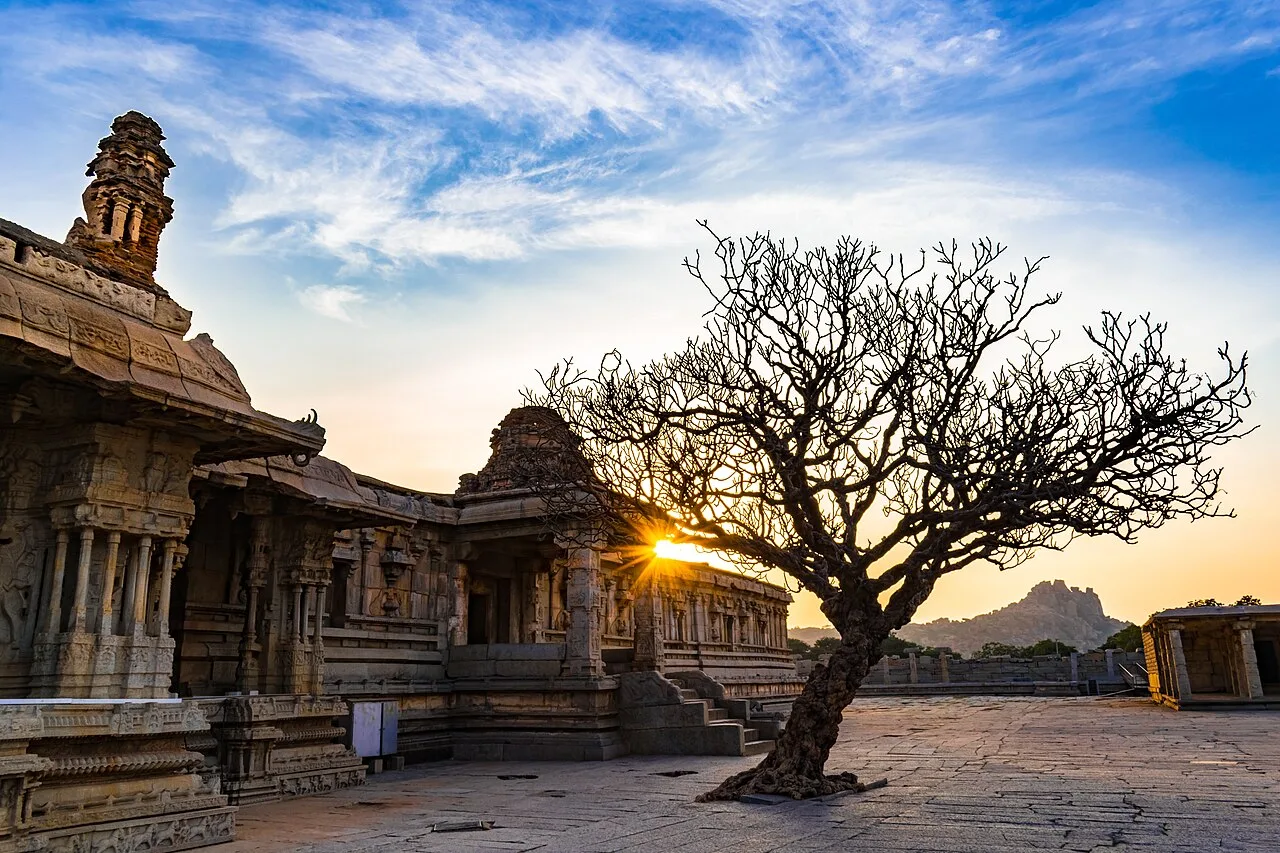
Vijaya Vittala Temple
Vijaya Vittala Temple is a sacred place in Karnataka’s Vijayanagara district. Visitors come to see it as a temple and recognise its religious significance.
Key facts · verified by Ghumoopedia editors
- Type of place
- Temple / pilgrimage site
- Best time to visit
- October to February; June to September for monsoon greenery in the Western Ghats
- Verified
- 21 Nov 2026
In Karnataka’s Vijayanagara district stands Vijaya Vittala Temple, a place identified as both a temple and a sacred site. Its religious character is central to how the place is described. Visitors interested in sacred places may come to see the temple. Its setting within the district and state identifies where it is located, while its designation explains its place among religious sites. The name refers to a temple in Vijayanagara district, Karnataka. It is regarded as a place of religious significance, and people visit it in that capacity. Karnataka holds the boulder-strewn ruins of Hampi, the Hoysala temple jewels of Belur and Halebidu, the Chalukyan monuments of Badami, Aihole and Pattadakal, the palaces of Mysuru, the coffee hills of Coorg and Chikkamagaluru, the temple-and-beach town of Gokarna and the tiger forests of Bandipur and Nagarhole. Bengaluru and the plateau are mild most of the year; the coast is hot and humid; the Malnad hills (Coorg, Chikkamagaluru, Agumbe) get very heavy monsoon rain from June to September. October to February is pleasant almost everywhere. The usual best time to visit is October to February; June to September for monsoon greenery in the Western Ghats. For official information, see Karnataka Tourism at https://karnatakatourism.org.
Why it matters
Vijaya Vittala Temple is one of the best-known monuments in Hampi, the former capital of the Vijayanagara Empire. Its elaborate stone architecture and sculptural work make it an important place for understanding the artistic and political culture of the empire. UNESCO includes the temple within the Group of Monuments at Hampi, inscribed on the World Heritage List in 1986. The Archaeological Survey of India (ASI) protects monuments in the Hampi heritage area; visitors should check current site arrangements with the managing authority. Although its name and history connect it with worship of Vishnu, the temple is principally visited today as a historic monument, and regular worship should not be assumed.
The temple belongs to the Vijayanagara period, when Hampi served as the capital of a powerful South Indian kingdom. Its construction and enlargement are generally associated with the fifteenth and sixteenth centuries. Accounts of the complex connect its development with successive Vijayanagara rulers; work is also associated with the reign of Krishnadevaraya in the early sixteenth century. The principal dedication was to Vittala, a form of Vishnu especially familiar in devotional traditions of the Deccan. The temple's scale and ornament reflect the resources and ambitions of the royal capital, as well as the work of skilled artisans and builders. Hampi was sacked after the Vijayanagara defeat at the Battle of Talikota in 1565, and the capital was subsequently abandoned as a political centre. The monuments, including the Vittala complex, fell into ruin and were exposed to weathering, vegetation and human damage over centuries. Archaeological recording, conservation and visitor management have since been undertaken by public heritage authorities, particularly the ASI. The complex is now part of the UNESCO-listed Group of Monuments at Hampi. Its surviving structures are historic remains, and conservation rules help protect fragile stonework.
Origin stories & folklore
Local and visitor lore associates the temple with Vittala, a form of Vishnu, and the stone chariot in the courtyard with Garuda, Vishnu's divine vehicle. A popular story says the deity found the grand temple unsuitable and returned to his celestial home; this is a devotional tale, not a verified account of the building's history. Stories about the carved pillars producing musical notes have also become part of the temple's reputation. The pillars are admired for their form and acoustic associations, but visitors should not strike or touch them: doing so risks damage and is not an appropriate way to test the story.
Architecture & design
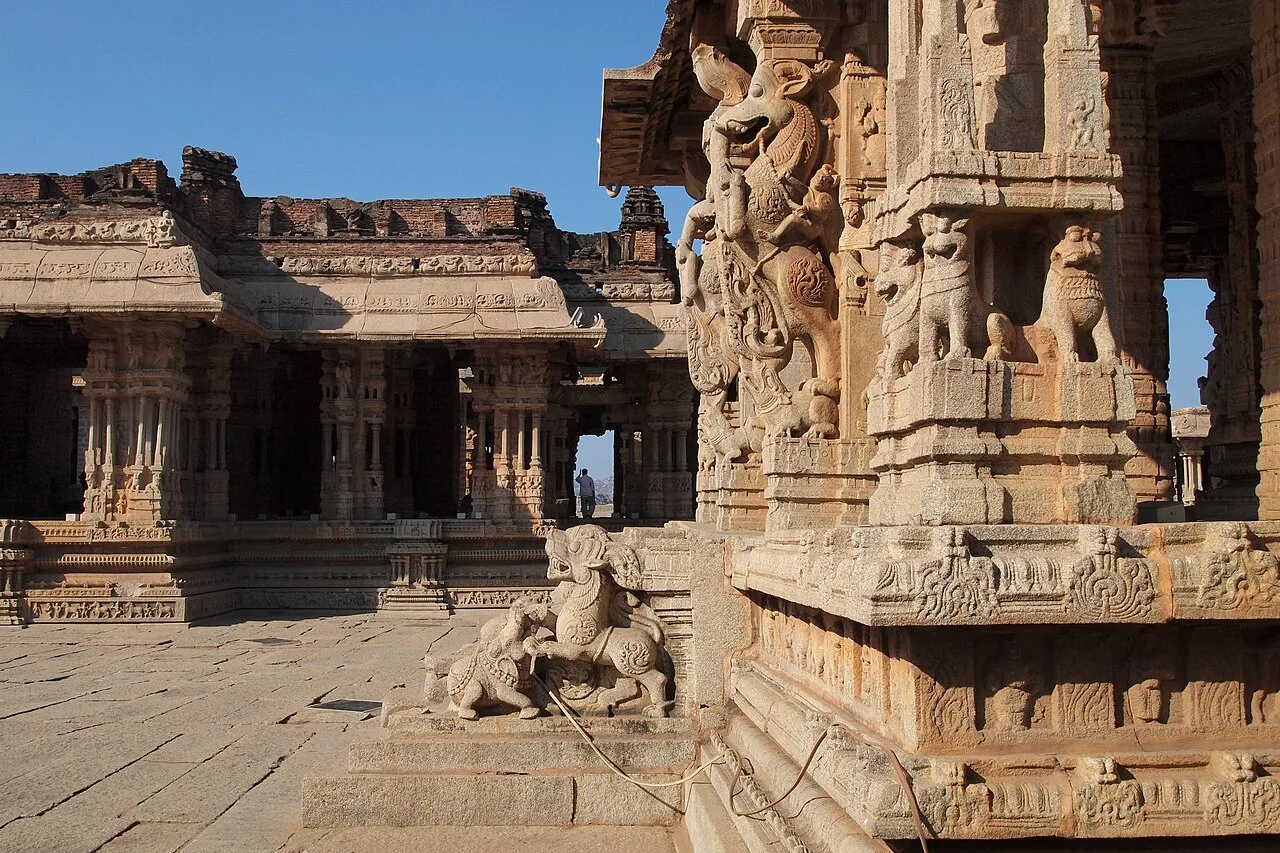
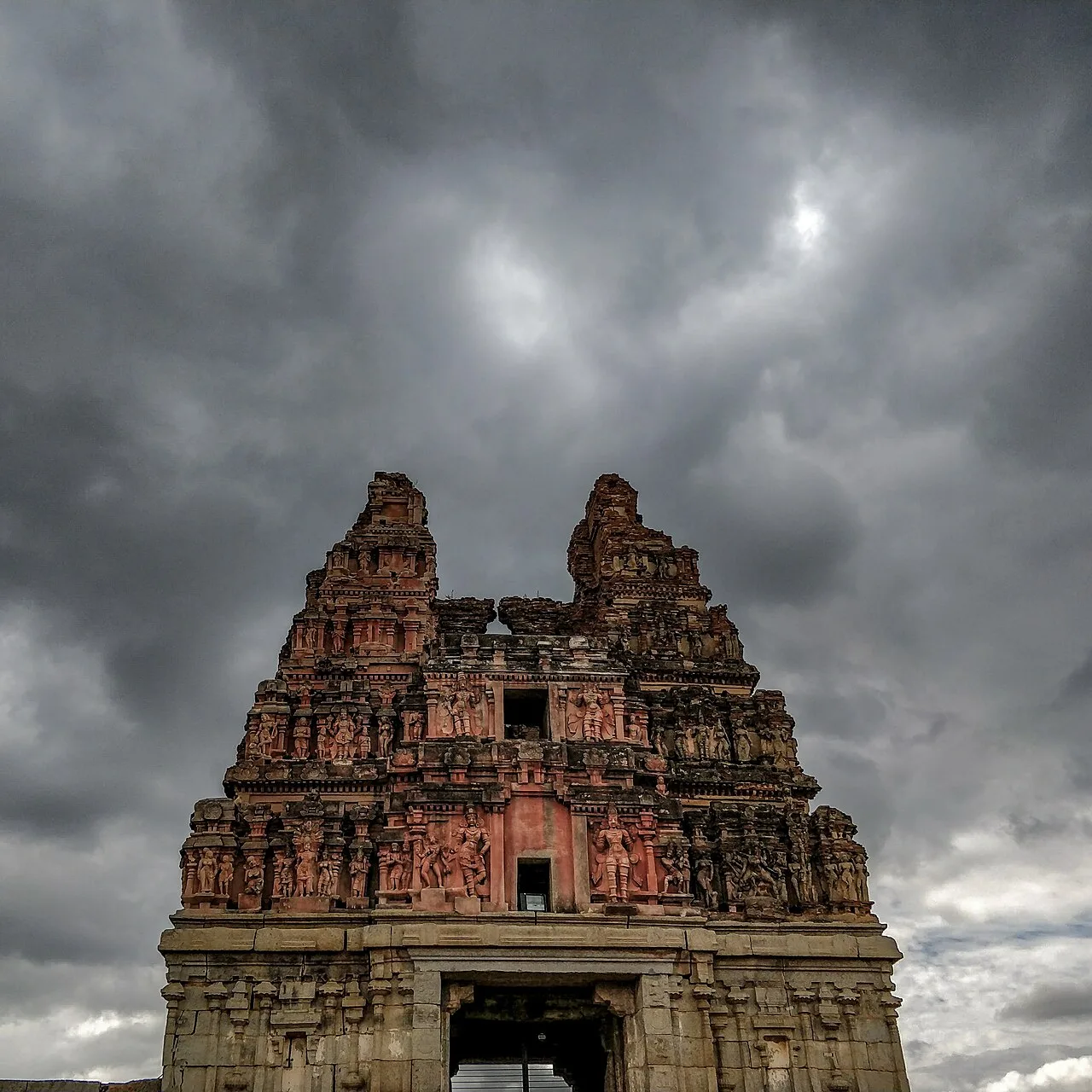
The complex is a major example of Vijayanagara temple architecture, built largely of locally available granite. Its spacious, walled precinct contains a main shrine and several pillared halls and subsidiary structures. The maha mandapa, or great hall, is notable for rows of sculpted pillars and richly carved supports. Other halls and platforms were associated with ceremonial and ritual use. In the courtyard stands the celebrated stone chariot, a shrine-shaped structure traditionally associated with Garuda. Its wheels and carved details give the appearance of a vehicle, though it is a fixed stone monument. Carved pillars, yali figures, ornamental bands and narrative reliefs combine structural function with decoration. The layout guides movement from the outer precinct towards sacred spaces, as is common in South Indian temple design. Much of the complex is now in a ruined or conserved state, so visitors should follow barriers and marked routes rather than climb on the masonry.
Important objects & sculptures
Look for the stone chariot in the courtyard, whose carved wheels and shrine-like body have made it a familiar emblem of Hampi. In the great hall, notice the carved pillars, including figures of animals, guardians and yali-like mythical creatures. Their shapes and workmanship are more important to appreciate than to test by tapping. The complex also has carved bases, ornamental bands, relief panels and remnants of gateways and subsidiary shrines. These details offer clues to the skill and visual vocabulary of Vijayanagara artisans. Some surfaces are worn or damaged, and access to particular features may be restricted for conservation. Avoid touching carvings or crossing protective barriers.
Religious significance
The temple was dedicated to Vittala, a form of Vishnu, and forms part of the sacred landscape of historic Hampi. Its halls and shrines were designed for worship and ceremonial use, but the complex is now chiefly managed and visited as an archaeological monument. Visitors should not assume that daily prayers or public rituals take place here. Those seeking active worship can ask locally about functioning temples in Hampi, including the Virupaksha Temple. Religious traditions and access practices can differ between sites. Be respectful of worshippers wherever rituals are in progress, dress modestly, and follow posted instructions about footwear, photography and entry into sanctums. Do not enter restricted or unstable areas.
Visit Vijaya Vittala Temple with time to observe daily prayers and rituals respectfully. Follow the posted rules on footwear, photography, phones, head covering and dress — many major temples require modest clothing, prohibit leather items and phones inside, and have separate darshan queues; non-Hindus may not be admitted to some sanctums. Ask caretakers which areas are open to visitors, and beware of unofficial 'guides' or agents offering quick darshan for a fee. A comfortable itinerary is one main visit in the morning, a local meal at midday and a short nearby stop before an afternoon return. Use the district list on this site to find other places in Vijayanagara, but check the route and its condition before combining stops. If a festival is on — such as Mysuru Dasara, the Hampi Utsav, the Kambala buffalo races on the coast or the Karaga in Bengaluru — roads and stays can be busy, and the experience can be unforgettable. Leave no litter: many sites are protected by the communities around them.
Suggested itineraries
Half day: Arrive in the morning, explore the temple complex and stone chariot at an unhurried pace, take a rest and visit one nearby Hampi monument if access and transport allow. Full day: Begin at Vijaya Vittala Temple, continue to other Hampi monuments such as the Virupaksha Temple and Hampi Bazaar, pause for a meal, then visit another accessible site before returning. Gentler option: Focus on the main courtyard and a short, level section of the approach, take seated breaks and arrange a nearby vehicle drop-off where permitted.
The temple is part of Hampi's living heritage, where local communities, pilgrims, heritage workers and visitors share a landscape of monuments and active places of worship. Kannada is widely spoken in the region; visitors may also encounter Telugu and other South Indian languages. The carved halls preserve a record of historical artistry, while present-day cultural events in Hampi bring music, dance and performance to the wider heritage area. Customs vary between archaeological monuments and functioning temples, so follow signs and ask respectfully before photographing people or ceremonies. The temple's association with music is often discussed, but visitors must not strike its pillars or treat the protected structure as an instrument.
Festivals & events
Hampi Utsav, also called Vijaya Utsav, is a cultural festival associated with Hampi and may feature music, dance and other performances at venues across the heritage area. Its schedule and programme can vary, so check locally before planning around it. The Virupaksha Temple in Hampi has its own religious calendar, including a chariot festival generally held in the spring; dates and access arrangements change from year to year. Festival periods can bring larger crowds, busy roads and limited accommodation. Vijaya Vittala Temple itself should not be assumed to host a regular public festival or daily ritual.
Local food in Karnataka includes bisi bele bath, Mysore masala dosa, ragi mudde with sambar, Coorg's pandi (pork) curry, Mangalorean fish curry with neer dosa, Davangere benne dosa, Dharwad pedha and filter coffee everywhere. Ask what is fresh that day; many small eateries cook a limited daily menu. Vegetarian travellers eat very well across the state; the coast is the place for seafood, and Coorg has its own distinctive cuisine. Don't miss a tiffin breakfast of idli, vada and filter coffee. Remote sites may have no restaurant at all. Carry water and snacks, eat a proper breakfast before long drives, and ask your accommodation for a packed lunch if you are heading out early. If prasad is offered, accept it according to local custom. Choose busy, clean places, drink sealed or filtered water, and carry your packaging back with you.
Shopping & local experiences
Hampi village and nearby visitor areas have small shops selling snacks, drinks, locally made souvenirs and craft items; selection and opening can vary. Look for responsibly made stone, textile or other regional handicrafts, but do not buy carved pieces or artefacts that may have been removed from heritage sites. Hosapete offers a wider choice of everyday goods and markets. Local meals and regional snacks are part of the experience, but check ingredients and food hygiene according to your needs. Carry reusable water containers where practical and take packaging away from the monuments.
October to February; June to September for monsoon greenery in the Western Ghats
These figures are calculated from map coordinates — actual road distance is longer. Bengaluru is the hub for the south and centre; Hubballi and Belagavi serve the north; Mangaluru serves the coast; Mysuru is the gateway to Coorg, and Hosapete is the railhead for Hampi. KSRTC buses connect the district towns, and the coast is served by the Konkan Railway with frequent buses from Mangaluru and Udupi. For Hampi, take a train or bus to Hosapete and an autorickshaw for the last 13 km. When comparing train, bus and flight, count the complete door-to-door time: a flight saves the most time only if the onward road transfer is short, while an overnight train can save a hotel night. Book your return before you leave, because seats fill quickly on weekends, festivals and holidays. Current train numbers, timings, return services and fares are not listed here; check IRCTC and NTES for trains and the airline's own schedule for flights. No permit is needed to visit Karnataka. Tiger safaris in Bandipur, Nagarhole and the Kali Tiger Reserve must be booked in advance through the forest department or authorised lodges — weekend slots sell out. Treks in Kudremukh National Park and some Western Ghat peaks need forest entry permission. Hampi's monuments have ASI entry tickets; the core zone is best seen with a bicycle, moped or autorickshaw for the day.
Getting around
Visitors usually approach the temple from Hampi village or Hosapete, using a local autorickshaw, taxi or other arranged vehicle. Some parts of the heritage area may have vehicle restrictions, so ask where a driver can drop you and whether a walk is required for the final approach. Walking between monuments is possible but can involve uneven paths and exposed stretches. Local buses serve the wider area, though they may not take visitors directly to every monument. Confirm parking and vehicle access locally, and allow extra time for transfers between sites.
Hours, tickets & permissions
Entry arrangements for the monument may involve admission rules, restricted areas and separate conditions for photography or equipment. Requirements can change, and access may be affected by conservation work or local management decisions. The temple is part of the protected Hampi heritage area, where ASI rules and site instructions apply. It is primarily an archaeological visit, not a guaranteed active darshan experience. Confirm current opening arrangements, entry requirements and any fees with the ASI or Karnataka Tourism before travelling; do not rely on old online listings.
Facilities
Facilities directly at the monument may be limited. Toilets, drinking water, snacks and local food are more likely to be found around Hampi village or other visitor areas, but availability should be checked locally. Parking and vehicle drop-off arrangements can vary with access controls. Guides may be available in the Hampi area; agree on the scope of a guided visit and use authorised services where possible. ATMs and a wider choice of shops or services are more readily found in Hosapete than at individual monuments. Carry water and take litter away with you.
Accessibility
The complex and its approach include uneven stone surfaces, exposed ground and potentially long walks between monuments. Steps, raised platforms and thresholds may make some areas difficult to enter. Shade can be limited, especially in open courtyards, so plan for heat and rest breaks. Wheelchair and stroller access should not be assumed, and there may be no step-free route to every feature. Older visitors or anyone with limited mobility may prefer a shorter visit, a locally arranged drop-off where permitted and a companion for uneven sections. Check current access conditions before setting out.
No permit is needed to visit Karnataka. Tiger safaris in Bandipur, Nagarhole and the Kali Tiger Reserve must be booked in advance through the forest department or authorised lodges — weekend slots sell out. Treks in Kudremukh National Park and some Western Ghat peaks need forest entry permission. Hampi's monuments have ASI entry tickets; the core zone is best seen with a bicycle, moped or autorickshaw for the day. Carry a photo ID at all times and save the emergency number 112 and your accommodation's contact offline. Heat in summer and heavy rain in the monsoon are the main weather risks; carry water, avoid midday sun and allow extra time when roads flood. Watch your belongings in crowds and on public transport, and follow posted instructions.
Visitor rules
Follow signs, barriers and instructions from site staff, and keep to visitor routes. Wear modest, comfortable clothing and suitable footwear for rough paths. Do not climb on, scratch, touch or remove pieces from the stonework, and never strike the pillars. Respect any restrictions on footwear, phones, photography or access to sacred and protected areas. Avoid littering and limit single-use plastic. At nearby active temples, follow their distinct rules for dress, footwear, offerings and entry, and behave quietly during worship.
Photography
The stone chariot and pillared halls are popular subjects; soft morning or late-afternoon light can bring out surface details and reduce harsh shadows. Photography rules may differ across the heritage area and can change, so check signs and ask staff before using professional equipment. Do not cross barriers or climb for a viewpoint. Drone use may be restricted or require permission; do not fly one without checking applicable rules. Ask before photographing worshippers, workers or ceremonies, and avoid flash or disruptive behaviour where worship is taking place.
Choose a stay by the full journey to Vijaya Vittala Temple, not just the district name. Bengaluru, Mysuru and Mangaluru offer the widest choice; Hampi has guesthouses on both banks of the Tungabhadra, Coorg has plantation homestays and resorts, and the forest lodges at Bandipur and Nagarhole book out early. In summer, check air-conditioning; in the monsoon, check that the property is accessible if roads flood. Book in advance for weekends, festivals and the peak season (October to February; June to September for monsoon greenery in the Western Ghats). Confirm the exact location, meals included, check-in time and cancellation terms in writing. Avoid sending money to unverified contacts or touts at stations. Carry some cash, as card and digital payments can be unreliable in remote areas.
Other notable places in the Hampi heritage area include the Virupaksha Temple and Hampi Bazaar, the Achyutaraya Temple, the Royal Enclosure, the Lotus Mahal and the Elephant Stables. These sites have different access conditions and may require additional walking or transport, so check routes before combining them. Hosapete is the main nearby town for onward transport, meals and a broader range of services. The monuments are spread across a large landscape; allow time for transfers and avoid planning too many stops in the heat.
For couples, Vijaya Vittala Temple rewards a slow pace: arrive early for soft light and fewer crowds, share a local meal and keep the evening free. A sunset over Hampi's boulders, a coffee-estate walk in Coorg or a quiet evening on a Gokarna beach makes the trip memorable. Public displays of affection can be frowned upon in conservative communities and at religious sites, so be discreet. Keep a buffer in your itinerary, because weather and road conditions can delay plans.
Q: How much time should I allow for a visit? A: Allow a few hours to see the complex at a relaxed pace; add time for walking and transfers to other Hampi monuments. Q: When is a comfortable season to visit? A: October to February is generally pleasant in Karnataka. Hampi can be hot, so carry water and check local weather. Q: Is this an active temple with guaranteed darshan? A: It is chiefly visited as a protected historic monument. Do not assume regular worship or access to a sanctum; confirm locally. Q: Is the site suitable for children and older visitors? A: Families can visit, but paths are uneven and shade may be limited. Plan breaks and consider a shorter route for anyone with limited mobility. Q: Where can I stay nearby? A: Visitors commonly look for accommodation around Hampi or in Hosapete. Check current availability and transport arrangements before booking.
Be the first to share photos, stories, advice or a helpful contact for Vijaya Vittala Temple.
Loading…