
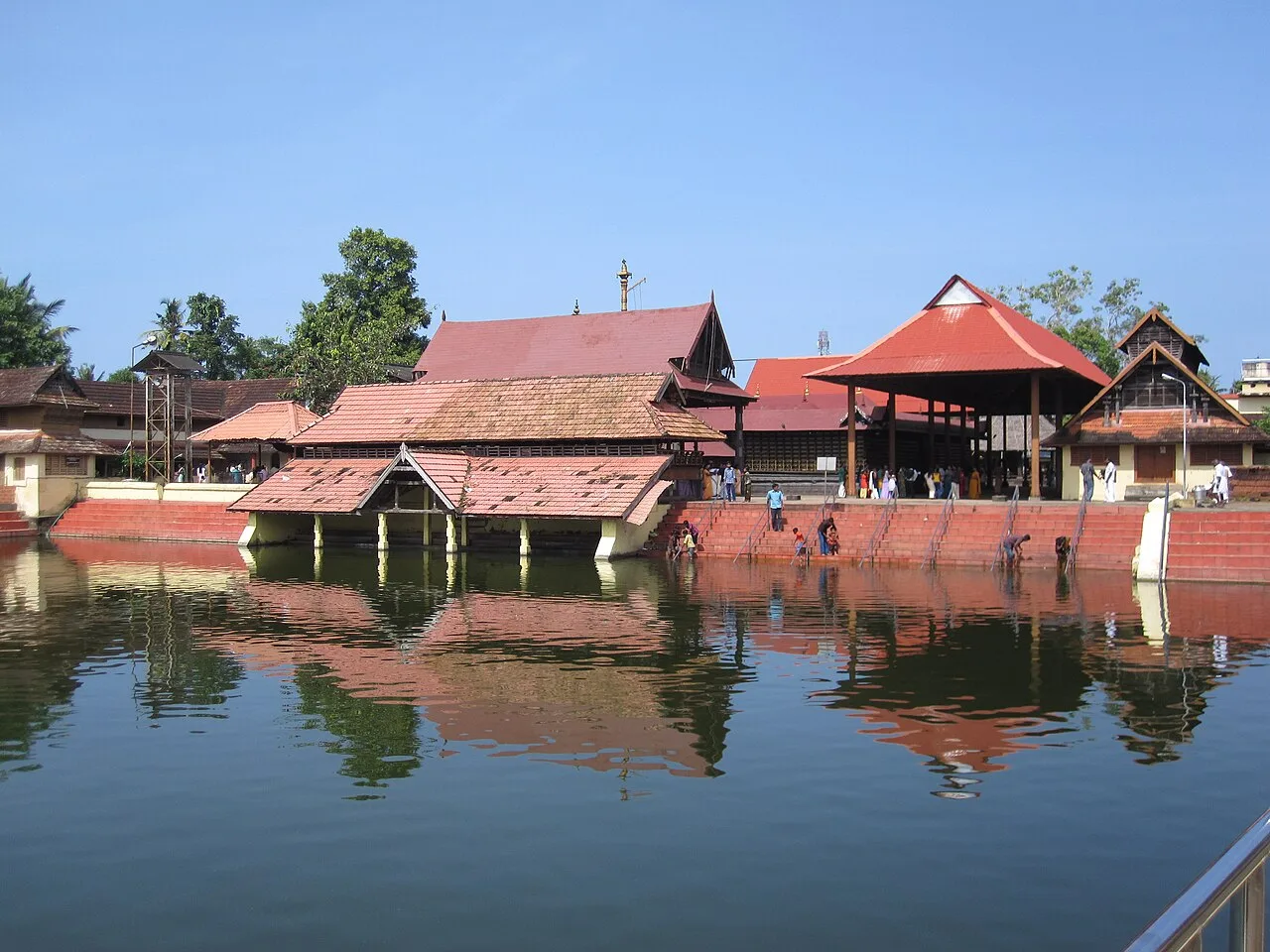
Ambalappuzha Sree Krishna Swamy Temple
A Krishna shrine in Ambalappuzha, Kerala, the temple is visited for its Vaishnavite associations, its Parthasarthi-style image and the customary payasam offering.
Key facts · verified by Ghumoopedia editors
- Type of place
- Temple / pilgrimage site
- Best time to visit
- September to March; June to August for monsoon Ayurveda and green landscapes
- Nearest railway station
- Alappuzha · about 12 km (straight line)
- Nearest airport
- Cochin International Airport · about 86 km (straight line)
- Verified
- 21 Nov 2026
Plan a trip from Ambalappuzha Sree Krishna Swamy Temple — a day-by-day route through places nearby.
Situated in Kerala’s Alappuzha district, the Hindu shrine at Ambalappuzha is dedicated to Krishna. Tradition dates its construction to the 15th century CE, crediting Chembakasserry Pooradam Thirunal-Devanarayanan Thampuran, ruler of the region. It is regarded as one of Travancore’s seven greatest temples and belongs to the Vaishnavite tradition’s group of 108 Abhimana Kshethram. The temple therefore features in both accounts of Travancore’s shrines and Vaishnavite religious tradition. The image represents Vishnu in the Parthasarthi aspect, with a whip in the deity’s right hand and a conch in the left. In 1789, during Tipu Sultan’s raids, the Krishna idol from Guruvayoor Temple was brought to Ambalappuzha for safekeeping. It remained there for three years. A sweet pudding of rice and milk, called payasam, is served at the temple. Belief holds that Guruvayoorappan visits each day to receive this offering. Kerala packs a lot into a narrow strip: the backwaters and houseboats of Alappuzha and Kumarakom, the tea hills of Munnar and the spice forests of Thekkady, the beaches of Kovalam, Varkala and Bekal, the colonial and Jewish heritage of Fort Kochi, and living art forms — Kathakali, Theyyam, Mohiniyattam and temple festivals with caparisoned elephants. Kerala is warm and humid at sea level all year. The southwest monsoon from June to September brings very heavy rain, and the northeast monsoon adds showers in October and November; the hill stations of Munnar, Wayanad and Vagamon are cool year-round and cold on winter nights. The usual best time to visit is September to March; June to August for monsoon Ayurveda and green landscapes. Timings, fees and access arrangements must be confirmed locally. For official information, see Kerala Tourism at https://www.keralatourism.org.
Why it matters
Ambalappuzha Sree Krishna Swamy Temple is an important Krishna shrine in Ambalappuzha, Alappuzha district, and a place of worship for local communities and pilgrims from elsewhere in Kerala. Temple tradition identifies it with the Vaishnava devotional tradition and counts it among the 108 Abhimana Kshethram; this is a religious classification, not a UNESCO or national heritage designation. Its Parthasarthi-form image of Krishna and the daily offering of payasam are central to its identity. The temple’s history, devotional practices and place in Kerala’s temple culture make it a meaningful stop for visitors interested in living Hindu traditions.
The temple is traditionally dated to the 15th century CE and is associated with the local ruler Chembakasserry Pooradam Thirunal-Devanarayanan Thampuran, who is credited with its construction. Ambalappuzha was then part of the Chembakassery kingdom, in the region later incorporated into Travancore. The shrine developed as an important centre of Krishna worship and is remembered in Vaishnava tradition as one of the 108 Abhimana Kshethram. A notable episode in its history is associated with the 1789 raids of Tipu Sultan: according to the temple’s historical account, the Krishna idol from Guruvayoor was brought here for safekeeping and remained for three years before being returned. The temple’s payasam offering has also become a lasting part of its public identity and devotional life. Like other active temples, the complex has been maintained and adapted over time for worship and visitors. Detailed dates for later building work or restoration should be checked with the temple authorities; this account does not assign unverified dates or name specific restoration campaigns.
Origin stories & folklore
According to local tradition, the temple’s daily rice-and-milk payasam offering is connected with a story of Krishna arriving in the guise of a young Brahmin to play chess with a ruler. The story says the visitor requested rice according to a doubling pattern on the chessboard squares; the resulting quantity was so great that the ruler could not provide it at once. The obligation was instead fulfilled through a daily payasam offering. Devotees also believe that Guruvayoorappan, Krishna of Guruvayoor, visits Ambalappuzha each day to accept the offering. These are devotional traditions rather than independently verified historical events, and they help explain why payasam is so closely associated with the shrine.
Architecture & design
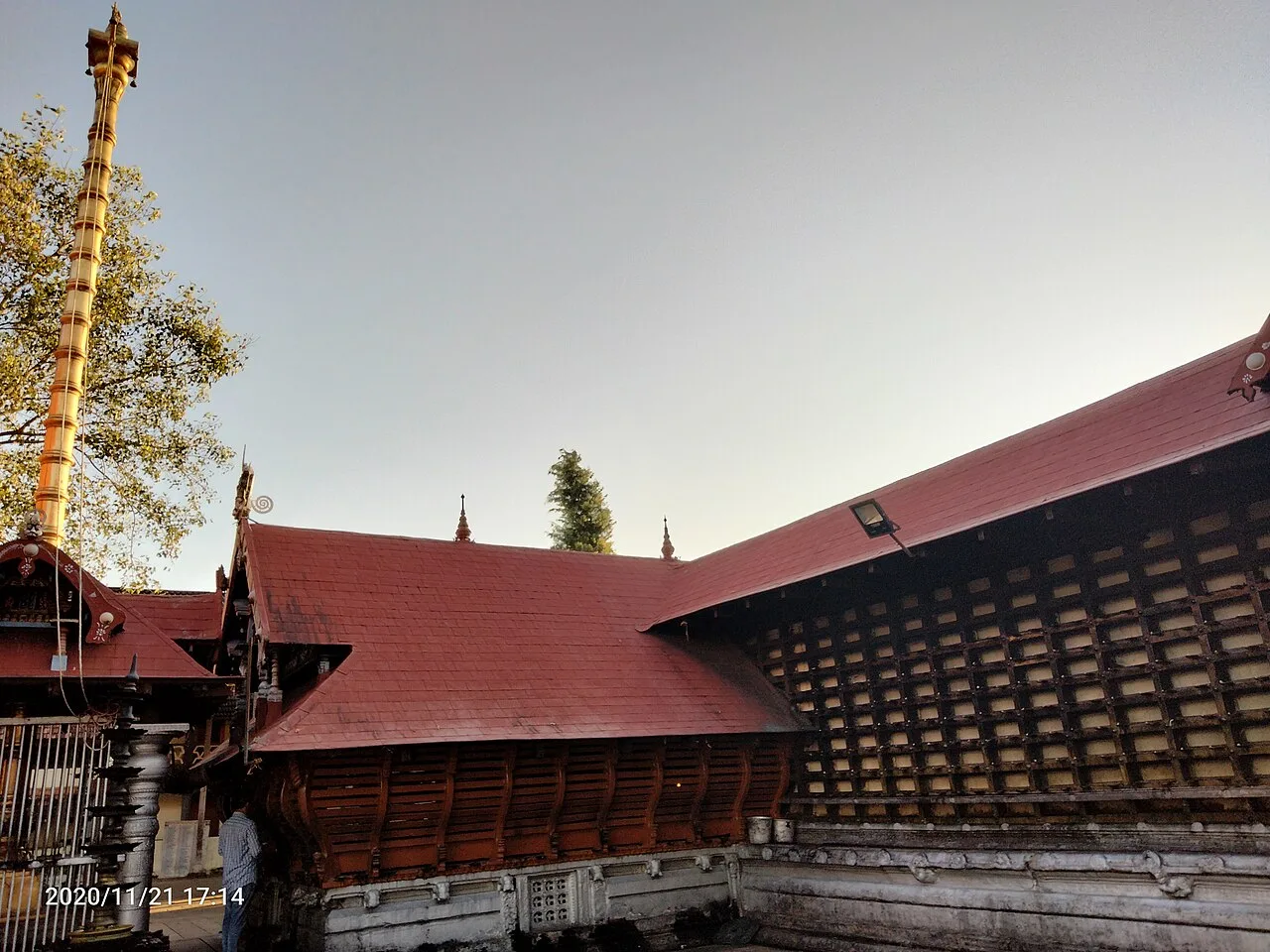
The temple follows the traditional Kerala Hindu temple idiom, with a compact, enclosed sacred complex rather than the towering gateway forms common in some other parts of India. Visitors can observe the sanctum area, surrounding worship spaces and the roofed structures that protect the shrine in Kerala’s rainy climate. Sloping roofs and timber details are characteristic of the region’s temple building tradition; visitors should treat specific materials and construction phases as features to confirm on site, since the complex has evolved over time. The layout guides worshippers from the outer areas towards the more restricted inner precincts, with access governed by temple custom. The building’s scale, sheltered circulation and relationship between the sanctum and surrounding spaces reflect a functioning place of worship. Take time to notice the craftsmanship and spatial arrangement without entering areas marked for worshippers only.
Important objects & sculptures
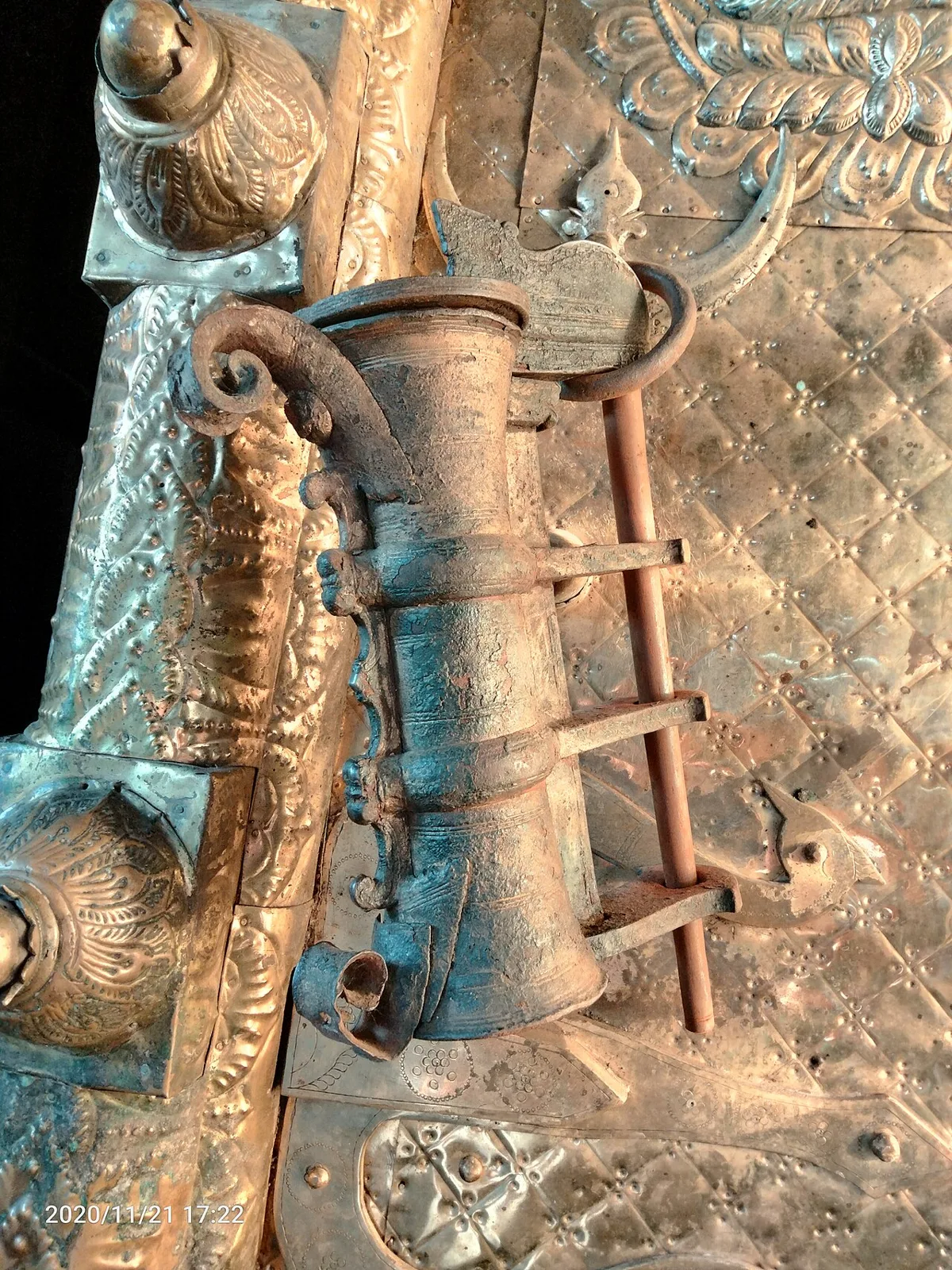
The principal sacred image is Krishna in a form likened to Parthasarathi, or Vishnu as Arjuna’s charioteer. The temple description notes a whip in the image’s right hand and a conch in the left. The deity is the focus of worship, and viewing access may depend on ritual arrangements and temple rules. The payasam offering is another important feature to learn about: it is a sweet pudding made with rice and milk and is associated with the temple’s daily devotional practice. Look respectfully at the visible features of the shrine and any carvings or painted details accessible from public areas. Do not assume that every image, inscription or inner feature is open to visitors or available for photography.
Religious significance
The shrine is dedicated to Krishna, worshipped in a form associated with Parthasarathi, the charioteer of the Mahabharata’s Arjuna. Its Vaishnava associations are reflected in the temple’s devotional identity and its traditional classification among the 108 Abhimana Kshethram. Worshippers come for darshan, prayers and participation in rituals conducted by temple priests. The daily payasam offering is especially significant: devotees believe Guruvayoorappan visits to accept it, and the offering is an expression of devotion as well as a local tradition. Practices and access can vary according to ritual schedules, and some parts of the temple may be reserved for worshippers or subject to customary rules. Visitors who are not participating in worship can observe quietly from permitted areas.
Visit Ambalappuzha Sree Krishna Swamy Temple with time to observe daily prayers and rituals respectfully. Follow the posted rules on footwear, photography, phones, head covering and dress, and avoid interrupting worshippers; popular shrines may have separate queues and mobile-phone deposit counters. Beware of unofficial agents offering quick darshan for a fee. A comfortable itinerary is one main visit in the morning, a local meal at midday and a short nearby stop before an afternoon return. Use the district list on this site to find other places in Alappuzha, but check the route and its condition before combining stops. If a festival is on — such as Onam, Thrissur Pooram, the Nehru Trophy snake-boat race on Punnamada Lake, the Theyyam season in Kannur and Kasaragod, or the Attukal Pongala — roads and stays can be busy, and the experience can be unforgettable. Leave no litter: many sites are protected by the communities around them.
Suggested itineraries
Half day: Allow 1–2 hours for the temple visit, including time to observe worship respectfully; have a local meal, then take a short stop in Ambalappuzha before returning. Full day: Visit the temple in the morning; pause for a meal; spend the afternoon exploring Alappuzha’s canals or Punnamada Lake, allowing time for the road journey and local conditions. Gentler option: Arrange a drop-off near the temple, keep the visit to the accessible outer areas, take seated rest breaks and avoid combining it with a long walking tour.
The temple remains an active place of worship, not simply a historic building. Malayalam is widely used in the surrounding region, and visitors may hear devotional recitation, temple bells and ritual music during services or festivals. Local customs shape dress, footwear, access to inner areas and conduct around worshippers; follow notices and guidance from temple staff. The payasam offering is a familiar part of the shrine’s cultural identity and is often discussed alongside its devotional traditions. Kerala’s broader temple culture includes seasonal celebrations and community participation, though particular performances or ceremonies should not be assumed on an ordinary visit. Ask before joining a ritual, and give worshippers space.
Festivals & events
The temple observes Krishna-related religious occasions and its own annual festival traditions; the annual temple festival and Arattu are generally associated with the Malayalam calendar’s spring season. Krishna Janmashtami, usually in August or September, is also an important occasion for Krishna devotees. Festival dates vary by year and should be confirmed with the temple. In the wider district, the Champakulam Moolam boat race is usually held during the monsoon season, while Onam celebrations take place around August or September. Festival days can bring larger crowds, traffic and busier accommodation, so allow extra time and check local arrangements before travelling.
Local food in Kerala includes appam with stew, puttu with kadala curry, idiyappam, the vegetarian sadya served on a banana leaf, Kerala parotta with beef or chicken fry, Malabar biryani and pathiri in the north, karimeen pollichathu (pearl-spot fish in banana leaf), toddy-shop fish curry, banana chips and many kinds of payasam. Ask what is fresh that day; many small eateries cook a limited daily menu. Coconut oil and coconut are used in most dishes; ask for less spice if needed. Toddy shops serve some of the best fish curry in Kerala, and a full sadya is the highlight of Onam. Remote sites may have no restaurant at all. Carry water and snacks, eat a proper breakfast before long drives, and ask your accommodation for a packed lunch if you are heading out early. If prasad is offered, accept it according to local custom. Choose clean places, drink sealed or filtered water, and carry your packaging back with you.
Shopping & local experiences
Look for everyday Kerala snacks, local sweets and small devotional items in shops around the town, while remembering that availability varies. Payasam is closely associated with the temple, but it is an offering and distribution arrangements may not suit takeaway; ask locally rather than expecting a retail purchase. Alappuzha town has a broader selection of markets and practical supplies than the immediate temple area. If buying crafts or souvenirs, check that products are locally made and avoid items made from protected wildlife or other restricted materials. Keep shopping discreet near active worship areas and do not bargain or handle offerings there.
September to March; June to August for monsoon Ayurveda and green landscapes
The nearest principal railway station by straight-line distance is Alappuzha, roughly 12 km away. The nearest operating airport by straight-line distance is Cochin International Airport, roughly 86 km away. These figures are calculated from map coordinates — actual road distance is longer. Thiruvananthapuram, Kollam, Kottayam, Ernakulam, Thrissur, Shoranur, Kozhikode and Kannur are the main rail stops along the coast line; Kochi, Thiruvananthapuram, Kozhikode and Kannur have international airports. For the final leg, KSRTC buses (from ordinary to air-conditioned Swift services), fast private buses, metered autos, app cabs and the Water Transport Department's public ferries in the backwaters link the towns. Distances look short on the map, but road and town traffic are slow, so allow extra time. When comparing train, bus and flight, count the complete door-to-door time: a flight saves the most time only if the onward road transfer is short, while an overnight train can save a hotel night. Kerala's coastal rail line is busy, so reserve trains early; KSRTC buses are frequent and often quicker to hill stations. Book your return before you leave, because seats fill quickly on weekends, festivals and holidays. Current train numbers, timings, return services and fares are not listed here; check IRCTC and NTES for trains and the airline's own schedule for flights. No permit is needed to visit Kerala. Several major temples, including Sree Padmanabhaswamy in Thiruvananthapuram and Guruvayur, admit only Hindus and enforce a strict dress code — men wear a mundu (dhoti) and remove shirts, women wear a saree or long skirt. Forest activities in Periyar, Eravikulam, Silent Valley, Parambikulam and Thattekad must be booked with the Kerala Forest Department, and Eravikulam National Park usually closes in February and March for the Nilgiri tahr calving season.
Confirm onward and return timings on IRCTC / NTES, the state bus operator or your airline before travel. A dash means current timings or fares have not been verified.
Getting around
Alappuzha is the main nearby rail hub; from there, local buses, private buses, autos and taxis can help with the road journey to Ambalappuzha. Ask the driver to confirm the temple drop-off point, especially during busy festival periods. Walking is practical around the immediate temple area, but allow for heat, rain and uneven or crowded streets. Parking availability may vary with the day and local events, so check locally rather than expecting a dedicated space. Backwater ferries and boat services operate in parts of the district, but they are not a substitute for checking the road connection to the temple.
Hours, tickets & permissions
Entry arrangements depend on worship and temple administration. Some areas may have restricted access, and customary dress or rules for footwear may apply. Whether visitors need a ticket, permit, identification or a separate camera permission can change, so do not rely on third-party claims or assume that all areas are open to everyone. Confirm current opening hours, entry requirements and any fees directly with the temple managing authority before setting out. During festivals or special rituals, access and queues may differ from an ordinary visit.
Facilities
Facilities within the temple complex may be limited or subject to worship schedules. Toilets, drinking water and footwear arrangements may be available on or near the premises, but check locally and carry water for the approach, especially in warm weather. Food options can usually be found in the surrounding town; the temple’s payasam offering is a devotional offering, so ask about current distribution arrangements rather than assuming availability. Parking, guides, ATMs and accessible facilities are not guaranteed at the shrine itself. Alappuzha town offers a broader range of services, so plan essential needs there if necessary.
Accessibility
The temple is an active religious complex, and access may involve walking through crowded areas, thresholds or uneven surfaces. The exact route and any steps can depend on which parts are open during your visit; inner areas may be restricted by custom. Do not assume that ramps, lifts or wheelchair-accessible toilets are available. Shade may be limited in outdoor approaches, so plan for sun and rain and take breaks as needed. Wheelchair users, visitors with strollers and people with limited mobility may find some spaces difficult to navigate, particularly during rituals or festivals. An accompanying person can help, and temple staff may advise which areas are practical to visit.
No permit is needed to visit Kerala. Several major temples, including Sree Padmanabhaswamy in Thiruvananthapuram and Guruvayur, admit only Hindus and enforce a strict dress code — men wear a mundu (dhoti) and remove shirts, women wear a saree or long skirt. Forest activities in Periyar, Eravikulam, Silent Valley, Parambikulam and Thattekad must be booked with the Kerala Forest Department, and Eravikulam National Park usually closes in February and March for the Nilgiri tahr calving season. Carry a photo ID at all times and save the emergency number 112 and your accommodation's contact offline. Watch your belongings in crowds and on public transport, and follow posted instructions.
Visitor rules
Follow signs and instructions from temple staff and worshippers. Remove footwear where required and dress modestly; local rules may specify further requirements for entering particular areas. Keep voices low, do not interrupt prayers or block ritual routes, and do not enter restricted spaces. Ask before taking photographs and obey any camera or phone restrictions. Avoid littering and reduce single-use plastic; use bins if provided. Do not touch sacred objects, offerings or ritual items unless invited to do so. Be wary of unofficial agents offering paid shortcuts or special access, and verify any arrangements with temple authorities.
Photography
Photography rules can differ between the outer grounds and worship areas, and cameras or phones may be restricted during rituals. Check posted notices and ask temple staff before taking pictures; do not photograph the sanctum, worshippers or priests without permission. If photography is allowed in public areas, softer morning or late-afternoon light can suit the exterior and surrounding streets. Do not obstruct queues or ceremonies to frame a shot. Drone use requires appropriate legal permissions and may be prohibited or inappropriate near a functioning temple; confirm rules locally and respect the privacy and sanctity of the site.
Choose a stay by the full journey to Ambalappuzha Sree Krishna Swamy Temple, not just the district name. Kerala Tourism's classified homestays are good value and a way to taste home cooking; beach towns have everything from hostels to Ayurveda resorts. In summer, check air-conditioning and backup power; in the monsoon, check that the property is accessible if roads flood. Book in advance for weekends, festivals and the peak season (September to March; June to August for monsoon Ayurveda and green landscapes). Confirm the exact location, meals included, check-in time and cancellation terms in writing. Avoid sending money to unverified contacts or touts at stations. Carry some cash, as card and digital payments can be unreliable in remote areas.
In Alappuzha town, visitors can combine a temple visit with the Alappuzha beach area or a backwater outing around Punnamada Lake, subject to travel time and local conditions. The district’s canals and waterways offer a different view of the region, but check departure points and road connections before planning a boat trip. Champakulam is associated with the district’s well-known Moolam boat race and may be of interest to visitors exploring local boat traditions. Krishnapuram Palace, in the wider Alappuzha district, is another cultural stop; check its current visitor arrangements separately. Avoid packing too many stops into one day, particularly during festivals or heavy rain.
For couples, Ambalappuzha Sree Krishna Swamy Temple rewards a slow pace: arrive early for soft light and fewer crowds, share a local meal and keep the evening free. An overnight houseboat on Vembanad, a sunset on the Varkala cliffs or a misty morning walk through Munnar's tea estates makes the trip memorable. Public displays of affection can be frowned upon in conservative communities and at religious sites, so be discreet. Keep a buffer in your itinerary, because weather and road conditions can delay plans.
Q: How much time should I allow for a visit? A: Allow about one to two hours for the temple itself, with extra time during busy worship periods or festivals. Q: When is a good season to visit? A: September to March is generally comfortable for travel in Kerala; June to August is very wet, so plan for heavy monsoon rain. Q: Is there an entry fee, and can all visitors enter? A: Rules and access can vary by area and occasion. Confirm current entry requirements and fees with the temple authority before travelling. Q: Is the temple suitable for children and older visitors? A: Families can visit respectfully, but crowds, heat, uneven surfaces and restricted areas may be challenging. Plan breaks and check access needs locally. Q: Where can I stay nearby? A: Alappuzha town is the main base for accommodation in the area. Check current availability and travel arrangements, especially during festival periods.
Be the first to share photos, stories, advice or a helpful contact for Ambalappuzha Sree Krishna Swamy Temple.
Loading…