
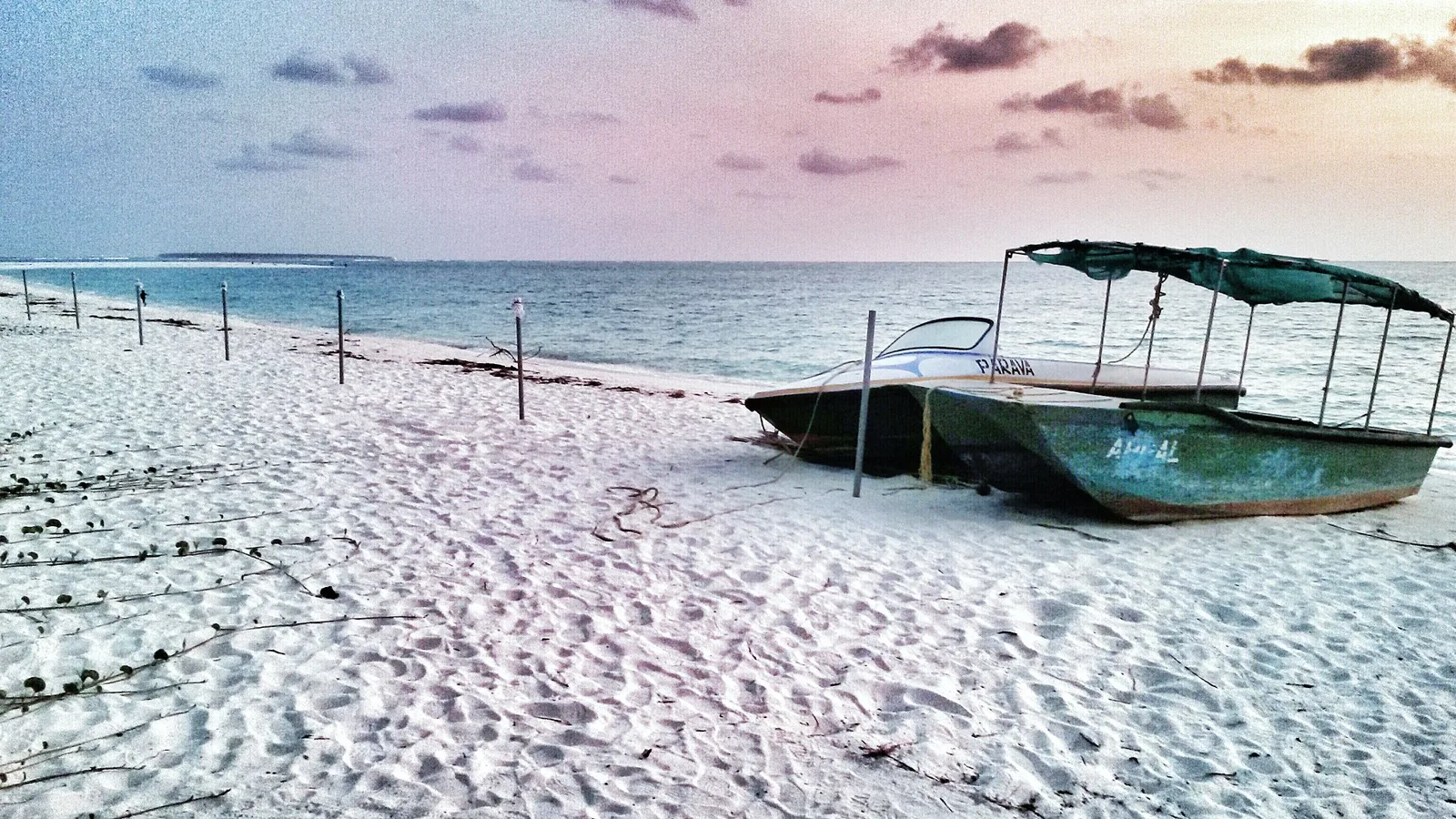
Kadmat Island
Kadmat is a coral island in Lakshadweep’s Amindivi group, also known as Cardamom Island. Visitors can enjoy its lagoon and marine life through kayaking, snorkelling and glass-bottom boat trips.
Key facts · verified by Ghumoopedia editors
- Type of place
- Natural attraction
- Best time to visit
- October to April
- Nearest airport
- Agatti Aerodrome · about 79 km (straight line)
- Verified
- 21 Nov 2026
Plan a trip from Kadmat Island — a day-by-day route through places nearby.
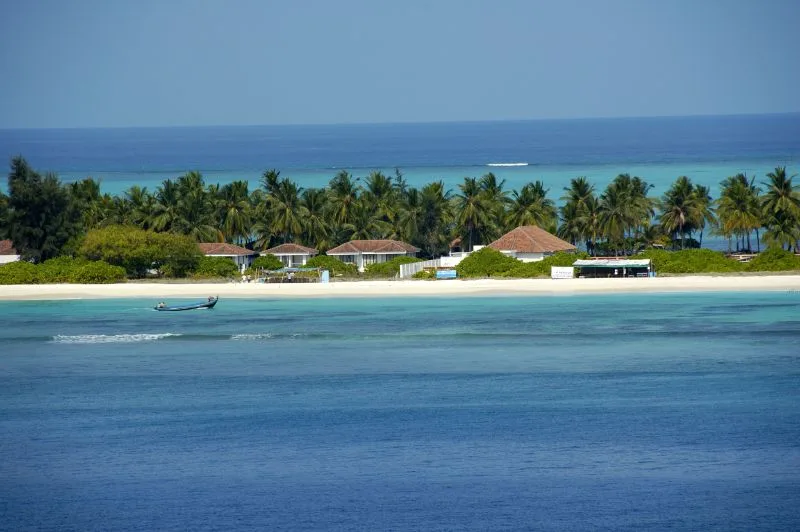
Kadmat is part of Lakshadweep, an Indian union territory. The island, also called Cardamom Island, is a coral formation in the Amindivi group of the Lakshadweep archipelago. It measures 9.3 kilometres from end to end. Its lagoon is up to 1.5 kilometres wide and covers 25 square kilometres. Coral reef and seagrass shape the island’s marine environment, and marine turtles come ashore to nest. India’s Ministry of Environment and Forests has declared the island a protected marine area, with the aim of conserving its plants, animals and other natural resources. Kadmat is the island’s sole inhabited village. The 2011 census recorded a population of 5,389. Fishing is the main livelihood, while farming occupies only 5% of the land. Tourism is permitted, with activities including kayaking, snorkelling and leisure outings in glass-bottomed boats for scuba diving. Lakshadweep is India's smallest union territory: a group of 36 coral islands and atolls in the Arabian Sea, of which only ten are inhabited, with turquoise lagoons, coral reefs, a Muslim, Malayalam-speaking population (Mahl on Minicoy), coconut groves and some of India's best snorkelling and diving. The islands are warm and humid all year (about 25–32 °C). The southwest monsoon from mid-May to September brings rough seas, when ship services are reduced and water sports stop; October to April has calm, clear water. The usual best time to visit is October to April. Timings, fees and access arrangements must be confirmed locally. For official information, see Lakshadweep Tourism at https://lakshadweeptourism.com.
Why it matters
Kadmat is a coral island in the Amindivi subgroup of Lakshadweep, valued for its lagoon, reef and seagrass habitat. The island is also known as Cardamom Island. Its reef environment supports marine life, including turtles that nest on the island, making conservation an important part of its significance. The Indian Ministry of Environment and Forests has notified Kadmat as a marine protected area to help conserve its organisms and natural resources. Kadmat is also a lived-in island: its only inhabited village is Kadmat, where fishing is a principal livelihood. Tourism is permitted under Lakshadweep’s regulated access arrangements, with water-based activities such as snorkelling and kayaking subject to local conditions and rules.
Kadmat’s natural history is tied to the formation of Lakshadweep’s coral islands and reefs in the Arabian Sea. The island is part of the Amindivi subgroup, but detailed accounts of its earliest settlement and the dates of particular historical changes are not consistently documented in widely available sources. Its history is therefore best understood through the continuing relationship between the island community and the surrounding sea, rather than through an unsupported sequence of dates or rulers. Fishing has long been central to island livelihoods, while agriculture occupies only a small share of Kadmat’s land. Today, Kadmat is the island’s only inhabited village; the 2011 Indian census recorded a population of 5,389. In more recent decades, regulated tourism has added activities such as snorkelling, kayaking and glass-bottomed-boat trips to the visitor experience. Conservation has also become more prominent: the Ministry of Environment and Forests notified the island as a marine protected area, recognising the need to safeguard its reef, seagrass, turtles and other natural resources. No specific restoration project or building history should be assumed without current local or official information.
Origin stories & folklore
No single, well-documented Kadmat-specific origin legend can be confidently presented as the island’s established folklore. Accounts of how Lakshadweep’s islands came to be may vary between families and communities, and visitors should treat informal stories as oral tradition rather than verified history. The name Cardamom Island is used as another name for Kadmat, but a familiar name alone does not establish a particular legend about its origin. If residents share a story, listen respectfully and ask whether it is appropriate to repeat or record it. The island’s coral formation and its place in the Amindivi group are geographical facts; they should not be confused with a religious or mythical explanation.
Spend unhurried time at Kadmat Island: use marked paths and official viewpoints, and ask locally whether a guide, ticket or permission is needed. Enjoy the water from safe, marked points; snorkel and dive only with certified operators, and admire coral without touching it, and keep an eye on the tide. A comfortable itinerary is one main visit in the morning, a local meal at midday and a short nearby stop before an afternoon return. Snorkel and swim in the calm morning hours and rest at midday when the sun is fierce; island life winds down early. Use the district list on this site to find other places in Lakshadweep, but check the route and its condition before combining stops. If a festival is on — such as Eid al-Fitr and Eid al-Adha or the Prophet's birthday (Milad-un-Nabi), when island life slows down and some services pause — transport and stays can be busy, and the experience can be unforgettable. The coral reefs are protected — use reef-safe sunscreen, avoid plastic and take all your waste back with you.
Suggested itineraries
Half day: Check local access and sea conditions; take a guided lagoon or reef activity such as snorkelling (about 1–2 hours); rest and have a local meal; finish with a short, permitted shoreline walk. Full day: Begin with a calm-water activity such as kayaking or snorkelling (about 2 hours); take a midday rest and meal; join an authorised glass-bottomed-boat trip or another approved excursion (about 1–2 hours); leave time for a gentle village or shore visit before returning. Gentler option: Choose a short boat outing or quiet lagoon viewpoint, with seated breaks and no requirement to swim; confirm boarding access and assistance in advance.
Kadmat’s living culture is shaped by island life, the sea and the Malayalam-speaking Muslim communities of Lakshadweep. Malayalam is widely used, and local customs and daily routines may differ from those of mainland visitors. Eid al-Fitr and Eid al-Adha are important occasions; religious observance can affect ordinary services and travel. Music, dance and food traditions belong to the wider cultural life of the islands, but visitors should not assume that a performance is regularly staged for tourists on Kadmat. Dress modestly in village and community settings, ask before photographing people, and follow local guidance around religious spaces and customs. Island life tends to be closely connected to fishing and the rhythms of the sea.
Local communities
Kadmat’s inhabited village is home to an island community whose livelihoods are closely linked to the surrounding lagoon and sea. Fishing is the principal economic activity identified for the island, while agriculture is limited to a small share of its land. Tourism also provides work through regulated visitor activities and related services, although availability can vary. The broader Lakshadweep population is predominantly Muslim and Malayalam-speaking; Mahl is associated particularly with Minicoy. Visitors should avoid treating island residents as a cultural exhibit: ask permission before taking portraits, respect privacy, and follow local rules and advice.
Festivals & events
Eid al-Fitr and Eid al-Adha are significant festivals in Kadmat and across Lakshadweep, with observances following the Islamic calendar and therefore varying in the Gregorian calendar. The Prophet’s birthday, often called Milad-un-Nabi, may also be observed. These are community and religious occasions rather than guaranteed visitor events. During festival periods, island routines may change, and transport, accommodation or other services can be busier or temporarily limited. There is no need to expect a public fair or scheduled performance; check locally before planning activities, and be considerate around prayers and family gatherings.
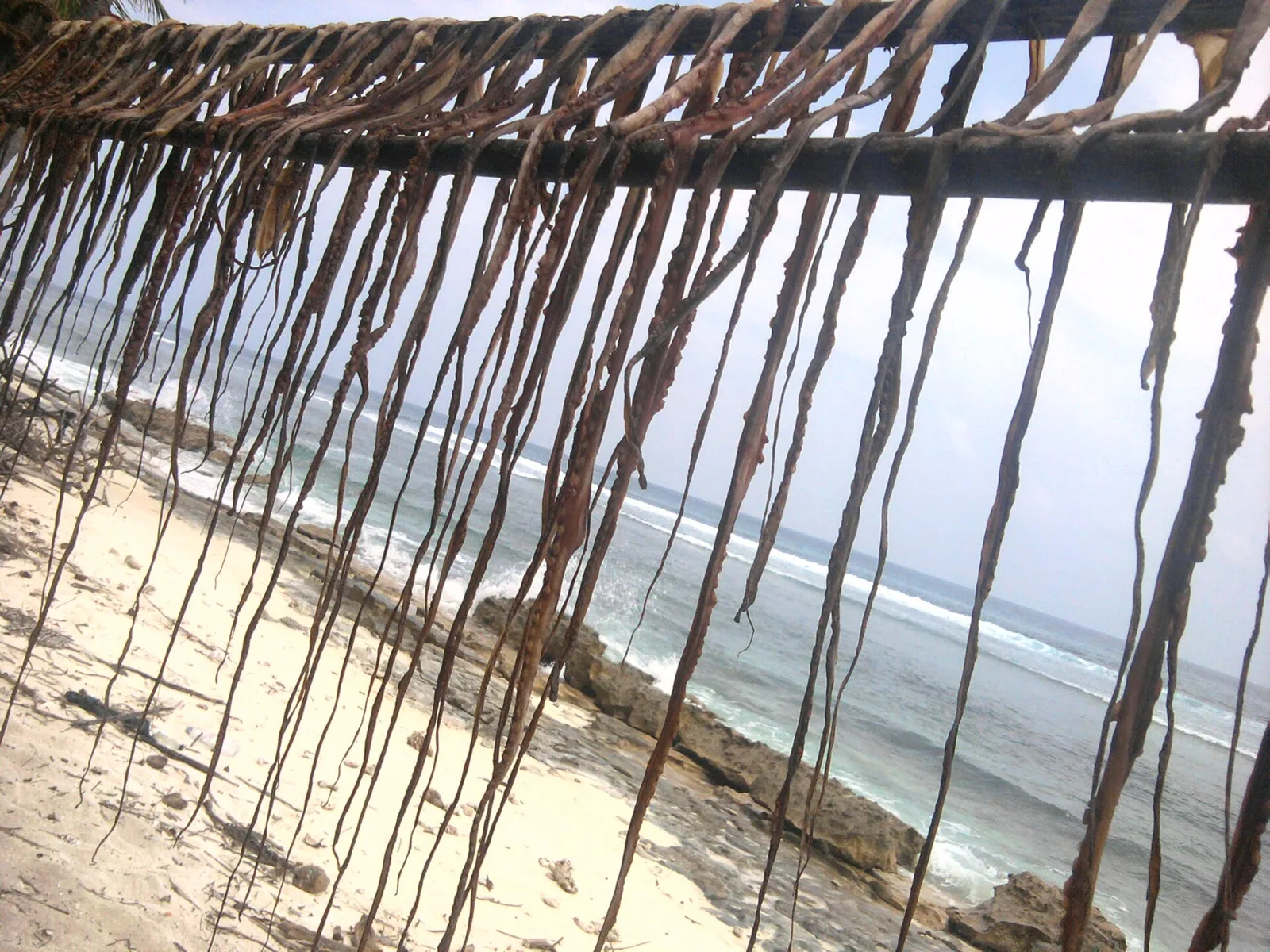
Local food in Lakshadweep includes tuna in every form — fresh curries, dried 'mas' and fried fish — coconut-based dishes, octopus, Malabar-style biryani, banana fritters and fresh coconut water. Ask what is fresh that day; many small eateries cook a limited daily menu. Food on the islands is simple and based on fish, coconut and rice; vegetarians should mention it when booking. Packages usually include meals because restaurants are few. Remote sites may have no restaurant at all. Carry water and snacks, eat a proper breakfast before long journeys, and ask your accommodation for a packed lunch if you are heading out early. Try a home-cooked or local meal when you can — it is often the best food on the route. Choose busy, clean places, drink sealed or filtered water, and carry your packaging back with you.
Shopping & local experiences
Shopping options on Kadmat are likely to be modest compared with a large town, so check locally rather than expecting a dedicated tourist market. Look for locally prepared food or small island-made items where residents or authorised sellers offer them. Seafood may be part of local meals, subject to availability and conservation rules. Avoid buying coral, shells, turtle products or other wildlife-derived souvenirs; taking natural material from a protected marine environment is inappropriate and may be prohibited. Ask before photographing or bargaining with individual sellers, and carry reusable bags to reduce packaging waste.
Kadmat is a low coral island set within a reef-and-lagoon environment. Its lagoon is a defining feature, while coral reef and seagrass habitats support marine life. Marine turtles nest on the island, though sightings are never guaranteed and nesting areas should be left undisturbed. The island’s shoreline and shallow waters can change in character with tide, weather and sea conditions. Coconut groves and other island vegetation form part of the terrestrial landscape, while seabirds may be seen around the coast; no particular sighting can be promised. Kadmat is notified as a marine protected area, so visitors should avoid touching or standing on coral, disturbing wildlife, leaving litter, or taking natural material away.
October to April
There is no railway in Lakshadweep. The nearest operating airport by straight-line distance is Agatti Aerodrome, roughly 79 km away. These figures are calculated from map coordinates — actual sea and road distance is longer. Alliance Air flies between Kochi and Agatti; ships from Kochi to the islands take 14–20 hours, and inter-island transfers are by boat or helicopter. There is no railway — the nearest stations are on the Kerala coast. Inter-island travel is by ship, boat or helicopter arranged with your permit and package. When comparing train, bus and flight, count the complete door-to-door time: a flight saves the most time only if the onward transfer is short, while an overnight train can save a hotel night. For Lakshadweep, flying from Kochi to Agatti saves the most time; ships are slower but let you see more islands. Either way, you must hold an entry permit before travelling. Book your return before you leave, because seats fill quickly on weekends, festivals and holidays. Current train numbers, timings, return services, ferry departures and fares are not listed here; check IRCTC and NTES for trains, the airline's own schedule for flights and the official operator for ships and ferries. Every visitor who is not a resident of Lakshadweep — Indian or foreign — needs an entry permit from the Lakshadweep administration, applied for online with ID and a police clearance certificate or through an approved tour package, before booking. Foreign nationals may visit only the islands opened to them. Alcohol is banned on all inhabited islands, and the islands have limited hotel rooms, so most visitors travel on government or approved packages.
Confirm onward and return timings on IRCTC / NTES, the state bus operator or your airline before travel. A dash means current timings or fares have not been verified.
Getting around
Kadmat is reached through authorised inter-island travel, which must be arranged as part of a permitted Lakshadweep visit. On the island, distances within the inhabited area may be manageable on foot, but ask locally about routes, weather, tide and areas where walking is permitted. Do not assume mainland-style taxi, auto-rickshaw or local-bus services are available. Boats used for excursions should be arranged through authorised local operators, and sea conditions can affect departures. Check where visitors may board, whether a guide is required, and how to return safely before setting out. Parking arrangements are limited or may not be relevant to most visitors arriving by boat.
Hours, tickets & permissions
Kadmat is an inhabited island, but access for visitors is regulated and may require a Lakshadweep entry permit and an approved travel or stay arrangement. Rules for visiting beaches, protected areas and joining water activities can vary; follow instructions from the local administration and authorised operators. Identification and permit documents may be requested. Do not assume that every shore or reef area is open to visitors, or that photography is allowed everywhere. Confirm current access conditions, activity permissions, operating arrangements and any applicable fees with the managing authority or authorised provider before travelling.
Facilities
Facilities on Kadmat are island-scale and may be limited compared with a mainland resort town. Food and drinking water may be available through authorised accommodation or local providers; check what is included and carry water in a reusable bottle where permitted. Toilets, guides and equipment for water activities are usually tied to the accommodation or operator, so confirm availability before arrival. Do not assume there is a public ATM, extensive medical care, or visitor parking. Keep essential medicines and travel documents with you, and ask your host about waste disposal, emergency arrangements and the nearest available services.
Accessibility
Kadmat’s terrain is generally low-lying, but paths, sand and shore surfaces may be uneven, soft or exposed to sun. Getting from a boat to land can involve steps, a gangway or an unsteady transfer, depending on the vessel and conditions. Wheelchair and stroller access should not be assumed, especially for beaches and water activities; ask the accommodation and boat operator about the specific transfer and route before booking. Shade may be limited away from buildings or vegetation. Older visitors and anyone with limited mobility may find heat, walking on sand and boarding boats tiring. Plan short outings, take breaks and avoid entering the water without suitable assistance.
Every visitor who is not a resident of Lakshadweep — Indian or foreign — needs an entry permit from the Lakshadweep administration, applied for online with ID and a police clearance certificate or through an approved tour package, before booking. Foreign nationals may visit only the islands opened to them. Alcohol is banned on all inhabited islands, and the islands have limited hotel rooms, so most visitors travel on government or approved packages. Carry a photo ID at all times and save the emergency number 112 and your accommodation's contact offline. Medical facilities are basic outside Kavaratti and Agatti, and evacuation depends on weather — carry your medicines and travel insurance. Swim and snorkel only in the lagoon with local guides, never touch or stand on coral, and protect yourself from strong sun. Keep behind barriers, never swim in unmarked spots or after drinking, and leave the water if the sea or currents change suddenly.
Photography
Soft morning or late-afternoon light can work well for the lagoon, shoreline and coconut landscape; changing weather and water clarity affect results. Photograph only from places where access is permitted, and do not step onto coral for a better angle. Ask permission before photographing residents, workers or children, and be especially discreet near homes and religious observances. Drone use may be restricted by aviation, security, conservation or local rules; obtain the required permissions before bringing or flying one. Avoid disturbing turtles, nests, birds or other wildlife for a photograph.
Choose a stay by the full journey to Kadmat Island, not just the district name. Rooms are limited: Agatti, Bangaram, Kadmat, Kavaratti and Minicoy have resorts, cottages and government tourist huts, usually booked as part of an approved package. In the hot months, check air-conditioning; in the monsoon, check that the property is reachable if roads flood or ferries are cancelled. Book in advance for weekends, festivals and the peak season (October to April). Confirm the exact location, meals included, check-in time and cancellation terms in writing. Avoid sending money to unverified contacts or touts at stations, airports and jetties. Carry some cash, as card and digital payments can be unreliable in remote areas.
Kadmat is part of Lakshadweep, where travel between islands requires advance planning and authorised transport rather than an assumed casual day trip. Amini and Kiltan are other inhabited islands in the Amindivi subgroup and may be relevant to a longer island itinerary if permitted connections are available. Agatti is an important air gateway for the archipelago, but it is not a simple local excursion from Kadmat. Confirm routes, permits, sea conditions and accommodation for each island separately. Do not plan to combine islands until the operator or relevant authority confirms that the transfer is running and included in your arrangements.
For couples, Kadmat Island rewards a slow pace: arrive early for soft light and fewer crowds, share a local meal and keep the evening free. A sunset over the lagoon, snorkelling together over the reef, a kayak trip or a quiet night under a clear sky makes the trip memorable. Public displays of affection can be frowned upon in conservative communities and at religious sites, so be discreet. Keep a buffer in your itinerary, because weather and transport can delay plans.
Q: How much time should I allow for Kadmat? A: A half-day can suit one activity and a short shore visit; a full day allows for a more relaxed pace, subject to permits and transport. Q: When is the best season to visit? A: October to April generally brings calmer, clearer water. The southwest monsoon, from mid-May to September, can bring rough seas and interruptions to water activities and travel. Q: Do I need permission to visit Kadmat? A: Lakshadweep travel is regulated and visitors generally need an entry permit and an approved arrangement. Confirm current requirements with the authorities or authorised operator. Q: Is Kadmat suitable for children or elderly visitors? A: It can be, if activities and boat transfers suit their abilities. Check boarding access, sea conditions, shade and assistance in advance; swimming and snorkelling require close supervision. Q: Can I stay on Kadmat or nearby? A: Stay options and availability are limited and should be confirmed through authorised arrangements. Ask whether accommodation, meals and inter-island transfers are included before travelling.
Be the first to share photos, stories, advice or a helpful contact for Kadmat Island.
Loading…