
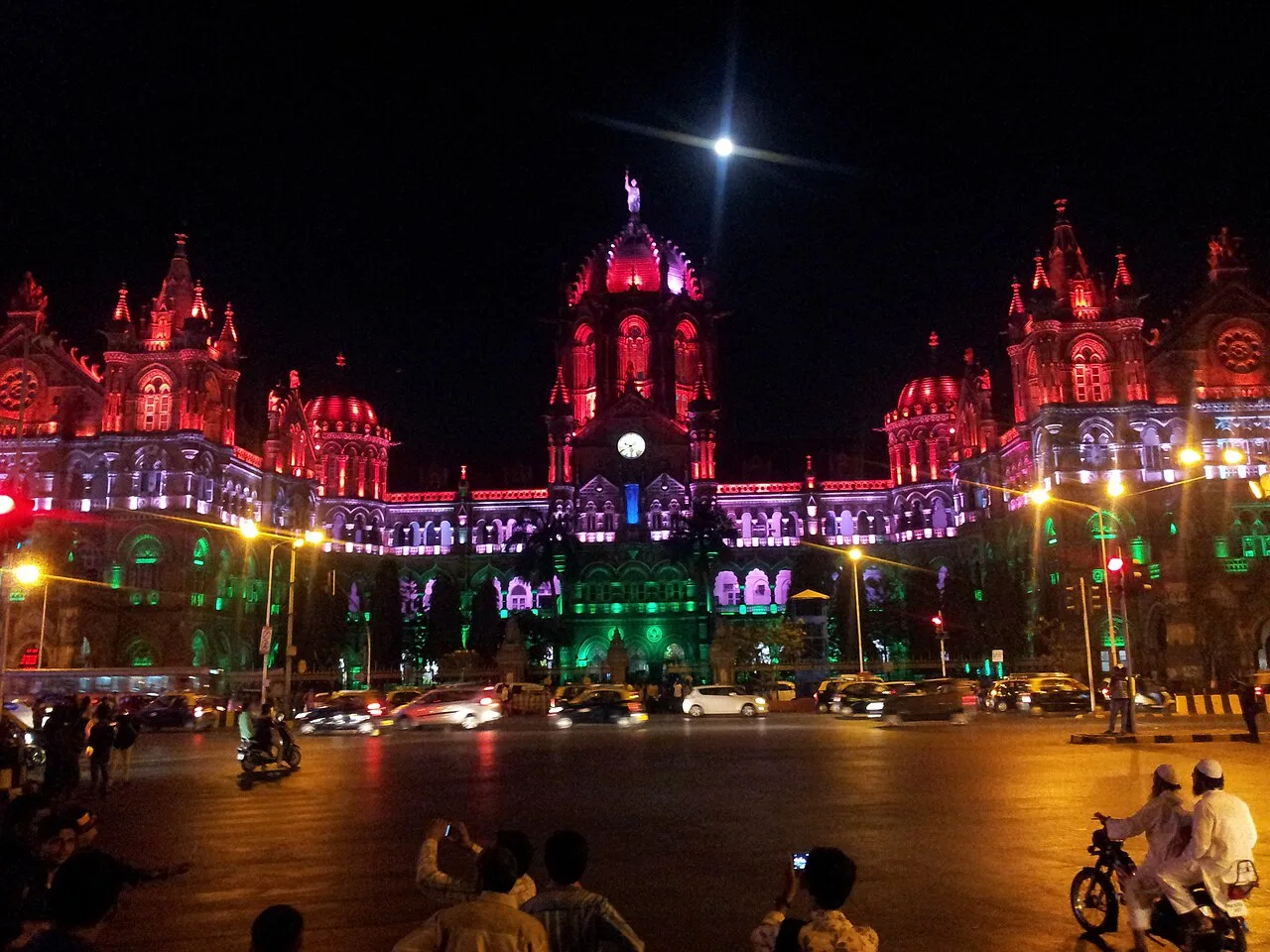
Chhatrapati Shivaji Terminus
Chhatrapati Shivaji Maharaj Terminus is a Mumbai railway hub and UNESCO World Heritage Site, visited for its Indo Gothic architecture and its place in the city’s railway history.
Key facts · verified by Ghumoopedia editors
- Type of place
- Heritage monument
- Best time to visit
- October to March; June to September for green monsoon landscapes on the Ghats (expect closures)
- Nearest railway station
- Mumbai CSMT · about 5 km (straight line)
- Verified
- 21 Nov 2026
Plan a trip from Chhatrapati Shivaji Terminus — a day-by-day route through places nearby.
Located in Mumbai City district, Maharashtra, this major rail complex is officially called Chhatrapati Shivaji Maharaj Terminus (CSMT). It was previously named Victoria Terminus (VT), while CST and VT remain familiar shortened forms. The station is a UNESCO World Heritage Site and an important railway landmark in Mumbai. British architectural engineer Frederick William Stevens shaped the scheme using an earlier design by Axel Haig. The result is an exuberant example of the Indo Gothic style. Construction began in 1878, south of the former Bori Bunder railway station. Work finished in 1887, coinciding with Queen Victoria’s Golden Jubilee. The station opened to the public on 20 May 1888. In March 1996, Victoria Terminus was renamed Chhatrapati Shivaji Terminus, honouring Shivaji, a seventeenth-century warrior king and the Maratha Empire’s inaugural Chhatrapati. He founded the polity in the western Marathi-speaking part of the Deccan Plateau. In 2017, Maharaj was added to the official name; the title translates as a great king or emperor. The station is Central Railway’s zonal headquarters and is among India’s busiest rail stations. It operates long-distance and suburban services. Of its 18 platforms, 11 serve long-distance trains and seven are assigned to suburban traffic. Maharashtra spans Mumbai's Gothic and Art Deco skyline, the rock-cut cave temples of Ajanta, Ellora, Karla and Elephanta, the hill forts of Chhatrapati Shivaji Maharaj, the Konkan's sea forts and beaches, and the great pilgrimages of Pandharpur, Shirdi and the Jyotirlingas. The coast is hot and humid most of the year with very heavy monsoon rain from June to September; the Western Ghats hill stations are cool and misty in the monsoon and pleasant in winter; the Deccan and Vidarbha are dry, with harsh summers above 40°C in Nagpur and Chandrapur. The usual best time to visit is October to March; June to September for green monsoon landscapes on the Ghats (expect closures). Timings, fees and access arrangements must be confirmed locally. For official information, see Maharashtra Tourism at https://www.maharashtratourism.gov.in.
Why it matters
Chhatrapati Shivaji Maharaj Terminus is both a major working railway station and a landmark of Mumbai’s public and architectural history. It serves long-distance trains and the city’s suburban network, and is the headquarters of the Central Railway zone. UNESCO inscribed the building as a World Heritage Site in 2004, recognising its Victorian Gothic architecture and the way it combines European forms with Indian influences. The station also reflects Mumbai’s growth as a port and commercial centre in the late nineteenth century. Its present official name honours Chhatrapati Shivaji Maharaj, while the older names Victoria Terminus and CST remain familiar in everyday speech. It is a protected heritage landmark, but not an isolated museum: railway operations continue around it.
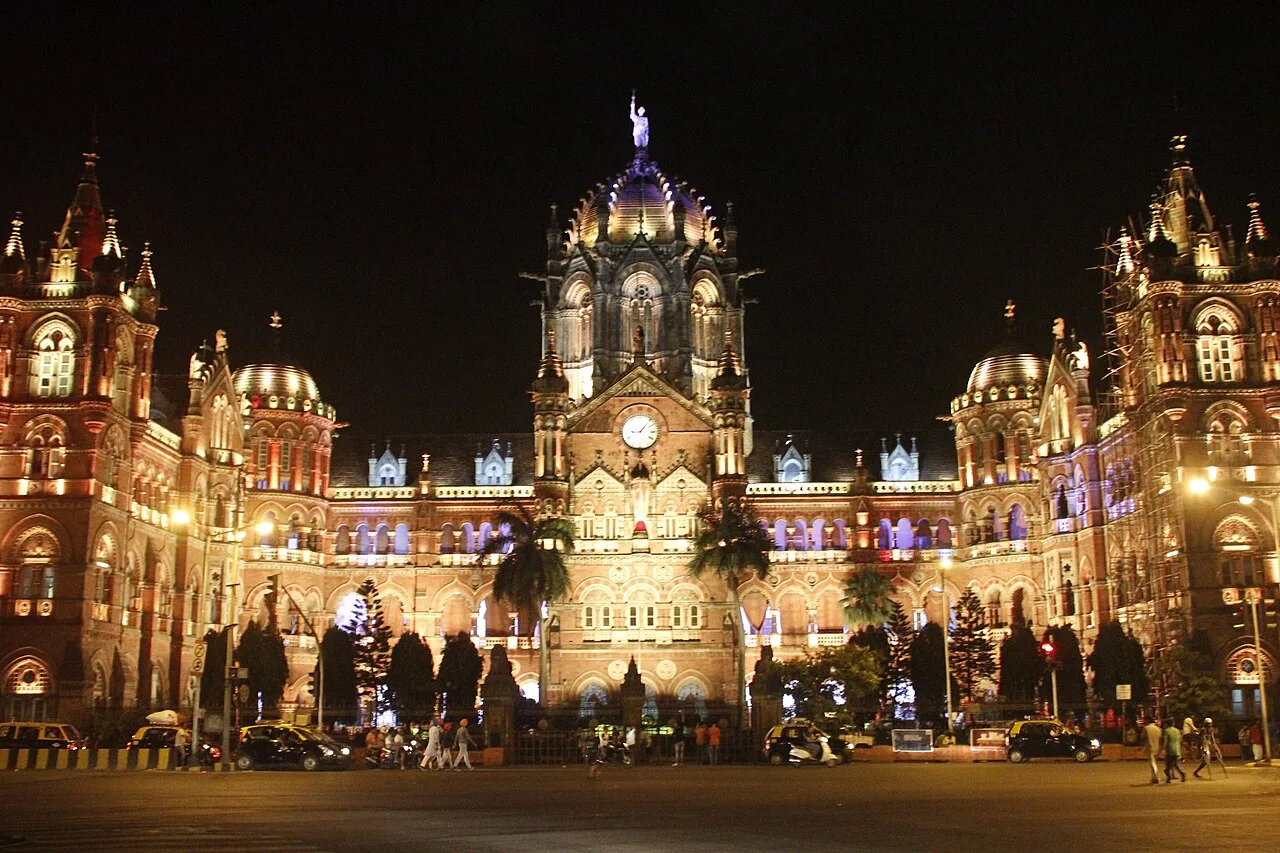
The terminus was built for the Great Indian Peninsula Railway on the site south of the earlier Bori Bunder station. Construction began in 1878, during the expansion of railways and trade in colonial Bombay. British architectural engineer Frederick William Stevens developed the design from an initial design by Axel Haig. The building was completed in 1887, the year of Queen Victoria’s Golden Jubilee, and opened to the public on 20 May 1888. It was first known as Victoria Terminus, commonly shortened to VT. In March 1996, the official name changed to Chhatrapati Shivaji Terminus, honouring the Maratha ruler Chhatrapati Shivaji. In 2017 it was renamed Chhatrapati Shivaji Maharaj Terminus; CSMT is its commonly used station code. The station became a UNESCO World Heritage Site in 2004. Its role has changed with the city: it remains an active terminus, serving suburban and long-distance services, with 18 platforms described in the existing guide. Conservation work has had to take account of both the historic fabric and the demands of a busy railway. Check current access arrangements, since some areas may be restricted for railway operations or conservation.
Origin stories & folklore
There is no widely documented local origin legend explaining the creation of the terminus; its history is recorded through railway and architectural sources. Local memory does, however, attach meaning to its grand central dome and the winged female figure above it, which represents Progress. This is an architectural allegory, not a traditional deity or a folklore figure. The station’s changing names are also sometimes retold as a story of the city’s changing identity: Victoria Terminus, CST and CSMT remain in use in different contexts. These names reflect documented political and civic changes rather than a supernatural origin story.
Architecture & design
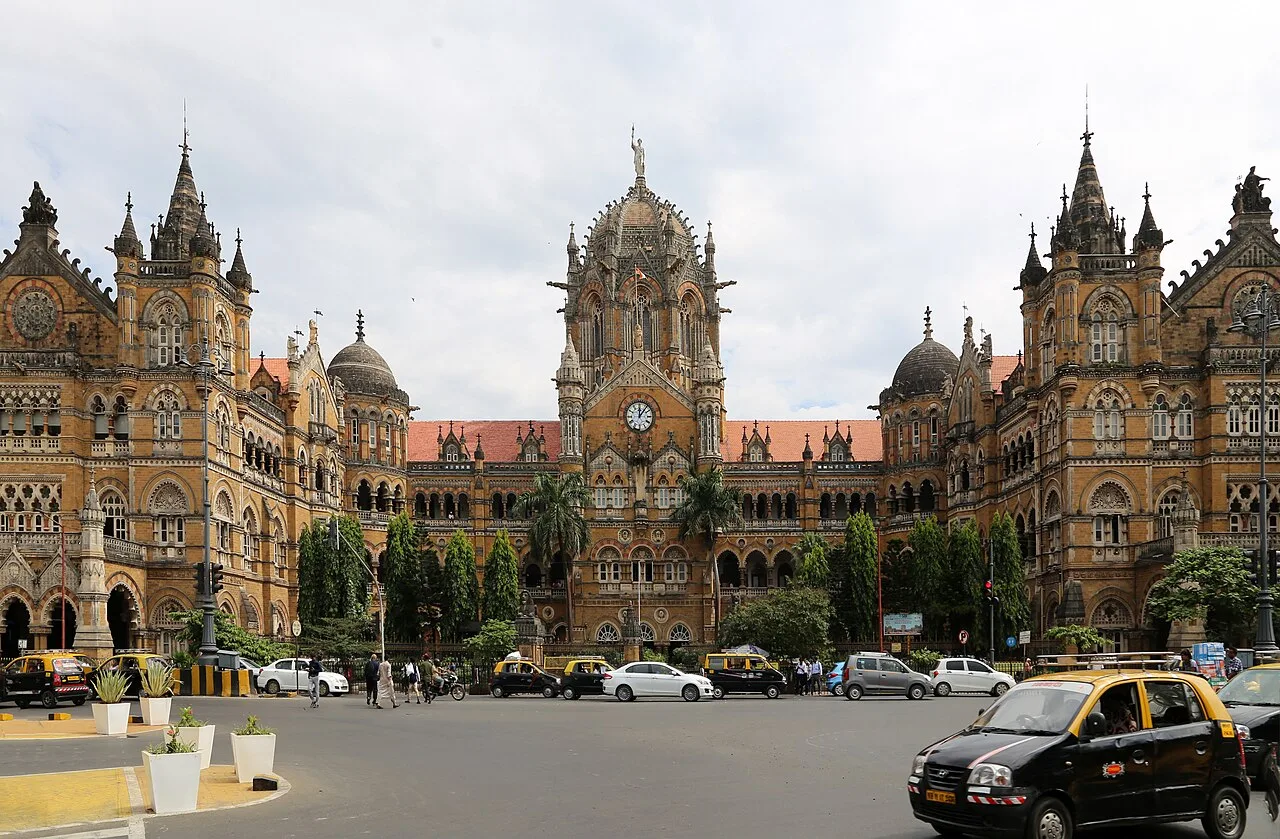
Designed in an exuberant Indo-Gothic style, the terminus brings together Victorian Gothic Revival forms and Indian architectural details. Its plan and massing were devised for a major railway facility, with a central domed section and wings extending along the station. Pointed arches, towers, turrets, steep roofs and projecting stonework give the exterior its varied silhouette. The building uses stone and other materials associated with late nineteenth-century construction in Bombay; carved ornament and coloured glass enrich parts of the structure. The central dome is crowned by an allegorical figure of Progress. Sculpted animals, foliage, tracery and decorative details appear across the façade. The design is monumental, yet its spaces also accommodate railway offices, circulation and passenger activity. Because it remains a working station, visitors may not be able to enter every historic interior or view all details from close range.
Important objects & sculptures
Look for the winged allegorical figure of Progress above the central dome, a symbol associated with the station’s original railway-era ambitions. The exterior also rewards close observation of carved foliage, animal figures, grotesques, finials and stone tracery around arches and windows. Coloured glass and decorative details can be seen in parts of the building, though access to interiors may be limited. These features are architectural sculpture rather than a collection of movable museum objects. Avoid entering restricted areas or obstructing passengers while looking at them; the station is an active transport hub, and some details are best viewed from public areas or across the surrounding streets.
Explore Chhatrapati Shivaji Terminus slowly and read the interpretation boards, use the official audio guide where available or hire an authorised guide to understand its history. Check opening days, ticket counters and camera rules in advance; many monuments and museums close on one weekday and on some public holidays. Early morning gives softer light, cooler air and smaller crowds. A comfortable itinerary is one main visit in the morning, a local meal at midday and a short nearby stop before an afternoon return. Use the district list on this site to find other places in Mumbai City, but check the route and its condition before combining stops. If a festival is on — such as Ganeshotsav, Gudi Padwa or the Ashadhi Wari to Pandharpur — roads and stays can be busy, and the experience can be unforgettable. Leave no litter: many sites are protected by the communities around them.
Suggested itineraries
Half day: View the façade and dome from public streets (45–60 minutes); explore permitted station areas and interpretation material (45–60 minutes); walk to nearby Flora Fountain and the Fort precinct (1–2 hours). Full day: Begin with the terminus and its surroundings (1.5–2 hours); visit St Thomas Cathedral and the Kala Ghoda heritage area (2–3 hours); take a meal break; continue to the Gateway of India and nearby waterfront (2–3 hours), allowing for travel and rest. Gentler option: View the building from a convenient public vantage point, spend a short time in accessible public areas if available, then take a taxi to one nearby landmark rather than attempting a long walking circuit.
The station is part of Mumbai’s everyday life as much as its heritage. Commuters, railway staff, visitors and vendors move through the precinct, and the rhythm of trains shapes its atmosphere. Marathi, Hindi, English and other languages used across Mumbai can be heard here. The station’s names—VT, CST and CSMT—remain part of local speech, with usage varying by person and context. There is no regular cultural performance tradition at the terminus itself; it is primarily a transport facility. Visitors can experience the surrounding city’s food and street life nearby, but should keep passageways clear and be considerate of people travelling to work or home.
Festivals & events
Ganeshotsav, usually observed in the late monsoon season, and Gudi Padwa, around the Marathi New Year in spring, are prominent in Mumbai; celebrations take place across the city rather than as a regular fair inside the station. Diwali and other major public holidays can also bring changes in passenger volumes and local activity. Processions and events elsewhere in the city may affect roads and access around the Fort precinct. Expect the station to remain busy as a transport hub, and allow extra time during festival periods. Check local advisories before planning a visit that depends on road access.
Local food in Maharashtra includes vada pav, misal pav, pav bhaji, poha, puran poli, modak at Ganesh Chaturthi, Kolhapuri mutton with tambda and pandhra rassa, Malvani fish curry and sol kadhi on the Konkan coast, and Nagpur oranges and saoji food in Vidarbha. Ask what is fresh that day; many small eateries cook a limited daily menu. Vegetarian travellers eat well across the state, and most towns also have fish and meat dishes. Remote sites may have no restaurant at all. Carry water and snacks, eat a proper breakfast before long drives, and ask your accommodation for a packed lunch if you are heading out early. Try a home-cooked or local thali meal when you can — it is often the best food on the route. Choose busy, clean places, drink sealed or filtered water, and carry your packaging back with you.
Shopping & local experiences
The Fort area has bookshops, cafés and small shops, while Crawford Market is known for a broad mix of market goods and food shopping. Visitors may find Mumbai-themed postcards, prints or other souvenirs in nearby shops, but availability varies; buy from established sellers and avoid removing or buying architectural fragments or antiquities. For a local food experience, look for familiar Mumbai snacks such as vada pav or sample a meal at a nearby café. Food outlets within the station may be subject to passenger-area access rules, so check locally.
October to March; June to September for green monsoon landscapes on the Ghats (expect closures)
The nearest principal railway station by straight-line distance is Mumbai CSMT, roughly 5 km away. The nearest operating airport by straight-line distance is Chhatrapati Shivaji Maharaj International Airport, Mumbai, roughly 15 km away. These figures are calculated from map coordinates — actual road distance is longer. Mumbai and Pune are the main rail and air gateways in the west, Chhatrapati Sambhajinagar (Aurangabad) for Ajanta and Ellora, Nagpur for Vidarbha and the tiger reserves, and the Konkan Railway serves the coast down to Sindhudurg. Within Mumbai, suburban local trains on the Western, Central and Harbour lines are the fastest way around outside rush hours (roughly 8–11 am and 5–9 pm); each train has ladies' compartments, and the Metro and app cabs are more comfortable alternatives. When comparing train, bus and flight, count the complete door-to-door time: a flight saves the most time only if the onward road transfer is short, while an overnight train can save a hotel night. Book your return before you leave, because seats fill quickly on weekends, festivals and holidays. Current train numbers, timings, return services and fares are not listed here; check IRCTC and NTES for trains and the airline's own schedule for flights. No permit is needed to visit Maharashtra. Tiger safaris in Tadoba, Pench and Melghat must be booked in advance through the official online portals. Many hill forts are popular monsoon treks: since several accidents, some districts restrict access to waterfalls, forts and ghats during heavy rain — check current district orders before setting out. Ganeshotsav (August–September) brings very large crowds to Mumbai and Pune.
Confirm onward and return timings on IRCTC / NTES, the state bus operator or your airline before travel. A dash means current timings or fares have not been verified.
Getting around
The terminus is itself a major railway gateway, with suburban and long-distance services. Within the surrounding Fort area, walking is practical for nearby landmarks, although pavements can be crowded and uneven. Black-and-yellow taxis and app-based cabs serve the area; arrange pickups where stopping is permitted. Public buses connect with other parts of Mumbai, but check routes locally. Auto-rickshaws are not generally the usual option in this part of South Mumbai, so confirm local availability rather than relying on one. Roadside parking is limited; avoid driving into congested streets if possible.
Hours, tickets & permissions
CSMT is a working railway terminus, but access to its heritage areas and interiors may be limited by railway operations, security arrangements or conservation work. Rules for entering particular spaces, carrying luggage, using cameras or joining a guided visit can differ from those for ordinary passenger areas. Do not assume that every part of the building is open for sightseeing. Confirm current opening arrangements, entry requirements and any fees with the managing railway authority before travelling. Follow posted instructions and staff directions on site.
Facilities
As a major railway station, CSMT usually has passenger services such as toilets, drinking-water points, food and help counters, though their location, availability and access rules can change. Some facilities may be intended for ticketed passengers. ATMs, eateries and other services are also found in the surrounding commercial area; check locally for current options. Parking near the terminus is limited, and there may not be dedicated visitor parking. Guided visits or audio interpretation should not be assumed to operate; confirm availability with the railway authority or an authorised local guide.
Accessibility
The station is large, busy and designed around railway movement, so visiting may involve substantial walking through crowded spaces. Streets and pavements in the surrounding district can be uneven, congested or exposed to traffic. Historic entrances and interiors may include steps, and step-free access to heritage viewing areas should not be assumed. Wheelchair users, visitors with strollers and older travellers may find it easier to view the exterior from a chosen nearby point and limit the route. Shade and places to sit vary, especially outdoors. Check access arrangements in advance and ask railway staff about permitted routes and assistance.
No permit is needed to visit Maharashtra. Tiger safaris in Tadoba, Pench and Melghat must be booked in advance through the official online portals. Many hill forts are popular monsoon treks: since several accidents, some districts restrict access to waterfalls, forts and ghats during heavy rain — check current district orders before setting out. Ganeshotsav (August–September) brings very large crowds to Mumbai and Pune. Carry a photo ID at all times and save the emergency number 112 and your accommodation's contact offline. Heat in summer and heavy rain in the monsoon are the main weather risks; carry water, avoid midday sun and allow extra time when roads flood. Watch your belongings in crowds and on public transport, and follow posted instructions.
Photography
Morning or late-afternoon light can bring out the stonework and carved details, while a view from across the street helps capture the full façade. Photography in public areas may be possible, but railway security rules and restrictions can apply, particularly inside operational spaces. Ask staff or check posted notices before photographing interiors, platforms or security-sensitive areas. Do not use a drone without the required permissions; aviation and security restrictions may apply. Keep walkways clear, avoid obstructing commuters, and ask before photographing identifiable people.
Choose a stay by the full journey to Chhatrapati Shivaji Terminus, not just the district name. Mumbai is expensive, so book early; Colaba and Fort suit sightseeing, while Bandra and Juhu suit nightlife and beaches. In summer, check air-conditioning; in the monsoon, check that the property is accessible if roads flood. Book in advance for weekends, festivals and the peak season (October to March; June to September for green monsoon landscapes on the Ghats (expect closures)). Confirm the exact location, meals included, check-in time and cancellation terms in writing. Avoid sending money to unverified contacts or touts at stations. Carry some cash, as card and digital payments can be unreliable in remote areas.
Within Mumbai’s Fort and South Mumbai area, visitors can combine the terminus with Flora Fountain, the Bombay High Court exterior, St Thomas Cathedral and the Kala Ghoda cultural precinct. The Chhatrapati Shivaji Maharaj Vastu Sangrahalaya museum and the Gateway of India are further south, while Crawford Market (Mahatma Jyotiba Phule Mandai) lies in the broader central area. Marine Drive offers a separate waterfront walk and requires additional travel. These places are in the city, but traffic and walking conditions can make short map distances take longer than expected. Check access and current conditions before combining stops.
For couples, Chhatrapati Shivaji Terminus rewards a slow pace: arrive early for soft light and fewer crowds, share a local meal and keep the evening free. Sunset on Marine Drive, a misty monsoon morning in Mahabaleshwar or a quiet Konkan beach makes the trip memorable. Public displays of affection can be frowned upon in conservative communities and at religious sites, so be discreet. Keep a buffer in your itinerary, because weather and road conditions can delay plans.
Q: How much time should I allow for a visit? A: Allow around one to two hours to view the exterior and any public areas open to visitors; add time for nearby heritage stops. Q: When is a comfortable season to visit? A: October to March is generally more comfortable for exploring Mumbai outdoors. The monsoon can bring heavy rain and wet, crowded streets. Q: Is there an entry ticket, and can I go inside? A: CSMT is an operating railway station, not a conventional museum. Access to heritage areas may be restricted; confirm current rules and any fees with the railway authority. Q: Is it suitable for children and elderly visitors? A: It can be, but crowds, walking distances and steps may be challenging. Choose a short exterior visit, supervise children closely and plan rest breaks. Q: Where should I stay nearby? A: The Fort and Colaba areas offer accommodation options within the wider South Mumbai district. Compare access, traffic and transport needs before booking.
Be the first to share photos, stories, advice or a helpful contact for Chhatrapati Shivaji Terminus.
Loading…