
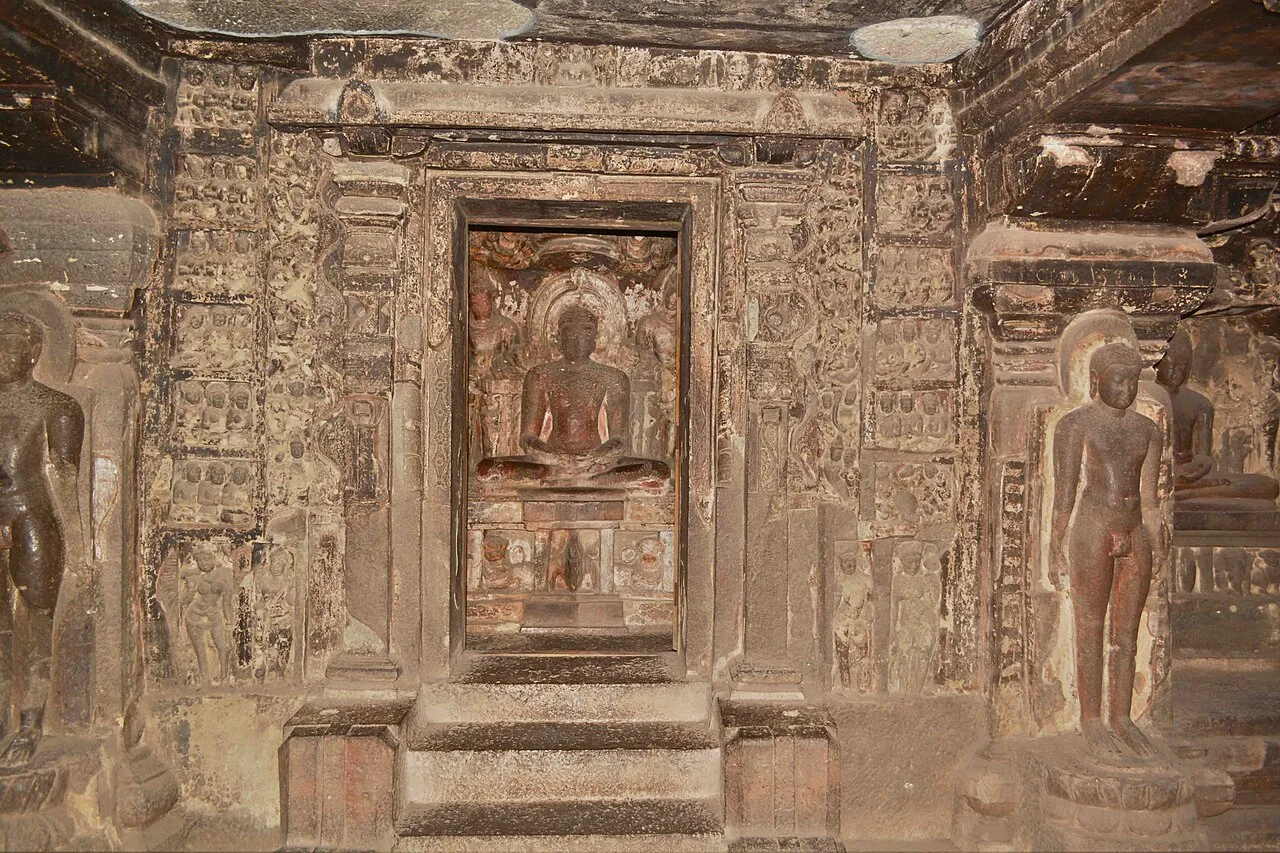
Ellora Caves
Ellora, in Maharashtra’s Chhatrapati Sambhajinagar district, is a UNESCO World Heritage Site. Visitors explore its Hindu, Buddhist and Jain monuments, including the remarkable Kailash temple carved from rock.
Key facts · verified by Ghumoopedia editors
- Type of place
- Heritage monument
- Best time to visit
- October to March; June to September for green monsoon landscapes on the Ghats (expect closures)
- Nearest railway station
- Chhatrapati Sambhajinagar (Aurangabad) · about 25 km (straight line)
- Nearest airport
- Aurangabad (Chhatrapati Sambhajinagar) Airport · about 30 km (straight line)
- Verified
- 21 Nov 2026
Plan a trip from Ellora Caves — a day-by-day route through places nearby.
Cut into basalt formations in the Charanandri Hills, Ellora contains more than 100 monuments, of which 34 are open to visitors. Created between AD 600 and 1000, the complex is among the world’s largest ensembles of rock-cut architecture and an important expression of Indian building traditions. Some structures are not enclosed caves: they have no roof. Ellora is 29 km northwest of Aurangabad and about 300 km east-northeast of Mumbai. The monuments fall into three groups: Buddhist caves 1–12, Hindu caves 13–29 and Jain caves 30–34. Their shrines, monasteries, images of deities and scenes drawn from religious traditions reflect beliefs and stories found in the first millennium CE. Built close together, the different groups demonstrate the religious harmony of ancient India. The complex served both as a place of worship and as a resting point for pilgrims. Its position on an old South Asian trade route also helped make it a commercial hub in the Deccan. The most extensive single-rock excavation is the Kailash temple, found at Cave 16. This chariot-shaped monument honours Shiva. Its carved decoration includes figures of Hindu gods and reliefs recounting episodes from the Ramayana and the Mahabharata, the two great Hindu epics. Royal patrons, merchants and wealthy people from the area contributed to the work. The Rashtrakuta dynasty, which ruled from AD 753 to 982, sponsored some of the Hindu and Buddhist monuments. The Yadava dynasty, dated to about 1187–1317, commissioned several of the Jain caves. Maharashtra spans Mumbai's Gothic and Art Deco skyline, the rock-cut cave temples of Ajanta, Ellora, Karla and Elephanta, the hill forts of Chhatrapati Shivaji Maharaj, the Konkan's sea forts and beaches, and the great pilgrimages of Pandharpur, Shirdi and the Jyotirlingas. The coast is hot and humid most of the year with very heavy monsoon rain from June to September; the Western Ghats hill stations are cool and misty in the monsoon and pleasant in winter; the Deccan and Vidarbha are dry, with harsh summers above 40°C in Nagpur and Chandrapur. The usual best time to visit is October to March; June to September for green monsoon landscapes on the Ghats (expect closures). Timings, fees and access arrangements must be confirmed locally. For official information, see Maharashtra Tourism at https://www.maharashtratourism.gov.in.
Why it matters
Ellora is a UNESCO World Heritage Site, inscribed in 1983, and an Archaeological Survey of India-protected monument. The complex is important to Maharashtra and to the study of India’s religious and artistic history: its Hindu, Buddhist and Jain monuments stand together in one basalt escarpment and reflect traditions that developed across the Deccan. The site is also a major example of rock-cut architecture, where halls, shrines and sculptures were carved directly from living rock. Cave 16, the Kailasa temple, is notable for being excavated as a vast monolithic structure. For visitors, Ellora is both a historic place of worship and a protected archaeological landscape; follow site rules and avoid touching carvings.
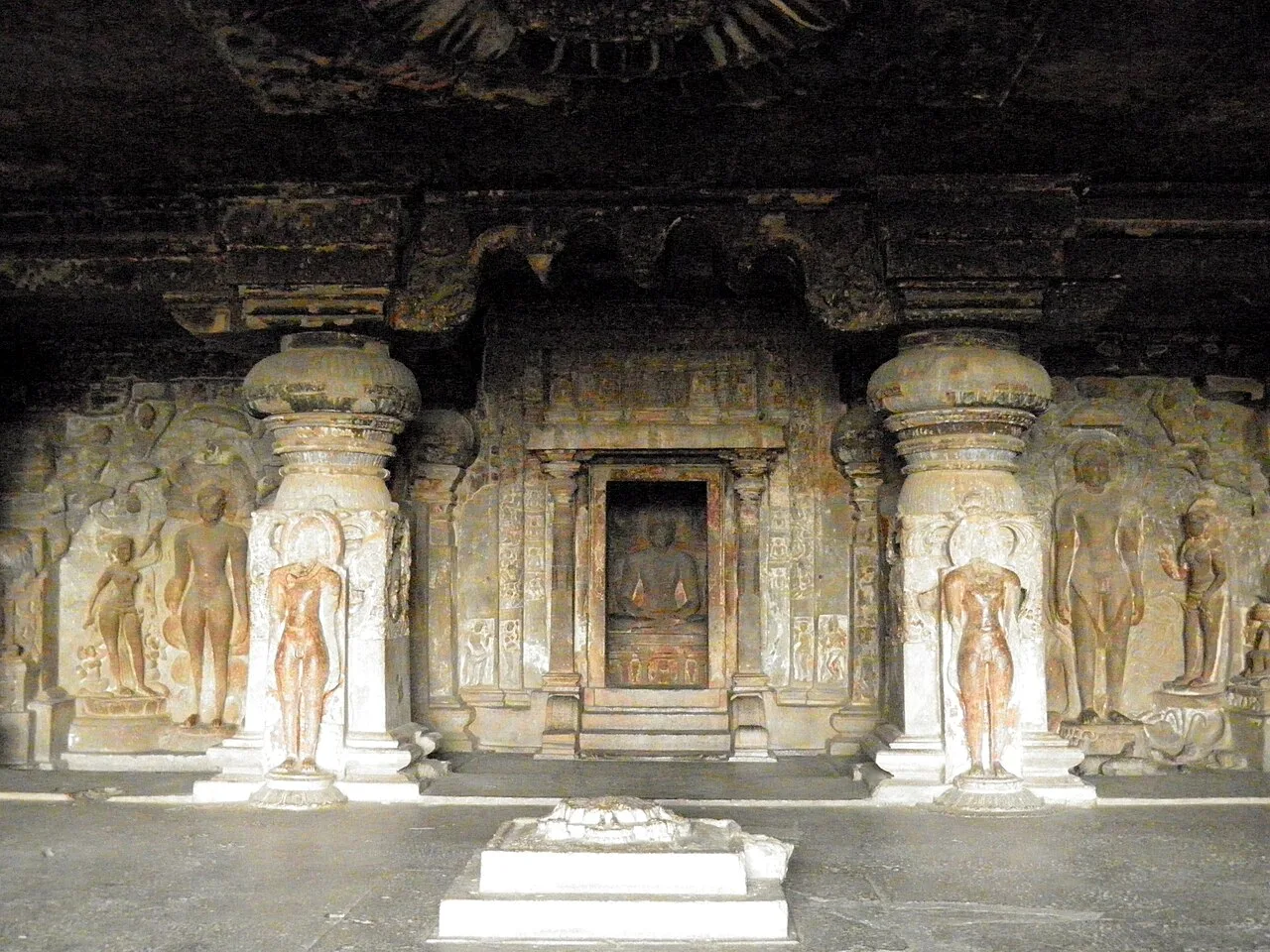
Ellora’s monuments were excavated in phases, traditionally dated from about the sixth to the tenth centuries CE. The caves lie along the Charanandri Hills basalt cliffs, close to an old route across the Deccan. Their Buddhist, Hindu and Jain shrines and monastic spaces were developed in successive periods, rather than as a single building project. The groups are conventionally numbered Buddhist caves 1–12, Hindu caves 13–29 and Jain caves 30–34; 34 monuments are open to the public, though more than 100 excavations have been identified across the site. Rashtrakuta-era patronage is associated with major Hindu and Buddhist works, including the Kailasa temple, Cave 16, traditionally linked to the Rashtrakuta ruler Krishna I. Several Jain caves are associated with later patronage, including the Yadava period. Royalty, merchants and other donors supported religious construction. Ellora also served pilgrims and travellers using regional trade routes. The site later received archaeological protection and conservation. The Archaeological Survey of India now manages the protected monuments, with conservation work intended to safeguard the rock-cut structures and sculptures.
Origin stories & folklore
Local and religious traditions connect the Kailasa temple with Mount Kailash, the Himalayan abode of Shiva. The temple’s name and mountain-like form evoke that sacred place; this is a devotional association, not a claim that the monument was transported or built from a separate mountain. A well-known sculptural subject at Ellora is Ravana shaking Mount Kailash while Shiva and Parvati remain above; it draws on the Ramayana tradition in which Ravana attempts to move Shiva’s mountain. Stories about the temple being completed with extraordinary speed also circulate in popular retellings, but these should be understood as legend rather than established construction history. Visitors may encounter different versions from guides and local storytellers.
Architecture & design
Ellora’s monuments are cut into the dark basalt of the Charanandri Hills. The caves include columned halls, monasteries, shrines, courtyards and sculpted façades; some are open excavations rather than enclosed caves. Their plans and decoration differ across the Buddhist, Hindu and Jain groups, reflecting distinct religious needs and artistic periods. Cave 16, the Kailasa temple, is the most striking example of large-scale excavation: workers cut down into the rock to leave a freestanding temple complex, rather than assembling it from blocks. Its courtyards, gateways, pillars, subsidiary shrines and sculpted surfaces are part of the same rock mass. The temple is arranged around a Shiva shrine and includes a tower, a Nandi pavilion and monumental elephants and other figures. Reliefs and carved panels cover walls and structural surfaces. The scale, sequencing and precision of the excavation make the complex an important record of Indian rock-cut engineering.
Important objects & sculptures
Look for the large sculptural ensembles at Cave 16, especially the Nandi pavilion, the Shiva shrine and panels drawn from Hindu sacred narratives. Carvings include Shiva and other Hindu deities, figures associated with the Ramayana and Mahabharata, and the celebrated scene of Ravana shaking Mount Kailash. In the Buddhist group, notice the halls, seated Buddha images and figures of bodhisattvas. The Jain caves contain images and ornament associated with Jain teachers and devotional practice. Details are best appreciated from marked visitor areas; surfaces are fragile, so do not touch or lean against sculptures. Not every carved figure or panel has a clearly identified story, and interpretation can vary between guides.
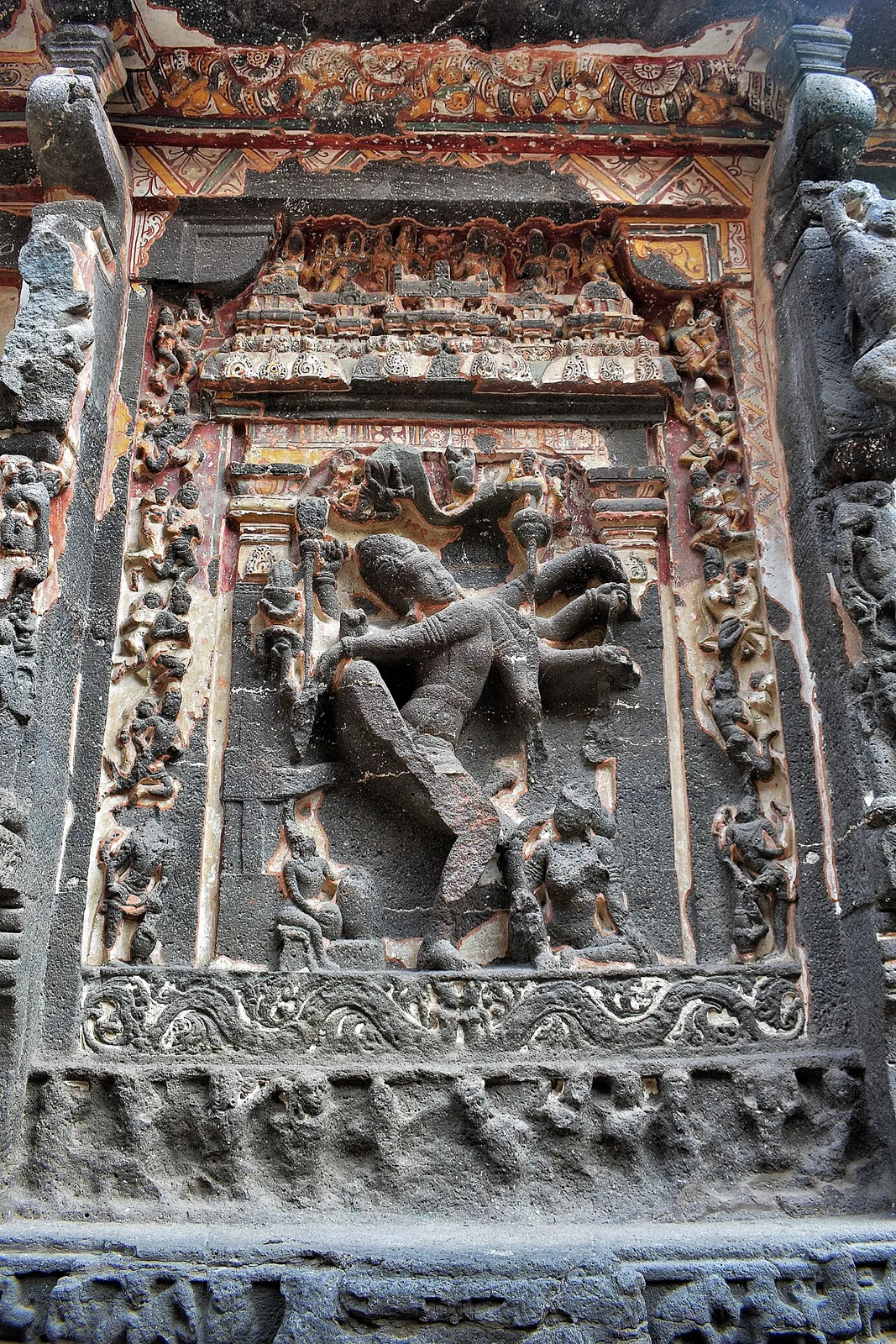
Spend unhurried time at Ellora Caves: walk the marked paths, use official viewpoints and ask locally whether a guide, entry ticket or forest permission is needed. Follow the marked route inside the caves, carry a small torch and never touch the paintings or sculptures. Ellora is usually closed on Tuesdays; confirm before going. Wildlife sightings are never guaranteed — patience and quiet improve your chances. A comfortable itinerary is one main visit in the morning, a local meal at midday and a short nearby stop before an afternoon return. Use the district list on this site to find other places in Chhatrapati Sambhajinagar, but check the route and its condition before combining stops. If a festival is on — such as Ganeshotsav, Gudi Padwa or the Ashadhi Wari to Pandharpur — roads and stays can be busy, and the experience can be unforgettable. Leave no litter: many sites are protected by the communities around them.
Suggested itineraries
Half day: Arrive in the morning; visit the Kailasa temple and nearby Hindu caves (about 2 hours); continue to selected Buddhist or Jain caves (about 1–2 hours); take a rest and return. Full day: Begin with the Kailasa temple and Hindu group (about 2–3 hours); pause for lunch; explore selected Buddhist caves, then the Jain group and marked viewpoints (about 2–3 hours); allow time for breaks and the return journey. Gentler option: Focus on the entrance area and a small number of accessible caves, taking frequent rests; ask staff locally about current path conditions and assistance.
Ellora is a protected archaeological site, not a place where visitors should assume that regular public worship or performances take place inside every monument. Its religious significance remains visible in the presence of Hindu, Buddhist and Jain heritage and in the devotional associations visitors bring to the site. The surrounding region’s everyday culture is strongly Maharashtrian; Marathi is widely spoken, and Hindi and Urdu are also heard. Local customs include removing footwear where a shrine or posted rule requires it, dressing respectfully and keeping voices low in sacred spaces. Regional music, dance and food traditions may feature in cultural events in Chhatrapati Sambhajinagar, but schedules and venues vary. Ask before photographing people, offerings or any active ritual.
Festivals & events
Ganeshotsav, usually celebrated in the late monsoon season, is widely observed across Maharashtra, including Chhatrapati Sambhajinagar, and can bring busy roads and accommodation demand. Gudi Padwa, the Marathi New Year in spring, is marked in the region with household and community observances. Buddha Purnima and Mahavir Jayanti are important in Buddhist and Jain calendars respectively, though visitors should check whether any public event is planned near Ellora rather than assuming celebrations take place at the caves. Cultural programmes associated with the wider heritage circuit may be announced from time to time. Festival travel can mean heavier traffic; confirm local arrangements before planning a visit.
Local food in Maharashtra includes vada pav, misal pav, pav bhaji, poha, puran poli, modak at Ganesh Chaturthi, Kolhapuri mutton with tambda and pandhra rassa, Malvani fish curry and sol kadhi on the Konkan coast, and Nagpur oranges and saoji food in Vidarbha. Ask what is fresh that day; many small eateries cook a limited daily menu. Vegetarian travellers eat well across the state, and most towns also have fish and meat dishes. Remote sites may have no restaurant at all. Carry water and snacks, eat a proper breakfast before long drives, and ask your accommodation for a packed lunch if you are heading out early. Try a home-cooked or local thali meal when you can — it is often the best food on the route. Choose busy, clean places, drink sealed or filtered water, and carry your packaging back with you.
Shopping & local experiences
Near the caves and in Chhatrapati Sambhajinagar, visitors may find small stalls or shops selling local snacks, regional foods and souvenirs. Look for locally made craft items or prints inspired by Maharashtra’s heritage, and ask about the maker and materials rather than assuming an item is handmade. Do not buy fragments, antiquities or objects claimed to come from the caves; removing archaeological material is harmful and may be illegal. For a broader choice of food and shopping, explore markets in the city. Keep purchases modest and avoid leaving litter at the monument.
October to March; June to September for green monsoon landscapes on the Ghats (expect closures)
The nearest principal railway station by straight-line distance is Chhatrapati Sambhajinagar (Aurangabad), roughly 25 km away. The nearest operating airport by straight-line distance is Aurangabad (Chhatrapati Sambhajinagar) Airport, roughly 30 km away. These figures are calculated from map coordinates — actual road distance is longer. Mumbai and Pune are the main rail and air gateways in the west, Chhatrapati Sambhajinagar (Aurangabad) for Ajanta and Ellora, Nagpur for Vidarbha and the tiger reserves, and the Konkan Railway serves the coast down to Sindhudurg. For the final leg, Maharashtra State Road Transport Corporation (MSRTC) buses, including Shivneri and Shivshahi coaches, private sleeper buses and shared jeeps and autos link district towns. A private taxi gives more flexibility for remote sites. When comparing train, bus and flight, count the complete door-to-door time: a flight saves the most time only if the onward road transfer is short, while an overnight train can save a hotel night. Book your return before you leave, because seats fill quickly on weekends, festivals and holidays. Current train numbers, timings, return services and fares are not listed here; check IRCTC and NTES for trains and the airline's own schedule for flights. No permit is needed to visit Maharashtra. Tiger safaris in Tadoba, Pench and Melghat must be booked in advance through the official online portals. Many hill forts are popular monsoon treks: since several accidents, some districts restrict access to waterfalls, forts and ghats during heavy rain — check current district orders before setting out. Ganeshotsav (August–September) brings very large crowds to Mumbai and Pune.
Confirm onward and return timings on IRCTC / NTES, the state bus operator or your airline before travel. A dash means current timings or fares have not been verified.
Getting around
From Chhatrapati Sambhajinagar, visitors can reach Ellora by road using a hired taxi, private vehicle or local bus where services are operating. Autos and shared vehicles may be available for local connections, but availability can vary; agree the destination before setting off. At the site, expect to walk between the entrance, caves and viewpoints, using marked paths. Parking is generally available near the visitor area, though capacity and access arrangements should be checked locally, especially on busy days. There is no need for boats. For a return journey, arrange transport in advance if relying on a taxi or shared vehicle.
Hours, tickets & permissions
Entry is subject to monument rules and may require a valid ticket; rules for children, identification, cameras or particular areas can change. Photography and access may be restricted in some places, so follow posted instructions and staff guidance. Ellora is usually closed on Tuesdays, but visitors should confirm this before travelling. Check current opening arrangements, entry requirements and fees with the Archaeological Survey of India or the official managing authority before setting out. Do not enter closed areas or cross barriers, even when a space appears accessible.
Facilities
The visitor area usually has basic facilities such as toilets, parking and places to buy refreshments, but services and their condition can vary. Carry drinking water, especially in warm weather, and check locally where refill points or food are available. Small food outlets may be found near the site, while a wider choice of meals and cash services is more likely in Chhatrapati Sambhajinagar. Guides may be available locally; confirm their credentials and arrangements before starting. Do not assume that ATMs, medical services or shops are available inside the monument grounds.
Accessibility
A visit involves walking outdoors between caves, uneven stone surfaces and, in places, steps. The complex is spread along a cliff face, so seeing many caves can mean substantial walking; shade is limited on exposed paths and courtyards. Wheelchair access may be difficult, and not all caves or interior spaces are suitable for wheelchairs or strollers. Older visitors and anyone with limited mobility may prefer to focus on a few nearby monuments, take frequent rests and avoid rushing. Ask the site staff about current path conditions and assistance before arrival; do not assume that every route has ramps or handrails.
No permit is needed to visit Maharashtra. Tiger safaris in Tadoba, Pench and Melghat must be booked in advance through the official online portals. Many hill forts are popular monsoon treks: since several accidents, some districts restrict access to waterfalls, forts and ghats during heavy rain — check current district orders before setting out. Ganeshotsav (August–September) brings very large crowds to Mumbai and Pune. Carry a photo ID at all times and save the emergency number 112 and your accommodation's contact offline. Heat in summer and heavy rain in the monsoon are the main weather risks; carry water, avoid midday sun and allow extra time when roads flood. Stay on marked paths, keep away from cliff edges and fast water, and never approach wild animals.
Photography
Morning or later-afternoon light can help reveal reliefs and carved details, while harsh midday sun may make exposed courtyards difficult to photograph. Use marked visitor areas and take care not to block paths. Camera rules can vary by location and may change, so check posted notices and current entry conditions. Do not touch carvings to pose or steady a camera. Drone use should not be assumed to be allowed; obtain the required authorization and follow heritage and aviation rules. Ask permission before photographing visitors, staff, worshippers or any ritual activity.
Choose a stay by the full journey to Ellora Caves, not just the district name. Mumbai, Pune, Nashik and Chhatrapati Sambhajinagar offer the widest choice; hill stations and Konkan beaches have resorts and family homestays, and MTDC resorts are reliable value. In summer, check air-conditioning; in the monsoon, check that the property is accessible if roads flood. Book in advance for weekends, festivals and the peak season (October to March; June to September for green monsoon landscapes on the Ghats (expect closures)). Confirm the exact location, meals included, check-in time and cancellation terms in writing. Avoid sending money to unverified contacts or touts at stations. Carry some cash, as card and digital payments can be unreliable in remote areas.
Within the wider Chhatrapati Sambhajinagar area, visitors can consider Grishneshwar Temple, Daulatabad Fort and Khuldabad, whose historic sites include the tomb of Aurangzeb. In the city, Bibi Ka Maqbara, the Chhatrapati Sambhajinagar Caves and Panchakki are established heritage stops. These places are separate visits and require road travel; check routes and current access before combining them with Ellora. Ajanta Caves are another major heritage site in Maharashtra, but are not a short stop on an Ellora outing, so plan them as a separate trip rather than assuming a convenient same-day connection.
For couples, Ellora Caves rewards a slow pace: arrive early for soft light and fewer crowds, share a local meal and keep the evening free. Sunset on Marine Drive, a misty monsoon morning in Mahabaleshwar or a quiet Konkan beach makes the trip memorable. Public displays of affection can be frowned upon in conservative communities and at religious sites, so be discreet. Keep a buffer in your itinerary, because weather and road conditions can delay plans.
Q: How much time should I allow for Ellora? A: A half day can cover a selection of caves; a full day allows more time for the three religious groups, breaks and walking. Q: When is the best season to visit? A: October to March is generally the most comfortable period. Monsoon months can be wet, so check conditions and travel plans. Q: Is Ellora ticketed, and is it open every day? A: Entry rules and fees are set by the managing authority. Ellora is usually closed on Tuesdays; confirm current details before travelling. Q: Is the site suitable for children and elderly visitors? A: Children can enjoy the sculptures with supervision. Uneven paths, steps and long walks may be tiring, so elderly visitors or people with limited mobility should plan a shorter route and rests. Q: Where should I stay for a visit? A: Chhatrapati Sambhajinagar is the main nearby city for a range of accommodation; check the route and transport options before booking.
Be the first to share photos, stories, advice or a helpful contact for Ellora Caves.
Loading…