
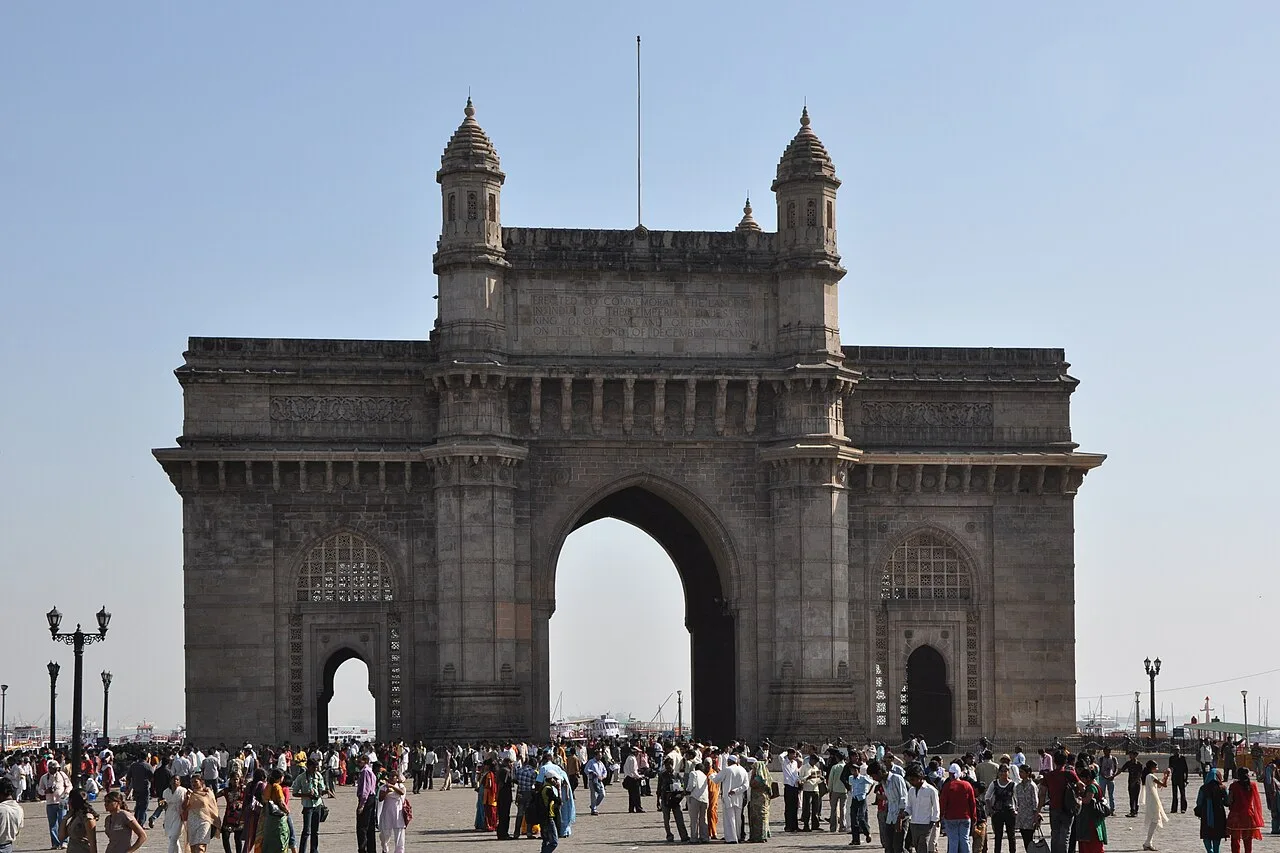
Gateway of India
The Gateway of India is a basalt arch in Mumbai, built to mark King George V’s 1911 arrival. Visitors come to see its architecture, waterfront setting and place in the city’s history.
Key facts · verified by Ghumoopedia editors
- Type of place
- Heritage monument
- Best time to visit
- October to March; June to September for green monsoon landscapes on the Ghats (expect closures)
- Nearest railway station
- Mumbai CSMT · about 5 km (straight line)
- Verified
- 21 Nov 2026
Plan a trip from Gateway of India — a day-by-day route through places nearby.
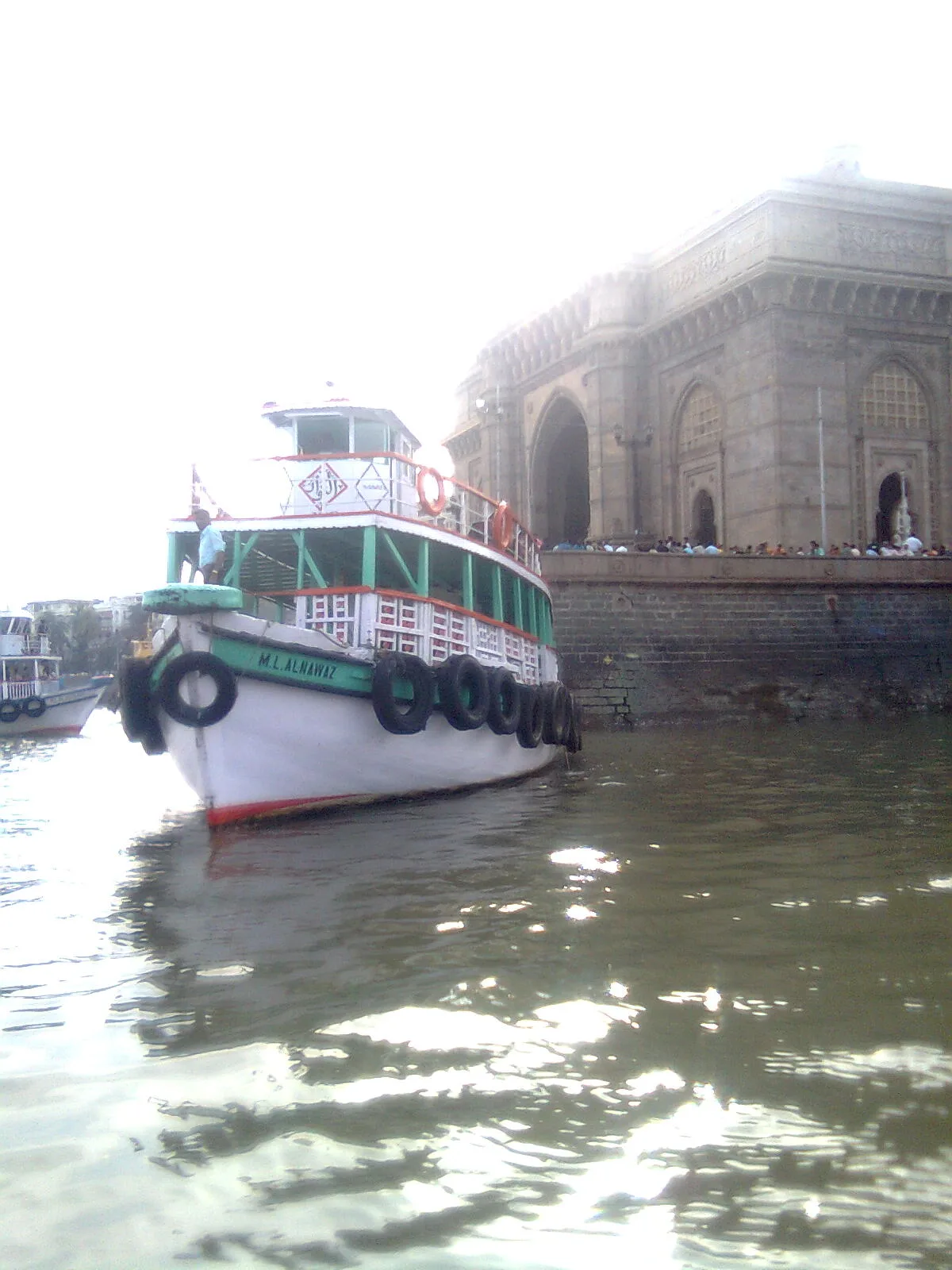
Standing on Mumbai’s shore in Maharashtra, the Gateway of India was completed in 1924. It commemorates King George V’s arrival in December 1911, when he came for his coronation as Emperor of India. His landing took place on Strand Road, close to Wellington Fountain; he was the first British sovereign to travel to India. Work began with the laying of the foundation stone in March 1913. Architect George Wittet’s plan received approval in 1914, and the monument was finished a decade later. Built from basalt, the arch rises 26 metres (85 feet). Its design belongs to the Indo-Saracenic style and draws on 16th-century Gujarati architecture, while also recalling a triumphal arch. For a time, it served as a formal point of entry for senior government visitors. In 1948, the final British troops departed from India through the Gateway, a year after the country gained independence. The monument stands at an angle along the waterfront, facing the Taj Mahal Palace and Tower Hotel and looking out over the Arabian Sea. It has become closely associated with Mumbai and is a well-known visitor attraction. Residents, vendors and photographers also gather there, with photographers offering their services to passers-by. Since 2003, the site has hosted Hanukkah observances for Mumbai’s Jewish community, including the lighting of a menorah. Five jetties are situated beside the Gateway; two handle commercial ferry services. In August 2003, a bomb exploded in a taxi parked outside the monument. Access to the Gateway was subsequently restricted. Maharashtra spans Mumbai's Gothic and Art Deco skyline, the rock-cut cave temples of Ajanta, Ellora, Karla and Elephanta, the hill forts of Chhatrapati Shivaji Maharaj, the Konkan's sea forts and beaches, and the great pilgrimages of Pandharpur, Shirdi and the Jyotirlingas. The coast is hot and humid most of the year with very heavy monsoon rain from June to September; the Western Ghats hill stations are cool and misty in the monsoon and pleasant in winter; the Deccan and Vidarbha are dry, with harsh summers above 40°C in Nagpur and Chandrapur. The usual best time to visit is October to March; June to September for green monsoon landscapes on the Ghats (expect closures). Timings, fees and access arrangements must be confirmed locally. For official information, see Maharashtra Tourism at https://www.maharashtratourism.gov.in.
Why it matters
The Gateway of India is a major civic landmark on Mumbai’s waterfront and a prominent reminder of the city’s colonial-era history. It was built to commemorate King George V’s landing in India in 1911 and later served as a ceremonial entrance for important visitors arriving by sea. Its role also changed with India’s independence: the last British troops left through the Gateway in 1948. For residents and visitors, it remains a familiar meeting place and a symbol of Mumbai’s relationship with the Arabian Sea. Hanukkah celebrations have also been held here by members of the local Jewish community. The monument is not a UNESCO World Heritage Site in its own right; confirm its current protection and management status with the relevant authorities.
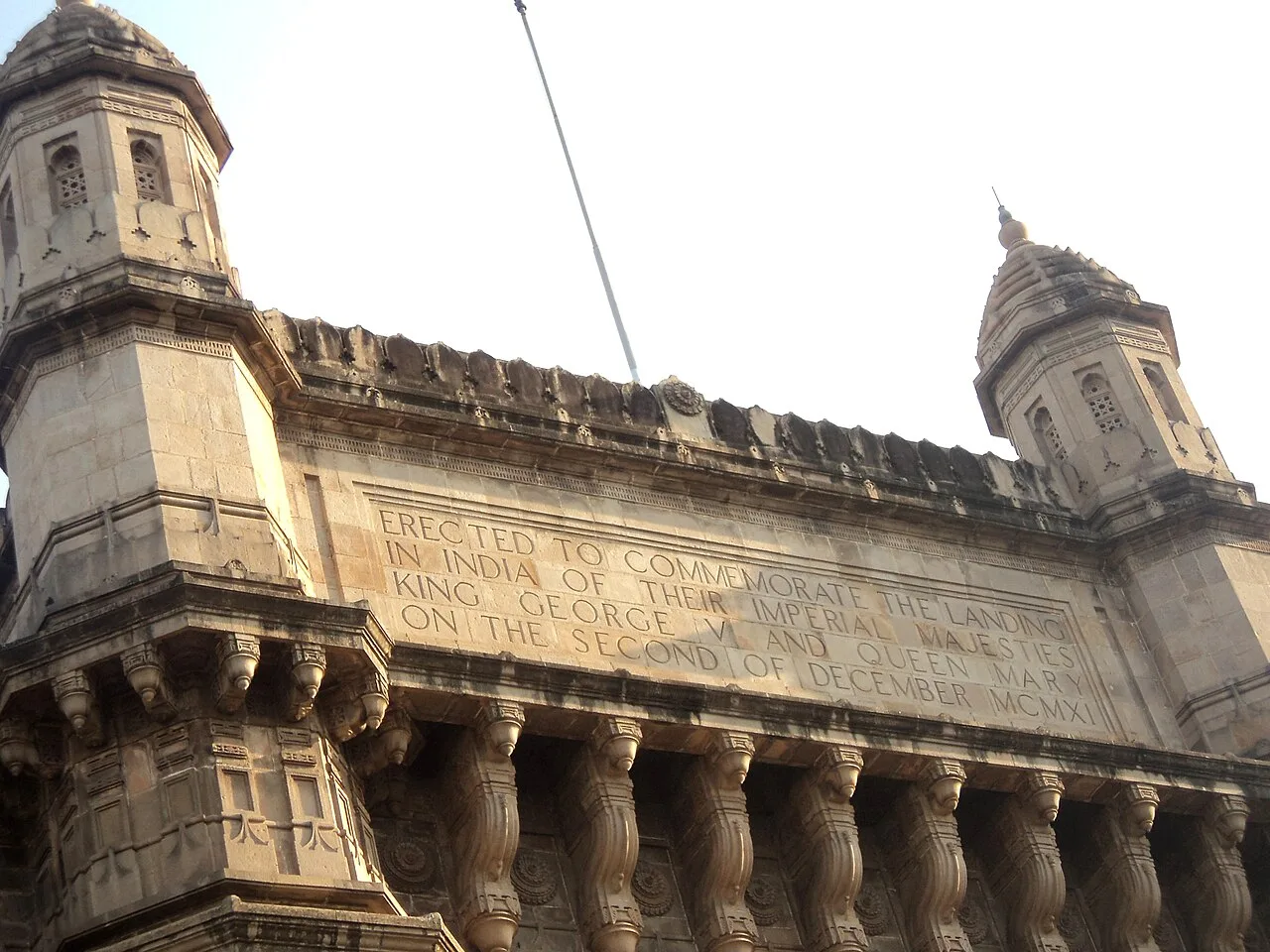
The Gateway of India was conceived to mark the landing of King George V and Queen Mary in Bombay in December 1911, during their visit for his coronation as Emperor of India. The landing took place near Strand Road and Wellington Fountain. The foundation stone was laid in March 1913, but the final design by architect George Wittet was sanctioned only in 1914. Construction continued through the First World War and the monument was completed in 1924. It was built in the Indo-Saracenic style, drawing on architectural forms associated with 16th-century Gujarat. During the colonial period, the arch became a ceremonial sea-facing entrance used for important government arrivals. Its meaning shifted after independence. In 1948, the last British troops to leave India passed through the Gateway in a departure ceremony, making the monument a setting for a prominent change in public symbolism. Over time it became a popular gathering place and a major visitor landmark, with ferry jetties operating nearby. The site has also experienced security restrictions, including after a bomb blast in a taxi parked in front of it in August 2003. Coastal exposure and heavy public use make ongoing care important; visitors should check locally for any current conservation work or access limits.
Origin stories & folklore
No widely established origin legend is associated with the Gateway of India; its history is documented through its commissioning, design and construction. Local meanings have nevertheless grown around the arch. Some visitors regard passing beneath it as a symbolic arrival in Mumbai, while its 1948 association with the departure of British troops has made it a potent reminder of the end of colonial rule. These are interpretations of recorded events rather than supernatural folklore. Hanukkah gatherings at the waterfront have added another layer of community meaning. Visitors may hear local stories from guides, but should distinguish oral interpretation from the monument’s documented history.
Architecture & design
The Gateway is a monumental stone arch on Mumbai’s eastern waterfront, set at an angle to the shoreline and facing the Arabian Sea. Its design is commonly described as Indo-Saracenic, blending forms associated with Indian architecture and features of European monumental design. Wittet’s design also drew inspiration from 16th-century Gujarati architecture. The principal arch rises about 26 metres (85 feet) and has the commanding profile of a triumphal arch, with smaller arches and architectural details contributing to its balanced composition. The structure is built primarily of basalt. Visitors can look for the domed elements, finely worked stone surfaces, ornamental details and screened openings that soften the mass of the masonry. The arch frames views through to the waterfront and forms a ceremonial passage rather than an enclosed interior monument. Its position opposite the Taj Mahal Palace and Tower Hotel makes the relationship between the arch, harbour and city skyline part of the architectural experience. Salt air, weather and crowds are ongoing practical challenges for the stonework.
Important objects & sculptures
The Gateway is an architectural monument rather than a museum, and it does not contain a regular collection of displayed objects. Visitors can examine its carved stone ornament, patterned screens, domed features and the transition from the massive piers to the central arch. These details reflect the monument’s Indo-Saracenic design and Gujarati architectural references. The basalt construction and scale are easiest to appreciate by viewing the structure from more than one angle, while keeping clear of restricted areas. Interpretation boards may provide further context when available. Do not assume that every visible mark or carved detail is an inscription; consult an authorised guide or reliable interpretation material for identification.
Explore Gateway of India slowly and read the interpretation boards, use the official audio guide where available or hire an authorised guide to understand its history. Check opening days, ticket counters and camera rules in advance; many monuments and museums close on one weekday and on some public holidays. Early morning gives softer light, cooler air and smaller crowds. A comfortable itinerary is one main visit in the morning, a local meal at midday and a short nearby stop before an afternoon return. Use the district list on this site to find other places in Mumbai City, but check the route and its condition before combining stops. If a festival is on — such as Ganeshotsav, Gudi Padwa or the Ashadhi Wari to Pandharpur — roads and stays can be busy, and the experience can be unforgettable. Leave no litter: many sites are protected by the communities around them.
Suggested itineraries
Half day: Spend 45–60 minutes viewing the Gateway and reading available interpretation; take a waterfront walk; allow 1–2 hours for a nearby museum or a relaxed Colaba visit. Full day: Begin at the Gateway; take a boat excursion if operating and suitable; visit the Chhatrapati Shivaji Maharaj Vastu Sangrahalaya; explore Kala Ghoda and finish with a meal in Colaba. Allow time for travel and queues. Gentler option: View the monument from the nearby waterfront at an unhurried pace, take seated breaks at a nearby café, and choose just one short, accessible stop after checking its entrance conditions.
The waterfront is a busy public gathering place used by residents, visitors, photographers and street vendors. Marathi, Hindi, Gujarati and English are commonly heard across Mumbai, alongside many other languages brought by the city’s diverse communities. The Gateway’s setting connects everyday urban life with the harbour: people meet, watch boats and take photographs, while nearby Colaba offers a mix of local and visitor-oriented shops and cafés. The local Jewish community has held Hanukkah celebrations here, including the lighting of a menorah, since 2003. Be considerate around ceremonies, vendors and people being photographed, and ask permission before taking close portraits.
Festivals & events
Hanukkah is a notable community observance at the Gateway, with menorah-lighting celebrations held here by the local Jewish community since 2003; arrangements can vary, so check locally. Mumbai’s major public festivals, including Ganeshotsav and Gudi Padwa, are celebrated across the city rather than being exclusive to this monument. During festival periods and school holidays, the waterfront and nearby roads can become busier, and traffic or security arrangements may change. Visitors hoping to attend a particular event should confirm whether it is scheduled at the site and follow directions from organisers and authorities.
Local food in Maharashtra includes vada pav, misal pav, pav bhaji, poha, puran poli, modak at Ganesh Chaturthi, Kolhapuri mutton with tambda and pandhra rassa, Malvani fish curry and sol kadhi on the Konkan coast, and Nagpur oranges and saoji food in Vidarbha. Ask what is fresh that day; many small eateries cook a limited daily menu. Vegetarian travellers eat well across the state, and most towns also have fish and meat dishes. Remote sites may have no restaurant at all. Carry water and snacks, eat a proper breakfast before long drives, and ask your accommodation for a packed lunch if you are heading out early. Try a home-cooked or local thali meal when you can — it is often the best food on the route. Choose busy, clean places, drink sealed or filtered water, and carry your packaging back with you.
Shopping & local experiences
Colaba Causeway is the best-known nearby place to browse for clothing, accessories, souvenirs and small gifts, though product quality and prices vary between shops. Ask before photographing shopkeepers or stalls, and check items carefully before buying. Around the waterfront, visitors may encounter vendors offering small souvenirs or photography services; use your judgement and agree on any service details in advance. The wider Colaba area has cafés and restaurants where visitors can try Mumbai snacks and regional Indian food. For crafts or packaged foods, favour reputable shops and check labels when relevant.
October to March; June to September for green monsoon landscapes on the Ghats (expect closures)
The nearest principal railway station by straight-line distance is Mumbai CSMT, roughly 5 km away. The nearest operating airport by straight-line distance is Chhatrapati Shivaji Maharaj International Airport, Mumbai, roughly 20 km away. These figures are calculated from map coordinates — actual road distance is longer. Mumbai and Pune are the main rail and air gateways in the west, Chhatrapati Sambhajinagar (Aurangabad) for Ajanta and Ellora, Nagpur for Vidarbha and the tiger reserves, and the Konkan Railway serves the coast down to Sindhudurg. Within Mumbai, suburban local trains on the Western, Central and Harbour lines are the fastest way around outside rush hours (roughly 8–11 am and 5–9 pm); each train has ladies' compartments, and the Metro and app cabs are more comfortable alternatives. When comparing train, bus and flight, count the complete door-to-door time: a flight saves the most time only if the onward road transfer is short, while an overnight train can save a hotel night. Book your return before you leave, because seats fill quickly on weekends, festivals and holidays. Current train numbers, timings, return services and fares are not listed here; check IRCTC and NTES for trains and the airline's own schedule for flights. No permit is needed to visit Maharashtra. Tiger safaris in Tadoba, Pench and Melghat must be booked in advance through the official online portals. Many hill forts are popular monsoon treks: since several accidents, some districts restrict access to waterfalls, forts and ghats during heavy rain — check current district orders before setting out. Ganeshotsav (August–September) brings very large crowds to Mumbai and Pune.
Confirm onward and return timings on IRCTC / NTES, the state bus operator or your airline before travel. A dash means current timings or fares have not been verified.
Getting around
Taxis and app-based cabs can bring visitors to the Colaba waterfront, though traffic and vehicle access may be restricted near the monument. Mumbai buses serve the wider area; check current routes locally. Walking is practical for nearby Colaba attractions, but pavements can be crowded. Commercial boat services operate from jetties at the Gateway, including services associated with harbour excursions; confirm current departures and boarding arrangements with operators. Parking near the waterfront can be limited, so a drop-off or public transport may be more convenient. Suburban trains and the Metro can help with longer journeys across Mumbai, followed by a bus, taxi or walk.
Hours, tickets & permissions
The waterfront monument is generally visited as an outdoor public attraction, but access can be restricted temporarily for security, events, maintenance or crowd management. Ticketing, photography rules, guided access and any permit requirements may differ by activity or change over time; do not assume that special areas or boat services follow the same rules as the public plaza. Dress respectfully for a public civic site and carry identification if required by current security instructions. Confirm current access conditions, hours and any fees with the relevant managing authority before travelling.
Facilities
Facilities immediately around the monument can vary with operating arrangements and crowd controls. Food and drinks are available from businesses in the wider Colaba area; do not rely on informal vendors for drinking water. Public toilets may be available nearby, but check locally for location and condition. Guides and audio interpretation may be available at times, though visitors should use authorised providers and confirm availability. ATMs, cafés and other services can be found in the surrounding neighbourhood. Parking close to the waterfront is limited or subject to restrictions. Check in advance for current facilities, especially if travelling with children or someone who needs frequent rest stops.
Accessibility
The monument is approached from a busy waterfront public area, where crowding, kerbs and uneven paving can make movement difficult. The exterior can be viewed without needing to explore an interior, but do not assume that every route is step-free or that ramps, lifts or accessible toilets are available. Check current access arrangements locally before visiting with a wheelchair or stroller. Walking distances can grow if vehicle access is restricted or parking is unavailable. Shade is limited around the exposed waterfront, so take breaks and carry water. Older visitors may find an early, quieter visit more comfortable, while allowing extra time for standing and walking.
No permit is needed to visit Maharashtra. Tiger safaris in Tadoba, Pench and Melghat must be booked in advance through the official online portals. Many hill forts are popular monsoon treks: since several accidents, some districts restrict access to waterfalls, forts and ghats during heavy rain — check current district orders before setting out. Ganeshotsav (August–September) brings very large crowds to Mumbai and Pune. Carry a photo ID at all times and save the emergency number 112 and your accommodation's contact offline. Heat in summer and heavy rain in the monsoon are the main weather risks; carry water, avoid midday sun and allow extra time when roads flood. Watch your belongings in crowds and on public transport, and follow posted instructions.
Photography
Early morning often brings softer light, cooler conditions and fewer people; late-day light can also suit waterfront views. The arch, harbour and Taj Mahal Palace and Tower Hotel offer varied compositions, but keep public routes clear and follow any temporary security instructions. Casual photography is commonly practised in the public area, though rules for professional equipment or commercial shoots may differ; check locally. Do not fly a drone without confirming current aviation and site permissions. Ask before photographing people closely, and be especially respectful during Hanukkah events or other community observances.
Choose a stay by the full journey to Gateway of India, not just the district name. Mumbai is expensive, so book early; Colaba and Fort suit sightseeing, while Bandra and Juhu suit nightlife and beaches. In summer, check air-conditioning; in the monsoon, check that the property is accessible if roads flood. Book in advance for weekends, festivals and the peak season (October to March; June to September for green monsoon landscapes on the Ghats (expect closures)). Confirm the exact location, meals included, check-in time and cancellation terms in writing. Avoid sending money to unverified contacts or touts at stations. Carry some cash, as card and digital payments can be unreliable in remote areas.
The Taj Mahal Palace and Tower Hotel stands opposite the Gateway, and Colaba Causeway is a nearby shopping street. The Chhatrapati Shivaji Maharaj Vastu Sangrahalaya offers museum collections a short journey away. Kala Ghoda is known for galleries and cultural institutions, while Flora Fountain and the surrounding Fort area provide further heritage architecture to explore. Mumbai CSMT is another major historic landmark in the city. Boat excursions from the Gateway may serve Elephanta Island, home to the Elephanta Caves; check current operations and allow for the boat journey and time on the island before combining it with other stops.
For couples, Gateway of India rewards a slow pace: arrive early for soft light and fewer crowds, share a local meal and keep the evening free. Sunset on Marine Drive, a misty monsoon morning in Mahabaleshwar or a quiet Konkan beach makes the trip memorable. Public displays of affection can be frowned upon in conservative communities and at religious sites, so be discreet. Keep a buffer in your itinerary, because weather and road conditions can delay plans.
Q: How much time should I allow for a visit? A: Around an hour can suit a simple look at the monument; allow longer to explore nearby waterfront attractions or take a boat trip. Q: When is a good season to visit? A: October to March is generally more comfortable in Mumbai. Monsoon months can bring heavy rain and disrupted waterfront conditions. Q: Is entry ticketed? A: The exterior is generally visited as a public landmark, but rules, fees for special activities and access restrictions can change. Confirm current details with the relevant authority. Q: Is it suitable for children and elderly visitors? A: Yes, with care. The area can be crowded and exposed, and walking surfaces may be uneven; plan breaks and supervise children near the water. Q: Where can I stay nearby? A: Colaba and the wider South Mumbai area have accommodation options across different categories. Check location, access and current conditions before booking.
Be the first to share photos, stories, advice or a helpful contact for Gateway of India.
Loading…