
Kashid
Kashid is a beach village in Raigad district, Maharashtra, facing the Arabian Sea. Visitors come for the coast, water sports and nearby places such as Phansad Bird Sanctuary and Korlai Fort.
Key facts · verified by Ghumoopedia editors
- Type of place
- Natural attraction
- Best time to visit
- October to March; June to September for green monsoon landscapes on the Ghats (expect closures)
- Nearest railway station
- Roha · about 25 km (straight line)
- Verified
- 21 Nov 2026
Plan a trip from Kashid — a day-by-day route through places nearby.
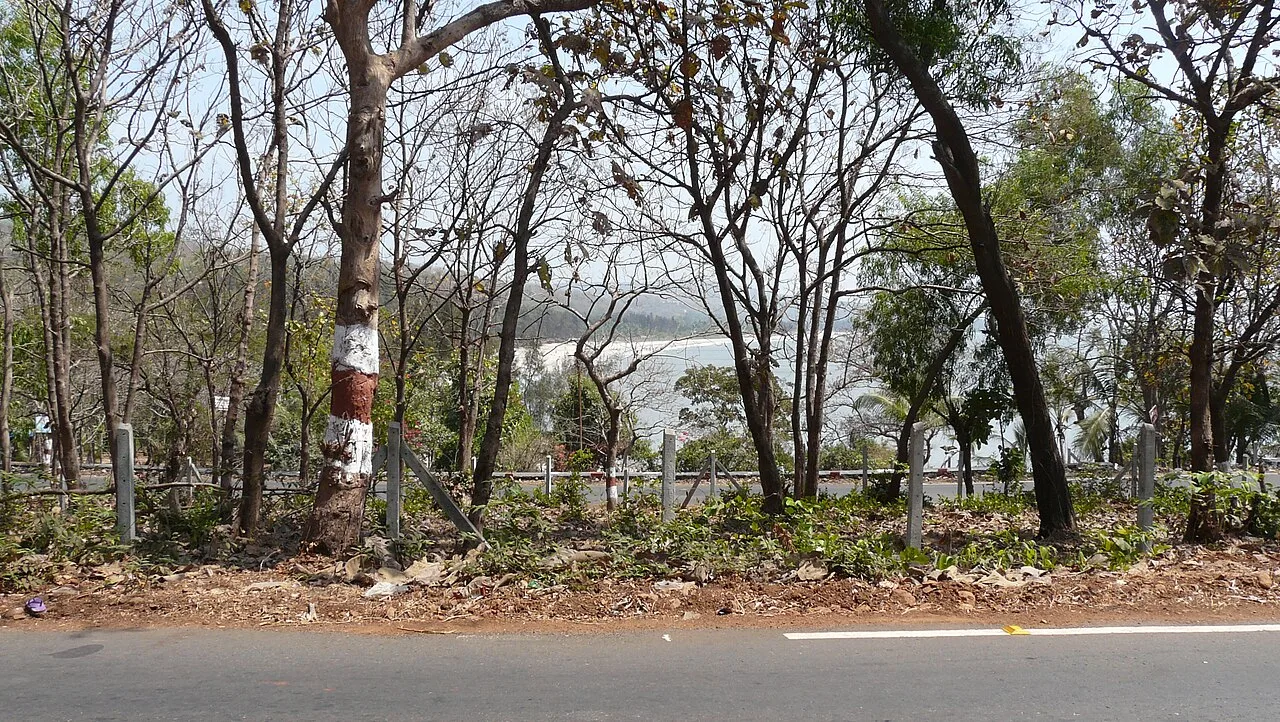
Kashid is in Raigad district, Maharashtra, within Murud taluka on the Arabian Sea coast of North Konkan. Murud City is 15 km away and Mumbai is 135 km away, with road access via the Alibag–Murud route. The beach curves into a semi-circle between two rocky hills, on the North Konkan shoreline between Mandwa and Murud-Janjira. The beach offers water sports during peak hours. Hotels and homestays are found beside the state highway, which passes close to the shore. Nearby places to visit include Phansad Bird Sanctuary, Korlai Fort and Datta Mandir at Revdanda. A Ro-Ro ferry service began about two years ago, enabling travellers to take a vehicle by ship from Ferry Wharf to Mandwa and then continue to Kashid by road. Ferry reservations must be made in advance, particularly for weekend travel. The crossing provides a sea leg before the onward road journey. Maharashtra spans Mumbai's Gothic and Art Deco skyline, the rock-cut cave temples of Ajanta, Ellora, Karla and Elephanta, the hill forts of Chhatrapati Shivaji Maharaj, the Konkan's sea forts and beaches, and the great pilgrimages of Pandharpur, Shirdi and the Jyotirlingas. The coast is hot and humid most of the year with very heavy monsoon rain from June to September; the Western Ghats hill stations are cool and misty in the monsoon and pleasant in winter; the Deccan and Vidarbha are dry, with harsh summers above 40°C in Nagpur and Chandrapur. The usual best time to visit is October to March; June to September for green monsoon landscapes on the Ghats (expect closures). Timings, fees and access arrangements must be confirmed locally. For official information, see Maharashtra Tourism at https://www.maharashtratourism.gov.in.
Why it matters
Kashid is a coastal village and beach destination in Murud taluka, Raigad district, on Maharashtra’s North Konkan coast. Its curved shoreline, framed by rocky hills and facing the Arabian Sea, makes it a popular local and regional place for seaside recreation. The beach is also a convenient base for exploring the wider coast, including the historic forts and natural areas around Murud, Revdanda and Phansad. Visitors should follow locally posted beach-safety instructions and respect the shore and surrounding communities.
Kashid’s history as a village is not widely detailed in readily available historical accounts, so a precise founding date or builder cannot be stated with confidence. Its setting on the North Konkan coast places it within a region shaped by fishing, coastal trade and maritime travel. Nearby forts provide clearer evidence of the area’s strategic past: Murud-Janjira is associated with the Siddis, while Korlai Fort reflects Portuguese coastal presence. These histories belong to the wider region and should not be taken as proof that either power built or governed Kashid itself. For generations, local livelihoods and settlement patterns have been linked to the sea and the surrounding rural landscape. In more recent decades, improved road access and the growth of beach tourism have brought hotels, homestays, food stalls and water-sports operators to the area. Seasonal visitor numbers have made tourism an increasingly visible part of the local economy. Kashid is best understood as a living coastal village whose modern visitor role sits alongside older regional maritime and rural connections; detailed claims about particular events in the village’s past require stronger local or archival evidence.
Origin stories & folklore
There is no widely documented, Kashid-specific origin legend that can be presented as established history. As in many coastal communities, stories about the sea, changing shorelines and the protection of fishing boats may be shared locally, but versions can differ between families and villages. Treat such accounts as oral tradition rather than verified explanations of how Kashid or its beach formed. The forts and religious places around Murud and Revdanda have their own histories and local beliefs; visitors should avoid transferring those stories to Kashid without evidence. If residents share a story, listen respectfully and ask whether it is appropriate to record or repeat it.
Enjoy Kashid early in the morning or at sunset, when the sand is cooler and the light is best. Swim only where lifeguards are posted and the beach is marked safe — rip currents are strong, especially in the monsoon, when swimming is often banned. Try local seafood at busy stalls and ask about tide times before walking out on rocks or sandbars. A comfortable itinerary is one main visit in the morning, a local meal at midday and a short nearby stop before an afternoon return. Use the district list on this site to find other places in Raigad, but check the route and its condition before combining stops. If a festival is on — such as Ganeshotsav, Gudi Padwa or the Ashadhi Wari to Pandharpur — roads and stays can be busy, and the experience can be unforgettable. Leave no litter: many sites are protected by the communities around them.
Suggested itineraries
Half day: Arrive in the morning, enjoy a short beach walk, relax in a safe area, have a local meal, then make a brief nearby stop if road and weather conditions allow. Full day: Visit the beach in the morning, take a meal break, choose one nearby stop such as Korlai Fort or Revdanda, then return to Kashid before evening conditions change. Gentler option: Choose a convenient beach access point, spend a short time seated near the shore, and enjoy a meal nearby; avoid rocky sections and long walks.
Marathi is widely used in the region, alongside forms of Konkani and other languages visitors may hear. Daily life reflects both village routines and the seasonal arrival of beach travellers. Local food often draws on coastal cooking, including fish and other seafood, with availability varying by season and household. Ganeshotsav, Diwali and other festivals are observed in the wider area, while customs and celebrations differ between families. Tourism has added guesthouses, eateries and recreation businesses, but Kashid remains a village rather than a purpose-built resort. Visitors can be considerate by dressing appropriately around homes and places of worship, asking before photographing people, and following local guidance near fishing activity.
Local communities
Kashid and the surrounding villages are home to Marathi- and Konkani-speaking residents, including families whose livelihoods may involve fishing, farming, small trade, transport, hospitality and food services. The beach economy also supports seasonal workers and local operators offering visitor services. These roles vary by household and season; not every resident is involved in tourism or fishing. The coast is both a workplace and a living environment, so visitors should keep clear of active fishing areas, avoid disturbing boats or nets, and buy from local businesses respectfully. Do not assume that community customs or access to private working spaces are open to visitors.
Festivals & events
Ganeshotsav, generally in the monsoon season, is widely observed in Maharashtra, including the wider Raigad region; Gudi Padwa, Diwali and Holi are also part of local festive life. Coastal communities may mark Narali Purnima, associated with the monsoon fishing season, though observance varies by village and year. These are community occasions, not necessarily events staged on Kashid Beach for visitors. Festival periods can increase traffic and demand for accommodation, especially when they coincide with school holidays or weekends. Check local notices before visiting, keep noise low near homes and religious gatherings, and do not photograph ceremonies without permission.
Local food in Maharashtra includes vada pav, misal pav, pav bhaji, poha, puran poli, modak at Ganesh Chaturthi, Kolhapuri mutton with tambda and pandhra rassa, Malvani fish curry and sol kadhi on the Konkan coast, and Nagpur oranges and saoji food in Vidarbha. Ask what is fresh that day; many small eateries cook a limited daily menu. Vegetarian travellers eat well across the state, and most towns also have fish and meat dishes. Remote sites may have no restaurant at all. Carry water and snacks, eat a proper breakfast before long drives, and ask your accommodation for a packed lunch if you are heading out early. Try a home-cooked or local thali meal when you can — it is often the best food on the route. Choose busy, clean places, drink sealed or filtered water, and carry your packaging back with you.
Shopping & local experiences
Shopping in Kashid is modest and centred on small local businesses rather than a large craft market. Visitors may find snacks, simple beach necessities and locally prepared food; availability changes with season and visitor numbers. Seafood dishes are a notable local food experience where served, but ask about the day’s catch and preparation rather than assuming a particular item is available. Look for locally made goods in nearby towns, while checking their origin instead of assuming an item is traditional to Kashid. Avoid buying shells, coral or wildlife products, and carry reusable bags to reduce plastic waste.
Kashid faces the Arabian Sea along a sandy shoreline set between rocky headlands, giving parts of the beach a curved, sheltered appearance. The sea and beach change with tides, weather and monsoon conditions; strong currents and rough surf can make swimming unsafe. The surrounding North Konkan landscape includes coastal vegetation, village land and forested areas farther inland. Phansad Wildlife Sanctuary, in the wider region, protects a larger forest habitat with birdlife and other wildlife, but sightings are never guaranteed and should not be expected on the beach itself. Avoid disturbing shorebirds or other animals, leave shells and natural features in place, and take all litter away. Monsoon conditions can alter access and beach safety.
October to March; June to September for green monsoon landscapes on the Ghats (expect closures)
The nearest principal railway station by straight-line distance is Roha, roughly 25 km away. The nearest operating airport by straight-line distance is Chhatrapati Shivaji Maharaj International Airport, Mumbai, roughly 70 km away. These figures are calculated from map coordinates — actual road distance is longer. Mumbai and Pune are the main rail and air gateways in the west, Chhatrapati Sambhajinagar (Aurangabad) for Ajanta and Ellora, Nagpur for Vidarbha and the tiger reserves, and the Konkan Railway serves the coast down to Sindhudurg. For the final leg, Maharashtra State Road Transport Corporation (MSRTC) buses, including Shivneri and Shivshahi coaches, private sleeper buses and shared jeeps and autos link district towns. A private taxi gives more flexibility for remote sites. When comparing train, bus and flight, count the complete door-to-door time: a flight saves the most time only if the onward road transfer is short, while an overnight train can save a hotel night. Book your return before you leave, because seats fill quickly on weekends, festivals and holidays. Current train numbers, timings, return services and fares are not listed here; check IRCTC and NTES for trains and the airline's own schedule for flights. No permit is needed to visit Maharashtra. Tiger safaris in Tadoba, Pench and Melghat must be booked in advance through the official online portals. Many hill forts are popular monsoon treks: since several accidents, some districts restrict access to waterfalls, forts and ghats during heavy rain — check current district orders before setting out. Ganeshotsav (August–September) brings very large crowds to Mumbai and Pune.
Confirm onward and return timings on IRCTC / NTES, the state bus operator or your airline before travel. A dash means current timings or fares have not been verified.
Getting around
Kashid lies on the Alibag–Murud road, and private taxis or self-driven vehicles are practical for reaching the beach and nearby attractions. Local buses, shared vehicles and auto-rickshaws may serve parts of the area, but frequency and availability can vary; check locally. From the village or nearby accommodation, some beach access may be possible on foot, though distances and routes depend on where you are staying. Parking is usually available in the wider beach area but can become busy on weekends and holidays. Ferry services to Mandwa may be an option from Mumbai, but routes, vehicle space and reservations change, so confirm before travel.
Hours, tickets & permissions
Kashid is an open coastal area rather than a single enclosed attraction, but access, parking and activities may be subject to local rules or seasonal restrictions. Water sports, where available, are operated separately and may have their own safety requirements. Do not enter closed or marked-off sections, and swim only where lifeguards indicate that conditions are safe. There is no confirmed ticket or permit information here. Confirm current access rules, any applicable fees, activity availability and local safety instructions with the relevant local authority or operator before setting out.
Facilities
Food stalls, small eateries and accommodation are available in and around Kashid, with options and operating seasons varying. Toilets, drinking water and changing facilities may be available near busy beach access points, but standards and availability are not guaranteed; check locally and carry drinking water. Parking is usually found near the beach, though it can fill during busy periods. Lifeguard presence and water-sports services may be seasonal or limited to particular sections. Do not assume there are guides, medical facilities or ATMs immediately beside the beach; plan essential needs in advance.
Accessibility
The beach is a natural sandy shore, so soft sand, uneven ground and changing surf can make movement difficult. Access routes and walking distances vary by parking area and accommodation, and some sections may involve steps, slopes or rough surfaces. Shade is limited on open sand, so plan rests and sun protection. Wheelchair users and visitors with strollers may find the beach difficult to navigate without firm, accessible paths; confirm conditions locally before travelling. Older visitors can choose a short visit near the easiest access point and avoid rocks, wet sand and steep or uneven approaches. Do not enter the water without local safety guidance.
No permit is needed to visit Maharashtra. Tiger safaris in Tadoba, Pench and Melghat must be booked in advance through the official online portals. Many hill forts are popular monsoon treks: since several accidents, some districts restrict access to waterfalls, forts and ghats during heavy rain — check current district orders before setting out. Ganeshotsav (August–September) brings very large crowds to Mumbai and Pune. Carry a photo ID at all times and save the emergency number 112 and your accommodation's contact offline. Coastal weather can turn quickly: follow lifeguard flags and cyclone warnings, and keep away from the water in rough seas. Stay on marked paths, keep away from cliff edges and fast water, and never approach wild animals.
Photography
Early morning and sunset usually offer softer light and cooler conditions for photographing the shoreline and surrounding hills. Look for viewpoints from stable public areas rather than climbing rocks or standing near breaking waves. Personal photography is generally suitable in open public areas, but local restrictions may apply to activities or specific sites. Ask permission before photographing residents, workers, children or religious observances. Drone use may be restricted by aviation rules or local directions; check current requirements and do not fly over crowds, homes, wildlife or sensitive areas. Protect equipment from sand and spray, and leave no litter.
Choose a stay by the full journey to Kashid, not just the district name. Mumbai, Pune, Nashik and Chhatrapati Sambhajinagar offer the widest choice; hill stations and Konkan beaches have resorts and family homestays, and MTDC resorts are reliable value. In summer, check air-conditioning; in the monsoon, check that the property is accessible if roads flood. Book in advance for weekends, festivals and the peak season (October to March; June to September for green monsoon landscapes on the Ghats (expect closures)). Confirm the exact location, meals included, check-in time and cancellation terms in writing. Avoid sending money to unverified contacts or touts at stations. Carry some cash, as card and digital payments can be unreliable in remote areas.
Nearby places to consider include Phansad Wildlife Sanctuary, a forested protected area in the region; Korlai Fort and the coastal settlement around Korlai; and Revdanda, including its fort remains and Datta Mandir. Murud-Janjira Fort, reached from the Murud area, is a prominent historic coastal attraction. These stops have different access conditions and may require extra travel time, so check routes, weather and opening arrangements before combining them with Kashid. Keep visits to protected areas and religious places respectful, and follow site-specific instructions. Avoid attempting too many stops in one day if road or ferry connections are uncertain.
For couples, Kashid rewards a slow pace: arrive early for soft light and fewer crowds, share a local meal and keep the evening free. Sunset on Marine Drive, a misty monsoon morning in Mahabaleshwar or a quiet Konkan beach makes the trip memorable. Public displays of affection can be frowned upon in conservative communities and at religious sites, so be discreet. Keep a buffer in your itinerary, because weather and road conditions can delay plans.
Q: How much time should I allow for Kashid? A: A half day suits a beach visit; allow a full day if combining it with a nearby attraction, and check road conditions. Q: When is a good season to visit? A: October to March is generally more comfortable for coastal visits. Monsoon scenery can be appealing, but rain, surf and access restrictions may affect plans. Q: Is there an entry ticket for Kashid Beach? A: No current ticket information is confirmed here. Check locally for access rules, parking arrangements and any activity-specific charges. Q: Is Kashid suitable for children and older visitors? A: It can be, with close supervision and a short visit near an accessible area. Swim only where lifeguards mark conditions safe; sand and uneven approaches may limit mobility. Q: Can I stay near the beach? A: Hotels and homestays are available along the nearby highway and in the surrounding area. Options can be busy on weekends and holidays, so confirm availability before travelling.
Be the first to share photos, stories, advice or a helpful contact for Kashid.
Loading…