

Powai Lake
An artificial lake in Mumbai’s Powai suburb, Powai Lake is a popular local attraction, with major educational institutions and urban neighbourhoods nearby.
Key facts · verified by Ghumoopedia editors
- Type of place
- Natural attraction
- Best time to visit
- October to March; June to September for green monsoon landscapes on the Ghats (expect closures)
- Nearest railway station
- Lokmanya Tilak Terminus · about 5 km (straight line)
- Verified
- 21 Nov 2026
Plan a trip from Powai Lake — a day-by-day route through places nearby.
Located in Mumbai Suburban district in Maharashtra, this man-made reservoir occupies the Powai valley. Before its construction, Powai village consisted of a group of huts; the adjoining suburb subsequently adopted the lake’s name. On its eastern shore stands the Indian Institute of Technology Bombay, a leading Indian centre for science and technology. IIM Mumbai, formerly known as the National Institute of Industrial Engineering (NITIE), lies nearby. Housing developments and upscale hotels occupy areas around the shoreline, and the local population has risen substantially over the years. When created, the lake covered about 2.1 square kilometres (520 acres). Its depth ranges from approximately 3 metres (9.8 feet) at the margins to 12 metres (39 feet) at its deepest point. The lake has undergone several phases of declining water quality. Once a source of drinking water for Mumbai, it has been declared unfit for consumption. It continues to attract visitors. Maharashtra spans Mumbai's Gothic and Art Deco skyline, the rock-cut cave temples of Ajanta, Ellora, Karla and Elephanta, the hill forts of Chhatrapati Shivaji Maharaj, the Konkan's sea forts and beaches, and the great pilgrimages of Pandharpur, Shirdi and the Jyotirlingas. The coast is hot and humid most of the year with very heavy monsoon rain from June to September; the Western Ghats hill stations are cool and misty in the monsoon and pleasant in winter; the Deccan and Vidarbha are dry, with harsh summers above 40°C in Nagpur and Chandrapur. The usual best time to visit is October to March; June to September for green monsoon landscapes on the Ghats (expect closures). Timings, fees and access arrangements must be confirmed locally. For official information, see Maharashtra Tourism at https://www.maharashtratourism.gov.in.
Why it matters
Powai Lake is a human-made water body in Mumbai Suburban district, occupying the Powai valley and giving its name to the surrounding suburb. It is a notable local landscape amid a densely developed part of Mumbai, with IIT Bombay on its eastern side and IIM Mumbai, formerly NITIE, nearby. The lake once formed part of the city's drinking-water supply, but its water is now regarded as unfit for drinking; its importance is chiefly scenic, ecological and recreational rather than as a potable source. Housing, hotels and institutions around the shore reflect Powai's growth into an urban neighbourhood. It is not listed as a UNESCO World Heritage Site or an ASI-protected monument, and visitors should not assume the entire shoreline is a formally managed public park.
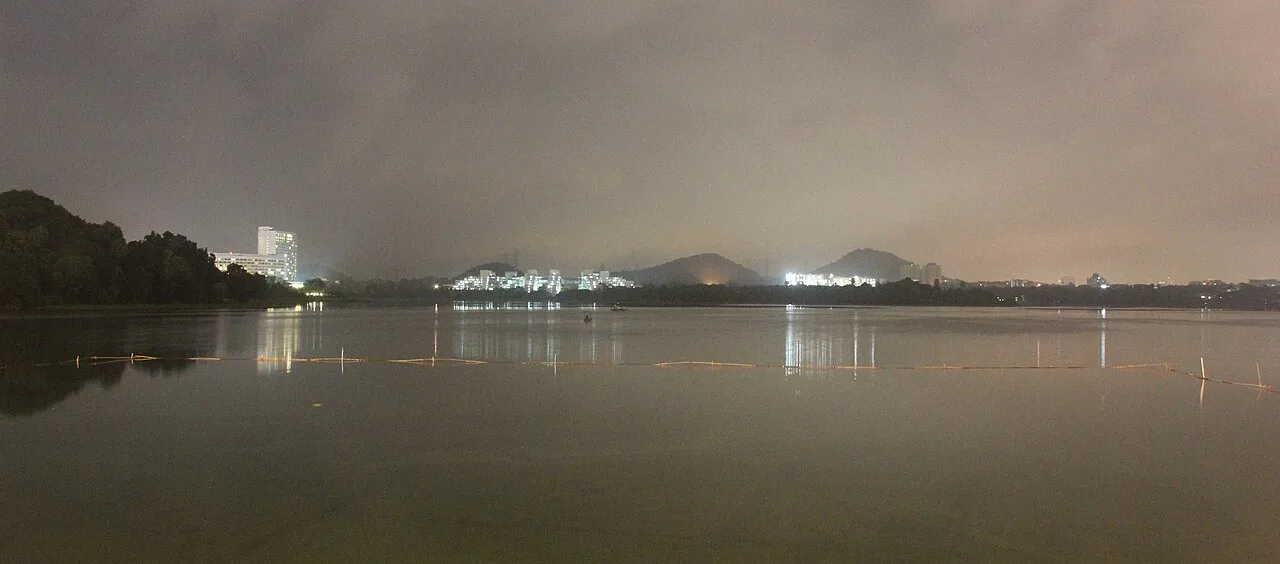
Powai Lake is an artificial lake created in the Powai valley during British rule; its construction is commonly dated to 1891. The valley had a Powai village, described in historical accounts as a small settlement of huts, before the suburban landscape developed around the water. The lake was intended as a source of drinking water for Mumbai, but the supply was later judged unsuitable for drinking, and the reservoir's role changed. Historical descriptions give an original area of about 2.1 square kilometres and depths ranging from roughly 3 metres near the edge to 12 metres at the deepest point; these are reported early dimensions, not a current survey. In the decades that followed, housing, hotels and major educational institutions expanded around the shore. IIT Bombay lies east of the lake, while IIM Mumbai, previously NITIE, is also nearby. Urban growth, wastewater and runoff have contributed to declines in water quality. The lake remains a familiar city landmark and visitor attraction, but no single completed restoration should be assumed; conservation and water-quality management remain ongoing concerns.
Origin stories & folklore
No widely documented origin legend for Powai Lake can be confidently verified. The lake is artificial, and historical accounts connect its name with Powai village and the valley where the water body was made. Local memories of the former settlement may be shared by residents, but they should not be presented as a single established folk tale. Visitors may hear informal stories about the lake or its wildlife; treat these as personal accounts unless supported by reliable local historical sources. The lake's documented story is chiefly one of construction, water supply and the transformation of the surrounding valley into an urban suburb.
Spend unhurried time at Powai Lake: walk the marked paths, use official viewpoints and ask locally whether a guide, entry ticket or forest permission is needed. Enjoy the water from safe, marked points; rocks near falls and dams are slippery and currents are dangerous, especially in the monsoon. Wildlife sightings are never guaranteed — patience and quiet improve your chances. A comfortable itinerary is one main visit in the morning, a local meal at midday and a short nearby stop before an afternoon return. Use the district list on this site to find other places in Mumbai Suburban, but check the route and its condition before combining stops. If a festival is on — such as Ganeshotsav, Gudi Padwa or the Ashadhi Wari to Pandharpur — roads and stays can be busy, and the experience can be unforgettable. Leave no litter: many sites are protected by the communities around them.
Suggested itineraries
Half day: Spend about 1–2 hours at an accessible lake viewpoint, take a quiet neighbourhood walk where permitted, then stop for a nearby meal. Full day: Begin with a lake visit and an unhurried walk, have lunch in Powai, then visit IIT Bombay's publicly accessible areas only if permitted, followed by a nearby stop such as Hiranandani Gardens. Gentler option: Choose one accessible viewpoint, keep the visit short, and take a taxi between stops rather than attempting a longer shoreline walk.
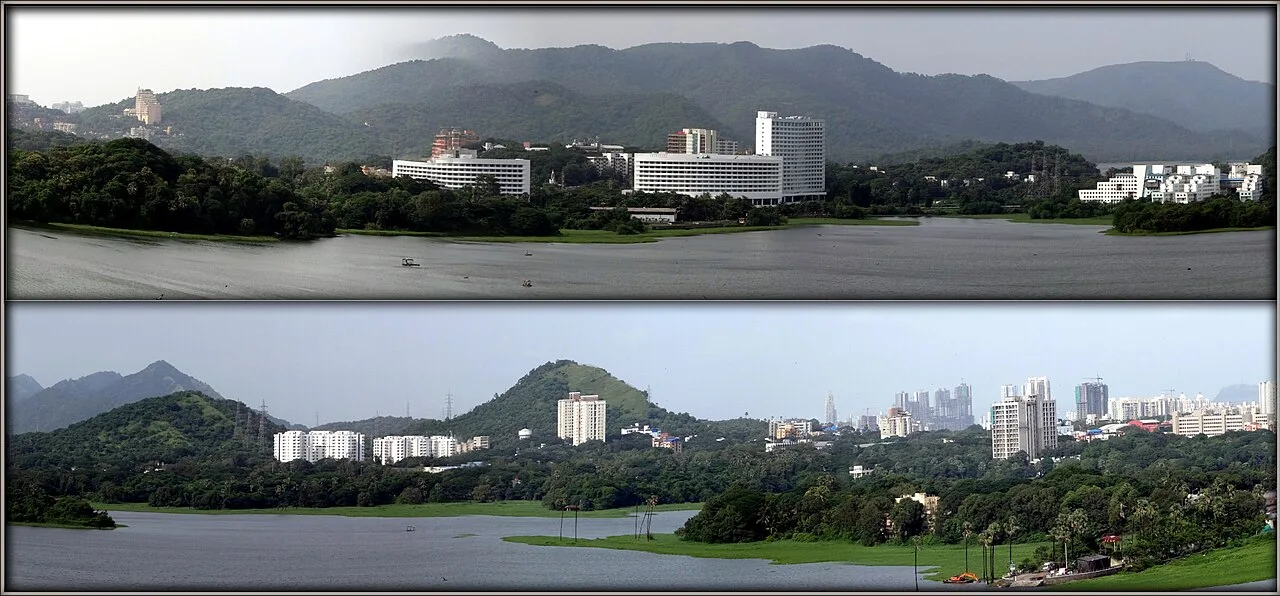
Powai's present-day culture reflects Mumbai's mix of long-established neighbourhood life, institutions and newer residential communities. Marathi, Hindi, English and other Indian languages are commonly heard in the area. Local customs include neighbourhood gatherings, temple visits and community celebrations, alongside the routines of students, office workers and families. Ganeshotsav and other festivals bring devotional music, processions and decorations to nearby streets, though these are not necessarily organised at the lake itself. The lake is a popular setting for informal walks and views, but visitors should follow posted rules and respect residents, worshippers and people using the surrounding public spaces.
Local communities
The lake is part of a neighbourhood shared by residents of Powai, students and staff at nearby institutions, and people working in local offices, hotels and businesses. The surrounding suburb has grown substantially, with housing complexes and commercial development around the lake. Mumbai's wider mix of linguistic, regional and religious communities is reflected in Powai. Fishing and other lake-edge activities may be visible, but visitors should not assume access to livelihoods, private property or restricted areas. Observe from permitted public places, avoid disturbing wildlife, and ask before photographing individuals or workers.
Festivals & events
Ganeshotsav, usually during the monsoon season, is widely celebrated across Mumbai and may bring processions and heavy traffic to neighbourhood roads. Navratri in autumn and Diwali in autumn or early winter are also marked by local gatherings, decorations and community events. These are city and neighbourhood celebrations, not guaranteed lake festivals. Powai's residential areas and roads may become busier during major celebrations, particularly around procession routes and venues. Check local notices before planning a visit, allow extra time for travel, and avoid blocking access for residents or emergency services.
Local food in Maharashtra includes vada pav, misal pav, pav bhaji, poha, puran poli, modak at Ganesh Chaturthi, Kolhapuri mutton with tambda and pandhra rassa, Malvani fish curry and sol kadhi on the Konkan coast, and Nagpur oranges and saoji food in Vidarbha. Ask what is fresh that day; many small eateries cook a limited daily menu. Vegetarian travellers eat well across the state, and most towns also have fish and meat dishes. Remote sites may have no restaurant at all. Carry water and snacks, eat a proper breakfast before long drives, and ask your accommodation for a packed lunch if you are heading out early. Try a home-cooked or local thali meal when you can — it is often the best food on the route. Choose busy, clean places, drink sealed or filtered water, and carry your packaging back with you.
Shopping & local experiences
Powai is an urban neighbourhood rather than a destination for a distinctive lake-specific craft. Visitors can look for everyday souvenirs, books, clothing and gifts in local shops and nearby retail centres, including R City Mall in Ghatkopar. Powai's restaurants and cafés offer a broad range of Mumbai and Indian food, as well as familiar international options. For local snacks, choose established vendors and check hygiene and waste arrangements. Buy from neighbourhood businesses where practical, and do not collect plants, stones or other material from the lake edge.
The lake lies in the Powai valley within a heavily urbanised part of Mumbai. Its open water and vegetated edges contrast with nearby buildings, roads and institutional campuses. The reservoir has experienced water-quality degradation, and its water is not suitable for drinking. Aquatic vegetation and plants along the margins may vary with season and water conditions. Birds are sometimes seen around the water and shoreline, but sightings are not guaranteed; keep quiet and observe from a distance. Crocodiles have been reported in the lake, so do not enter the water, approach animals or feed wildlife. The monsoon can bring lush surroundings as well as slippery edges, poor visibility and rapidly changing conditions.
October to March; June to September for green monsoon landscapes on the Ghats (expect closures)
The nearest principal railway station by straight-line distance is Lokmanya Tilak Terminus, roughly 5 km away. The nearest operating airport by straight-line distance is Chhatrapati Shivaji Maharaj International Airport, Mumbai, roughly 5 km away. These figures are calculated from map coordinates — actual road distance is longer. Mumbai and Pune are the main rail and air gateways in the west, Chhatrapati Sambhajinagar (Aurangabad) for Ajanta and Ellora, Nagpur for Vidarbha and the tiger reserves, and the Konkan Railway serves the coast down to Sindhudurg. Within Mumbai, suburban local trains on the Western, Central and Harbour lines are the fastest way around outside rush hours (roughly 8–11 am and 5–9 pm); each train has ladies' compartments, and the Metro and app cabs are more comfortable alternatives. When comparing train, bus and flight, count the complete door-to-door time: a flight saves the most time only if the onward road transfer is short, while an overnight train can save a hotel night. Book your return before you leave, because seats fill quickly on weekends, festivals and holidays. Current train numbers, timings, return services and fares are not listed here; check IRCTC and NTES for trains and the airline's own schedule for flights. No permit is needed to visit Maharashtra. Tiger safaris in Tadoba, Pench and Melghat must be booked in advance through the official online portals. Many hill forts are popular monsoon treks: since several accidents, some districts restrict access to waterfalls, forts and ghats during heavy rain — check current district orders before setting out. Ganeshotsav (August–September) brings very large crowds to Mumbai and Pune.
Confirm onward and return timings on IRCTC / NTES, the state bus operator or your airline before travel. A dash means current timings or fares have not been verified.
Getting around
Powai can be reached from elsewhere in Mumbai by local buses, taxis and app-based cabs; auto-rickshaws also serve parts of the neighbourhood. Local trains and Metro services can be used for journeys into the wider area, with a road connection needed for many lake viewpoints. Walking is practical only for short stretches because access around the shore is not continuous and some roads are busy. Parking may be limited or controlled near popular spots, so check locally and avoid blocking entrances. Boats are not a routine public transport option on the lake; do not assume recreational boating is available.
Hours, tickets & permissions
Public access is not uniform around the lake: some viewing areas may be accessible while other edges adjoin private property or institutional land. Entry rules, any tickets or permissions, and restrictions on cameras can vary by location and may change. There is no assurance that the entire shoreline is open for walking. Follow signs and directions from site staff, and do not cross barriers or enter water. Confirm current access arrangements, hours and fees with the relevant managing authority or locally before setting out.
Facilities
Facilities vary by viewpoint, and the lake does not have a guaranteed visitor centre or uniform set of public amenities. Toilets, drinking water, food outlets, ATMs and parking are usually easier to find in the surrounding Powai neighbourhood than directly beside the water. Seating and shade may be limited at informal viewing points. Guided visits are not assured; check locally if you want a guide or organised activity. Carry drinking water, use established businesses and dispose of rubbish responsibly. Confirm which facilities are open and accessible before travelling.
Accessibility
Access depends on the chosen viewpoint: the lake has no assured continuous, level promenade, and routes may include uneven surfaces, kerbs, steps or roadside walking. Some areas have limited shade, while the exposed water's edge can be hot and slippery, especially during the monsoon. Wheelchair and stroller suitability cannot be assumed; check the specific approach and surface before setting out. Older visitors may find a short visit to one accessible viewpoint more comfortable than trying to walk around the lake. Avoid steep, wet or restricted edges, and arrange a vehicle drop-off where lawful and practical.
No permit is needed to visit Maharashtra. Tiger safaris in Tadoba, Pench and Melghat must be booked in advance through the official online portals. Many hill forts are popular monsoon treks: since several accidents, some districts restrict access to waterfalls, forts and ghats during heavy rain — check current district orders before setting out. Ganeshotsav (August–September) brings very large crowds to Mumbai and Pune. Carry a photo ID at all times and save the emergency number 112 and your accommodation's contact offline. Heat in summer and heavy rain in the monsoon are the main weather risks; carry water, avoid midday sun and allow extra time when roads flood. Waterfalls and dams are dangerous in the monsoon: keep behind barriers and leave the area if the water level rises suddenly.
Photography
Early morning or late afternoon can provide softer light over the water, though views depend on weather and access. Use public, permitted viewpoints rather than entering private or restricted property. Photography is generally suitable for personal use in open public areas, but rules can differ near institutions or managed sites; confirm locally before using professional equipment. Do not fly a drone without checking current aviation rules and any local restrictions. Ask permission before photographing people, and avoid disturbing wildlife or interrupting rituals and community events.
Choose a stay by the full journey to Powai Lake, not just the district name. Mumbai is expensive, so book early; Colaba and Fort suit sightseeing, while Bandra and Juhu suit nightlife and beaches. In summer, check air-conditioning; in the monsoon, check that the property is accessible if roads flood. Book in advance for weekends, festivals and the peak season (October to March; June to September for green monsoon landscapes on the Ghats (expect closures)). Confirm the exact location, meals included, check-in time and cancellation terms in writing. Avoid sending money to unverified contacts or touts at stations. Carry some cash, as card and digital payments can be unreliable in remote areas.
IIT Bombay is east of the lake, and IIM Mumbai, formerly NITIE, is also close by; access to institutional grounds may be restricted. Hiranandani Gardens is a nearby neighbourhood for architecture, food and everyday urban activity. Sanjay Gandhi National Park and the Kanheri Caves are other notable attractions in Mumbai Suburban district, but require separate travel planning. Aarey also offers green spaces in the wider area, with access rules that can vary. Check routes and entry conditions before combining these places with a lake visit.
For couples, Powai Lake rewards a slow pace: arrive early for soft light and fewer crowds, share a local meal and keep the evening free. Sunset on Marine Drive, a misty monsoon morning in Mahabaleshwar or a quiet Konkan beach makes the trip memorable. Public displays of affection can be frowned upon in conservative communities and at religious sites, so be discreet. Keep a buffer in your itinerary, because weather and road conditions can delay plans.
Q: How much time should I allow for Powai Lake? A: A short visit to a permitted viewpoint can take about one to two hours; allow longer if you plan a meal or nearby stop. Q: When is a good season to visit? A: October to March is generally more comfortable. Monsoon brings greener surroundings but can make paths and edges slippery. Q: Is there an entry fee or a ticket? A: Access depends on the specific location, and rules may change. Check current entry conditions and any fees locally before visiting. Q: Is the lake suitable for children and older visitors? A: It can suit a brief visit from a safe viewpoint, with close supervision of children. Uneven or slippery edges may be difficult for some visitors. Q: Can I stay near Powai Lake? A: Hotels and other accommodation are available in the surrounding Powai area. Check location, access and current availability when booking.
Be the first to share photos, stories, advice or a helpful contact for Powai Lake.
Loading…