
Rajmachi
Rajmachi is a historic fort in Pune district, Maharashtra, set in the Sahyadri hills. Visitors come to see its paired strongholds, Shriwardhan and Manaranjan, and the surrounding plateau.
Key facts · verified by Ghumoopedia editors
- Type of place
- Heritage monument
- Best time to visit
- October to March; June to September for green monsoon landscapes on the Ghats (expect closures)
- Nearest railway station
- Lonavala · about 10 km (straight line)
- Nearest airport
- Pune Airport · about 60 km (straight line)
- Verified
- 21 Nov 2026
Plan a trip from Rajmachi — a day-by-day route through places nearby.
Rajmachi Fort stands in Pune district, Maharashtra, among the Sahyadri hills, which form part of the Western Ghats. The historic site has two neighbouring strongholds, Shriwardhan and Manaranjan. A broad machi, or plateau, surrounds the pair of Balekillas. Udhewadi is a small village on this plateau, located at the southern base of Manaranjan Balekilla. The 2011 census report records about 60 households in Udhewadi. The village occupies the machi below one of Rajmachi’s two fortified heights, with Shriwardhan forming the other. Maharashtra spans Mumbai's Gothic and Art Deco skyline, the rock-cut cave temples of Ajanta, Ellora, Karla and Elephanta, the hill forts of Chhatrapati Shivaji Maharaj, the Konkan's sea forts and beaches, and the great pilgrimages of Pandharpur, Shirdi and the Jyotirlingas. The coast is hot and humid most of the year with very heavy monsoon rain from June to September; the Western Ghats hill stations are cool and misty in the monsoon and pleasant in winter; the Deccan and Vidarbha are dry, with harsh summers above 40°C in Nagpur and Chandrapur. The usual best time to visit is October to March; June to September for green monsoon landscapes on the Ghats (expect closures). Timings, fees and access arrangements must be confirmed locally. For official information, see Maharashtra Tourism at https://www.maharashtratourism.gov.in.
Why it matters
Rajmachi Fort is a historic hill fort in Pune district, set in the Sahyadri range of the Western Ghats. Its two elevated strongholds, Shriwardhan and Manaranjan, rise above a broad plateau known as a machi, where the village of Udhewadi is located. The fort’s position overlooking the historic Bor Ghat corridor gave it strategic importance on a route between the Deccan plateau and the Konkan coast. It is valued regionally for its Maratha-era associations, fortification remains and mountain setting, and locally as part of the landscape and heritage of Udhewadi. No UNESCO or Archaeological Survey of India designation is asserted here; visitors should check with the relevant authorities for current protection or access information.
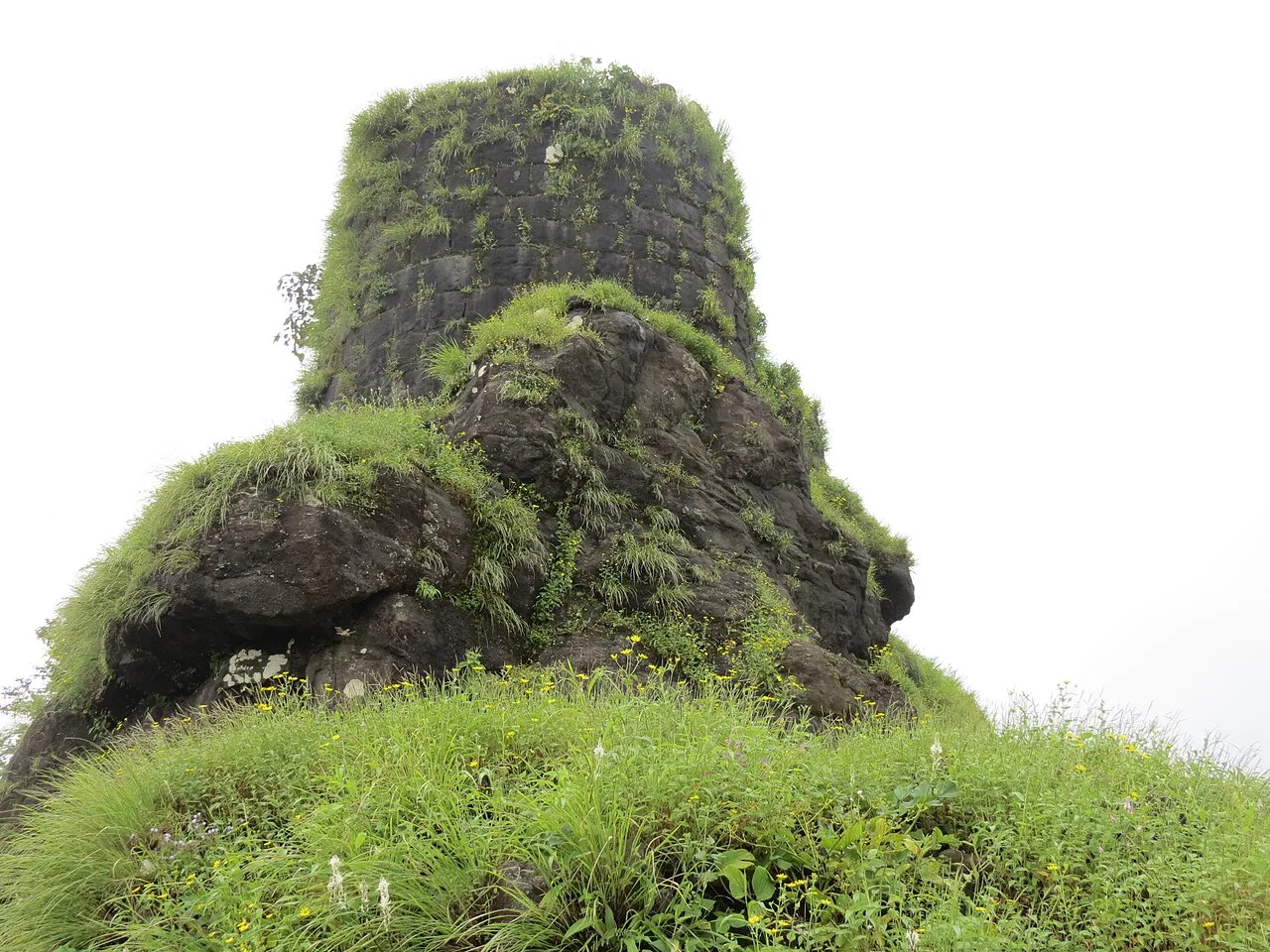
Rajmachi’s importance came in part from its commanding position above the Bor Ghat route, a passage connecting the Deccan with the Konkan. The exact date of the fort’s original construction and the identity of its earliest builders are not firmly established in commonly available accounts, so claims assigning it a precise origin should be treated cautiously. Historical narratives most often discuss Rajmachi in connection with the Maratha period and the region’s changing control of strategic forts. Accounts associate it with Chhatrapati Shivaji Maharaj’s campaigns and later shifts between Maratha and Mughal authority. Like other forts in the area, it came under British control during the expansion of British rule in the early nineteenth century. Its military role subsequently declined, leaving fortifications, water structures and religious remains exposed to weather and vegetation. The two balekillas and the intervening plateau remain the defining features of the site. Visitors should not assume that visible ruins have been recently restored, and should follow any conservation or access notices on site.
Origin stories & folklore
There is no single, consistently documented origin legend for Rajmachi that can be confidently presented as established fact. In local retellings, the fort is often remembered through stories of Maratha-era campaigns, watchmen and the importance of guarding the mountain pass. Such accounts contribute to the place’s sense of history but may vary between storytellers and should be understood as oral tradition rather than verified event-by-event records. Stories about hidden treasure or secret passages sometimes circulate around old forts in the region; visitors should treat these as folklore, not evidence that such features are present. Ask residents respectfully about local memories, and avoid damaging masonry or entering unsafe ruins in search of supposed relics.
Architecture & design
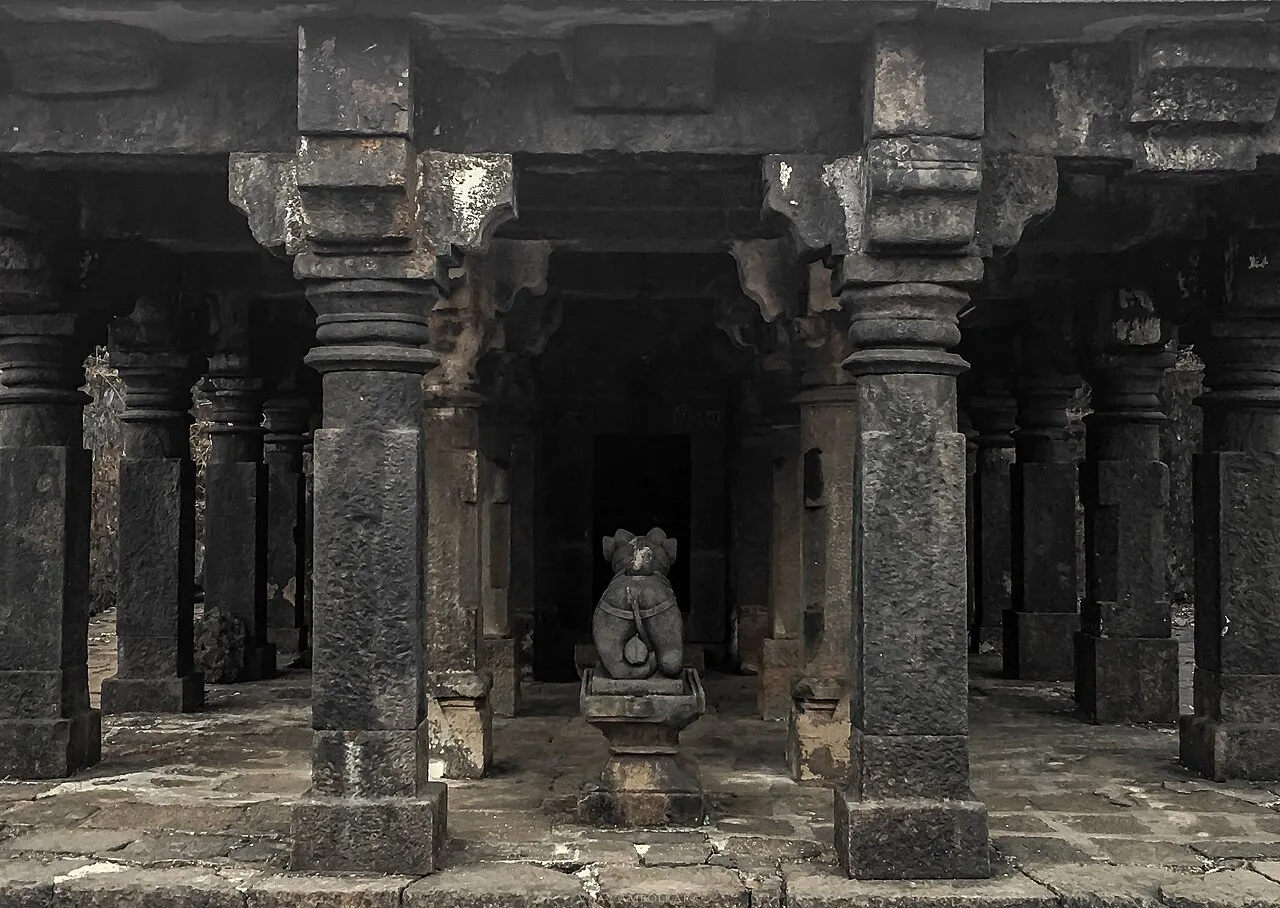
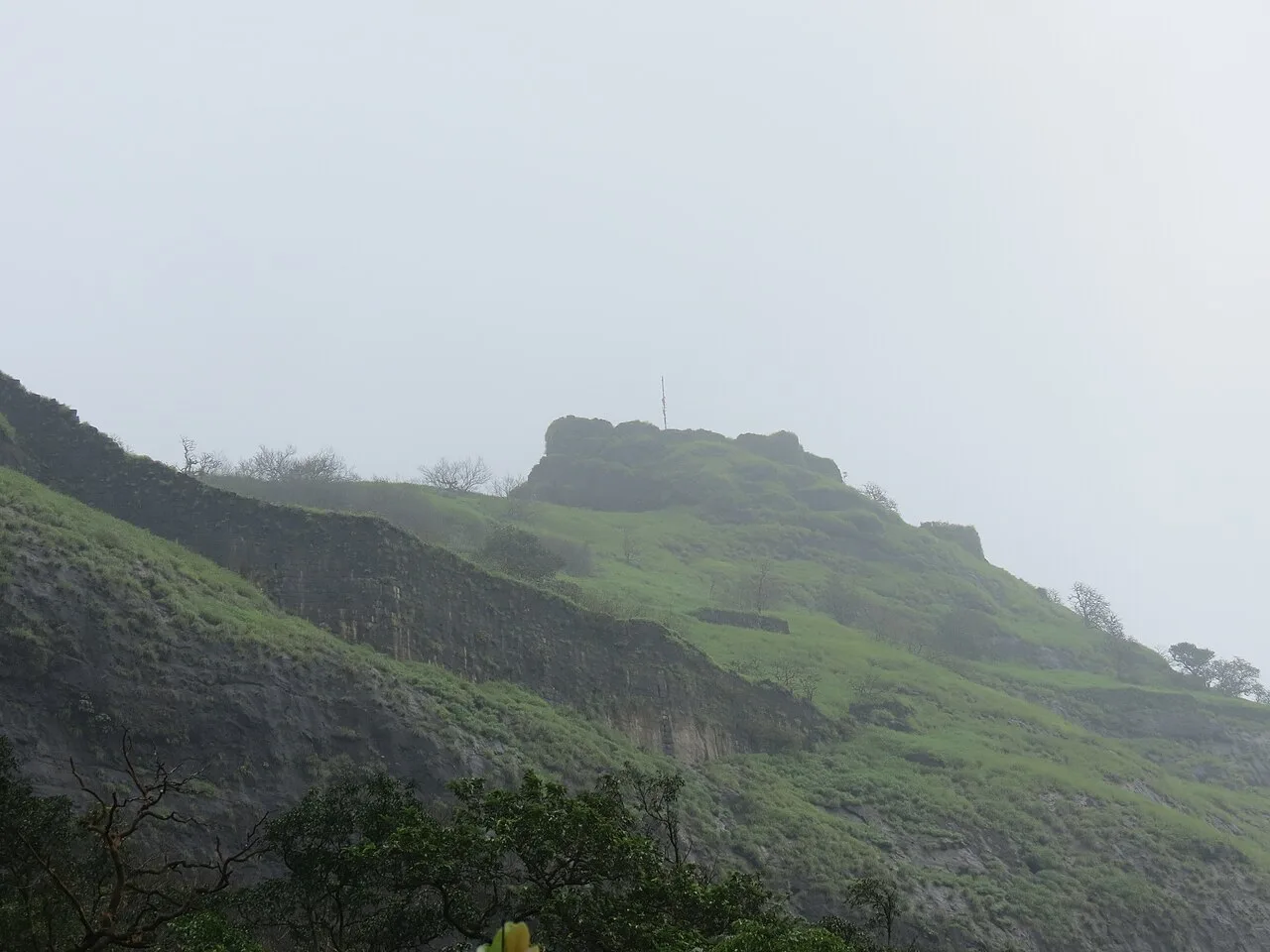
Rajmachi is arranged around two hilltop strongholds, Shriwardhan and Manaranjan, known as balekillas, with a wide machi or plateau between and around them. The elevated positions use the natural ridges and steep slopes as part of the defensive setting, while surviving fortification walls and gateways mark controlled approaches. Construction is characteristic of regional hill forts: locally available stone, including basalt common to the Deccan, was used in masonry, though repairs and weathering can make original building phases difficult to distinguish. Remains of water cisterns reflect the need to store rainwater on a high, exposed site. Temples and other modest structures are also found among the ruins. The layout is best understood on foot from the plateau, but uneven ground, broken walls and vegetation obscure parts of the original plan. Do not climb unstable masonry or enter structures that appear unsafe.
Important objects & sculptures
Rajmachi is an open historic site rather than a museum, and visitors should not expect a curated collection or labelled display of movable objects. Look for the surviving stone gateways and wall sections, the rock-cut or masonry water-storage cisterns, and the remains of religious structures on the plateau and hilltops. These features help explain how a fort community managed access, water and worship in a remote setting. No particular inscription, sculpture or portable collection is confidently identified here as a must-see; inscriptions and carved details, where present, may be weathered or difficult to interpret. Do not remove stones, fragments or other material, and leave any religious objects undisturbed.
Explore Rajmachi slowly and read the interpretation boards, use the official audio guide where available or hire an authorised guide to understand its history. Hill forts involve steep climbs on uneven stone steps; start early, carry water and descend well before dark. Early morning gives softer light, cooler air and smaller crowds. A comfortable itinerary is one main visit in the morning, a local meal at midday and a short nearby stop before an afternoon return. Use the district list on this site to find other places in Pune, but check the route and its condition before combining stops. If a festival is on — such as Ganeshotsav, Gudi Padwa or the Ashadhi Wari to Pandharpur — roads and stays can be busy, and the experience can be unforgettable. Leave no litter: many sites are protected by the communities around them.
Suggested itineraries
Half day: From Udhewadi, allow about 1–2 hours to explore the plateau and nearby fort remains, then spend time at a viewpoint before returning; this suits visitors already at the village, not a complete trek from a distant trailhead. Full day: Start early from your chosen approach, allow several hours for the uphill walk, explore the plateau and both balekillas at a careful pace, take a meal break, then descend with ample daylight. Gentler option: Avoid the steep balekilla climbs; arrange a locally confirmed vehicle approach if conditions allow, or enjoy a short, level section around the village and plateau, with rest stops.
Udhewadi is a small village on Rajmachi’s plateau, so the fort is not only a trekking destination but also part of a lived rural landscape. Marathi is the principal regional language; visitors may also encounter people familiar with Hindi or English, though this varies. Local life is shaped by the hill environment, farming and seasonal travel, while trekking and overnight visits bring outside visitors, especially in the cooler months and monsoon. The Bhairavnath temple at Udhewadi is a local place of worship; visitors should dress and behave respectfully and ask before photographing people or ceremonies. There is no single performance tradition that visitors should expect to find on a typical visit.
Festivals & events
Ganeshotsav, Gudi Padwa and Holi are observed in the wider Maharashtra region, while temple observances and village gatherings around Udhewadi may follow local practice. The Bhairavnath temple is a place to ask residents about community events, but visitors should not assume that a particular fair or ceremony is scheduled during their visit. Nearby towns also hold seasonal religious and cultural celebrations. Festival periods can increase traffic and demand for transport or accommodation, especially around popular hill destinations. Check locally before planning a visit around an event, and follow residents’ guidance around worship spaces and processions.
Local food in Maharashtra includes vada pav, misal pav, pav bhaji, poha, puran poli, modak at Ganesh Chaturthi, Kolhapuri mutton with tambda and pandhra rassa, Malvani fish curry and sol kadhi on the Konkan coast, and Nagpur oranges and saoji food in Vidarbha. Ask what is fresh that day; many small eateries cook a limited daily menu. Vegetarian travellers eat well across the state, and most towns also have fish and meat dishes. Remote sites may have no restaurant at all. Carry water and snacks, eat a proper breakfast before long drives, and ask your accommodation for a packed lunch if you are heading out early. Try a home-cooked or local thali meal when you can — it is often the best food on the route. Choose busy, clean places, drink sealed or filtered water, and carry your packaging back with you.
Shopping & local experiences
Rajmachi is not a major shopping destination, and there may be only limited provisions at or near Udhewadi. Visitors can look for simple local snacks or home-cooked food when available, and buy everyday supplies in Lonavala or another larger town before setting out. Small local purchases should be made respectfully and without assuming a regular craft market. The most responsible souvenirs are photographs and memories rather than stones, plants or historical fragments taken from the fort. Ask permission before buying food from a household or photographing local work, and carry out all packaging and litter.
October to March; June to September for green monsoon landscapes on the Ghats (expect closures)
The nearest principal railway station by straight-line distance is Lonavala, roughly 10 km away. The nearest operating airport by straight-line distance is Pune Airport, roughly 60 km away. These figures are calculated from map coordinates — actual road distance is longer. Mumbai and Pune are the main rail and air gateways in the west, Chhatrapati Sambhajinagar (Aurangabad) for Ajanta and Ellora, Nagpur for Vidarbha and the tiger reserves, and the Konkan Railway serves the coast down to Sindhudurg. For the final leg, Maharashtra State Road Transport Corporation (MSRTC) buses, including Shivneri and Shivshahi coaches, private sleeper buses and shared jeeps and autos link district towns. A private taxi gives more flexibility for remote sites. When comparing train, bus and flight, count the complete door-to-door time: a flight saves the most time only if the onward road transfer is short, while an overnight train can save a hotel night. Book your return before you leave, because seats fill quickly on weekends, festivals and holidays. Current train numbers, timings, return services and fares are not listed here; check IRCTC and NTES for trains and the airline's own schedule for flights. No permit is needed to visit Maharashtra. Tiger safaris in Tadoba, Pench and Melghat must be booked in advance through the official online portals. Many hill forts are popular monsoon treks: since several accidents, some districts restrict access to waterfalls, forts and ghats during heavy rain — check current district orders before setting out. Ganeshotsav (August–September) brings very large crowds to Mumbai and Pune.
Confirm onward and return timings on IRCTC / NTES, the state bus operator or your airline before travel. A dash means current timings or fares have not been verified.
Getting around
Most visitors approach Rajmachi from the Lonavala side or by trekking from the Karjat side; the route and its condition should be checked before travel. From Lonavala, local taxis or other arranged vehicles may take visitors toward a trailhead when road conditions permit. From the Karjat side, visitors generally arrange transport to a village-side starting point and continue on foot. Shared jeeps may be available seasonally, but should not be relied on without checking locally. Parking, where available, is generally associated with an approach point rather than the hilltop fort. Walking is necessary to explore the plateau and balekillas.
Hours, tickets & permissions
Access arrangements at Rajmachi can depend on the approach route, weather, conservation needs and any local or forest-related restrictions. Do not assume that a ticket office, staffed entrance or fixed entry procedure will be available at the fort. Requirements for permits, photography or access by vehicles may change, and visitors should follow signs and instructions from local authorities or site staff. Confirm current opening arrangements, entry rules and any applicable fees with the relevant managing authority before setting out. Carry identification if requested by authorities, and avoid entering restricted or unsafe areas.
Facilities
Facilities at the fort itself are limited and can vary by season. Udhewadi may have simple local food or refreshments, but availability should be checked in advance, particularly outside busy periods. Do not assume there are public toilets, reliable drinking-water points, shops, an ATM or staffed information services on the plateau. Carry drinking water and essential supplies from a larger town, and ask locally about safe refill options. Guides or vehicle arrangements may sometimes be organised in nearby settlements, but availability is not guaranteed. Parking and visitor services are more likely to be found near an approach point than at the fort.
Accessibility
Rajmachi involves hill walking over uneven paths, rocky ground and, in places, steep or broken stone steps. Reaching the plateau can require a substantial trek from the approach route, and climbing either balekilla is more demanding. Shade is limited on exposed sections, though tree cover varies along the route. The fort is generally unsuitable for wheelchair users and strollers, and may be difficult for elderly visitors or anyone with limited balance, stamina or mobility. A gentler visit can focus on a locally accessible section near the village and omit the hilltop climbs. Check trail and road conditions before travel, and do not attempt the route in poor weather without suitable preparation.
No permit is needed to visit Maharashtra. Tiger safaris in Tadoba, Pench and Melghat must be booked in advance through the official online portals. Many hill forts are popular monsoon treks: since several accidents, some districts restrict access to waterfalls, forts and ghats during heavy rain — check current district orders before setting out. Ganeshotsav (August–September) brings very large crowds to Mumbai and Pune. Carry a photo ID at all times and save the emergency number 112 and your accommodation's contact offline. Heat in summer and heavy rain in the monsoon are the main weather risks; carry water, avoid midday sun and allow extra time when roads flood. On forts, keep away from unfenced edges, especially in mist or rain, and do not climb after dark.
Photography
Early morning usually offers softer light, cooler conditions and fewer visitors; mist and cloud can create striking views during the monsoon, but may reduce visibility and make paths slippery. Photograph the twin balekillas, plateau, stonework and surrounding Sahyadri landscape from safe ground. Photography is generally part of ordinary outdoor visiting, but follow any local restrictions and ask permission before photographing residents, homes or worship. Drone use may be restricted by aviation rules, local permissions or site conditions; confirm requirements before flying and do not disturb wildlife or people. Avoid climbing walls for a viewpoint.
Choose a stay by the full journey to Rajmachi, not just the district name. Mumbai, Pune, Nashik and Chhatrapati Sambhajinagar offer the widest choice; hill stations and Konkan beaches have resorts and family homestays, and MTDC resorts are reliable value. In summer, check air-conditioning; in the monsoon, check that the property is accessible if roads flood. Book in advance for weekends, festivals and the peak season (October to March; June to September for green monsoon landscapes on the Ghats (expect closures)). Confirm the exact location, meals included, check-in time and cancellation terms in writing. Avoid sending money to unverified contacts or touts at stations. Carry some cash, as card and digital payments can be unreliable in remote areas.
Lonavala and Khandala are nearby hill towns with visitor services and viewpoints. The Buddhist rock-cut cave complexes of Karla and Bhaja, near Lonavala, are established heritage stops that can be considered on a separate or combined outing if route conditions and time allow. Lohagad and Visapur are other well-known hill forts in the broader Lonavala area; combining multiple fort treks in one day can be tiring. On the Karjat approach side, Kondhane Caves are a nearby rock-cut heritage site, but access conditions should be checked locally. Choose stops according to weather, daylight and the condition of connecting roads and trails.
For couples, Rajmachi rewards a slow pace: arrive early for soft light and fewer crowds, share a local meal and keep the evening free. Sunset on Marine Drive, a misty monsoon morning in Mahabaleshwar or a quiet Konkan beach makes the trip memorable. Public displays of affection can be frowned upon in conservative communities and at religious sites, so be discreet. Keep a buffer in your itinerary, because weather and road conditions can delay plans.
Q: How much time should I allow for Rajmachi? A: A visit from Udhewadi can take a few hours, but reaching the village and returning by the trekking routes can make it a full-day outing or longer. Plan for daylight and your fitness level. Q: When is the best season to visit? A: October to March is generally more comfortable for walking. The monsoon brings green scenery but also slippery trails, mist and possible access difficulties; check conditions before travel. Q: Is there an entry ticket or fixed entry arrangement? A: Rules and access arrangements can change, and a staffed entrance may not be present. Confirm current requirements and any fees with the relevant authority or locally before setting out. Q: Can children or elderly visitors explore the fort? A: The approach and climbs are uneven and can be strenuous. Families should assess children’s stamina and supervision needs; elderly visitors or people with limited mobility may prefer to avoid the steep sections. Q: Where can I stay nearby? A: Lonavala and Karjat have more accommodation options. Simple stays or local arrangements around Udhewadi may be available, but should be confirmed in advance.
Be the first to share photos, stories, advice or a helpful contact for Rajmachi.
Loading…