
Elephant Falls
Elephant Falls is a waterfall in Shillong, in Meghalaya’s East Khasi Hills district. Visitors come to see its stream descend in two successive stages.
Key facts · verified by Ghumoopedia editors
- Type of place
- National park / sanctuary
- Best time to visit
- October to May; the monsoon is dramatic for waterfalls but roads and treks become slippery
- Nearest railway station
- Kamakhya Junction · about 70 km (straight line)
- Nearest airport
- Shillong Airport (Umroi) · about 25 km (straight line)
- Verified
- 21 Nov 2026
Plan a trip from Elephant Falls — a day-by-day route through places nearby.
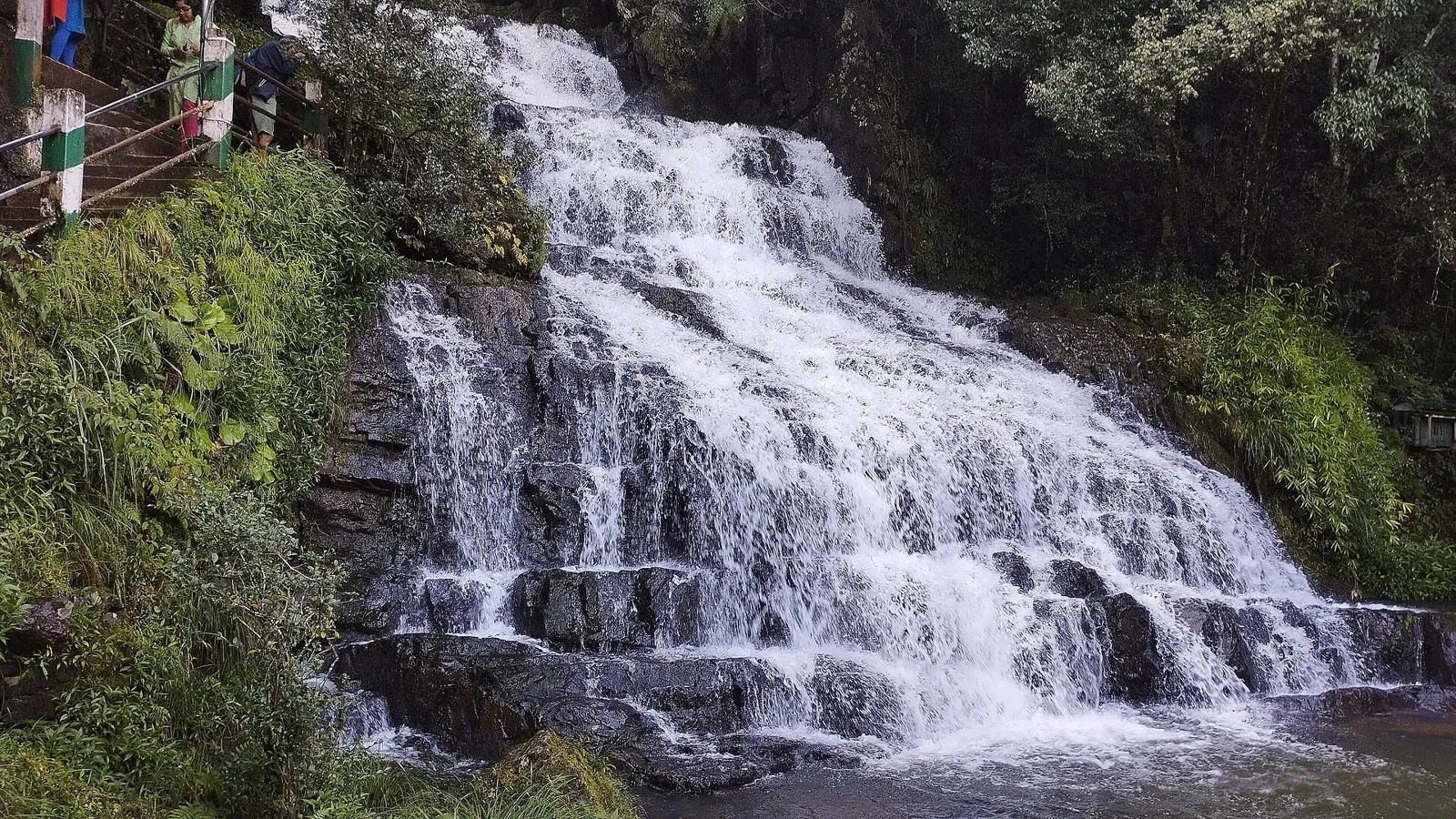
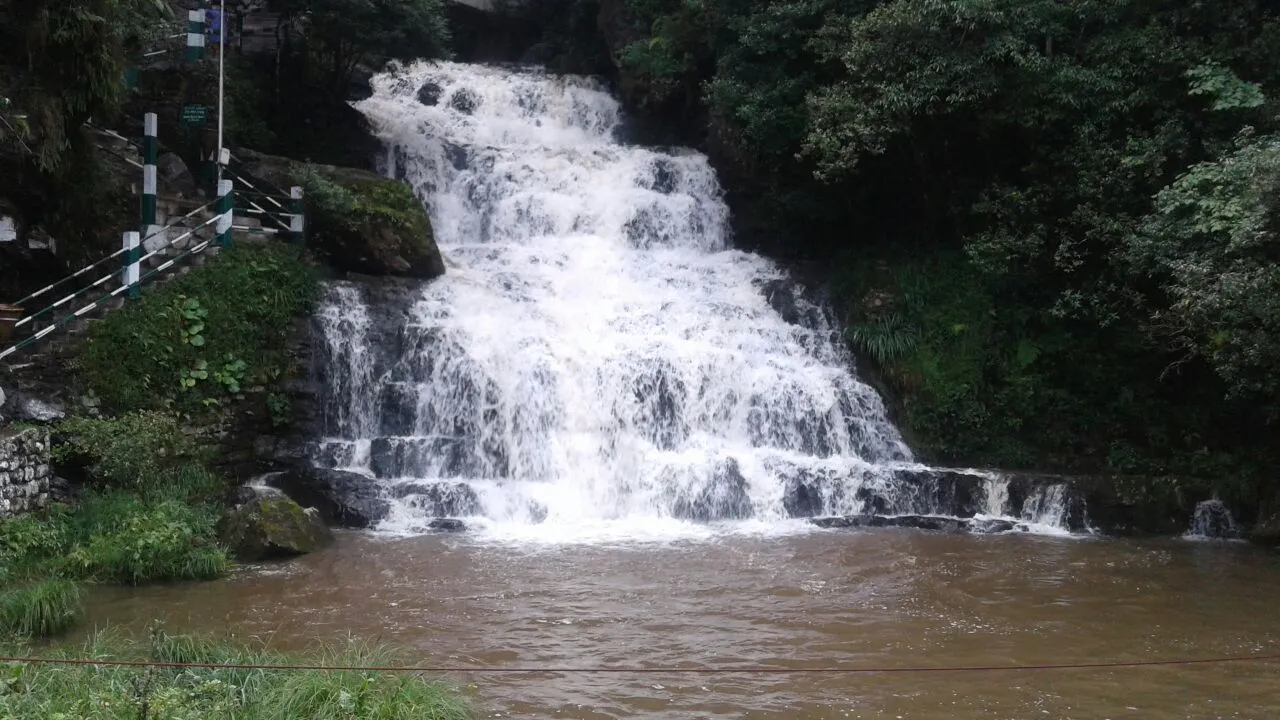
Elephant Falls lies in Shillong, within Meghalaya’s East Khasi Hills district. A mountain stream forms the waterfall, dropping through a pair of cascades in sequence. The water runs between rocky hollows edged with ferns, shaping the falls’ setting. Rather than plunging in one uninterrupted drop, the stream descends over two levels. Its course passes through fern-covered dells as it moves from one fall to the next. The stepped flow and the rocks around it describe the main features of this waterfall. The Khasi, Jaintia and Garo communities follow matrilineal traditions, and community councils manage much of the land visitors pass through. Meghalaya is among the wettest places on earth: Sohra and Mawsynram receive extreme monsoon rainfall. Shillong is cool all year, and fog can close viewpoints at any season. The usual best time to visit is October to May; the monsoon is dramatic for waterfalls but roads and treks become slippery. Days are short in Northeast India: the sun can set before 5 pm in winter, so plan to reach and leave Elephant Falls in daylight. Timings, fees and access arrangements must be confirmed locally. For official information, see Meghalaya Tourism at https://www.meghalayatourism.in.
Why it matters
Elephant Falls is a well-known natural attraction near Shillong in East Khasi Hills, Meghalaya. Its mountain stream descends through successive falls and fern-covered rocky dells, giving visitors an accessible introduction to the region’s waterfall landscapes. For Shillong residents and visitors, it is a popular short outing that can be combined with other local stops. The falls are associated with Khasi place-naming and local knowledge of the landscape; their Khasi name is commonly rendered as Ka Kshaid Lai Pateng Khohsiew, or “the three-step waterfall.” This guide describes the falls as two-tiered. No UNESCO, Archaeological Survey of India, or national-park designation is confirmed here; visitors should not assume that such a status applies.
Elephant Falls is a natural waterfall, not a monument known to have been built by a ruler or institution. Its stream runs through rocky, fern-covered terrain near Shillong, and its successive drops have shaped the site over time. The Khasi name is commonly written as Ka Kshaid Lai Pateng Khohsiew and translated as “the three-step waterfall,” referring to the successive stages of the cascade. The English name is generally attributed to British-era visitors who associated a rock near the falls with the shape of an elephant. Accounts say that the rock was destroyed in the 1897 earthquake, although visitors should treat this as a commonly repeated historical explanation rather than a detailed, independently verified record. The falls became a familiar outing from Shillong as the town and its road connections developed. Visitor paths and viewpoints now make it possible to approach the cascades, but reliable dates for their construction or later restoration are not established here. The surrounding landscape remains part of Meghalaya’s living environment, and local stewardship matters alongside tourism. For current access arrangements, consult Meghalaya Tourism or ask locally rather than relying on old travel accounts.
Spend unhurried time at Elephant Falls: walk the marked paths, use official viewpoints and ask locally whether a guide, entry ticket or permit is needed. Admire the water from safe points rather than climbing wet rocks or swimming in unknown currents. Wildlife sightings are never guaranteed — patience and quiet improve your chances. A comfortable itinerary is one main visit in the morning, a local meal at midday and a short nearby stop before an afternoon return. Use the district list on this site to find other places in East Khasi Hills, but check the actual road route and its condition before combining stops. If a festival is on, local roads and stays can be busy — and the experience can be unforgettable. Leave no litter: many sites in Meghalaya are protected by the communities who own them.
Suggested itineraries
Half day: Travel from Shillong; spend about 1–2 hours on marked paths and viewpoints; take a short refreshment stop; return in daylight. Full day: Visit the falls in the morning; have lunch in Shillong; choose one nearby stop such as Shillong Peak or Don Bosco Museum; return before dark. Gentler option: Use a taxi to the visitor entrance, take in the accessible viewpoints available on arrival, and skip steep or wet sections; ask staff locally about the easiest route.
Khasi is widely spoken in the area, alongside English and other languages used across Meghalaya. Khasi cultural life includes music, dance, oral traditions and community celebrations; visitors may encounter performances in Shillong, but they are not a regular feature of the falls themselves. Khasi, Jaintia and Garo communities are known for matrilineal traditions, though practices vary among families and communities. Around the waterfall, the most appropriate cultural approach is simple courtesy: follow local instructions, ask before photographing people, and do not assume that a natural site has no community significance. Dress comfortably for walking and changing weather, while remaining respectful in public and community spaces.
Local communities
The falls lie in East Khasi Hills, where Khasi communities have longstanding connections to the region’s land and settlements. Khasi, Jaintia and Garo communities in Meghalaya follow matrilineal traditions, with customs and governance varying across places and families. Community councils manage much of the land visitors pass through, so local guidance and access arrangements deserve respect. Livelihoods in the wider area include farming, trade, transport, hospitality and other services; tourism also supports local drivers, food vendors and small businesses. Ask before photographing residents or entering land that is not clearly part of the visitor route, and avoid treating community customs as tourist performances.
Festivals & events
The falls are not known as the venue for a regular major festival. Shillong and nearby parts of East Khasi Hills host community and cultural events during the year, including Khasi celebrations such as Shad Suk Mynsiem, generally held in spring, and the autumn Wangala festival associated with Garo communities elsewhere in Meghalaya. Events, venues and seasonal programmes vary, so check local listings rather than assuming a celebration takes place at the falls. Festival periods can make roads, public spaces and accommodation busier. If combining a visit with an event, allow extra time for local traffic and follow any community guidance about photography or access.
Local food in Meghalaya includes jadoh (rice cooked with meat), dohneiiong (pork with black sesame), tungrymbai (fermented soybean), pumaloi and Garo dishes such as kapa. Ask what is fresh that day; many small eateries cook a limited daily menu. Pork, beef, fish and fermented ingredients are common in tribal cuisines, so vegetarian travellers should explain their needs clearly — rice, dal, vegetables and eggs are usually possible in towns. Remote sites may have no restaurant at all. Carry water and snacks, eat a proper breakfast before long drives, and ask your accommodation for a packed lunch if you are heading out early. Try a homestay-cooked meal when you can — it is often the best food in the hills. Choose busy, clean places and carry your packaging back to town.
Shopping & local experiences
For a wider choice of local goods, browse Shillong’s Police Bazaar or Bara Bazaar rather than expecting extensive shopping at the falls. Look for Meghalaya-made textiles, woven items, locally produced foods and small crafts, checking the maker and materials where possible. Food stalls near visitor sites may offer refreshments, but availability varies; Shillong is a more reliable place to find meals and shops. Buy respectfully from local sellers, ask before photographing stalls or products, and avoid souvenirs made from wildlife, protected plants or other restricted materials.
The setting is a mountain stream descending through a series of rocky drops and fern-covered dells. The surrounding landscape is green and humid, with vegetation that thrives in Meghalaya’s heavy rainfall. Water flow and the appearance of the falls change with the seasons: monsoon rains can make the cascade more forceful, while wet paths and rocks become more hazardous. The wider region supports varied plants and wildlife, but sightings at this busy visitor site are not assured. Quiet observation may offer a better chance of noticing birds or small animals without disturbing them. Fog and rain can reduce visibility, and conditions can change quickly. Stay on marked paths, keep clear of the water’s edge, and leave plants and wildlife undisturbed.
October to May; the monsoon is dramatic for waterfalls but roads and treks become slippery
The nearest principal railway station by straight-line distance is Kamakhya Junction, roughly 70 km away. The nearest operating airport by straight-line distance is Shillong Airport (Umroi), roughly 25 km away. These figures are calculated from map coordinates — hill roads in Meghalaya wind a lot, so actual road distance and travel time are usually much longer. Guwahati is the main rail and air hub for the region, and most long-distance journeys connect through it. For the final leg, Meghalaya Transport Corporation (MTC) and shared taxis from Shillong’s Police Bazaar and Anjalee terminals link district towns; shared taxis usually leave early in the morning and depart only when full. A private taxi gives more flexibility for remote sites. When comparing train, bus and flight, count the complete door-to-door time: a flight saves the most time only if the onward road transfer is short, while an overnight train to Guwahati plus a road journey can save a hotel night. Book your return before you leave, because seats on shared vehicles and the few daily flights fill quickly. Current train numbers, timings, return services and fares are not listed here; check IRCTC and NTES for trains and the airline’s own schedule for flights. No Inner Line Permit is needed for Indian visitors to Meghalaya. Many villages, caves, waterfalls and living root bridges charge a small community entry or parking fee, and some sites have their own visitor rules.
Confirm onward and return timings on IRCTC / NTES, the state bus operator or your airline before travel. A dash means current timings or fares have not been verified.
Getting around
From Shillong, visitors can travel by taxi or other locally available transport towards Elephant Falls; confirm the route and road conditions with the driver before setting out. Shared taxis and local services operate around Shillong, but availability and routing can vary. A private taxi offers more flexibility for combining nearby stops. Walking is required within the waterfall grounds, where paths and steps connect viewpoints. Check locally whether parking is available and where vehicles should be left; do not block access roads or community routes. In fog, rain or low light, arrange a safe return ride in advance rather than relying on finding transport at the last moment.
Hours, tickets & permissions
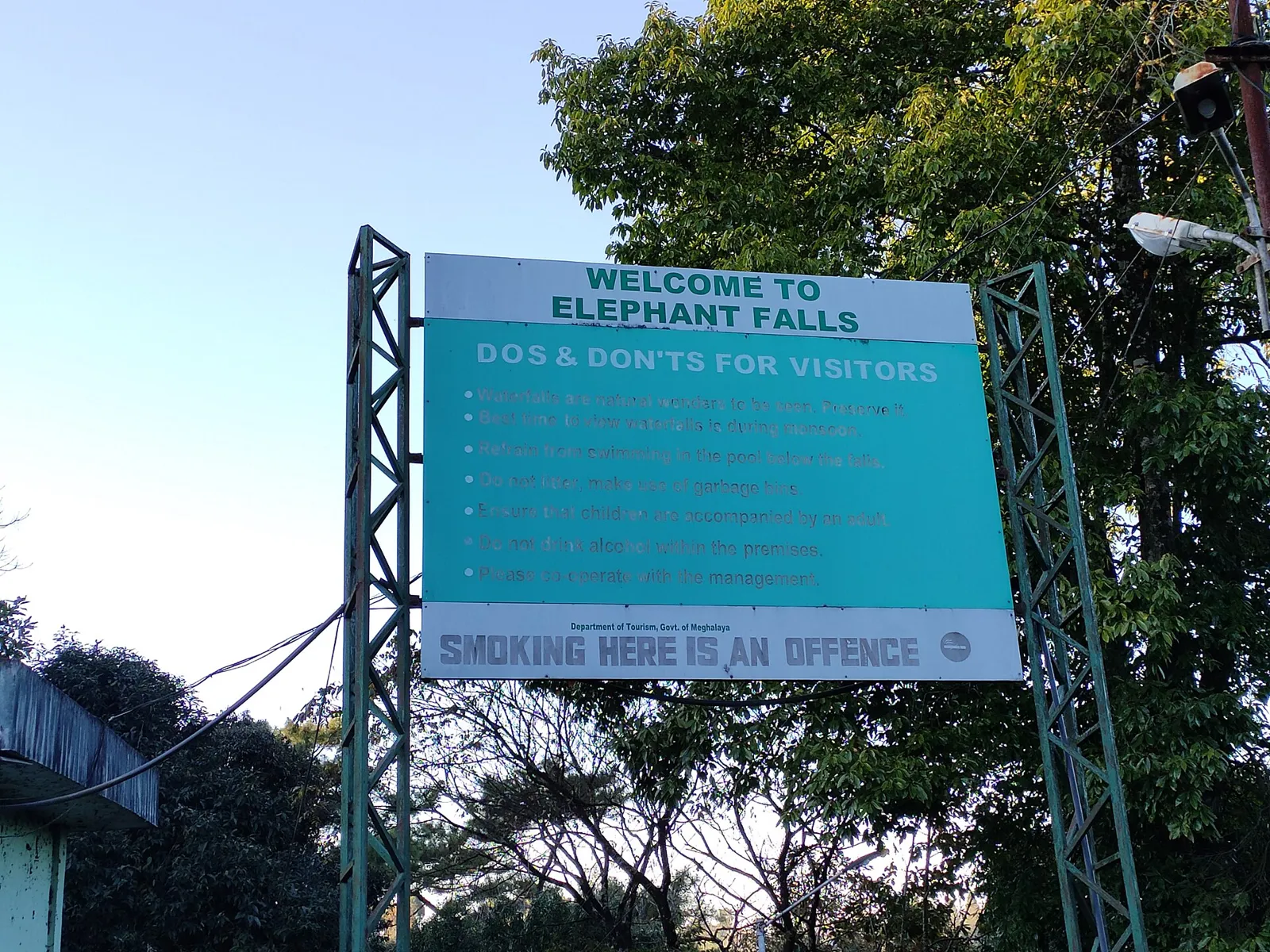
Entry arrangements may involve a ticket, site-specific rules or other access requirements, and these can change. Do not assume that a camera, drone or commercial photography is covered by ordinary visitor access. Confirm current opening arrangements, fees and any permit or identification requirements with the managing authority or Meghalaya Tourism before travelling. Follow notices at the entrance and instructions from staff or local representatives. Seasonal weather, maintenance or local decisions may affect access, so check locally on the day as well.
Facilities
Facilities at the falls may include a defined entrance, paths, viewpoints and basic visitor services, but provision can change; check locally. Toilets, drinking water, food stalls and parking may be available in or near the visitor area, though visitors should not rely on every service being open. Carry drinking water and take litter away if bins are full or unavailable. Shillong has a wider choice of meals, shops, ATMs and accommodation than the falls area. Guides or local assistance may be available, but availability should be confirmed before depending on it.
Accessibility
The waterfall route involves uneven ground, steps and changes in level, and sections can be slippery after rain. Reaching lower viewpoints may require substantial stair walking; the full route may not suit everyone. Wheelchair and stroller access should not be assumed, and there may be limited places to rest or shade along the path. Older visitors and anyone with balance, heart or mobility concerns may prefer a shorter visit to the easiest viewpoint, with a companion. Ask staff locally about current path conditions before descending. Sturdy footwear and a cautious pace are advisable, especially during the monsoon.
No Inner Line Permit is needed for Indian visitors to Meghalaya. Many villages, caves, waterfalls and living root bridges charge a small community entry or parking fee, and some sites have their own visitor rules. Carry a photo ID at all times; checkpoints are common. Save the emergency number 112 and your accommodation’s contact offline. Heat, humidity and sudden downpours are the main weather risks; carry water and rain protection. Stay on marked paths, keep away from cliff edges and fast water, and never approach wild animals. Avoid hill road travel after dark and during heavy rain, when landslides are more likely. Check official advisories for the region before travel, and follow local guidance if access changes.
Visitor rules
Use marked paths and official viewpoints, and obey barriers and local instructions. Do not climb wet rocks, enter restricted areas or swim in unfamiliar currents. Wear secure footwear; modest, practical clothing is useful in changing weather. Carry out plastic and other rubbish, and avoid feeding or disturbing wildlife. Ask before photographing people, and respect any local restrictions on cameras or access. Do not play loud music or damage plants and rocks. Community-managed land may have rules beyond those posted at the entrance, so check with local staff or representatives.
Photography
Soft morning light can suit the falls, while mist and rain may create atmospheric views but reduce visibility and make paths slippery. Use marked viewpoints and keep cameras and phones secure near water. Photography is generally part of ordinary sightseeing, but check locally for any restrictions, fees or rules covering particular areas or commercial work. Do not cross barriers or climb wet rocks to frame a shot. Drone use may be restricted by aviation rules, local permissions or site management; obtain required approvals before flying. Ask permission before photographing people, and do not interrupt community activities or rituals.
Choose a stay by the full journey to Elephant Falls, not just the district name. Main towns in East Khasi Hills usually offer hotels, state tourism lodges and homestays with better transport, meals and medical access, while village homestays offer a closer connection to local life. In the plains and valleys, check fans or air-conditioning and mosquito nets in summer. Book in advance for weekends, festival dates and the peak season (October to May; the monsoon is dramatic for waterfalls but roads and treks become slippery). Confirm the exact location, meals included, check-in time and cancellation terms in writing. Many homestays accept payment on arrival; avoid sending money to unverified contacts. Mobile network and digital payments can be unreliable in remote areas, so carry some cash.
Shillong Peak is a nearby viewpoint often combined with a visit to the falls, though visibility depends on weather. Within Shillong, visitors can consider the Don Bosco Museum, Ward’s Lake, Shillong Golf Course and the markets around Police Bazaar or Bara Bazaar. These are distinct stops, so check road conditions and allow time for traffic before combining them. Mawphlang Sacred Grove is another well-known East Khasi Hills excursion, but it is farther afield and has its own community guidance and visitor etiquette. Confirm local access arrangements, especially in wet weather or during community events.
For couples, Elephant Falls rewards a slow pace: arrive early for soft light and fewer crowds, share a local meal and keep the evening free. Public displays of affection can be frowned upon in conservative communities and at religious sites, so be discreet. A homestay can make the trip memorable — confirm privacy, hot water and transport back. Keep a buffer day in your itinerary, because weather and road closures can delay plans in Meghalaya.
Q: How much time should I allow for Elephant Falls? A: Allow a few hours for the visit, including travel and time on the paths; the walk can take longer if you explore multiple viewpoints. Q: When is the best season to visit? A: October to May is generally more manageable. Monsoon brings dramatic water flow but also slippery paths and difficult road conditions. Q: Is entry ticketed, and what are the current rules? A: Entry requirements and fees can change. Confirm current arrangements with the managing authority or Meghalaya Tourism before visiting. Q: Is the visit suitable for children or elderly visitors? A: Families can enjoy the viewpoints, but steps and wet, uneven paths need care. Some lower sections may not suit visitors with limited mobility. Q: Where can I stay nearby? A: Shillong has the broadest range of accommodation. Check availability and road conditions before choosing a stay farther from town.
Be the first to share photos, stories, advice or a helpful contact for Elephant Falls.
Loading…