
Aizawl
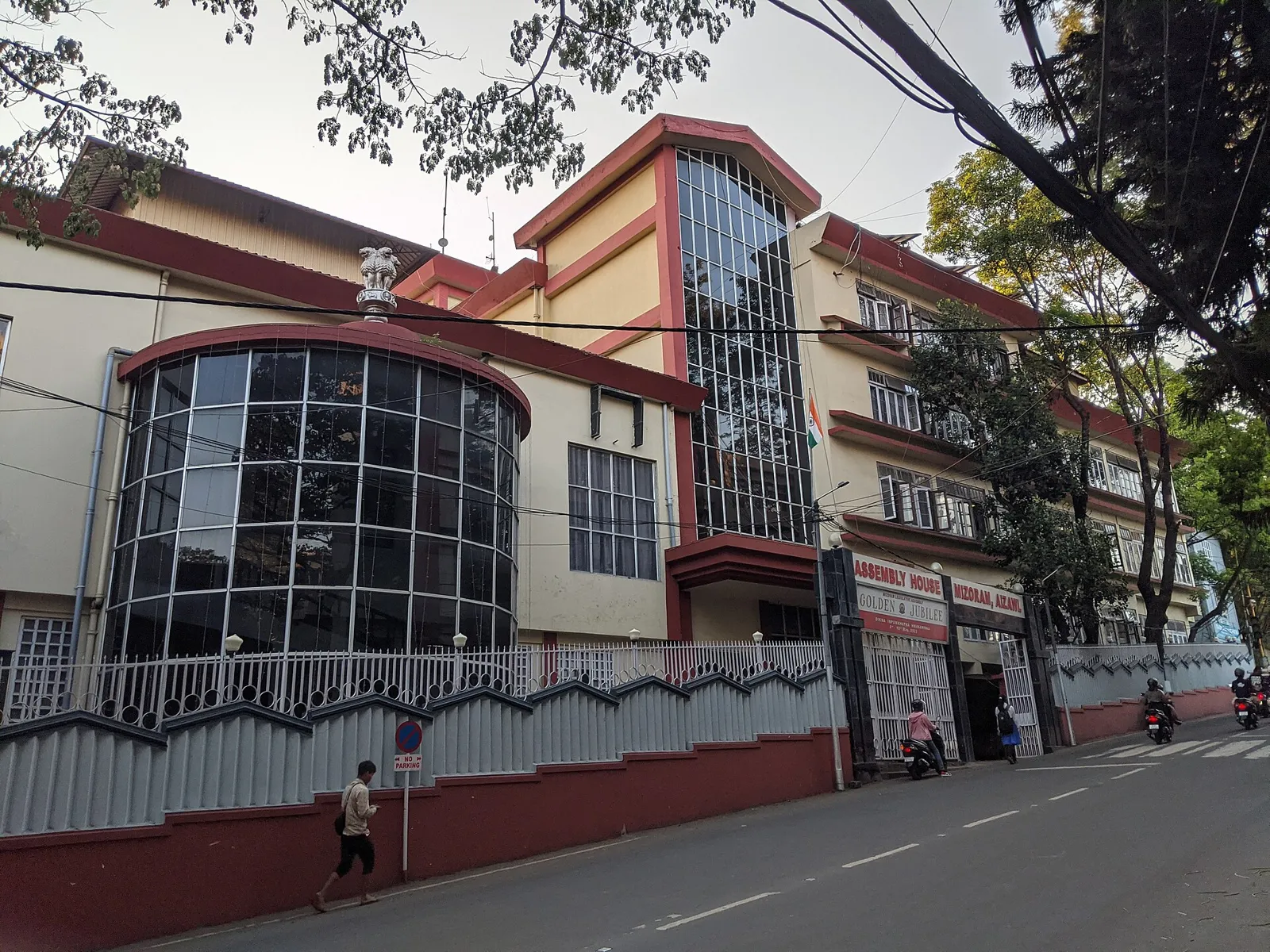
Aizawl is Mizoram’s capital and largest city, spread across elevated ridges. Visitors can see its colonial-era civic buildings and the Assembly House, which serves as the state legislature’s home.
Key facts · verified by Ghumoopedia editors
- Type of place
- Community & living culture
- Best time to visit
- October to March
- Nearest railway station
- Sairang (for Aizawl) · about 10 km (straight line)
- Verified
- 21 Nov 2026
Plan a trip from Aizawl — a day-by-day route through places nearby.
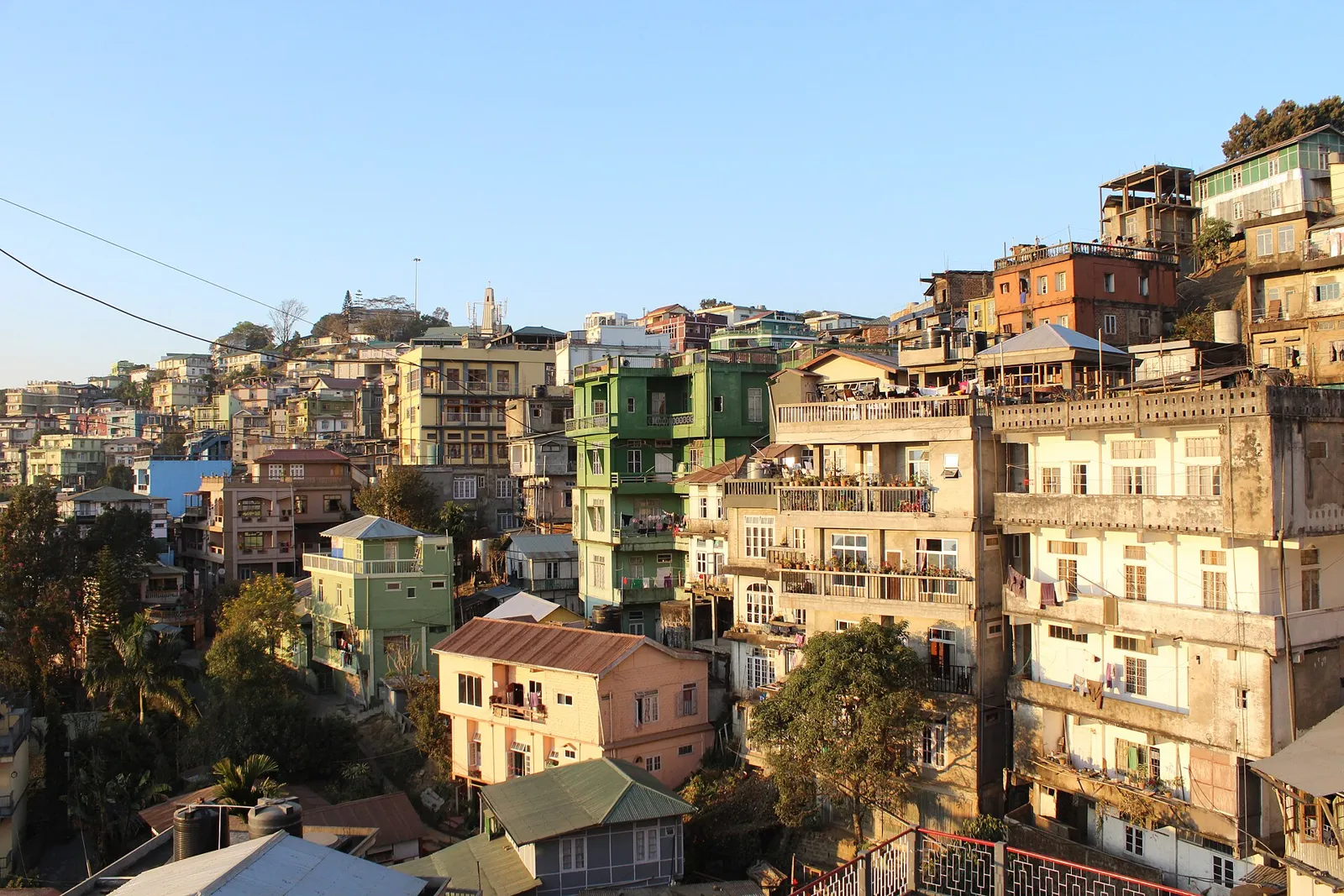
Aizawl is in Mizoram’s Aizawl district and serves as the state capital. Formerly called Aijal, it has the state’s largest urban population and ranks third among cities in north-east India. Built along ridges, it stands at an average height of about 1,132 metres (3,714 feet). The population estimate for 2024 is 415,000. Between 1898 and 1947, Aizawl was the administrative centre of the British Lushai Hills. Colonial-era buildings can be found in the city centre, including Aijal Club, Raj Bhavan, the Red School and the Deputy Commissioner’s Office. The Assembly House is also in Aizawl, which is the seat of Mizoram’s government. Aizawl is included in the Smart Cities Mission, an initiative of the Ministry of Housing and Urban Affairs. Its aims include urban development and improvements to infrastructure. Mizo society is close-knit and largely Christian; many shops and services close on Sundays, and the state enforces liquor prohibition. Mizoram’s ridges are mild for most of the year. Heavy monsoon rain from May to September can cause landslides on hill roads. The usual best time to visit is October to March. Days are short in Northeast India: the sun can set before 5 pm in winter, so plan to reach and leave Aizawl in daylight. Timings, fees and access arrangements must be confirmed locally. For official information, see Mizoram Tourism at https://tourism.mizoram.gov.in.
Why it matters
Aizawl is the capital of Mizoram and its most populous city, serving as the state’s main centre of government, education, commerce and public services. It is also the headquarters of Aizawl district and the seat of the Mizoram Legislative Assembly. The city’s position along a series of ridges makes it a prominent urban centre in the hill landscape of Northeast India. Published accounts describe Aizawl as the region’s third-largest city. Its administrative importance dates to the British period, when it served as the capital of the British Lushai Hills. Aizawl is included in India’s Smart Cities Mission; it is not identified here as a UNESCO or ASI-protected site.
Aizawl grew into an administrative centre in the Mizo Hills, a region inhabited by Mizo communities with their own social and political institutions. British administration expanded in the Lushai Hills during the late nineteenth century. Aizawl, then known as Aijal, served as the capital of the British Lushai Hills from 1898 until Indian independence in 1947. Buildings associated with the colonial-era administration remain in the city centre, including the Aijal Club, Raj Bhavan, the Red School and the Office of the Deputy Commissioner. Their presence reflects the city’s changing role rather than a single founding event. After independence, Aizawl continued as the principal administrative centre of the area. Mizoram became a Union Territory in 1972 and a state in 1987, with Aizawl as its capital. The city has since grown along its ridges, with government offices, housing, markets and services adapting to steep terrain and increasing population. It now hosts the state Assembly and government institutions. Aizawl is also part of the national Smart Cities Mission, which supports urban infrastructure and development. Historic buildings and access arrangements can vary; check locally before planning a visit.
Origin stories & folklore
There is no single, well-documented legend that explains the founding of Aizawl. Mizo oral traditions include accounts of Chhinlung, often described in stories as a cave or rock from which ancestors emerged or through which they passed. Interpretations and versions vary among tellers, and these accounts concern Mizo origins more broadly, not the establishment of the present-day city. They are part of living cultural memory rather than a verified account of Aizawl’s history. Visitors interested in such traditions can ask a local guide or cultural institution whether a story is appropriate to share. Listen respectfully, avoid presenting one version as universal, and do not record or publish a telling without permission.
Use Aizawl as a base to understand local life: walk through the market area, visit community-run attractions and ask your host about nearby viewpoints and short excursions. Always ask before photographing people, homes or ceremonies. A comfortable itinerary is one main visit in the morning, a local meal at midday and a short nearby stop before an afternoon return. Use the district list on this site to find other places in Aizawl, but check the actual road route and its condition before combining stops. If a festival is on, local roads and stays can be busy — and the experience can be unforgettable. Leave no litter: many sites in Mizoram are protected by the communities who own them.
Suggested itineraries
Half day: Explore Bara Bazar and the market area, allow time for a local meal, then visit a nearby viewpoint if weather and road conditions permit; about 3–4 hours. Full day: Visit the Mizoram State Museum, explore Bara Bazar, pause for lunch, then make a vehicle-based visit towards Durtlang for hill views; about 6–8 hours, subject to venue access and traffic. Gentler option: Choose one central venue and a nearby meal, using a taxi between stops to reduce walking; allow a flexible half day.
Mizo is the principal language of everyday life in Aizawl, while English is widely used in education and administration; other Indian languages are also heard. Christianity shapes much of public and community life, and many shops and services close on Sundays. Mizo music and group singing are familiar parts of gatherings. Traditional dances include Cheraw, performed with bamboo staves, as well as Khuallam and Chheihlam; performances are usually arranged for particular events rather than guaranteed for visitors. Woven puan garments and contemporary clothing are both part of daily dress. The value often expressed as tlawmngaihna—generosity, responsibility and service to others—is important in Mizo social life, though practices differ among individuals and communities.
Local communities
Aizawl is home predominantly to Mizo people, including residents with connections to communities across Mizoram, alongside people who have moved from other parts of India. Family, church, neighbourhood and community networks play important roles in city life. Residents work in government and public services, education, healthcare, retail, transport, construction and other urban livelihoods. Handloom weaving and craft traditions are also practised, though availability varies. The city’s population and customs are not uniform; visitors should avoid treating any one person as a spokesperson for all Mizo communities. When attending a community event, follow the host’s guidance and ask before photographing people or entering private spaces.
Festivals & events
Chapchar Kut, a major Mizo festival associated with the spring season, is celebrated in Aizawl and elsewhere in Mizoram. Mim Kut is generally observed around the late monsoon season, while Pawl Kut is associated with the harvest period and usually falls in winter. Christmas is widely observed, reflecting the importance of Christianity in the city. Public programmes may include music, dance, community gatherings and cultural presentations, but events and access arrangements vary by year and organiser. Festival periods can bring busier roads, fuller accommodation and larger crowds at venues. Check local announcements, ask before photographing performances, and allow extra time for travel.
Local food in Mizoram includes bai (a stew of vegetables and bamboo shoot), sawhchiar rice porridge, vawksa rep (smoked pork) and fresh chutneys. Ask what is fresh that day; many small eateries cook a limited daily menu. Pork, beef, fish and fermented ingredients are common in tribal cuisines, so vegetarian travellers should explain their needs clearly — rice, dal, vegetables and eggs are usually possible in towns. Remote sites may have no restaurant at all. Carry water and snacks, eat a proper breakfast before long drives, and ask your accommodation for a packed lunch if you are heading out early. Try a homestay-cooked meal when you can — it is often the best food in the hills. Choose busy, clean places and carry your packaging back to town.
Shopping & local experiences
Bara Bazar and other market areas are places to browse for everyday goods, local produce and souvenirs. Depending on availability, visitors may find Mizo puan textiles, handwoven items, bamboo or cane crafts and locally made products. Food shops and restaurants offer opportunities to try Mizo dishes; ingredients and menus vary, so ask about contents and preparation if you have dietary needs. Buy crafts respectfully and ask about the maker or material rather than assuming an item represents every community. Carry reusable bags where possible, and check current rules before taking plant, animal or other regulated materials across borders.
Aizawl occupies a series of steep ridges at an average elevation of about 1,132 metres above sea level. The surrounding landscape is hilly, with deep valleys and forested slopes in the wider region; the city itself is extensively built up. Mizoram’s broader vegetation includes bamboo and subtropical hill forests, but the amount of natural cover visible from any viewpoint depends on location and season. The monsoon, usually from May to September, brings heavy rain and can contribute to landslides on hill roads. Clearer conditions are more common in the cooler, drier months, though weather can change. Birdlife and other wildlife occur in the region, but sightings in or near the city are not assured. Keep to established paths and leave plants, wildlife and community-owned places undisturbed.
October to March
The nearest principal railway station by straight-line distance is Sairang (for Aizawl), roughly 10 km away. The nearest operating airport by straight-line distance is Lengpui Airport, Aizawl, roughly 15 km away. These figures are calculated from map coordinates — hill roads in Mizoram wind a lot, so actual road distance and travel time are usually much longer. Guwahati is the main rail and air hub for the region, and most long-distance journeys connect through it. For the final leg, Mizoram State Transport and shared Sumo taxis link district towns; shared taxis usually leave early in the morning and depart only when full. A private taxi gives more flexibility for remote sites. When comparing train, bus and flight, count the complete door-to-door time: a flight saves the most time only if the onward road transfer is short, while an overnight train to Guwahati plus a road journey can save a hotel night. Book your return before you leave, because seats on shared vehicles and the few daily flights fill quickly. Current train numbers, timings, return services and fares are not listed here; check IRCTC and NTES for trains and the airline’s own schedule for flights. Indian visitors who are not residents of Mizoram need an Inner Line Permit, issued through Mizoram’s official ILP system or at entry points and Lengpui Airport. Foreign nationals must check the current permit and registration requirements.
Confirm onward and return timings on IRCTC / NTES, the state bus operator or your airline before travel. A dash means current timings or fares have not been verified.
Getting around
Aizawl’s steep, winding roads make local travel slower than distances on a map may suggest. Shared taxis and local buses serve parts of the city; private taxis can be useful for viewpoints or visits beyond the central area. Confirm the destination with the driver, as routes and stopping points can vary. Walking is possible in market areas, but hills, stairs, narrow pavements and traffic can make even short journeys demanding. Parking is limited in busy parts of town, so ask locally about suitable drop-off points. For onward travel to other towns, shared taxis commonly operate from designated stands; confirm the route and arrangements locally.
Hours, tickets & permissions
Aizawl is a working city rather than a single ticketed attraction, so access rules differ between markets, public viewpoints, museums, churches and government buildings. Some venues may require an entry ticket, prior permission, identification or restrictions on cameras; others may be freely accessible. Government and religious premises may have their own visitor guidance, and some services close on Sundays. Confirm current opening arrangements, entry requirements and any fees with the venue or managing authority before setting out. Do not assume that a public building or viewpoint is open simply because it appears on a map.
Facilities
As the state capital, Aizawl usually has a broad range of hotels, guesthouses, restaurants, pharmacies, banks and ATMs, particularly in central neighbourhoods. Food and drinking water are available in town, but facilities may be less convenient at viewpoints or on excursions outside the city. Public toilets, seating and shelter vary by venue; check locally rather than relying on them at every stop. Larger attractions may provide staff or basic visitor information, but dedicated guides are not guaranteed. Parking can be constrained in busy areas. Carry water, any essential medicines and a charged phone, and confirm accommodation and venue services before travel.
Accessibility
Aizawl’s ridge-top setting means steep slopes, stairs, uneven paths and narrow roads are common. Walking between nearby places can involve significant climbs, and pavements may be limited or obstructed. Wheelchair access, ramps, lifts and accessible toilets should not be assumed; check directly with each venue and accommodation. Strollers can be difficult to manoeuvre on steep or uneven routes. Older visitors and anyone with limited mobility may find a vehicle-based plan with few stops more comfortable, but vehicle access and drop-off points vary. Rain can make surfaces slippery, and shade is inconsistent on streets and viewpoints. Build in rest breaks and avoid rushing.
Indian visitors who are not residents of Mizoram need an Inner Line Permit, issued through Mizoram’s official ILP system or at entry points and Lengpui Airport. Foreign nationals must check the current permit and registration requirements. Carry a printed and digital copy of your permit and a photo ID at all times; checkpoints are common. Save the emergency number 112 and your accommodation’s contact offline. Heat, humidity and sudden downpours are the main weather risks; carry water and rain protection. Respect community rules, private property and posted instructions. Avoid hill road travel after dark and during heavy rain, when landslides are more likely. Check official advisories for the region before travel, and follow local guidance if access changes.
Visitor rules
Follow signs and instructions at museums, churches, government premises and community-managed places. Modest clothing is considerate when entering churches or attending community events; remove footwear where requested. Wear shoes with a good grip on steep or wet paths. Ask permission before photographing people, homes, services or ceremonies, and respect any no-photography areas. Do not enter private, restricted or official spaces without permission. Carry litter out and avoid single-use plastic where practical. Alcohol is subject to Mizoram’s prohibition laws and related regulations; do not assume it may be bought or consumed. Be considerate of Sunday observance and neighbourhood quiet.
Photography
Clear mornings or late afternoon can offer softer light over Aizawl’s ridges, though clouds and rain often alter visibility. Public viewpoints and street scenes may be photographed where no restriction is posted, but ask before taking close portraits or photographing homes, worship, ceremonies and community events. Museums, government buildings and some religious premises may restrict cameras or particular subjects; check with staff. Avoid blocking narrow streets or market entrances while taking pictures. Drone use can be subject to aviation, security and local permissions, so do not fly without confirming the rules and obtaining required approvals. Respect anyone who declines to be photographed.
Choose a stay by the full journey to Aizawl, not just the district name. Main towns in Aizawl usually offer hotels, state tourism lodges and homestays with better transport, meals and medical access, while village homestays offer a closer connection to local life. In the plains and valleys, check fans or air-conditioning and mosquito nets in summer. Book in advance for weekends, festival dates and the peak season (October to March). Confirm the exact location, meals included, check-in time and cancellation terms in writing. Many homestays accept payment on arrival; avoid sending money to unverified contacts. Mobile network and digital payments can be unreliable in remote areas, so carry some cash.
Within Aizawl, visitors can look for the Mizoram State Museum, Bara Bazar, Solomon’s Temple and viewpoints around Durtlang; access and opening arrangements should be checked locally. Falkawn, a Mizo cultural village south of the city, may be an option for a short excursion when open to visitors. Reiek and Hmuifang are further hill destinations often considered from Aizawl, but they require road travel and should not be treated as quick city stops. Routes can be affected by rain, landslides and changing road conditions. Check the actual journey and venue access before combining places, and allow enough time to return in daylight.
For couples, Aizawl rewards a slow pace: arrive early for soft light and fewer crowds, share a local meal and keep the evening free. Public displays of affection can be frowned upon in conservative communities and at religious sites, so be discreet. A homestay can make the trip memorable — confirm privacy, hot water and transport back. Keep a buffer day in your itinerary, because weather and road closures can delay plans in Mizoram.
Q: How much time should I allow for Aizawl? A: A half day can cover one central visit and a meal; a full day allows a more relaxed city visit and a nearby viewpoint, depending on access and road conditions. Q: When is a good season to visit? A: October to March is generally the drier, cooler period. Monsoon rain from May to September can disrupt hill-road travel. Q: Is there one entry ticket for the city? A: No. Aizawl is a city, and any tickets, permissions or camera rules apply to individual venues. Confirm requirements with each place. Q: Is Aizawl suitable for children and older visitors? A: It can be, but steep roads, stairs and uneven pavements may be tiring. Choose fewer stops and use a vehicle where helpful. Q: Can I stay overnight nearby? A: Yes. Aizawl has hotels and guesthouses, with options varying by neighbourhood and season. Check facilities and book ahead during festivals or busy periods.
Be the first to share photos, stories, advice or a helpful contact for Aizawl.
Loading…