
Khajuraho Temples
Khajuraho is a complex of Hindu and Digambara Jain temples in Madhya Pradesh, known for Nagara architecture and sculptural detail that attracts visitors interested in Indian art and religious history.
Key facts · verified by Ghumoopedia editors
- Type of place
- Temple / pilgrimage site
- Best time to visit
- October to March
- Nearest railway station
- Khajuraho · about 4 km (straight line)
- Nearest airport
- Khajuraho Airport · about 4 km (straight line)
- Verified
- 21 Nov 2026
Plan a trip from Khajuraho Temples — a day-by-day route through places nearby.
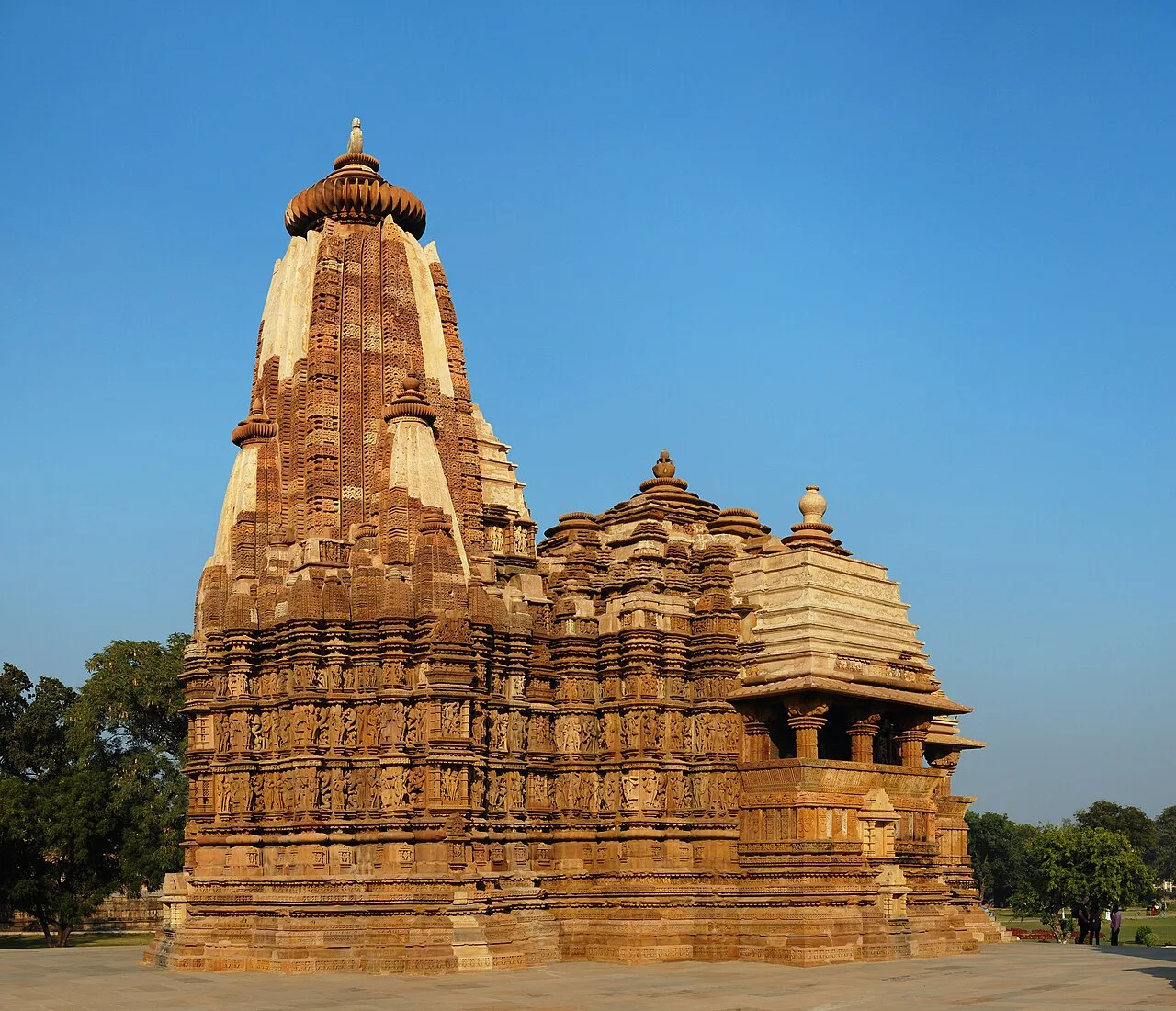
The Khajuraho temple ensemble is in Madhya Pradesh’s Chhatarpur district. Chhatarpur, the district headquarters, is about 46 km (28.6 miles) away; Gwalior is 283 km (177 miles) distant. Khajuraho lies 175 km (109 miles) southeast of Jhansi, while Khajwa is 10 km (6.2 miles) away and Rajnagar 9 km (5.6 miles). The site includes Hindu shrines and temples of the Digambara Jain tradition. Its buildings use the Nagara architectural idiom, and some carvings depict erotic subjects. Most of the temples were raised under the Chandela dynasty from 885 to 1000 CE. Records from the 12th century describe 85 temples spread across 20 sq km (7.7 sq miles). Around 25 survive, occupying six sq km (2.3 sq miles). Kandariya Mahadeva Temple is among them; its abundant carvings display fine detail, symbolic imagery and expressive forms associated with ancient Indian art. Vegetation eventually covered the site. In 1838, British engineer Captain T.S. Burt visited and documented what he found in the Journal of the Asiatic Society of Bengal. An account of the sculptures links them to the education of local boys: they reportedly lived in hermitages as brahmacharyas, or bachelors, until adulthood, and the imagery was intended to teach them about life as householders. Hindu and Jain temples share this complex, a sign of acceptance and respect for different religious beliefs in the region. The monuments were inscribed on the UNESCO World Heritage List in recognition of their architecture, varied temple forms and evidence of Chandela civilisation. Madhya Pradesh holds three UNESCO World Heritage Sites — the temples of Khajuraho, the Buddhist stupas of Sanchi and the Bhimbetka rock shelters — plus the forts and palaces of Gwalior, Orchha and Mandu, the marble gorges of Bhedaghat, the pilgrim towns of Ujjain and Omkareshwar, and some of India's best tiger country in Kanha, Bandhavgarh, Pench and Satpura. The state has very hot summers from March to June (often above 42°C in the north and west), a monsoon from late June to September that greens the forests but closes the tiger reserves' core zones, and a cool, pleasant winter from November to February — the best season for almost everything. The usual best time to visit is October to March. Timings, fees and access arrangements must be confirmed locally. For official information, see Madhya Pradesh Tourism at https://www.mptourism.com.
Why it matters
The Khajuraho Group of Monuments is a major heritage site in Chhatarpur district, Madhya Pradesh, recognised for its medieval Hindu and Digambara Jain temples. UNESCO inscribed the group on the World Heritage List in 1986, citing its architecture, range of temple forms and evidence of the Chandela civilisation. The Archaeological Survey of India protects and maintains a number of the monuments. Khajuraho is important both as a record of religious and artistic life in central India and as a place where visitors can encounter temple sculpture in its architectural setting. Its carvings include religious, everyday and intimate subjects; the erotic imagery is only one part of a much broader programme.
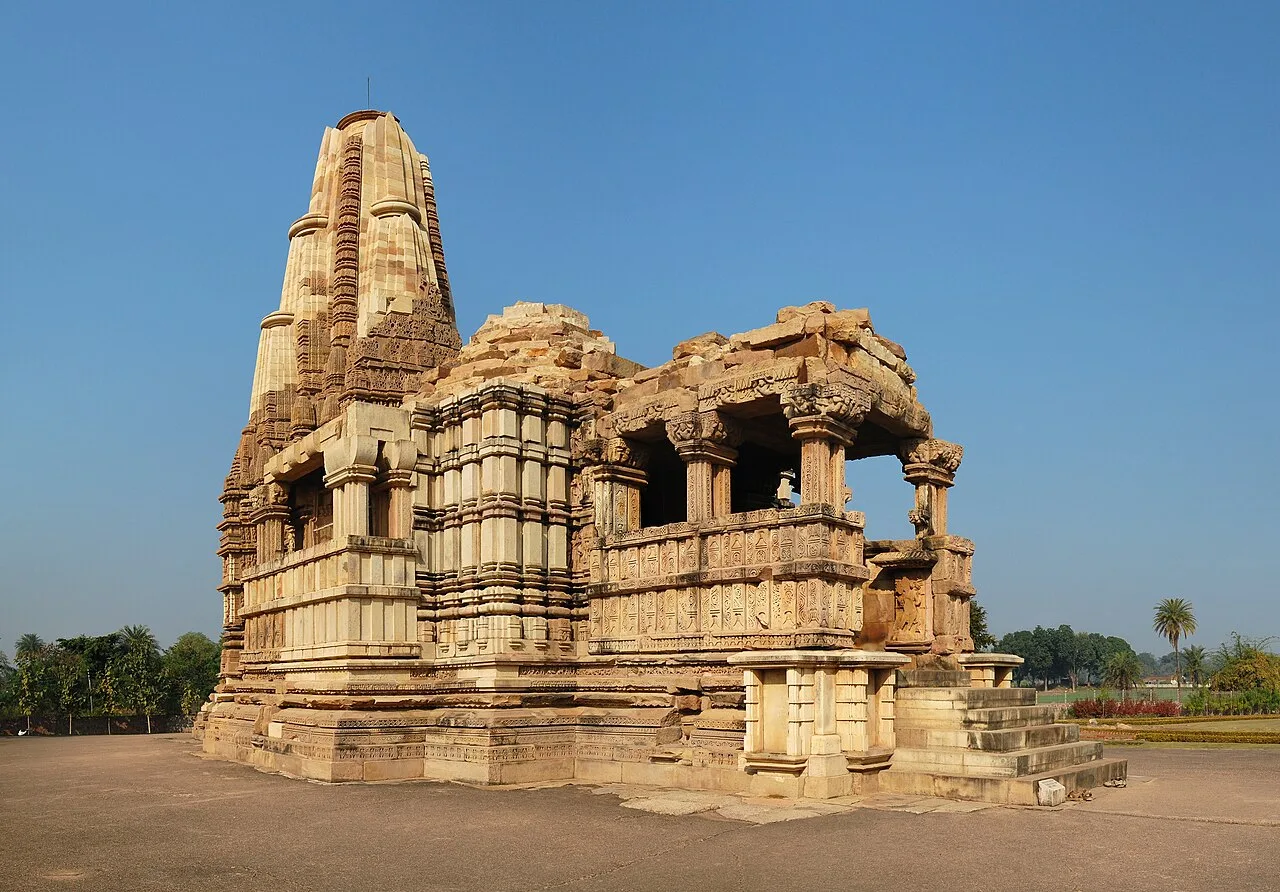
Most surviving temples at Khajuraho were built under the Chandela dynasty, principally between the 9th and 11th centuries. They were dedicated to Hindu traditions and to Digambara Jainism, indicating that different religious communities were represented at the site. Historical accounts describe a much larger complex: by the 12th century, it is said to have contained about 85 temples across roughly 20 square kilometres. Around 25 survive, distributed across several groups. The Chandela political centre shifted over time, and Khajuraho gradually lost prominence. The monuments became overgrown and less widely known outside the region. In 1838, British engineer Captain T. S. Burt visited the site and reported it to the Journal of the Asiatic Society of Bengal, helping bring it to wider notice. Subsequent documentation, conservation and archaeological study have made the temples accessible to visitors while protecting their carved surfaces and structures. The group was inscribed by UNESCO in 1986. Today, the Archaeological Survey of India manages protected monuments, while some temples, including Matangeshvara, also retain a role in worship.
Origin stories & folklore
According to a well-known origin legend, Hemavati, a beautiful woman, encountered the moon god Chandra, and their son became the ancestor of the Chandela rulers. In versions of the story, Hemavati asked her son to build temples whose sculptures would portray human life and its desires, as well as spiritual concerns. The tale is a traditional account, not a verified historical explanation for the temples or their carvings. Local and popular retellings also connect the name Khajuraho with khajur, or date palm, and describe palm trees once marking the settlement. Such stories add to the site's cultural memory, but visitors should distinguish them from the archaeological evidence for Chandela-era construction.
Architecture & design
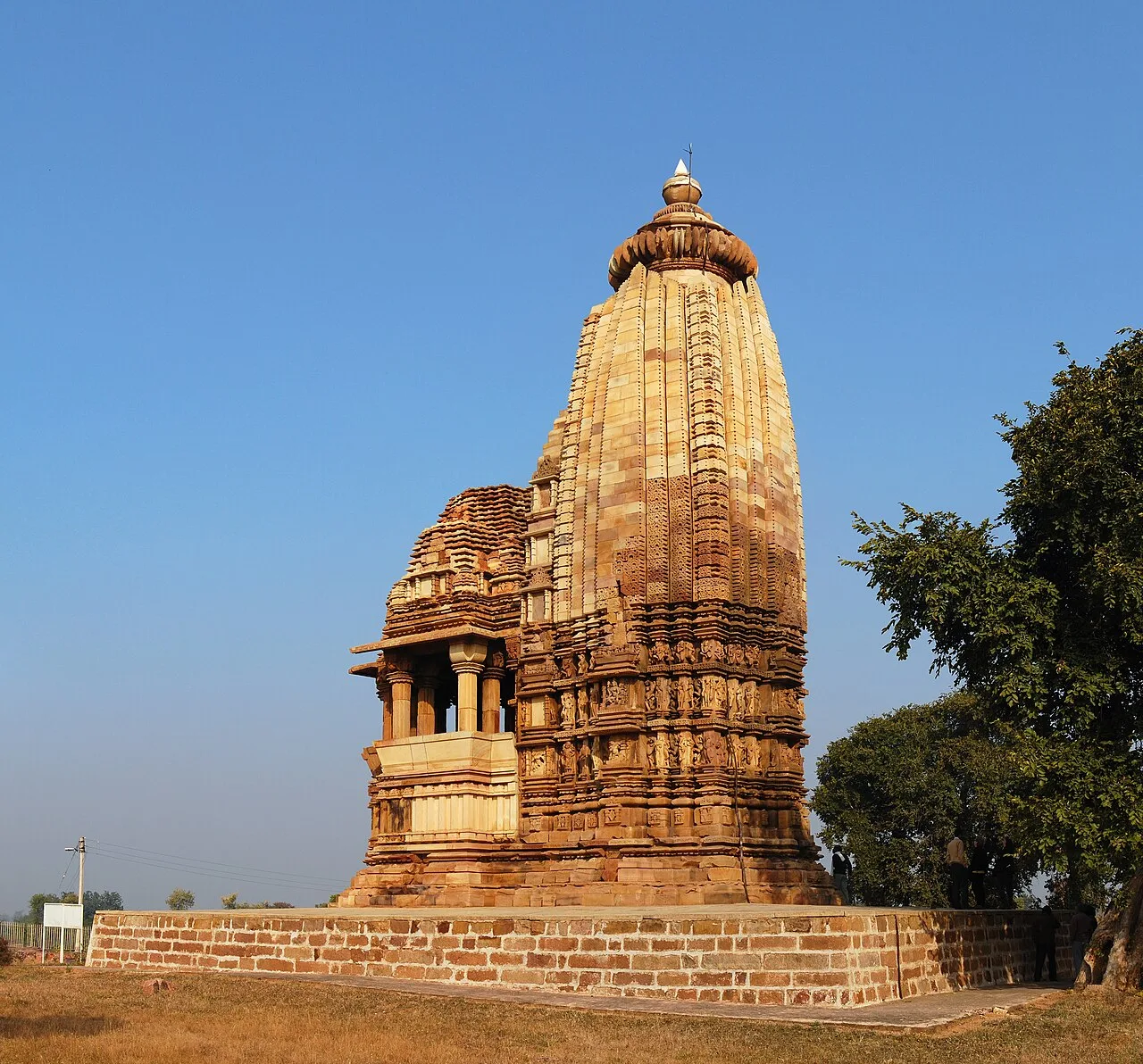
Khajuraho's temples are celebrated examples of the Nagara tradition of North Indian temple architecture. Many stand on raised platforms and are arranged along an east-west axis, with a porch, a sequence of halls and a sanctum. Their roofs rise in clustered, curving tiers, culminating in a tower over the shrine. The buildings are generally constructed from sandstone blocks fitted with careful joints; granite is also present in some early structures. Carved bands cover much of the exterior, while the overall composition balances vertical towers, projecting walls and richly ornamented surfaces. The surviving monuments are grouped across the Western, Eastern and Southern areas. The Kandariya Mahadeva Temple is among the most elaborate, with a tall central tower and dense sculptural decoration. Temple plans and details vary, reflecting changes in design and patronage over time. Figures, deities, guardians and ornamental motifs are integrated into the architecture rather than displayed as a separate collection. The raised plinths, layered halls and sculpted elevations help visitors read the temples as both places of worship and carefully composed works of art.
Important objects & sculptures
Look for the sculpted figures arranged in horizontal bands around temple walls and doorways. They include Hindu deities, attendant figures, guardians, musicians, dancers, couples, animals and scenes of ordinary activity. The intimate and erotic carvings are notable, but form only a portion of the wider sculptural programme. At the Kandariya Mahadeva Temple, the density and fine detail of the carving reward a slow look from different angles. Doorways and shrine entrances often carry particularly intricate ornament. The temples also contain images associated with Jain worship in the Eastern group. These are architectural monuments rather than a single museum collection, so carvings remain in their original settings; avoid touching or climbing on them.
Religious significance
The temple group brings together shrines associated with Hindu traditions and Digambara Jainism. Hindu temples honour deities including Shiva, Vishnu and forms of the Goddess, while Jain temples are connected with the Tirthankaras. Matangeshvara remains an active Shiva temple and is a focus of worship; other monuments are primarily visited as protected heritage sites, though religious meaning remains important to many visitors. Worship practices and access can vary by temple and occasion. Visitors may encounter prayer, offerings or ceremonies, and should give worshippers space rather than treating these moments as performances. The shared presence of Hindu and Jain monuments is often understood as evidence of religious diversity and patronage in the region, while each tradition retains its distinct beliefs and practices.
Visit Khajuraho Temples with time to observe daily prayers and rituals respectfully. Follow the posted rules on footwear, photography, phones, head covering and dress, and avoid interrupting worshippers; popular temples may have separate queues, dress codes or mobile-phone deposit counters. Ask caretakers which areas are open to visitors, and beware of unofficial 'guides' or agents offering quick darshan for a fee. A comfortable itinerary is one main visit in the morning, a local meal at midday and a short nearby stop before an afternoon return. Use the district list on this site to find other places in Khajuraho, but check the route and its condition before combining stops. If a festival is on — such as the Khajuraho Dance Festival, the Tansen Samaroh in Gwalior, Lokrang in Bhopal or the Simhastha Kumbh at Ujjain — roads and stays can be busy, and the experience can be unforgettable. Leave no litter: many sites are protected by the communities around them.
Suggested itineraries
Half day: Spend about 2–3 hours exploring the Western Group, allowing time for the Kandariya Mahadeva Temple and nearby shrines; take a break and visit the Archaeological Museum if time and opening arrangements allow. Full day: Begin with 3–4 hours at the Western Group, pause for lunch, then spend 1–2 hours at the Eastern Group's Jain and other temples; finish with a visit to the Southern Group or a relaxed return to a favourite temple. Gentler option: Choose one temple group, use a taxi or auto between areas, take regular shaded breaks and ask locally about the easiest approaches before visiting.
Khajuraho is a living town as well as a heritage destination. Hindi is widely used, alongside Bundeli and other languages of the region; visitors may also hear English in tourism settings. Local cultural life includes temple worship, regional food, craft sales and performances connected with classical dance. The annual Khajuraho Dance Festival brings performers and audiences to the town, linking dance traditions with the monument setting. Dress is varied, but modest clothing is considerate in places of worship. Residents, priests, guides, craftspeople and tourism workers all contribute to the visitor experience. Ask before photographing people, and approach religious customs with respect rather than assuming that every temple operates as an active shrine.
Festivals & events
The Khajuraho Dance Festival is usually held in February, with classical dance performances staged in the town amid the temple heritage setting. Mahashivratri, usually in February or March, is observed by worshippers at Shiva temples, including Matangeshvara. Jain observances such as Mahavir Jayanti generally fall in March or April, though the calendar varies. Festival periods can bring larger crowds, busier roads and greater demand for accommodation, so plan ahead and check current arrangements. Religious events may affect access to particular shrines; follow directions from temple staff and organisers, and avoid interrupting ceremonies.
Local food in Madhya Pradesh includes poha with jalebi for breakfast, bhutte ka kees, dal bafla and dal baati, Indore's sarafa night-market snacks, Bhopal's seekh kebabs and biryani, mawa-bati and gajak sweets, and mahua-based tribal dishes in forest districts. Ask what is fresh that day; many small eateries cook a limited daily menu. Vegetarian travellers eat well across the state, and most towns also have good non-vegetarian food; Indore's Sarafa Bazaar turns into a famous night food market. Remote sites may have no restaurant at all. Carry water and snacks, eat a proper breakfast before long drives, and ask your accommodation for a packed lunch if you are heading out early. If prasad is offered, accept it according to local custom. Choose busy, clean places, drink sealed or filtered water, and carry your packaging back with you.
Shopping & local experiences
Khajuraho town has shops and stalls offering small souvenirs, locally made crafts, textiles and replicas inspired by temple sculpture. Look for work that identifies its maker or material, and ask before photographing shopkeepers or their displays. The town's restaurants and cafés provide opportunities to try Madhya Pradesh and Bundelkhand-influenced meals, as well as familiar Indian dishes. Availability varies, so ask locally about seasonal or regional specialties. Buy responsibly: avoid products made from protected wildlife, archaeological material or anything presented as an original temple fragment.
October to March
The nearest principal railway station by straight-line distance is Khajuraho, roughly 4 km away. The nearest operating airport by straight-line distance is Khajuraho Airport, roughly 4 km away. These figures are calculated from map coordinates — actual road distance is longer. Bhopal, Indore, Jabalpur and Gwalior are the main rail and air gateways; Khajuraho has its own airport and station, Jhansi (UP) serves Orchha and Datia, and Pipariya is the railhead for Pachmarhi. For the final leg, Madhya Pradesh State Road Transport Corporation buses, private sleeper coaches between the big cities, and shared jeeps and autos in smaller towns link district towns. A private taxi gives more flexibility for remote sites such as forts, caves and forest gates. When comparing train, bus and flight, count the complete door-to-door time: a flight saves the most time only if the onward road transfer is short, while an overnight train can save a hotel night. Book your return before you leave, because seats fill quickly on weekends, festivals and holidays. Current train numbers, timings, return services and fares are not listed here; check IRCTC and NTES for trains and the airline's own schedule for flights. No permit is needed to visit Madhya Pradesh. Tiger safaris in Kanha, Bandhavgarh, Pench, Satpura and Panna must be booked in advance on the official MP Forest online portal — zones and gates sell out weeks ahead in peak season, and the core zones are closed during the monsoon (roughly July to mid-October). Boating and angling in the National Chambal Sanctuary also need forest-department bookings.
Confirm onward and return timings on IRCTC / NTES, the state bus operator or your airline before travel. A dash means current timings or fares have not been verified.
Getting around
Khajuraho's temple groups are spread across town, and some can be explored on foot if you are comfortable with the distance and weather. Auto-rickshaws and taxis are commonly used to move between the temple areas, accommodation and local attractions; agree on the route before setting off. Cycle-rickshaws may be available for shorter trips, depending on local conditions. Ask your accommodation about vehicle access and parking near the monuments, as arrangements can vary. Local buses may serve connections beyond the central area, but check locally rather than relying on a particular service. Allow extra time during festivals and busy visitor periods.
Hours, tickets & permissions
Entry arrangements differ between temple groups and individual shrines. Some protected monument areas have ticketing or other entry controls, while access to active places of worship may follow separate practices. Rules on cameras, bags, footwear or photography can also vary, and special events may bring temporary restrictions. Carry identification if required by the current visitor arrangements, but do not assume a particular document is always needed. Confirm current opening hours, entry conditions and fees with the Archaeological Survey of India or the relevant temple authority before setting out.
Facilities
Facilities vary by temple group. Visitor areas usually have some combination of toilets, drinking-water points, paths, signs, parking and places to rest, but availability and upkeep can differ; check locally and carry water, especially in warm weather. Food and refreshments are more readily found in Khajuraho town than beside every monument. Guides may be available, and visitors should confirm credentials and scope before starting a tour. ATMs and other services are generally found in town, not necessarily at the temple entrances. Museum access and facilities may follow separate arrangements.
Accessibility
The site involves outdoor walking across several temple groups, with uneven stone surfaces, steps and raised platforms. Shade is limited in exposed areas, and distances between groups can make a full visit tiring, especially in hot weather. Wheelchair and stroller access may be difficult around steps, narrow approaches and uneven paving; do not assume that every shrine or platform is accessible. Older visitors and people with limited mobility may prefer one group at a time, use a vehicle between areas and take frequent rests. Check current access conditions with site staff, and ask before relying on ramps or assistance, as provision can vary.
No permit is needed to visit Madhya Pradesh. Tiger safaris in Kanha, Bandhavgarh, Pench, Satpura and Panna must be booked in advance on the official MP Forest online portal — zones and gates sell out weeks ahead in peak season, and the core zones are closed during the monsoon (roughly July to mid-October). Boating and angling in the National Chambal Sanctuary also need forest-department bookings. Carry a photo ID at all times and save the emergency number 112 and your accommodation's contact offline. Heat in summer and heavy rain in the monsoon are the main weather risks; carry water, avoid midday sun and allow extra time when roads flood. Watch your belongings in crowds and on public transport, and follow posted instructions.
Visitor rules
Follow notices and instructions from monument staff, temple caretakers and security personnel. Dress respectfully, particularly at active places of worship, and remove footwear where the shrine requests it. Do not touch, climb on or mark the carved stone, and stay out of closed or restricted areas. Photography, bags and phone use may be subject to local rules; check signs before proceeding. Keep noise low around worshippers, do not interrupt rituals, and ask permission before photographing people. Take litter with you and avoid bringing single-use plastic where restricted. Unofficial offers of special access or quick darshan should be treated cautiously.
Photography
Soft morning or late-afternoon light can bring out the relief of the carvings and reduce harsh shadows; viewpoints around the temple platforms help show the buildings in context. Photography rules differ by monument and may change, so check posted notices or ask staff before taking pictures indoors or using equipment. Do not photograph worshippers or ceremonies without permission, and avoid flash where it could disturb people or risk damage. Drone use should not be assumed to be permitted: check current aviation and site rules and obtain any required authorisation before flying.
Choose a stay by the full journey to Khajuraho Temples, not just the district name. Bhopal, Indore, Gwalior and Jabalpur offer the widest choice; Khajuraho, Orchha and Pachmarhi have hotels and MP Tourism lodges, which are reliable value, and pilgrim towns have dharamshalas. In summer, check air-conditioning; in the monsoon, check that the property is accessible if roads flood. Book in advance for weekends, festivals and the peak season (October to March). Confirm the exact location, meals included, check-in time and cancellation terms in writing. Avoid sending money to unverified contacts or touts at stations. Carry some cash, as card and digital payments can be unreliable in remote areas.
Within Khajuraho, visitors can combine the temple groups with the Archaeological Museum, subject to its current visitor arrangements, and explore the town's markets and local heritage. The Eastern and Southern temple groups provide useful contrasts with the Western Group. Further afield, Raneh Falls and the Ken Gharial Sanctuary are recognised natural attractions in the region; conditions and access can vary seasonally. Panna Tiger Reserve is another possible excursion from Khajuraho, but it requires separate travel planning and entry arrangements. Check road conditions, park access and the time needed before combining any of these stops with a temple visit.
For couples, Khajuraho Temples rewards a slow pace: arrive early for soft light and fewer crowds, share a local meal and keep the evening free. Sunset over the marble rocks at Bhedaghat, a boat ride on the Narmada at Maheshwar or a night drive under the stars near a forest lodge makes the trip memorable. Public displays of affection can be frowned upon in conservative communities and at religious sites, so be discreet. Keep a buffer in your itinerary, because weather and road conditions can delay plans.
Q: How much time should I allow for Khajuraho's temples? A: Allow at least half a day for one principal group. A full day gives time to visit more groups at a relaxed pace. Q: When is a good season to visit? A: November to February is generally cooler and more comfortable for walking. Summer can be very hot, while monsoon weather may affect outdoor plans. Q: Is entry allowed at every temple, and do I need a ticket? A: Access and ticketing vary by group and shrine. Confirm current arrangements with the relevant monument or temple authority. Q: Can children and elderly visitors explore the site? A: Yes, but uneven paths, steps, heat and walking distances can be challenging. Choose a manageable area, take breaks and check access conditions. Q: Can I stay near the temples? A: Khajuraho has accommodation options in and around town. Availability can tighten during festivals and busy travel periods, so check and book ahead.
Be the first to share photos, stories, advice or a helpful contact for Khajuraho Temples.
Loading…