
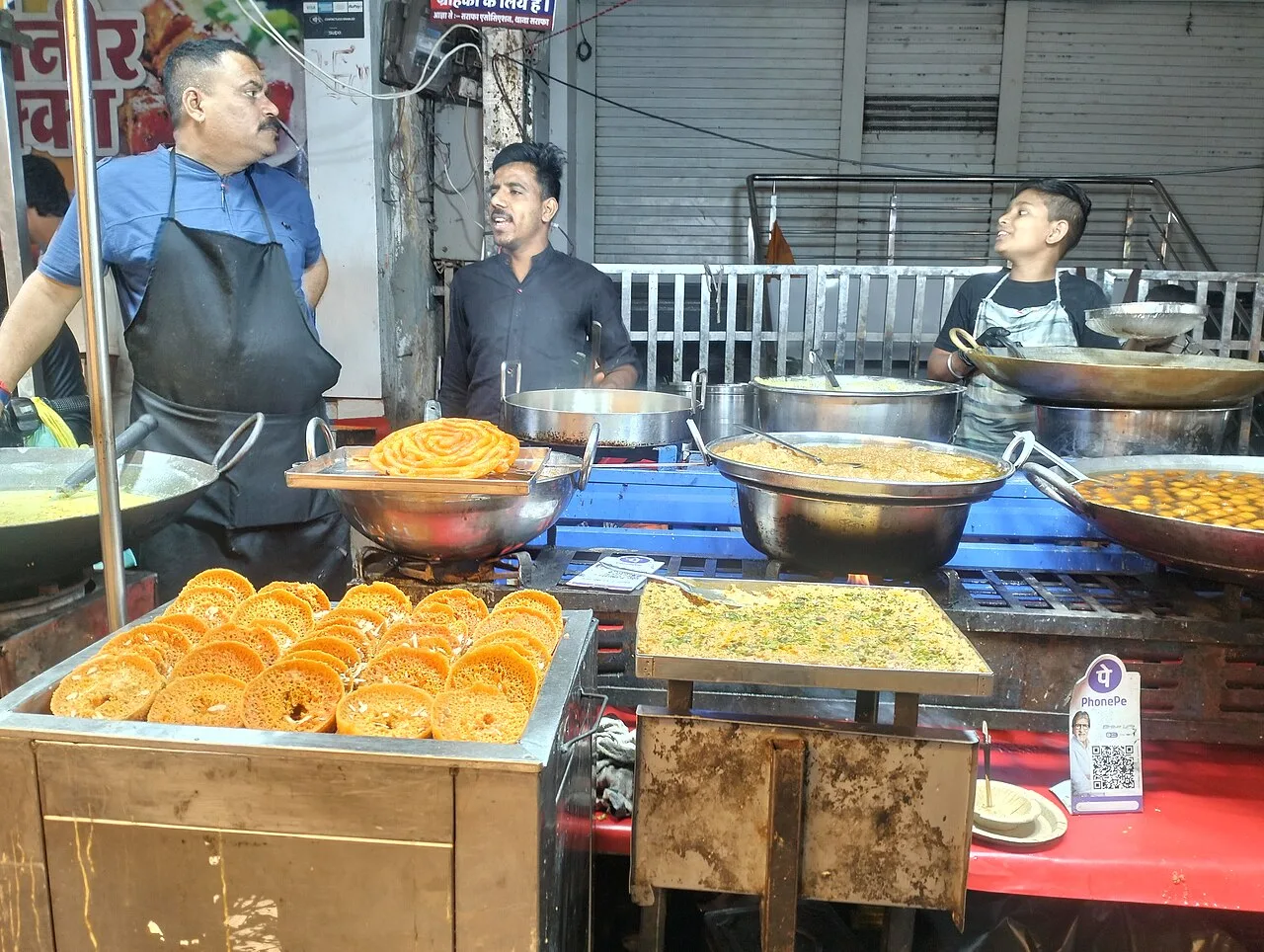
Sarafa Bazaar
In central Indore, Sarafa Bazaar is a jewellery-trading area by day that becomes a street-food destination at night, drawing visitors for its varied cuisine and evening atmosphere.
Key facts · verified by Ghumoopedia editors
- Type of place
- Food / craft destination
- Best time to visit
- October to March
- Nearest railway station
- Indore Junction · about 2 km (straight line)
- Verified
- 21 Nov 2026
Plan a trip from Sarafa Bazaar — a day-by-day route through places nearby.
Sarafa Bazaar lies in Indore district, Madhya Pradesh, in the central part of Indore. Its character shifts as the day ends: jewellery trading gives way to stalls serving street food. The market is made up of two sections, Bada Sarafa Bazaar and Chhota Sarafa Bazaar. During daylight hours, it functions as a place for jewellery shopping; after dark, food becomes its main draw. Visitors come to experience the range of dishes and the market’s lively evening activity. This change from daytime commerce to nighttime dining has made Sarafa Bazaar a well-known place for tourists in Indore. Madhya Pradesh holds three UNESCO World Heritage Sites — the temples of Khajuraho, the Buddhist stupas of Sanchi and the Bhimbetka rock shelters — plus the forts and palaces of Gwalior, Orchha and Mandu, the marble gorges of Bhedaghat, the pilgrim towns of Ujjain and Omkareshwar, and some of India's best tiger country in Kanha, Bandhavgarh, Pench and Satpura. The state has very hot summers from March to June (often above 42°C in the north and west), a monsoon from late June to September that greens the forests but closes the tiger reserves' core zones, and a cool, pleasant winter from November to February — the best season for almost everything. The usual best time to visit is October to March. Timings, fees and access arrangements must be confirmed locally. For official information, see Madhya Pradesh Tourism at https://www.mptourism.com.
Why it matters
Sarafa Bazaar is a working jewellery market and a well-known night-time street-food destination in central Indore, Madhya Pradesh. Its distinctive daily change of use—from shops selling jewellery and related goods by day to food stalls serving visitors at night—makes it a memorable part of the city’s commercial and eating-out culture. The market is commonly described as having two sections, Bada Sarafa Bazaar and Chhota Sarafa Bazaar. It is a local landmark and a popular stop for residents as well as visitors exploring Indore. No UNESCO World Heritage or Archaeological Survey of India protected-site designation is established for Sarafa Bazaar; its importance is chiefly as a living market and food destination, rather than a formally protected monument.
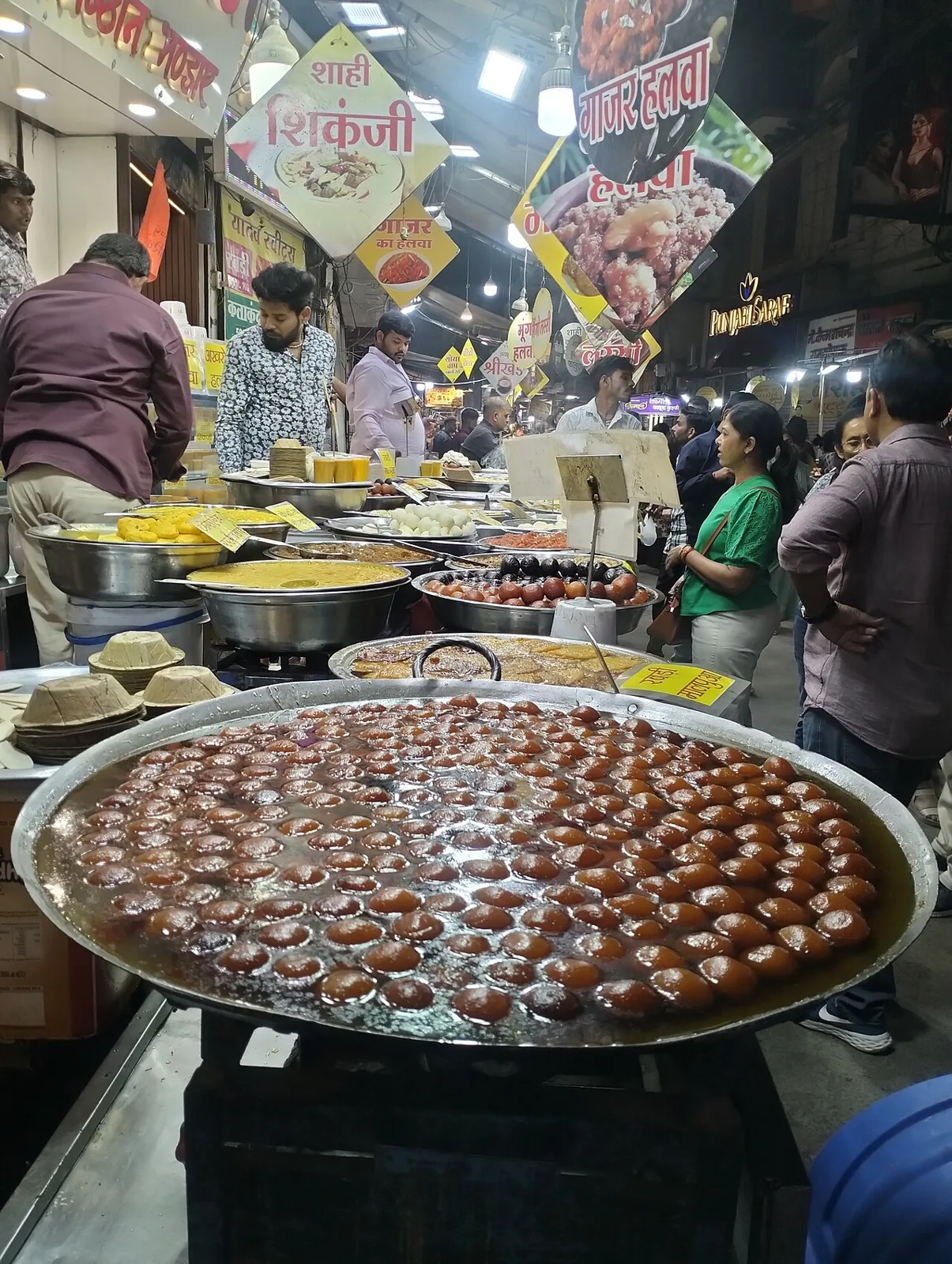
Sarafa Bazaar developed as part of Indore’s traditional commercial centre, where jewellery traders and other businesses served the city and surrounding region. It is therefore best understood as a market shaped over time by local trade rather than as a planned monument with a documented construction date. Its daytime identity remains tied to jewellery retail, while its food stalls have made the same streets a popular evening destination. This change of use is a practical arrangement: food vendors set up as the jewellery businesses close, allowing the market lanes to serve another purpose without losing their commercial character. Bada Sarafa Bazaar and Chhota Sarafa Bazaar are the two commonly identified sections. The night-food scene has become part of Indore’s public image and everyday leisure culture. No specific restoration programme or major architectural rebuilding is reliably documented for the bazaar as a whole; visitors should treat it as an active market, not a preserved historic complex.
Use Sarafa Bazaar as a base to understand local life: walk through the market, look for local crafts such as Chanderi and Maheshwar weaves or Gwalior's crafts and ask your host about nearby viewpoints and short excursions. Always ask before photographing people, homes or ceremonies. A comfortable itinerary is one main visit in the morning, a local meal at midday and a short nearby stop before an afternoon return. Use the district list on this site to find other places in Indore, but check the route and its condition before combining stops. If a festival is on — such as the Khajuraho Dance Festival, the Tansen Samaroh in Gwalior, Lokrang in Bhopal or the Simhastha Kumbh at Ujjain — roads and stays can be busy, and the experience can be unforgettable. Leave no litter: many sites are protected by the communities around them.
Suggested itineraries
Half day: Walk through the jewellery market and Bada and Chhota Sarafa Bazaar (about 1 hour); return in the evening to sample a few food stalls at an unhurried pace (about 1–2 hours). Full day: Visit Rajwada Palace and nearby old-city streets (about 1–2 hours); take a break for a meal and rest (about 1 hour); see another Indore attraction such as Kanch Mandir or the Central Museum (about 1–2 hours); finish with a food walk at Sarafa (about 1–2 hours). Gentler option: Ask a taxi to drop you near an agreed market entrance, browse one short stretch with frequent seated breaks, and choose a nearby food stop rather than crossing the entire bazaar.
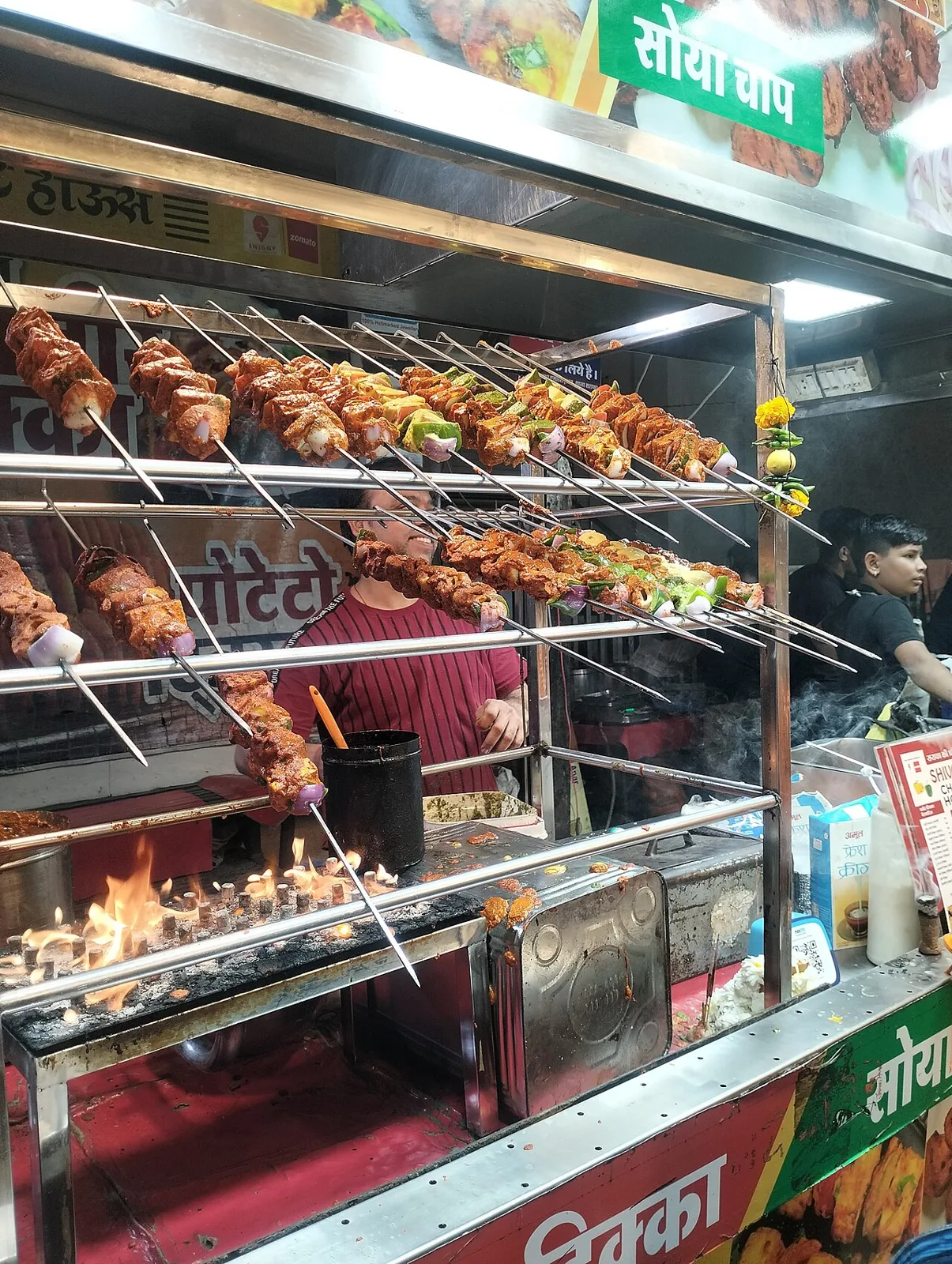
Sarafa’s character comes from the contrast between its daytime jewellery trade and its lively night-time food culture. Visitors can encounter Indore favourites such as poha-jalebi, bhutte ka kees, garadu, chaat, dahi vada and local sweets, though stall menus and availability vary. Hindi is widely used, alongside Malwi and other languages spoken in the city. The atmosphere is informal and sociable: people browse, eat standing or at shared seating, and meet friends and family. Food traditions are part of a wider Indore dining culture; recipes, ingredients and hygiene practices differ between vendors, so choose stalls thoughtfully and be considerate in crowded lanes.
Local communities
Jewellers, shopkeepers and workers in the market sustain Sarafa’s daytime trade. At night, food vendors, cooks, stall assistants and suppliers bring a second working community into the same streets. Customers include local families, young people, workers and visitors from elsewhere in Indore and beyond. The market’s changing rhythm depends on cooperation between businesses, vendors and the people who manage public space and services. These are varied livelihoods, not a single uniform community; visitors should ask permission before photographing workers or their stalls and avoid blocking entrances or trading activity.
Festivals & events
Sarafa is especially busy during festive periods, when Indore residents may shop and eat out in greater numbers. Diwali, generally in autumn, brings activity to jewellery and retail markets, while the city’s celebrations of Ganesh Chaturthi and Rang Panchami can add to visitor numbers and traffic. These are city-wide occasions rather than festivals confined to Sarafa. Indore’s Rang Panchami celebrations are known for public processions, so local routes and access may be affected. Festival calendars vary from year to year; expect denser crowds, longer waits at popular food stalls and possible changes to traffic arrangements, and check local notices before setting out.
Local food in Madhya Pradesh includes poha with jalebi for breakfast, bhutte ka kees, dal bafla and dal baati, Indore's sarafa night-market snacks, Bhopal's seekh kebabs and biryani, mawa-bati and gajak sweets, and mahua-based tribal dishes in forest districts. Ask what is fresh that day; many small eateries cook a limited daily menu. Vegetarian travellers eat well across the state, and most towns also have good non-vegetarian food; Indore's Sarafa Bazaar turns into a famous night food market. Remote sites may have no restaurant at all. Carry water and snacks, eat a proper breakfast before long drives, and ask your accommodation for a packed lunch if you are heading out early. Try a home-cooked or local thali meal when you can — it is often the best food on the route. Choose busy, clean places, drink sealed or filtered water, and carry your packaging back with you.
Shopping & local experiences
During the day, browse the jewellery shops and other retail businesses in Bada and Chhota Sarafa Bazaar; check materials, workmanship, receipts and return policies directly with the seller. Sarafa is better known for its food experience than for a single designated craft or souvenir. For Madhya Pradesh textiles such as Chanderi or Maheshwari weaves, ask locally for reputable shops elsewhere in Indore rather than assuming they are made or sold in this market. At night, visitors can sample snacks, savoury dishes, sweets and drinks from different stalls. Menus, ingredients and payment options vary by vendor.
October to March
The nearest principal railway station by straight-line distance is Indore Junction, roughly 2 km away. The nearest operating airport by straight-line distance is Devi Ahilyabai Holkar Airport, Indore, roughly 5 km away. These figures are calculated from map coordinates — actual road distance is longer. Bhopal, Indore, Jabalpur and Gwalior are the main rail and air gateways; Khajuraho has its own airport and station, Jhansi (UP) serves Orchha and Datia, and Pipariya is the railhead for Pachmarhi. For the final leg, Madhya Pradesh State Road Transport Corporation buses, private sleeper coaches between the big cities, and shared jeeps and autos in smaller towns link district towns. A private taxi gives more flexibility for remote sites such as forts, caves and forest gates. When comparing train, bus and flight, count the complete door-to-door time: a flight saves the most time only if the onward road transfer is short, while an overnight train can save a hotel night. Book your return before you leave, because seats fill quickly on weekends, festivals and holidays. Current train numbers, timings, return services and fares are not listed here; check IRCTC and NTES for trains and the airline's own schedule for flights. No permit is needed to visit Madhya Pradesh. Tiger safaris in Kanha, Bandhavgarh, Pench, Satpura and Panna must be booked in advance on the official MP Forest online portal — zones and gates sell out weeks ahead in peak season, and the core zones are closed during the monsoon (roughly July to mid-October). Boating and angling in the National Chambal Sanctuary also need forest-department bookings.
Confirm onward and return timings on IRCTC / NTES, the state bus operator or your airline before travel. A dash means current timings or fares have not been verified.
Getting around
Sarafa is in central Indore and can be reached from other parts of the city by auto-rickshaw or taxi; app-based rides may also be available. Indore Junction and Devi Ahilyabai Holkar Airport are the city’s principal rail and air gateways, respectively, but road travel and congestion affect the final approach. The market lanes are best explored on foot, and walking is often more practical than trying to move a vehicle through crowded streets. Parking in the immediate area may be limited; ask your driver about a suitable drop-off and pickup point. Local buses can help with broader city journeys, but check routes and stops locally.
Hours, tickets & permissions
Sarafa is a working market whose character changes between the jewellery-trading day and the street-food evening. It is not a museum-style attraction with one visitor schedule. Browsing the public market lanes usually does not involve a site ticket or permit, but individual shops and food stalls set their own operating patterns. Special events or local arrangements may affect access. Dress modestly for a public market, keep belongings secure and follow any directions from shopkeepers or local authorities. Confirm current operating arrangements and any applicable fees locally before visiting.
Facilities
Food is the main visitor facility at night, with a wide variety of stalls; jewellery shops and other retail businesses operate during the market’s trading period. Public toilets, drinking-water points, seating and parking may be available nearby, but provision and condition can vary, so check locally and carry water. ATMs and other everyday services can be found in the wider central Indore area. The lanes are commercial streets rather than a managed visitor centre, and dedicated guides or visitor information desks should not be assumed. Keep cash or a suitable payment option available, as payment methods differ by vendor.
Accessibility
Sarafa consists of active market lanes rather than a purpose-built visitor site. Walking surfaces may be uneven or obstructed by stalls, parked vehicles and crowds, particularly during the food trade. There can be little room to manoeuvre, and shade or places to rest are not consistent throughout the lanes. Wheelchair users and visitors with strollers may find the busiest sections difficult to navigate; access can be easier at quieter periods, but conditions change. Older visitors or anyone with limited stamina may prefer a short visit, a nearby drop-off and planned seating breaks. Check current street conditions locally and avoid walking in dense crowds if balance or mobility is a concern.
No permit is needed to visit Madhya Pradesh. Tiger safaris in Kanha, Bandhavgarh, Pench, Satpura and Panna must be booked in advance on the official MP Forest online portal — zones and gates sell out weeks ahead in peak season, and the core zones are closed during the monsoon (roughly July to mid-October). Boating and angling in the National Chambal Sanctuary also need forest-department bookings. Carry a photo ID at all times and save the emergency number 112 and your accommodation's contact offline. Heat in summer and heavy rain in the monsoon are the main weather risks; carry water, avoid midday sun and allow extra time when roads flood. Watch your belongings in crowds and on public transport, and follow posted instructions.
Photography
The market’s changing atmosphere is often best captured in natural daylight for jewellery-front views and after dark for the food stalls and street activity. Stay to the side of busy lanes and do not photograph through shop entrances without permission. Ask before taking close-up pictures of vendors, customers or workers; respect anyone who declines. Avoid photographing private homes or religious activity without consent. Drone use over a crowded urban market may be restricted or unsafe, so do not fly one without confirming applicable permissions and local rules. Keep equipment compact and be mindful of traffic and stall operations.
Choose a stay by the full journey to Sarafa Bazaar, not just the district name. Bhopal, Indore, Gwalior and Jabalpur offer the widest choice; Khajuraho, Orchha and Pachmarhi have hotels and MP Tourism lodges, which are reliable value, and pilgrim towns have dharamshalas. In summer, check air-conditioning; in the monsoon, check that the property is accessible if roads flood. Book in advance for weekends, festivals and the peak season (October to March). Confirm the exact location, meals included, check-in time and cancellation terms in writing. Avoid sending money to unverified contacts or touts at stations. Carry some cash, as card and digital payments can be unreliable in remote areas.
Within Indore, visitors can combine Sarafa with Rajwada Palace and the old-city market area. Kanch Mandir, known for its glass and mirror work, and the Central Museum offer different perspectives on the city’s religious art and regional history. Lal Bagh Palace is another established city attraction, while Khajrana Ganesh Temple is a major place of worship. These are separate sites with their own access arrangements, and travel between them is affected by city traffic. Plan only a manageable combination in one outing, especially if returning to Sarafa for its evening food scene.
For couples, Sarafa Bazaar rewards a slow pace: arrive early for soft light and fewer crowds, share a local meal and keep the evening free. Sunset over the marble rocks at Bhedaghat, a boat ride on the Narmada at Maheshwar or a night drive under the stars near a forest lodge makes the trip memorable. Public displays of affection can be frowned upon in conservative communities and at religious sites, so be discreet. Keep a buffer in your itinerary, because weather and road conditions can delay plans.
Q: How much time should I allow for Sarafa Bazaar? A: Allow about one to two hours for a relaxed food visit, or longer if you also browse the daytime jewellery market. Q: When is the best season to visit? A: October to March is generally more comfortable for exploring Indore outdoors; evenings can be crowded in any season. Q: Is there an entry ticket? A: Browsing the public market lanes usually does not require a site ticket, but individual purchases and any special arrangements are separate. Q: Is Sarafa suitable for children and older visitors? A: Families visit, but crowded, uneven lanes can be tiring; choose a short route, keep children close and plan breaks. Q: Where should I stay nearby? A: Indore has accommodation across the city; choose a place with convenient road access to the central market and confirm transport arrangements locally.
Be the first to share photos, stories, advice or a helpful contact for Sarafa Bazaar.
Loading…