
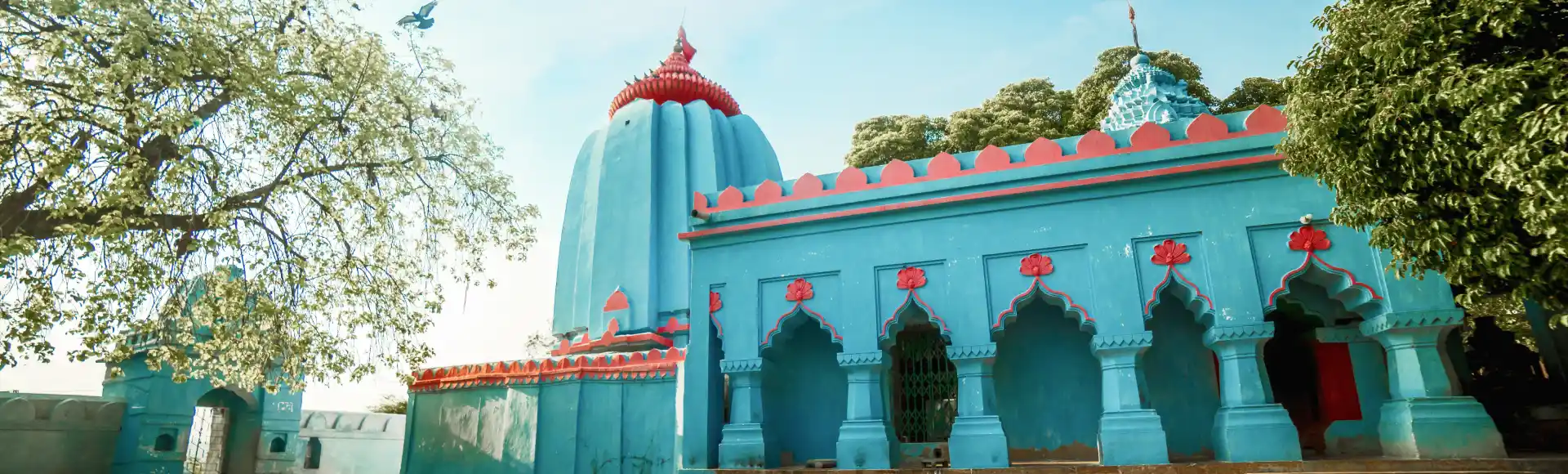
Leaning Temple of Huma
Beside the Mahanadi at Huma near Sambalpur, this Shiva temple is known for its leaning shrines and attracts worshippers and visitors interested in its unusual architecture and riverside traditions.
Key facts · verified by Ghumoopedia editors
- Type of place
- Temple / pilgrimage site
- Best time to visit
- October - March
- Verified
- 21 Nov 2026
Plan a trip from Leaning Temple of Huma — a day-by-day route through places nearby.
Huma, near Sambalpur in Odisha, is home to a riverside shrine devoted to Shiva, worshipped here as Bimaleshwar. Beside the Mahanadi, the temple is notable for its slant: the main shrine and the smaller sanctuaries nearby incline in different directions. Despite their angles, the buildings remain standing. The fact that the tilt affects several structures, rather than just one, has made the temple a source of architectural curiosity as well as a place of religious importance. The shrine is believed to have been built in the seventeenth century, during the rule of Sambalpur’s Chauhan rulers. Its unusual form has not changed its purpose: it remains an active place of worship. Devotees come to pray and seek Bimaleshwar’s blessings. The river is an integral part of the setting, with the movement and sound of its water close by. Together, the temple and riverbank create a peaceful atmosphere. The angled buildings also distinguish the site from the upright form commonly associated with temples. Fish living in the river near the temple are treated as sacred. Local people and visitors do not harm them, and feeding them is considered auspicious. This practice is part of the experience for many who come to Huma, alongside prayer and time by the water. Shivaratri and local fairs bring larger gatherings to the temple, adding a more lively, communal character to the grounds. These events connect religious observance with local cultural life. The leaning shrines, continuing worship and river traditions are all central to the temple’s identity. Plan your visit around October - March. The official suggested visit duration is 1–2 hours; treat this as time at the attraction, not the complete journey from your hotel. Odisha’s coast and plains can be hot and humid, while southern hill districts may feel cooler after sunset. Heavy monsoon rain can affect road travel and access to outdoor sites. Check the local forecast before setting out, and keep a flexible alternative for bad weather. Official destination reference: https://odishatourism.gov.in/en/places/leaning-temple-of-huma
Why it matters
The Leaning Temple of Huma is a distinctive Shiva shrine in Huma, near Sambalpur, valued for both its religious life and its unusual tilted buildings. Odisha Tourism includes it among the state’s religious and historical attractions. Worshippers visit Bimaleshwar, while other visitors come to observe the temple’s relationship with the Mahanadi and its striking architecture. The complex is an active place of worship, not simply a monument, so daily rituals and local customs remain part of the visit. Its importance is chiefly regional and local, particularly within western Odisha. No UNESCO designation is stated here; visitors seeking details of any current protected status should check with the relevant heritage or temple authority.
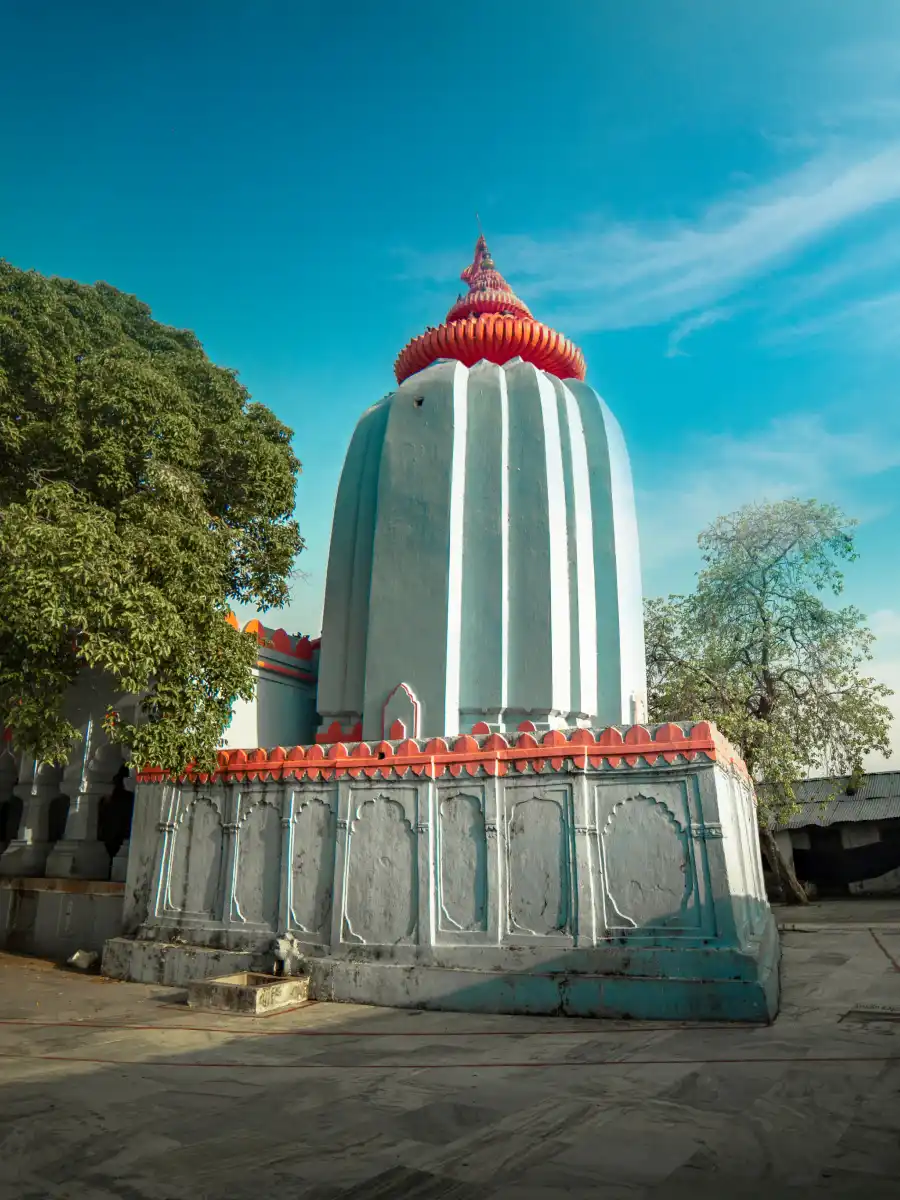
The temple is traditionally dated to the seventeenth century and associated with the Chauhan rulers of Sambalpur. The main shrine is dedicated to Shiva as Bimaleshwar. Accounts of its early history are not always consistent, so the attribution and date are best treated as a traditional historical account rather than a precisely documented construction record. Huma developed as a place of worship on the Mahanadi, and the shrine has continued to serve devotees over the centuries. Its unusual lean is part of the site’s identity, though the cause and the precise history of the tilt should not be assumed from the appearance alone. The surrounding smaller shrines are also described as leaning in differing directions. The temple remains in active religious use, and upkeep is necessarily part of sustaining a working shrine. Detailed records of particular restoration campaigns or structural interventions are not consistently available in general visitor information. For that reason, visitors interested in conservation history should seek current information from the temple administration or heritage authorities. The site’s continuing importance comes from the combination of worship, local tradition and a distinctive built setting rather than from a single documented historical event.
Origin stories & folklore
According to a local tradition, a cow once released milk over a particular stone at this riverside location. The stone was understood as a manifestation of Shiva, and the discovery is said to have led to worship there and, eventually, the establishment of a shrine. Versions of the story can vary, as is common with oral traditions; it should be received as local belief rather than a verified account of the temple’s founding. The temple’s unusual tilt has also encouraged curiosity and stories, but no single explanation should be presented as proven. The sacred fish in the river are another part of local belief: they are treated with respect, and feeding them is considered auspicious by some visitors.
Architecture & design
The complex centres on the shrine of Bimaleshwar, with smaller shrines in its vicinity. Its temple forms belong broadly to the regional Odisha temple-building tradition, though visitors should avoid assuming that every feature matches a standard plan. The most noticeable characteristic is the inclination: the main temple and surrounding shrines appear to lean, and not all in the same direction. The buildings remain standing and in use, making their unusual alignment especially striking. The structures are built in masonry, with stone elements associated with the shrine; detailed material and construction histories are not readily established in general visitor accounts. Look at the relationship between the shrine, its subsidiary buildings and the river setting rather than trying to judge the tilt from one angle alone. The Mahanadi forms an important part of the temple’s setting, but the riverbank can be uneven.
Important objects & sculptures
The principal sacred focus is the Shiva linga worshipped as Bimaleshwar. As it is an active shrine, the linga is approached within the rules and ritual arrangements in force on the day; visitors should not expect unrestricted access or close viewing. Notice the temple’s exterior masonry and any visible carved details, but do not assume that every surface is accessible or that a particular carving has a documented interpretation. The smaller shrines offer further details of the complex’s layout. In the river, locally revered fish are a notable part of the visit, though they are living animals rather than temple objects. There is no need to touch, catch or disturb them. Ask temple attendants before entering restricted areas or photographing sacred objects.
Religious significance
Huma is an active Hindu place of worship dedicated to Lord Shiva, venerated here as Bimaleshwar. Devotees come to offer prayers and seek blessings, and worship takes place within the customs observed by the temple community. Maha Shivaratri is an important occasion for Shiva worshippers and can bring larger gatherings. The river setting contributes to the devotional atmosphere, while the sacred fish are treated respectfully by local people and many visitors. Feeding them is regarded by some as auspicious, but follow any local guidance and do not disturb wildlife. Visitors who are not participating in worship are welcome to observe respectfully where permitted. Access to the inner shrine or specific ritual spaces may be limited according to religious practice, and a visit should not be treated as a guarantee of entry to every part of the complex.
Begin with the main attraction at Leaning Temple of Huma and leave time to understand its setting in Sambalpur. Approach the shrine respectfully, follow the posted entry requirements and allow time for queues. Ask attendants about photography, footwear storage and the permitted route. Religious practice is part of daily life here; avoid interrupting worship or assuming that every visitor can enter every part of the complex. Keep a simple itinerary: arrive in daylight, enjoy the main visit, take a shaded meal break, then decide whether one nearby stop fits your return plan. Use the district index to find nearby places, but check the actual road route before combining them. Reserve a little time for photographs from permitted public viewpoints and avoid blocking paths while taking pictures.
Suggested itineraries
Half day: Travel from Sambalpur to Huma; spend about 1–2 hours at the temple, including time for the shrine, permitted viewpoints and riverside setting; return to Sambalpur. Full day: Visit Huma in daylight; allow about 1–2 hours at the temple; take a meal break in or near Sambalpur; add Samaleswari Temple or another district stop only after checking the road route and return transport. Gentler option: Arrange a drop-off close to the accessible approach, spend time at the main permitted viewing area, and avoid the riverbank or subsidiary shrines if the ground or steps are difficult.
The temple is part of the living religious and cultural landscape of western Odisha. Odia is widely used in the region, and Sambalpuri or related western Odisha speech forms may also be heard; visitors can ask politely if they need help communicating. Customs around worship, footwear and entry reflect the shrine’s daily religious use. Local dress is varied, while modest clothing is a considerate choice for a temple visit. During gatherings, devotional activity and the movement of worshippers shape the atmosphere more than staged performances. Sambalpuri textiles and regional foods are part of the wider district’s cultural identity, though they are not necessarily sold at the temple itself. Observe local practice rather than assuming that every visitor follows the same ritual.
Festivals & events
Maha Shivaratri, usually observed in the late winter or early spring according to the Hindu lunar calendar, is a major occasion for worship of Shiva and can draw larger crowds to Huma. The temple may also see local gatherings and fair activity associated with religious observances; arrangements can vary from year to year. In Sambalpur, Sital Sasthi is a prominent Shiva-related festival, although celebrations are centred in the town and should not be assumed to take place at Huma. Festival days can mean queues, busier roads and less quiet time for viewing the architecture. Confirm local arrangements before planning a visit around a festival.
For a visit to Leaning Temple of Huma, plan food around your base in Sambalpur and do not assume that a remote entrance has a full restaurant. Odisha offers rice-based meals, dalma, vegetable preparations and sweets such as chhena poda. Availability varies by district and outlet; ask what is freshly prepared rather than expecting every local dish at every stop. Choose busy, clean establishments and tell staff about allergies, spice preferences or dietary restrictions before ordering. Carry sealed drinking water and a small snack if you are travelling beyond a town. In hot weather, take regular water breaks instead of waiting until you feel exhausted. If a temple offers food or prasad, follow the local serving rules and confirm what ingredients it contains. Do not treat ritual food as a guaranteed restaurant meal. Keep all packaging with you until you find an appropriate waste bin.
Shopping & local experiences
Sambalpur is known for Sambalpuri handloom textiles, including ikat-patterned fabrics, which visitors can look for in town shops and markets. Availability and authenticity vary, so ask about the product and its making rather than assuming every item is handwoven locally. Small devotional items or offerings may be available near the temple, but selection can be limited and change with visitor activity. Local markets are a better place to explore regional produce and everyday goods. Sambalpuri and western Odisha food can be part of a town visit; ask locally about seasonal dishes and suitable places to eat. Avoid buying items made from wildlife or river animals.
October - March
Start by choosing a practical overnight base in or near Sambalpur, rather than assuming every attraction has its own railway station. Odisha Tourism lists this rail access: Nearest railway station – Sambalpur. The listed air access is: Nearest airport – Veer Surendra Sai Airport, Jharsuguda. Road access: Accessible by road from Sambalpur. Compare train, bus and flight options door to door. Rail can suit overnight journeys and travellers who prefer to avoid a long drive. A bus may be useful between district towns, but the last service may finish before your visit ends. A flight only saves time if airport transfers, check-in and the final road leg are included. Reserve the return leg before departure and allow time for traffic, meals and weather. Check IRCTC and NTES for trains, OSRTC for buses, and the airline’s own schedule for flights. Do not rely on an unconfirmed connection or assume taxis will wait at a remote site.
Confirm onward and return timings on IRCTC / NTES, the state bus operator or your airline before travel. A dash means current timings or fares have not been verified.
Getting around
Use Sambalpur as the practical transport base and arrange the road journey to Huma. Local autos or a hired taxi may be useful for the last leg; confirm that a return ride can be arranged before travelling, particularly outside busy periods. Local buses may serve parts of the area, but routes and service availability should be checked on the day. The temple grounds are best explored on foot, with care around uneven surfaces and the river edge. Check locally where vehicles may be parked and do not block access for worshippers. Boat trips are not assumed to be part of a visit; follow local safety advice if any river activity is offered.
Hours, tickets & permissions
Entry arrangements can depend on worship, festival activity and the part of the complex you wish to visit. A general visitor should check locally whether any ticket, camera charge, permit or special entry requirement applies; do not assume that all areas are open to everyone. Dress and footwear rules may apply at the shrine. Confirm current visiting hours and any fees with the temple administration or managing authority before setting out, as these details can change. During worship, visitors may be asked to wait or follow a designated route.
Facilities
Facilities at the temple may be basic and can vary with the season and level of visitor activity. Toilets, drinking water, food stalls or small eateries may be available nearby, but check locally rather than relying on them. Carry water and any personal essentials, especially if combining the visit with another stop. Parking arrangements should be confirmed on arrival. Do not assume that an on-site guide, ATM, first-aid post or accessible toilet is available. Sambalpur is the more practical place to look for a wider choice of food, banking and accommodation services. During festivals, facilities may be busier than usual.
Accessibility
The temple is approached on foot, and the ground around the complex and river may be uneven. Steps, thresholds or narrow passages may limit access to parts of the shrine; do not assume there are ramps or lifts. The amount of walking depends on where a vehicle can stop and which areas are open. Shade may be limited in exposed parts of the grounds, so plan for sun and heat. Wheelchair and stroller access cannot be guaranteed, especially near the shrine or river edge. Older visitors or anyone with reduced mobility may prefer to visit with a companion, take breaks and remain in the easiest permitted viewing areas. Check conditions locally before travelling.
At Leaning Temple of Huma, local access rules take priority over any suggested itinerary. Reconfirm opening arrangements, entry eligibility, permits and weather restrictions shortly before arrival. Keep the emergency number 112 available and save your accommodation’s contact details offline. A map pin identifies a general location, not an assurance that the approach road or walking path is safe. Ask local staff which entrance visitors should use. Dress respectfully and follow shrine-specific rules. Entry restrictions may depend on religious practice, and photography or phones may be prohibited. Use official counters where available and agree on any guide service before accepting it. Carry only necessary valuables, keep rubbish out of the site, and leave enough daylight for the return journey.
Visitor rules
Treat Huma as an active place of worship. Wear considerate clothing, remove footwear where instructed, and follow signs or directions from temple attendants. Do not enter restricted areas, interrupt prayers or assume that access to the inner shrine is permitted. Ask before photographing people, worship or sacred objects, and respect any camera restrictions. Keep the grounds clean and avoid leaving plastic or food packaging. Do not climb on the buildings, touch carvings without permission or approach the river edge unsafely. Treat the sacred fish gently: do not catch, injure or throw unsuitable food to them. Follow any additional rules announced locally.
Photography
The temple’s tilted profile and its setting beside the Mahanadi are natural subjects for photographs. Daylight can help show the buildings’ alignment; softer light earlier or later in the day may reduce harsh contrast, though access and weather vary. Use only permitted public viewpoints and keep paths clear for worshippers. Ask before photographing people, rituals or the inner shrine, and obey any posted camera restrictions or attendant instructions. Do not use a drone without checking applicable aviation rules and obtaining any required permissions; do not assume that flying one is allowed. Avoid climbing or stepping onto unstable riverbank areas to get a picture.
Choose accommodation by the complete journey to Leaning Temple of Huma, not by the district name alone. A room in a well-connected town in Sambalpur may offer easier transport, meals and medical access than a property advertised as being close to the attraction. Check the exact location, recent guest feedback, reception hours and cancellation terms. Ask how you will reach the site and return after the visit, especially if you are not driving. A centrally located stay can make early sightseeing and an evening return easier. Confirm whether the approach road is accessible to your vehicle and whether lifts are available. Book only through a trusted accommodation channel, avoid sending payments to an unverified personal contact, and keep written confirmation of the services included.
In Sambalpur, Samaleswari Temple is an important regional shrine and a possible addition for visitors interested in local religious traditions. Hirakud Dam is another well-known district attraction, but allow for the road journey and check current visitor access before combining it with Huma. Ghanteswari Temple is another religious site in the district. Debrigarh Wildlife Sanctuary offers a different, nature-focused outing and is better planned as a separate trip if time or road conditions are limited. These places are not all immediate neighbours of Huma; check routes, access arrangements and return transport before making a same-day plan.
For couples visiting Leaning Temple of Huma, keep the day relaxed: one main visit, a meal break and a return transfer arranged in advance. Choose public viewpoints for photographs and respect religious or community expectations around behaviour and clothing. Confirm the accommodation’s check-in requirements before booking. Avoid secluded paths after dark and do not trade a safe return plan for a late photograph. A quieter weekday may suit you, but opening and access arrangements still need local confirmation.
Q: How much time should I allow at the temple? A: The suggested visit duration is about 1–2 hours at the attraction. This does not include travel from Sambalpur or time for queues and breaks. Q: When is a good season to visit? A: October to March is generally a practical period. Heat, humidity and monsoon conditions can affect comfort and road travel at other times. Q: Is there an entry ticket, and can I enter the shrine? A: Check current entry requirements with the temple administration. Access to specific worship areas may depend on local rules and religious practice. Q: Is the visit suitable for children or elderly visitors? A: Families can visit, but supervise children near the river and expect uneven ground. Older visitors or anyone with limited mobility should check access locally and avoid difficult areas. Q: Where should I stay? A: Sambalpur is the practical overnight base, with a broader choice of services than the temple area. Arrange transport to and from Huma in advance.
Be the first to share photos, stories, advice or a helpful contact for Leaning Temple of Huma.
Loading…