
Maa Kalijai Temple
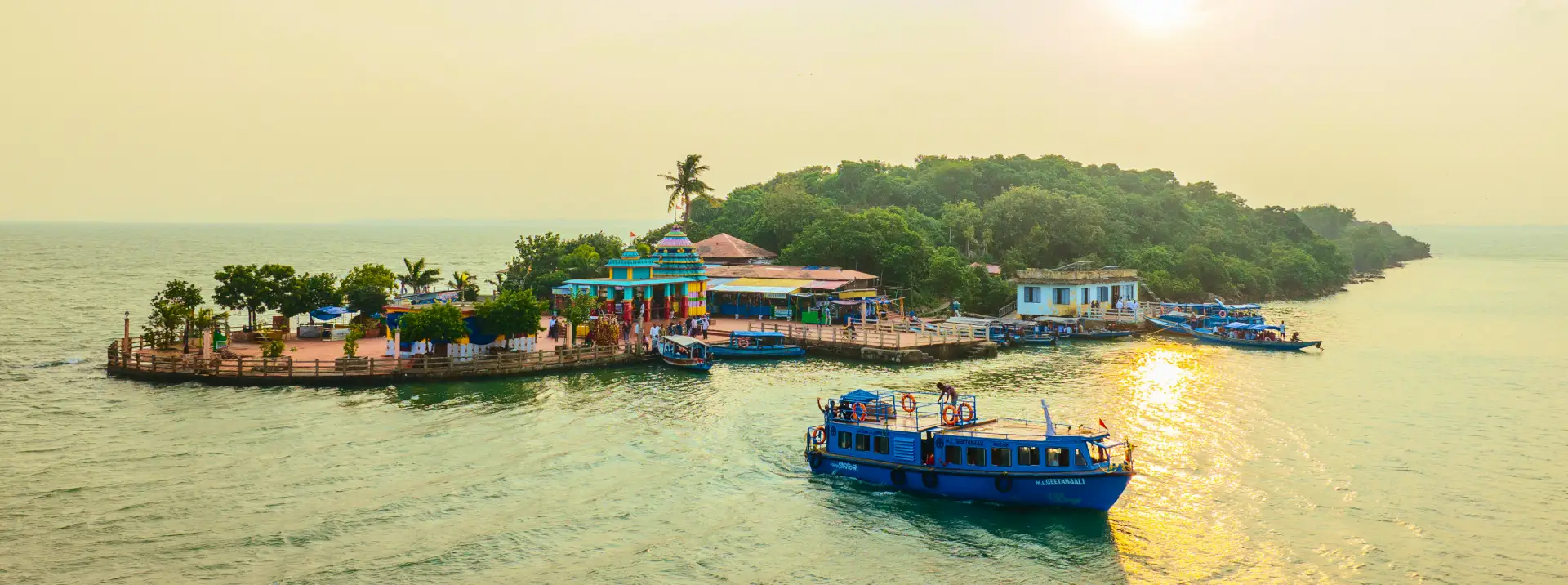
Set on an island in Chilika Lake, Maa Kalijai Temple draws worshippers, lake workers seeking blessings and devotees who attend its Makar Sankranti fair.
Key facts · verified by Ghumoopedia editors
- Type of place
- Temple / pilgrimage site
- Best time to visit
- October - March
- Verified
- 21 Nov 2026
Plan a trip from Maa Kalijai Temple — a day-by-day route through places nearby.
Maa Kalijai Temple occupies an islet within Chilika, in Khordha district of Odisha. Visitors reach it by boat, and the shrine is closely linked with worship and journeys across the lagoon. Fishermen and boatmen pause here to seek the goddess’s blessings before setting out on the water. Local tradition recounts the fate of Jai, a young bride travelling with her family. A sudden storm overturned their boat. She prayed to Goddess Kali to spare her loved ones; the others survived, but Jai was lost in the lake. Godabarish Mishra later told her story in the poem Kalijai, preserving it in local folklore. Her appeal to the goddess and disappearance became part of the shrine’s identity, joining devotion with the memory of the lake. Its name recalls both Jai and the goddess. Accounts of the temple’s past credit its establishment to the kings of Parikud, devoted worshippers of Kali. Another legend tells of the Khordha king preparing to attack Parikud. As his forces neared Chilika’s shore, large flocks of flamingos covered the water. They appeared to be a defending army, so the king withdrew, fearing defeat. The Parikud ruler regarded the birds’ appearance as divine intervention, adding to the shrine’s importance in local belief. On Makar Sankranti, the island hosts Kalijai Makar Mela, attended by thousands of devotees. The gathering brings together worship, remembered stories and the customs of life on Chilika. Plan your visit around October - March. The official suggested visit duration is 3–4 hours; treat this as time at the attraction, not the complete journey from your hotel. Odisha’s coast and plains can be hot and humid, while southern hill districts may feel cooler after sunset. Heavy monsoon rain can affect road travel and access to outdoor sites. Check the local forecast before setting out, and keep a flexible alternative for bad weather. Official destination reference: https://odishatourism.gov.in/en/places/maa-kalijai-temple
Why it matters
Maa Kalijai Temple is a pilgrimage shrine on a small island in Chilika Lake, in Khordha district, Odisha. Its importance is closely tied to the lagoon: fishermen and boatmen seek the goddess’s blessings before setting out on the water, and visitors reach the shrine by boat. Odisha Tourism presents the temple as a religious centre and highlights its setting within Chilika. The annual Kalijai Makar Mela draws devotees to the island and connects worship with local folklore and lake life. The available destination information does not identify the temple as a UNESCO site or as protected by the Archaeological Survey of India; visitors should not assume either designation.
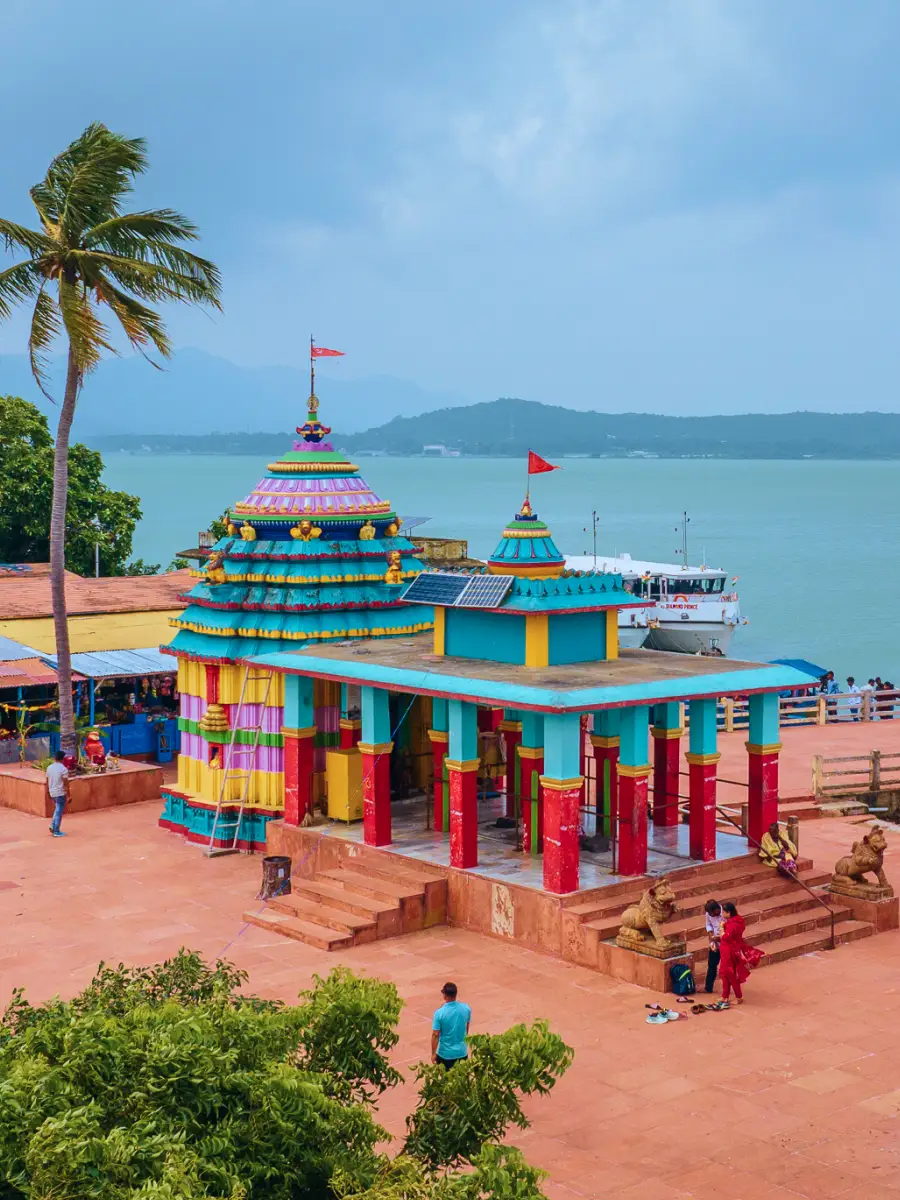
The temple is traditionally associated with the Kings of Parikud, who are described in local accounts as devotees of Goddess Kali and as its founders. The available visitor information does not establish a construction date, identify a particular architectural period, or document later rebuilding or restoration, so the shrine’s age should not be stated more precisely without further evidence. Its history is inseparable from Chilika, where boats remain essential to travel between the shore and the island. The shrine also holds a place in the literary memory of the region: the story of Jai became widely associated with the poem Kalijai by Odia writer Godabarish Mishra. Local historical tradition further recalls a conflict between the rulers of Khordha and Parikud, in which a flock of flamingos on the lagoon was mistaken for a defending force. That episode is best understood as a regional account rather than a securely documented military event. Today, the temple continues to serve worshippers, especially people whose work takes them onto Chilika, while the Makar Sankranti fair brings a larger seasonal gathering to the island.
Origin stories & folklore
According to local tradition, Jai was a young bride travelling across Chilika Lake with her family when a sudden storm overturned their boat. She prayed to Goddess Kali to protect her loved ones; the others survived, but Jai was lost in the water. The story is remembered through the name Kalijai and through Godabarish Mishra’s poem of that title. It gives the island shrine a strong connection with memory, devotion and the hazards of crossing the lagoon. Another local account says flamingos once appeared in great numbers during a threatened conflict between Khordha and Parikud, leading the Khordha ruler to mistake them for an army and withdraw. These are cherished traditions, not independently verified historical accounts.
Architecture & design
The temple’s most distinctive architectural feature for visitors is its island setting: the shrine stands on a small island in Chilika and is approached by boat rather than directly from a road. The available destination information does not give a reliable construction date, identify a formal architectural style, or describe the building’s materials, measurements or structural history. It is therefore better to experience the temple as a functioning place of worship than to assign it a specific period or style without evidence. On arrival, visitors can observe the shrine’s exterior and the arrangement of worship spaces that are open to them, following directions from temple staff. The lake, landing area and surrounding island form an important part of the visit, but they should not be mistaken for designed temple features. Access, permitted areas and the amount of time available on the island may depend on local arrangements and conditions on the water.
Important objects & sculptures
The principal focus of worship is the image of Maa Kalijai, understood in local devotion as a form of Goddess Kali. Visitors may see flowers, lamps or other offerings arranged for worship, though displays and access can vary with ritual activity. The available visitor information does not catalogue particular sculptures, inscriptions, historic objects or a museum collection, so visitors should avoid assuming that any item is an ancient artefact. Look respectfully at what is visible from public areas and follow the guidance of temple staff or worshippers. Do not touch ritual objects or enter areas set aside for priests and ceremonies unless invited.
Religious significance
Maa Kalijai is worshipped as a form of Goddess Kali, and the island shrine is an important devotional destination for people connected with Chilika. Fishermen and boatmen traditionally seek the goddess’s blessings before venturing onto the lagoon, reflecting the close relationship between faith and life on the water. Worshippers make offerings and prayers at the shrine; the precise rituals and access to inner areas may vary according to temple practice and the day’s observances. The temple also draws pilgrims during the Kalijai Makar Mela. Visitors who are not there to worship can observe quietly, dress respectfully and follow local instructions. Ask before interrupting a ceremony or photographing people at prayer.
Begin with the main attraction at Maa Kalijai Temple and leave time to understand its setting in Khordha. Use marked viewpoints and permitted trails, and ask whether a forest permit, guide or boat booking is required. Observe animals from a safe distance; a wildlife visit never guarantees a particular sighting. Waterfalls and riverbanks are best enjoyed from protected viewing areas rather than by climbing wet rocks. Keep a simple itinerary: arrive in daylight, enjoy the main visit, take a shaded meal break, then decide whether one nearby stop fits your return plan. Use the district index to find nearby places, but check the actual road route before combining them. Reserve a little time for photographs from permitted public viewpoints and avoid blocking paths while taking pictures.
Suggested itineraries
Half day: Reach a suitable Chilika landing point, arrange a boat, visit Maa Kalijai Temple and allow time for worship and the island setting; Odisha Tourism suggests 3–4 hours at the attraction, excluding your journey from accommodation. Full day: Travel to the lake in daylight, visit the temple by boat, take a meal break at a suitable shore-side stop, then consider a locally permitted Chilika boat outing before returning with ample daylight and weather flexibility. Gentler option: Arrange the shortest practical boat transfer with a local operator, take breaks in shaded areas where available, and keep the island visit brief; confirm boarding and walking conditions in advance.
The shrine’s living culture reflects the communities of Chilika and their reliance on the lagoon for travel and livelihood. Local devotion to Kalijai is intertwined with the story of Jai and with boat journeys to the island. Odia is widely associated with the region; visitors may also encounter other languages spoken by pilgrims and people working around the lake. The annual fair brings devotional activity and a gathering atmosphere, though performances or other entertainment should not be assumed on every visit. Customs are shaped by temple worship: modest dress, quiet conduct and respect for offerings and ceremonies are appropriate. The setting also encourages attention to the lake and to the people whose daily work takes place on it.
Festivals & events
The best-known annual gathering is the Kalijai Makar Mela, held around Makar Sankranti in January. Devotees travel to the island for worship, and the fair can make the temple and boat approaches particularly busy. Allow extra flexibility for queues, boarding and local transport during the festival period, and confirm arrangements locally before setting out. Worship also takes place through the year, but the Makar fair is the main seasonal event identified in the destination information. Festival activities and crowd levels may vary from year to year; do not rely on a particular programme unless it has been confirmed locally.
For a visit to Maa Kalijai Temple, plan food around your base in Khordha and do not assume that a remote entrance has a full restaurant. Odisha offers rice-based meals, dalma, vegetable preparations and sweets such as chhena poda. Availability varies by district and outlet; ask what is freshly prepared rather than expecting every local dish at every stop. Choose busy, clean establishments and tell staff about allergies, spice preferences or dietary restrictions before ordering. Carry sealed drinking water and a small snack if you are travelling beyond a town. In hot weather, take regular water breaks instead of waiting until you feel exhausted. If a temple offers food or prasad, follow the local serving rules and confirm what ingredients it contains. Do not treat ritual food as a guaranteed restaurant meal. Keep all packaging with you until you find an appropriate waste bin.
Shopping & local experiences
Shopping on the island may be limited, so do not plan on finding a broad range of shops at the shrine. Depending on the season, small stalls or markets around lake access points and nearby towns may offer refreshments, devotional items or locally made souvenirs. Look for Odisha handicrafts in established local markets, checking the origin and quality rather than assuming an item is made nearby. Chilika seafood may be available at shore-side eateries, but menus and availability vary. Buy responsibly, avoid products made from wildlife, and carry reusable bags to reduce waste around the lagoon.
October - March
Start by choosing a practical overnight base in or near Khordha, rather than assuming every attraction has its own railway station. Odisha Tourism lists this rail access: Nearest railway station – Balugaon. The listed air access is: Nearest airport – Biju Patnaik International Airport, Bhubaneswar. Road access: Accessible by road via Barkul and Balugaon. Compare train, bus and flight options door to door. Rail can suit overnight journeys and travellers who prefer to avoid a long drive. A bus may be useful between district towns, but the last service may finish before your visit ends. A flight only saves time if airport transfers, check-in and the final road leg are included. Reserve the return leg before departure and allow time for traffic, meals and weather. Check IRCTC and NTES for trains, OSRTC for buses, and the airline’s own schedule for flights. Do not rely on an unconfirmed connection or assume taxis will wait at a remote site.
Confirm onward and return timings on IRCTC / NTES, the state bus operator or your airline before travel. A dash means current timings or fares have not been verified.
Getting around
The temple is accessible only by boat from the Chilika shore. Odisha Tourism lists road access via Barkul and Balugaon, and identifies Balugaon as the nearest railway station; Biju Patnaik International Airport in Bhubaneswar is the listed nearest airport. On arrival, arrange a boat locally from an appropriate landing point and confirm the return plan before boarding. Autos, taxis and local buses may help connect towns, railway access and lake-side areas, but availability varies. Ask about parking at the departure point, weather conditions and the permitted route. Walking is limited to the landing area and island paths; there is no road connection to the shrine.
Hours, tickets & permissions
Entry arrangements may depend on temple practice, boat access, weather and local administration. Tickets, camera permissions, any applicable fees, and rules for entering worship areas should be checked locally; do not assume that a boat trip or temple visit is included in another service. Odisha Tourism recommends October to March for planning a visit, but that is seasonal advice rather than a statement of opening hours. Confirm current visiting hours and fees with the managing authority or local boat operators before travelling, especially during the Makar Mela or unsettled weather.
Facilities
Facilities on the island may be limited and should be checked locally. Do not assume that toilets, drinking-water points, food stalls, guides or accessible seating are available at the temple itself. Shore-side areas around established lake access points may offer more services, but provision can vary by landing point and season. Carry drinking water and essential supplies, and ask your boat operator where facilities are available before departure. Parking, ATMs, meals and other services are more likely to be found in nearby towns or visitor areas than on the island; confirm what is open on the day.
Accessibility
Reaching the temple requires a boat journey, and boarding or leaving a boat may involve uneven surfaces and assistance. The island’s walking routes may be unpaved or uneven, and the available information does not confirm wheelchair ramps, step-free access or accessible toilets. Wheelchair and stroller suitability should therefore be checked directly with the boat operator and temple management before travel. Older visitors and anyone with balance or mobility concerns should assess boarding conditions, wind and water movement, and the amount of walking involved. Shade and places to sit may be limited, so plan breaks and avoid the visit during poor weather or when local operators advise against travel.
At Maa Kalijai Temple, local access rules take priority over any suggested itinerary. Reconfirm opening arrangements, entry eligibility, permits and weather restrictions shortly before arrival. Keep the emergency number 112 available and save your accommodation’s contact details offline. A map pin identifies a general location, not an assurance that the approach road or walking path is safe. Ask local staff which entrance visitors should use. Do not cross barriers, approach wildlife or enter deep water. Slippery rocks, steep edges and sudden changes in river flow can be dangerous. Leave exposed trails if a storm develops, and never take a forest shortcut without authorization. Carry only necessary valuables, keep rubbish out of the site, and leave enough daylight for the return journey.
Visitor rules
Follow instructions from temple staff and boat operators, and stay within areas open to visitors. Dress modestly and remove footwear where temple practice requires it. Do not touch idols or offerings, interrupt worship, or enter restricted spaces without permission. Ask locally about photography rules, particularly inside worship areas. Keep plastic and other waste out of the lake and take rubbish back to shore where disposal is available. Use care around the landing and water’s edge, supervise children, and do not board a boat until the operator confirms it is safe. Respect wildlife and avoid feeding or disturbing animals.
Photography
The lake and island may be especially attractive in soft morning or late-afternoon light, but plan around boat conditions and the time needed to return safely. Photograph from permitted public areas and avoid blocking paths or boat landings. Ask before photographing worshippers, priests, ceremonies or the deity; photography inside the shrine may be restricted. Drone use should not be assumed to be allowed: check applicable permissions and local rules before bringing or flying one. Keep a respectful distance from wildlife, and prioritise safe footing over a photograph near the water.
Choose accommodation by the complete journey to Maa Kalijai Temple, not by the district name alone. A room in a well-connected town in Khordha may offer easier transport, meals and medical access than a property advertised as being close to the attraction. Check the exact location, recent guest feedback, reception hours and cancellation terms. Ask how you will reach the site and return after the visit, especially if you are not driving. Nature camps and forest stays may require advance reservations and have seasonal restrictions. Confirm meals, electricity, phone coverage, guided activities and the last permitted entry time directly with the operator. Book only through a trusted accommodation channel, avoid sending payments to an unverified personal contact, and keep written confirmation of the services included.
The main nearby experience is Chilika Lake itself, whose views and boat journeys form part of a visit to Kalijai. Barkul and Balugaon are useful lake-side access areas identified in Odisha Tourism’s route guidance; services and boat arrangements should be checked locally. Nalabana Bird Sanctuary is within Chilika, but it is a protected wildlife area, so access may be restricted and wildlife viewing is not guaranteed. Do not assume it can be visited on the same boat trip without permission. Other stops across the lagoon may involve long water or road transfers; check the actual route and return plan rather than combining places solely because they appear close on a map.
For couples visiting Maa Kalijai Temple, keep the day relaxed: one main visit, a meal break and a return transfer arranged in advance. Choose public viewpoints for photographs and respect religious or community expectations around behaviour and clothing. Confirm the accommodation’s check-in requirements before booking. Avoid secluded paths after dark and do not trade a safe return plan for a late photograph. A quieter weekday may suit you, but opening and access arrangements still need local confirmation.
Q: How much time should I allow for Maa Kalijai Temple? A: Odisha Tourism suggests 3–4 hours at the attraction. Add separate time for reaching the lake, arranging a boat and returning to your accommodation. Q: When is the best season to visit? A: October to March is the recommended planning period. Check the forecast, as rain and water conditions can affect boat trips. Q: Is there an entry ticket, and can I visit without a boat? A: The temple is accessible only by boat. Confirm current entry, boat and camera arrangements locally; fees and rules can change. Q: Is the visit suitable for children and elderly visitors? A: It can be, but boat boarding, water movement and uneven island paths may be challenging. Check conditions and assistance options before setting out, and supervise children closely. Q: Where should I stay nearby? A: Choose accommodation in or near a practical lake-side base such as Barkul or Balugaon, or another suitable town after checking the route and services. The island itself should not be assumed to offer overnight accommodation.
Be the first to share photos, stories, advice or a helpful contact for Maa Kalijai Temple.
Loading…