

Maniabandha Handloom Village
Maniabandha is an Odisha weaving village known for Bandha and Khandua Patta textiles, and received India’s Best Tourism Village recognition in the craft category in 2024. Visitors come to see its handloom traditions and meet weavers.
Key facts · verified by Ghumoopedia editors
- Type of place
- Heritage monument
- Best time to visit
- Oct – Mar
- Verified
- 21 Nov 2026
Plan a trip from Maniabandha Handloom Village — a day-by-day route through places nearby.
Maniabandha, in Badamba, Kataka district, received the 2024 India’s Best Tourism Village distinction for craft. Its weaving tradition centres on Odisha Ikat, also called Bandha, and Khandua Patta sarees. Generations of local artisans use tie-and-dye methods to create these textiles. Designs draw on sacred and customary imagery: woven verses appear alongside lotus blossoms, elephants and lions. The village’s silk work also uses fine silk from cocoons collected after they have been shed naturally, a practice that belongs to its centuries-old weaving tradition. The motifs reflect Odisha’s cultural traditions, while inherited techniques connect the cloth with generations of skilled weavers. Buddhist and Hindu communities live here, giving the village a cultural character alongside its craft. Visitors may meet weavers, watch the stages involved in making cloth and explore handwoven textiles. Weaving remains part of ordinary village life, allowing visitors to encounter the textile practices and community traditions maintained in Maniabandha. These encounters bring together the making of cloth, the village’s shared religious life and its continuing handloom heritage. Plan your visit around Oct – Mar. The official suggested visit duration is 2–3 Hrs; treat this as time at the attraction, not the complete journey from your hotel. Odisha’s coast and plains can be hot and humid, while southern hill districts may feel cooler after sunset. Heavy monsoon rain can affect road travel and access to outdoor sites. Check the local forecast before setting out, and keep a flexible alternative for bad weather. Official destination reference: https://odishatourism.gov.in/en/places/maniabandha-handloom-village
Why it matters
Maniabandha is a living handloom village in Badamba, Kataka (Cuttack) district, known for Odisha Ikat, also called Bandha, and Khandua Patta textiles. Its importance lies in the continuing work of local weavers, who preserve skills and designs through everyday production rather than within a purpose-built museum. The village’s textiles feature traditional motifs, including sacred verses, lotus flowers, elephants and lions. Maniabandha was recognised as India’s Best Tourism Village (Craft Category) in 2024, as stated in the destination guide. This recognition highlights its craft heritage and visitor experience; it does not mean the village is an ASI-protected monument or a UNESCO site.
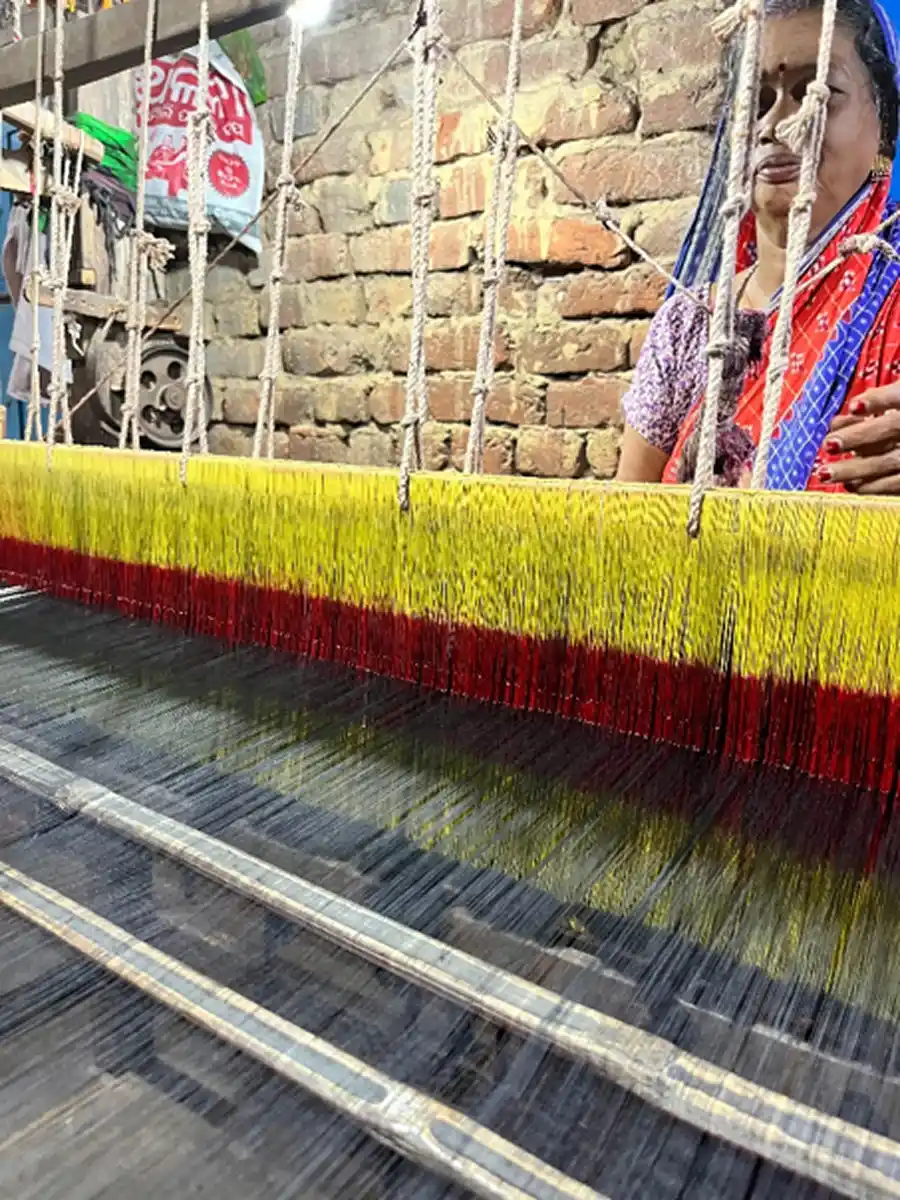
Maniabandha’s history is best understood through its continuing weaving community. The exact date when weaving began here, and the identity of any founder or patron, are not established in the available destination information. Rather than assign an unsupported origin date, the craft can be described as a tradition carried forward by generations of local weavers. The village is associated with Odisha Ikat, or Bandha, in which threads are tied and dyed to form patterns that emerge when woven, and with Khandua Patta, a textile tradition noted for its sacred and cultural motifs. The designs connect skilled production with religious and regional life, including verses and familiar natural or animal forms. The guide also records a distinctive practice of making fine silk from naturally shed cocoons, presenting it as a sustainable element of the village’s weaving heritage. Maniabandha has changed as a living settlement, but its workshops and household craft practices remain central to its identity. There is no documented single building campaign, monument restoration, or named royal builder associated with the village as a whole. Visitors can learn about changes in technique and livelihood directly from weavers, while allowing each maker to describe their own family’s history.
Origin stories & folklore
The available destination information does not identify a specific founding legend or supernatural tale belonging to Maniabandha, so visitors should be cautious about treating an unverified story as established local folklore. The textiles do carry motifs with religious and cultural meaning: sacred verses, lotus flowers, elephants and lions are among the designs associated with the village. Their presence reflects the place of belief and inherited symbolism in weaving, but does not by itself establish a legend about how the craft began. Ask local weavers whether a particular pattern has a story or interpretation in their family or workshop; meanings may vary, and listening to the maker’s account is more reliable than assuming one explanation applies to every textile.
Architecture & design
Maniabandha is a working village, not a single monument with a defined architectural style or formal visitor layout. Its heritage is expressed through homes, workshops and spaces where weaving forms part of daily life. The available destination information does not specify historic building materials, a planned street pattern, or a protected architectural ensemble, so these should not be inferred. Visitors may encounter handlooms and the practical arrangement of threads, tools and working areas, but access to a workspace depends on the household and the activity underway. The technical design is most evident in the textile itself: Bandha patterns are created by tying and dyeing threads before weaving, so the design takes shape through the relationship between prepared threads and the loom. Ask the weaver to explain the process rather than entering a work area without permission. The village’s character comes from a living craft landscape, not from monumental façades or engineered visitor facilities.
Important objects & sculptures
The principal objects to look for are the village’s handwoven textiles, especially Odisha Ikat (Bandha) and Khandua Patta sarees. Notice how motifs such as sacred verses, lotus flowers, elephants and lions are formed in the fabric, and ask the maker how the design was prepared and woven. Looms, prepared threads and dyeing materials may be visible during a visit, but these are working tools rather than a curated collection; availability varies by household and production stage. Maniabandha is also noted for fine silk made from naturally shed cocoons. Do not handle cloth, tools or materials without permission, and ask before photographing them.
Begin with the main attraction at Maniabandha Handloom Village and leave time to understand its setting in Cuttack. Look for interpretation boards, guided visits or opportunities to meet local makers. Ask before photographing people or their work. A village workshop is a working space, not a staged performance; agree on any demonstration charge and avoid pressuring artisans for free access. Keep a simple itinerary: arrive in daylight, enjoy the main visit, take a shaded meal break, then decide whether one nearby stop fits your return plan. Use the district index to find nearby places, but check the actual road route before combining them. Reserve a little time for photographs from permitted public viewpoints and avoid blocking paths while taking pictures.
Suggested itineraries
Half day: Arrive in daylight; spend about 1–2 hours meeting weavers and learning about Bandha and Khandua Patta; allow time for a brief village walk and browsing textiles before returning. Full day: Set aside 2–3 hours for the village visit; take a meal break, then add one nearby Cuttack-district stop only if the road route and return transport work for your plans. Gentler option: Arrange a vehicle drop-off near the agreed visit point, limit walking to one accessible workshop or meeting place, and take seated breaks; confirm access with the host beforehand.
Weaving is part of contemporary village life in Maniabandha, where visitors may meet local makers and observe stages of textile production by invitation. The community is described as a harmonious blend of Buddhist and Hindu residents, giving the village a distinctive cultural dimension; avoid assuming that all households share the same customs. Odisha Ikat and Khandua Patta designs connect craft with regional and sacred traditions. Odia is widely used in the region, though the languages a particular weaver speaks can vary. There is no single performance or costume presented for visitors: workshops are places of work, and conversations are best approached with courtesy, patience and respect for household privacy.
Festivals & events
The destination information does not list a dedicated annual fair or festival at the weaving village. Hindu and Buddhist residents may observe their own religious calendars, while broader Odisha festivals such as Durga Puja, Raja and Rath Yatra are celebrated across the state; local practice and participation vary. Buddha Purnima may also be meaningful to Buddhist communities, but visitors should confirm local observances rather than assume a public event is taking place. Festival periods can affect household availability, transport and visitor numbers. If a visit is intended to coincide with a celebration, check locally beforehand and follow guidance about photography and access to religious spaces.
For a visit to Maniabandha Handloom Village, plan food around your base in Cuttack and do not assume that a remote entrance has a full restaurant. Odisha offers rice-based meals, dalma, vegetable preparations and sweets such as chhena poda. Availability varies by district and outlet; ask what is freshly prepared rather than expecting every local dish at every stop. Choose busy, clean establishments and tell staff about allergies, spice preferences or dietary restrictions before ordering. Carry sealed drinking water and a small snack if you are travelling beyond a town. In hot weather, take regular water breaks instead of waiting until you feel exhausted. For early starts, arrange breakfast in advance and ask your accommodation whether a packed meal is practical. Keep all packaging with you until you find an appropriate waste bin.
Shopping & local experiences
Look for locally made Odisha Ikat (Bandha) and Khandua Patta textiles, and ask the weaver about the design, materials and making process. Maniabandha is also associated with fine silk made from naturally shed cocoons. Buying directly from a maker can support the craft, but take time to understand the item and agree on the purchase respectfully. The destination information does not confirm a formal market or fixed shop, so availability may depend on individual households and current production. Food options may be limited in the village; ask locally about a meal or plan to eat in a larger town.
Oct – Mar
Start by choosing a practical overnight base in or near Cuttack, rather than assuming every attraction has its own railway station. Odisha Tourism lists this rail access: Nearest Railway Station -Kataka Railway Station (Approx. 50 km). The listed air access is: Nearest Airport - Biju Patnaik International Airport, Bhubaneswar (Approx. 75 km). Road access: Maniabandha is located in Badamba Block of Kataka district, about 50 km from Kataka and 75 km from Bhubaneswar. The village is easily accessible by road via Athagada and Banki.. Compare train, bus and flight options door to door. Rail can suit overnight journeys and travellers who prefer to avoid a long drive. A bus may be useful between district towns, but the last service may finish before your visit ends. A flight only saves time if airport transfers, check-in and the final road leg are included. Reserve the return leg before departure and allow time for traffic, meals and weather. Check IRCTC and NTES for trains, OSRTC for buses, and the airline’s own schedule for flights. Do not rely on an unconfirmed connection or assume taxis will wait at a remote site.
Confirm onward and return timings on IRCTC / NTES, the state bus operator or your airline before travel. A dash means current timings or fares have not been verified.
Getting around
Plan the final leg from Cuttack, Bhubaneswar or another overnight base in advance. A hired car or taxi can offer flexibility for the road journey; local autos or buses may be useful in nearby towns, but availability for the village leg should be checked locally. Odisha Tourism lists Kataka Railway Station as about 50 km away and Biju Patnaik International Airport as about 75 km away. The village is reached by road via Athagada and Banki, according to the destination guide. Once there, expect to explore on foot, and ask locally about suitable drop-off and parking points. Do not assume a frequent return service.
Hours, tickets & permissions
Maniabandha is a lived-in village and working craft destination, not necessarily a ticketed monument with a single entrance. Access to a household workshop or demonstration may depend on the weaver’s availability and permission; agree on any demonstration arrangement before it begins. Do not assume that every workspace is open to visitors. The destination guide does not establish current entry rules, camera charges or fixed visiting hours. Confirm current hours, any fees and visitor arrangements with the managing authority or local contacts before setting out.
Facilities
Facilities inside the village may be modest and vary by location. Toilets, drinking water, food, parking, guides and ATMs should not be assumed to be available at the exact visit point; check locally and carry drinking water and any essentials. Cuttack and other larger towns are more practical places to arrange meals, cash and overnight needs. A visit may involve speaking directly with a weaver rather than using a staffed information desk. Confirm whether a host can receive visitors before travelling, and ask about any demonstration arrangements in advance.
Accessibility
Maniabandha is a working village rather than a purpose-built attraction, so visitor paths and workshop access may vary. Expect some walking on ordinary village lanes and potentially uneven surfaces; the available information does not confirm ramps, lifts, step-free toilets or dedicated wheelchair routes. A loom or household work area may have a narrow entrance or limited space. Strollers may be difficult to manoeuvre in uneven or busy sections. Shade and seating are not guaranteed, so plan breaks and avoid the hottest part of the day. Elderly visitors or people with limited mobility may find a short, pre-arranged visit with vehicle access and a seated conversation more comfortable; confirm arrangements with the host.
At Maniabandha Handloom Village, local access rules take priority over any suggested itinerary. Reconfirm opening arrangements, entry eligibility, permits and weather restrictions shortly before arrival. Keep the emergency number 112 available and save your accommodation’s contact details offline. A map pin identifies a general location, not an assurance that the approach road or walking path is safe. Ask local staff which entrance visitors should use. Respect conservation barriers, residential boundaries and instructions from staff. Ask permission for portraits and avoid sharing identifiable images of local residents without consent. Carry only necessary valuables, keep rubbish out of the site, and leave enough daylight for the return journey.
Photography
For comfortable outdoor light, consider visiting in the morning or later afternoon, while keeping the visit within arrangements agreed with local hosts. There is no confirmed designated viewpoint or public photography area. Ask permission before photographing weavers, household spaces, tools or textiles, and follow any restrictions during religious observances. Avoid touching work in progress or blocking paths to take pictures. Do not assume drones are permitted: check applicable aviation rules and local restrictions before use, and respect residents’ privacy even where flying is lawful.
Choose accommodation by the complete journey to Maniabandha Handloom Village, not by the district name alone. A room in a well-connected town in Cuttack may offer easier transport, meals and medical access than a property advertised as being close to the attraction. Check the exact location, recent guest feedback, reception hours and cancellation terms. Ask how you will reach the site and return after the visit, especially if you are not driving. A centrally located stay can make early sightseeing and an evening return easier. Confirm whether the approach road is accessible to your vehicle and whether lifts are available. Book only through a trusted accommodation channel, avoid sending payments to an unverified personal contact, and keep written confirmation of the services included.
Possible additions in the wider Cuttack district include Bhattarika Temple in the Badamba area, Charchika Temple in Banki, and Cuttack’s Barabati Fort and Odisha State Maritime Museum. These are separate visits, not features within the weaving village, and the most practical combination depends on road conditions, available transport and your overnight base. Check the route and current access arrangements before building them into the same day. Cuttack city can also serve as a base for meals and other services. Avoid relying on straight-line proximity when planning; actual road travel may take longer.
For couples visiting Maniabandha Handloom Village, keep the day relaxed: one main visit, a meal break and a return transfer arranged in advance. Choose public viewpoints for photographs and respect religious or community expectations around behaviour and clothing. Confirm the accommodation’s check-in requirements before booking. Avoid secluded paths after dark and do not trade a safe return plan for a late photograph. A quieter weekday may suit you, but opening and access arrangements still need local confirmation.
Q: How much time should I allow for Maniabandha? A: The suggested visit duration is 2–3 hours at the attraction; add your road journey and any nearby stops separately. Q: When is the best season to visit? A: October to March is the recommended period. Check the local forecast, especially during the monsoon. Q: Is there an entry ticket or fixed visiting schedule? A: Check with the managing authority or a local host before visiting. Q: Is the village suitable for children and elderly visitors? A: It can be an engaging craft visit, but lanes and workspaces may be uneven or confined. Arrange access and breaks in advance, and supervise children around looms and tools. Q: Where should I stay nearby? A: Cuttack is a practical overnight base; confirm accommodation and transport arrangements before travelling to the village.
Be the first to share photos, stories, advice or a helpful contact for Maniabandha Handloom Village.
Loading…