
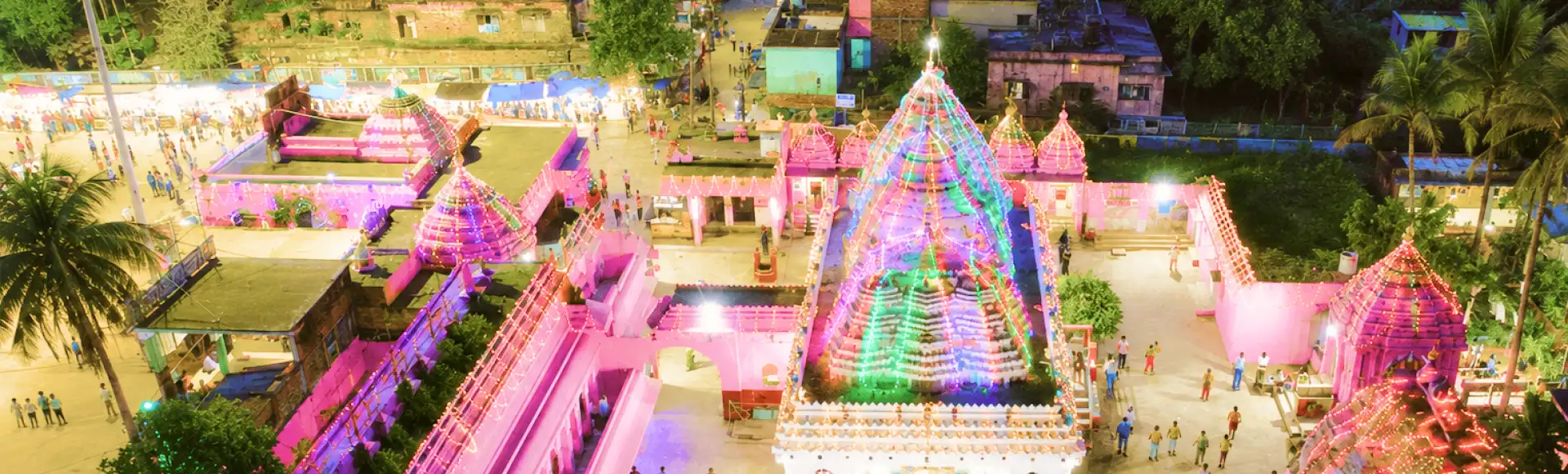
Raghunath Jew Temple
Raghunath Jew Temple in Odagaon, Nayagada district, is a prominent shrine devoted to Lord Rama. Visitors are drawn by its forest-exile images, distinctive architecture and Rama Navami observances.
Key facts · verified by Ghumoopedia editors
- Type of place
- Temple / pilgrimage site
- Best time to visit
- Oct – Mar (Rama Navami is the most vibrant time to visit)
- Verified
- 21 Nov 2026
Plan a trip from Raghunath Jew Temple — a day-by-day route through places nearby.
In Odagaon, Nayagada district, Odisha, this temple is a prominent place of worship for Lord Rama. Its images set it apart from many Rama shrines: Rama, Sita and Laxman appear as they are understood during their forest exile, rather than dressed as royalty. Carved from neem wood, the figures of Rama and Laxman have beards and moustaches. This depiction is uncommon in Odisha and gives the temple’s central images a distinctive artistic character. The three deities and their presentation also express the shrine’s religious importance. The building has the appearance of a royal residence rather than the usual form of a shrine. Three kalasas made of pure gold crown the structure, bringing a notable architectural feature together with its sacred role. The temple draws pilgrims, especially for Rama Navami, when thousands of devotees assemble to honour Rama’s life and teachings. Its spiritual setting, rare forest-dweller imagery and unusual form make it a significant religious and heritage site in Nayagada. Plan your visit around Oct – Mar (Rama Navami is the most vibrant time to visit). The official suggested visit duration is 1–2 Hrs; treat this as time at the attraction, not the complete journey from your hotel. Odisha’s coast and plains can be hot and humid, while southern hill districts may feel cooler after sunset. Heavy monsoon rain can affect road travel and access to outdoor sites. Check the local forecast before setting out, and keep a flexible alternative for bad weather. Official destination reference: https://odishatourism.gov.in/en/places/raghunath-jew-temple
Why it matters
Raghunath Jew Temple at Odagaon is an important centre of Lord Rama worship in Nayagarh district, Odisha. Odisha Tourism presents it as a temple and spiritual destination, and its regional significance is closely tied to its distinctive images of Rama, Sita and Lakshman in forest-exile form. The bearded and moustached depictions of Rama and Lakshman are unusual among Rama temple images in the state, while the neem-wood idols draw interest for their craftsmanship and devotional importance. The temple is also notable locally for its palace-like appearance and three gold kalasas. Rama Navami brings a larger gathering of worshippers and visitors. These points establish its religious and heritage value; no UNESCO or Archaeological Survey of India protection status is asserted here.
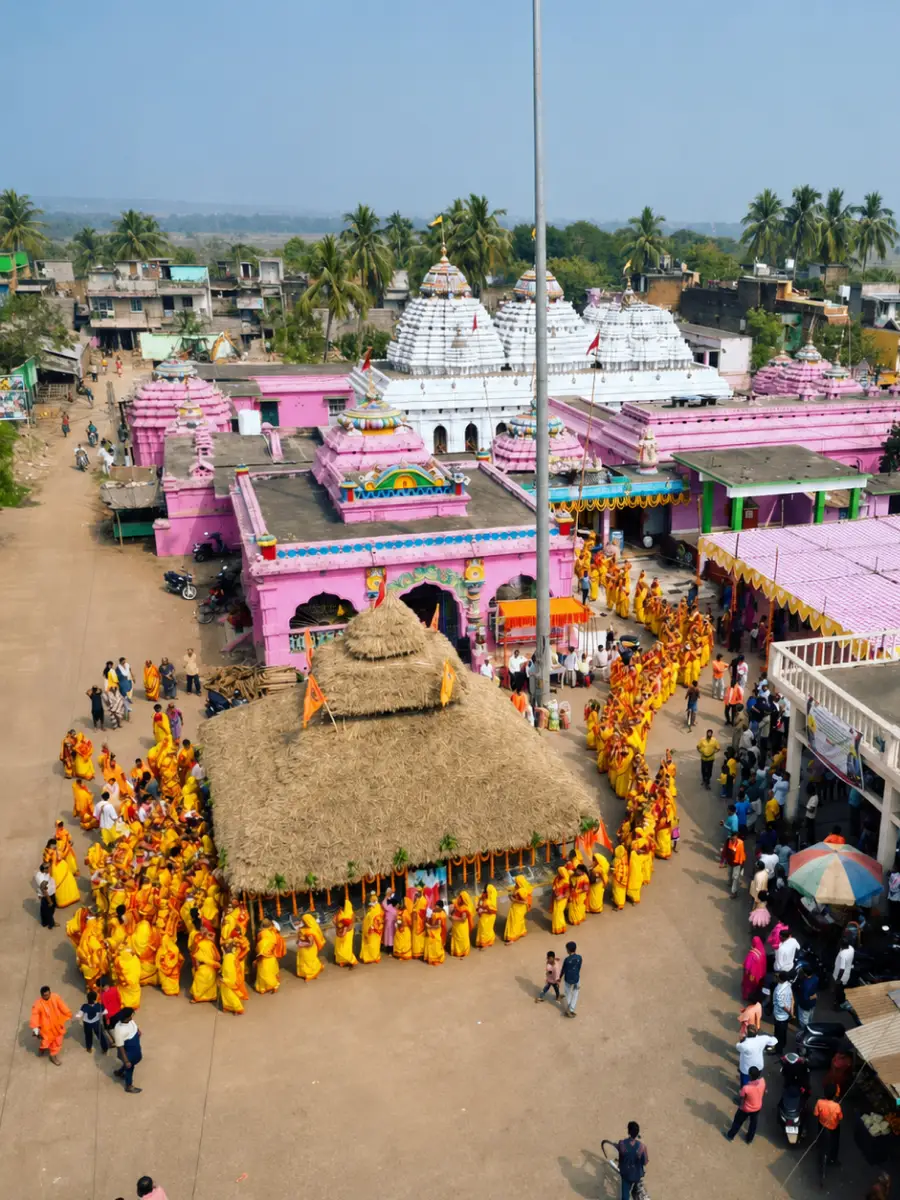
Raghunath Jew Temple is located at Odagaon in present-day Nayagarh district and remains an active place of worship. Public-facing destination information identifies the temple’s principal images as carved from neem wood and describes their Vanavasi, or forest-exile, form. It does not provide a securely documented foundation date, a named builder, or a detailed chronology of construction and later repairs. In the absence of reliable published evidence for those details, visitors should treat precise dates and royal patronage stories as unverified unless confirmed by the temple authorities or local historical records. The temple’s continuing importance is evident in the worship centred on Rama, Sita and Lakshman and in the gatherings associated with Rama Navami. Its distinctive images and palace-like exterior have helped it become a landmark of Odagaon as well as a pilgrimage destination for people from the wider region. As with many living shrines, the complex may have undergone maintenance and changes over time, but the timing and scope of any restoration should be checked locally. The safest account is therefore one that distinguishes the temple’s well-known devotional and artistic features from historical details that are not firmly established in the available destination record.
Origin stories & folklore
The temple’s Vanavasi images invite a devotional reading of the Ramayana’s forest-exile episode: Rama, Sita and Lakshman are understood by worshippers through the period of hardship, duty and devotion associated with their journey into the forest. The beards and moustaches shown on Rama and Lakshman reinforce this distinctive interpretation of the figures. This is a religious and artistic association, not by itself evidence of a particular founding event. Local stories about the temple’s origins or the discovery of its images may be shared by residents and devotees, but accounts can vary; ask locally and treat them as oral tradition rather than established history.
Architecture & design
The temple is distinguished by an exterior described as resembling a royal palace more than a conventional shrine. Its overall presence and the three pure-gold kalasas crowning the structure are among its most readily noted features. The building brings together a grand public-facing form and the devotional focus of the sanctum, although a detailed architectural plan or construction chronology is not established in the available destination information. The principal images of Rama, Sita and Lakshman are crafted from neem wood, giving the shrine an important sculptural as well as religious dimension. Visitors can look at the temple’s overall profile and the way its crowned form stands apart in Odagaon, while following any locally indicated route through the complex. Avoid attributing a specific architectural school, date, or engineering method without confirmation from a reliable specialist source.
Important objects & sculptures
The principal objects of devotional and artistic interest are the neem-wood images of Lord Rama, Sita and Lakshman. Their Vanavasi representation sets them apart: Rama and Lakshman are depicted with beards and moustaches, rather than only in the royal, courtly form familiar from many other Rama shrines. Observe the figures respectfully and follow restrictions around the sanctum; access and viewing distance may depend on worship or temple rules. The three gold kalasas above the temple are notable features of the structure. No particular inscription, museum collection, or separately documented group of sculptures is identified in the available destination information, so visitors should ask temple attendants before interpreting other objects or carvings.
Religious significance
The shrine is dedicated to Lord Rama, with Sita and Lakshman represented alongside him. For devotees, the images’ forest-exile form connects worship with the Ramayana and with ideals associated with Rama’s life, including duty and steadfastness. The temple is an active place of Hindu worship, not solely a heritage monument; daily devotional practices and access to particular areas may take precedence over sightseeing. Visitors should allow worshippers space, observe posted instructions, and ask attendants before joining a ritual or entering a restricted area. Rama Navami is a particularly significant occasion, drawing devotees to celebrate Rama’s life and teachings. Practices and arrangements can vary, so seek guidance respectfully rather than assuming that every ritual is open to visitors.
Begin with the main attraction at Raghunath Jew Temple and leave time to understand its setting in Nayagarh. Approach the shrine respectfully, follow the posted entry requirements and allow time for queues. Ask attendants about photography, footwear storage and the permitted route. Religious practice is part of daily life here; avoid interrupting worship or assuming that every visitor can enter every part of the complex. Keep a simple itinerary: arrive in daylight, enjoy the main visit, take a shaded meal break, then decide whether one nearby stop fits your return plan. Use the district index to find nearby places, but check the actual road route before combining them. Reserve a little time for photographs from permitted public viewpoints and avoid blocking paths while taking pictures.
Suggested itineraries
Half day: Arrive in daylight; spend 1–2 hours at Raghunath Jew Temple, allowing for worship and queues; take a shaded break nearby; return to your base. Full day: Visit Raghunath Jew Temple in the morning; pause for a meal; choose one confirmed nearby stop such as Kuanria Dam or a Nayagarh-town visit, checking the road route and return transport first. Gentler option: Arrange a drop-off near the temple, take a seated rest before entering, visit at an unhurried pace and skip additional stops.
The temple is part of the living religious life of Odagaon and the wider Nayagarh region. Worship, offerings and pilgrimage visits shape the atmosphere, especially around Rama Navami. Odia is widely used locally; visitors may also encounter Hindi or English, but language availability should not be assumed. Dress is generally modest at places of worship, and removing footwear may be required in designated areas. The temple’s unusual Vanavasi images are an important local point of interest and may be explained through devotional interpretation. Do not interrupt prayer or treat worshippers as subjects for portraits without permission.
Festivals & events
Rama Navami, usually observed in the spring, is the temple’s most prominent festival period and the liveliest time for many pilgrims to visit. Devotees gather for worship and celebrations connected with the life and teachings of Lord Rama. Larger crowds can mean queues, busier approaches and less time for a quiet view of the shrine; follow directions from temple staff and keep companions together. Other observances may take place according to the temple’s religious calendar, but their programme and public access can vary. Confirm current arrangements locally before planning around a particular ritual or festival.
For a visit to Raghunath Jew Temple, plan food around your base in Nayagarh and do not assume that a remote entrance has a full restaurant. Odisha offers rice-based meals, dalma, vegetable preparations and sweets such as chhena poda. Availability varies by district and outlet; ask what is freshly prepared rather than expecting every local dish at every stop. Choose busy, clean establishments and tell staff about allergies, spice preferences or dietary restrictions before ordering. Carry sealed drinking water and a small snack if you are travelling beyond a town. In hot weather, take regular water breaks instead of waiting until you feel exhausted. If a temple offers food or prasad, follow the local serving rules and confirm what ingredients it contains. Do not treat ritual food as a guaranteed restaurant meal. Keep all packaging with you until you find an appropriate waste bin.
Shopping & local experiences
Shopping around the temple may be limited and can vary with the day or festival crowds. Visitors may find devotional offerings or small religious keepsakes locally, but availability and origin should be checked with sellers. For a broader choice, explore markets in Nayagarh town and look for locally made goods or regional food items, asking whether products are genuinely local. Buy packaged goods responsibly and avoid purchasing anything made from protected wildlife or restricted materials. If you plan to carry offerings or food, check temple rules and keep the shrine area clean.
Oct – Mar (Rama Navami is the most vibrant time to visit)
Start by choosing a practical overnight base in or near Nayagarh, rather than assuming every attraction has its own railway station. Odisha Tourism lists this rail access: Nearest Railway Station -Khordha Road Junction (Approx. 80 km). The listed air access is: Nearest Airport - Biju Patnaik International Airport, Bhubaneswar (Approx. 110 km). Road access: Raghunath Jew Temple is located at Odagaon, about 12 km from Nayagada town and approximately 110 km from Bhubaneswar. It is well connected by road.. Compare train, bus and flight options door to door. Rail can suit overnight journeys and travellers who prefer to avoid a long drive. A bus may be useful between district towns, but the last service may finish before your visit ends. A flight only saves time if airport transfers, check-in and the final road leg are included. Reserve the return leg before departure and allow time for traffic, meals and weather. Check IRCTC and NTES for trains, OSRTC for buses, and the airline’s own schedule for flights. Do not rely on an unconfirmed connection or assume taxis will wait at a remote site.
Confirm onward and return timings on IRCTC / NTES, the state bus operator or your airline before travel. A dash means current timings or fares have not been verified.
Getting around
Odagaon is reached by road, and Nayagarh town can serve as a practical base for arranging onward transport. On arrival, ask locally about available auto-rickshaws, taxis or other hired vehicles for the temple and your return journey; service availability can vary. Local buses may connect district towns, but check where they stop and whether a suitable return service is available. The final approach and movement around the temple are generally best planned on foot once dropped nearby, subject to local access arrangements. Confirm parking and drop-off points with the driver or temple staff, and avoid blocking the entrance or approach roads.
Hours, tickets & permissions
Entry arrangements may depend on worship, festival activity and the areas open to visitors. The temple may require footwear to be left in a designated place, and access to the inner shrine or photography may be restricted. Do not assume that all parts of the complex are open to every visitor. Confirm current opening hours, entry requirements and any applicable fees with the temple’s managing authority before travelling; arrangements can change, especially during festivals. Carry identification only if an authority specifically advises that it is needed.
Facilities
Basic facilities may be available in or around the temple area, but provision can vary. Check locally for toilets, drinking water, footwear storage, seating and parking before relying on them. Small food options may be found in the surrounding area or in nearby towns; carry water and any necessary snacks, especially if visiting outside a festival period. Do not assume that an official guide, ATM or accessible toilet is available on site. For a longer visit, arrange practical needs in Nayagarh or another overnight base and confirm local services before setting out.
Accessibility
Ask locally about the closest practical drop-off point and the route into the complex before visiting. Shade and places to sit may be limited or variable, particularly when crowds gather, so plan breaks and avoid the busiest period if mobility is a concern. Wheelchair and stroller access to the inner areas should not be assumed, and assistance may be needed for steps or thresholds. Older visitors may find a short, unhurried visit more comfortable; companions should check access with temple staff on arrival.
At Raghunath Jew Temple, local access rules take priority over any suggested itinerary. Reconfirm opening arrangements, entry eligibility, permits and weather restrictions shortly before arrival. Keep the emergency number 112 available and save your accommodation’s contact details offline. A map pin identifies a general location, not an assurance that the approach road or walking path is safe. Ask local staff which entrance visitors should use. Dress respectfully and follow shrine-specific rules. Entry restrictions may depend on religious practice, and photography or phones may be prohibited. Use official counters where available and agree on any guide service before accepting it. Carry only necessary valuables, keep rubbish out of the site, and leave enough daylight for the return journey.
Visitor rules
Dress modestly and follow any instructions posted by the temple or given by attendants. Remove footwear wherever required and use the designated storage area. Keep voices low, do not interrupt worship, and avoid entering restricted spaces or touching sacred objects unless invited to do so. Ask before photographing people, rituals or interior areas. Dispose of rubbish responsibly and avoid bringing or leaving single-use plastic where prohibited. During busy observances, follow queue arrangements and keep entrances and pathways clear. Local rules may change with religious activity, so ask staff if uncertain.
Photography
The temple’s exterior and crowned profile can be viewed in daylight, but use only public or otherwise permitted viewpoints and avoid obstructing worshippers. Photography inside the shrine, of the images, or during rituals may be limited; ask an attendant before taking a camera or phone out. Be considerate when photographing visitors and seek their permission for close portraits. Drone use can be restricted by aviation rules, local authorities or temple management; do not fly one without confirming permission. Festival crowds are part of a religious gathering, not a staged scene, so photograph respectfully and follow directions.
Choose accommodation by the complete journey to Raghunath Jew Temple, not by the district name alone. A room in a well-connected town in Nayagarh may offer easier transport, meals and medical access than a property advertised as being close to the attraction. Check the exact location, recent guest feedback, reception hours and cancellation terms. Ask how you will reach the site and return after the visit, especially if you are not driving. A centrally located stay can make early sightseeing and an evening return easier. Confirm whether the approach road is accessible to your vehicle and whether lifts are available. Book only through a trusted accommodation channel, avoid sending payments to an unverified personal contact, and keep written confirmation of the services included.
For a wider Nayagarh district visit, Kuanria Dam is a possible nature-and-reservoir stop, while Nayagarh town offers a practical place to pause or arrange onward travel. These stops should be considered only after checking the actual road route and transport for the day; do not assume they are a short walk from Odagaon. Other temples and local places of interest may be known to residents, but confirm their names, access and current visitor arrangements before adding them to an itinerary. A simple temple visit with a return to your base is often more practical than combining several distant stops.
For couples visiting Raghunath Jew Temple, keep the day relaxed: one main visit, a meal break and a return transfer arranged in advance. Choose public viewpoints for photographs and respect religious or community expectations around behaviour and clothing. Confirm the accommodation’s check-in requirements before booking. Avoid secluded paths after dark and do not trade a safe return plan for a late photograph. A quieter weekday may suit you, but opening and access arrangements still need local confirmation.
Q: How much time should I allow for the temple? A: The suggested visit is 1–2 hours at the attraction; allow extra time for queues, worship or a festival crowd. Q: When is a good season to visit? A: October to March is a practical general period. Rama Navami is especially vibrant, but also busier. Q: Is there an entry fee, and are all areas open? A: Confirm current entry arrangements and any fees with the temple authority. Access to inner areas may be restricted. Q: Is the temple suitable for children and elderly visitors? A: Families can visit respectfully, but surfaces, steps and crowding may be challenging. Check access locally and plan a gentle visit. Q: Where should I stay nearby? A: Nayagarh town is a practical base to consider; confirm accommodation and onward transport before travelling.
Be the first to share photos, stories, advice or a helpful contact for Raghunath Jew Temple.
Loading…