
Rajarani Temple
Rajarani Temple, in Bhubaneswar, is an 11th-century shrine known for its sculpted sandstone work and distinctive tower. Visitors explore its architecture and gardens, and attend its music festival.
Key facts · verified by Ghumoopedia editors
- Type of place
- Temple / pilgrimage site
- Best time to visit
- October - March
- Verified
- 21 Nov 2026
Plan a trip from Rajarani Temple — a day-by-day route through places nearby.
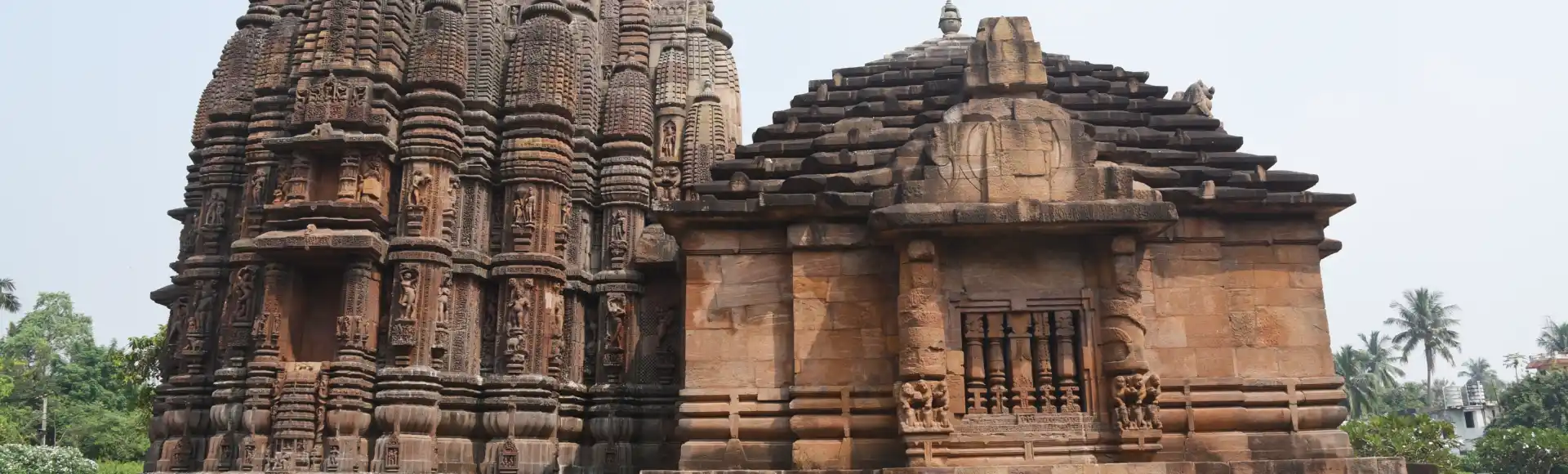
Rajarani Temple stands in Bhubaneswar, within Odisha’s Khordha district, and dates from the 11th century. Builders used a reddish-gold stone known as rajarania. Its tall, tapering tower and sandstone surfaces make the temple a notable example of the region’s architectural craft. Its carvings include celestial maidens, figures representing guardians of the eight directions, and detailed ornamental patterns. There is no presiding deity in the shrine. The imagery, however, indicates a Shaivite association, and the temple was formerly believed to bear the name Indreswara. A landscaped garden surrounds the monument, while shifting daylight alters the way its stonework appears. The grounds offer a calm setting in which to examine the building and its sculpture. Rajarani also provides the setting for the Rajarani Music Festival, a leading Indian classical music festival in Odisha. Across three days, performances bring music, spiritual associations and the temple’s architecture together. Plan your visit around October - March. The official suggested visit duration is 1–2 hours; treat this as time at the attraction, not the complete journey from your hotel. Odisha’s coast and plains can be hot and humid, while southern hill districts may feel cooler after sunset. Heavy monsoon rain can affect road travel and access to outdoor sites. Check the local forecast before setting out, and keep a flexible alternative for bad weather. Official destination reference: https://odishatourism.gov.in/en/places/rajarani-temple
Why it matters
Rajarani Temple is an important example of Odisha’s medieval temple architecture and sculptural tradition. Located in Bhubaneswar, it is valued for its carved sandstone surfaces, distinctive spire and harmonious proportions. The Archaeological Survey of India lists it as a protected monument, reflecting its national heritage importance. Unlike many temples in the city, it has no presiding deity, so visitors often experience it chiefly as a historic and artistic site rather than a place of regular worship. Its Shaivite imagery connects it to the wider temple culture of Bhubaneswar. The temple also hosts the Rajarani Music Festival, which brings Indian classical music into this historic setting.
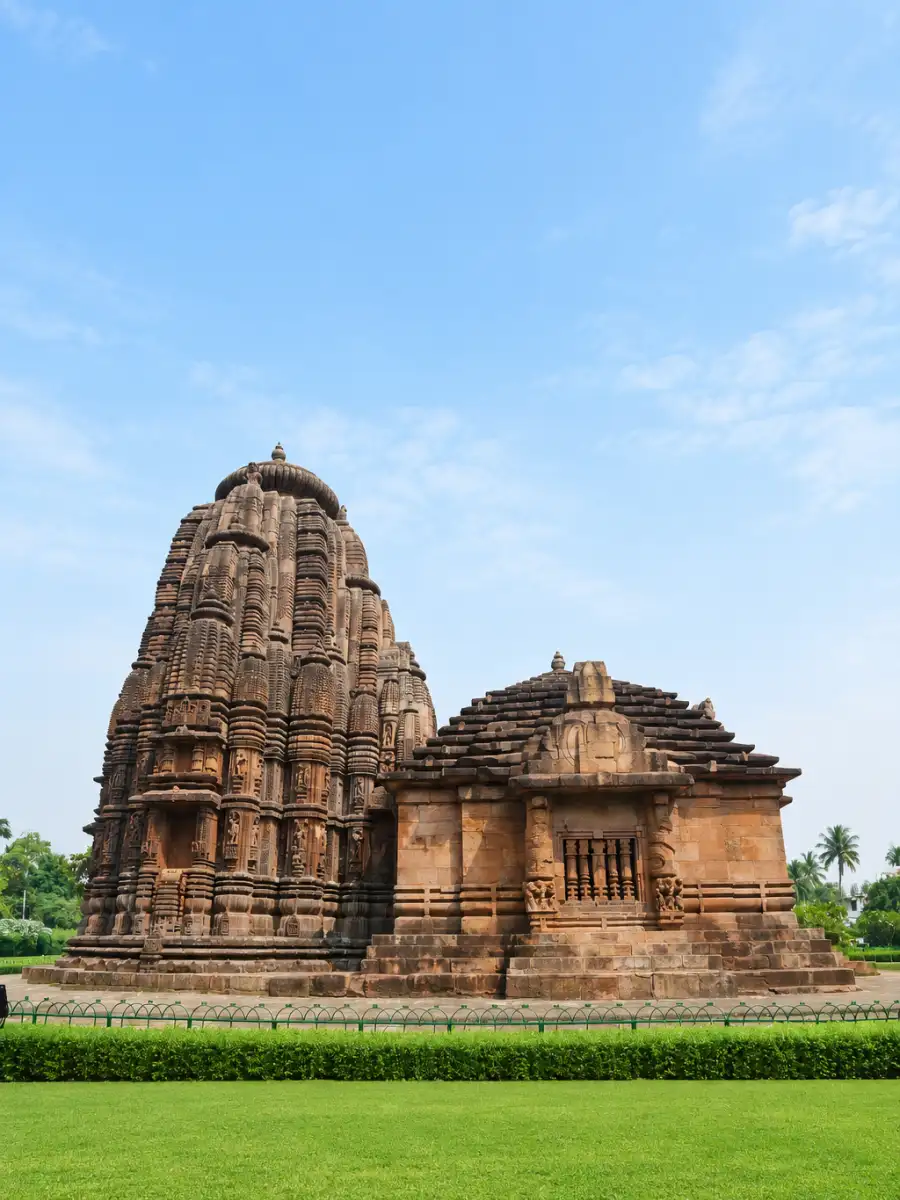
Rajarani Temple is generally dated to the 11th century, during a period when Bhubaneswar was developing as a major centre of temple construction. Scholars commonly associate it with the Somavamsi period, although the precise patron and circumstances of its construction are not firmly established. The temple’s name is often linked to the reddish-gold sandstone known as rajarani, rather than to a royal couple. It is also sometimes identified as Indreswara, a name associated with Shiva; its sculptural programme supports a Shaivite connection, even though no presiding deity is now installed. The building belongs to the broader Kalinga architectural tradition shared by historic temples across Odisha. Over the centuries it became known both for its architecture and for the absence of an active central image. The Archaeological Survey of India protects the monument. Its landscaped grounds and use as a setting for cultural events reflect its present role as a heritage attraction as well as a historic religious structure. Details of particular restoration campaigns are not consistently documented in visitor information, so consult the managing authority for current conservation updates.
Origin stories & folklore
There is no single widely documented founding legend for Rajarani Temple. According to local tradition and common accounts, the name Rajarani comes from the reddish-gold stone used in its construction; this is an explanation of the name rather than a confirmed historical record. The temple is also sometimes called Indreswara and associated with Shiva. Its carvings of Shaivite figures and related imagery have encouraged this identification, but the name and the original dedication are not conclusively established. Visitors may encounter different explanations from guides or local accounts. These should be understood as traditions and interpretations, distinct from the limited historical evidence about the temple’s original patronage.
Architecture & design
Rajarani Temple is built in the Kalinga style of Odisha, with a curving sanctuary tower, or deul, rising above a compact plan and a front assembly hall known as the jagamohana. Its warm-toned sandstone gives the exterior a varied reddish and golden appearance. The tower is articulated with vertical projections and carved bands that draw the eye upward, while the exterior walls carry a dense programme of sculpture and ornament. Figures of celestial women, guardians of the directions and Shaivite deities appear among floral and geometric motifs. The structure’s balanced proportions and carefully layered surfaces are notable even without a large congregational interior. As with other stone temples, its masonry depends on closely fitted blocks and the structural form of the walls and tower. The surrounding landscaped grounds provide space to view the building from several angles; visitors should remain on permitted paths and avoid touching the carvings.
Important objects & sculptures
Look closely at the exterior carvings for celestial maidens in varied poses, directional guardians and figures associated with Shiva. Decorative bands, foliage, patterned details and sculpted panels fill many of the temple’s surfaces. The tower’s ascending carved divisions are especially worth observing from a little distance, where the overall composition becomes clearer. The temple does not have a presiding deity in its sanctuary today, and visitors should not expect a regular collection of displayed objects or an interpretive museum. Inscriptions are not a prominent feature of the visitor experience, and details about any individual inscription should be checked with a qualified guide or the managing authority rather than inferred from the carvings.
Religious significance
The temple’s sculpture and traditional identification as Indreswara point to a Shaivite association, but Rajarani has no presiding deity installed today. It is therefore not generally experienced as an active shrine with regular daily worship in the way some nearby temples are. For visitors, its religious significance lies in its place within Bhubaneswar’s sacred landscape and in the imagery and architectural traditions it preserves. Local understandings may vary, so ask respectfully if discussing its history with attendants or guides. The site is also used for cultural gatherings, including a classical music festival. Visitors should remember that a historic monument can retain religious meaning even when regular worship is not evident, and should behave respectfully throughout the grounds.
Begin with the main attraction at Rajarani Temple and leave time to understand its setting in Khordha. Approach the shrine respectfully, follow the posted entry requirements and allow time for queues. Ask attendants about photography, footwear storage and the permitted route. Religious practice is part of daily life here; avoid interrupting worship or assuming that every visitor can enter every part of the complex. Keep a simple itinerary: arrive in daylight, enjoy the main visit, take a shaded meal break, then decide whether one nearby stop fits your return plan. Use the district index to find nearby places, but check the actual road route before combining them. Reserve a little time for photographs from permitted public viewpoints and avoid blocking paths while taking pictures.
Suggested itineraries
Half day: Rajarani Temple visit and sculpture viewing (1–2 hours); take a shaded break; add one nearby temple if travel and energy allow. Full day: Rajarani Temple (1–2 hours); visit Mukteswar and Parsurameswar temples; pause for lunch; continue to Lingaraj Temple and Bindu Sagar, checking access rules at each site. Gentler option: Spend 1–2 hours at Rajarani Temple, take seated breaks in the grounds where permitted, and choose only one nearby stop with a convenient vehicle drop-off.
Rajarani Temple sits within Bhubaneswar, where Odia culture and the city’s long temple tradition remain visible in daily life. Odia is the principal local language; Hindi and English may also be understood by some attendants, guides and service providers. The temple’s carvings offer a visual record of medieval artistic conventions, while its modern cultural role includes classical music performances. Visitors may encounter people making quiet visits, taking photographs or attending organised events. Dress is generally practical for the warm, humid climate, with modest clothing appropriate at a heritage and religious site. Be considerate around worshippers and local visitors, and ask before photographing people or any activity that appears devotional.
Festivals & events
The Rajarani Music Festival is the principal recurring cultural event associated with the monument. It is a three-day programme of Indian classical music, generally held during the cooler season; confirm the current season and arrangements with Odisha Tourism or the event organisers. Performances bring audiences into the temple grounds and can make the site busier than on an ordinary visit. Bhubaneswar’s major temple festivals, including events associated with Lingaraj Temple, take place elsewhere in the city and may affect traffic and accommodation demand. Festival schedules can change, so check locally before planning a visit around a performance or combining the temple with other busy sites.
For a visit to Rajarani Temple, plan food around your base in Khordha and do not assume that a remote entrance has a full restaurant. Odisha offers rice-based meals, dalma, vegetable preparations and sweets such as chhena poda. Availability varies by district and outlet; ask what is freshly prepared rather than expecting every local dish at every stop. Choose busy, clean establishments and tell staff about allergies, spice preferences or dietary restrictions before ordering. Carry sealed drinking water and a small snack if you are travelling beyond a town. In hot weather, take regular water breaks instead of waiting until you feel exhausted. If a temple offers food or prasad, follow the local serving rules and confirm what ingredients it contains. Do not treat ritual food as a guaranteed restaurant meal. Keep all packaging with you until you find an appropriate waste bin.
Shopping & local experiences
Bhubaneswar markets and craft shops offer opportunities to look for Odisha handloom textiles, silver filigree, stone or wood craft and locally made souvenirs. Ask about provenance and choose established sellers, especially for expensive craft items. Food experiences around the city may include Odia meals and regional sweets; availability varies by neighbourhood and time of day. There may be few shopping options immediately beside the temple, so plan purchases in the city rather than expecting a large site market. Avoid buying objects presented as genuine archaeological material or anything removed from a heritage site.
October - March
Start by choosing a practical overnight base in or near Khordha, rather than assuming every attraction has its own railway station. Odisha Tourism lists this rail access: Nearest railway station – Bhubaneswar. The listed air access is: Nearest airport – Biju Patnaik International Airport, Bhubaneswar. Road access: Easily accessible within Bhubaneswar city by road. Compare train, bus and flight options door to door. Rail can suit overnight journeys and travellers who prefer to avoid a long drive. A bus may be useful between district towns, but the last service may finish before your visit ends. A flight only saves time if airport transfers, check-in and the final road leg are included. Reserve the return leg before departure and allow time for traffic, meals and weather. Check IRCTC and NTES for trains, OSRTC for buses, and the airline’s own schedule for flights. Do not rely on an unconfirmed connection or assume taxis will wait at a remote site.
Confirm onward and return timings on IRCTC / NTES, the state bus operator or your airline before travel. A dash means current timings or fares have not been verified.
Getting around
The temple is within Bhubaneswar and is accessible by road from other parts of the city. Auto-rickshaws and app-based or hired taxis can be practical for the last leg; agree on the drop-off and return plan before leaving busy areas. Local buses serve parts of the city, but routes and stops may not take you directly to the entrance, so check locally. Walking around the temple grounds is the simplest way to see the exterior, using the marked paths. Parking may be available nearby, but space can be limited during events. For onward sightseeing, arrange a vehicle or confirm transport availability rather than assuming an auto or bus will be waiting.
Hours, tickets & permissions
Entry arrangements can include a ticket or other site-specific conditions, and access may be managed differently during events or conservation work. Camera rules, permitted areas and any identification requirements should be checked at the entrance rather than assumed. Dress respectfully, and follow posted instructions about footwear and movement through the grounds. Confirm current opening hours, entry requirements and fees with the Archaeological Survey of India or the site authority before travelling. Do not rely on older listings, particularly when planning around the Rajarani Music Festival.
Facilities
Facilities at the monument and immediately around it may be limited. Toilets, drinking water, parking or attendants may be available, but check locally and carry water, especially in warm weather. Food options are easier to find elsewhere in Bhubaneswar than inside the grounds. Guides may be available by arrangement or on site, though availability and language choice can vary. ATMs, pharmacies and a wider choice of meals are found in the city rather than guaranteed at the entrance. Carry small essentials with you and do not assume that food, water or guide services will be operating during every visit.
Accessibility
The temple grounds involve outdoor walking over paths and potentially uneven surfaces, and viewing the carvings requires moving around the building. There may be steps or changes in level, so wheelchair access to all areas should not be assumed. Stroller use can also be difficult on uneven sections. Shade may be limited around parts of the monument, so plan rests and carry water in warm weather. Older visitors and anyone with limited mobility may find a shorter visit focused on the clearest approach and accessible viewpoints more comfortable. Contact the site authority in advance about current access conditions; do not assume ramps, lifts or assistance are provided.
At Rajarani Temple, local access rules take priority over any suggested itinerary. Reconfirm opening arrangements, entry eligibility, permits and weather restrictions shortly before arrival. Keep the emergency number 112 available and save your accommodation’s contact details offline. A map pin identifies a general location, not an assurance that the approach road or walking path is safe. Ask local staff which entrance visitors should use. Dress respectfully and follow shrine-specific rules. Entry restrictions may depend on religious practice, and photography or phones may be prohibited. Use official counters where available and agree on any guide service before accepting it. Carry only necessary valuables, keep rubbish out of the site, and leave enough daylight for the return journey.
Visitor rules
Follow signs and instructions from site staff, and keep to public paths and any permitted visitor areas. Wear modest, comfortable clothing and ask locally whether footwear must be removed in any area. Do not touch, climb on or scratch the carvings, and avoid blocking entrances or paths. Keep noise low, especially if worship or a performance is taking place. Dispose of litter responsibly and avoid bringing single-use plastic where restrictions apply. Photography may be limited in particular areas or during events; confirm before taking pictures. Do not enter closed or cordoned sections, even for a better view.
Photography
The temple’s carved exterior is rewarding to photograph in soft morning or late-afternoon light, when the sandstone’s warm tones are more apparent. Walk around the permitted public paths to find different views of the tower and sculpted walls, and avoid obstructing other visitors. Photography rules can vary by area and during events, so check posted notices or ask attendants before using a camera. Do not photograph people closely without consent or interrupt worship and performances. Drone use may require permissions and may be restricted; do not fly one without confirming current rules with the relevant authorities.
Choose accommodation by the complete journey to Rajarani Temple, not by the district name alone. A room in a well-connected town in Khordha may offer easier transport, meals and medical access than a property advertised as being close to the attraction. Check the exact location, recent guest feedback, reception hours and cancellation terms. Ask how you will reach the site and return after the visit, especially if you are not driving. A centrally located stay can make early sightseeing and an evening return easier. Confirm whether the approach road is accessible to your vehicle and whether lifts are available. Book only through a trusted accommodation channel, avoid sending payments to an unverified personal contact, and keep written confirmation of the services included.
Bhubaneswar has several notable heritage sites that can be combined with Rajarani Temple, subject to opening and access rules. Mukteswar Temple and Parsurameswar Temple are well-known examples of the city’s temple architecture. Lingaraj Temple and Bindu Sagar are important parts of the city’s religious landscape, though entry rules at Lingaraj may restrict access for some visitors. Ananta Vasudeva Temple is another historic temple in the city. For a different kind of heritage visit, Udayagiri and Khandagiri caves and the Dhauli Shanti Stupa are in the wider Bhubaneswar area. Check road conditions and allow for city traffic before combining several stops.
For couples visiting Rajarani Temple, keep the day relaxed: one main visit, a meal break and a return transfer arranged in advance. Choose public viewpoints for photographs and respect religious or community expectations around behaviour and clothing. Confirm the accommodation’s check-in requirements before booking. Avoid secluded paths after dark and do not trade a safe return plan for a late photograph. A quieter weekday may suit you, but opening and access arrangements still need local confirmation.
Q: How much time should I allow for Rajarani Temple? A: The suggested visit duration is 1–2 hours at the attraction; allow additional time for city travel and any nearby stops. Q: When is the best season to visit? A: October to March is generally a more comfortable period. Check the local forecast, as weather can vary. Q: Is there an entry fee or a special entry requirement? A: Rules and fees can change. Confirm current arrangements with the site authority before visiting. Q: Is the site suitable for children and elderly visitors? A: It can be visited by families, but paths may be uneven and shade limited. Plan breaks and supervise children near the carvings. Q: Where should I stay nearby? A: Bhubaneswar is a practical base, with a wider choice of accommodation and transport than the temple area itself.
Be the first to share photos, stories, advice or a helpful contact for Rajarani Temple.
Loading…