
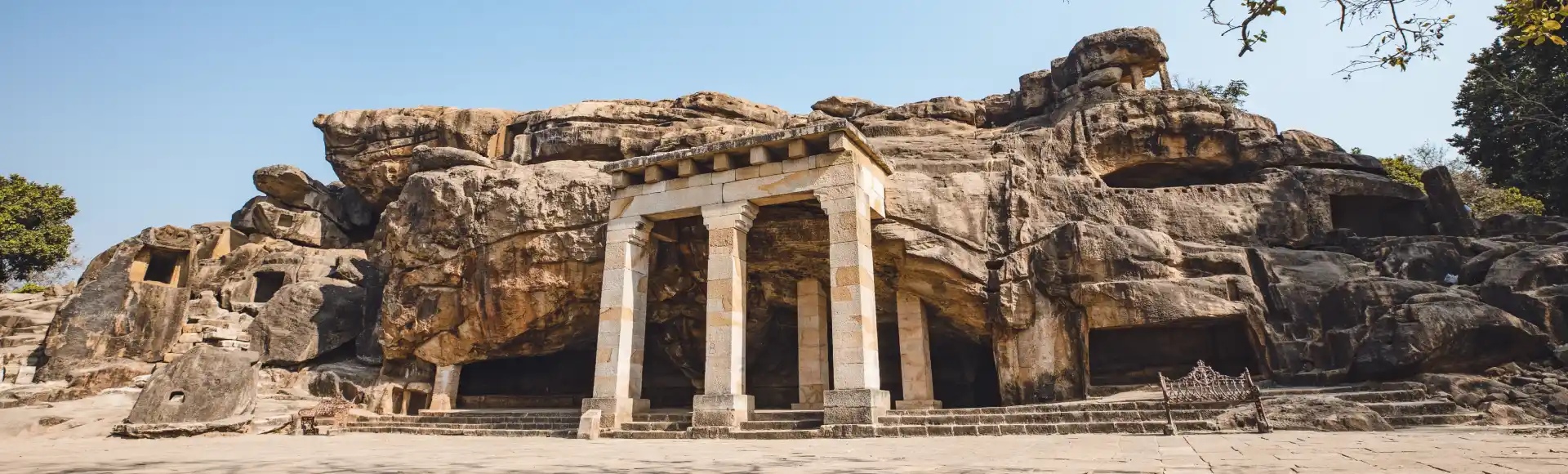
Udayagiri & Khandagiri Caves
The Udayagiri and Khandagiri Caves are ancient rock-cut retreats in Bhubaneswar, visited for their Jain heritage, carved art, historical inscriptions and views across the city.
Key facts · verified by Ghumoopedia editors
- Type of place
- Heritage monument
- Best time to visit
- October - March
- Verified
- 21 Nov 2026
Plan a trip from Udayagiri & Khandagiri Caves — a day-by-day route through places nearby.
Located on two hills in Bhubaneswar, Khordha, the cave complex records Odisha’s past and links it with the medieval period. Cut into rock in the second century BCE under King Kharavela, the chambers served as retreats for Jain monks. Their form reflects a life of restraint, contemplation and religious practice. Udayagiri contains the more elaborate carvings. Its Rani Gumpha is notable for detailed panels depicting episodes of courtly life and mythology. Across the hills, Khandagiri has a subdued atmosphere, offering a quieter setting for visitors. The Hathigumpha inscription is among the site’s important historical features, adding written evidence to its sculptural remains. From the elevated slopes, visitors can look out over Bhubaneswar. Together, the caves present a mix of history, stone craftsmanship and spiritual associations. Plan your visit around October - March. The official suggested visit duration is 2–3 hours; treat this as time at the attraction, not the complete journey from your hotel. Odisha’s coast and plains can be hot and humid, while southern hill districts may feel cooler after sunset. Heavy monsoon rain can affect road travel and access to outdoor sites. Check the local forecast before setting out, and keep a flexible alternative for bad weather. Official destination reference: https://odishatourism.gov.in/en/places/udayagiri-khandagiri-caves
Why it matters
Udayagiri and Khandagiri are among Odisha’s most important surviving early rock-cut sites, preserving evidence of Jain religious life and the history of ancient Kalinga. Their caves and inscriptions connect the hills with King Kharavela, a ruler known chiefly through the Hathigumpha inscription. The Archaeological Survey of India protects the monuments, and Odisha Tourism presents them as a major heritage attraction in Bhubaneswar. Their regional importance lies in combining early Jain architecture, epigraphic evidence and later religious use in one landscape. The site also offers a local vantage point over the city, though visitors should treat the caves primarily as archaeological and religious heritage rather than as a viewpoint alone.
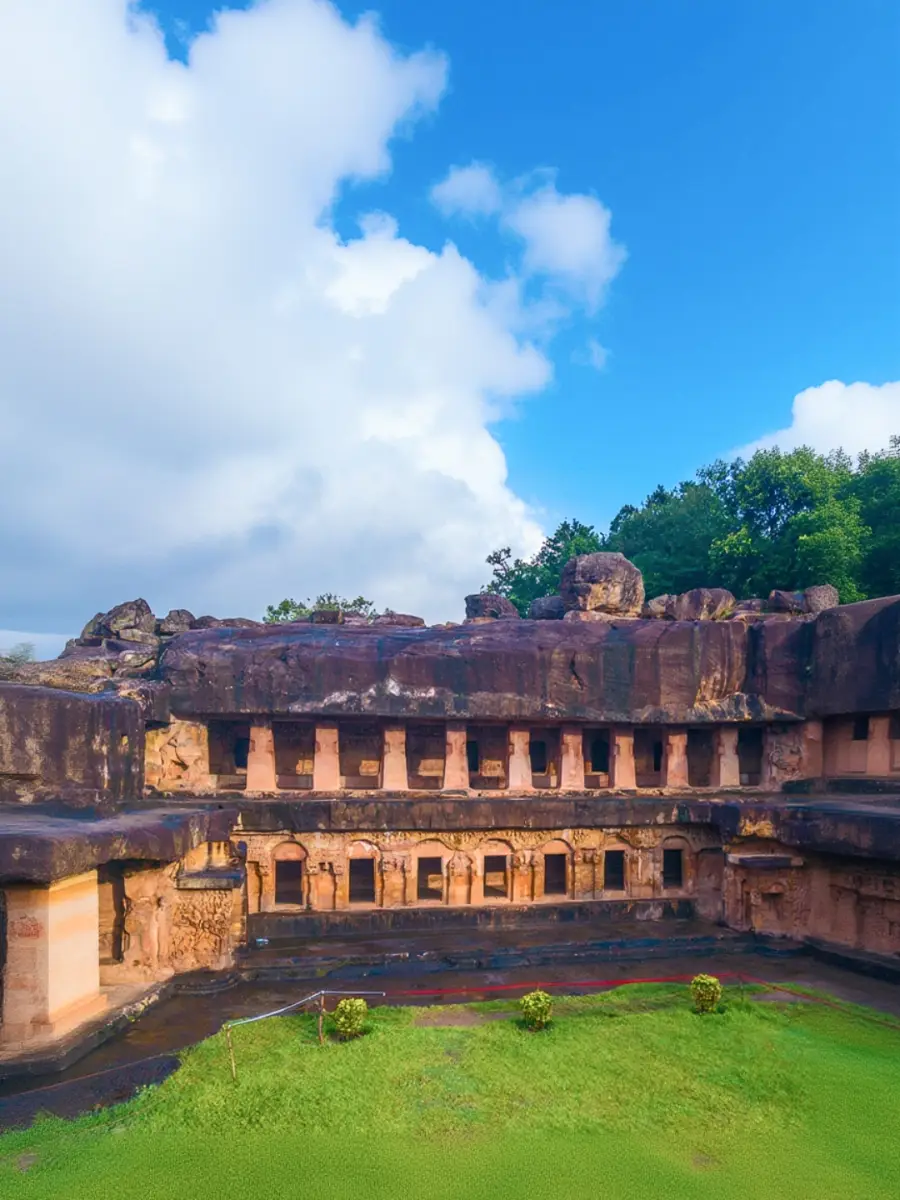
The caves are traditionally dated to around the second century BCE and are associated with the reign of Kharavela, ruler of ancient Kalinga. They were cut into the twin hills as residences and places of retreat for Jain ascetics. Inscriptions and architectural features suggest that royal patronage and donations by other supporters contributed to the complex; the precise chronology and interpretation of some records remain subjects of scholarship. The best-known record is the Hathigumpha inscription on Udayagiri. Written in an early form of Brahmi script and Prakrit, it recounts events associated with Kharavela’s reign and is an important source for the history of the region. The hills contain caves of differing sizes and layouts, including communal spaces and small cells suited to ascetic life. The site continued to have religious significance after its earliest phase. Khandagiri includes later Jain shrines and images, reflecting subsequent periods of worship and building. The Archaeological Survey of India now protects and maintains the monument. Conservation work and visitor management help safeguard the carved surfaces, but weathering and visitor contact remain concerns; follow barriers and site instructions.
Origin stories & folklore
The names Udayagiri and Khandagiri are often explained through local interpretations of the hills: Udayagiri is associated with sunrise, while Khandagiri is sometimes popularly understood as a broken or divided hill. These explanations are best treated as folk etymologies, not established accounts of how the names originated. The name Rani Gumpha, or “Queen’s Cave,” has also encouraged stories that it was a royal residence, but the name alone does not prove that a queen lived there. Jain tradition and the historical evidence identify the caves with ascetic practice; stories connecting individual chambers to particular rulers or characters should be understood as local belief unless supported by inscriptions.
Architecture & design
The complex consists of rock-cut chambers and verandas carved into the slopes of two hills, using the local stone rather than assembled masonry. Many caves have small, plain cells suited to retreat, while larger spaces have pillared fronts, low doorways and carved architectural details. Their forms vary with the contours of the rock, so the layout is not a uniform set of purpose-built rooms. Udayagiri is especially noted for Rani Gumpha, a two-storey cave with a broad courtyard-like arrangement, columns and sculpted panels. Khandagiri has caves of varied scale, as well as later shrines and images. Carved doorways, rail-like motifs, animals and narrative scenes show how decoration was adapted to the rock face. The builders shaped chambers by cutting into the hillside, creating shelter while leaving much of the hill’s natural mass intact. Uneven floors, narrow passages and exposed steps are part of the historic fabric, not modern circulation design.
Important objects & sculptures
Look for the Hathigumpha inscription on Udayagiri: its weathered lines are an important written record associated with Kharavela. Do not touch or trace the lettering, as contact can damage the surface. Rani Gumpha’s carved panels include figures, animals and narrative scenes often interpreted as depicting courtly or ceremonial life; interpretations may differ. Other caves have carved doorframes, pillars, elephants and decorative motifs. On Khandagiri, visitors can see Jain images and later shrine features that reflect continued religious use. Some details are worn or difficult to read, so take time to view them from permitted paths and rely on site interpretation or a knowledgeable guide for context.
Begin with the main attraction at Udayagiri & Khandagiri Caves and leave time to understand its setting in Khordha. Look for interpretation boards, guided visits or opportunities to meet local makers. Ask before photographing people or their work. A village workshop is a working space, not a staged performance; agree on any demonstration charge and avoid pressuring artisans for free access. Keep a simple itinerary: arrive in daylight, enjoy the main visit, take a shaded meal break, then decide whether one nearby stop fits your return plan. Use the district index to find nearby places, but check the actual road route before combining them. Reserve a little time for photographs from permitted public viewpoints and avoid blocking paths while taking pictures.
Suggested itineraries
Half day: Start at Udayagiri and the Hathigumpha inscription (about 60–90 minutes), explore Rani Gumpha and nearby caves (about 45–60 minutes), then visit selected Khandagiri caves (about 45–60 minutes). Full day: Visit Udayagiri and Khandagiri at a relaxed pace (about 2–3 hours), take a shaded meal break in Bhubaneswar, then continue to Dhauli Shanti Stupa or the Lingaraj Temple area (about 1–2 hours, subject to access and travel). Gentler option: See the most accessible lower viewpoints and selected caves with frequent rests; skip steep or uneven paths and allow extra time.
The caves remain part of Bhubaneswar’s religious and heritage landscape, with Jain visitors, local residents, students and travellers sharing the site. Odia is the principal local language; Hindi and English are also commonly used in visitor settings, though individual guides and vendors may speak different languages. Jain observances and visits continue, particularly around religious occasions, while the surrounding city expresses broader Odia traditions through food, festivals, music and dance. Visitors should dress respectfully, avoid disturbing prayer or worship, and ask before photographing people. The caves are archaeological remains as well as places with religious associations, so quiet conduct and care around images and shrines are appropriate.
Festivals & events
The Khandagiri Mela is held in the area during the winter festival season, commonly around January or February, with religious gatherings and fair activity. It can make the approaches and nearby roads busier than usual. Jain observances such as Mahavir Jayanti, usually in March or April, may bring visitors to the caves, though programmes vary. Bhubaneswar’s wider calendar includes festivals such as Durga Puja, while the Kalinga Mahotsav is held at Dhauli, a nearby heritage site, usually in February. Festival dates and arrangements change from year to year; check locally before planning a visit around an event.
For a visit to Udayagiri & Khandagiri Caves, plan food around your base in Khordha and do not assume that a remote entrance has a full restaurant. Odisha offers rice-based meals, dalma, vegetable preparations and sweets such as chhena poda. Availability varies by district and outlet; ask what is freshly prepared rather than expecting every local dish at every stop. Choose busy, clean establishments and tell staff about allergies, spice preferences or dietary restrictions before ordering. Carry sealed drinking water and a small snack if you are travelling beyond a town. In hot weather, take regular water breaks instead of waiting until you feel exhausted. For early starts, arrange breakfast in advance and ask your accommodation whether a packed meal is practical. Keep all packaging with you until you find an appropriate waste bin.
Shopping & local experiences
Bhubaneswar markets and craft shops are better places to look for Odisha handloom textiles, stone or wood craft, and souvenirs than the immediate cave paths. Appliqué work associated with Pipili is a well-known regional craft, though it may be easier to find in specialist shops or on a separate excursion. Ask about materials and where an item was made, and buy from established sellers where possible. For food, look for Odia dishes and local sweets in the city; availability varies by neighbourhood and season. Do not remove stones, fragments or other material from the monument.
October - March
Start by choosing a practical overnight base in or near Khordha, rather than assuming every attraction has its own railway station. Odisha Tourism lists this rail access: Nearest railway station – Bhubaneswar. The listed air access is: Nearest airport – Biju Patnaik International Airport, Bhubaneswar. Road access: Easily accessible within Bhubaneswar city by road. Compare train, bus and flight options door to door. Rail can suit overnight journeys and travellers who prefer to avoid a long drive. A bus may be useful between district towns, but the last service may finish before your visit ends. A flight only saves time if airport transfers, check-in and the final road leg are included. Reserve the return leg before departure and allow time for traffic, meals and weather. Check IRCTC and NTES for trains, OSRTC for buses, and the airline’s own schedule for flights. Do not rely on an unconfirmed connection or assume taxis will wait at a remote site.
Confirm onward and return timings on IRCTC / NTES, the state bus operator or your airline before travel. A dash means current timings or fares have not been verified.
Getting around
The caves are within Bhubaneswar and are accessible by road. Auto-rickshaws and taxis, including app-based services where available, can take visitors to the hill entrances; city buses may serve nearby roads, but check the route and return options locally. Parking is generally available in the area, though capacity and access can be affected by events or traffic. Once there, visits between the two hills and their caves are on foot over uneven paths and steps. Arrange a return pickup in advance if you prefer not to look for transport after walking the site.
Hours, tickets & permissions
Entry arrangements can include a ticket or other site-specific rules, and camera permissions or charges may differ from one visit to another. Carry identification if requested by the managing authority, and follow notices about restricted areas, footwear or conduct near shrines. Do not assume that every cave or path is open. Confirm current visiting hours, entry fees, camera rules and any temporary closures with the Archaeological Survey of India or the local site authority before setting out.
Facilities
Facilities around the entrances may include basic toilets, parking and small refreshment or water options, but availability and upkeep can vary. Carry drinking water, especially in warm weather, and do not rely on every facility being open. Food choices are more dependable in Bhubaneswar than on the hills. Guides may be available locally, but confirm their credentials and agree on the scope of the visit before starting. ATMs and broader services are easier to find in the city. Check locally for current visitor facilities, accessible toilets and any temporary restrictions.
Accessibility
The site involves outdoor walking on uneven stone paths, slopes and steps, with some narrow or steep approaches to caves. Shade is intermittent, and surfaces can become slippery after rain. The hills are not generally suitable for wheelchair or stroller access to the full cave complex; some lower areas may still be difficult to navigate. Older visitors or anyone with limited mobility should consider visiting only selected accessible sections, taking frequent rests and travelling with a companion. There may be limited seating, so check locally and bring any mobility aids or water you need. Avoid attempting paths that feel unsafe.
At Udayagiri & Khandagiri Caves, local access rules take priority over any suggested itinerary. Reconfirm opening arrangements, entry eligibility, permits and weather restrictions shortly before arrival. Keep the emergency number 112 available and save your accommodation’s contact details offline. A map pin identifies a general location, not an assurance that the approach road or walking path is safe. Ask local staff which entrance visitors should use. Respect conservation barriers, residential boundaries and instructions from staff. Ask permission for portraits and avoid sharing identifiable images of local residents without consent. Carry only necessary valuables, keep rubbish out of the site, and leave enough daylight for the return journey.
Photography
Soft morning or late-afternoon light can bring out the carved surfaces, while open hill viewpoints offer city scenes when visibility is good. Photograph from public paths and avoid blocking narrow passages. Photography rules can vary inside caves and near religious images, so check signs or ask site staff before taking pictures. Do not touch carvings to pose beside them. Drone use may require permissions and is subject to aviation and site rules; do not fly one without checking first. Ask people before photographing them, and be especially considerate during worship or ceremonies.
Choose accommodation by the complete journey to Udayagiri & Khandagiri Caves, not by the district name alone. A room in a well-connected town in Khordha may offer easier transport, meals and medical access than a property advertised as being close to the attraction. Check the exact location, recent guest feedback, reception hours and cancellation terms. Ask how you will reach the site and return after the visit, especially if you are not driving. A centrally located stay can make early sightseeing and an evening return easier. Confirm whether the approach road is accessible to your vehicle and whether lifts are available. Book only through a trusted accommodation channel, avoid sending payments to an unverified personal contact, and keep written confirmation of the services included.
Within Bhubaneswar, the Lingaraj Temple and Mukteswar Temple offer notable examples of Odisha temple architecture; access to active temples may be subject to worship and visitor rules. The Odisha State Museum provides further context on the region’s history and material culture. Dhauli Shanti Stupa, associated with the Kalinga War tradition and Buddhist heritage, is another nearby excursion. These stops can be combined according to road traffic and the time available; check current access conditions, especially for religious sites. Use a map to plan the actual route rather than assuming that attractions are adjacent.
For couples visiting Udayagiri & Khandagiri Caves, keep the day relaxed: one main visit, a meal break and a return transfer arranged in advance. Choose public viewpoints for photographs and respect religious or community expectations around behaviour and clothing. Confirm the accommodation’s check-in requirements before booking. Avoid secluded paths after dark and do not trade a safe return plan for a late photograph. A quieter weekday may suit you, but opening and access arrangements still need local confirmation.
Q: How much time should I allow for the caves? A: The suggested visit is about 2–3 hours at the attraction; allow additional time for travel, breaks and the walk between caves. Q: When is the best season to visit? A: October to March is generally the more comfortable period. Check the forecast, as rain and heat can affect the visit. Q: Is entry ticketed, and can I photograph the caves? A: Entry and camera rules can change. Confirm current requirements with the site authority and follow posted restrictions. Q: Are the caves suitable for children and elderly visitors? A: Children can visit with supervision, but steps and uneven paths require care. Visitors with limited mobility may need to restrict the route. Q: Where should I stay nearby? A: Bhubaneswar is the practical base, with a wider choice of accommodation and food than the immediate hill area.
Be the first to share photos, stories, advice or a helpful contact for Udayagiri & Khandagiri Caves.
Loading…