
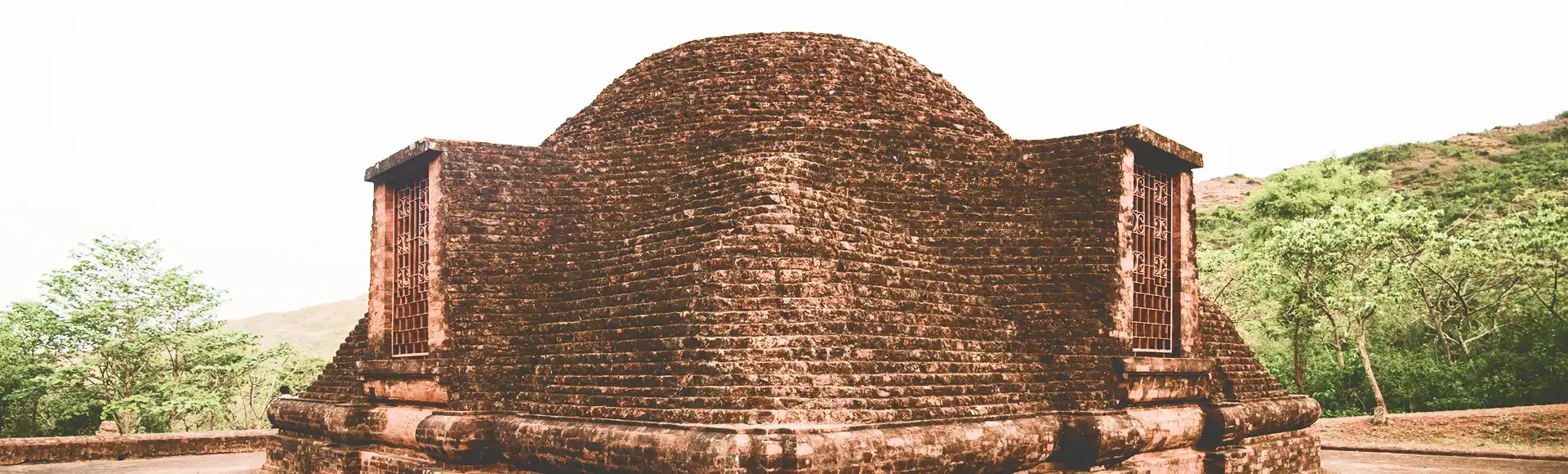
Udayagiri Monastery
Udayagiri is an extensive Buddhist archaeological complex in Jajpur, Odisha, and part of the region’s Diamond Triangle. Visitors explore its monastic remains and history of Buddhist scholarship.
Key facts · verified by Ghumoopedia editors
- Type of place
- Temple / pilgrimage site
- Best time to visit
- Oct - Mar
- Verified
- 21 Nov 2026
Plan a trip from Udayagiri Monastery — a day-by-day route through places nearby.
Set among hills in Jajpur, Odisha, Udayagiri is the largest site in the state’s Buddhist Diamond Triangle. It was an important centre of Buddhist study from the seventh to the twelfth centuries CE. The complex contains two major monasteries, Simhaprastha Mahavihara and Madhavapura Mahavihara. Stupas, shrines and tiered structures are also found here, reflecting the former centre’s scale and design. Systematic excavation of much of Udayagiri began in 1985, revealing a significant archaeological site. Its quiet setting, long history and continuing research interest draw Buddhist pilgrims, history enthusiasts and travellers exploring Odisha’s Buddhist heritage. Plan your visit around Oct - Mar. The official suggested visit duration is 2–3 hours; treat this as time at the attraction, not the complete journey from your hotel. Odisha’s coast and plains can be hot and humid, while southern hill districts may feel cooler after sunset. Heavy monsoon rain can affect road travel and access to outdoor sites. Check the local forecast before setting out, and keep a flexible alternative for bad weather. Official destination reference: https://odishatourism.gov.in/en/places/udayagiri-monastery
Why it matters
Udayagiri is a major archaeological site in Jajpur district and one of the three principal sites of Odisha’s Buddhist Diamond Triangle, alongside Ratnagiri and Lalitgiri. Odisha Tourism describes it as the largest and most expansive of the three. The monastery complex flourished as a centre of Buddhist learning between the 7th and 12th centuries CE, and its scale offers important evidence of Buddhist monastic life in the region. Its hills, monastic remains, stupas and shrines form a significant part of Odisha’s Buddhist heritage. The site is also important to archaeological study: extensive excavation brought much of the complex to wider attention from 1985 onward. Check with the managing authority for current information about its protection and visitor access.
Udayagiri developed as a major Buddhist monastic centre during a period when Buddhist institutions flourished in Odisha. It is generally associated with the 7th to 12th centuries CE, although the history of individual buildings and phases is a matter for archaeological interpretation. The complex includes two major monastic establishments, identified as Simhaprastha Mahavihara and Madhavapura Mahavihara, as well as stupas, shrines and other remains spread across the hills. Together, these structures suggest a substantial community of residents and learners, supported by religious activity and patronage. The site belongs to the wider Buddhist landscape of the region that also includes Ratnagiri and Lalitgiri. Much of Udayagiri remained buried or little understood until systematic excavation began in 1985, revealing the extent of its remains. Excavation and conservation have helped make the site accessible for study and visits, though archaeological work and interpretation may continue to develop. Visitors should rely on site information and current archaeological interpretation rather than assuming every structure has a settled date or purpose.
Origin stories & folklore
Its history is principally understood through archaeological remains and scholarly study, rather than a well-known local foundation story. The name Udayagiri is commonly rendered as “sunrise hill,” but the name alone should not be treated as proof of a particular legend or ritual. Local people may have stories or beliefs associated with the hills, Buddhist images or nearby sacred places; these can vary and should be presented as local tradition rather than verified history. If you hear such accounts, ask respectfully whether the speaker is sharing a family story, a community belief or an archaeological explanation.
Architecture & design
Udayagiri is a hilltop archaeological complex rather than a single temple building. Its remains include the two large monastic establishments known as Simhaprastha Mahavihara and Madhavapura Mahavihara, together with stupas, shrines and terraced structures. Their arrangement across the landscape gives a sense of a planned religious and educational settlement, with spaces for monastic life and devotional activity. Surviving masonry and structural remains reveal the scale of construction, while excavated levels help indicate how the complex developed over time. The visible architecture is shaped by the terrain, so the visitor route passes between separate remains rather than through one continuous monument. Some features are incomplete or weathered, and not every structure is fully explained on site. Follow marked paths and interpretive boards, and avoid climbing on masonry or entering areas closed for conservation.
Important objects & sculptures
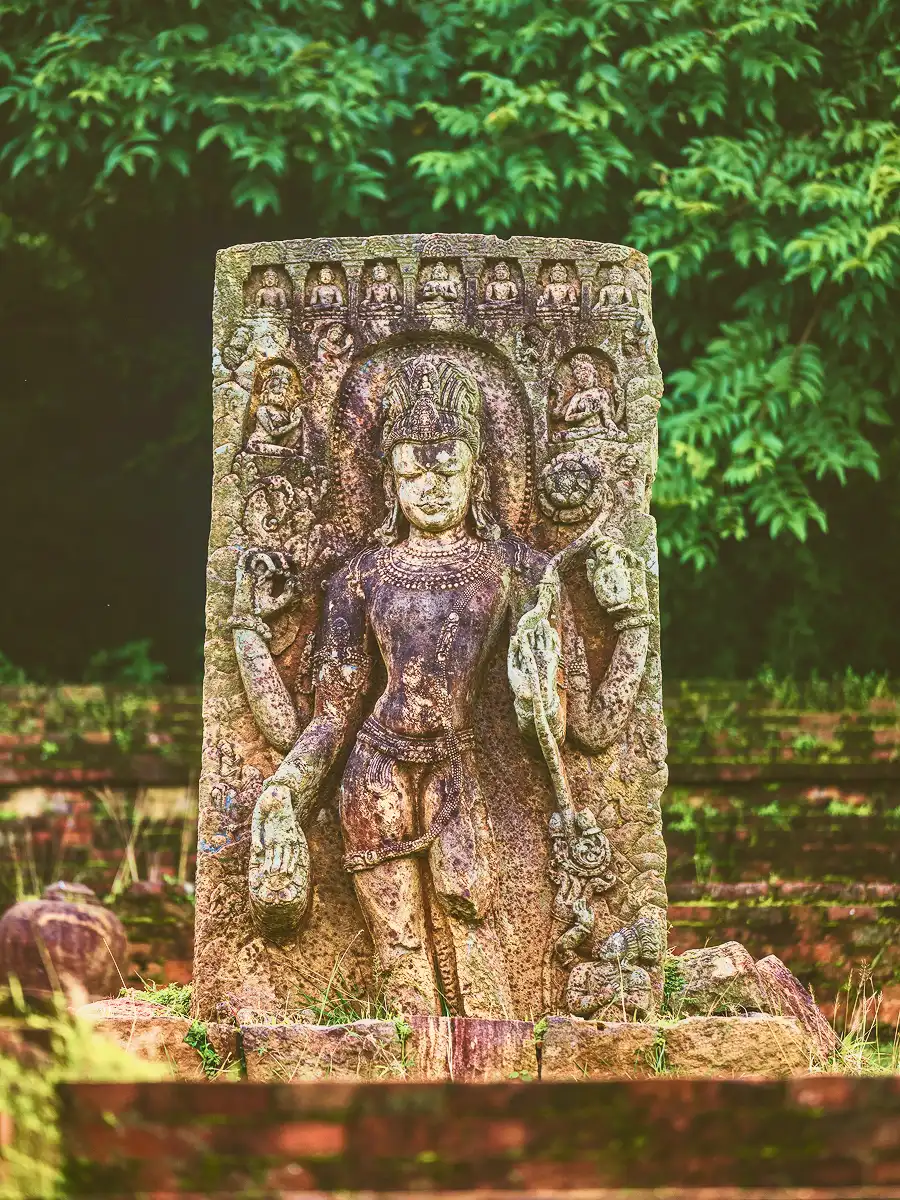
Look for the surviving Buddhist sculptures and architectural fragments displayed or visible along the visitor route, as well as the remains of stupas and shrines. Sculptural imagery can help visitors recognise the devotional character of the complex and the variety of Buddhist forms represented at the site. Excavations also revealed structural remains associated with the monasteries, giving context to the objects and carved elements. The condition and accessibility of individual pieces may change, and some finds may be kept in collections rather than displayed outdoors. Read local interpretation boards for current identifications; do not touch, move or climb on sculptures or fragments. Inscriptions and individual object attributions should be treated carefully unless identified by the site’s official information.
Religious significance
Udayagiri is a Buddhist sacred and monastic site, associated with the religious communities that lived, studied and practised here during its period of importance. The wider Buddhist heritage of Odisha includes Mahayana traditions and forms often discussed by scholars in relation to esoteric or Vajrayana Buddhism; the precise interpretation of particular images and buildings depends on archaeological evidence. Today, Udayagiri is valued by Buddhist pilgrims and visitors interested in Buddhist history, although it should not be assumed that every ruin is an active shrine or that regular ceremonies take place at the site. Visitors may encounter personal prayer or devotional visits. Give worshippers space, behave quietly around sacred images, and follow any instructions from site staff or local custodians.
Begin with the main attraction at Udayagiri Monastery and leave time to understand its setting in Jajpur. Walk the public visitor route, read local information boards and ask staff which areas are open. Choose a relaxed visit over trying to cover too many unrelated stops. Keep a simple itinerary: arrive in daylight, enjoy the main visit, take a shaded meal break, then decide whether one nearby stop fits your return plan. Use the district index to find nearby places, but check the actual road route before combining them. Reserve a little time for photographs from permitted public viewpoints and avoid blocking paths while taking pictures.
Suggested itineraries
Half day: Arrive in daylight; spend 2–3 hours walking the visitor route, viewing the monasteries, stupas and shrines, and reading site information; take a shaded break before returning. Full day: Visit Udayagiri in the morning; allow 2–3 hours at the site; take a meal break; if transport and road conditions allow, continue to Ratnagiri or another nearby attraction, then return to your base. Gentler option: Focus on the most accessible parts of the visitor route, pause often, and skip steep or uneven sections; ask locally about current path conditions.
Udayagiri’s present-day character is shaped by its archaeological landscape and its place in Odisha’s Buddhist heritage. Visitors may meet local residents, guides and pilgrims, alongside students and history enthusiasts. Odia is widely spoken in the surrounding region; Hindi and English may also be understood by some tourism workers, but availability varies. The site is not known primarily as a regular venue for scheduled music or dance performances, so visitors should not expect these as part of a visit. Customs around religious remains are generally respectful and quiet: avoid touching sacred images, keep pathways clear and ask before photographing people. Local explanations and oral memories can add perspective, but distinguish them from formally documented archaeological findings.
Festivals & events
Buddha Purnima, usually observed in spring, is an important Buddhist occasion across India and may prompt devotional visits to Buddhist heritage sites in Odisha. Jajpur’s wider religious calendar includes occasions associated with the district’s Hindu pilgrimage places, including Biraja Temple, but these are separate from Udayagiri’s Buddhist history. Larger observances can bring additional visitors and affect local traffic or accommodation availability. Confirm current arrangements with local tourism or site authorities.
For a visit to Udayagiri Monastery, plan food around your base in Jajpur and do not assume that a remote entrance has a full restaurant. Odisha offers rice-based meals, dalma, vegetable preparations and sweets such as chhena poda. Availability varies by district and outlet; ask what is freshly prepared rather than expecting every local dish at every stop. Choose busy, clean establishments and tell staff about allergies, spice preferences or dietary restrictions before ordering. Carry sealed drinking water and a small snack if you are travelling beyond a town. In hot weather, take regular water breaks instead of waiting until you feel exhausted. For early starts, arrange breakfast in advance and ask your accommodation whether a packed meal is practical. Keep all packaging with you until you find an appropriate waste bin.
Shopping & local experiences
Shopping choices immediately around the archaeological site may be limited, so do not rely on finding a wide range of souvenirs on arrival. In nearby towns, look for locally made crafts, small devotional items and regional snacks, while checking that any claimed antiquities are not archaeological objects. Jajpur’s markets can be a place to sample everyday Odia foods or buy packaged refreshments for the journey. Choose legal, locally made souvenirs and avoid purchasing old-looking sculptures, coins or fragments that may be protected heritage. Carry reusable water containers where practical and take rubbish back to an appropriate bin.
Oct - Mar
Start by choosing a practical overnight base in or near Jajpur, rather than assuming every attraction has its own railway station. Odisha Tourism lists this rail access: Nearest railway station – Jajpur Kendujhar Road (35 km) / Kataka Railway Station (60 km). The listed air access is: Nearest airport – Biju Patnaik International Airport, Bhubaneswar. Road access: Accessible by road from Jajpur Road (30 km), Kataka (62 km) & Bhubaneswar (100 km). Compare train, bus and flight options door to door. Rail can suit overnight journeys and travellers who prefer to avoid a long drive. A bus may be useful between district towns, but the last service may finish before your visit ends. A flight only saves time if airport transfers, check-in and the final road leg are included. Reserve the return leg before departure and allow time for traffic, meals and weather. Check IRCTC and NTES for trains, OSRTC for buses, and the airline’s own schedule for flights. Do not rely on an unconfirmed connection or assume taxis will wait at a remote site.
Confirm onward and return timings on IRCTC / NTES, the state bus operator or your airline before travel. A dash means current timings or fares have not been verified.
Getting around
Use Jajpur or Jajpur Road as a practical base and arrange the final road journey to Udayagiri in advance. Auto-rickshaws, hired cars and local taxis may be available in nearby towns, but availability for the return trip can vary; agree on a pickup plan before leaving. Local buses can connect district towns, though they may not serve the site entrance conveniently. The hill complex is explored on foot once you arrive. Check locally for parking and drop-off arrangements, and avoid assuming that a vehicle can reach every archaeological area. Carry water for the walk and plan your onward transport before beginning the visit.
Hours, tickets & permissions
Entry arrangements can depend on the managing authority and the condition of archaeological areas. Check locally for current opening hours, entry requirements, ticketing or any camera-related charges before setting out; do not rely on old online listings. Some areas may be closed temporarily for conservation, safety or archaeological work. Ask whether visitors need to follow a designated route, obtain permission for group visits or observe any identification requirements. Confirm current hours and fees with the managing authority, and arrive with enough daylight for the hilltop visitor route.
Facilities
Facilities at the archaeological site may be limited. Toilets, drinking water, shaded resting places and food options should be checked locally rather than assumed; carry water and any essentials you need. Small shops or refreshments may be available in nearby settlements, but choices can be limited. Parking and visitor information arrangements can vary. Guides may be available by advance or local arrangement, though this is not guaranteed. Jajpur and other nearby towns are more likely to offer broader food, banking and accommodation services. Carry cash where useful, as card or digital payment availability can vary, and confirm current facilities before travelling.
Accessibility
The site spreads across scenic hills, and visiting involves outdoor walking over uneven ground. Paths may include slopes, steps, exposed sections or rough surfaces, and the route between separate remains can require sustained walking. Shade may be limited in places, so sun protection and rest breaks are sensible. Wheelchair access and stroller suitability should not be assumed; check current route conditions with the managing authority before visiting. Older visitors and anyone with limited mobility may prefer to explore a shorter section with a companion and avoid uneven or steep areas. Wear secure footwear, carry water and allow extra time rather than rushing between structures.
At Udayagiri Monastery, local access rules take priority over any suggested itinerary. Reconfirm opening arrangements, entry eligibility, permits and weather restrictions shortly before arrival. Keep the emergency number 112 available and save your accommodation’s contact details offline. A map pin identifies a general location, not an assurance that the approach road or walking path is safe. Ask local staff which entrance visitors should use. Respect conservation barriers, residential boundaries and instructions from staff. Ask permission for portraits and avoid sharing identifiable images of local residents without consent. Carry only necessary valuables, keep rubbish out of the site, and leave enough daylight for the return journey.
Visitor rules
Follow signs, staff instructions and any temporary closures, and remain on public visitor paths. Do not climb on, touch or remove stones, sculptures or other archaeological remains. Keep voices low around religious spaces and give pilgrims room to pray. Wear practical, respectful clothing and sturdy footwear for the hill terrain. Dispose of rubbish responsibly and avoid bringing single-use plastic where restrictions apply. Ask before photographing people, and observe any limits on cameras or photography in designated areas. Do not enter fenced or restricted sections, even if they appear accessible.
Photography
Soft morning or late-afternoon light can bring out the texture of the hills and masonry; bright midday sun may be harsh, so seek permitted viewpoints and avoid blocking paths. Photography is generally a common visitor activity at archaeological sites, but confirm current camera restrictions and any charges with site staff. Do not touch or climb structures to frame a picture. Ask permission before photographing local people or anyone praying. Drone use may require separate permissions and can be restricted around heritage sites; do not launch one without explicit approval from the relevant authorities.
Choose accommodation by the complete journey to Udayagiri Monastery, not by the district name alone. A room in a well-connected town in Jajpur may offer easier transport, meals and medical access than a property advertised as being close to the attraction. Check the exact location, recent guest feedback, reception hours and cancellation terms. Ask how you will reach the site and return after the visit, especially if you are not driving. A centrally located stay can make early sightseeing and an evening return easier. Confirm whether the approach road is accessible to your vehicle and whether lifts are available. Book only through a trusted accommodation channel, avoid sending payments to an unverified personal contact, and keep written confirmation of the services included.
Ratnagiri and Lalitgiri are the other principal archaeological sites associated with Odisha’s Buddhist Diamond Triangle and can be considered for a wider Buddhist heritage itinerary. Check road conditions and travel time before combining them with Udayagiri. In Jajpur town, Biraja Temple is an important Hindu pilgrimage site and offers a different religious and architectural context; observe its separate visitor customs and rules. Langudi is another Buddhist archaeological site in Jajpur district that visitors interested in the region’s Buddhist history may wish to research. Availability of access and facilities can vary, so verify locally before setting out.
For couples visiting Udayagiri Monastery, keep the day relaxed: one main visit, a meal break and a return transfer arranged in advance. Choose public viewpoints for photographs and respect religious or community expectations around behaviour and clothing. Confirm the accommodation’s check-in requirements before booking. Avoid secluded paths after dark and do not trade a safe return plan for a late photograph. A quieter weekday may suit you, but opening and access arrangements still need local confirmation.
Q: How much time should I allow for Udayagiri? A: The suggested time at the attraction is 2–3 hours. Add separate time for the road journey and breaks. Q: When is the best season to visit? A: October to March is the recommended period. Check the forecast, as heavy monsoon rain can affect roads and outdoor visits. Q: Is there an entry ticket? A: Entry arrangements and any fees can change. Confirm current requirements with the managing authority before travelling. Q: Can children and elderly visitors explore the site? A: They can visit, but the hill terrain may be uneven or sloping. Choose a manageable route, take breaks and supervise children near ruins. Q: Where should I stay nearby? A: Consider Jajpur or Jajpur Road as an overnight base, and confirm accommodation and onward transport availability before your trip.
Be the first to share photos, stories, advice or a helpful contact for Udayagiri Monastery.
Loading…