
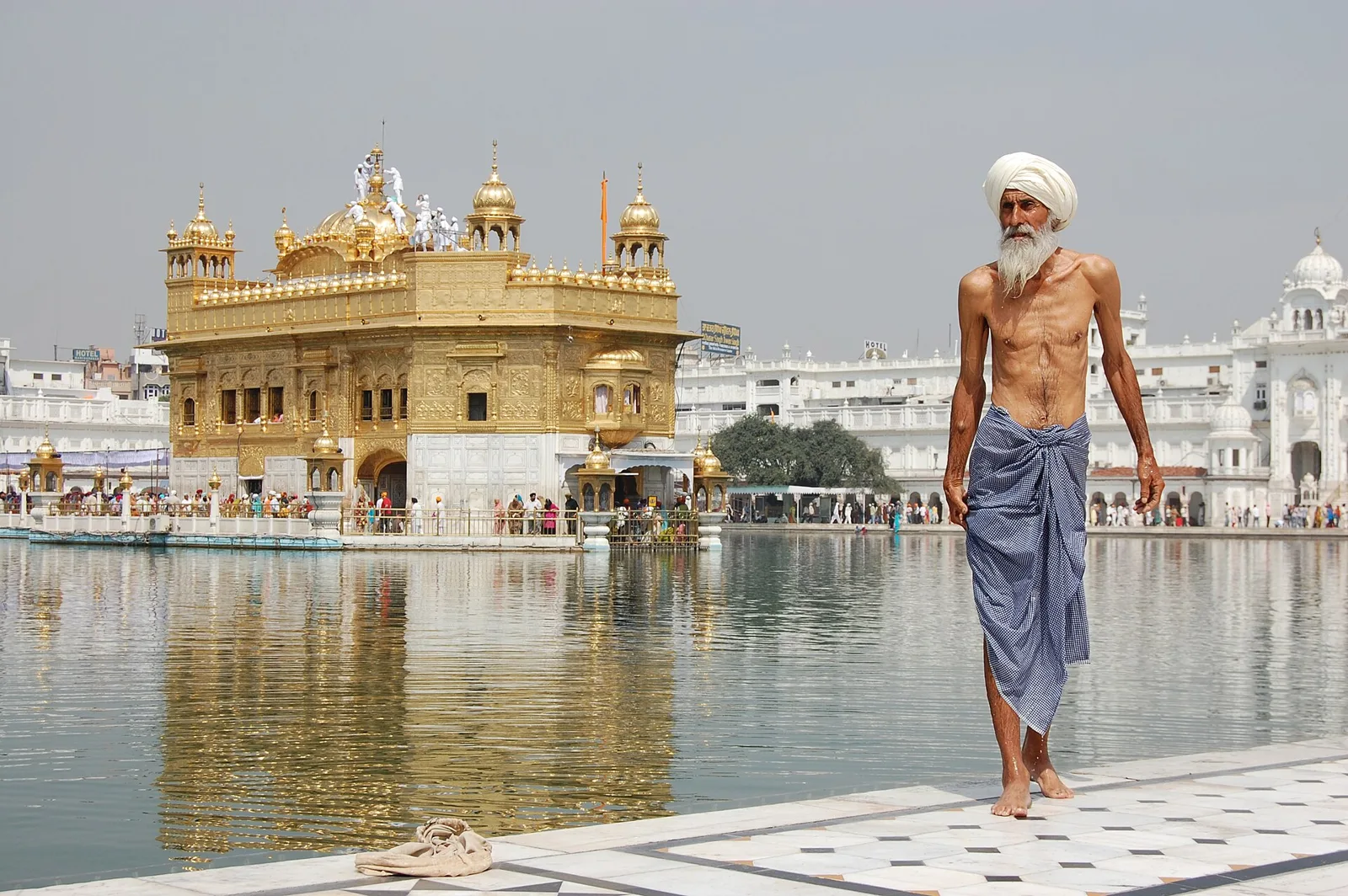
Golden Temple
A major Sikh shrine in Amritsar, the Golden Temple draws worshippers to its sacred sanctuary and pool, while its langar welcomes visitors to a free vegetarian meal.
Key facts · verified by Ghumoopedia editors
- Type of place
- Temple / pilgrimage site
- Best time to visit
- October to March
- Nearest railway station
- Amritsar Junction · about 5 km (straight line)
- Verified
- 21 Nov 2026
Plan a trip from Golden Temple — a day-by-day route through places nearby.
The Golden Temple is Sikhism’s foremost place of worship and its most sacred shrine. Its central sanctuary stands within a larger group of buildings beside the Amrit Sarovar, the revered water tank. Among the complex’s key institutions is Akal Takht, one of the Panj Takht, or five Sikh seats of authority, and the faith’s principal centre for religious leadership. The grounds also contain a clock tower, offices of the Shiromani Gurdwara Parbandhak Committee and a museum. A langar, maintained by the Sikh community, serves vegetarian food to visitors without distinction and at no charge. Each day, more than 150,000 people come to worship, making the shrine one of the world’s most frequently visited religious places. The sacred pool was completed in 1577 under the direction of Guru Ram Das, the fourth Sikh Guru. Guru Arjan brought the building work to completion and, in 1604, installed the Adi Granth there; his contribution was central to the shrine’s growth. Sikh communities rebuilt the complex on repeated occasions after persecution, including following destruction by Mughal forces and Afghan invaders. In 1809, Maharaja Ranjit Singh had the buildings reconstructed using marble and copper. Gold leaf was added to the sanctuary in 1830, giving rise to the name by which the site is widely known. The shrine figured in Sikh public life. From 1883 into the 1920s, it served as a focal point of the Singh Sabha Movement; it was also associated with the Punjabi Suba Movement, active from 1947 to 1966. The complex has been proposed for UNESCO World Heritage recognition, and its application remains on the organisation’s tentative list. Its religious role, community services and history shape its importance to Sikhs and to visitors who come for worship. Punjab's identity is shaped by Sikh heritage, gurdwara traditions of seva and langar, Bhangra and Giddha, and a strong farming culture. Punjab has hot summers from April to June, a monsoon from July to September, and cold, foggy winters from December to February. Winter fog can delay trains and flights. The usual best time to visit is October to March. Timings, fees and access arrangements must be confirmed locally. For official information, see Punjab Tourism at https://punjabtourism.gov.in.
Why it matters
The Golden Temple, also called Harmandir Sahib, is a gurdwara in Amritsar and the pre-eminent spiritual centre of Sikhism. Sikhs from India and around the world come here to worship, listen to the Guru Granth Sahib and take part in seva, or selfless service. The complex also matters to the wider region as a place of community gathering, learning and welcome, with its langar serving visitors without discrimination. Akal Takht, within the complex, is one of Sikhism’s five seats of authority. UNESCO lists the Golden Temple complex on its Tentative List; it is not a World Heritage Site. It is an active place of worship, not an Archaeological Survey of India monument.
The history of the site is associated with the development of Amritsar under the Sikh Gurus. The pool, now called the Amrit Sarovar, was begun under Guru Ram Das and is traditionally dated to 1577. Guru Arjan, the fifth Sikh Guru, oversaw the development of the shrine and, in 1604, installed the Adi Granth there. The Sikh community later established Akal Takht as a centre of religious authority. The shrine was attacked and rebuilt several times during periods of persecution, including incursions by Mughal and Afghan forces. In the early nineteenth century, Maharaja Ranjit Singh supported its rebuilding, including work in marble and copper; gold leaf was applied to the sanctum in 1830, giving rise to its familiar English name. The complex became a focal point for Sikh reform and political movements, including the Singh Sabha Movement and the Punjabi Suba Movement. In 1984, military action at the complex caused damage and loss of life; the site was subsequently repaired and restored. Its buildings and management continue to be maintained by the Sikh community and its institutions.
Origin stories & folklore
According to local tradition, the pool at the heart of the complex has spiritual associations with purification and healing. Stories about its waters are expressions of faith and should not be taken as medical claims. Some accounts also say that the Sufi saint Mian Mir was invited to lay the foundation stone of the shrine, reflecting a tradition of respect across religious communities; versions of this story differ. The Golden Temple’s open approaches are often understood by worshippers as a sign that people of every background may come to seek spiritual solace. These stories form part of the place’s living memory, alongside its documented history.
Architecture & design
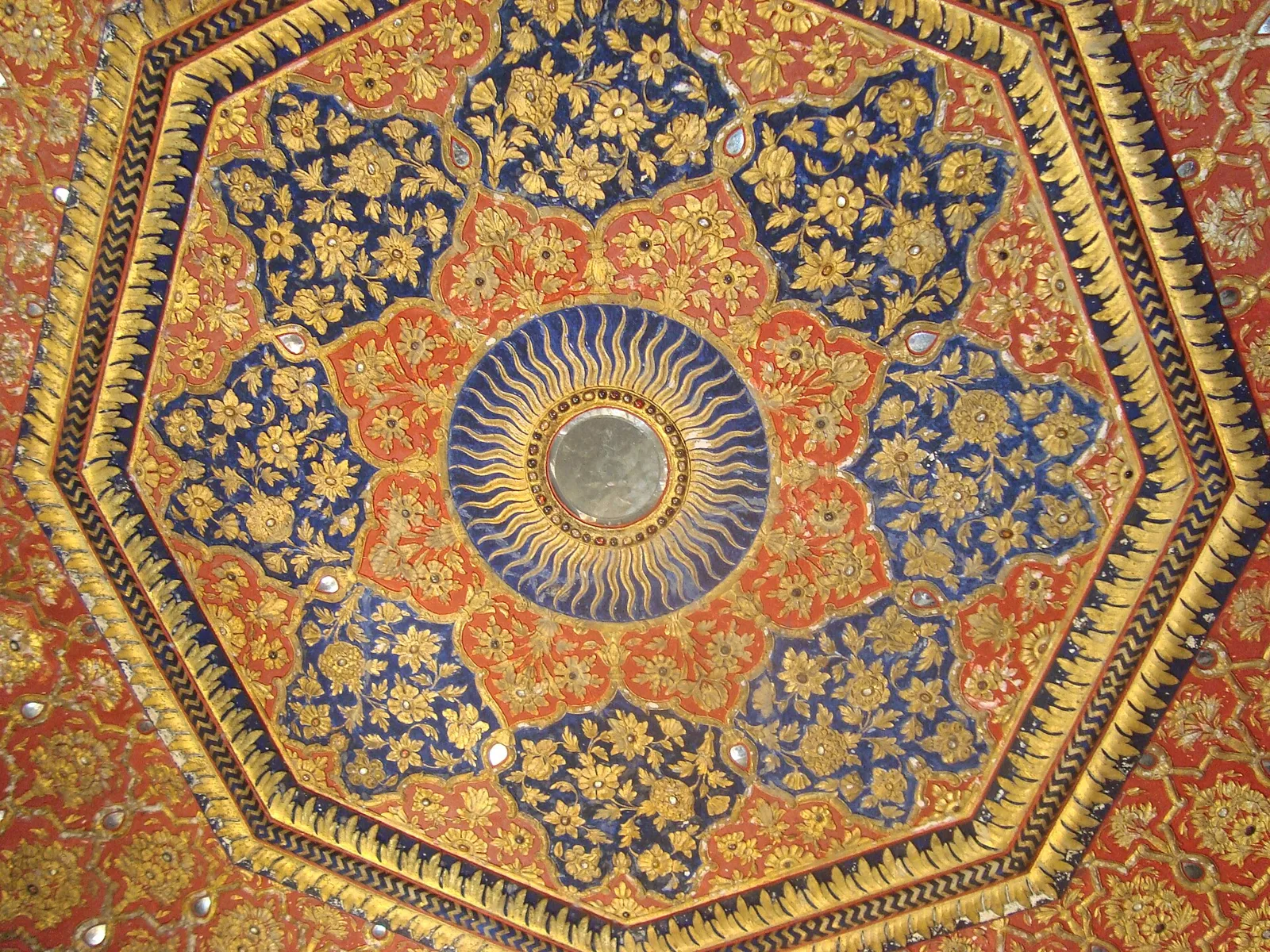
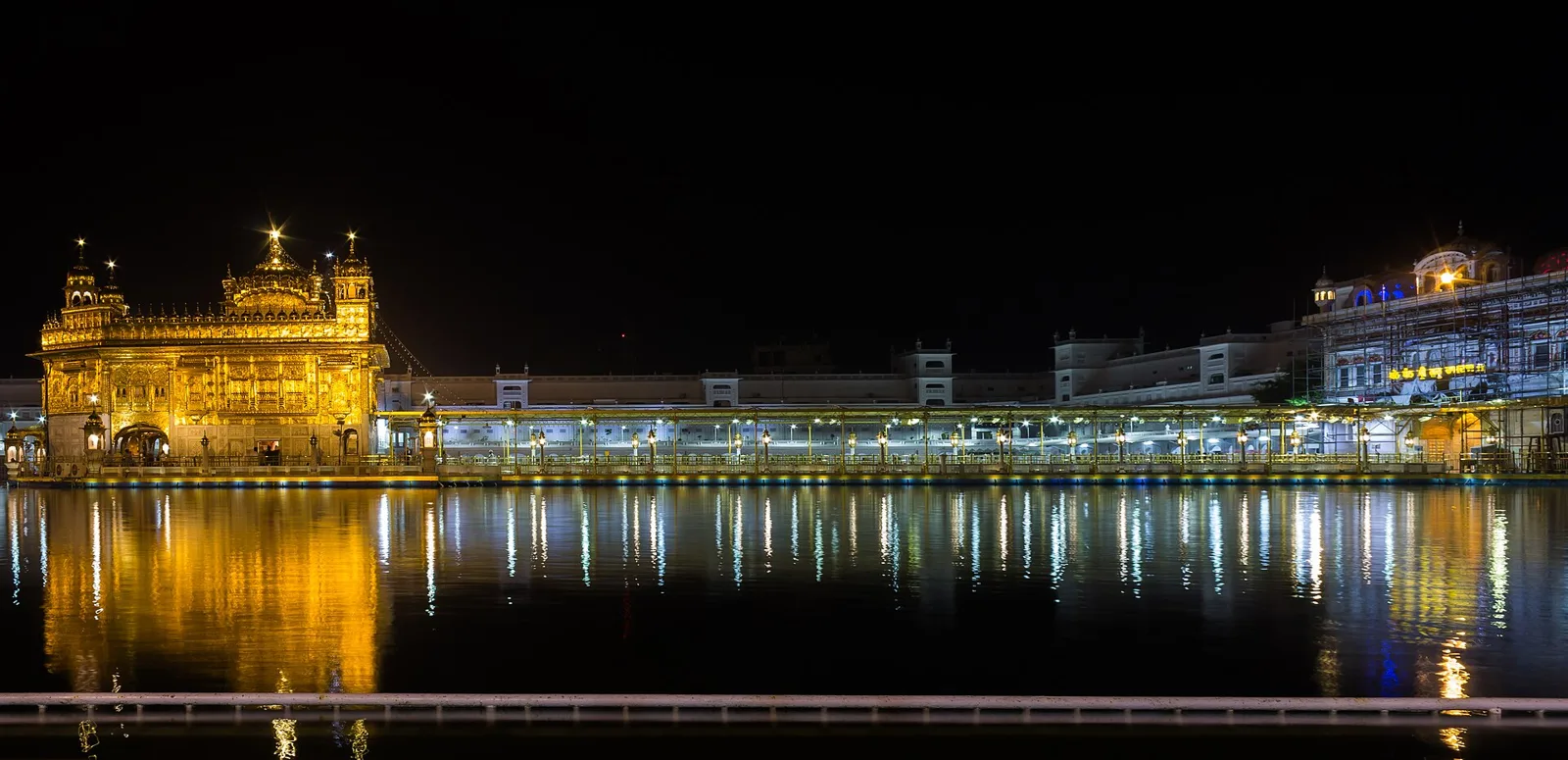
The complex is arranged around the rectangular Amrit Sarovar, with the gilded sanctum standing within the sacred pool and linked to the surrounding marble walkway by a causeway. The sanctum’s lower portions use marble, while its upper levels and dome feature gold covering and decorative work. The broader complex includes courtyards, gateways, the Akal Takht, a clock tower, offices, a museum and the community kitchen. The four entrances are commonly interpreted as welcoming people from all directions and backgrounds. Visitors encounter carved and inlaid marble, floral motifs, painted surfaces and ornamental metalwork. The pool and causeway shape the movement of worshippers around and towards the sanctum. Buildings from different periods reflect repeated rebuilding and additions, rather than a single uniform architectural style. Remove footwear and cover the head before entering the worship areas.
Important objects & sculptures
The most important sacred object is the Guru Granth Sahib, treated by Sikhs as the living Guru. Visitors may see it being carried or installed according to the day’s worship arrangements; observe quietly and follow staff instructions. The Akal Takht is a significant institution and building within the complex, rather than simply a display object. Look for decorative marble inlay, painted and gilded surfaces, metalwork and inscriptions on buildings, while remembering that some areas may be closed to visitors. The complex’s museum presents material connected with Sikh history and heritage; its displays and access arrangements can change. There are no central idols in Sikh worship, so visitors should not expect a shrine organised around deity statues.
Religious significance
The Golden Temple is a gurdwara, a Sikh place of worship, and is especially important because of its association with the Guru Granth Sahib and the Sikh Gurus. Worshippers listen to the recitation and singing of scripture, offer prayers and walk around the Amrit Sarovar. Hymns, known as kirtan, are central to the devotional atmosphere. The langar embodies seva and the principle that people should share a meal without discrimination. Visitors of any faith may enter areas open to the public, provided they respect the gurdwara’s practices. Covering the head, removing shoes and keeping the feet clean are customary requirements. Ask before approaching any religious activity, and avoid interrupting worshippers or the movement of scripture.
Visit Golden Temple with time to observe daily rituals respectfully. Follow the posted rules on footwear, photography, head covering and dress, walk clockwise around shrines, and avoid interrupting worshippers. Ask caretakers which areas are open to visitors. A comfortable itinerary is one main visit in the morning, a local meal at midday and a short nearby stop before an afternoon return. Use the district list on this site to find other places in Amritsar, but check the actual road route and its condition before combining stops. If a festival or fair is on, local roads and stays can be busy — and the experience can be unforgettable. Leave no litter: many sites are protected by the communities around them.
Suggested itineraries
Half day: Allow 2–3 hours for entry, the sanctum, a respectful walk around the sarovar and langar; add 1–2 hours for Jallianwala Bagh if desired. Full day: Spend the morning at the Golden Temple (2–3 hours), take a midday langar or local meal, then visit Jallianwala Bagh and the Partition Museum (about 1–2 hours each); leave travel time between stops. Gentler option: Focus on the accessible areas you can comfortably reach, take seated rests, and shorten the circuit rather than trying to see every building.
The complex is a living centre of Sikh community life, where worship, service and hospitality are visible throughout the day. Volunteers help prepare and serve langar, clean shared spaces and assist visitors. Kirtan and the recitation of scripture shape the soundscape. Punjabi is widely spoken, alongside Hindi and English among visitors and staff. Modest clothing and a covered head are customary inside the complex, and visitors remove their shoes before entering. The wider region is known for Punjabi traditions, including Bhangra and Giddha, but these are not performances to expect within the prayer spaces. The atmosphere is devotional; speak softly and allow worshippers room to participate.
Festivals & events
The complex is especially busy during major Sikh observances, including Vaisakhi, usually in spring, and the Gurpurabs commemorating the Sikh Gurus, whose dates follow the Sikh calendar. Bandi Chhor Divas, which coincides with Diwali in the season of autumn, is marked with prayers and illumination. The surrounding city also observes Hindu festivals, though celebrations and access arrangements vary. Large gatherings can bring dense crowds, queues and road disruption around the shrine. Check current notices before travelling, allow extra time and follow instructions from the gurdwara authorities and local officials.
Local food in Punjab includes sarson da saag with makki di roti, Amritsari kulcha, chole bhature, lassi, tandoori dishes, pinni and jalebi; langar at gurdwaras serves a free vegetarian meal to all. Ask what is fresh that day; many small eateries cook a limited daily menu. Vegetarian travellers eat very well across this region, and most towns also have simple non-vegetarian dhabas. Remote sites may have no restaurant at all. Carry water and snacks, eat a proper breakfast before long drives, and ask your accommodation for a packed lunch if you are heading out early. If langar or prasad is offered at the shrine, accept it according to local custom — gurdwara langar is free and open to everyone. Choose busy, clean places and carry your packaging back to town.
Shopping & local experiences
Markets in the old city, including Hall Bazaar and Katra Jaimal Singh, offer Punjabi textiles and crafts. Look for phulkari embroidery, juttis, traditional metalware and locally made souvenirs, while checking workmanship and asking before photographing sellers or stalls. Amritsar is also known for papad and warian, which are food products rather than temple offerings. Nearby eateries serve Punjabi dishes, but choose a meal that suits your dietary needs. Keep purchases and packaging minimal around the shrine, and do not leave litter in the streets or complex.
October to March
The nearest principal railway station by straight-line distance is Amritsar Junction, roughly 5 km away. The nearest operating airport by straight-line distance is Sri Guru Ram Dass Jee International Airport, Amritsar, roughly 15 km away. These figures are calculated from map coordinates — actual road distance may differ. Delhi, Chandigarh and Amritsar are the main rail and air hubs, and most long-distance journeys connect through them. For the final leg, Punjab Roadways, PEPSU Road Transport (PRTC) and private Volvo coaches link district towns; shared taxis usually leave early in the morning. A private taxi gives more flexibility for remote sites. When comparing train, bus and flight, count the complete door-to-door time: a flight saves the most time only if the onward road transfer is short, while an overnight train plus a road journey can save a hotel night. Book your return before you leave, because seats fill quickly on weekends and holidays. Current train numbers, timings, return services and fares are not listed here; check IRCTC and NTES for trains and the airline's own schedule for flights. No permit is needed to visit Punjab. The Wagah–Attari border ceremony needs a same-day security check, and the Kartarpur Corridor to Pakistan requires advance online registration and a passport.
Confirm onward and return timings on IRCTC / NTES, the state bus operator or your airline before travel. A dash means current timings or fares have not been verified.
Getting around
Amritsar Junction and the airport connect the city with other parts of India; local autos, taxis and app-based services can take visitors towards the old city, subject to traffic and access restrictions. The lanes near the complex are often congested, so the final approach may be easier on foot from a suitable drop-off point. Local buses serve parts of the city, but routes may not reach the entrance directly. Parking is available in the wider area, though spaces and access can be limited during busy periods. Ask locally about current vehicle restrictions and use marked pedestrian routes around the complex.
Hours, tickets & permissions
Entry for worship generally does not require a standard admission ticket, but access to particular buildings, museum displays or services may have separate rules. Head covering and removal of footwear are required in worship areas; dress should be respectful. Camera use and access to restricted areas are governed by posted notices and staff instructions. There may be security checks, and visitors should not bring prohibited items. Policies and public access can change during ceremonies, maintenance or high-attendance events. Confirm current opening arrangements, rules and any fees for specific facilities with the gurdwara’s managing authority before setting out.
Facilities
The complex has a free community langar, drinking water and shoe-storage arrangements; head coverings may be available, but check locally. Toilets and other visitor facilities are generally available in or near the complex, though locations and access can vary. The surrounding city has restaurants, ATMs, pharmacies and accommodation. Parking and visitor assistance may be limited or affected by crowd levels. Information staff or volunteers can usually help with directions and basic questions; specialist guided tours should be arranged or confirmed in advance. Follow signs and ask before entering staff-only or service areas.
Accessibility
Expect substantial walking, queues and busy pedestrian areas, with marble surfaces that may be wet or slippery near the sarovar. The outer walkway is largely level, but steps, thresholds and crowding can make some routes difficult. Visitors must remove shoes, which may be uncomfortable or impractical for some people. Shade and seating are not consistent throughout the complex; plan rest breaks and carry any needed mobility support. Wheelchair and stroller access may be constrained by steps, narrow passages and crowds, so confirm current arrangements with the managing authority before visiting. Older visitors may find a shorter visit and an off-peak period more manageable.
No permit is needed to visit Punjab. The Wagah–Attari border ceremony needs a same-day security check, and the Kartarpur Corridor to Pakistan requires advance online registration and a passport. Carry a photo ID at all times and save the emergency number 112 and your accommodation's contact offline. Heat in summer and dense fog in winter are the main weather risks; carry water and allow extra travel time on foggy December–January mornings. Respect community rules, private property and posted instructions. Check official advisories for the region before travel, and follow local guidance if access changes.
Visitor rules
Cover your head and remove shoes before entering the worship areas; wash or clean your feet where directed. Wear respectful clothing and keep voices low. Do not obstruct worshippers, ceremonies or the movement of the Guru Granth Sahib. Follow signs and staff instructions about photography, restricted areas, security checks and permitted belongings. Do not litter, damage surfaces or leave plastic behind. Ask before touching objects or joining a ritual, and use the langar respectfully. The complex is an active gurdwara, so visitor convenience does not take priority over worship and community service.
Photography
Light around the sarovar and gilded sanctum can be especially appealing in the early morning or later in the day, but conditions and access vary. Photography rules differ across the complex and may change; follow posted notices and ask staff if unsure. Do not photograph where prohibited, disrupt worship or aim a camera at people in prayer without permission. Keep devices silent and avoid blocking walkways for a picture. Drone use should not be attempted without explicit permission from the relevant authorities; security restrictions may apply. Respect worshippers who do not wish to be photographed.
Choose a stay by the full journey to Golden Temple, not just the district name. Main towns in Amritsar usually offer hotels, state tourism lodges and guesthouses with better transport, meals and medical access, while village homestays offer a closer connection to local life. In the plains, check fans or air-conditioning in summer and heating in the December–January cold wave. Book in advance for weekends, festival dates and the peak season (October to March). Confirm the exact location, meals included, check-in time and cancellation terms in writing. Many homestays accept payment on arrival; avoid sending money to unverified contacts. Mobile network and digital payments can be unreliable in remote areas, so carry some cash.
Jallianwala Bagh, a memorial garden and museum, is close to the complex and can be combined with a visit. The Partition Museum in Amritsar presents personal accounts and material relating to Partition. Durgiana Temple is another prominent place of worship in the city. Gobindgarh Fort has heritage displays and visitor activities, whose availability should be checked locally. The Attari-Wagah border ceremony is a popular outing outside the city; travel and entry arrangements can change, so check before planning it. Traffic and crowds may make it impractical to fit all these stops into one day.
For couples, Golden Temple rewards a slow pace: arrive early for soft light and fewer crowds, share a local meal and keep the evening free. Public displays of affection can be frowned upon in conservative communities and at religious sites, so be discreet. A homestay or a small heritage hotel can make the trip memorable — confirm privacy, hot water and transport back. Keep a buffer in your itinerary, because weather and traffic can delay plans in Punjab.
Q: How much time should I allow for a visit? A: Allow a few hours for the sanctum, the sarovar and, if you wish, langar. Crowds and ceremonies can extend the visit. Q: When is a good season to visit? A: October to March is generally comfortable in Punjab, though winter fog can affect travel. Expect heavier crowds during major Sikh observances. Q: Is there an entry ticket? A: Worship access generally has no standard admission ticket. Confirm current access rules and any charges for particular facilities with the managing authority. Q: Can children and older visitors visit? A: Yes, but expect walking, queues, bare feet and crowded areas. Plan rests, supervise children and check accessibility arrangements if needed. Q: Where can I stay nearby? A: Amritsar has accommodation across a range of areas and types. Staying in the city makes access easier, but check location, transport and current availability before booking.
Be the first to share photos, stories, advice or a helpful contact for Golden Temple.
Loading…