
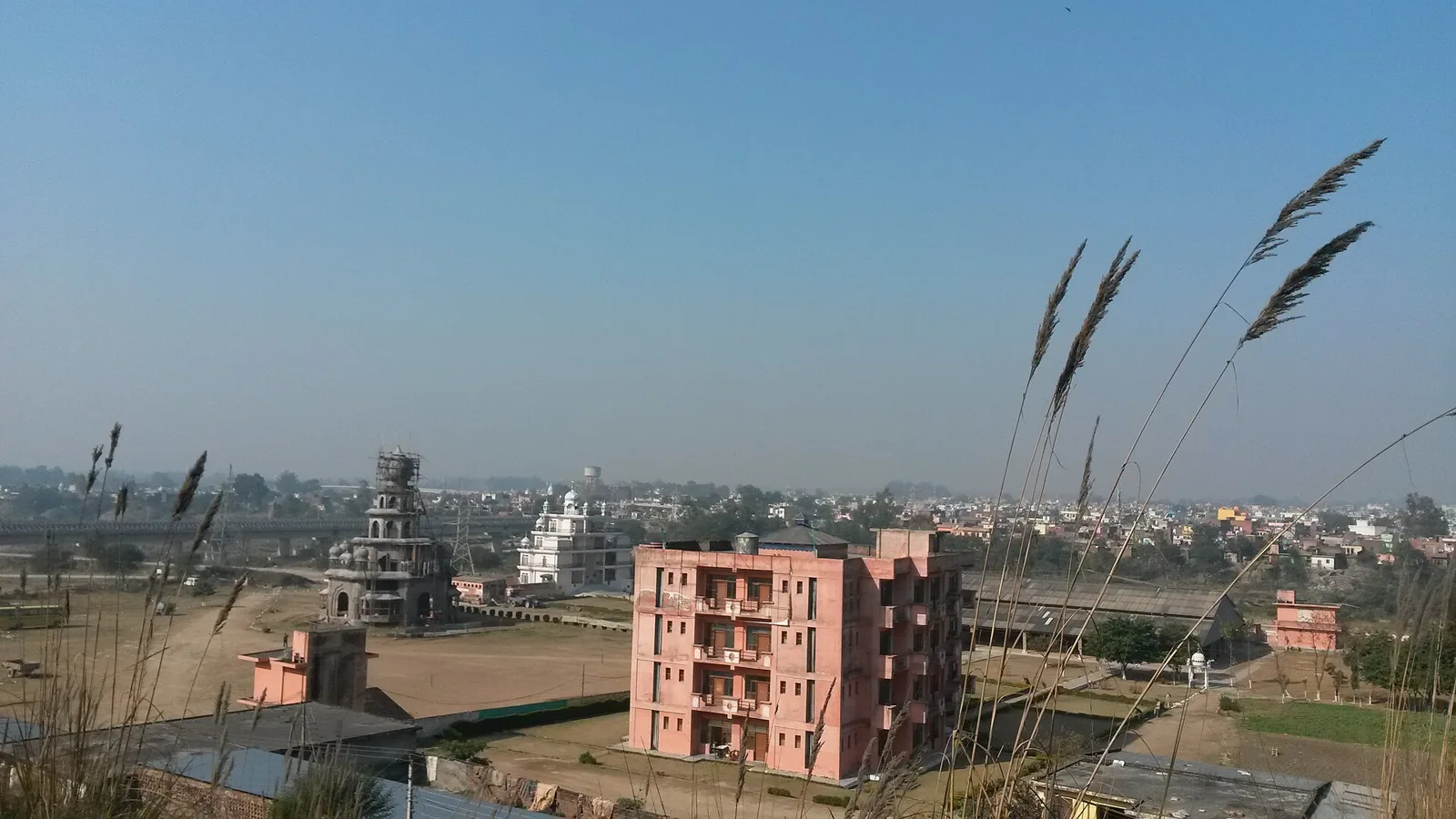
Pathankot
Pathankot is a city in Punjab and the administrative centre of Pathankot district. Its position close to Himachal Pradesh makes it a convenient point of access to the neighbouring state.
Key facts · verified by Ghumoopedia editors
- Type of place
- Destination
- Best time to visit
- October to March
- Nearest railway station
- Pathankot Junction · about 5 km (straight line)
- Nearest airport
- Pathankot Airport · about 5 km (straight line)
- Verified
- 21 Nov 2026
Plan a trip from Pathankot — a day-by-day route through places nearby.
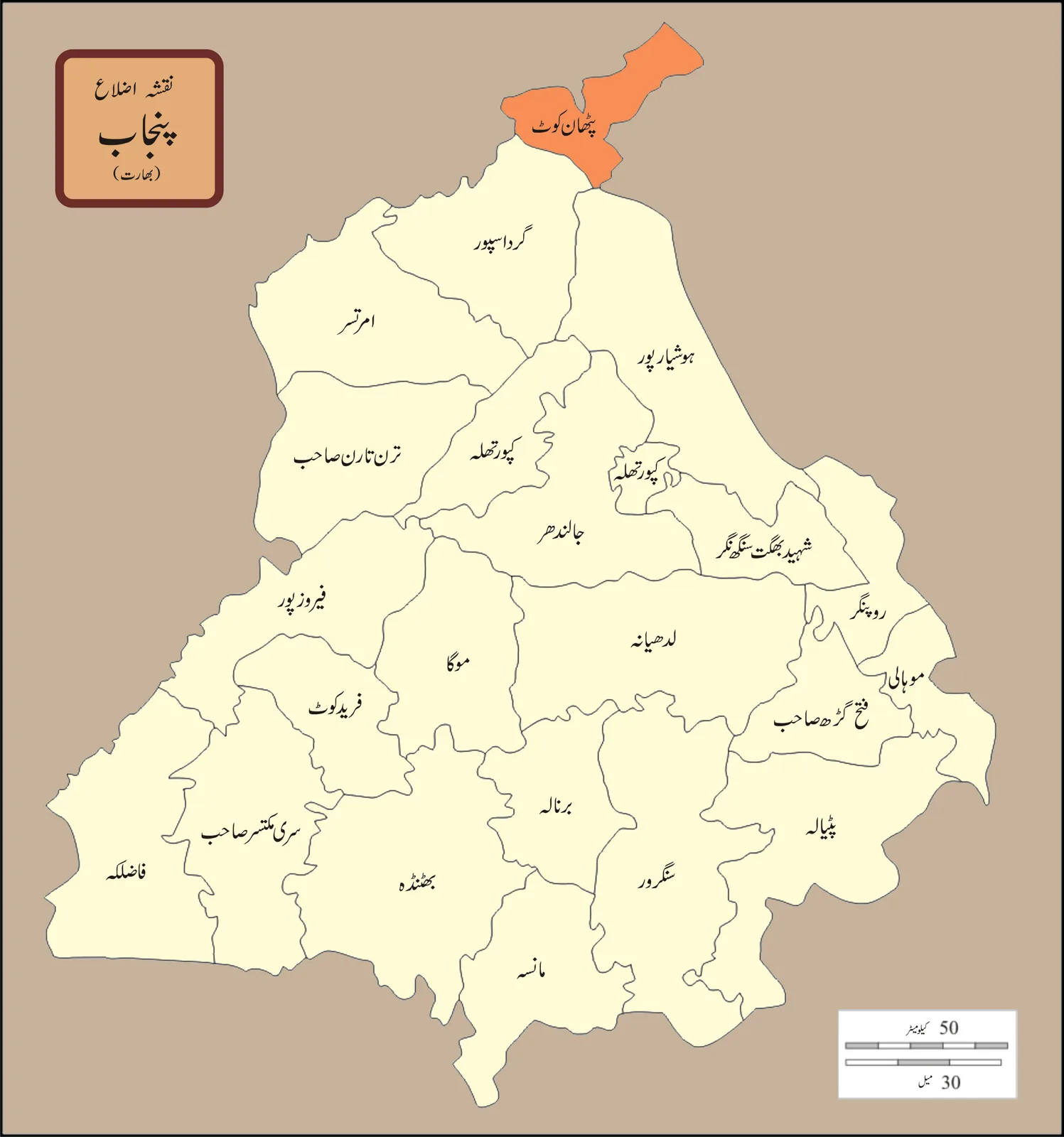
Set in the northern part of Punjab, Pathankot is both a city and the administrative centre of the district that bears its name. The city is governed by a municipal corporation. Among Punjab’s cities, Pathankot has the state’s sixth-largest population, after Ludhiana, Amritsar, Jalandhar, Patiala and Bathinda. It lies close to Kangra district in Himachal Pradesh, just beyond the state boundary. This proximity has led to Pathankot being called the Gateway to Himachal. Its location makes it a useful point of passage for people travelling towards Himachal Pradesh. Punjab's identity is shaped by Sikh heritage, gurdwara traditions of seva and langar, Bhangra and Giddha, and a strong farming culture. Punjab has hot summers from April to June, a monsoon from July to September, and cold, foggy winters from December to February. Winter fog can delay trains and flights. The usual best time to visit is October to March. Timings, fees and access arrangements must be confirmed locally. For official information, see Punjab Tourism at https://punjabtourism.gov.in.
Why it matters
Pathankot is a city in northern Punjab and the administrative headquarters of Pathankot district. Its position near the borders with Himachal Pradesh and Jammu and Kashmir has made it a regional transport and service centre for journeys between the Punjab plains and the neighbouring hill regions. Rail and road connections, along with nearby defence and transport infrastructure, contribute to its importance. The district was formed in 2011 from parts of Gurdaspur district. The city is also a practical base for exploring parts of the surrounding district and nearby foothills. No UNESCO designation or specific national heritage status is asserted here; check with the relevant authority before visiting individual historic or religious sites.
The area's past is closely connected with the hill states and communities of the northern Punjab-Himachal frontier. Local histories associate the name Pathankot with the Pathania Rajputs and the former kingdom of Nurpur, whose influence extended across parts of the region. Accounts of the city's early origins differ, so a single founding date or builder cannot be stated with confidence. The wider area experienced changing political control over successive periods, including Mughal, Sikh and British rule, as boundaries and regional powers shifted. Pathankot's modern growth was shaped less by a single monument than by its location at the meeting point of routes toward the hills and the plains. Rail and road links strengthened its role as a transport and commercial centre, while military infrastructure also became part of the area's contemporary identity. In 2011, Pathankot became the headquarters of a newly created district, separated from Gurdaspur district. Historic structures and places of worship in and around the city have their own local histories; visitors should consult their custodians for reliable details about construction, conservation or access.
Use Pathankot as a base to understand local life: walk through the market area, visit community-run attractions and ask your host about nearby viewpoints and short excursions. Always ask before photographing people, homes or ceremonies. A comfortable itinerary is one main visit in the morning, a local meal at midday and a short nearby stop before an afternoon return. Use the district list on this site to find other places in Pathankot, but check the actual road route and its condition before combining stops. If a festival or fair is on, local roads and stays can be busy — and the experience can be unforgettable. Leave no litter: many sites are protected by the communities around them.
Suggested itineraries
Half day: Explore the central market area (1–2 hours), visit a local place of worship with permission and appropriate dress (about 1 hour), then pause for a Punjabi meal (about 1 hour). Full day: Begin with a city market walk (1–2 hours), visit a local place of worship (about 1 hour), travel to one nearby attraction such as Mukteshwar Temple or the Ranjit Sagar Dam area (allow several hours including the drive), then return to the city for a meal. Gentler option: Choose one central market or worship-site visit, use a taxi for transfers, and build in seated breaks; confirm step-free access with the site before going.
Pathankot's culture reflects its position between Punjab's plains and the neighbouring hill regions. Punjabi is widely spoken, while Hindi and Dogri may also be heard in everyday life. Sikh heritage is visible in gurdwara traditions of seva and langar, alongside Hindu places of worship and customs shared across the region. Bhangra and Giddha are familiar Punjabi dance forms, especially at celebrations, and seasonal gatherings may feature Punjabi folk music. Dress and daily customs vary; visitors will encounter both contemporary urban life and strong family and community ties. At religious sites, follow local guidance, dress respectfully and ask before taking photographs.
Festivals & events
Baisakhi in spring, Lohri in winter, and Diwali and Dussehra in autumn are observed in the city and surrounding region. Sikh Gurpurabs are marked at gurdwaras according to the religious calendar, often with prayers and langar. Nearby temples may hold local observances or fairs, but programmes vary by shrine and year; confirm with local organisers before travelling. Festival periods can bring heavier traffic, fuller accommodation and crowds around places of worship and market areas. Be considerate during ceremonies and follow any directions from organisers.
Local food in Punjab includes sarson da saag with makki di roti, Amritsari kulcha, chole bhature, lassi, tandoori dishes, pinni and jalebi; langar at gurdwaras serves a free vegetarian meal to all. Ask what is fresh that day; many small eateries cook a limited daily menu. Vegetarian travellers eat very well across this region, and most towns also have simple non-vegetarian dhabas. Remote sites may have no restaurant at all. Carry water and snacks, eat a proper breakfast before long drives, and ask your accommodation for a packed lunch if you are heading out early. Try a home-cooked or dhaba meal when you can — it is often the best food on the route. Choose busy, clean places and carry your packaging back to town.
Shopping & local experiences
Pathankot's market areas are practical places to browse for everyday Punjabi clothing, household goods, sweets and snacks. Shops may carry regional food products and seasonal festival items, though availability changes. Look for local sweet-shop specialities or Punjabi snacks as a food experience rather than assuming a particular craft is unique to the city. Ask vendors about ingredients if you have dietary restrictions. Carry a reusable bag, compare goods between shops and seek permission before photographing stallholders or their displays.
October to March
The nearest principal railway station by straight-line distance is Pathankot Junction, roughly 5 km away. The nearest operating airport by straight-line distance is Pathankot Airport, roughly 5 km away. These figures are calculated from map coordinates — actual road distance may differ. Delhi, Chandigarh and Amritsar are the main rail and air hubs, and most long-distance journeys connect through them. For the final leg, Punjab Roadways, PEPSU Road Transport (PRTC) and private Volvo coaches link district towns; shared taxis usually leave early in the morning. A private taxi gives more flexibility for remote sites. When comparing train, bus and flight, count the complete door-to-door time: a flight saves the most time only if the onward road transfer is short, while an overnight train plus a road journey can save a hotel night. Book your return before you leave, because seats fill quickly on weekends and holidays. Current train numbers, timings, return services and fares are not listed here; check IRCTC and NTES for trains and the airline's own schedule for flights. No permit is needed to visit Punjab. The Wagah–Attari border ceremony needs a same-day security check, and the Kartarpur Corridor to Pakistan requires advance online registration and a passport.
Confirm onward and return timings on IRCTC / NTES, the state bus operator or your airline before travel. A dash means current timings or fares have not been verified.
Getting around
Auto-rickshaws and taxis are useful for short trips around the city; agree on the destination before setting off and confirm arrangements directly with the driver. Local buses connect parts of the city and surrounding settlements, though routes may not serve every attraction conveniently. Walking can work for a short visit to a compact market area, but traffic and uneven pavements call for care. For sites outside the centre, a private taxi offers flexibility; ask locally about road conditions and access restrictions. Check parking availability at each destination rather than assuming it is provided.
Hours, tickets & permissions
Pathankot is a working city, and its public streets and markets do not have a single visitor-entry schedule. Individual temples, gurdwaras, forts and dam-area facilities may have their own access rules, including restrictions during ceremonies or security checks. Some places may require visitors to remove footwear or follow modest-dress rules; photography and vehicle access can also be limited. Confirm current opening arrangements, entry rules and any fees with the managing authority or site custodians before setting out.
Facilities
As a district headquarters, Pathankot generally has food shops, restaurants, banks, ATMs and accommodation in the city. Toilets and drinking-water access vary between public places and individual attractions; carry water and check locally. Larger religious or community sites may provide basic visitor facilities, but services are not guaranteed. Parking, interpretation and guided visits depend on the specific site. Smaller or more remote attractions may have limited food, toilets or mobile connectivity, so plan necessities in town and confirm facilities before travelling.
Accessibility
Accessibility depends on the place visited. Central streets and market lanes can be busy, with uneven surfaces, kerbs and limited room to move; outdoor sites may involve steps, sloping paths or unpaved ground. Shade and seating are not assured, particularly away from the city centre. Do not assume that historic buildings or religious sites have ramps, accessible toilets or wheelchair-friendly routes; contact the custodian in advance to ask about the entrance and surfaces. Strollers may be difficult on crowded or uneven paths. Elderly visitors may find a taxi, shorter visits and rest breaks helpful.
No permit is needed to visit Punjab. The Wagah–Attari border ceremony needs a same-day security check, and the Kartarpur Corridor to Pakistan requires advance online registration and a passport. Carry a photo ID at all times and save the emergency number 112 and your accommodation's contact offline. Heat in summer and dense fog in winter are the main weather risks; carry water and allow extra travel time on foggy December–January mornings. Respect community rules, private property and posted instructions. Check official advisories for the region before travel, and follow local guidance if access changes.
Photography
For city streets and markets, morning or late-afternoon light is often comfortable for photographs, while individual viewpoints depend on weather and access. Ask permission before photographing people, homes, shops or ceremonies. At gurdwaras and temples, follow posted rules and instructions from caretakers; some spaces or rituals may not be photographed. Security-sensitive locations and dam infrastructure may restrict cameras or photography, so check first. Do not fly a drone without confirming current aviation rules and obtaining any required permissions. Avoid blocking paths or disturbing worshippers for a picture.
Choose a stay by the full journey to Pathankot, not just the district name. Main towns in Pathankot usually offer hotels, state tourism lodges and guesthouses with better transport, meals and medical access, while village homestays offer a closer connection to local life. In the plains, check fans or air-conditioning in summer and heating in the December–January cold wave. Book in advance for weekends, festival dates and the peak season (October to March). Confirm the exact location, meals included, check-in time and cancellation terms in writing. Many homestays accept payment on arrival; avoid sending money to unverified contacts. Mobile network and digital payments can be unreliable in remote areas, so carry some cash.
Within Pathankot district, visitors may consider the Ranjit Sagar Dam, also known as Thein Dam, and Shahpurkandi Fort; access to dam and security-controlled areas can be restricted, so check first. Mukteshwar Temple is another regional religious site associated with the area. Kathgarh Temple, near Indora in neighbouring Himachal Pradesh, and Nurpur Fort in Himachal Pradesh can be considered as wider-area excursions, subject to road conditions and opening arrangements. These destinations are not all close to one another; check the route and allow for the return journey before combining stops.
For couples, Pathankot rewards a slow pace: arrive early for soft light and fewer crowds, share a local meal and keep the evening free. Public displays of affection can be frowned upon in conservative communities and at religious sites, so be discreet. A homestay or a small heritage hotel can make the trip memorable — confirm privacy, hot water and transport back. Keep a buffer in your itinerary, because weather and traffic can delay plans in Punjab.
Q: How much time should I allow for Pathankot? A: Half a day suits a brief city visit; allow a full day or more if you plan an excursion outside the centre. Q: When is a comfortable season to visit? A: October to March is generally more comfortable. Winter fog can disrupt travel, so check conditions. Q: Is there an entry ticket for the city? A: The city itself has no single visitor entry point. Individual attractions may have separate rules or fees; confirm with their managers. Q: Can children and elderly visitors explore comfortably? A: Many city visits are manageable with breaks, but traffic, uneven paths and steps can make some sites challenging. Check access in advance. Q: Can I stay overnight in Pathankot? A: The city has accommodation options, but availability and suitability vary. Check current listings and book ahead during busy festival periods.
Be the first to share photos, stories, advice or a helpful contact for Pathankot.
Loading…