
Jagdish Temple
Jagdish Temple is a large Hindu place of worship in central Udaipur, Rajasthan, beside the royal palace. Visitors come to see this prominent city monument and its long-standing place of worship.
Key facts · verified by Ghumoopedia editors
- Type of place
- Temple / pilgrimage site
- Best time to visit
- October to March
- Nearest railway station
- Udaipur City · about 5 km (straight line)
- Verified
- 21 Nov 2026
Plan a trip from Jagdish Temple — a day-by-day route through places nearby.
Located in Udaipur district, Rajasthan, Jagdish Temple stands at the centre of Udaipur, just beyond the royal palace. It is a sizeable Hindu shrine and a notable monument in the city. Worship at the temple has continued since 1651. Its former name was the temple of Jagannath Rai; it is now known as Jagdish-ji. The site is a tourist attraction as well as a place of worship. Its position in the heart of Udaipur and its importance as a city monument draw visitors to see it. Rajasthan is the land of Rajput forts and palaces, painted havelis, desert folk music, puppetry and colourful fairs such as the Pushkar camel fair. Rajasthan is very hot from April to June — often above 45 °C in the desert — with a short monsoon in July–September. Winter days are pleasant and nights are cold, especially in the Thar Desert. Mount Abu is the state's only hill station and stays cooler. The usual best time to visit is October to March. Timings, fees and access arrangements must be confirmed locally. For official information, see Rajasthan Tourism at https://www.tourism.rajasthan.gov.in.
Why it matters
Jagdish Temple is a prominent Hindu shrine in Udaipur’s old city, just outside the City Palace complex. It has remained in worship since 1651 and is an important place of devotion as well as a major landmark for visitors exploring the historic centre. Originally known as the temple of Jagannath Rai, it is now commonly called Jagdish-ji. Its central setting connects religious life with the surrounding palace district, markets and lakefront neighbourhoods. Rajasthan Tourism and local heritage accounts present it as a significant Udaipur monument. It is not a UNESCO World Heritage Site; visitors should check with the relevant authority for any current protected-monument designation or access requirements.
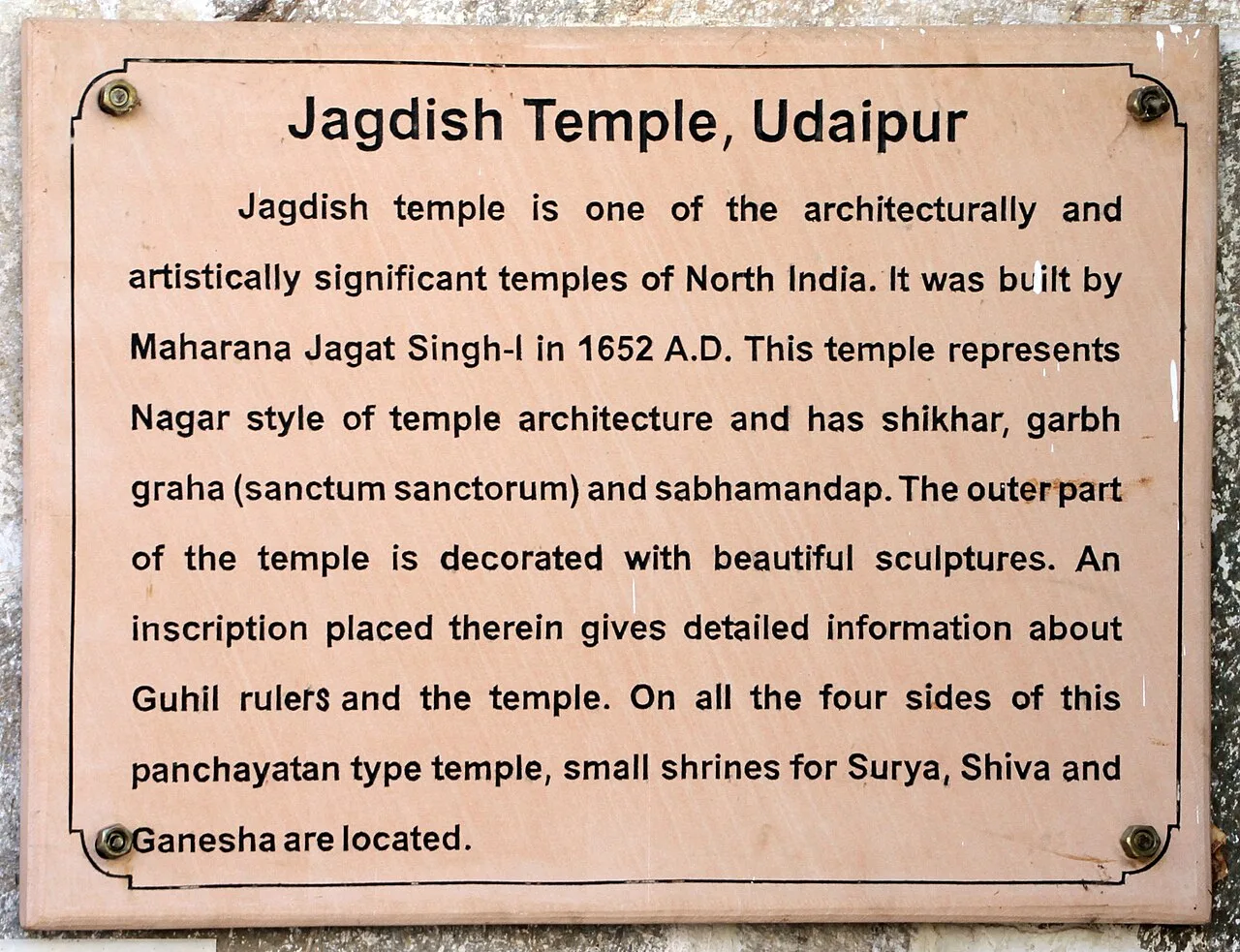
Jagdish Temple was built under the patronage of Maharana Jagat Singh I of Mewar and is traditionally dated to 1651. The ruler belonged to the Sisodia dynasty, whose capital at Udaipur had grown into a major centre of courtly and religious life. The shrine was originally called the temple of Jagannath Rai, a name referring to the deity worshipped there; Jagdish-ji became its familiar name. Its location immediately outside the City Palace reflects the close relationship between royal patronage and temple worship in the historic city. The temple has continued in active worship through successive periods of Udaipur’s history, rather than surviving only as an archaeological monument. That continued use means religious observances and visitor access operate alongside the care of an old structure. The temple’s carved stonework and fabric require ongoing attention, but specific claims about major restoration campaigns should be verified with the managing authority. Today it remains both a living place of worship and one of Udaipur’s best-known historic landmarks.
Origin stories & folklore
Local belief centres on Jagdish-ji as a form of Vishnu who watches over the city and offers protection to devotees. The older name, Jagannath Rai, is associated with this revered form of the deity. As at many long-established shrines, devotional stories and family traditions may explain the temple’s importance in personal terms; versions can differ between worshippers. These accounts belong to faith and oral tradition rather than to independently verified historical records. Visitors can learn more by listening respectfully to worshippers or temple caretakers, without treating sacred beliefs as spectacle or interrupting prayer.
Architecture & design
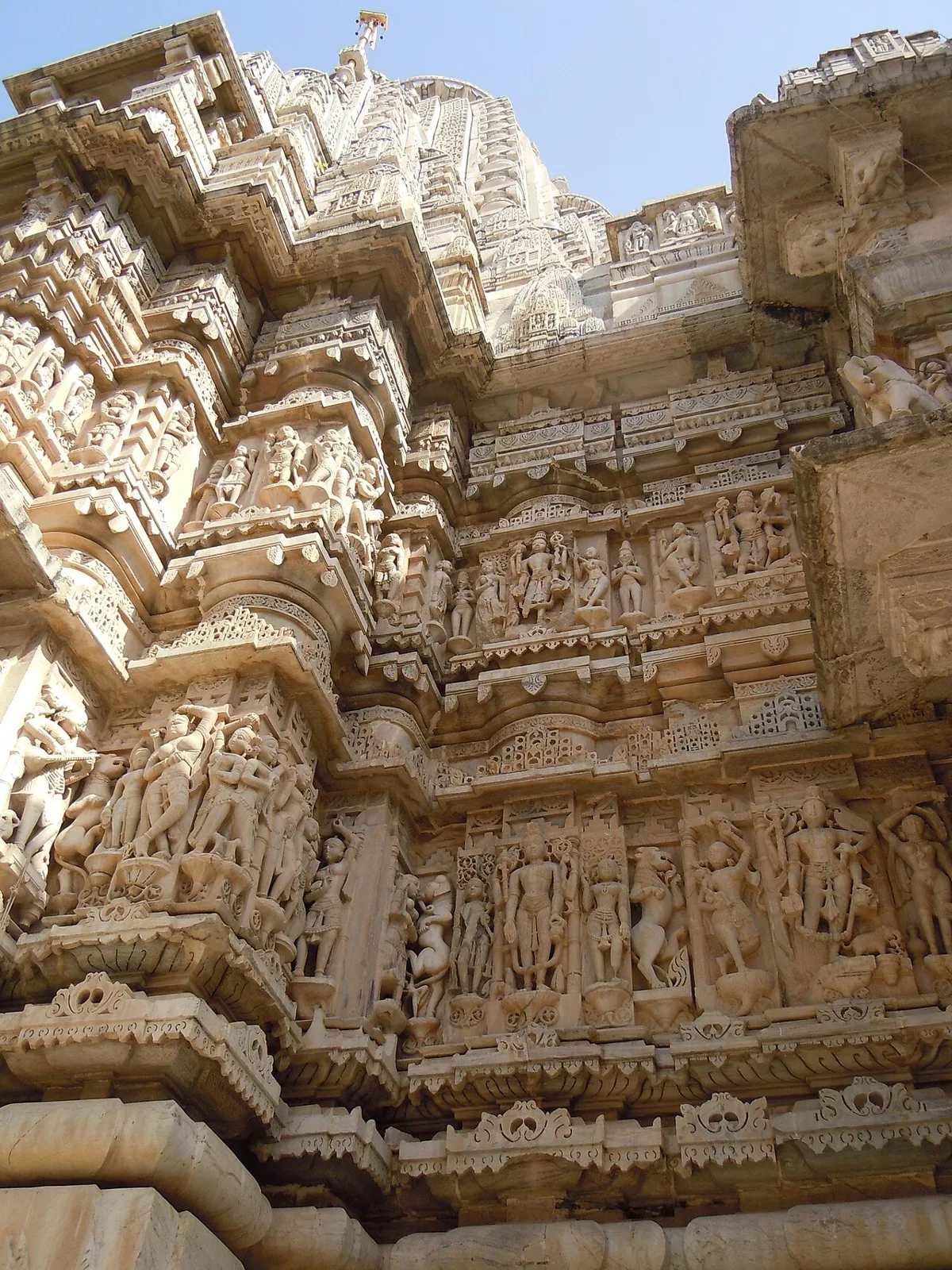
The temple is a substantial stone structure in the Nagara tradition of north Indian temple architecture. It rises on a raised platform above the surrounding street, with a pillared approach leading into the main worship space and a tall, sculpted shikhara above the sanctum. The complex includes a mandapa and subsidiary shrines, arranged around the principal shrine. Carved pillars, bands of figures and decorative details cover much of the exterior and interior stonework. The tower’s vertical form is particularly visible from the crowded old-city lanes. The building’s scale and elaborate carving stand out against the closely packed streets around it. Steps at the raised entrance and the active use of the interior are important practical features for visitors to bear in mind.
Important objects & sculptures
The central object of worship is an image of Vishnu, revered here as Jagdish-ji or Jagannath Rai. The sanctum is a place of active devotion, so access and viewing conditions may change during prayers. Look for carved figures and decorative bands on the exterior, including imagery associated with Hindu deities and stories, as well as detailed work on pillars and doorways. A figure of Garuda, Vishnu’s vehicle, is also associated with the temple complex. Stone carvings reward patient observation, but visitors should not touch images, offerings or architectural details. Inscriptions or smaller objects may be difficult to view and should not be assumed to be on public display.
Religious significance
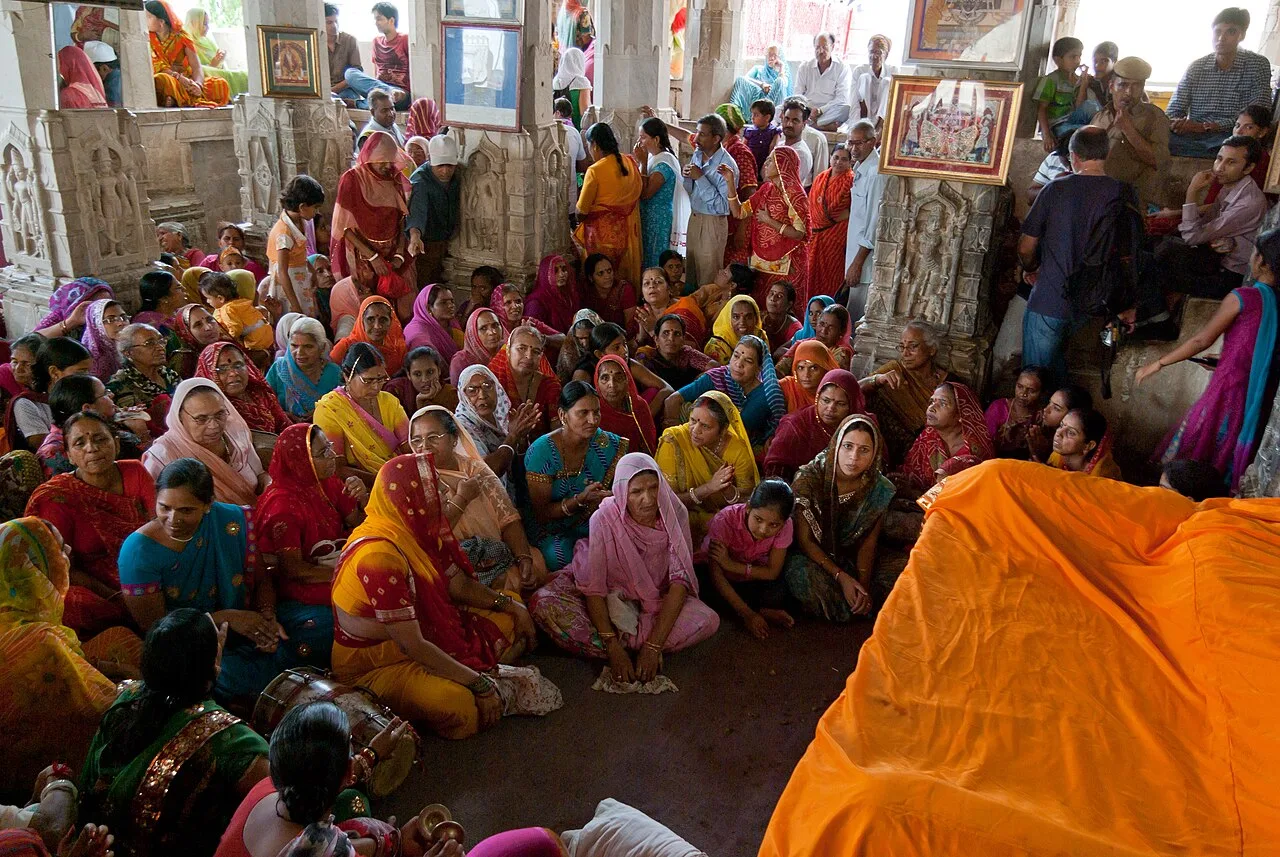
Jagdish Temple is dedicated to Vishnu, worshipped locally as Jagdish-ji and historically named Jagannath Rai. It is an active Hindu temple, not simply a monument, and devotees come for darshan, prayer and offerings. Daily worship may include lamps, bells, flowers, chanting and aarti; the sequence and visitor access depend on the temple’s current observances. For worshippers, the shrine is part of the living religious landscape of Udaipur and a place to seek blessings and mark occasions. Non-Hindu visitors are generally expected to behave quietly and follow directions from temple staff. Ask before entering areas beyond those open to visitors, and avoid interrupting rituals or people at prayer.
Visit Jagdish Temple with time to observe daily prayers and rituals respectfully. Follow the posted rules on footwear, photography, head covering and dress, and avoid interrupting worshippers. Ask caretakers which areas are open to visitors, and beware of unofficial 'guides' asking for donations. A comfortable itinerary is one main visit in the morning, a local meal at midday and a short nearby stop before an afternoon return. Use the district list on this site to find other places in Udaipur, but check the route and its condition before combining stops. If a festival or fair is on, roads and stays can be busy — and the experience can be unforgettable. Leave no litter: many sites are protected by the communities around them.
Suggested itineraries
Half day: City Palace area (about 1–2 hours), Jagdish Temple and respectful observation of worship (about 45–75 minutes), then a walk towards Gangaur Ghat or a nearby meal (about 1 hour). Full day: Jagdish Temple (about 1 hour), City Palace (about 2–3 hours), lunch in the old city (about 1 hour), Bagore Ki Haveli or Gangaur Ghat (about 1–2 hours), then a Lake Pichola boat experience if operating (about 1 hour). Gentler option: Visit the temple when the lanes are manageable, take breaks at a nearby café, and choose one close-by stop rather than linking several walks; arrange a vehicle drop-off as near as access allows.
The temple sits within Udaipur’s old-city community, where worship, household errands, tourism and market life share narrow streets. Hindi and Mewari are commonly heard locally, alongside other languages used by visitors and residents. Devotional singing, bells and prayer are part of the temple’s living soundscape, especially during observances. People may visit in everyday clothing or in traditional dress for worship and festivals. Customs around offerings, footwear and conduct are shaped by the shrine’s religious use; follow posted notices and local guidance rather than assuming that visitor practices apply to worshippers. The surrounding lanes also reflect the city’s broader traditions of crafts, food and hospitality.
Festivals & events
Janmashtami, celebrating Krishna, and other Vaishnava and Hindu observances may bring additional worship and activity to the temple. Udaipur’s wider festival calendar includes Diwali and Holi, while Rath Yatra celebrations associated with Jagannath traditions may be observed locally; arrangements vary by year and temple practice. Lunar-calendar festivals shift between months, so check locally rather than relying on a fixed date. During major observances, the temple and nearby lanes can be busier, with queues, processions or traffic restrictions. Allow extra time, respect worshippers’ space and confirm whether visitor access is affected.
Local food in Rajasthan includes dal baati churma, gatte ki sabzi, ker sangri, laal maas, pyaaz kachori, mirchi vada, ghewar, mawa kachori and chaach (spiced buttermilk). Ask what is fresh that day; many small eateries cook a limited daily menu. Vegetarian travellers eat very well across this region, and most towns also have non-vegetarian options. Remote sites may have no restaurant at all. Carry water and snacks, eat a proper breakfast before long drives, and ask your accommodation for a packed lunch if you are heading out early. If prasad or langar is offered, accept it according to local custom. Choose busy, clean places and carry your packaging back with you.
Shopping & local experiences
The lanes and markets around Jagdish Chowk and Udaipur’s old city offer textiles, miniature paintings, jewellery, leather goods and other Rajasthani crafts. Hathi Pol and Bada Bazaar are established city shopping areas for a broader selection; compare workmanship and ask about materials before buying. Shops may be busy during tourist seasons and festivals. Local cafés and restaurants provide opportunities to try Rajasthani dishes and snacks, though menus and availability vary. Bargaining may be customary in some market settings, but keep it courteous. Avoid buying anything represented as an antique or religious artefact unless its provenance and legality are clear.
October to March
The nearest principal railway station by straight-line distance is Udaipur City, roughly 5 km away. The nearest operating airport by straight-line distance is Maharana Pratap Airport, Udaipur, roughly 20 km away. These figures are calculated from map coordinates — actual road distance is longer. Jaipur, Ajmer, Jodhpur, Udaipur and Kota are the main rail hubs, and Jaipur, Udaipur and Jodhpur have the most flights; Delhi is the usual gateway for the north-east of the state. For the final leg, Rajasthan State Road Transport Corporation (RSRTC) buses and private coaches link district towns; shared taxis usually leave early in the morning. A private taxi gives more flexibility for remote sites. When comparing train, bus and flight, count the complete door-to-door time: a flight saves the most time only if the onward road transfer is short, while an overnight train can save a hotel night. Book your return before you leave, because seats fill quickly on weekends, festivals and holidays. Current train numbers, timings, return services and fares are not listed here; check IRCTC and NTES for trains and the airline's own schedule for flights. No permit is needed to visit Rajasthan. Land close to the international border west of Jaisalmer and Barmer is restricted beyond certain points: places such as Tanot can be visited, but border outposts need Border Security Force permission. Forts and palaces charge entry and camera fees, and tiger-reserve safaris must be booked through the official forest department portal.
Confirm onward and return timings on IRCTC / NTES, the state bus operator or your airline before travel. A dash means current timings or fares have not been verified.
Getting around
The temple is in the old-city centre, where walking is often the simplest way to move between nearby sights. Streets are narrow and can be congested, so an auto-rickshaw or taxi may need to drop visitors at a point from which they continue on foot. Ask locally about vehicle access and parking; convenient parking close to the entrance should not be assumed. Local buses and autos connect parts of Udaipur, while taxis are useful for longer journeys across the city. Lake Pichola boat services serve nearby waterfront attractions, not the temple itself. Allow extra time during festivals and busy periods.
Hours, tickets & permissions
Entry arrangements can vary with daily worship, special observances and crowd conditions. There may be separate expectations for worshippers and general visitors, and access to the sanctum or particular areas is not guaranteed. Follow any posted requirements concerning footwear, dress, photography or belongings. Do not assume that a ticket, permit or camera permission is needed—or that entry is unrestricted—without checking current guidance. Confirm opening hours, fees, access arrangements and any applicable rules with the temple’s managing authority before setting out.
Facilities
Facilities inside an active historic temple may be limited, and visitor services can change during worship or festivals. Toilets, drinking water, cafés and restaurants are usually easier to find in the surrounding old-city area than within the temple itself; check locally for the nearest options. Parking near the entrance may be difficult because the lanes are narrow. Guides may be available around major attractions, but confirm credentials and any fee before agreeing to a service. ATMs and shops can be found elsewhere in the city centre. Do not rely on storage, cloakroom or accessible toilet facilities without checking ahead.
Accessibility
The approach runs through a dense old-city area with narrow lanes, uneven surfaces and possible crowding. The temple stands on a raised platform reached by steps, and visitors should expect stairs within the historic complex. These features may make independent wheelchair or stroller access difficult; do not assume ramps or lifts are available. Walking distances can be kept short by arranging a vehicle drop-off as close as local access permits, though the final approach may still be on foot. Shade and places to rest are not guaranteed at the entrance. Older visitors or anyone with limited mobility may prefer a quieter period, assistance from a companion and a flexible plan.
No permit is needed to visit Rajasthan. Land close to the international border west of Jaisalmer and Barmer is restricted beyond certain points: places such as Tanot can be visited, but border outposts need Border Security Force permission. Forts and palaces charge entry and camera fees, and tiger-reserve safaris must be booked through the official forest department portal. Carry a photo ID at all times and save the emergency number 112 and your accommodation's contact offline. Heat in summer and fog in winter are the main weather risks; carry water and allow extra travel time on foggy December–January mornings. Respect community rules, private property and posted instructions. Follow local guidance if access changes.
Visitor rules
Remove footwear where instructed and follow signs or staff directions about dress, head covering and entry to worship areas. Wear clothing that is respectful of an active Hindu shrine. Keep voices low, do not block worshippers, and ask before approaching caretakers or taking part in any ritual. Photography may be restricted in particular areas; confirm before using a camera or phone. Do not touch idols, offerings or carved surfaces, and do not enter cordoned or staff-only spaces. Carry litter out and avoid single-use plastic where possible. Be cautious of unofficial guides or people pressing for donations; give only through clearly authorised channels.
Photography
The temple’s exterior carvings and the surrounding old-city setting can be attractive in soft morning or late-afternoon light. A view from nearby public lanes may show the tower, but keep entrances clear and avoid photographing people at close range without permission. Photography inside the temple may be restricted, especially near the sanctum or during worship; ask staff and follow signs before taking pictures. Never interrupt prayers to frame a shot. Drone use may be restricted by aviation rules and local security or heritage requirements, so do not fly one without all necessary permissions. Respect any instruction to put cameras away.
Choose a stay by the full journey to Jagdish Temple, not just the district name. Heritage havelis, fort hotels, state tourism (RTDC) hotels and desert camps offer distinctive stays; check that a desert camp is licensed and has proper toilets. In summer, check air-conditioning or coolers; in December and January, check heating and hot water. Book in advance for weekends, festivals and the peak season (October to March). Confirm the exact location, meals included, check-in time and cancellation terms in writing. Avoid sending money to unverified contacts or touts at stations. Carry some cash, as card and digital payments can be unreliable in remote areas.
The City Palace complex is immediately nearby and can be combined with a visit to the temple. In the same old-city area, Bagore Ki Haveli and Gangaur Ghat are established cultural and waterfront stops. Lake Pichola offers boat experiences when services are operating. Farther across Udaipur, Saheliyon Ki Bari and Fateh Sagar Lake are well-known city attractions; Sajjangarh, also called the Monsoon Palace, is another option outside the central lanes. Check opening status, transport and route conditions before combining stops, and allow for congestion around the old city.
For couples, Jagdish Temple rewards a slow pace: arrive early for soft light and fewer crowds, share a local meal and keep the evening free. A heritage hotel or a lakeside sunset makes the trip memorable. Public displays of affection can be frowned upon in conservative communities and at religious sites, so be discreet. Keep a buffer in your itinerary, because weather and traffic can delay plans.
Q: How much time should I allow for Jagdish Temple? A: Allow around an hour for a respectful visit, with extra time if worship, queues or festival crowds affect access. Q: When is a comfortable season to visit? A: October to March is generally the more comfortable season in Rajasthan; summer can be very hot, and monsoon conditions vary. Q: Is there an entry fee or are there visitor restrictions? A: Rules and any fees can change. Confirm current arrangements with the temple’s managing authority and follow posted instructions. Q: Is the temple suitable for children or elderly visitors? A: Families can visit, but crowds, narrow lanes and steps may be challenging. Keep children close and consider mobility needs before entering. Q: Where can I stay nearby? A: Udaipur has accommodation in and around the old city and elsewhere in town. Choose based on mobility, noise and transport needs, and check access to your lodging.
Be the first to share photos, stories, advice or a helpful contact for Jagdish Temple.
Loading…