
Kalibangan
Kalibangan is an archaeological town in Hanumangarh district, Rajasthan, beside the Ghaggar. Visitors come to explore its Indus Valley Civilization remains, including fire altars and evidence of an ancient ploughed field.
Key facts · verified by Ghumoopedia editors
- Type of place
- Natural attraction
- Best time to visit
- October to March
- Nearest railway station
- Hanumangarh Junction · about 20 km (straight line)
- Nearest airport
- Bikaner (Nal) Airport · about 180 km (straight line)
- Verified
- 21 Nov 2026
Plan a trip from Kalibangan — a day-by-day route through places nearby.
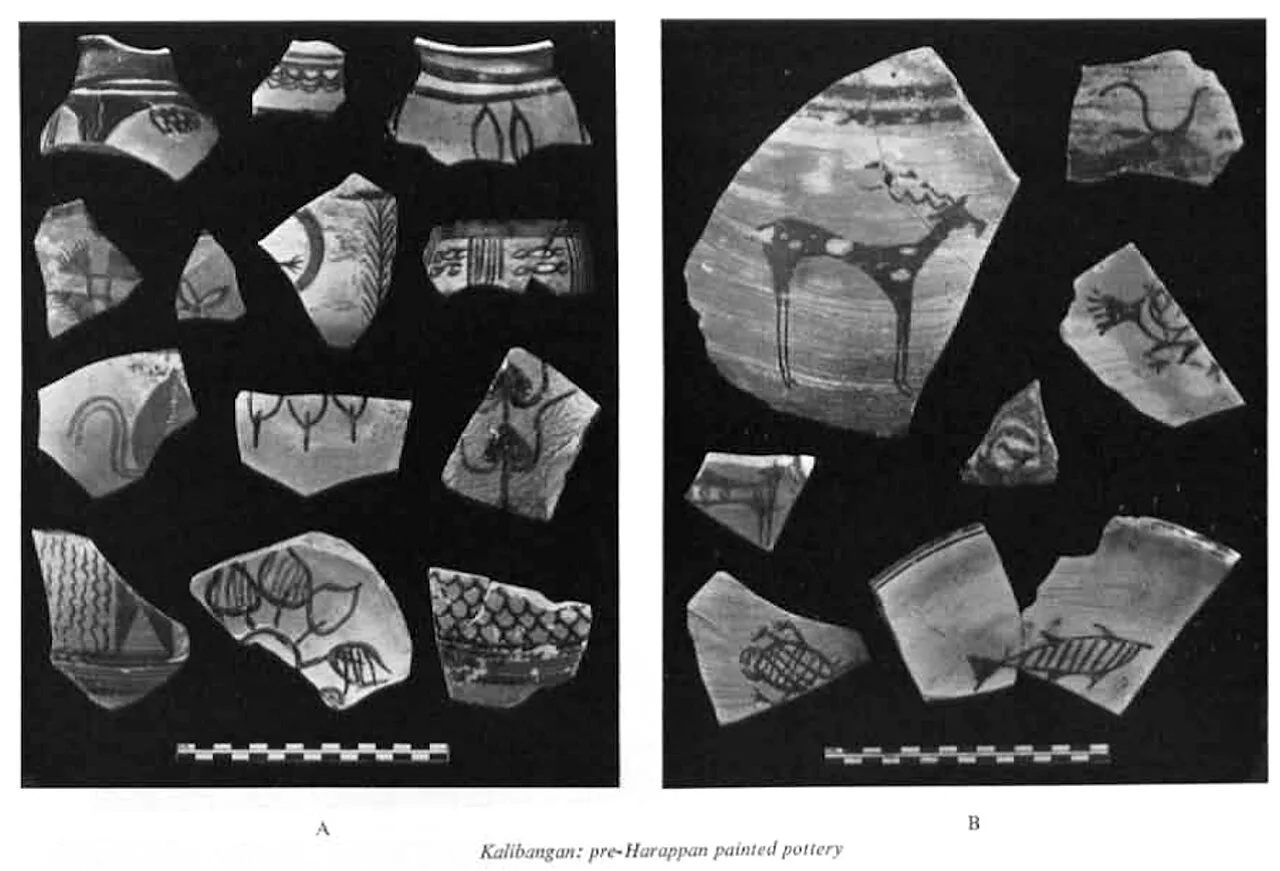
Kalibangan is a town in Hanumangarh district, Rajasthan, within Pilibangan tehsil. It stands on the Ghaggar’s southern, or left, bank, between Suratgarh and Hanumangarh, and 205 km from Bikaner. The settlement is also associated with the triangular tract around the meeting of the Drishadvati and Sarasvati rivers. Luigi Tessitori first identified evidence here of the prehistoric and pre-Mauryan phases of the Indus Valley Civilization. Excavations were directed by Braj Lal of the Archaeological Survey of India from 1960–61 to 1969–70. Bal Thapar, M.D. Khare, K.M. Shrivastava, J.P. Joshi and S.P. Jain were also members of the team. Among the site’s notable features are fire altars and what is considered the world’s earliest attested ploughed field. By about 2900 BC, the settlement had developed into a planned city. The Archaeological Survey of India published the complete excavation report in 2003, 34 years after work ended. The report described Kalibangan as a major provincial capital of the Indus Valley Civilization. Rajasthan is the land of Rajput forts and palaces, painted havelis, desert folk music, puppetry and colourful fairs such as the Pushkar camel fair. Rajasthan is very hot from April to June — often above 45 °C in the desert — with a short monsoon in July–September. Winter days are pleasant and nights are cold, especially in the Thar Desert. Mount Abu is the state's only hill station and stays cooler. The usual best time to visit is October to March. Timings, fees and access arrangements must be confirmed locally. For official information, see Rajasthan Tourism at https://www.tourism.rajasthan.gov.in.
Why it matters
Kalibangan is an important archaeological site on the Ghaggar-Hakra river plain in Hanumangarh district, Rajasthan. Excavations revealed a planned settlement of the Indus Valley Civilization, including distinctive fire installations and evidence of an ancient ploughed field. The Archaeological Survey of India (ASI) conducted the principal excavations and published the full excavation report in 2003. The report described Kalibangan as a major provincial centre of the civilisation. The site is significant to the study of early urban planning, agriculture and ritual practices in north-western South Asia. It is not a UNESCO World Heritage Site. Visitors should check with the ASI or local authorities for current information about its management and visitor access.
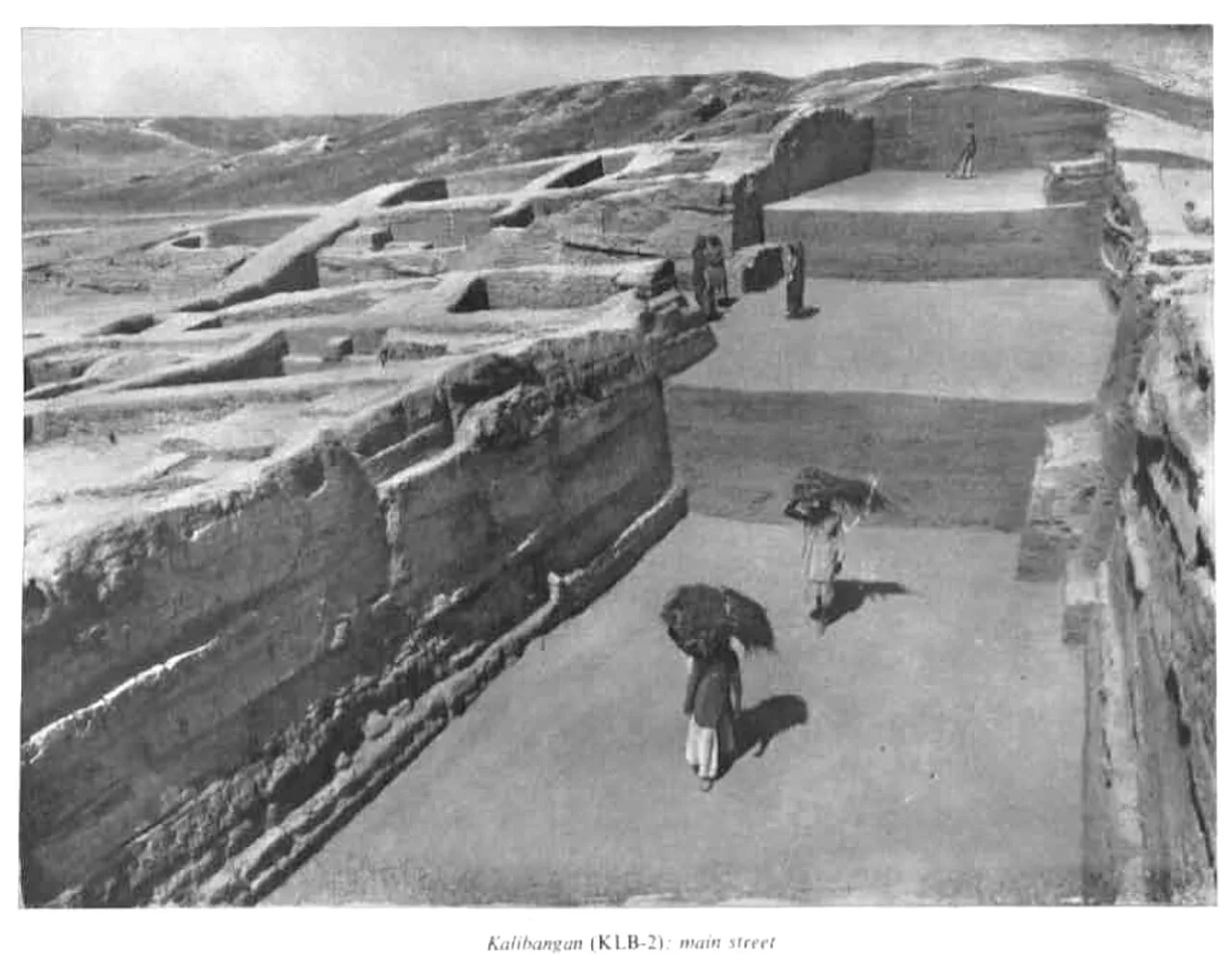
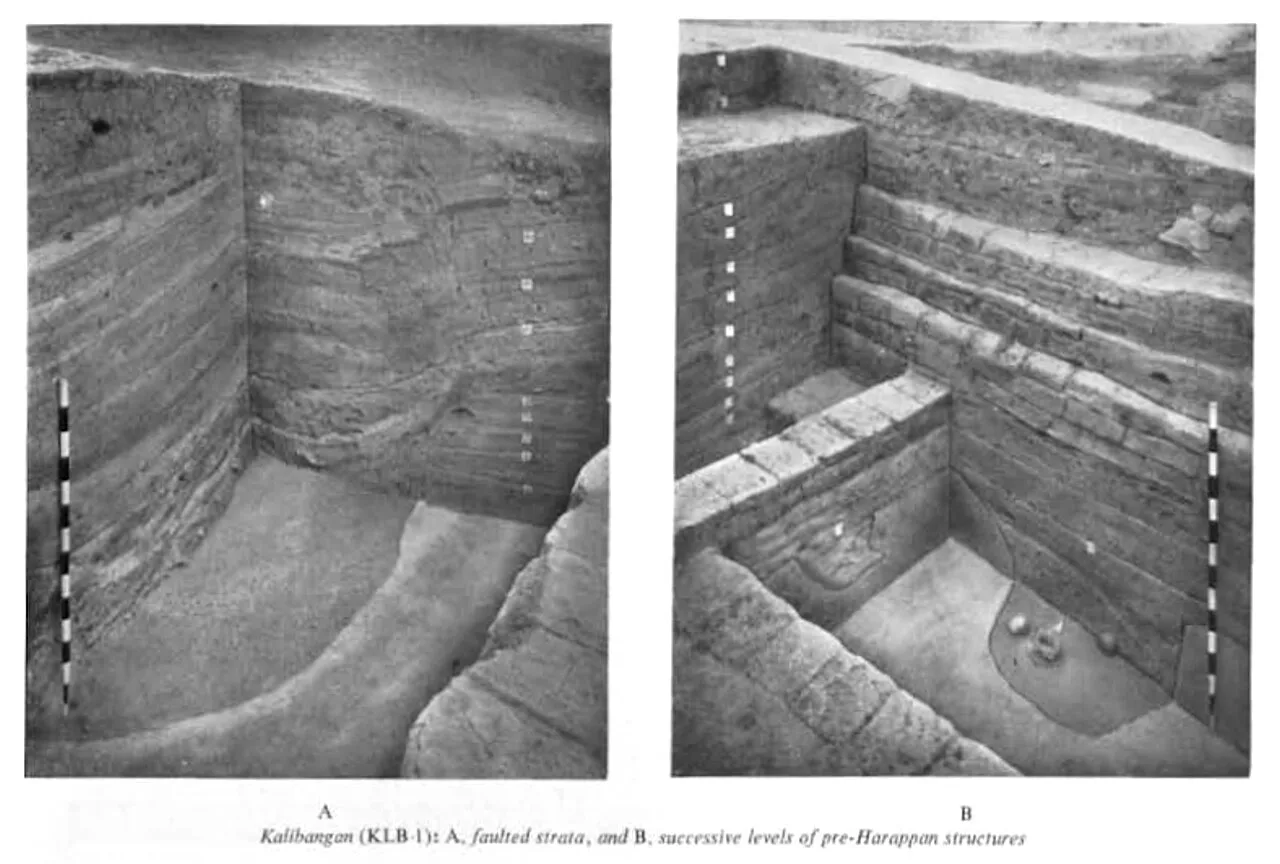
The settlement developed on the southern bank of the Ghaggar, a river channel associated with the Ghaggar-Hakra system. Archaeological evidence indicates occupation before and during the mature phase of the Indus Valley Civilization, followed by later changes and eventual abandonment. The mature settlement, commonly dated to the third millennium BCE, was laid out in planned sectors and included streets, houses and drainage features. Excavators also documented fire installations and a ploughed field marked by intersecting furrows, evidence that has informed research into early agriculture. Luigi Tessitori drew attention to the site's archaeological importance before systematic excavation. The ASI excavated Kalibangan from 1960–61 to 1969–70 under the direction of Braj Lal, with archaeologists including Bal Thapar, M. D. Khare, K. M. Shrivastava, J. P. Joshi and S. P. Jain. The complete excavation report appeared in 2003, decades after fieldwork ended. Kalibangan is often discussed alongside other Harappan centres, but interpretations of its regional role and the ancient river system continue to be subjects of scholarship.
Origin stories & folklore
There is no single, well-documented local legend about the founding of Kalibangan that visitors can reliably be told as history. The town's name is commonly explained as meaning “black bangles,” from words associated with black and bangles; this is a popular interpretation rather than proof of the settlement's ancient name. Kalibangan is also sometimes connected in traditional and popular accounts with the Sarasvati and Drishadvati rivers. Identifying the Ghaggar-Hakra system with the Sarasvati is debated, and should not be presented as settled fact. Visitors can distinguish these cultural associations from what excavations establish about the settlement and its material remains.
Explore Kalibangan slowly and read the interpretation boards, use the official audio guide where available or hire an authorised guide to understand its history. Check opening days, ticket counters and camera rules in advance; many monuments and museums close on one weekday and on some public holidays. Early morning gives softer light, cooler air and smaller crowds. A comfortable itinerary is one main visit in the morning, a local meal at midday and a short nearby stop before an afternoon return. Use the district list on this site to find other places in Hanumangarh, but check the route and its condition before combining stops. If a festival or fair is on, roads and stays can be busy — and the experience can be unforgettable. Leave no litter: many sites are protected by the communities around them.
Suggested itineraries
Half day: Arrive in the morning, spend about 1–2 hours exploring the accessible remains and interpretation material, then pause for a meal in town before returning. Full day: Visit the site in the morning for about 2–3 hours, take a relaxed midday break in a nearby town, then make a short stop at Bhatner Fort in Hanumangarh if transport and access allow. Gentler option: Ask about vehicle drop-off close to the permitted entrance, focus on the most accessible viewing areas, take frequent shaded breaks where available and keep the visit short.
Kalibangan sits in a rural part of northern Rajasthan, where everyday life reflects both desert-edge conditions and the agricultural landscape of the Ghaggar plain. Hindi and regional forms of Rajasthani are commonly heard; Punjabi may also be understood in parts of the wider border region. Local dress, food and social customs vary between families and communities. Folk music, devotional singing and dance traditions are part of the wider region's cultural life, though performances are not guaranteed at the archaeological site. Visitors can learn about the place through its interpretation material and by speaking respectfully with local guides or residents, without treating contemporary life as a reenactment of Harappan culture.
Local communities
Residents of Kalibangan and nearby villages are connected to the surrounding agricultural landscape. Farming and livestock keeping are important rural livelihoods in the wider area, alongside small businesses, transport and other local services. The archaeological site also brings work for guides and people involved in visitor services when these are available. The ancient Harappan population cannot be directly equated with any present-day community, and claims of an unbroken cultural link should be treated cautiously. Visitors can support local livelihoods by using locally available services, asking permission before photographing people and respecting homes, fields and working spaces.
Festivals & events
Kalibangan itself is not known for a major visitor festival centred on the archaeological remains. In the wider Hanumangarh district, the Gogamedi fair, associated with the Gogaji shrine, is held during the monsoon-season period and can draw large crowds. Regional observances such as Teej, Gangaur and Diwali are marked in towns and villages, with customs varying locally. Festival travel may mean busier roads, fuller accommodation and changes to local services. Check with local sources before planning around a fair, and keep festival activity separate from any protected archaeological areas.
Local food in Rajasthan includes dal baati churma, gatte ki sabzi, ker sangri, laal maas, pyaaz kachori, mirchi vada, ghewar, mawa kachori and chaach (spiced buttermilk). Ask what is fresh that day; many small eateries cook a limited daily menu. Vegetarian travellers eat very well across this region, and most towns also have non-vegetarian options. Remote sites may have no restaurant at all. Carry water and snacks, eat a proper breakfast before long drives, and ask your accommodation for a packed lunch if you are heading out early. Try a home-cooked or dhaba meal when you can — it is often the best food on the route. Choose busy, clean places and carry your packaging back with you.
Shopping & local experiences
Kalibangan is primarily an archaeological destination rather than a craft-shopping centre, and stalls at the site should not be expected. In nearby towns, look for everyday Rajasthani textiles, household items and locally made goods in general markets; availability varies. Buy only from legitimate sellers and never purchase artefacts, old coins or objects claimed to come from the excavation. A meal or snacks from a local eatery can be a more practical way to support nearby businesses. Carry out packaging and avoid leaving litter at the site.
The site occupies a dry, open plain beside the Ghaggar river channel, within a semi-arid landscape shaped by seasonal rainfall and irrigation. The Ghaggar's flow is variable, and stretches of its channel may be dry; do not expect a year-round river view. Around the settlement, visitors may see cultivated fields, sandy or silty ground and hardy vegetation such as khejri, babul and grasses. The broader district supports common arid and agricultural-land birds, and seasonal birdlife may vary with water and crops; sightings are never assured. There is little natural shade across exposed ground, so bring water and sun protection. Stay on permitted paths and avoid disturbing plants, wildlife or archaeological features.
October to March
The nearest principal railway station by straight-line distance is Hanumangarh Junction, roughly 20 km away. The nearest operating airport by straight-line distance is Bikaner (Nal) Airport, roughly 180 km away. These figures are calculated from map coordinates — actual road distance is longer. Jaipur, Ajmer, Jodhpur, Udaipur and Kota are the main rail hubs, and Jaipur, Udaipur and Jodhpur have the most flights; Delhi is the usual gateway for the north-east of the state. For the final leg, Rajasthan State Road Transport Corporation (RSRTC) buses and private coaches link district towns; shared taxis usually leave early in the morning. A private taxi gives more flexibility for remote sites. When comparing train, bus and flight, count the complete door-to-door time: a flight saves the most time only if the onward road transfer is short, while an overnight train can save a hotel night. Book your return before you leave, because seats fill quickly on weekends, festivals and holidays. Current train numbers, timings, return services and fares are not listed here; check IRCTC and NTES for trains and the airline's own schedule for flights. No permit is needed to visit Rajasthan. Land close to the international border west of Jaisalmer and Barmer is restricted beyond certain points: places such as Tanot can be visited, but border outposts need Border Security Force permission. Forts and palaces charge entry and camera fees, and tiger-reserve safaris must be booked through the official forest department portal.
Confirm onward and return timings on IRCTC / NTES, the state bus operator or your airline before travel. A dash means current timings or fares have not been verified.
Getting around
Kalibangan is reached from nearby district towns by road. On arrival, local transport options may be limited, so arrange a return vehicle in advance if you are not driving. Taxis or hired cars offer flexibility for reaching the site and combining it with other stops; ask locally whether shared vehicles or buses serve the route on your intended day. Walking is practical within the visit area only where paths and access rules allow. Confirm parking arrangements at the entrance, and avoid leaving a vehicle where it blocks residents, farm access or site operations.
Hours, tickets & permissions
Entry arrangements can depend on the managing authority and current site conditions. Tickets or other entry controls may apply, and separate rules may govern photography, video equipment, bags or access to particular areas. Do not assume that all excavated sections or any museum facilities are open on a given day. Check current opening arrangements, closure days, fees and camera rules with the ASI or local authorities before travelling. Follow posted instructions and do not touch, climb on or remove archaeological material.
Facilities
Facilities at the archaeological site may be limited. Toilets, drinking water, seating, shade, parking and interpretation services should be checked locally rather than assumed. Food and basic supplies are more likely to be found in nearby towns than within the site grounds. Authorised guides or audio interpretation may be available, but availability can change; ask at the entrance or through the managing authority. ATMs and broader services are generally easier to find in larger nearby towns. Carry water and any personal essentials, and take rubbish away if bins are not provided.
Accessibility
The remains are spread across an open archaeological landscape, so a visit can involve walking over uneven, dusty or exposed ground. Paths, surfaces and access to individual areas may vary, and steps or changes in level may be present. Shade is limited. Wheelchair and stroller access should not be assumed; contact the managing authority beforehand to ask which areas are currently reachable. Older visitors and anyone with limited mobility may prefer a short visit, supportive footwear and a companion. Plan for heat, bring water and rest as needed, and do not enter restricted or unstable sections.
No permit is needed to visit Rajasthan. Land close to the international border west of Jaisalmer and Barmer is restricted beyond certain points: places such as Tanot can be visited, but border outposts need Border Security Force permission. Forts and palaces charge entry and camera fees, and tiger-reserve safaris must be booked through the official forest department portal. Carry a photo ID at all times and save the emergency number 112 and your accommodation's contact offline. Heat in summer and fog in winter are the main weather risks; carry water and allow extra travel time on foggy December–January mornings. Respect community rules, private property and posted instructions. Follow local guidance if access changes.
Photography
Early morning or late afternoon usually offers softer light across the open site and can be more comfortable than the hotter middle of the day. Photograph only from permitted areas and check current rules on cameras, video and any additional equipment before entry. Drone use may be restricted by aviation rules and site regulations; obtain the required permissions rather than launching one casually. Avoid climbing on remains for a viewpoint, and ask consent before photographing local people. Do not interrupt worship or other personal activities if encountered nearby.
Choose a stay by the full journey to Kalibangan, not just the district name. Heritage havelis, fort hotels, state tourism (RTDC) hotels and desert camps offer distinctive stays; check that a desert camp is licensed and has proper toilets. In summer, check air-conditioning or coolers; in December and January, check heating and hot water. Book in advance for weekends, festivals and the peak season (October to March). Confirm the exact location, meals included, check-in time and cancellation terms in writing. Avoid sending money to unverified contacts or touts at stations. Carry some cash, as card and digital payments can be unreliable in remote areas.
Bhatner Fort in Hanumangarh town is a notable nearby historical stop and may pair well with a Kalibangan visit if road conditions and opening arrangements suit. Gogamedi, associated with the Gogaji shrine and its annual fair, is another recognised destination in Hanumangarh district, though it is a separate journey and not necessarily a short detour. The towns of Pilibanga, Suratgarh and Hanumangarh can provide practical stops for food or services. Check routes, current access and travel conditions before combining destinations, especially during hot weather or festival periods.
For couples, Kalibangan rewards a slow pace: arrive early for soft light and fewer crowds, share a local meal and keep the evening free. A heritage hotel or a lakeside sunset makes the trip memorable. Public displays of affection can be frowned upon in conservative communities and at religious sites, so be discreet. Keep a buffer in your itinerary, because weather and traffic can delay plans.
Q: How much time should I allow for Kalibangan? A: Allow a few hours for a considered visit; the time depends on which areas are accessible and how much interpretation you read. Q: When is a comfortable season to visit? A: The cooler months, generally October to March, are usually more comfortable. Days can be very hot in summer. Q: Is there an entry fee, and can I take photographs? A: Entry and camera rules may apply and can change. Confirm current requirements with the ASI or local authority before travelling. Q: Is the site suitable for children or older visitors? A: It can be informative for children, but the exposed, uneven ground and limited shade may be tiring. Older visitors or people with limited mobility should check access and plan a shorter visit. Q: Where can I stay nearby? A: Look for accommodation in Hanumangarh or other nearby towns, and confirm availability and transport arrangements before setting out.
Be the first to share photos, stories, advice or a helpful contact for Kalibangan.
Loading…