
Kiradu temples
Kiradu is a group of ruined Hindu shrines in Rajasthan’s Thar Desert, visited for its surviving temple remains, particularly Someshvara, a shrine dedicated to Shiva.
Key facts · verified by Ghumoopedia editors
- Type of place
- Temple / pilgrimage site
- Best time to visit
- October to March
- Nearest railway station
- Barmer · about 30 km (straight line)
- Nearest airport
- Jaisalmer Airport (seasonal flights) · about 130 km (straight line)
- Verified
- 21 Nov 2026
Plan a trip from Kiradu temples — a day-by-day route through places nearby.
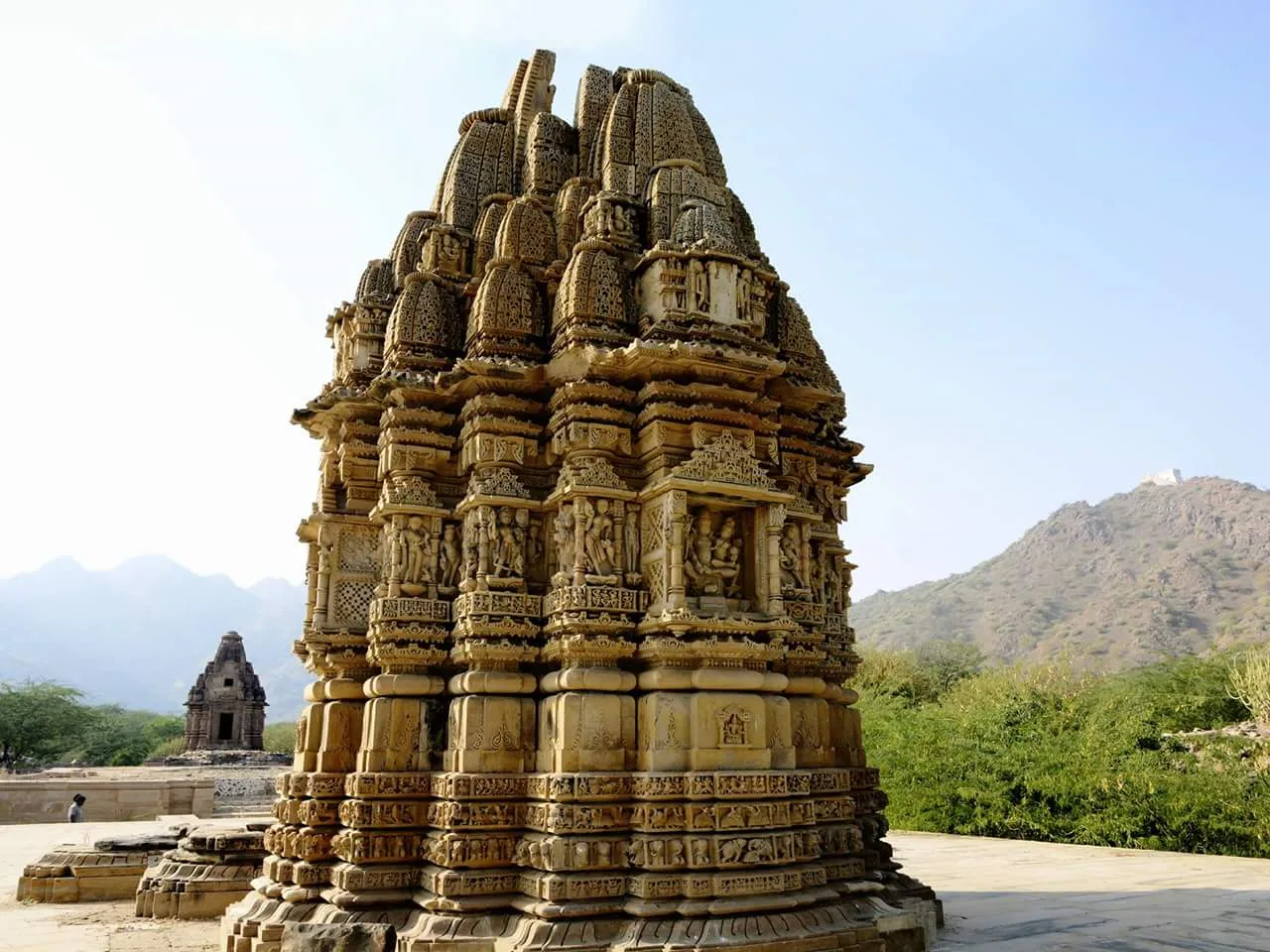
Kiradu is a temple site in the Thar Desert, within Rajasthan’s Barmer district. The remains are around 35 km from Barmer and 157 km from Jaisalmer, and comprise a cluster of old religious structures. At least five Hindu temples remain in ruin at the site. Someshvara stands out as the best-preserved building; the shrine is dedicated to Shiva. Inscriptions provide evidence about the complex’s period and patrons. They indicate construction in the 11th and 12th centuries by vassals serving Chalukya rulers, also known as Solanki monarchs. Rajasthan is the land of Rajput forts and palaces, painted havelis, desert folk music, puppetry and colourful fairs such as the Pushkar camel fair. Rajasthan is very hot from April to June — often above 45 °C in the desert — with a short monsoon in July–September. Winter days are pleasant and nights are cold, especially in the Thar Desert. Mount Abu is the state's only hill station and stays cooler. The usual best time to visit is October to March. Timings, fees and access arrangements must be confirmed locally. For official information, see Rajasthan Tourism at https://www.tourism.rajasthan.gov.in.
Why it matters
The Kiradu temples are a group of ruined Hindu shrines in Rajasthan’s Barmer district and an important record of medieval temple building in the western Thar region. Their scale, carved stonework and surviving inscriptions help researchers understand religious life and patronage under the Chalukya, or Solanki, rulers and their local vassals. The Someshvara temple, dedicated to Shiva, is the best-preserved of at least five known temples. The complex is also a place of religious interest, though its buildings are largely in ruins. It is not a UNESCO World Heritage Site; visitors should check with local authorities for current information about its management and protection status.
Epigraphic evidence places the construction of the Kiradu temples broadly in the 11th and 12th centuries. The builders are associated with local vassals of the Chalukya, also known as Solanki, monarchs. The complex reflects the resources and religious patronage available to regional powers in what is now Barmer district. At least five temples once stood here; the Someshvara temple, dedicated to Shiva, survives in the best-preserved condition. The temples were active places of worship, but the reasons and precise sequence by which the settlement and shrines declined are not firmly established. The present site consists of ruins and surviving architectural elements rather than a fully intact temple town. Inscriptions are important evidence for the complex’s history, although their condition and accessibility may vary. The temples have received attention as historic monuments, but visitors should not assume that all structures have been restored or that a particular restoration date applies to the whole complex. For the latest conservation information, consult the responsible heritage authority or local caretakers.
Origin stories & folklore
According to a popular local legend, a holy man or yogi once left a disciple in Kiradu while he travelled. When the disciple fell ill, the townspeople are said to have refused to help, except for a potter’s wife. In some versions, the returning holy man cursed the inhabitants to turn to stone. He warned the woman to leave before sunset and not look back; she supposedly did, and was also turned to stone. Details differ between tellings, and the story is folklore rather than established history. It is often linked to the abandoned appearance of the temples and helps explain the site’s reputation, but it should not be treated as evidence for why the settlement declined.
Architecture & design
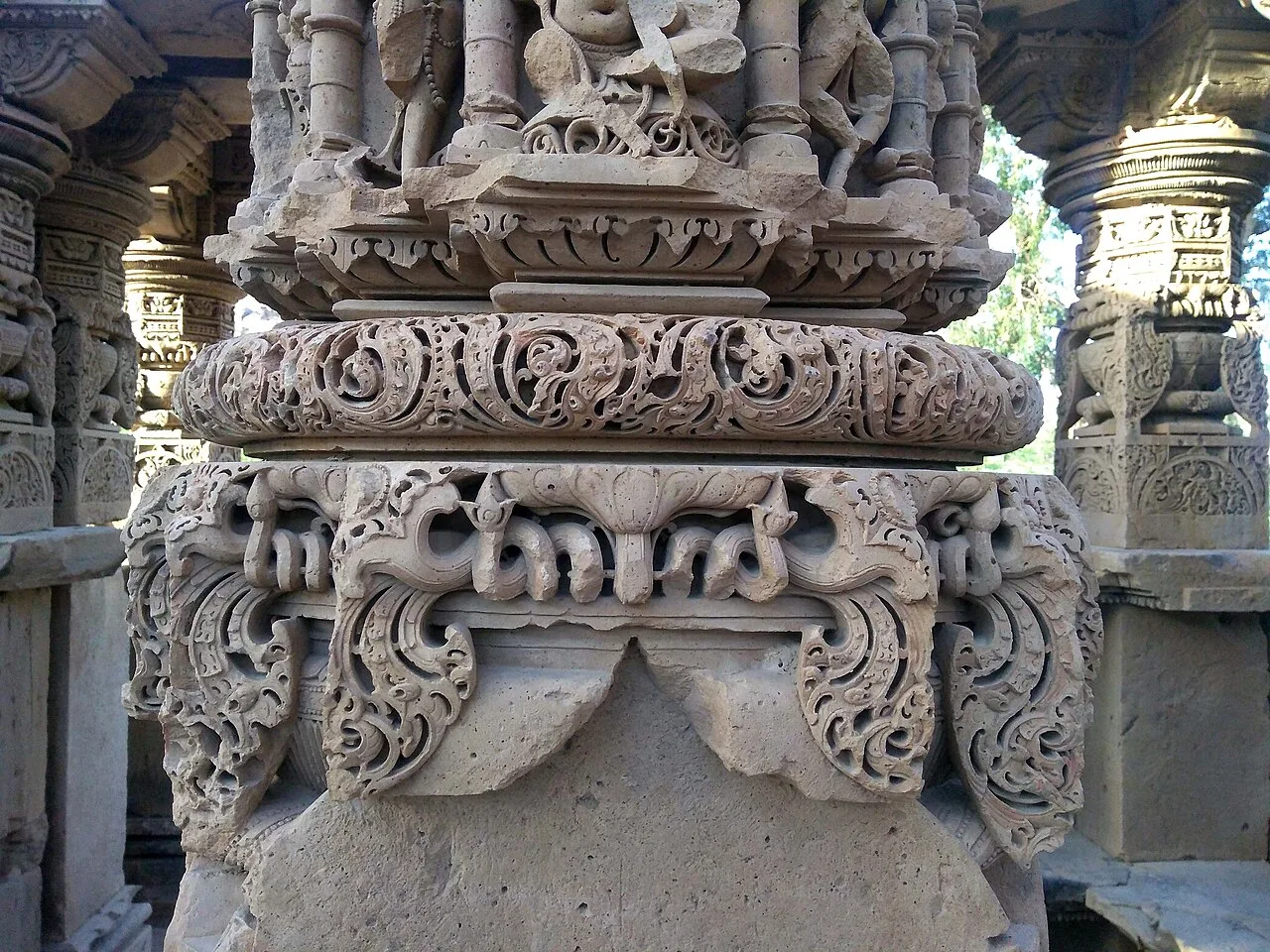
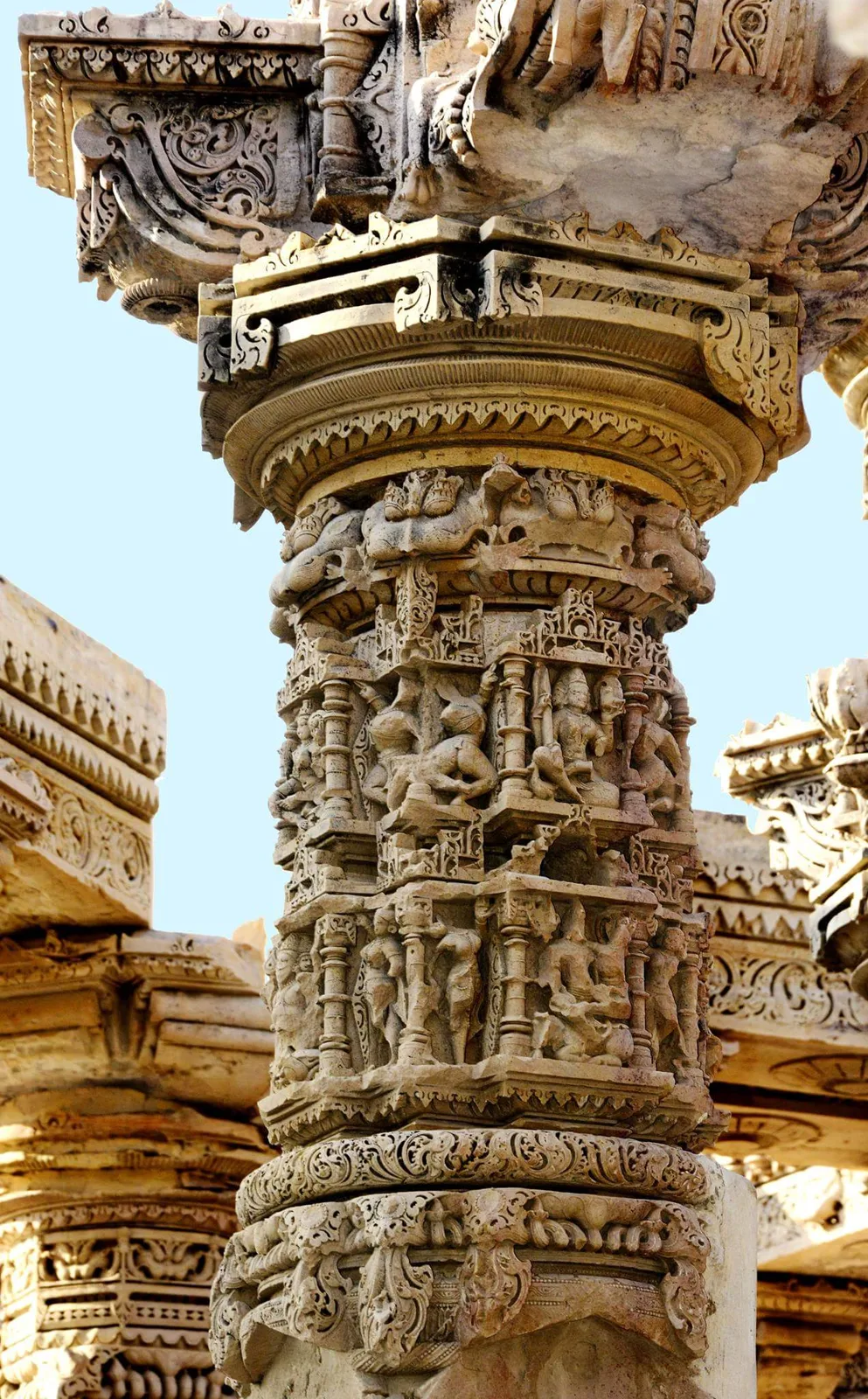
Kiradu’s surviving temples are generally associated with western Indian temple architecture of the medieval period, often discussed in relation to the regional Solanki or Maru-Gurjara tradition. Sandstone forms the principal visible building material. The complex once contained at least five temples; today, the Someshvara temple is the most complete and gives the clearest sense of a shrine’s arrangement. Surviving elements include sanctum spaces, pillared halls, carved columns and sections of exterior walls and towers. Much of the original superstructure is damaged or missing, so the layout is best understood by reading the remains rather than imagining a complete complex. Carved surfaces show a high level of stoneworking, including figures and ornamental bands. Uneven masonry, broken sections and exposed stone are part of the site’s present condition; avoid climbing on structures or treating fragments as seating.
Important objects & sculptures
Look for carved pillars, ornamental bands, figures and surviving architectural fragments around the temples, especially at Someshvara. These details offer close views of the stone carving even where larger parts of the buildings have collapsed. The complex is also known for epigraphic evidence relevant to its dating and patronage; inscriptions may be worn, difficult to read or not accessible to visitors, so do not touch or rub their surfaces. Shiva is associated with the Someshvara shrine, but the condition and presence of individual images can change or be restricted. The site is an archaeological landscape, not a museum collection: do not move, handle or remove stones or fragments.
Religious significance
Someshvara, the best-preserved temple at Kiradu, is dedicated to Shiva. The group’s ruined Hindu shrines retain religious significance alongside their historical and architectural interest. Worship and the availability of particular shrine areas may vary, and visitors should ask caretakers which spaces are open and whether any observances are taking place. If prayers or rituals are underway, remain quiet, keep a respectful distance and avoid interrupting worshippers. Follow local instructions about footwear, offerings and access to sacred areas; customs may differ between shrines. The site is also known through local folklore, but stories associated with it should be distinguished from the documented history of the temples.
Visit Kiradu temples with time to observe daily prayers and rituals respectfully. Follow the posted rules on footwear, photography, head covering and dress, and avoid interrupting worshippers. Ask caretakers which areas are open to visitors, and beware of unofficial 'guides' asking for donations. A comfortable itinerary is one main visit in the morning, a local meal at midday and a short nearby stop before an afternoon return. Use the district list on this site to find other places in Barmer, but check the route and its condition before combining stops. If a festival or fair is on, roads and stays can be busy — and the experience can be unforgettable. Leave no litter: many sites are protected by the communities around them.
Suggested itineraries
Half day: Arrive in the morning; spend about 1–2 hours viewing the temple group and carved details; pause for a local meal; return to Barmer. Full day: Visit Kiradu in the morning; allow time to explore the ruins without rushing; have lunch in or near Barmer; visit Barmer Fort if access and travel conditions allow; return before evening. Gentler option: Arrange a vehicle drop-off as close as permitted, focus on the most accessible views around Someshvara, take frequent rests and skip uneven sections.
Kiradu lies in the Barmer region, where Rajasthani and Marwari speech, desert livelihoods and local Hindu customs shape everyday life. Barmer is also known for regional folk music and crafts, including embroidery and textile work. These traditions belong to the wider district and should not be assumed to be performed at the temple on an ordinary visit. Dress around the shrine is generally modest, and visitors may encounter people making personal visits or prayers. Ask before photographing residents, worshippers or craft workers. A courteous greeting, patience and respect for local instructions help make a visit considerate, particularly if a religious observance is in progress.
Festivals & events
Maha Shivaratri is associated with Shiva and may bring worshippers to Shiva shrines in the region; confirm locally whether observances take place at Kiradu and what access arrangements apply. Navratri is widely observed across Rajasthan and may also be marked at nearby temples. Barmer’s Thar Festival is a regional cultural event, generally held in the cooler part of the year, with local performances and activities; it is not necessarily held at Kiradu. Festival periods can mean more visitors, busier roads and greater demand for accommodation in nearby towns. Check current local announcements before planning around an event.
Local food in Rajasthan includes dal baati churma, gatte ki sabzi, ker sangri, laal maas, pyaaz kachori, mirchi vada, ghewar, mawa kachori and chaach (spiced buttermilk). Ask what is fresh that day; many small eateries cook a limited daily menu. Vegetarian travellers eat very well across this region, and most towns also have non-vegetarian options. Remote sites may have no restaurant at all. Carry water and snacks, eat a proper breakfast before long drives, and ask your accommodation for a packed lunch if you are heading out early. If prasad or langar is offered, accept it according to local custom. Choose busy, clean places and carry your packaging back with you.
Shopping & local experiences
Barmer is known for regional textiles and crafts, including embroidered work and printed fabrics. Look for locally made items in Barmer town or at established craft sellers, and ask about materials and where an item was made. Food experiences may include Rajasthani dishes available at local eateries; availability varies, so check before relying on a particular meal. There may be few or no shopping facilities at the temple itself. Buy souvenirs away from the ruins, and never purchase carved fragments, antiques or objects that may have been removed from an archaeological site.
October to March
The nearest principal railway station by straight-line distance is Barmer, roughly 30 km away. The nearest operating airport by straight-line distance is Jaisalmer Airport (seasonal flights), roughly 130 km away. These figures are calculated from map coordinates — actual road distance is longer. Jaipur, Ajmer, Jodhpur, Udaipur and Kota are the main rail hubs, and Jaipur, Udaipur and Jodhpur have the most flights; Delhi is the usual gateway for the north-east of the state. For the final leg, Rajasthan State Road Transport Corporation (RSRTC) buses and private coaches link district towns; shared taxis usually leave early in the morning. A private taxi gives more flexibility for remote sites. When comparing train, bus and flight, count the complete door-to-door time: a flight saves the most time only if the onward road transfer is short, while an overnight train can save a hotel night. Book your return before you leave, because seats fill quickly on weekends, festivals and holidays. Current train numbers, timings, return services and fares are not listed here; check IRCTC and NTES for trains and the airline's own schedule for flights. No permit is needed to visit Rajasthan. Land close to the international border west of Jaisalmer and Barmer is restricted beyond certain points: places such as Tanot can be visited, but border outposts need Border Security Force permission. Forts and palaces charge entry and camera fees, and tiger-reserve safaris must be booked through the official forest department portal.
Confirm onward and return timings on IRCTC / NTES, the state bus operator or your airline before travel. A dash means current timings or fares have not been verified.
Getting around
Barmer is the nearest principal town for arranging the final road leg. A private taxi or hired vehicle offers the most flexibility; local bus or shared-vehicle connections may be limited, so check availability and the route condition before setting out. Autos are useful within towns but may not be available at the temple for the return journey. Agree on a pickup plan with a driver rather than assuming transport will be waiting. At the site, expect to walk between the ruins on foot; park only where directed and avoid driving onto archaeological remains.
Hours, tickets & permissions
Entry arrangements may depend on the site’s managing authority and can include visitor registration, a ticket or other access conditions. Camera rules, access to particular structures and any requirements for identity documents should also be confirmed locally. Do not rely on third-party listings for current opening information, and ask caretakers before entering restricted or worship areas. Confirm current hours, fees and entry rules with the responsible authority before travelling, as arrangements can change.
Facilities
Facilities at the temple site may be limited. Toilets, drinking water, shaded seating, food stalls and staffed guiding services are not guaranteed, so check locally and carry water and any essentials you need. Barmer is the more practical place to look for meals, supplies, accommodation and cash services such as ATMs. Parking arrangements may be available near the site, but follow local directions and do not block access. If you want a guide, ask a recognised local or official source about credentials and any applicable arrangements; do not assume unsolicited donation requests are official.
Accessibility
The temple grounds include uneven surfaces, broken stone and areas where walking may be difficult. Steps or changes in level can occur around the ruins, and shade may be limited, especially in hot weather. Wheelchair and stroller access across the site should not be assumed; there may be places where these cannot pass safely. Older visitors or anyone with limited mobility may prefer a companion, sturdy footwear and a short visit focused on views from firmer paths. Ask locally about the current condition of the approach and accessible areas before setting out, and avoid climbing on masonry.
No permit is needed to visit Rajasthan. Land close to the international border west of Jaisalmer and Barmer is restricted beyond certain points: places such as Tanot can be visited, but border outposts need Border Security Force permission. Forts and palaces charge entry and camera fees, and tiger-reserve safaris must be booked through the official forest department portal. Carry a photo ID at all times and save the emergency number 112 and your accommodation's contact offline. Desert heat is dangerous from April to September: travel early or late, wear a hat, carry plenty of water and watch for heat exhaustion. Desert nights in winter are cold, so pack a warm layer. Respect community rules, private property and posted instructions. Follow local guidance if access changes.
Visitor rules
Follow notices and instructions from caretakers or the managing authority. Dress modestly, remove footwear where requested, and ask before entering a shrine or restricted area. Keep voices low during worship and do not touch idols, inscriptions or fragile stonework. Photography may be limited in particular places; confirm before taking pictures. Do not litter, leave offerings outside designated areas, or use plastic irresponsibly. Avoid climbing, sitting on carved structures or removing fragments. Be wary of unofficial requests for donations, and ask for clarification if a rule or payment request is unclear.
Photography
Soft morning or late-afternoon light can bring out the texture of the sandstone; bright midday sun may be harsh and the site has limited shade. Photograph from paths or other stable public areas, and do not climb on ruins for a viewpoint. Photography may be restricted in shrines or during worship, so check notices and ask caretakers first. Be considerate when photographing visitors, residents or religious activity, and seek permission where appropriate. Drone use can be subject to aviation rules and site restrictions; do not fly one without checking and obtaining all required permissions.
Choose a stay by the full journey to Kiradu temples, not just the district name. Heritage havelis, fort hotels, state tourism (RTDC) hotels and desert camps offer distinctive stays; check that a desert camp is licensed and has proper toilets. In summer, check air-conditioning or coolers; in December and January, check heating and hot water. Book in advance for weekends, festivals and the peak season (October to March). Confirm the exact location, meals included, check-in time and cancellation terms in writing. Avoid sending money to unverified contacts or touts at stations. Carry some cash, as card and digital payments can be unreliable in remote areas.
Barmer town is the practical nearby base and has the historic Barmer Fort, also known as Garh Barmer. Jasol is known for the Rani Bhatiyani Temple, while the Nakoda Jain temple is another regional pilgrimage destination; these are separate visits and require checking the route and access arrangements. Jaisalmer is a farther travel option, not a quick add-on to the temple visit. Road conditions and actual journey times can vary, so confirm routes before combining places. Use the Barmer district listings and local advice to identify other stops suited to the time available.
For couples, Kiradu temples rewards a slow pace: arrive early for soft light and fewer crowds, share a local meal and keep the evening free. A sunset on the dunes and a night under desert stars are memorable. Public displays of affection can be frowned upon in conservative communities and at religious sites, so be discreet. Keep a buffer in your itinerary, because weather and traffic can delay plans.
Q: How much time should I allow for Kiradu? A: Allow a few hours for a relaxed visit to the temple group, with extra time for the road journey and a meal or nearby stop. Q: When is the best season to visit? A: October to March is generally the more comfortable season in Rajasthan. Summer can be extremely hot, so check conditions and plan cautiously. Q: Is there an entry fee? A: Entry arrangements can change. Confirm any current fee, ticket or other access rule with the managing authority before visiting. Q: Can children and elderly visitors visit? A: Yes, but the ground is uneven and exposed to sun. Supervise children closely; visitors with limited mobility may need to restrict walking to easier areas. Q: Where should I stay nearby? A: Barmer is the practical base for accommodation and services. Check availability locally, especially during festivals or busy travel periods.
Be the first to share photos, stories, advice or a helpful contact for Kiradu temples.
Loading…